D R . S . K I S H O R E
I G N O U
Open Learning
ACADEMIC COUNSELLING
Counselling
 Counselling means ADVICE
 Academic Counselling refers to advice and guidance
about academic and non-academic matters
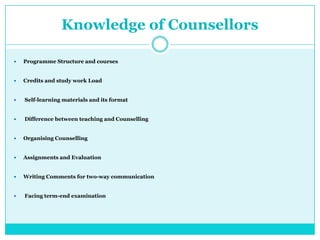
Knowledge of Counsellors
 Programme Structure and courses
 Credits and study work Load
 Self-learning materials and its format
 Difference between teaching and Counselling
 Organising Counselling
 Assignments and Evaluation
 Writing Comments for two-way communication
 Facing term-end examination
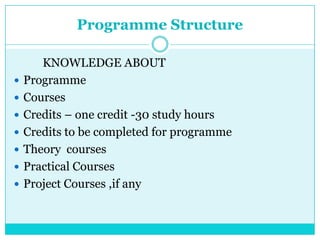
Programme Structure
KNOWLEDGE ABOUT
 Programme
 Courses
 Credits – one credit -30 study hours
 Credits to be completed for programme
 Theory courses
 Practical Courses
 Project Courses ,if any
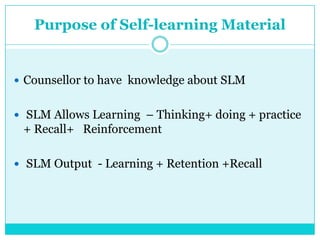
Purpose of Self-learning Material
 Counsellor to have knowledge about SLM
 SLM Allows Learning – Thinking+ doing + practice
+ Recall+ Reinforcement
 SLM Output - Learning + Retention +Recall
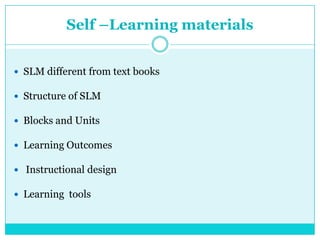
Self –Learning materials
 SLM different from text books
 Structure of SLM
 Blocks and Units
 Learning Outcomes
 Instructional design
 Learning tools
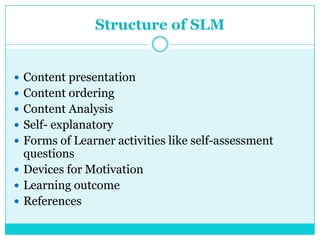
Structure of SLM
 Content presentation
 Content ordering
 Content Analysis
 Self- explanatory
 Forms of Learner activities like self-assessment
questions
 Devices for Motivation
 Learning outcome
 References
Academic Counselling
 Not Lecture-oriented
 Learner -oriented
 Counselling to facilitate learning
Sessions details
 For 4 Credit - Five 2 ½ hr session
 For 8 Credit - Ten 2 ½ hr session
What is Counselling
 Information
 Advice
 Help
 Guidance
 Motivation
 Support
 Listening
Requirements of Counsellor
 Good Knowledge about subject
 Human relation link
 Genuine interest towards learners
 Ability to listen
 Ability to observe and respond
 Treat learners individually as per the individual
needs
 Ability to create dialogue
Academic Counselling activities
 Clarification of doubts
 Discussion
 Interaction
 Active participation of Learners
 Group work
 Help
 Enhance self-confidence of learners
 Linking subject with life/work experience
Use of ICT in Counselling
 Use of VCD
 Radio
 Gyan Darshan
 Gyan Vani
 Teleconferencing
 ICT intervention help in better understanding review
and retention of subject knowledge
Tips during counselling
 Improving communication skills
 Study skills Tips
 Time to be allotted for self-study per week
 Tips for writing assignment responses
Tutor-marked assignments
Role of Academic Counsellor
1. Go through the responses
2. Award marks /grades
3. Write comments about responses for Two-way
communication and giving Feedback
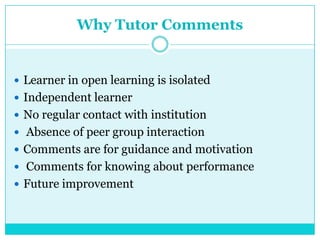
Why Tutor Comments
 Learner in open learning is isolated
 Independent learner
 No regular contact with institution
 Absence of peer group interaction
 Comments are for guidance and motivation
 Comments for knowing about performance
 Future improvement
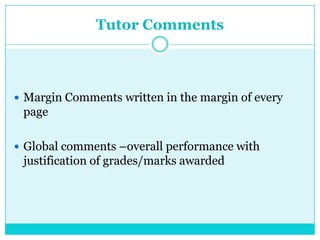
Tutor Comments
 Margin Comments written in the margin of every
page
 Global comments –overall performance with
justification of grades/marks awarded
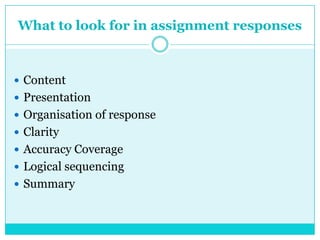
What to look for in assignment responses
 Content
 Presentation
 Organisation of response
 Clarity
 Accuracy Coverage
 Logical sequencing
 Summary
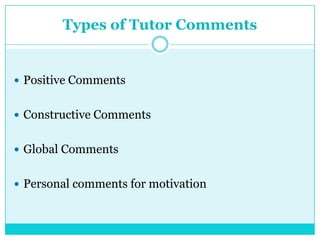
Types of Tutor Comments
 Positive Comments
 Constructive Comments
 Global Comments
 Personal comments for motivation
Comments to AVOID
 Negative comments
 Harmful Comments
 Misleading Comments
 Hallow Comments
 Null Comments
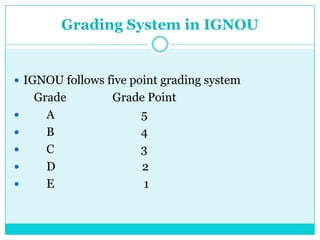
Grading System in IGNOU
 IGNOU follows five point grading system
Grade Grade Point
 A 5
 B 4
 C 3
 D 2
 E 1
Features of Global Comments
 Two-way communication
 Feedback
 Suggestions for Future improvement
 Constructively conveying to include additional
information/content/any modification etc.
 Justifying the grade/marks awarded
Additional role of Counsellor
 Tips for writing examination
 Informing learner to contact by e-mail for doubts
 Informing learner to contact by mobile phone for
getting any help
Counselling for Practical Courses
 Organising
 Informing Methodology
 Facilitating Practical skills
 Hands-on experience of learners
Improving analytical skills
 Improving problem solving skills
 Help in arriving Results and its inference
 Report writing/record presentation
 Evaluation and awarding marks
Other than Counsellorrole
 Informing learner to maintain a file for written
communication submitted to university
 Informing about the last dates for submission of
assignment responses
 Reminding learner about the date for payment of re-
registartion fee for subsequent registration
 Reminding about the payment of examination form
and fee

Academic counselling

  • 1.
    D R .S . K I S H O R E I G N O U Open Learning ACADEMIC COUNSELLING
  • 2.
    Counselling  Counselling meansADVICE  Academic Counselling refers to advice and guidance about academic and non-academic matters
  • 3.
    Knowledge of Counsellors Programme Structure and courses  Credits and study work Load  Self-learning materials and its format  Difference between teaching and Counselling  Organising Counselling  Assignments and Evaluation  Writing Comments for two-way communication  Facing term-end examination
  • 4.
    Programme Structure KNOWLEDGE ABOUT Programme  Courses  Credits – one credit -30 study hours  Credits to be completed for programme  Theory courses  Practical Courses  Project Courses ,if any
  • 5.
    Purpose of Self-learningMaterial  Counsellor to have knowledge about SLM  SLM Allows Learning – Thinking+ doing + practice + Recall+ Reinforcement  SLM Output - Learning + Retention +Recall
  • 6.
    Self –Learning materials SLM different from text books  Structure of SLM  Blocks and Units  Learning Outcomes  Instructional design  Learning tools
  • 7.
    Structure of SLM Content presentation  Content ordering  Content Analysis  Self- explanatory  Forms of Learner activities like self-assessment questions  Devices for Motivation  Learning outcome  References
  • 8.
    Academic Counselling  NotLecture-oriented  Learner -oriented  Counselling to facilitate learning
  • 9.
    Sessions details  For4 Credit - Five 2 ½ hr session  For 8 Credit - Ten 2 ½ hr session
  • 10.
    What is Counselling Information  Advice  Help  Guidance  Motivation  Support  Listening
  • 11.
    Requirements of Counsellor Good Knowledge about subject  Human relation link  Genuine interest towards learners  Ability to listen  Ability to observe and respond  Treat learners individually as per the individual needs  Ability to create dialogue
  • 12.
    Academic Counselling activities Clarification of doubts  Discussion  Interaction  Active participation of Learners  Group work  Help  Enhance self-confidence of learners  Linking subject with life/work experience
  • 13.
    Use of ICTin Counselling  Use of VCD  Radio  Gyan Darshan  Gyan Vani  Teleconferencing  ICT intervention help in better understanding review and retention of subject knowledge
  • 14.
    Tips during counselling Improving communication skills  Study skills Tips  Time to be allotted for self-study per week  Tips for writing assignment responses
  • 15.
    Tutor-marked assignments Role ofAcademic Counsellor 1. Go through the responses 2. Award marks /grades 3. Write comments about responses for Two-way communication and giving Feedback
  • 16.
    Why Tutor Comments Learner in open learning is isolated  Independent learner  No regular contact with institution  Absence of peer group interaction  Comments are for guidance and motivation  Comments for knowing about performance  Future improvement
  • 17.
    Tutor Comments  MarginComments written in the margin of every page  Global comments –overall performance with justification of grades/marks awarded
  • 18.
    What to lookfor in assignment responses  Content  Presentation  Organisation of response  Clarity  Accuracy Coverage  Logical sequencing  Summary
  • 19.
    Types of TutorComments  Positive Comments  Constructive Comments  Global Comments  Personal comments for motivation
  • 20.
    Comments to AVOID Negative comments  Harmful Comments  Misleading Comments  Hallow Comments  Null Comments
  • 21.
    Grading System inIGNOU  IGNOU follows five point grading system Grade Grade Point  A 5  B 4  C 3  D 2  E 1
  • 22.
    Features of GlobalComments  Two-way communication  Feedback  Suggestions for Future improvement  Constructively conveying to include additional information/content/any modification etc.  Justifying the grade/marks awarded
  • 23.
    Additional role ofCounsellor  Tips for writing examination  Informing learner to contact by e-mail for doubts  Informing learner to contact by mobile phone for getting any help
  • 24.
    Counselling for PracticalCourses  Organising  Informing Methodology  Facilitating Practical skills  Hands-on experience of learners Improving analytical skills  Improving problem solving skills  Help in arriving Results and its inference  Report writing/record presentation  Evaluation and awarding marks
  • 25.
    Other than Counsellorrole Informing learner to maintain a file for written communication submitted to university  Informing about the last dates for submission of assignment responses  Reminding learner about the date for payment of re- registartion fee for subsequent registration  Reminding about the payment of examination form and fee