Most school children with a disability
attend regular classes
abs.gov.au/education
09/02/13www.ncid.org.au
Inclusive Education
NCID has strongly advocated for inclusive
education and written several Interaction
editions specifically on Inclusive Education.
By this we mean a student attending a regular
school in the regular classroom with a reasonable
adjustments as required but using the same
subject material as that being taught to the whole
class.
2
09/02/13www.ncid.org.au
ABS media release 7/8/2013
This report states that
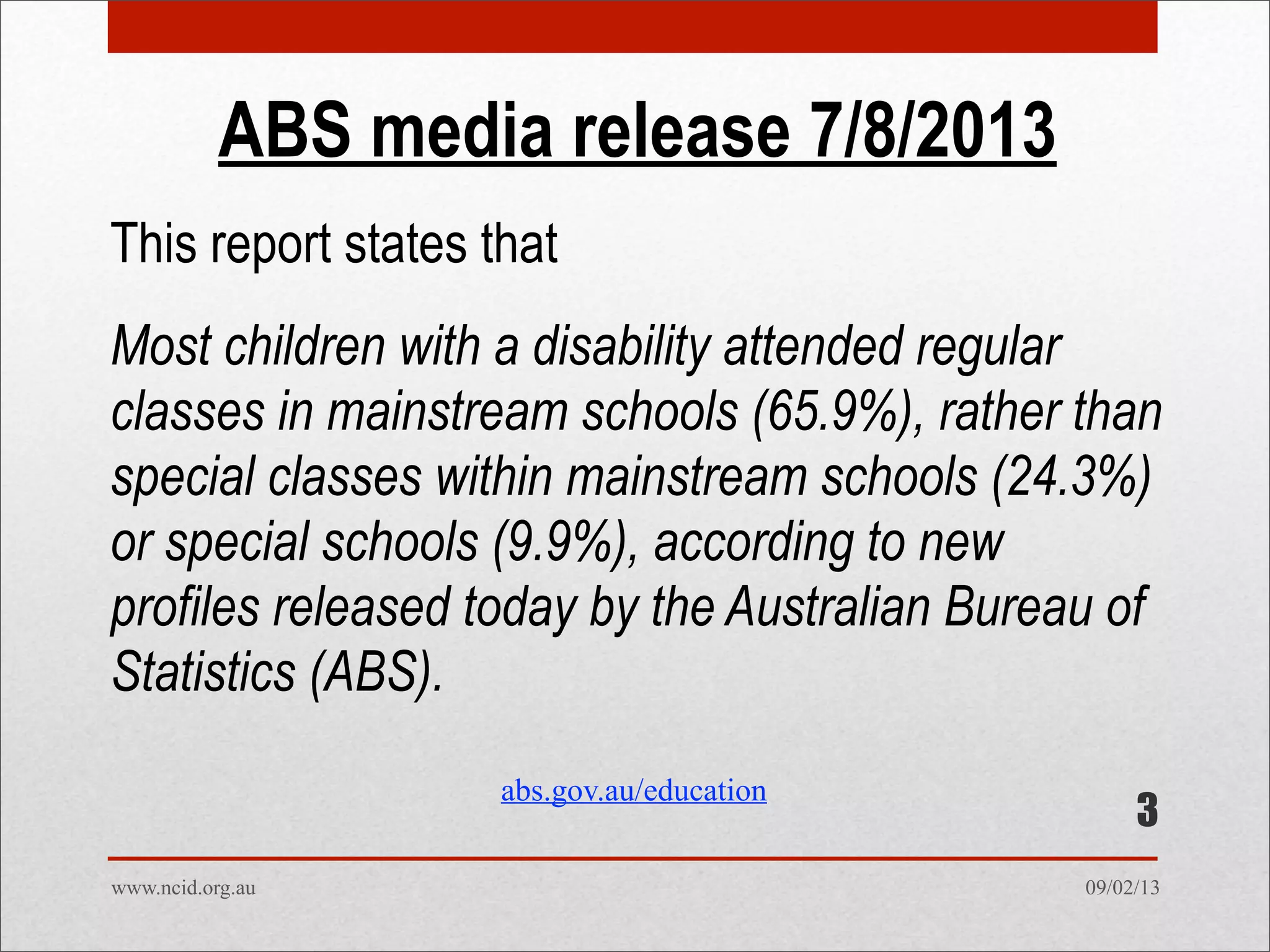
Most children with a disability attended regular
classes in mainstream schools (65.9%), rather than
special classes within mainstream schools (24.3%)
or special schools (9.9%), according to new
profiles released today by the Australian Bureau of
Statistics (ABS).
3
abs.gov.au/education
09/02/13www.ncid.org.au
Other key findings:
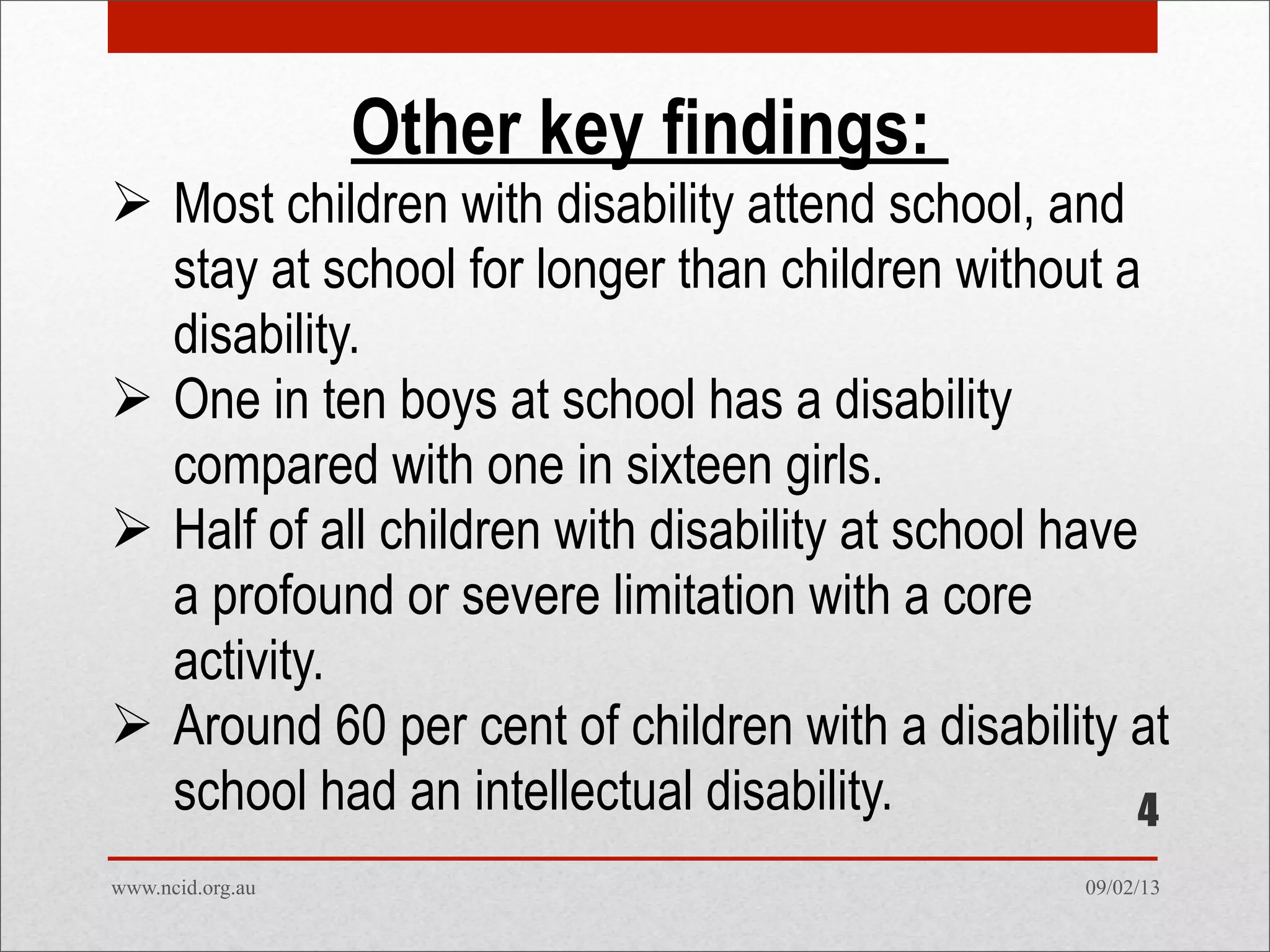
 Most children with disability attend school, and
stay at school for longer than children without a
disability.
 One in ten boys at school has a disability
compared with one in sixteen girls.
 Half of all children with disability at school have
a profound or severe limitation with a core
activity.
 Around 60 per cent of children with a disability at
school had an intellectual disability. 4
09/02/13www.ncid.org.au
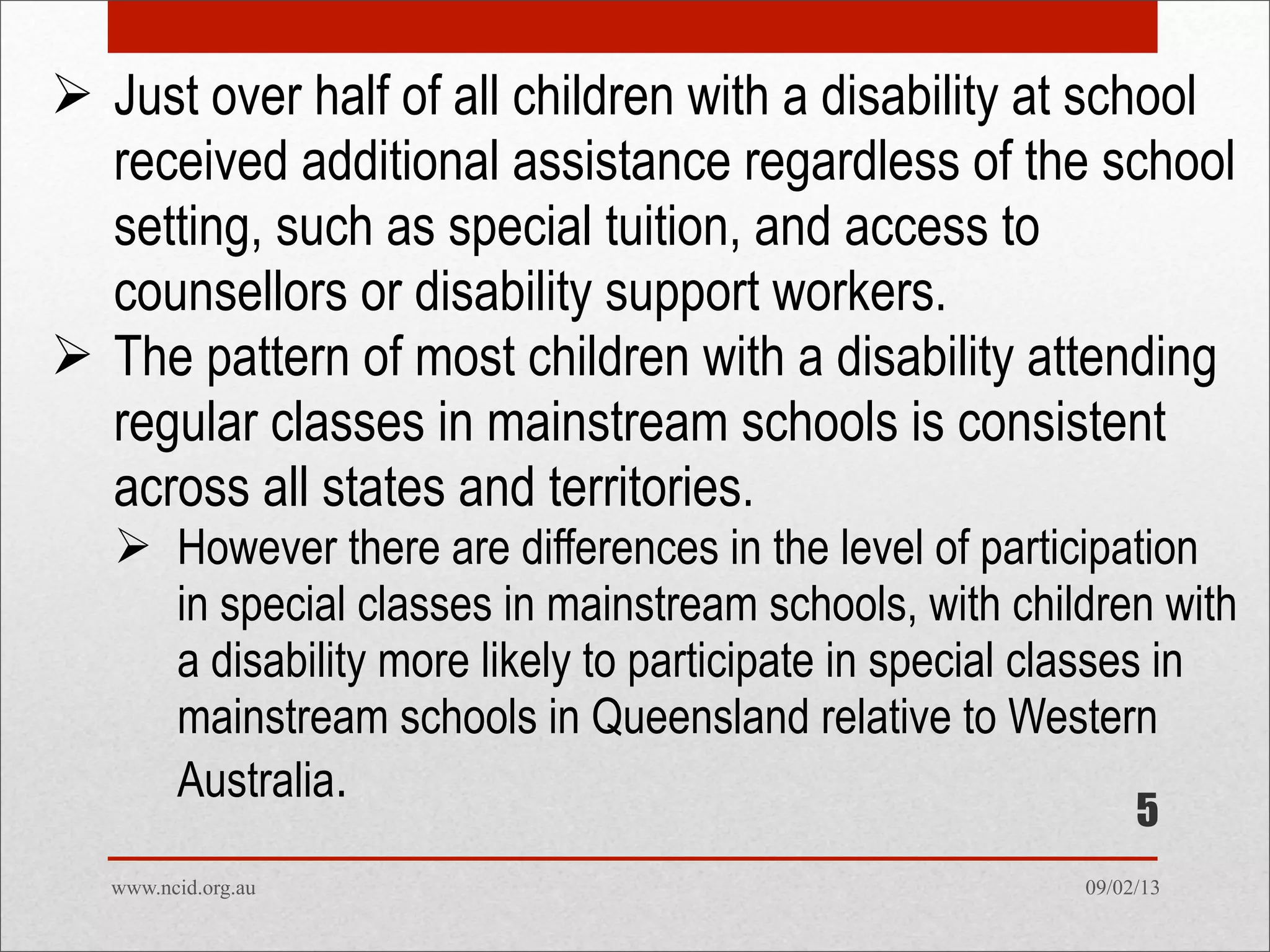
 Just over half of all children with a disability at school
received additional assistance regardless of the school
setting, such as special tuition, and access to
counsellors or disability support workers.
 The pattern of most children with a disability attending
regular classes in mainstream schools is consistent
across all states and territories.
 However there are differences in the level of participation
in special classes in mainstream schools, with children with
a disability more likely to participate in special classes in
mainstream schools in Queensland relative to Western
Australia.
5
09/02/13www.ncid.org.au
Questions that arise for NCID from
this report
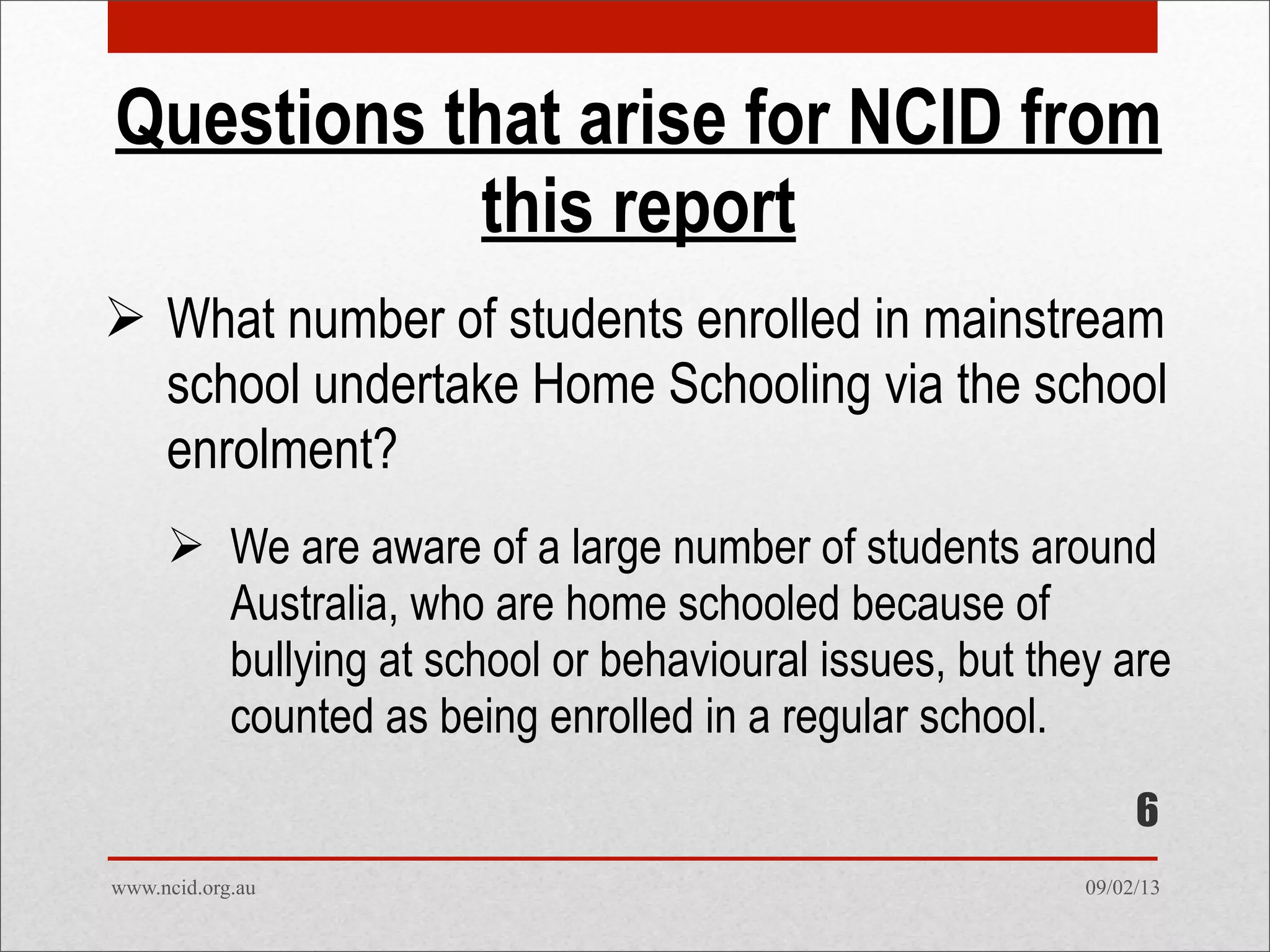
 What number of students enrolled in mainstream
school undertake Home Schooling via the school
enrolment?
 We are aware of a large number of students around
Australia, who are home schooled because of
bullying at school or behavioural issues, but they are
counted as being enrolled in a regular school.
6
09/02/13www.ncid.org.au
7
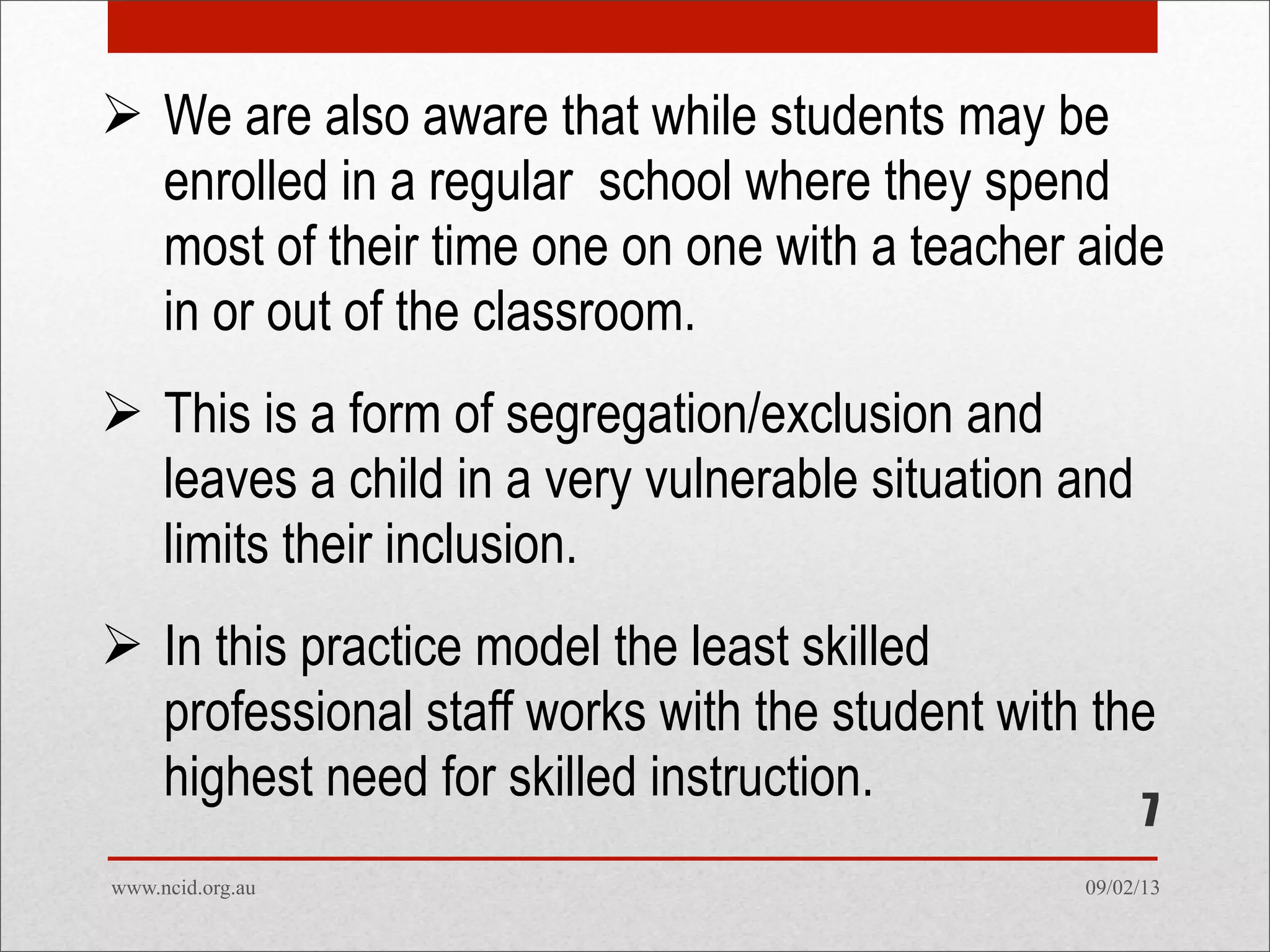
 We are also aware that while students may be
enrolled in a regular school where they spend
most of their time one on one with a teacher aide
in or out of the classroom.
 This is a form of segregation/exclusion and
leaves a child in a very vulnerable situation and
limits their inclusion.
 In this practice model the least skilled
professional staff works with the student with the
highest need for skilled instruction.
09/02/13www.ncid.org.au
Fitting in and communication
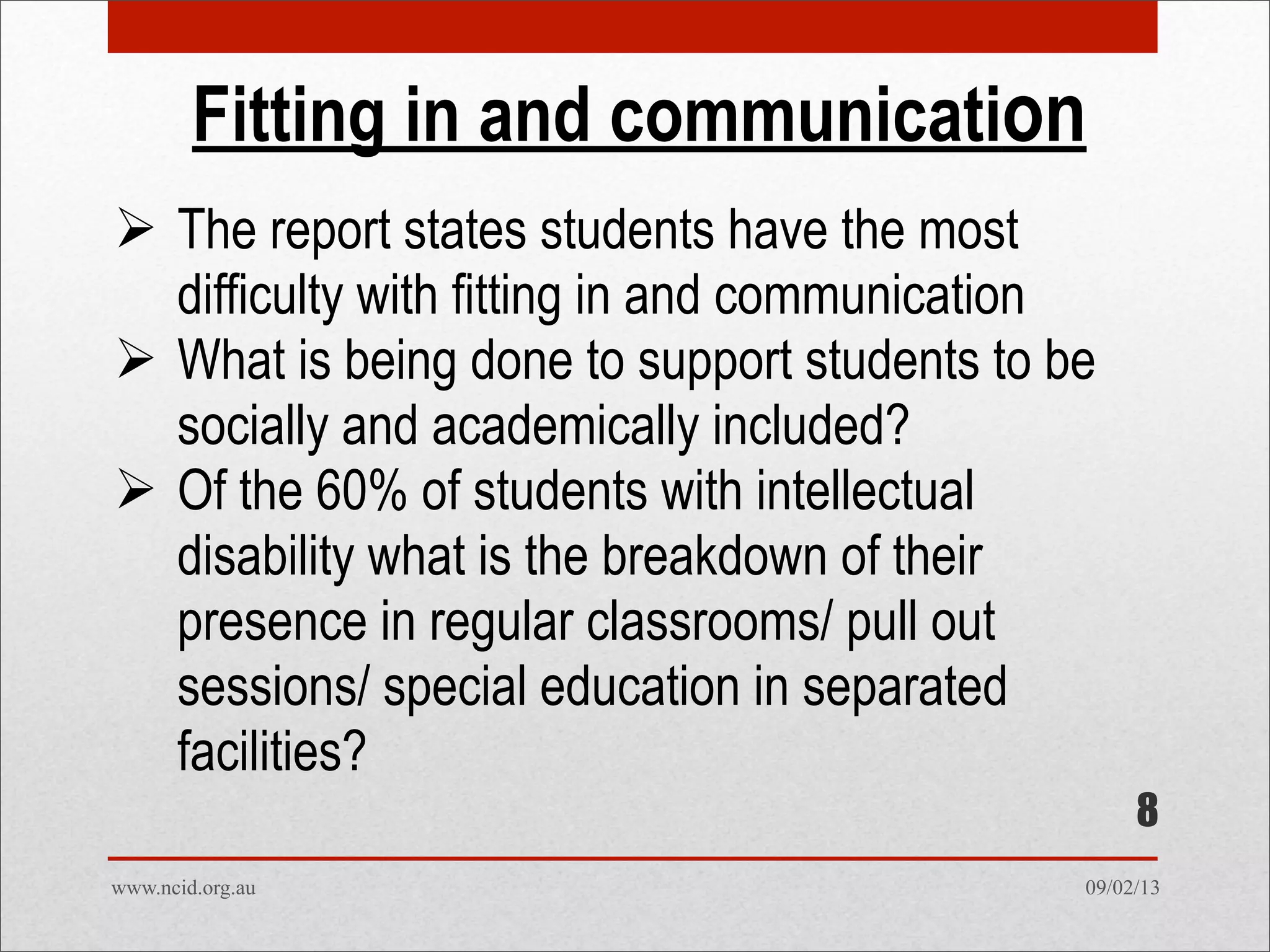
 The report states students have the most
difficulty with fitting in and communication
 What is being done to support students to be
socially and academically included?
 Of the 60% of students with intellectual
disability what is the breakdown of their
presence in regular classrooms/ pull out
sessions/ special education in separated
facilities?
8
09/02/13www.ncid.org.au
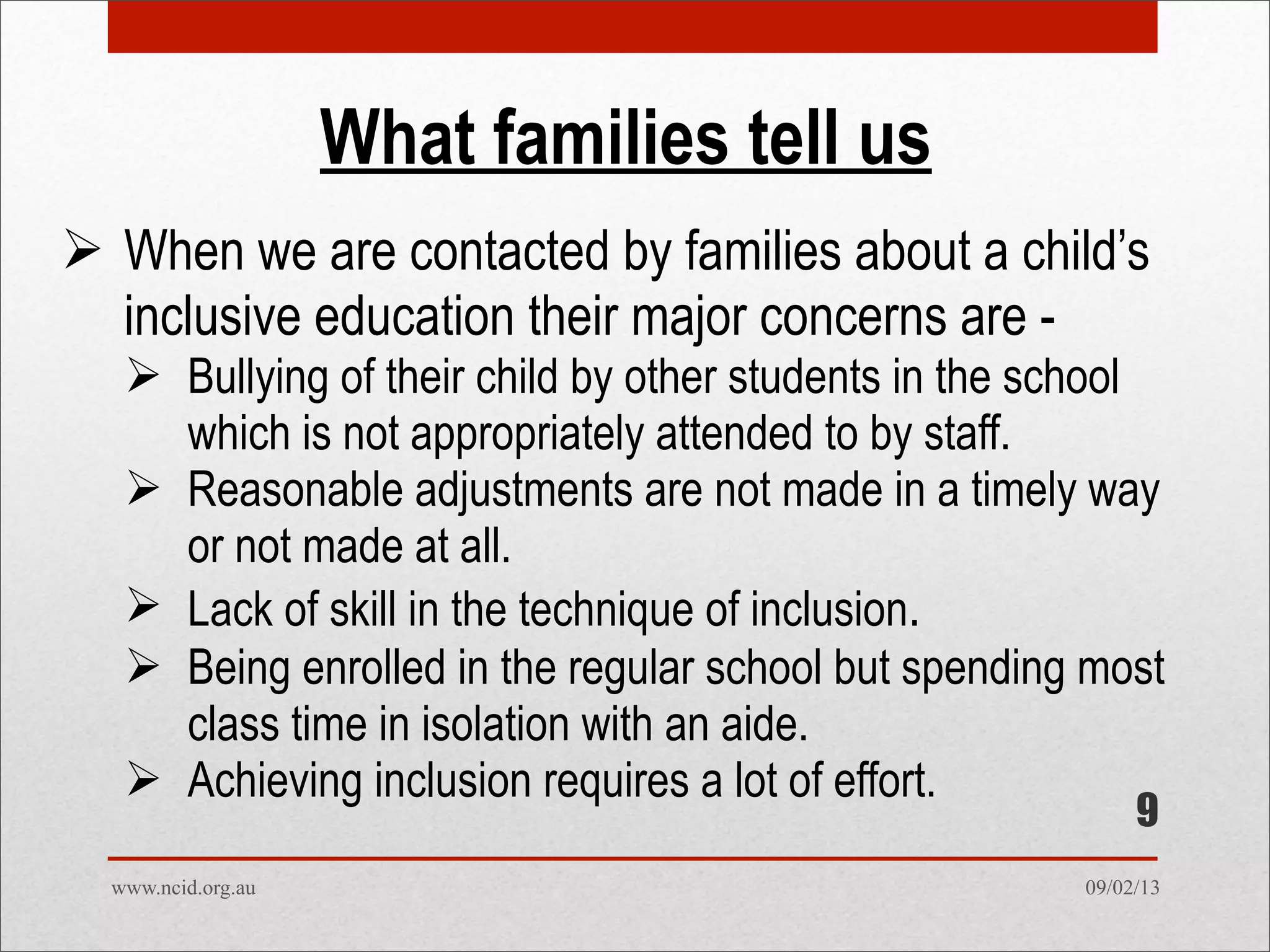
What families tell us
 When we are contacted by families about a child’s
inclusive education their major concerns are -
 Bullying of their child by other students in the school
which is not appropriately attended to by staff.
 Reasonable adjustments are not made in a timely way
or not made at all.
 Lack of skill in the technique of inclusion.
 Being enrolled in the regular school but spending most
class time in isolation with an aide.
 Achieving inclusion requires a lot of effort.
9
09/02/13www.ncid.org.au
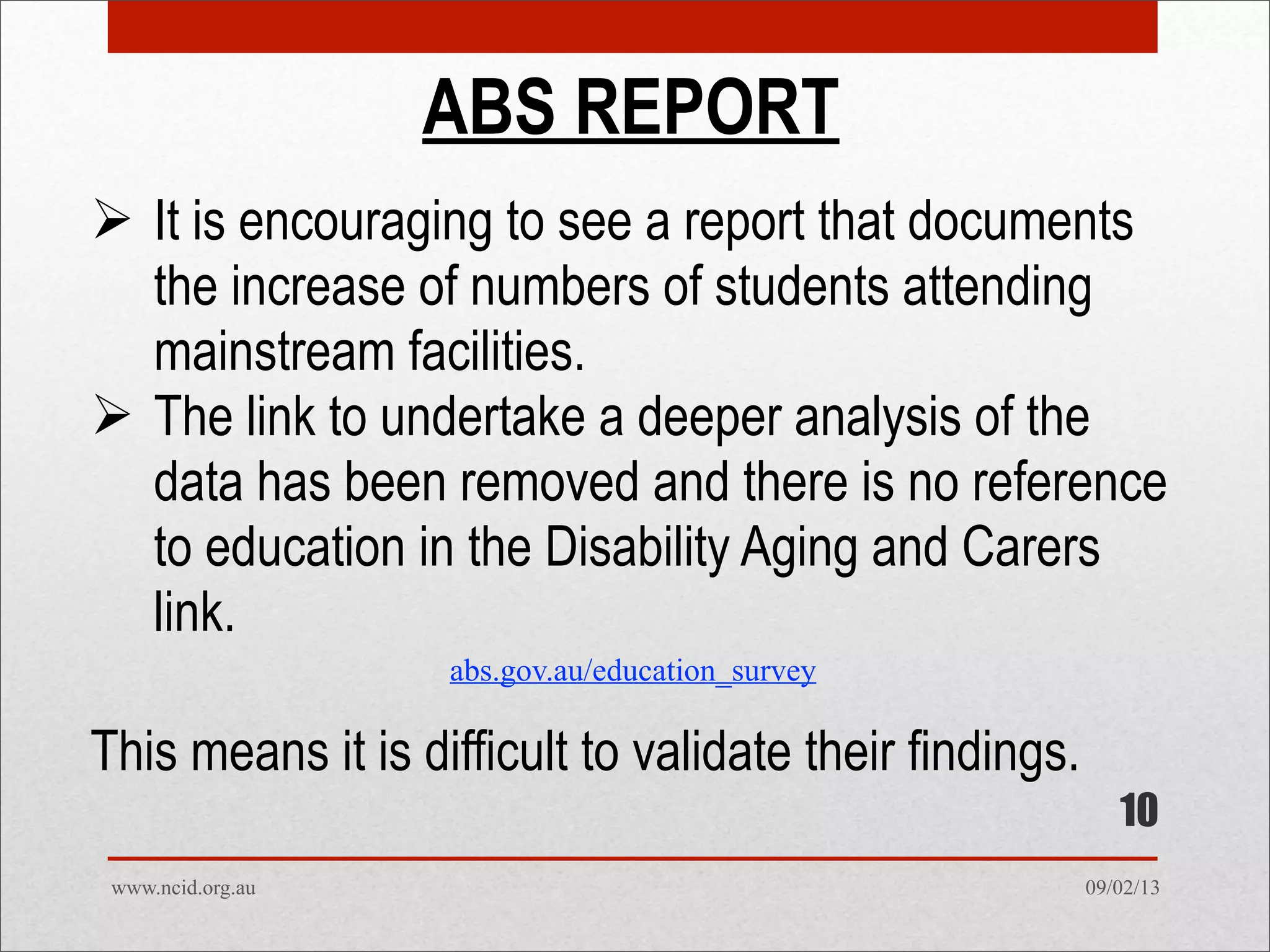
ABS REPORT
 It is encouraging to see a report that documents
the increase of numbers of students attending
mainstream facilities.
 The link to undertake a deeper analysis of the
data has been removed and there is no reference
to education in the Disability Aging and Carers
link.
This means it is difficult to validate their findings.
10
abs.gov.au/education_survey

ABS - most children with disability in mainstream

  • 1.
    Most school childrenwith a disability attend regular classes abs.gov.au/education
  • 2.
    09/02/13www.ncid.org.au Inclusive Education NCID hasstrongly advocated for inclusive education and written several Interaction editions specifically on Inclusive Education. By this we mean a student attending a regular school in the regular classroom with a reasonable adjustments as required but using the same subject material as that being taught to the whole class. 2
  • 3.
    09/02/13www.ncid.org.au ABS media release7/8/2013 This report states that Most children with a disability attended regular classes in mainstream schools (65.9%), rather than special classes within mainstream schools (24.3%) or special schools (9.9%), according to new profiles released today by the Australian Bureau of Statistics (ABS). 3 abs.gov.au/education
  • 4.
    09/02/13www.ncid.org.au Other key findings: Most children with disability attend school, and stay at school for longer than children without a disability.  One in ten boys at school has a disability compared with one in sixteen girls.  Half of all children with disability at school have a profound or severe limitation with a core activity.  Around 60 per cent of children with a disability at school had an intellectual disability. 4
  • 5.
    09/02/13www.ncid.org.au  Just overhalf of all children with a disability at school received additional assistance regardless of the school setting, such as special tuition, and access to counsellors or disability support workers.  The pattern of most children with a disability attending regular classes in mainstream schools is consistent across all states and territories.  However there are differences in the level of participation in special classes in mainstream schools, with children with a disability more likely to participate in special classes in mainstream schools in Queensland relative to Western Australia. 5
  • 6.
    09/02/13www.ncid.org.au Questions that arisefor NCID from this report  What number of students enrolled in mainstream school undertake Home Schooling via the school enrolment?  We are aware of a large number of students around Australia, who are home schooled because of bullying at school or behavioural issues, but they are counted as being enrolled in a regular school. 6
  • 7.
    09/02/13www.ncid.org.au 7  We arealso aware that while students may be enrolled in a regular school where they spend most of their time one on one with a teacher aide in or out of the classroom.  This is a form of segregation/exclusion and leaves a child in a very vulnerable situation and limits their inclusion.  In this practice model the least skilled professional staff works with the student with the highest need for skilled instruction.
  • 8.
    09/02/13www.ncid.org.au Fitting in andcommunication  The report states students have the most difficulty with fitting in and communication  What is being done to support students to be socially and academically included?  Of the 60% of students with intellectual disability what is the breakdown of their presence in regular classrooms/ pull out sessions/ special education in separated facilities? 8
  • 9.
    09/02/13www.ncid.org.au What families tellus  When we are contacted by families about a child’s inclusive education their major concerns are -  Bullying of their child by other students in the school which is not appropriately attended to by staff.  Reasonable adjustments are not made in a timely way or not made at all.  Lack of skill in the technique of inclusion.  Being enrolled in the regular school but spending most class time in isolation with an aide.  Achieving inclusion requires a lot of effort. 9
  • 10.
    09/02/13www.ncid.org.au ABS REPORT  Itis encouraging to see a report that documents the increase of numbers of students attending mainstream facilities.  The link to undertake a deeper analysis of the data has been removed and there is no reference to education in the Disability Aging and Carers link. This means it is difficult to validate their findings. 10 abs.gov.au/education_survey