
Department of Sericulture
Dr. Kuntamalla Sujatha K. Srilatha,
Asst Prof, Dept of Sericulture, M.Sc. Sericulture.
Kakatiya University.
Madichetti Sai Abhishek
Shodhana Labs, Hyderabad.
BIOFERTILIZERS
Semester 1 Paper 2
1
Biofertilizer is a substance that contains living
microorganisms that, when applied to seed, plant surfaces,
or soil, colonize the rhizosphere or the interior of the plant
and promote growth by increasing the supply or availability
of primary nutrients to the host plant.
BIOFERTILIZERS :
2
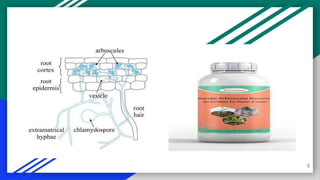
Vesicular Arbuscular Mycorrhiza :
The fungus colonizes the root cortex, forming a mycelial
network and characteristic vesicles and arbuscules. The
vesicles store nutrients, while the arbuscules absorb
nutrients. The plant provides nutrition to the fungus through
photosynthesis.
VAM helps plants grow, develop nodules, and protect
against pathogens. It also improves the plant's nutrient
status, increases growth and development, and protects
the plant against pathogens.
3
Arbuscular mycorrhiza (AM), a symbiosis between plants and
members of an ancient phylum of fungi, the Glomeromycota,
improves the supply of water and nutrients, such as
phosphate and nitrogen, to the host plant. In return, up to
20% of plant-fixed carbon is transferred to the fungus.
Advantages:
4
5
Phosphate-solubilizing microorganisms (PSMs) have the
ability to transform the insoluble P forms into soluble forms,
which can function as biofertilizers by increasing the soluble P
content in soil
Phosphate solubilizing bacteria :
6
Improve plant growth
PSB can increase the amount of phosphorus that plants can
absorb, which can lead to higher crop yields.
Reduce the negative effects of fertilizer
PSB can help reduce the negative effects of overusing
agricultural fertilizer.
Improve soil pH
PSB release organic and inorganic acids that reduce soil pH,
making nutrients like phosphorus available for plants to
absorb.
Advantages :
7
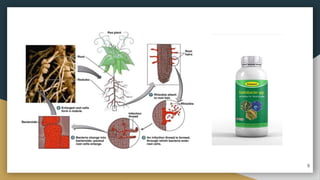
Azotobacter biofertilizer:
It is a biofertilizer that contains non-symbiotic Azotobacter
bacteria which has the ability to fix atmospheric Nitrogen. It
is recommended for non-leguminous crops like Paddy,
Wheat, Millets, Cotton, Tomato, Cabbage, Mustard,
Safflower, Sunflower, etc..
8
9
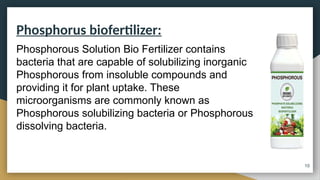
Phosphorus biofertilizer:
Phosphorous Solution Bio Fertilizer contains
bacteria that are capable of solubilizing inorganic
Phosphorous from insoluble compounds and
providing it for plant uptake. These
microorganisms are commonly known as
Phosphorous solubilizing bacteria or Phosphorous
dissolving bacteria.
10
Compost biofertilizer:
Compost biofertilizers are those which make use of the
animal dung to enrich the soil with useful microorganisms
and nutrients.
11
12
ACKNOWLEDGE FROM INTERNET

About Biofertilizers - their uses, .pptx

  • 1.
    Department of Sericulture Dr.Kuntamalla Sujatha K. Srilatha, Asst Prof, Dept of Sericulture, M.Sc. Sericulture. Kakatiya University. Madichetti Sai Abhishek Shodhana Labs, Hyderabad. BIOFERTILIZERS Semester 1 Paper 2 1
  • 2.
    Biofertilizer is asubstance that contains living microorganisms that, when applied to seed, plant surfaces, or soil, colonize the rhizosphere or the interior of the plant and promote growth by increasing the supply or availability of primary nutrients to the host plant. BIOFERTILIZERS : 2
  • 3.
    Vesicular Arbuscular Mycorrhiza: The fungus colonizes the root cortex, forming a mycelial network and characteristic vesicles and arbuscules. The vesicles store nutrients, while the arbuscules absorb nutrients. The plant provides nutrition to the fungus through photosynthesis. VAM helps plants grow, develop nodules, and protect against pathogens. It also improves the plant's nutrient status, increases growth and development, and protects the plant against pathogens. 3
  • 4.
    Arbuscular mycorrhiza (AM),a symbiosis between plants and members of an ancient phylum of fungi, the Glomeromycota, improves the supply of water and nutrients, such as phosphate and nitrogen, to the host plant. In return, up to 20% of plant-fixed carbon is transferred to the fungus. Advantages: 4
  • 5.
  • 6.
    Phosphate-solubilizing microorganisms (PSMs)have the ability to transform the insoluble P forms into soluble forms, which can function as biofertilizers by increasing the soluble P content in soil Phosphate solubilizing bacteria : 6
  • 7.
    Improve plant growth PSBcan increase the amount of phosphorus that plants can absorb, which can lead to higher crop yields. Reduce the negative effects of fertilizer PSB can help reduce the negative effects of overusing agricultural fertilizer. Improve soil pH PSB release organic and inorganic acids that reduce soil pH, making nutrients like phosphorus available for plants to absorb. Advantages : 7
  • 8.
    Azotobacter biofertilizer: It isa biofertilizer that contains non-symbiotic Azotobacter bacteria which has the ability to fix atmospheric Nitrogen. It is recommended for non-leguminous crops like Paddy, Wheat, Millets, Cotton, Tomato, Cabbage, Mustard, Safflower, Sunflower, etc.. 8
  • 9.
  • 10.
    Phosphorus biofertilizer: Phosphorous SolutionBio Fertilizer contains bacteria that are capable of solubilizing inorganic Phosphorous from insoluble compounds and providing it for plant uptake. These microorganisms are commonly known as Phosphorous solubilizing bacteria or Phosphorous dissolving bacteria. 10
  • 11.
    Compost biofertilizer: Compost biofertilizersare those which make use of the animal dung to enrich the soil with useful microorganisms and nutrients. 11
  • 12.