g
ABO INCOMPATIBILITY
‫وترتیب‬ ‫تهیه‬
:
‫هللا‬ ‫داکترصفی‬
(
‫سلیمانخیل‬
)
‫رهنما‬ ‫استاد‬
:
‫امیری‬ ‫هللا‬ ‫نعمت‬ ‫دکتور‬ ‫استاد‬
Neonatal Hyperbilirubinemia
• Visible jaundice:
• Adults: >2mg%
• Newborns: >7mg
• Up to 50% of all newborns may develop
jaundice
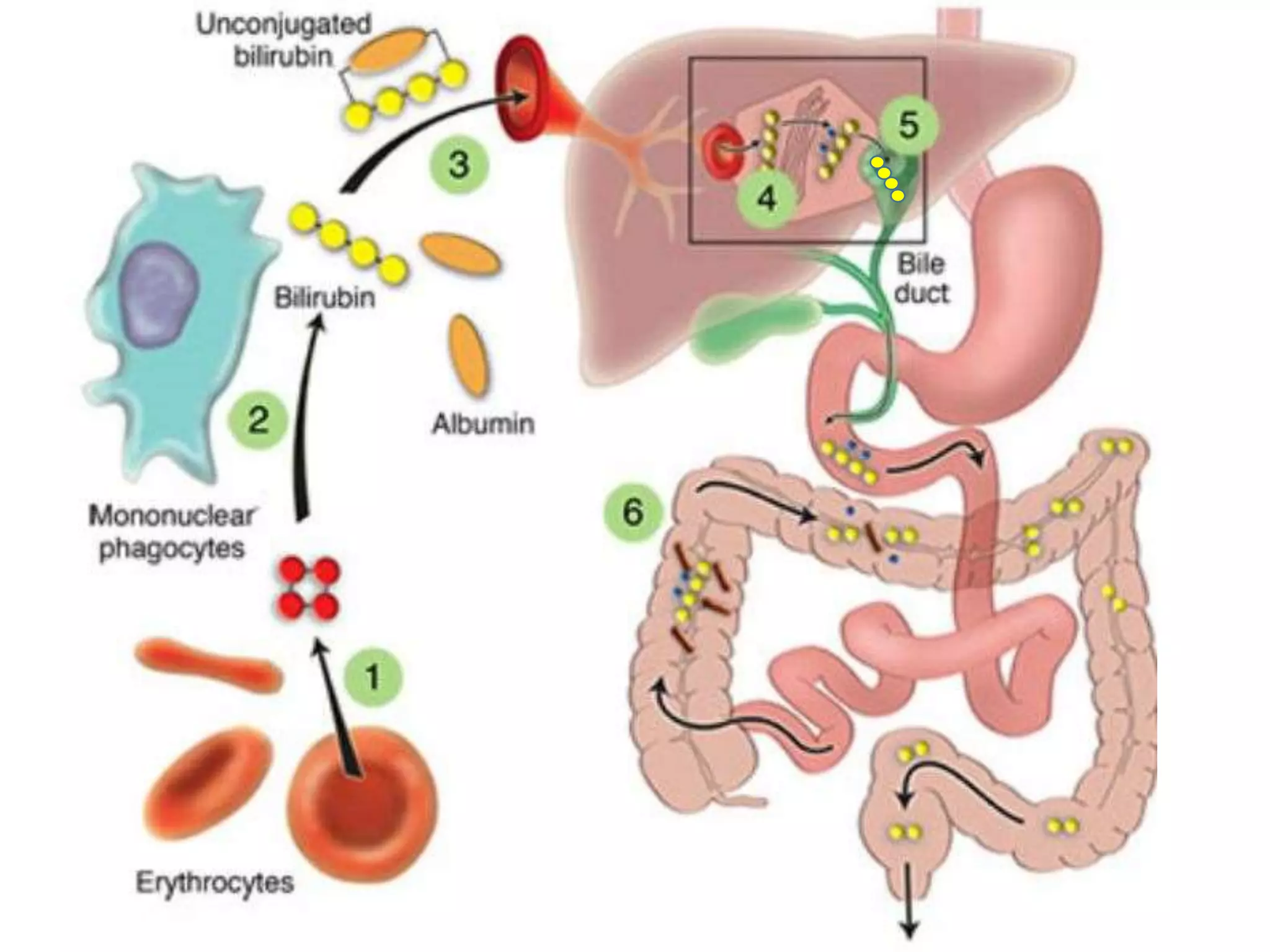
Source of Bilirubin
• 75%: from old RBCs released from RES
• 25%: from ineffective erythropoyesis,
myoglobine, cytochromes, catalase,
peroxidase.
• Production of bilirubin:. 6-10 mg/kg/day.
(adults 3-4mg/kg/day)
• 1gr Hemoglobine produces 34mg of bilirubin
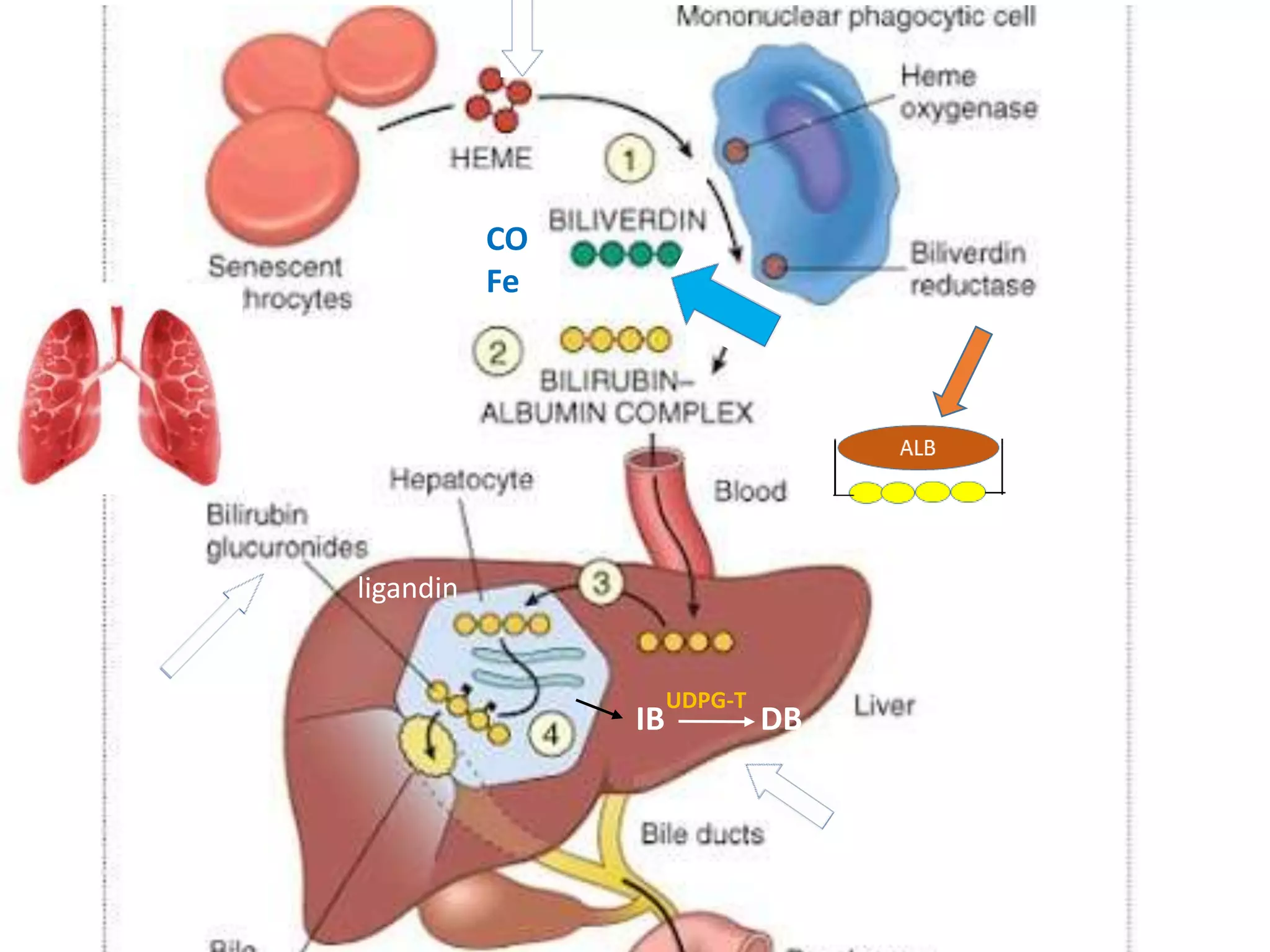
CO
Fe
ligandin
IB DB
UDPG-T
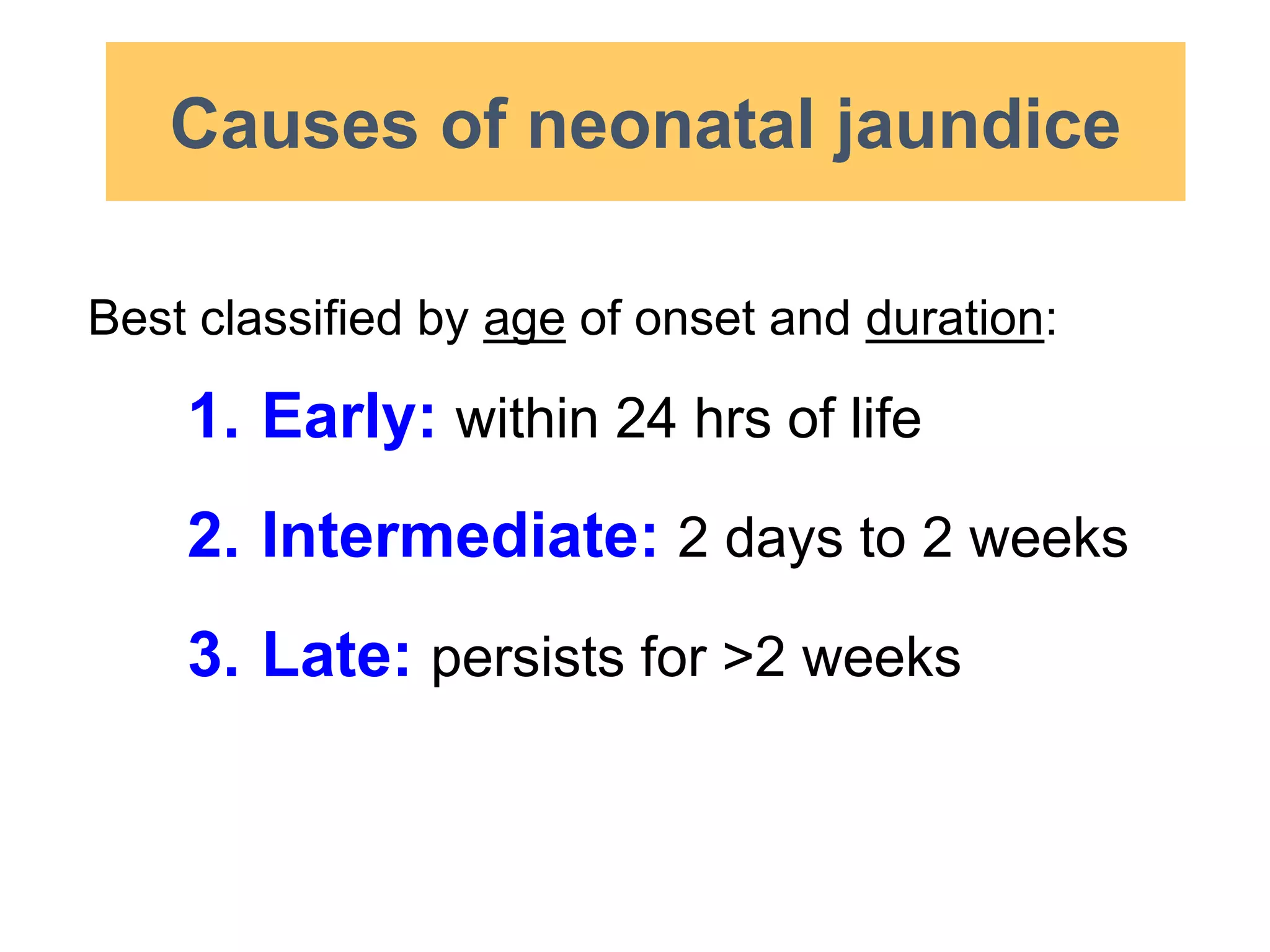
Best classified by age of onset and duration:
1. Early: within 24 hrs of life
2. Intermediate: 2 days to 2 weeks
3. Late: persists for >2 weeks
Causes of neonatal jaundice
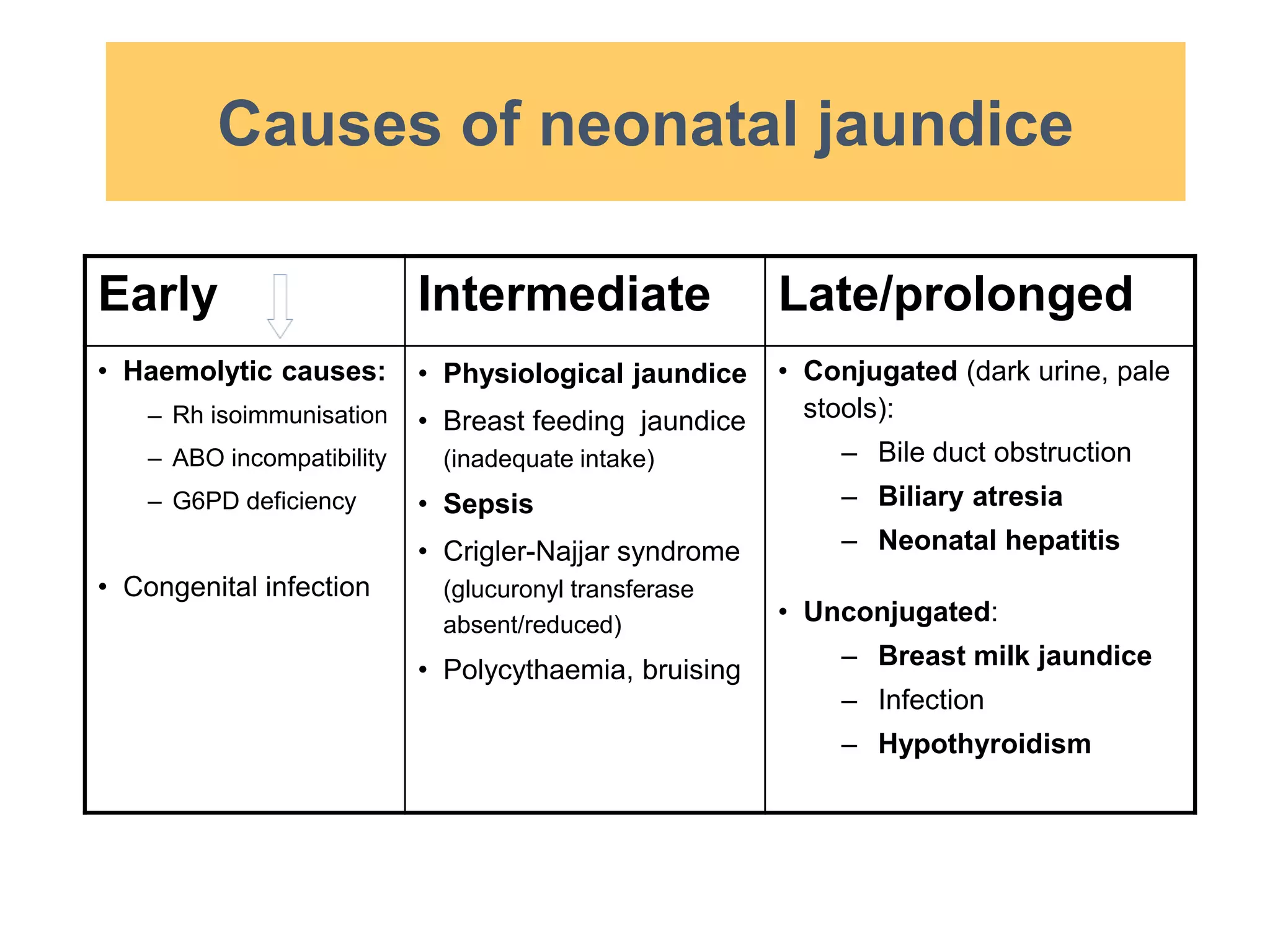
Early Intermediate Late/prolonged
• Haemolytic causes:
– Rh isoimmunisation
– ABO incompatibility
– G6PD deficiency
• Congenital infection
• Physiological jaundice
• Breast feeding jaundice
(inadequate intake)
• Sepsis
• Crigler-Najjar syndrome
(glucuronyl transferase
absent/reduced)
• Polycythaemia, bruising
• Conjugated (dark urine, pale
stools):
– Bile duct obstruction
– Biliary atresia
– Neonatal hepatitis
• Unconjugated:
– Breast milk jaundice
– Infection
– Hypothyroidism
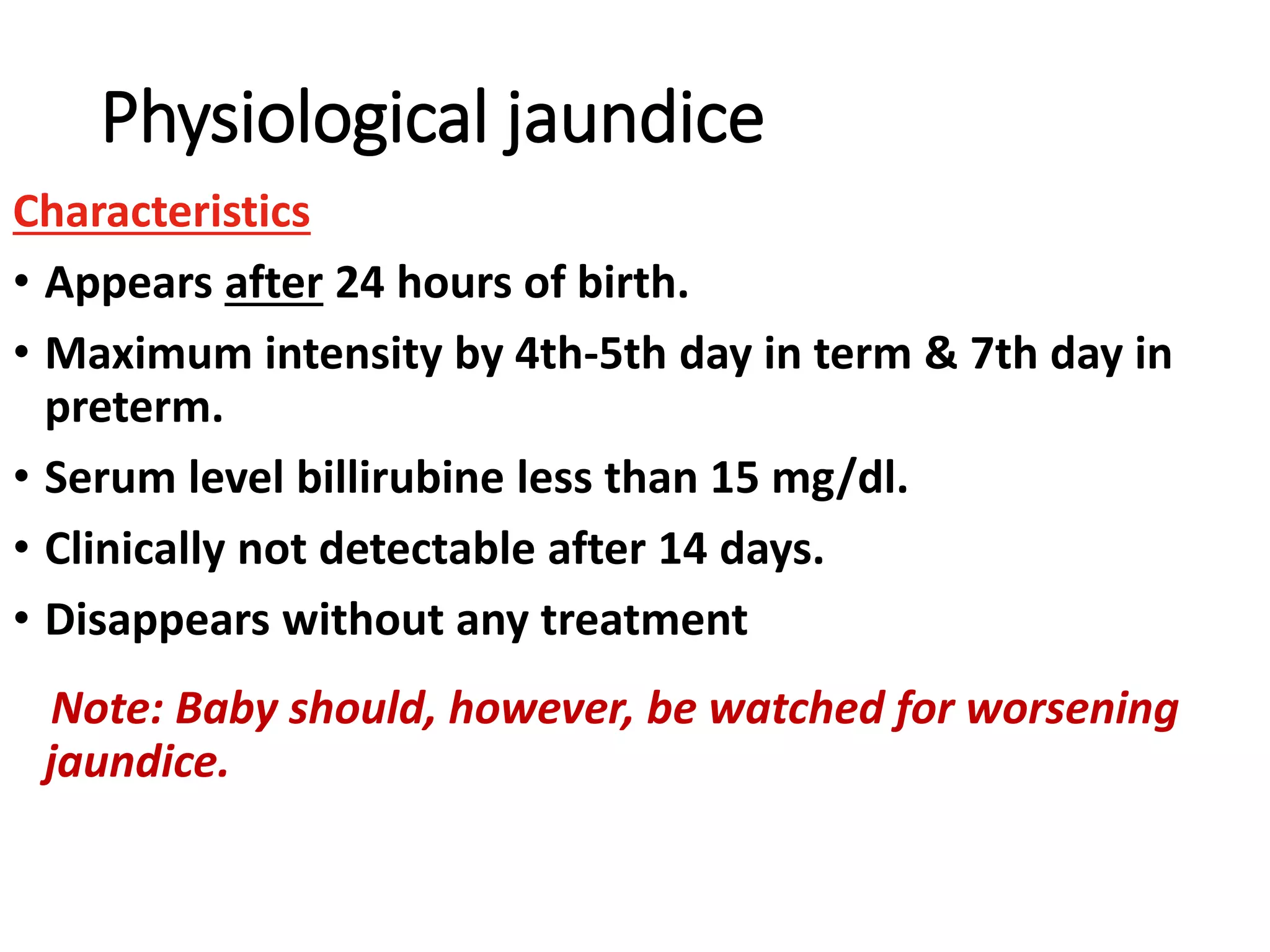
Physiological jaundice
Characteristics
• Appears after 24 hours of birth.
• Maximum intensity by 4th-5th day in term & 7th day in
preterm.
• Serum level billirubine less than 15 mg/dl.
• Clinically not detectable after 14 days.
• Disappears without any treatment
Note: Baby should, however, be watched for worsening
jaundice.
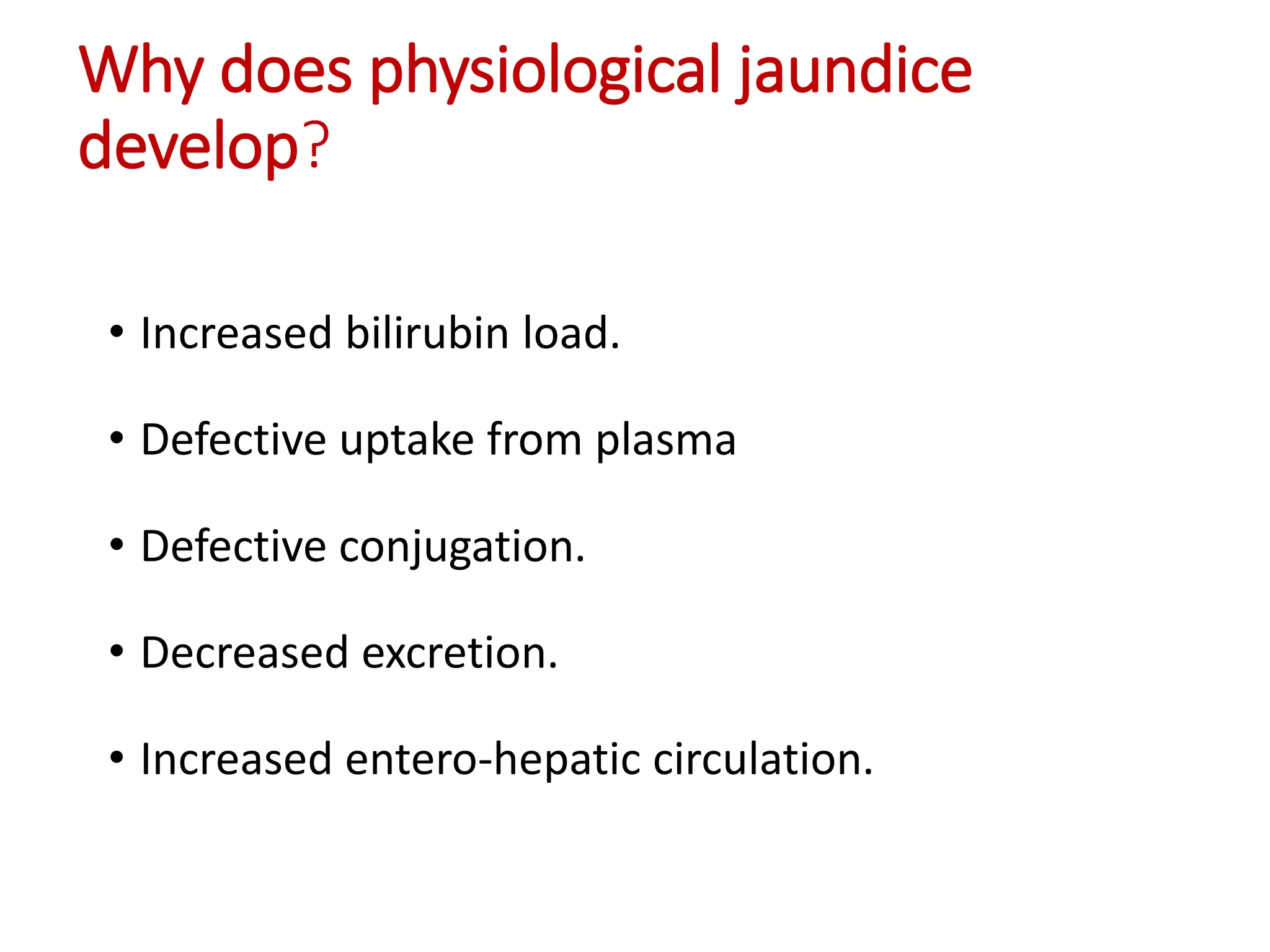
Why does physiological jaundice
develop?
• Increased bilirubin load.
• Defective uptake from plasma
• Defective conjugation.
• Decreased excretion.
• Increased entero-hepatic circulation.
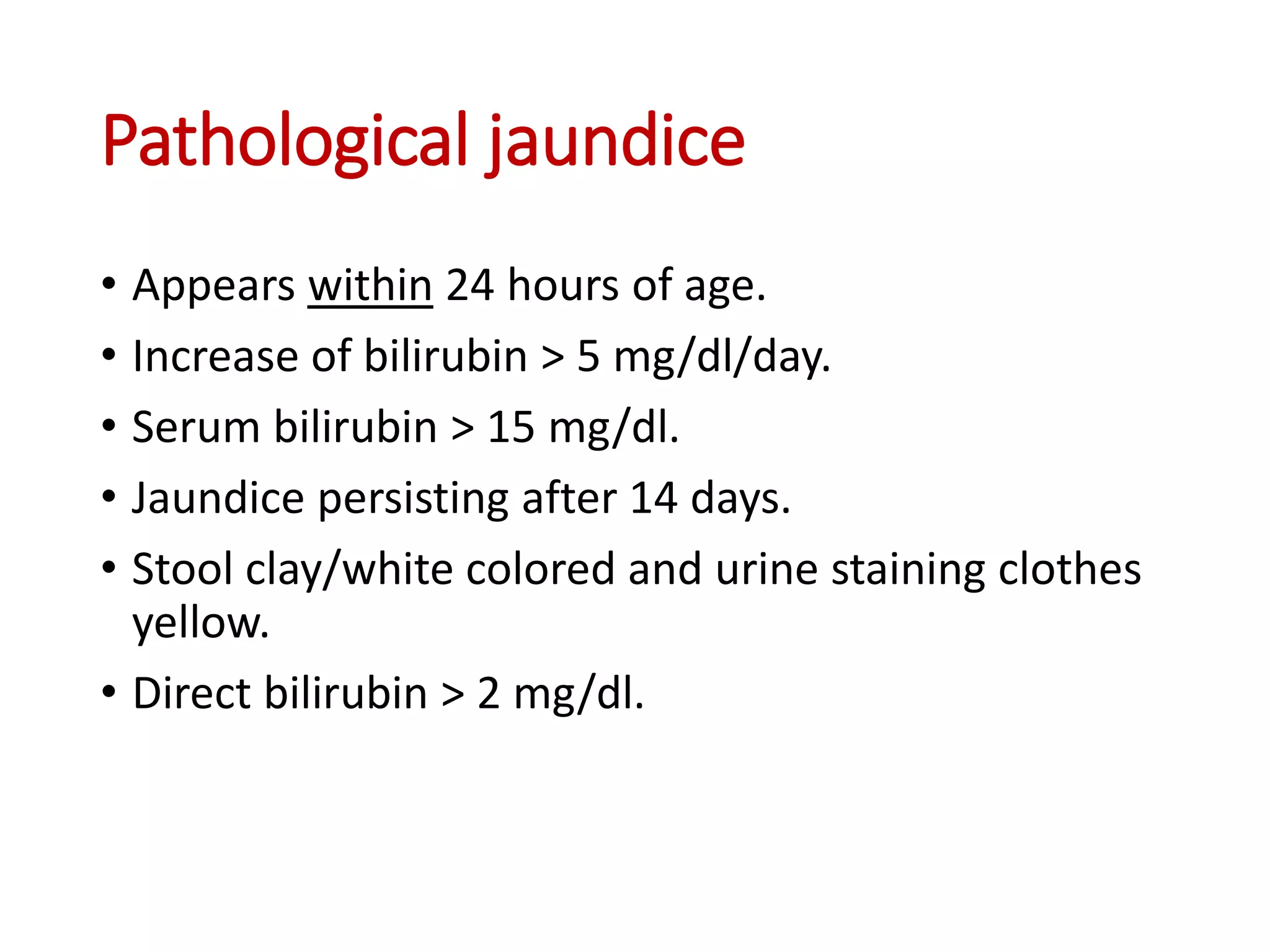
Pathological jaundice
• Appears within 24 hours of age.
• Increase of bilirubin > 5 mg/dl/day.
• Serum bilirubin > 15 mg/dl.
• Jaundice persisting after 14 days.
• Stool clay/white colored and urine staining clothes
yellow.
• Direct bilirubin > 2 mg/dl.
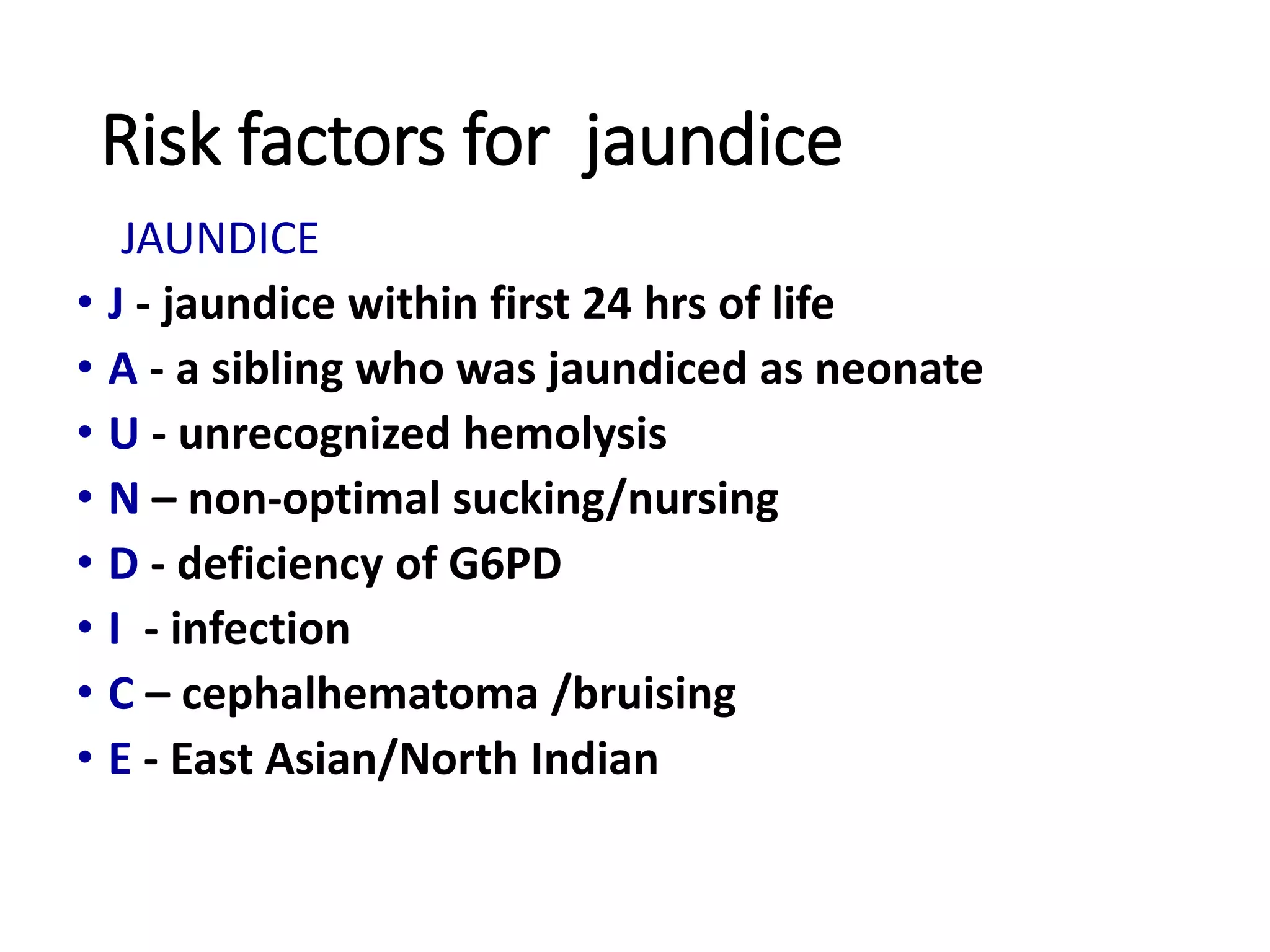
Risk factors for jaundice
JAUNDICE
• J - jaundice within first 24 hrs of life
• A - a sibling who was jaundiced as neonate
• U - unrecognized hemolysis
• N – non-optimal sucking/nursing
• D - deficiency of G6PD
• I - infection
• C – cephalhematoma /bruising
• E - East Asian/North Indian
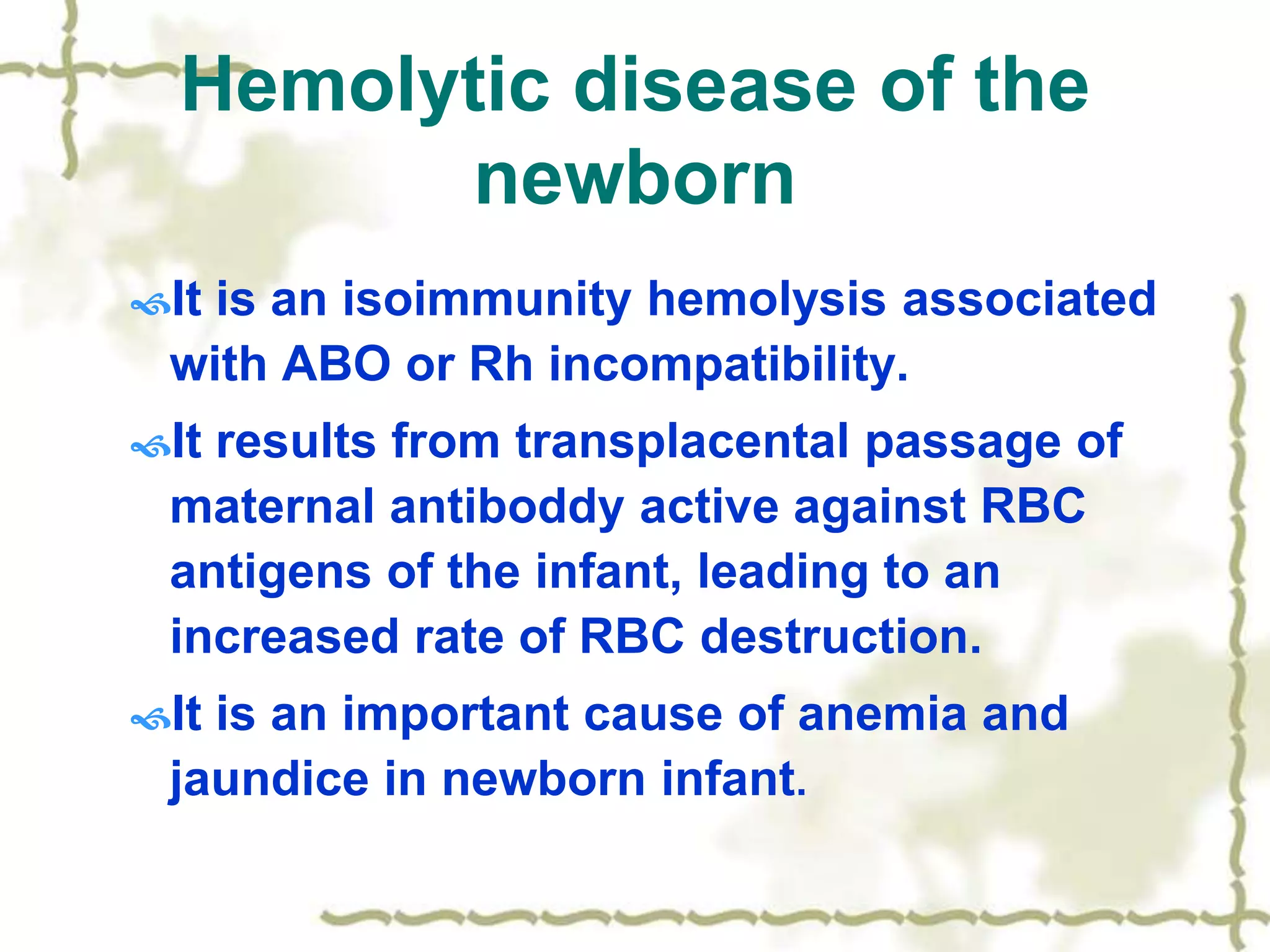
Hemolytic disease of the
newborn
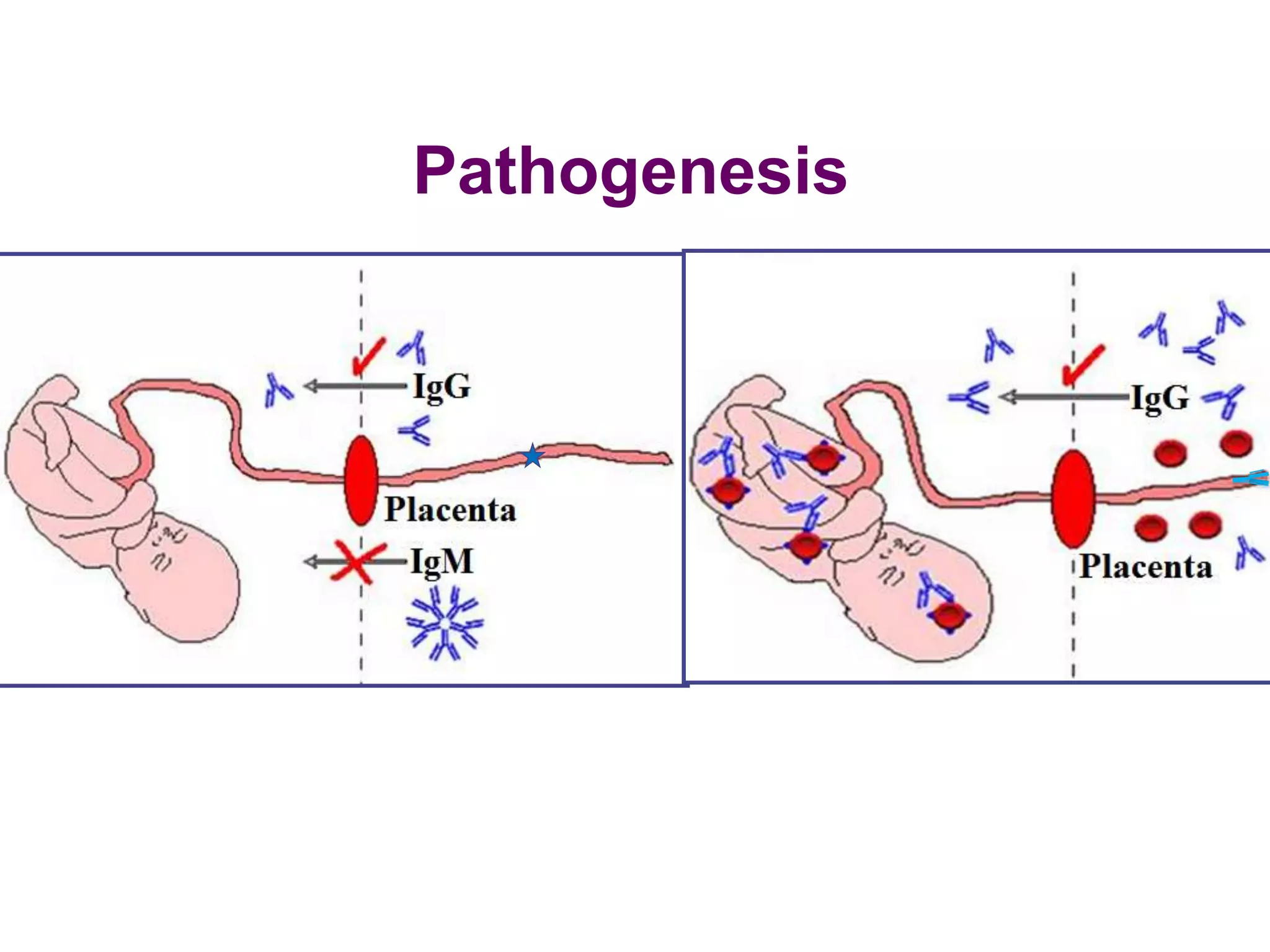
It is an isoimmunity hemolysis associated
with ABO or Rh incompatibility.
It results from transplacental passage of
maternal antiboddy active against RBC
antigens of the infant, leading to an
increased rate of RBC destruction.
It is an important cause of anemia and
jaundice in newborn infant.
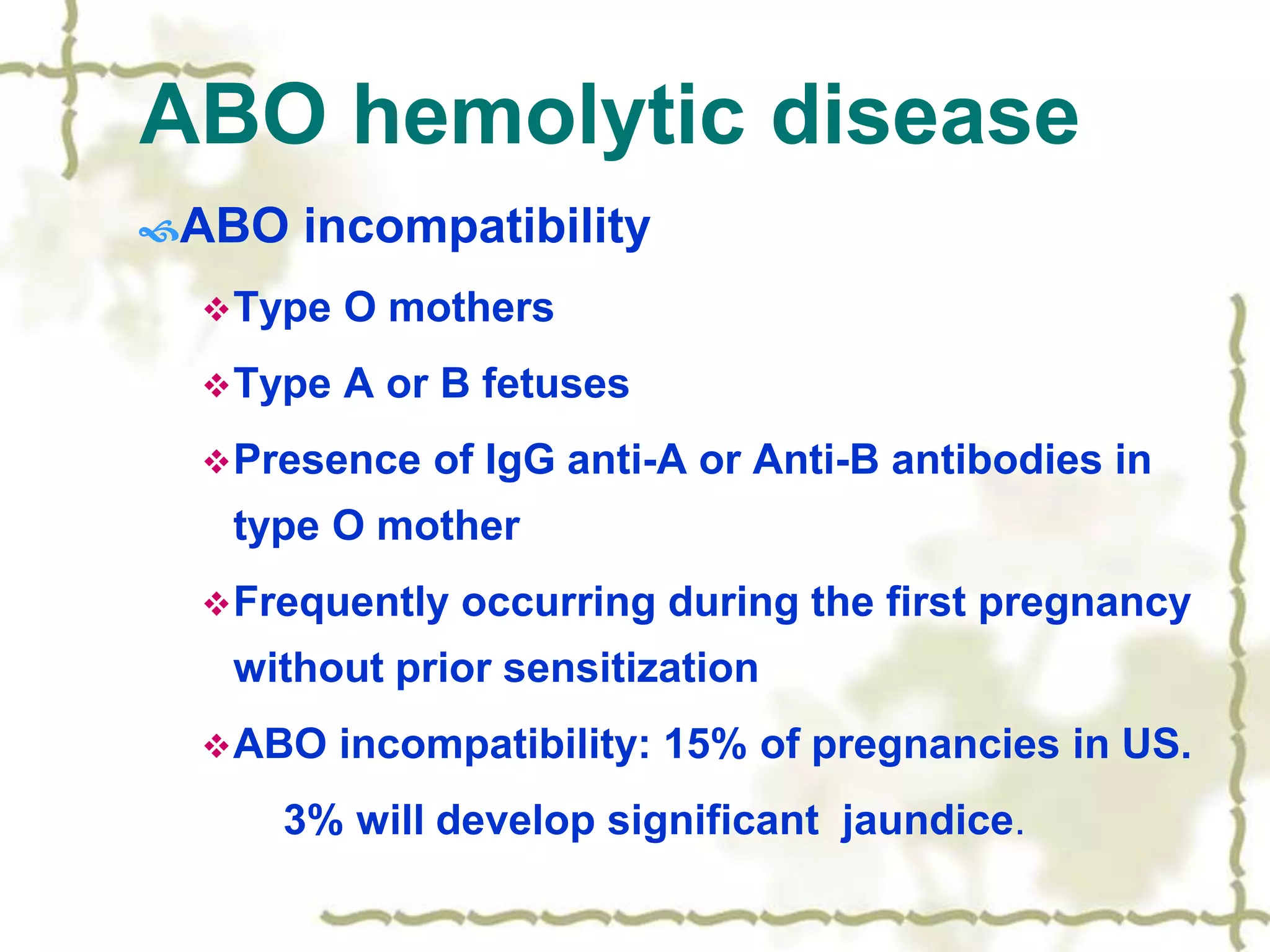
ABO hemolytic disease
ABO incompatibility
Type O mothers
Type A or B fetuses
Presence of IgG anti-A or Anti-B antibodies in
type O mother
Frequently occurring during the first pregnancy
without prior sensitization
ABO incompatibility: 15% of pregnancies in US.
3% will develop significant jaundice.
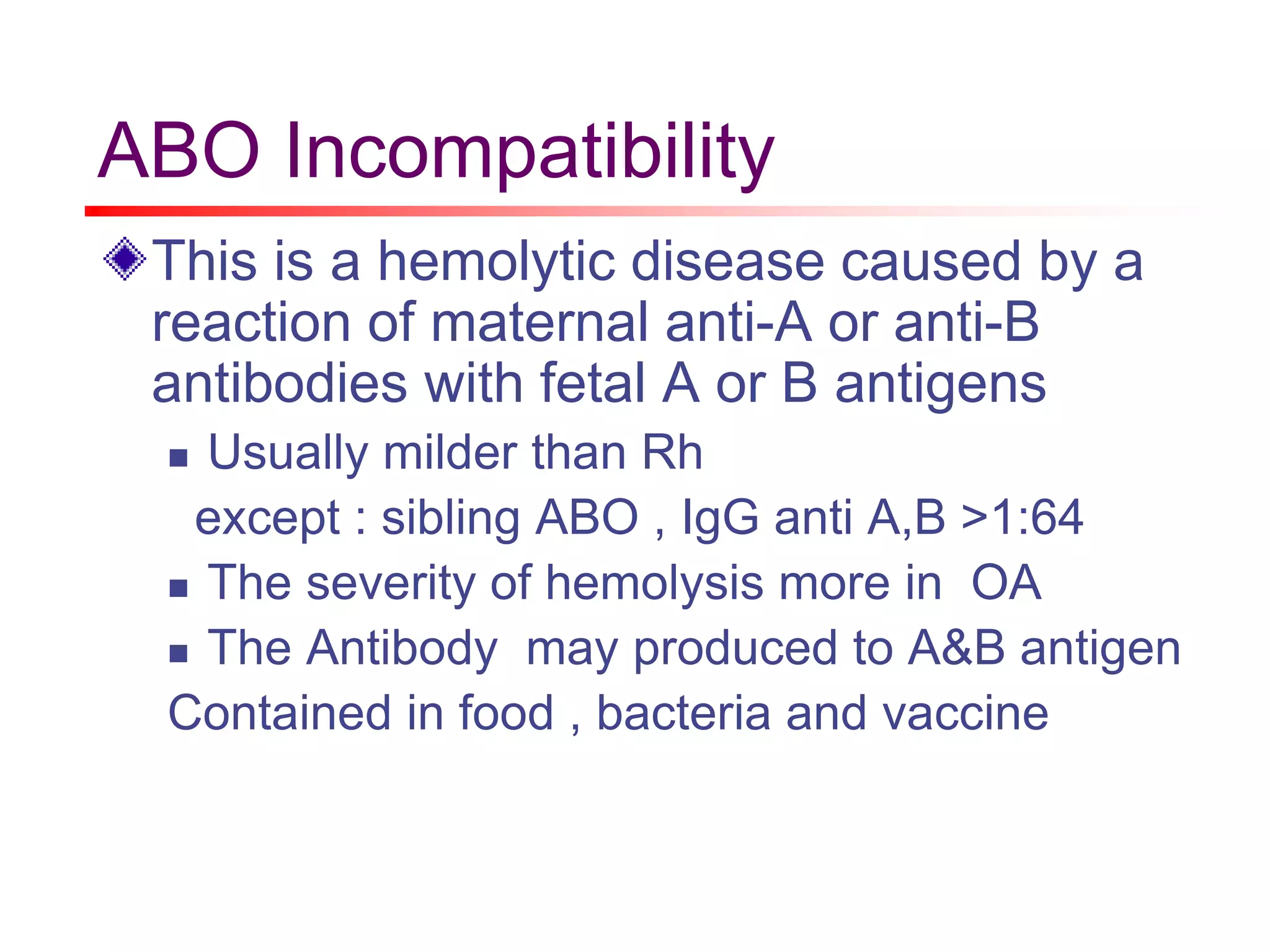
ABO Incompatibility
This is a hemolytic disease caused by a
reaction of maternal anti-A or anti-B
antibodies with fetal A or B antigens
 Usually milder than Rh
except : sibling ABO , IgG anti A,B >1:64
 The severity of hemolysis more in OA
 The Antibody may produced to A&B antigen
Contained in food , bacteria and vaccine
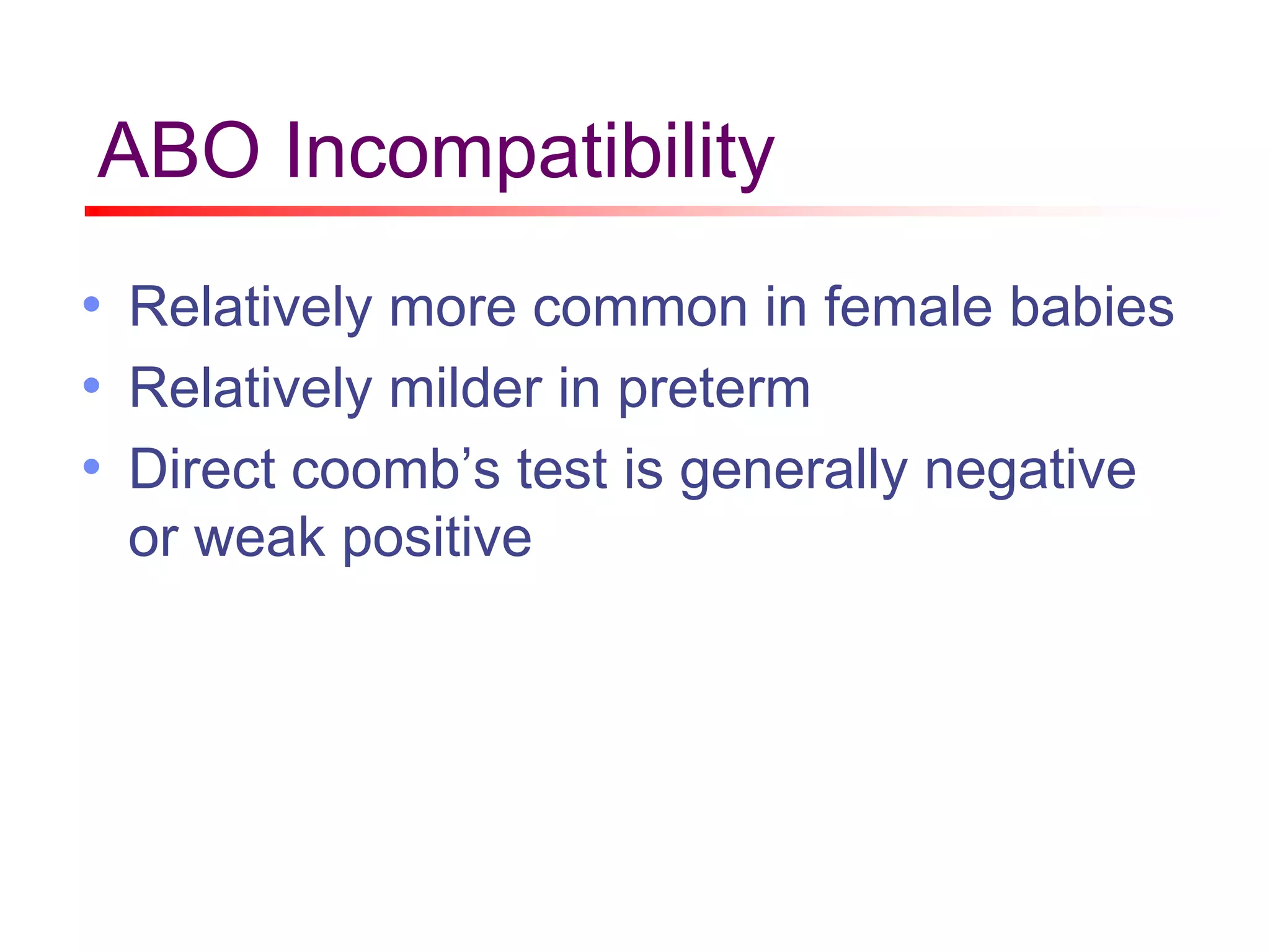
ABO Incompatibility
• Relatively more common in female babies
• Relatively milder in preterm
• Direct coomb’s test is generally negative
or weak positive
Pathogenesis
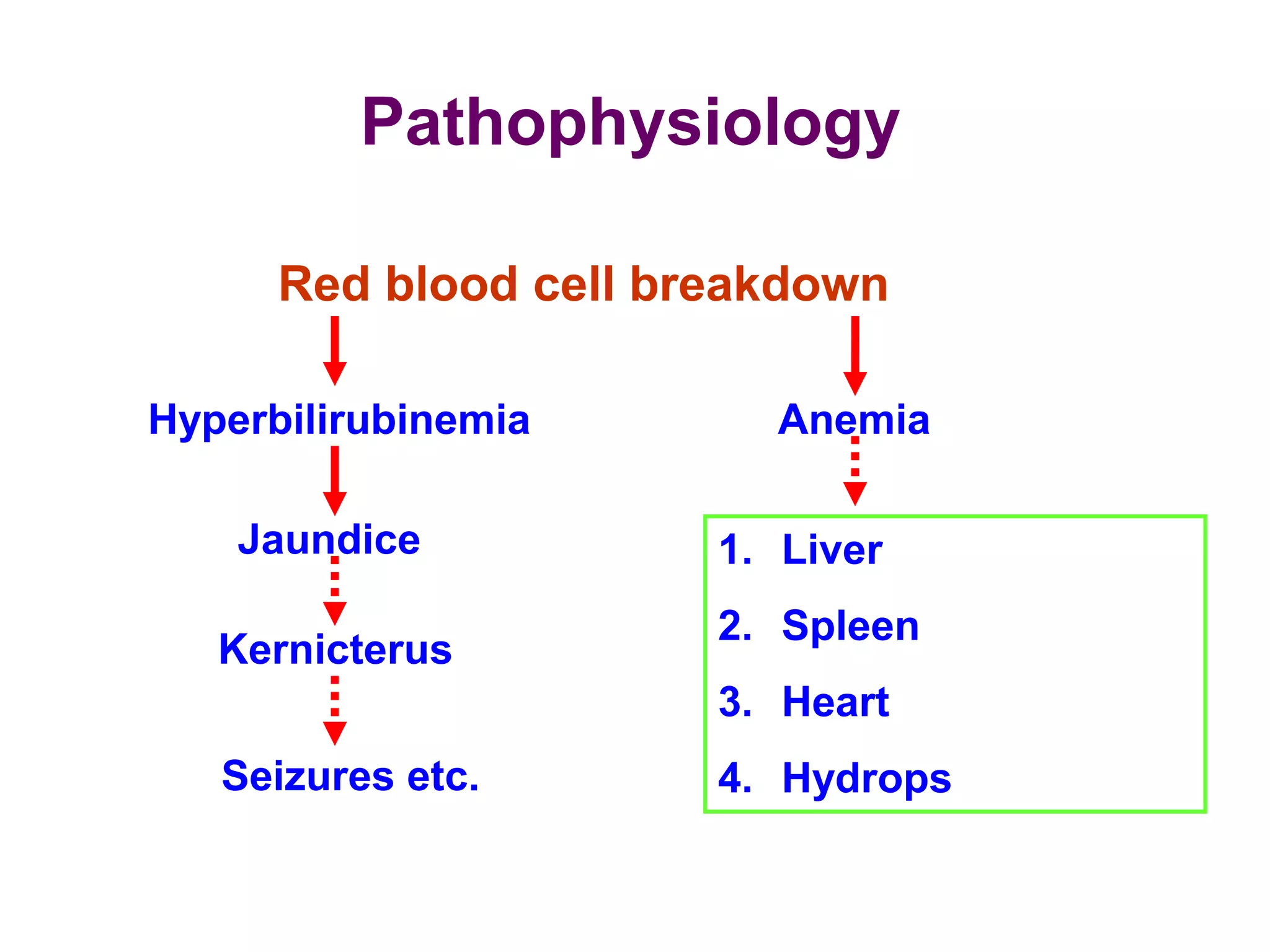
Pathophysiology
Red blood cell breakdown
Hyperbilirubinemia
Jaundice
Kernicterus
Seizures etc.
Anemia
1. Liver
2. Spleen
3. Heart
4. Hydrops
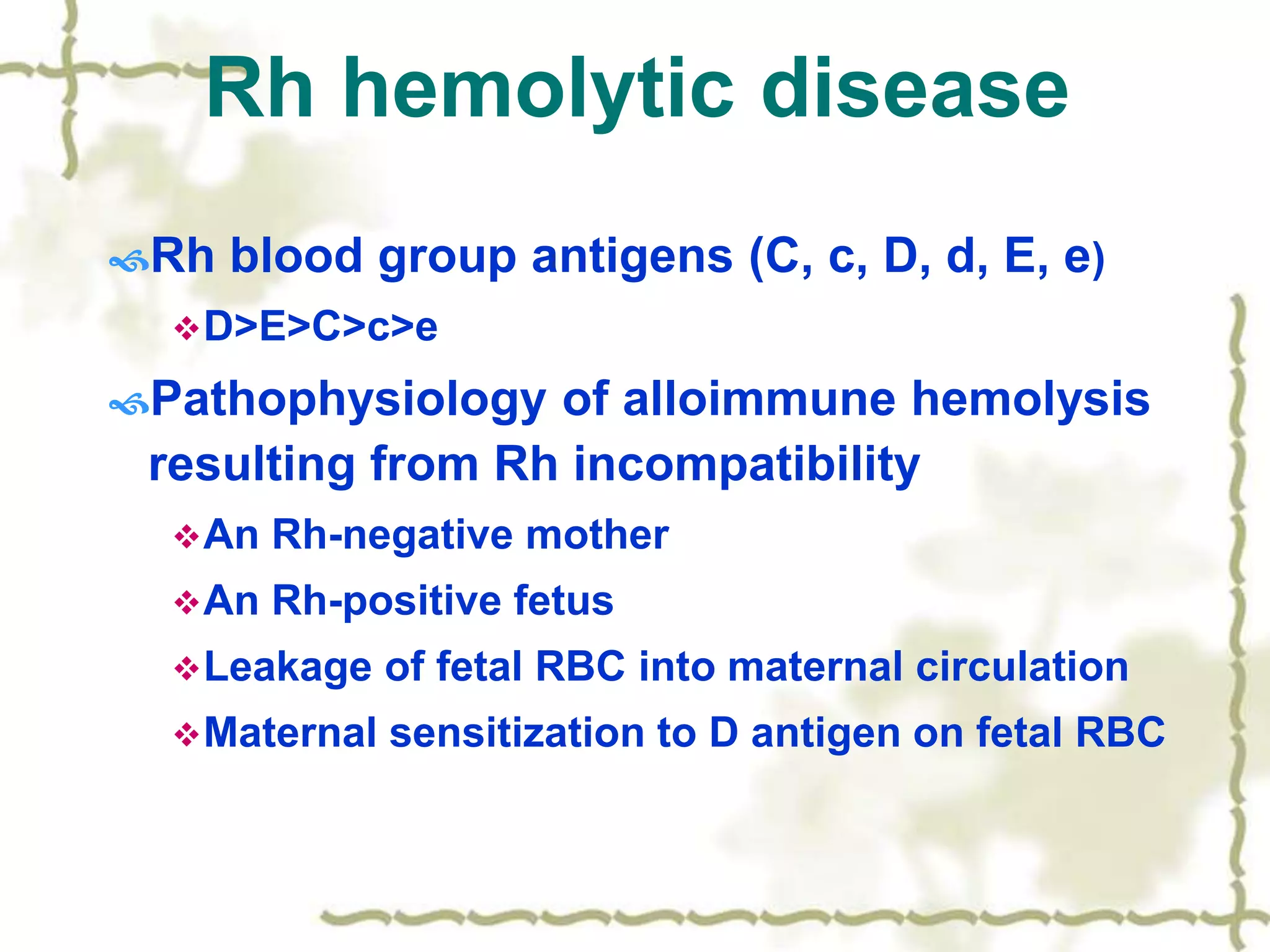
Rh hemolytic disease
Rh blood group antigens (C, c, D, d, E, e)
D>E>C>c>e
Pathophysiology of alloimmune hemolysis
resulting from Rh incompatibility
An Rh-negative mother
An Rh-positive fetus
Leakage of fetal RBC into maternal circulation
Maternal sensitization to D antigen on fetal RBC
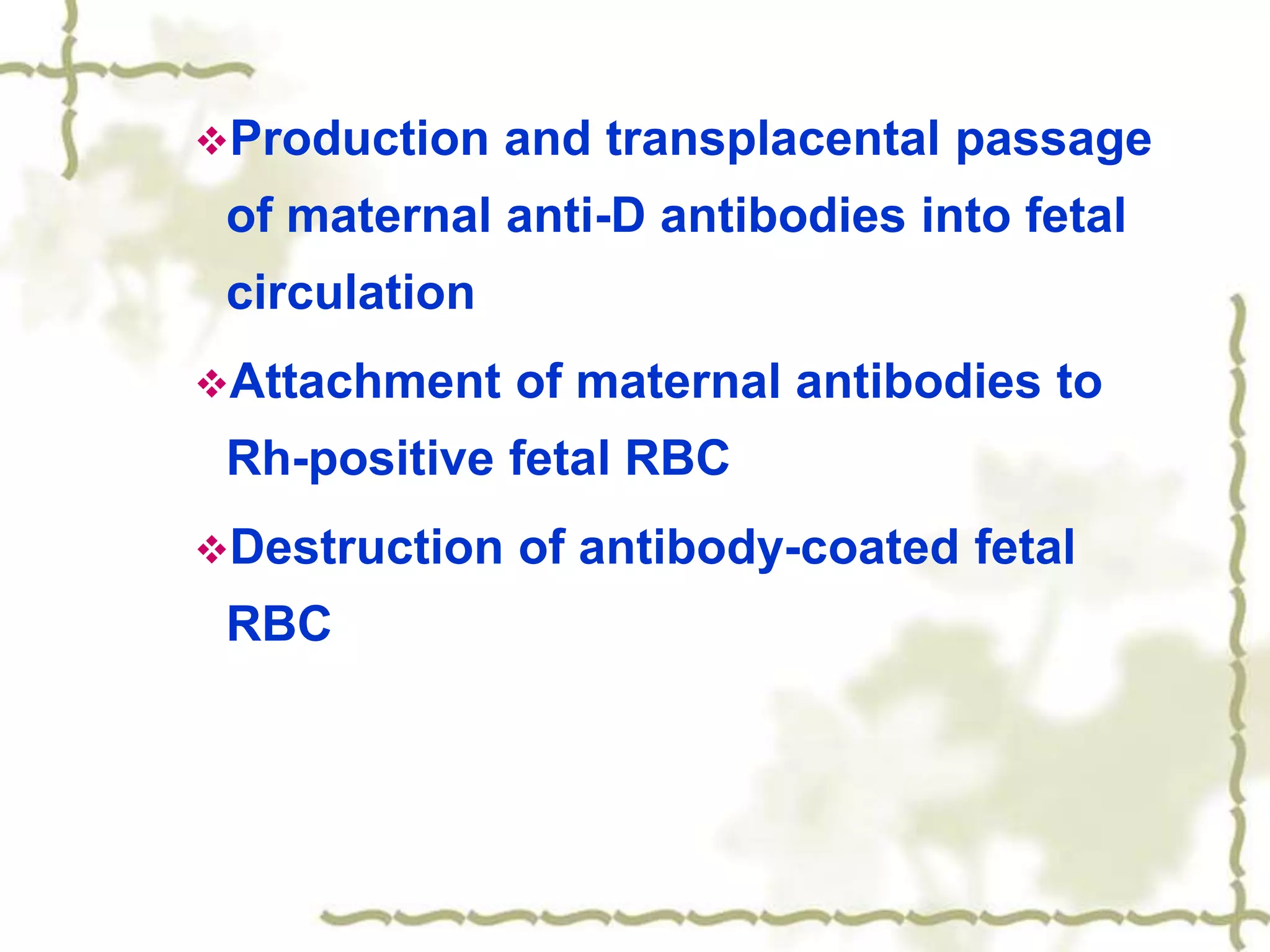
Production and transplacental passage
of maternal anti-D antibodies into fetal
circulation
Attachment of maternal antibodies to
Rh-positive fetal RBC
Destruction of antibody-coated fetal
RBC
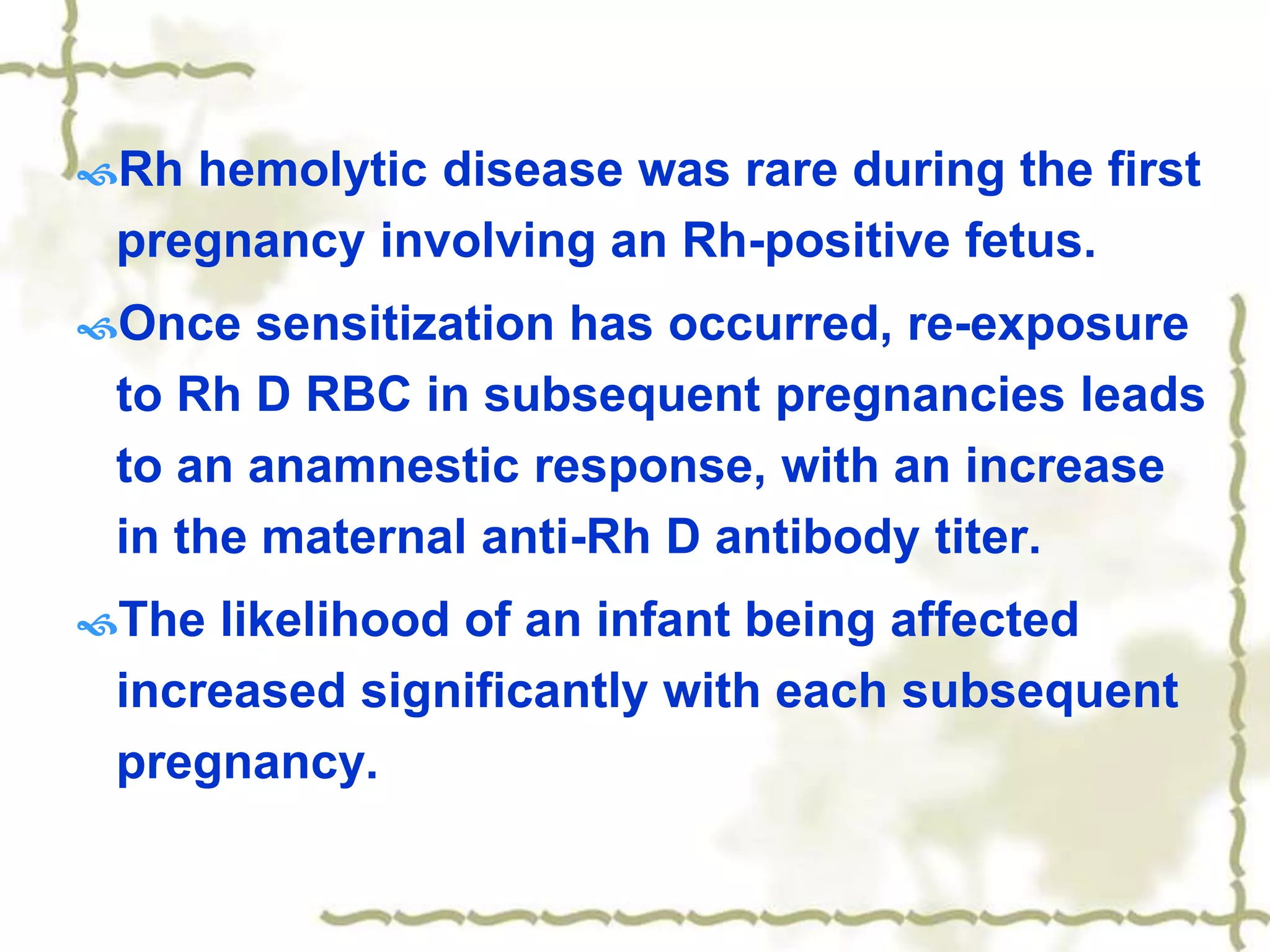
Rh hemolytic disease was rare during the first
pregnancy involving an Rh-positive fetus.
Once sensitization has occurred, re-exposure
to Rh D RBC in subsequent pregnancies leads
to an anamnestic response, with an increase
in the maternal anti-Rh D antibody titer.
The likelihood of an infant being affected
increased significantly with each subsequent
pregnancy.
Significant hemolysis occurring in the
first pregnancy indicates prior maternal
exposure to Rh-positive RBC.
Fetal bleeding associated with a previous
spontaneous or therapeutic abortion
Ectopic pregnancy
A variety of different prenatal procedures
Transfusion of some other blood product
containing Rh D RBC in an Rh-negative
mother
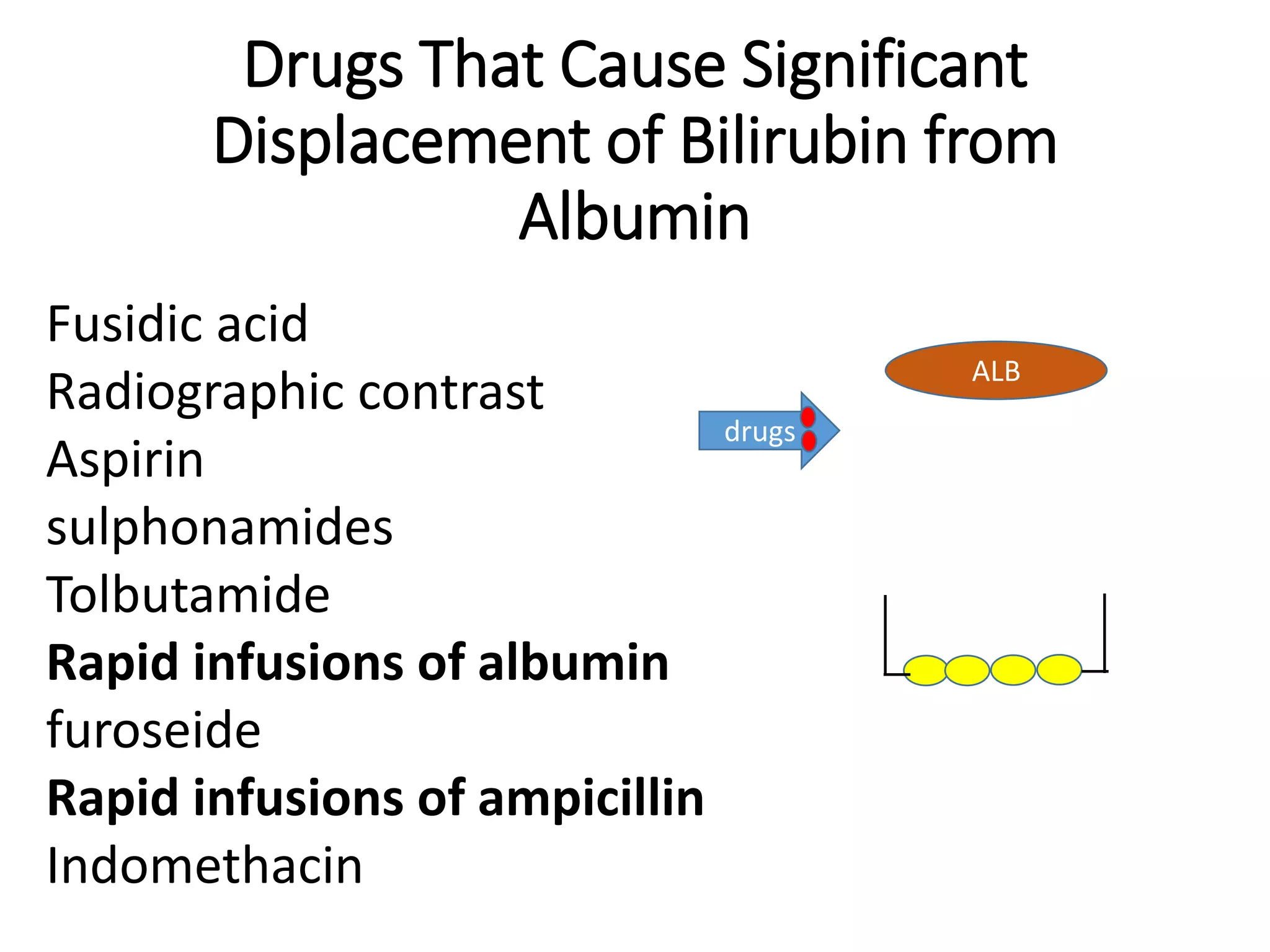
Drugs That Cause Significant
Displacement of Bilirubin from
Albumin
Fusidic acid
Radiographic contrast
Aspirin
sulphonamides
Tolbutamide
Rapid infusions of albumin
furoseide
Rapid infusions of ampicillin
Indomethacin
ALB
drugs
• Early Phase :
– Hypotonia , high-pitched cry, Poor suck, and
lethargy
• Intermediate phase: Hypertonia of extensor
muscles (with opisthotonus, oculogyric crisis
rigidity and retrocollis), seizures.
• Advanced phase : seizures, hypotonia
replaces hypertonia , opisthotonus Pronounced
coma, and death
Acute bilirubin encephalopathy
Chronic bilirubin encephalopathy
(Kernicterus)
• Choreoathetoid
• cerebral palsy
• Upward gaze palsy
• Sensor neural
• hearing loss
• intellectual deficits
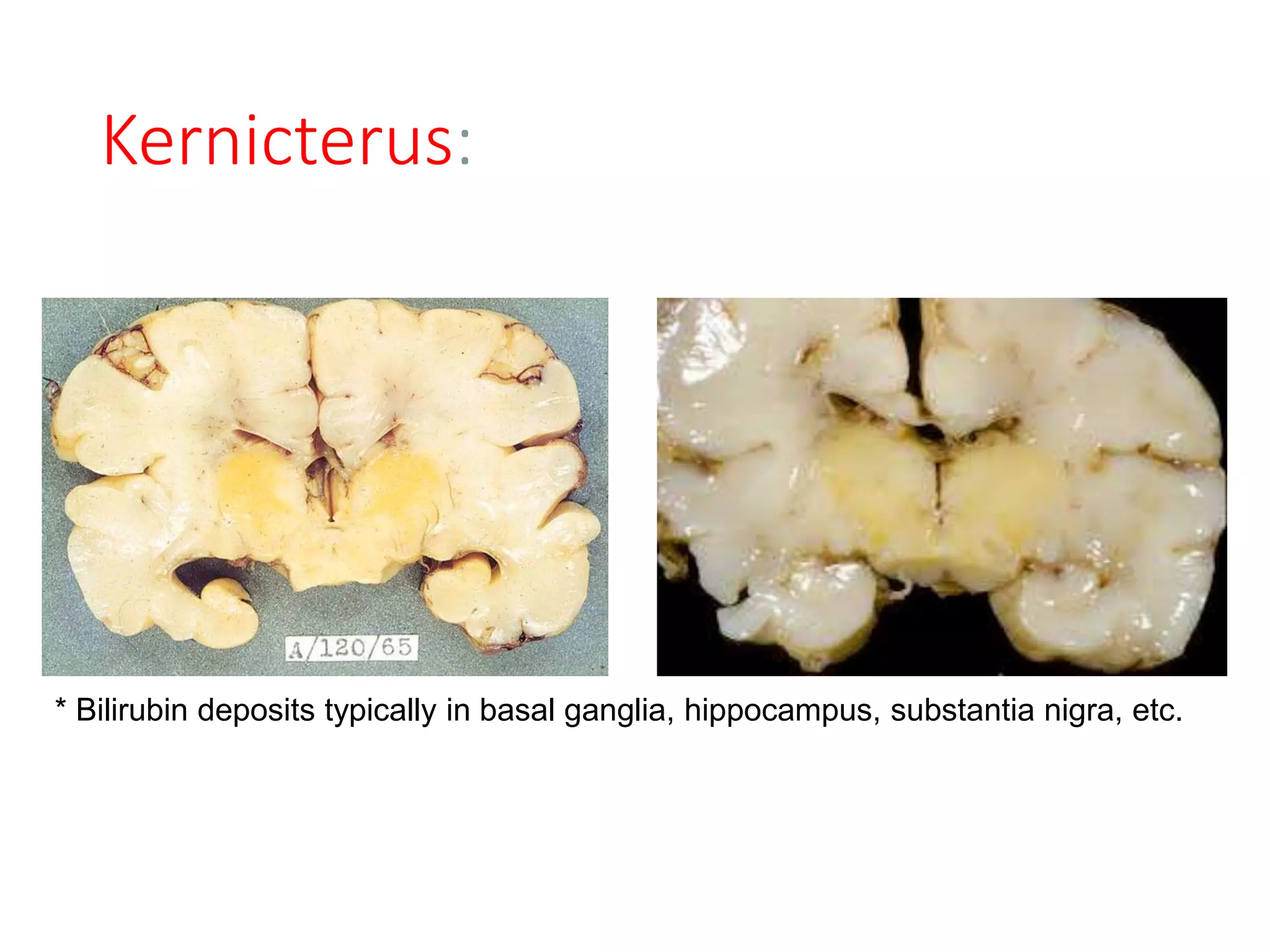
Kernicterus:
* Bilirubin deposits typically in basal ganglia, hippocampus, substantia nigra, etc.
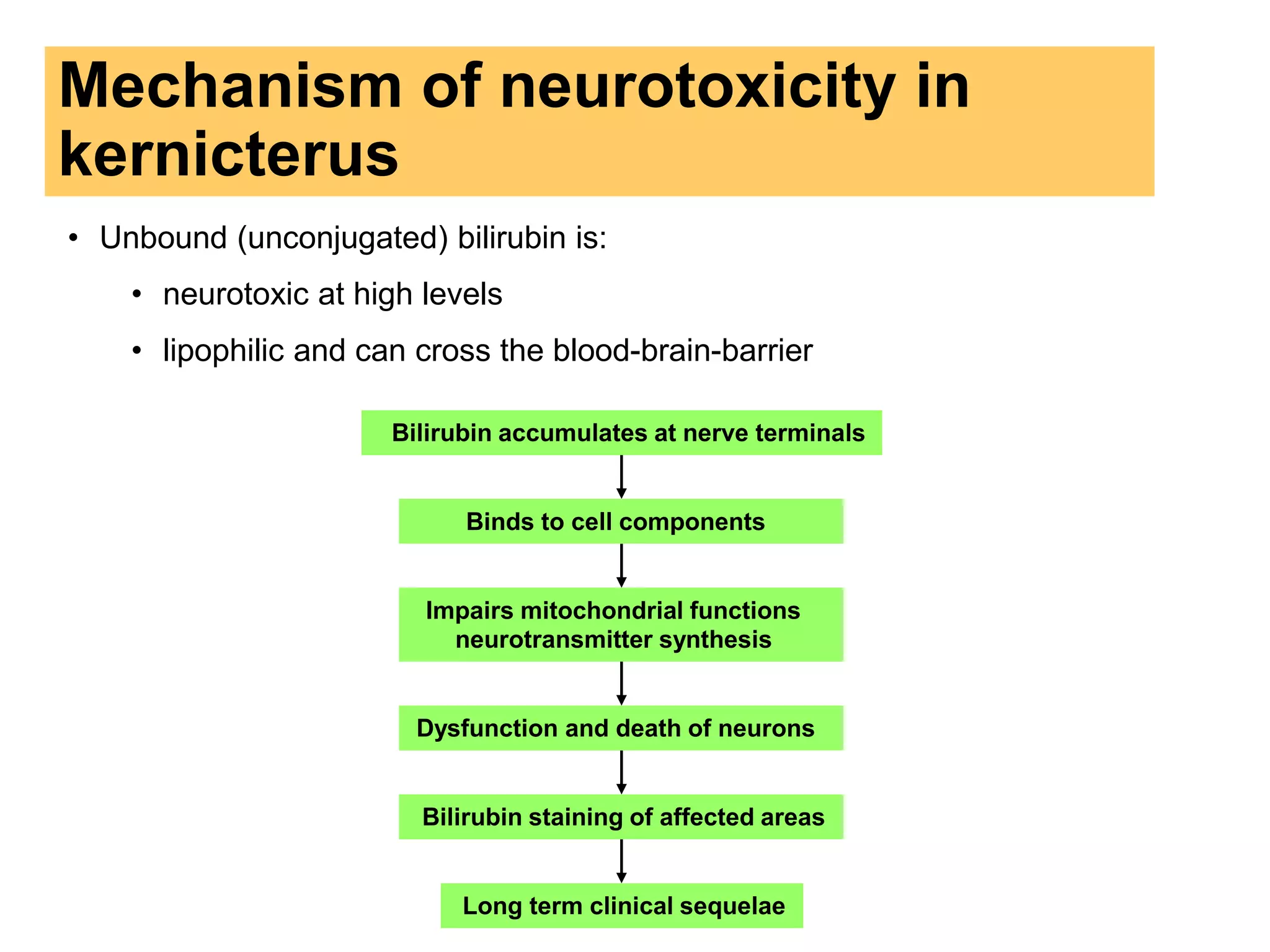
Mechanism of neurotoxicity in
kernicterus
• Unbound (unconjugated) bilirubin is:
• neurotoxic at high levels
• lipophilic and can cross the blood-brain-barrier
Long term clinical sequelae
Bilirubin staining of affected areas
Dysfunction and death of neurons
Impairs mitochondrial functions
neurotransmitter synthesis
Binds to cell components
Bilirubin accumulates at nerve terminals
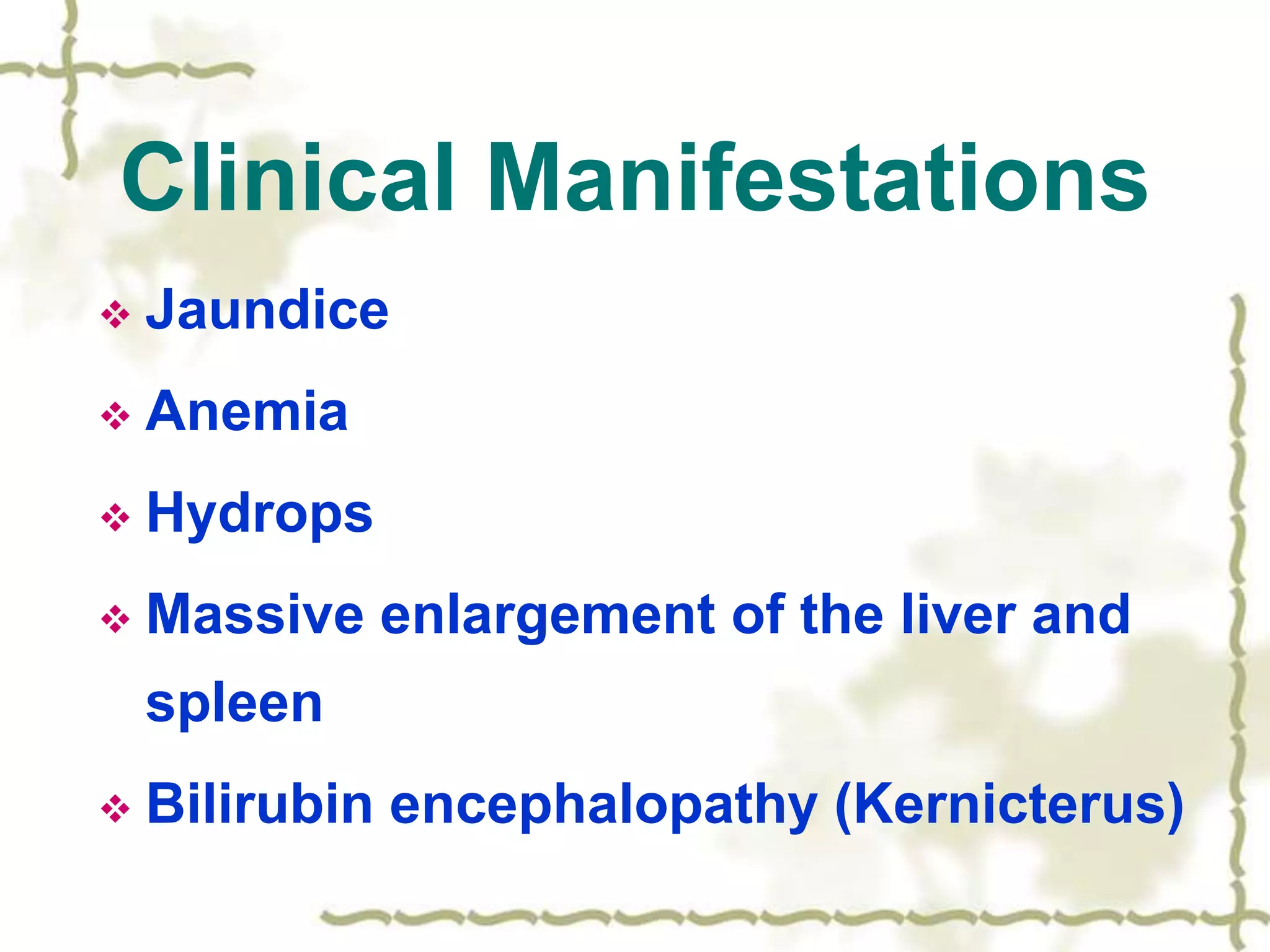
Clinical Manifestations
 Jaundice
 Anemia
 Hydrops
 Massive enlargement of the liver and
spleen
 Bilirubin encephalopathy (Kernicterus)
Hyperbilirubinemia & Clinical
Outcomes:
Deposits in
skin and
mucous
membranes
Unconjugate
d bilirubin
deposits in
the brain
Permanent
neuronal
damage
JAUNDICE
ACUTE BILIRUBIN
ENCEPHALOPATHY
KERNICTERUS
Clinical Manifestations
Clinical Features Of Hemolytic Disease
Clinical Features Rh ABO
Frequency Unusual Common
Anemia Marked Minimal
Jaundice Marked Minimal to moderate
Hydrops Common Rare
Hepatosplenomegaly Marked Minimal
Kernicterus Common Rare
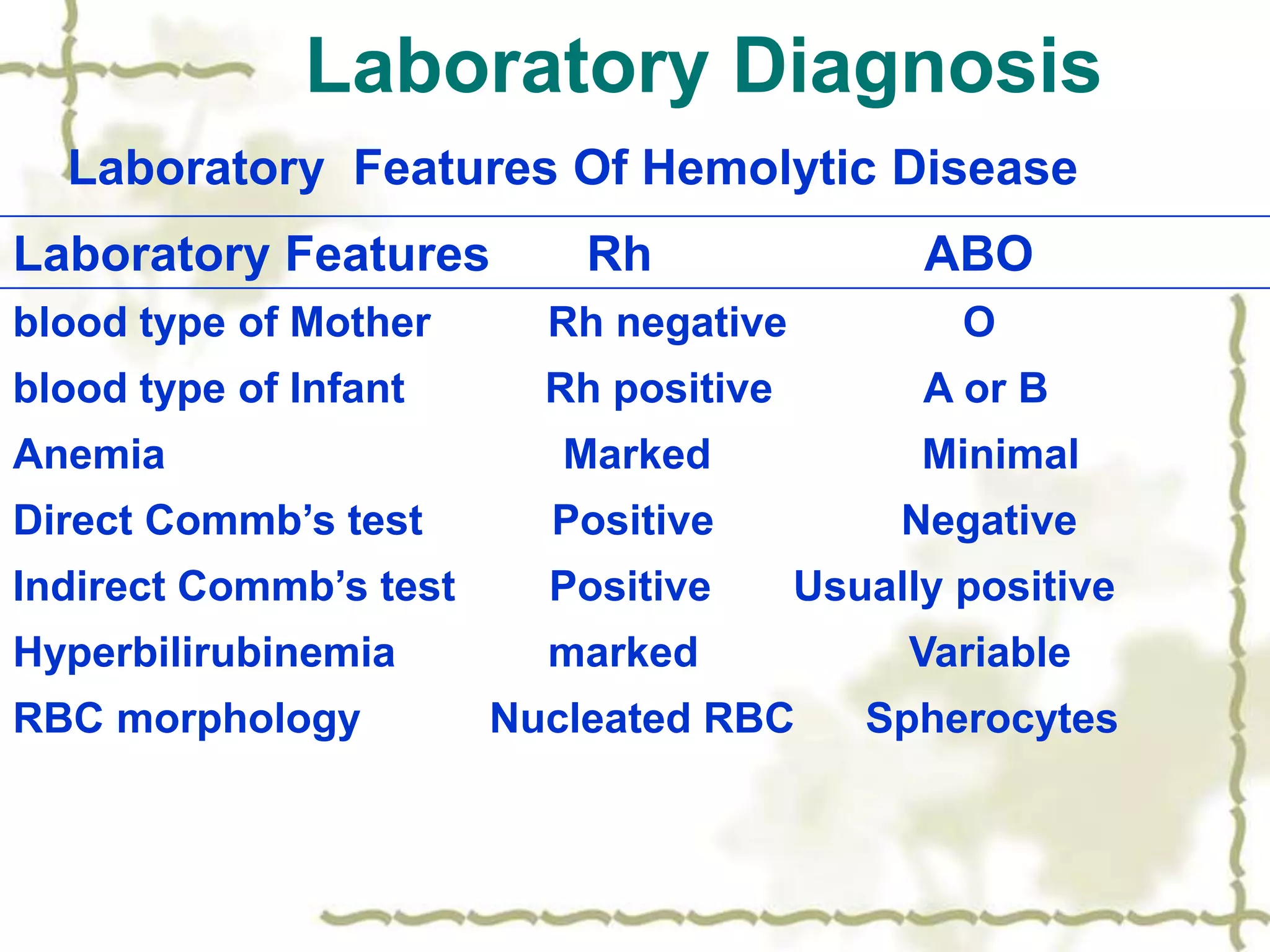
Laboratory Diagnosis
Laboratory Features Of Hemolytic Disease
Laboratory Features Rh ABO
blood type of Mother Rh negative O
blood type of Infant Rh positive A or B
Anemia Marked Minimal
Direct Commb’s test Positive Negative
Indirect Commb’s test Positive Usually positive
Hyperbilirubinemia marked Variable
RBC morphology Nucleated RBC Spherocytes
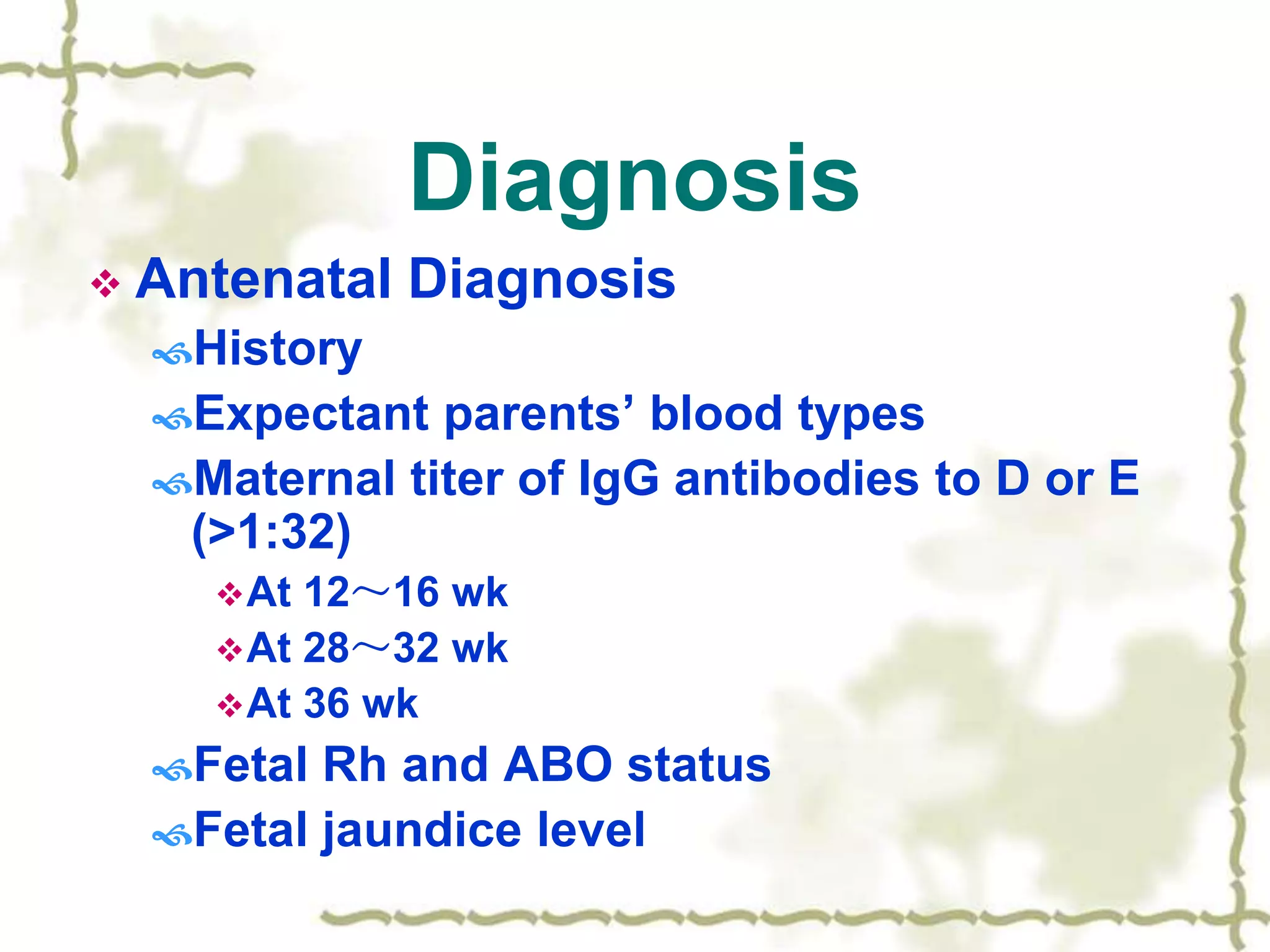
Diagnosis
 Antenatal Diagnosis
History
Expectant parents’ blood types
Maternal titer of IgG antibodies to D or E
(>1:32)
At 12~16 wk
At 28~32 wk
At 36 wk
Fetal Rh and ABO status
Fetal jaundice level
Diagnosis
 Postnatal diagnosis
Jaundice at < 24 hr
Anemia (Hematocrit and hemoglobin
examination)
Rh or ABO incompatibility
Coomb’s test positive
Examination for RBC antibodies in the
mother’s serum
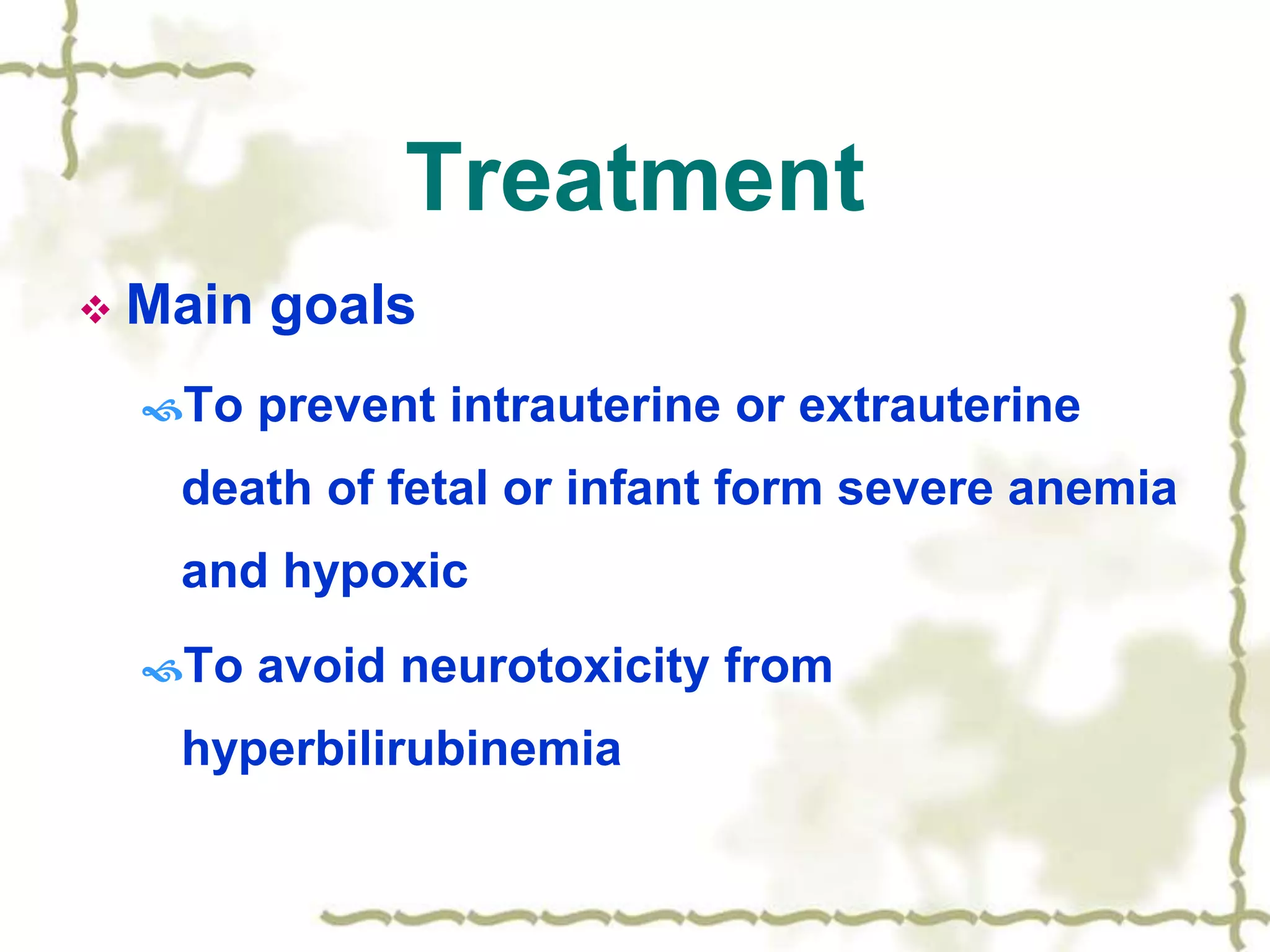
Treatment
 Main goals
To prevent intrauterine or extrauterine
death of fetal or infant form severe anemia
and hypoxic
To avoid neurotoxicity from
hyperbilirubinemia
Treatment
 Treatment of the unborn infant
Utero transfusion
Indication
Hydrops
Anemia (Hematocrit<30%)
Method
Packed RBC matching with the mother’s
serum
Umbilical vein transfusion
Treatment
Delivery in advance
Indication
Pulmonary maturity
Fetal distress
Maternal titer of Rh antibodies > 1:32
35~37 wk of gestation
Treatment
 Treatment of the liveborn infant
Immediate resuscitation and supportive
therapy
Temperature stabilization
Correction of acidosis: 1-2mEq/kg of sodium
bicarbonate
A small transfusion compatible packed RBC
Volume expansion for hypotension
Provision of assisted ventilation for respiratory
failure
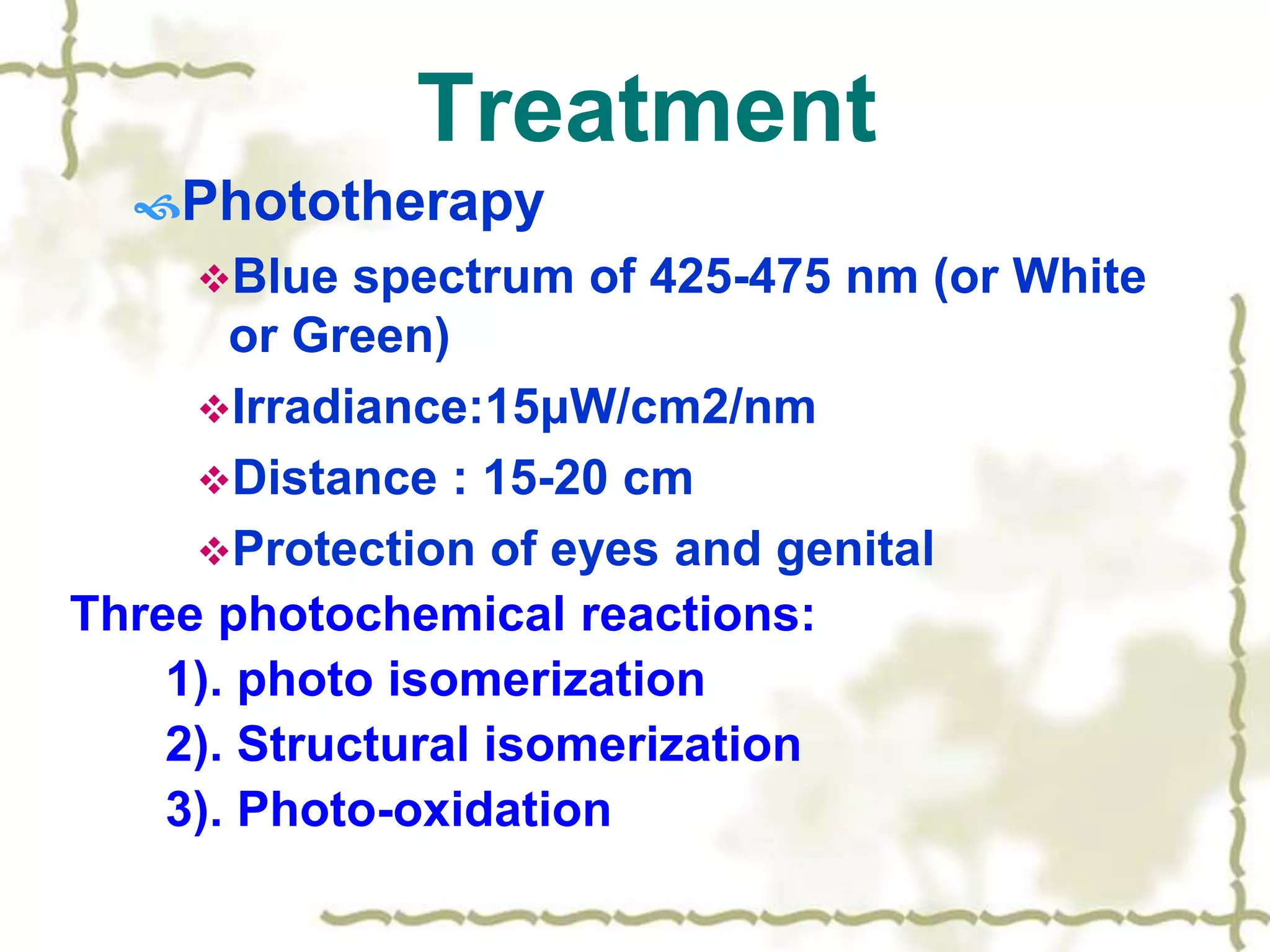
• Depends on the cause and level and type of
bilirubin
• Unconjugated hyperbilirubinaemia:
• Ensure adequate fluid intake
• Phototherapy
• IV immunoglobulin
• Exchange transfusion
• Conjugated hyperbilirubinaemia:
• Ensure adequate nutrition
• Treat underlying problem
Treatment of Neonatal Jaundice
Treatment
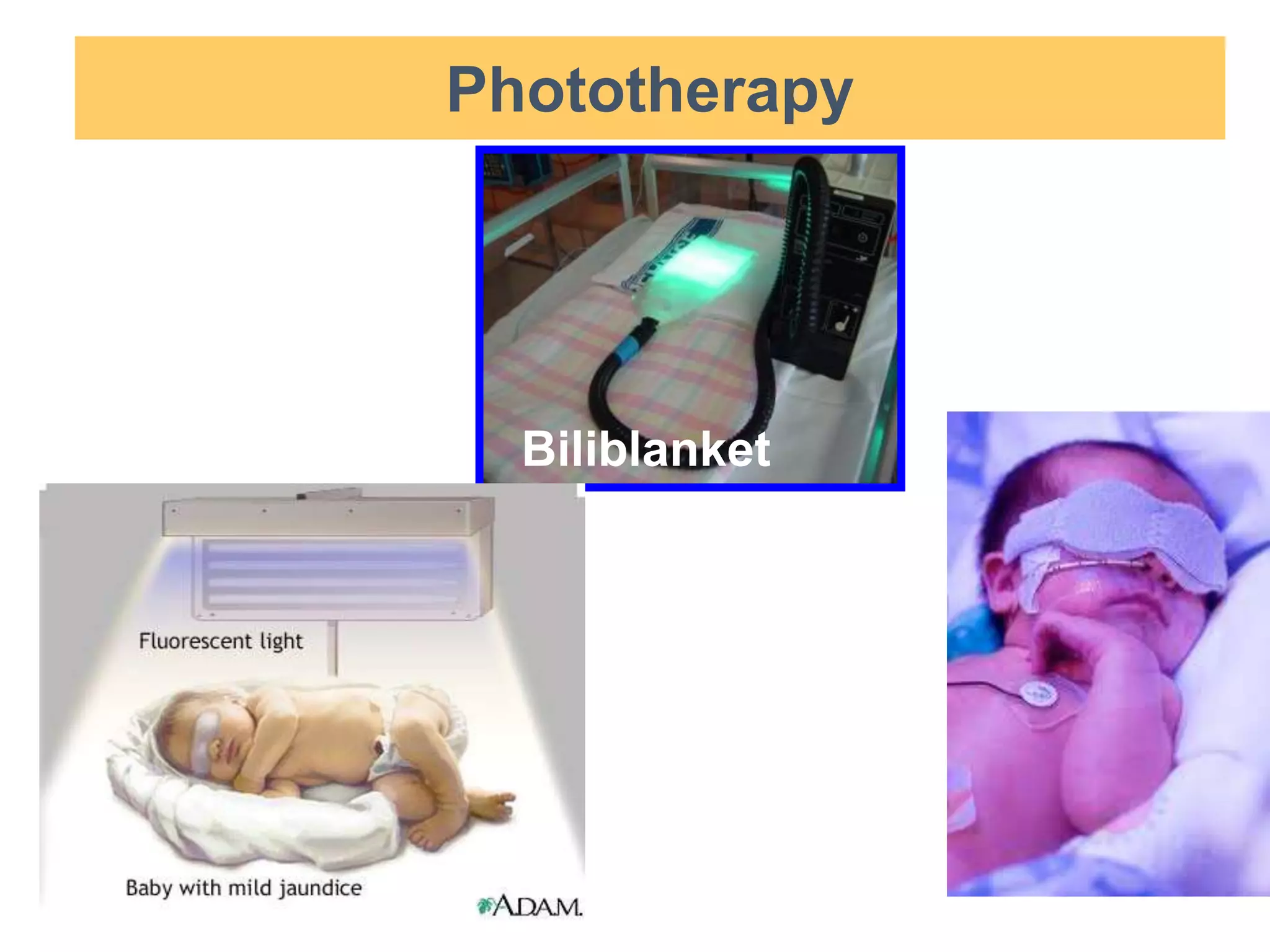
Phototherapy
Blue spectrum of 425-475 nm (or White
or Green)
Irradiance:15μW/cm2/nm
Distance : 15-20 cm
Protection of eyes and genital
Three photochemical reactions:
1). photo isomerization
2). Structural isomerization
3). Photo-oxidation
Phototherapy
Biliblanket
Phototherapy
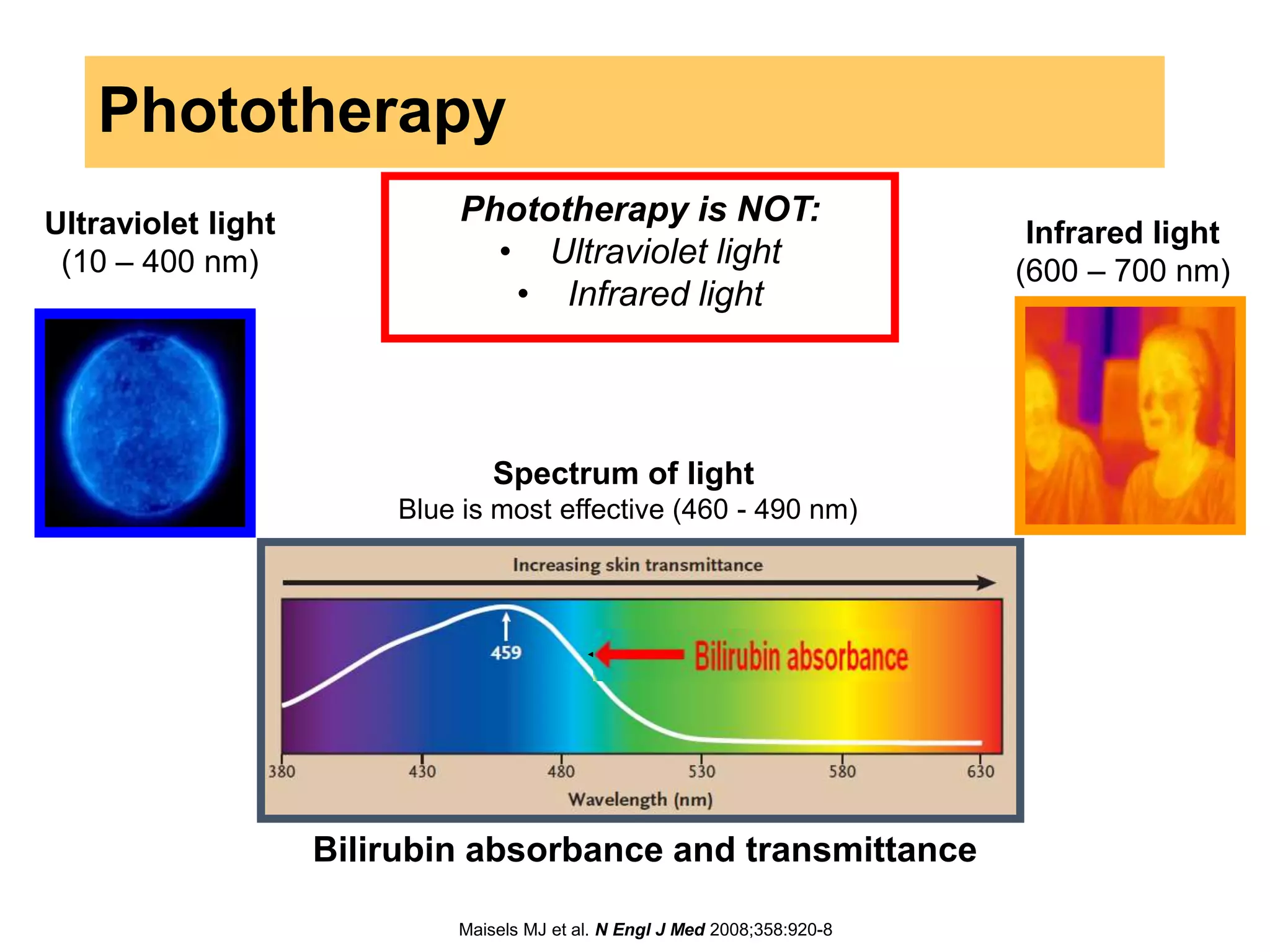
Spectrum of light
Blue is most effective (460 - 490 nm)
Ultraviolet light
(10 – 400 nm)
Infrared light
(600 – 700 nm)
Phototherapy is NOT:
• Ultraviolet light
• Infrared light
Bilirubin absorbance and transmittance
Maisels MJ et al. N Engl J Med 2008;358:920-8
Bilirubin absorbance
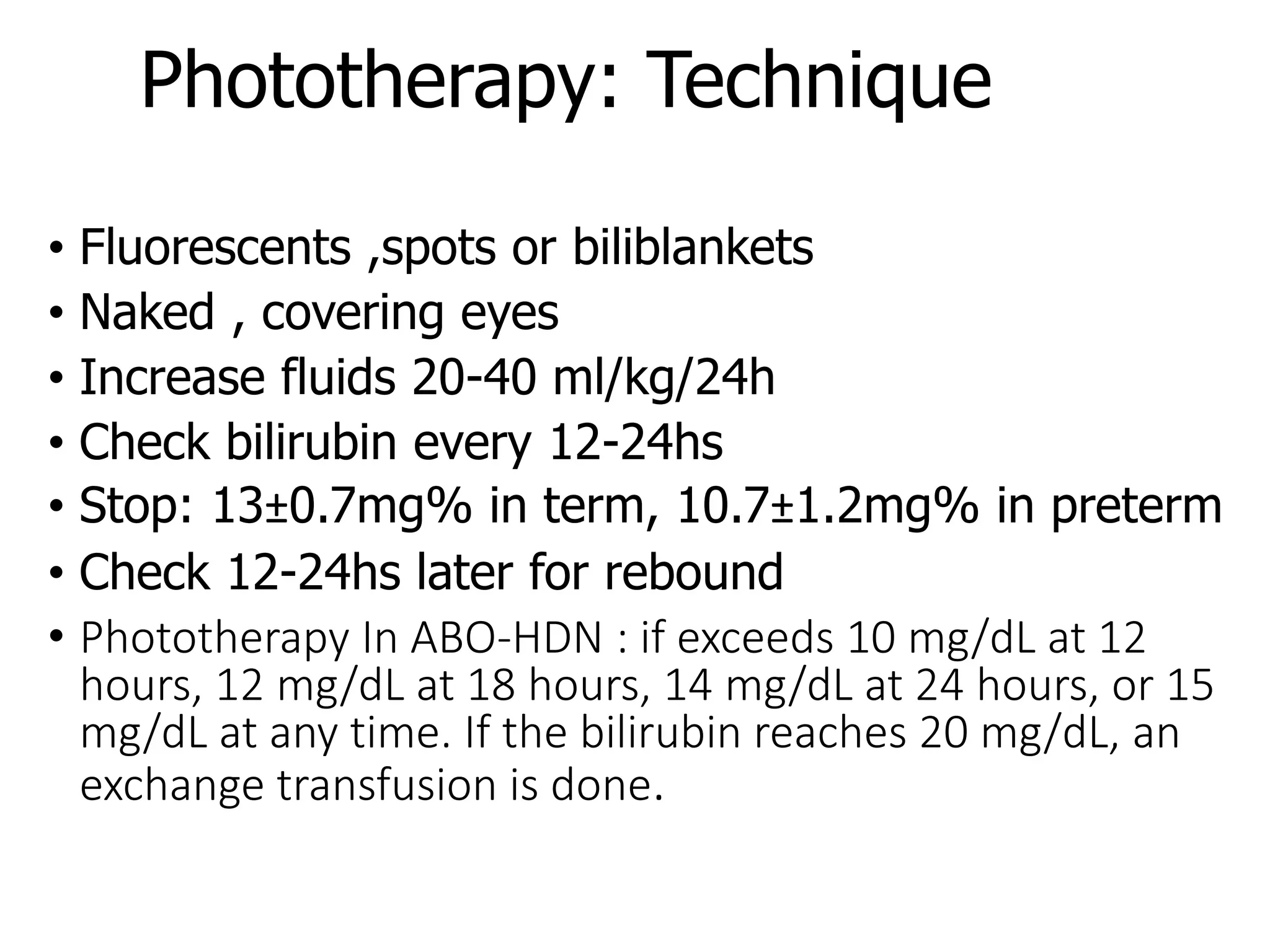
Phototherapy: Technique
• Fluorescents ,spots or biliblankets
• Naked , covering eyes
• Increase fluids 20-40 ml/kg/24h
• Check bilirubin every 12-24hs
• Stop: 13±0.7mg% in term, 10.7±1.2mg% in preterm
• Check 12-24hs later for rebound
• Phototherapy In ABO-HDN : if exceeds 10 mg/dL at 12
hours, 12 mg/dL at 18 hours, 14 mg/dL at 24 hours, or 15
mg/dL at any time. If the bilirubin reaches 20 mg/dL, an
exchange transfusion is done.
Phototherapy: Side effects
• Increased water loss
• Diarrhea
• Retinal damage
• Bronze baby, tanning
• Mutations in DNA?  shield scrotum
• Disturb of mother-infant interaction.
Premature infants
• 1. Infants <1,000 g. Phototherapy : within 24
hoursexchange transfusion :10 to 12 mg/dL.
• 2. Infants 1,000 to 1,500 g. Phototherapy : 7 to
9 mg/dL exchange transfusion : 12 to 15 mg/dL.
• 3. Infants 1,500 to 2,000 g. Phototherapy : 10 to
12 mg/dL and exchange transfusion : 15 to 18
mg/dL.
• 4. Infants 2,000 to 2,500 g. Phototherapy :13 to
15 mg/dL and exchange transfusion :18 to 20
mg/dL.
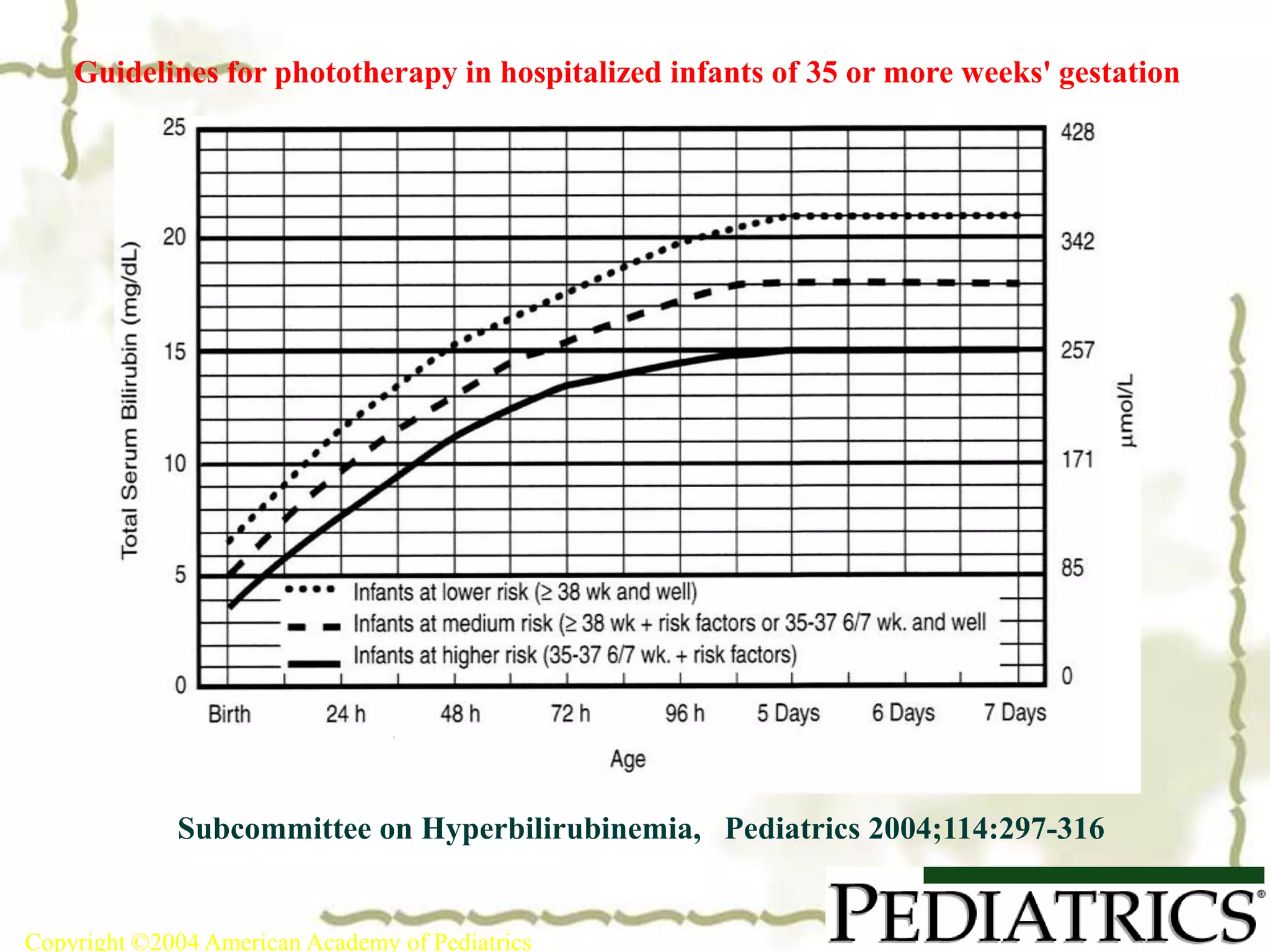
Copyright ©2004 American Academy of Pediatrics
Subcommittee on Hyperbilirubinemia, Pediatrics 2004;114:297-316
Guidelines for phototherapy in hospitalized infants of 35 or more weeks' gestation
Exchange transfusion
Indication
 Cord Hemoglobin <11g/dl
 Cord bilirubin > 4.5mg/dl
 Hydrops, hepatosplenomegaly and heart failure
 Bilirubin in the 1st 12 of life>0.75mg/dl/hr
 Bilirubin concentration>20mg/dl
 The bilirubin level is rising >1 mg/dL/hour despite
phototherapy.
 Factors supporting early exchange transfusion:
Previous kernicterus in a sibling, reticulocyte counts
greater than 15%, asphyxia of neonate and
premature infant
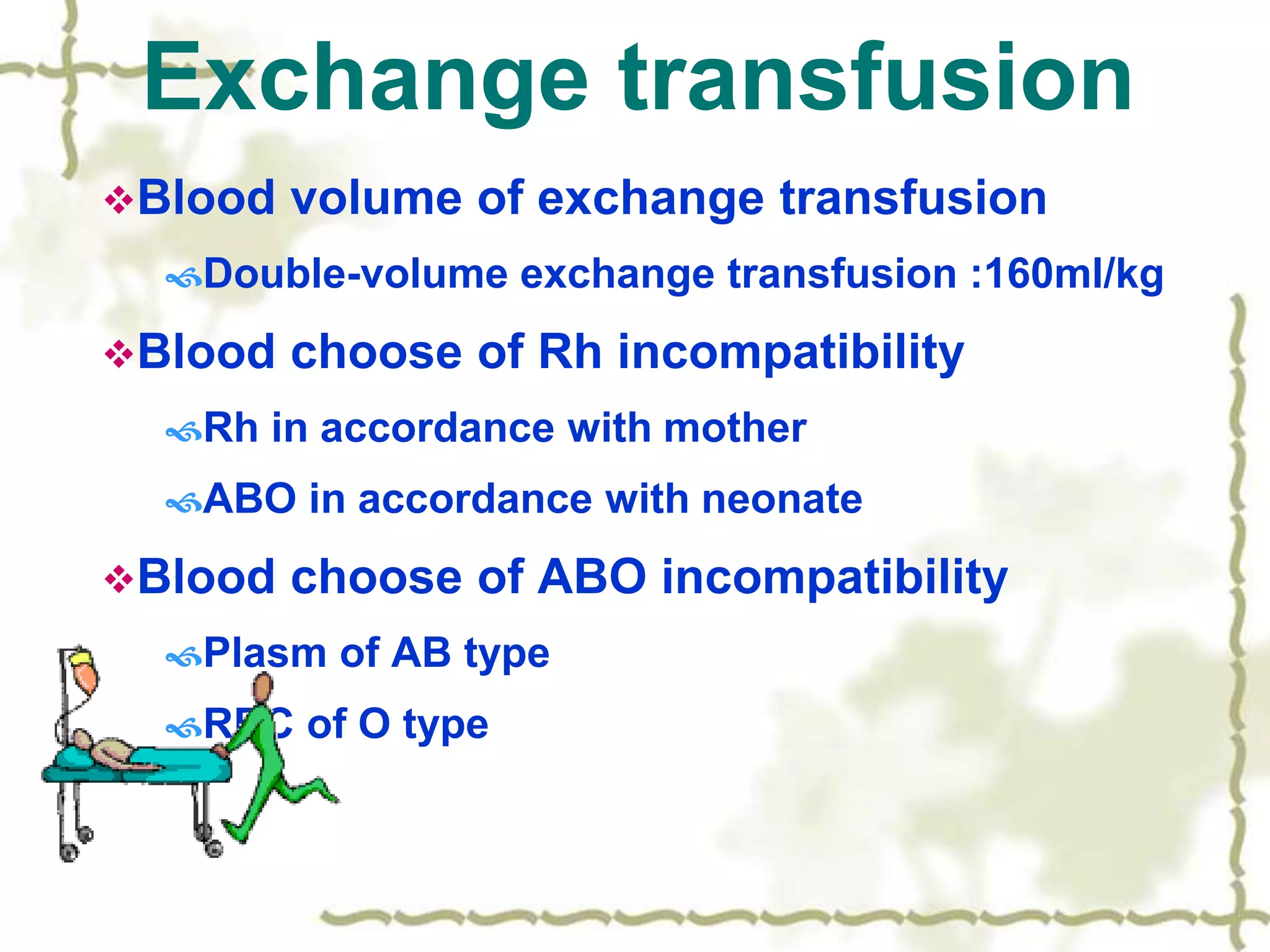
Exchange transfusion
Blood volume of exchange transfusion
Double-volume exchange transfusion :160ml/kg
Blood choose of Rh incompatibility
Rh in accordance with mother
ABO in accordance with neonate
Blood choose of ABO incompatibility
Plasm of AB type
RBC of O type
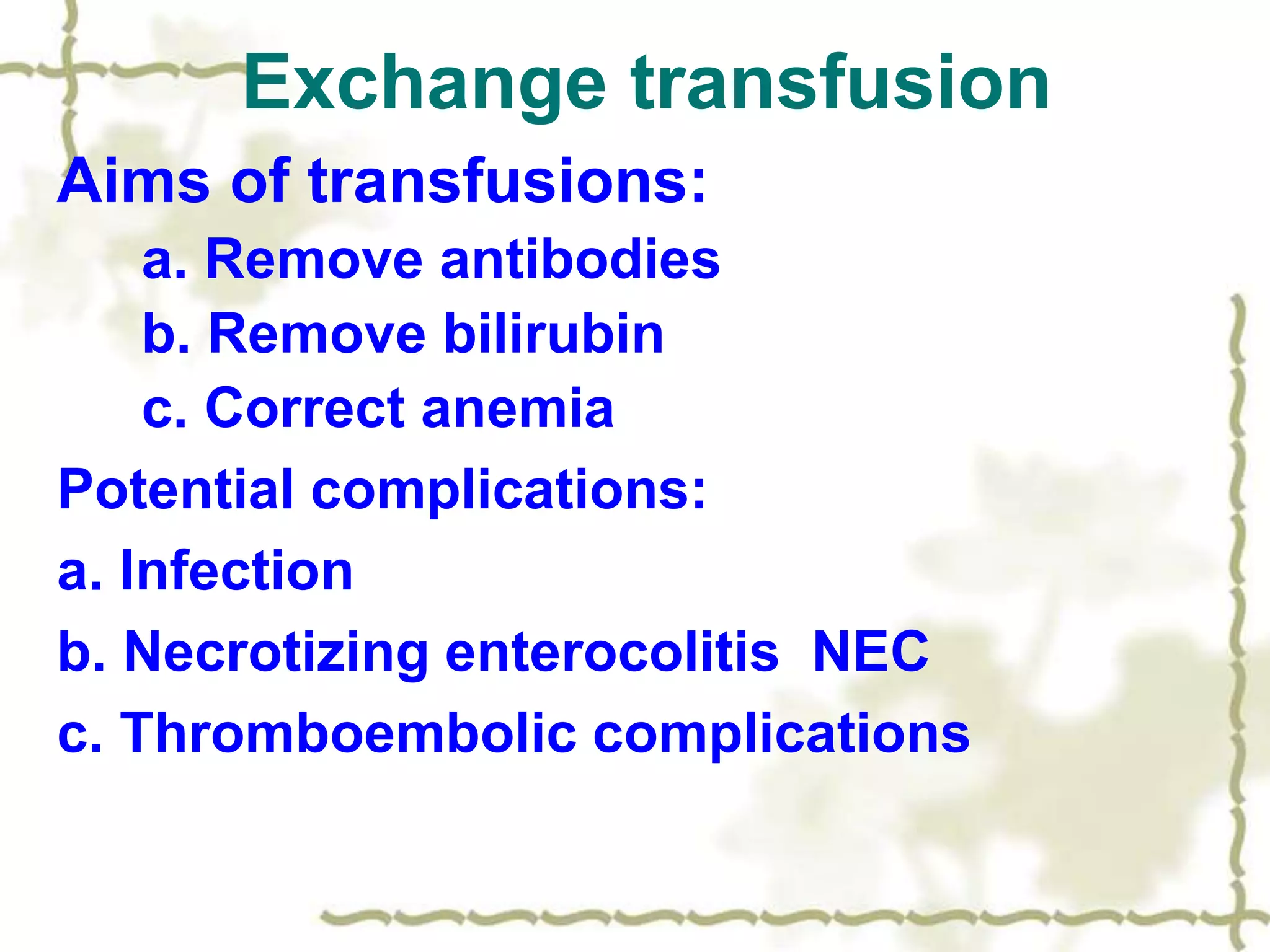
Exchange transfusion
Aims of transfusions:
a. Remove antibodies
b. Remove bilirubin
c. Correct anemia
Potential complications:
a. Infection
b. Necrotizing enterocolitis NEC
c. Thromboembolic complications
Copyright ©2004 American Academy of Pediatrics
Subcommittee on Hyperbilirubinemia, Pediatrics 2004;114:297-316
Guidelines for exchange transfusion in infants 35 or more weeks' gestation
treatment of hyperbilirubinemia in healthy term
babies
Age (hr) phototherapy exchange transfusion
Birth > 6 > 16
12 > 11 > 17
24-48 > 15 > 20
49-72 >18 >24
>72 >20 >25
#Phototherapy should result in a decline 1-2 mg/dL of total
bilirubin within 4-6 hour, should continue to fall and remain
below exchange transfusion levels.
*Intensive phototherapy, prepare for exchange, exchange if
bilirubin does not fall below exchange transfusion levels.
Exchange Transfusion
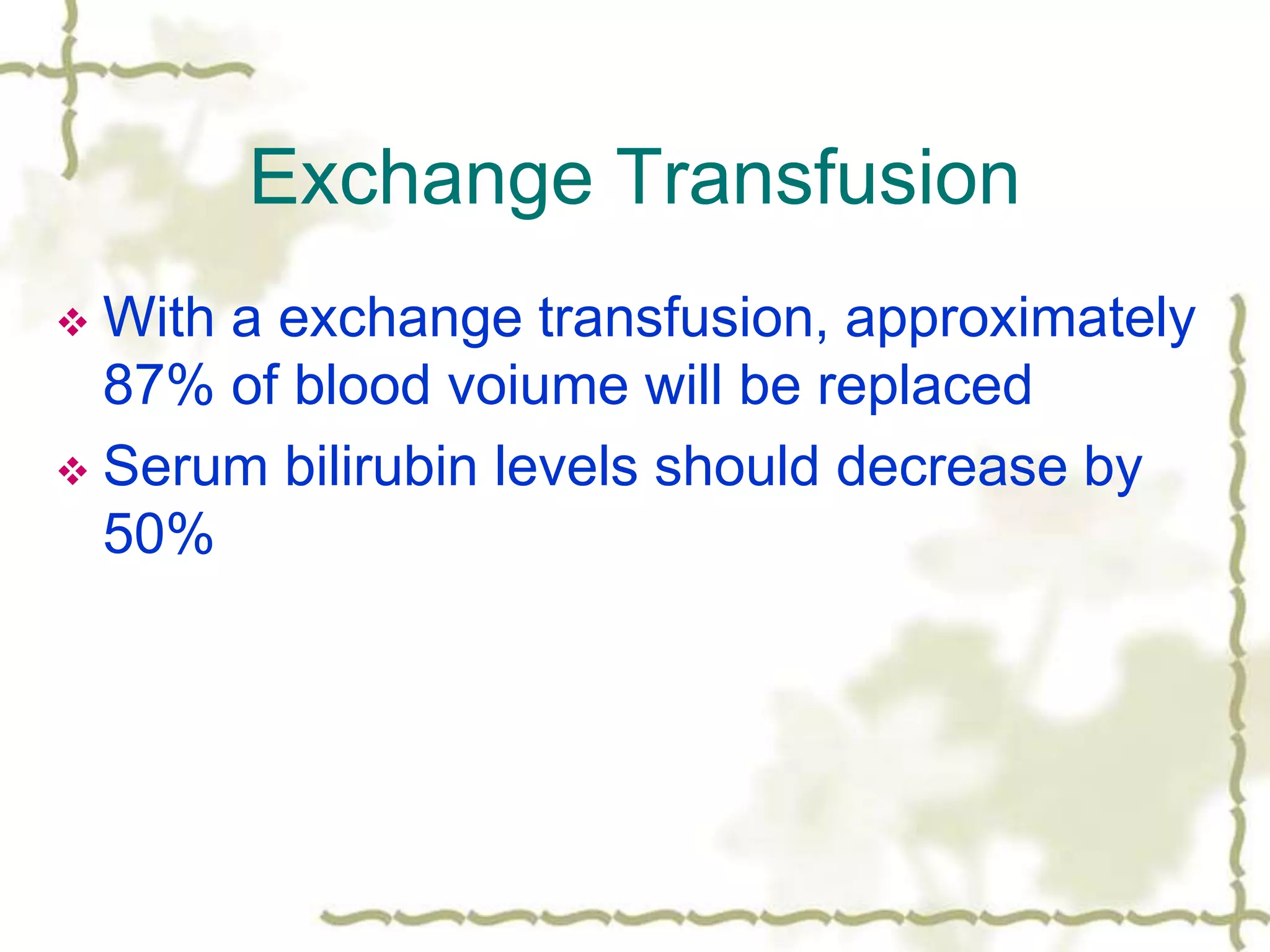
 With a exchange transfusion, approximately
87% of blood voiume will be replaced
 Serum bilirubin levels should decrease by
50%
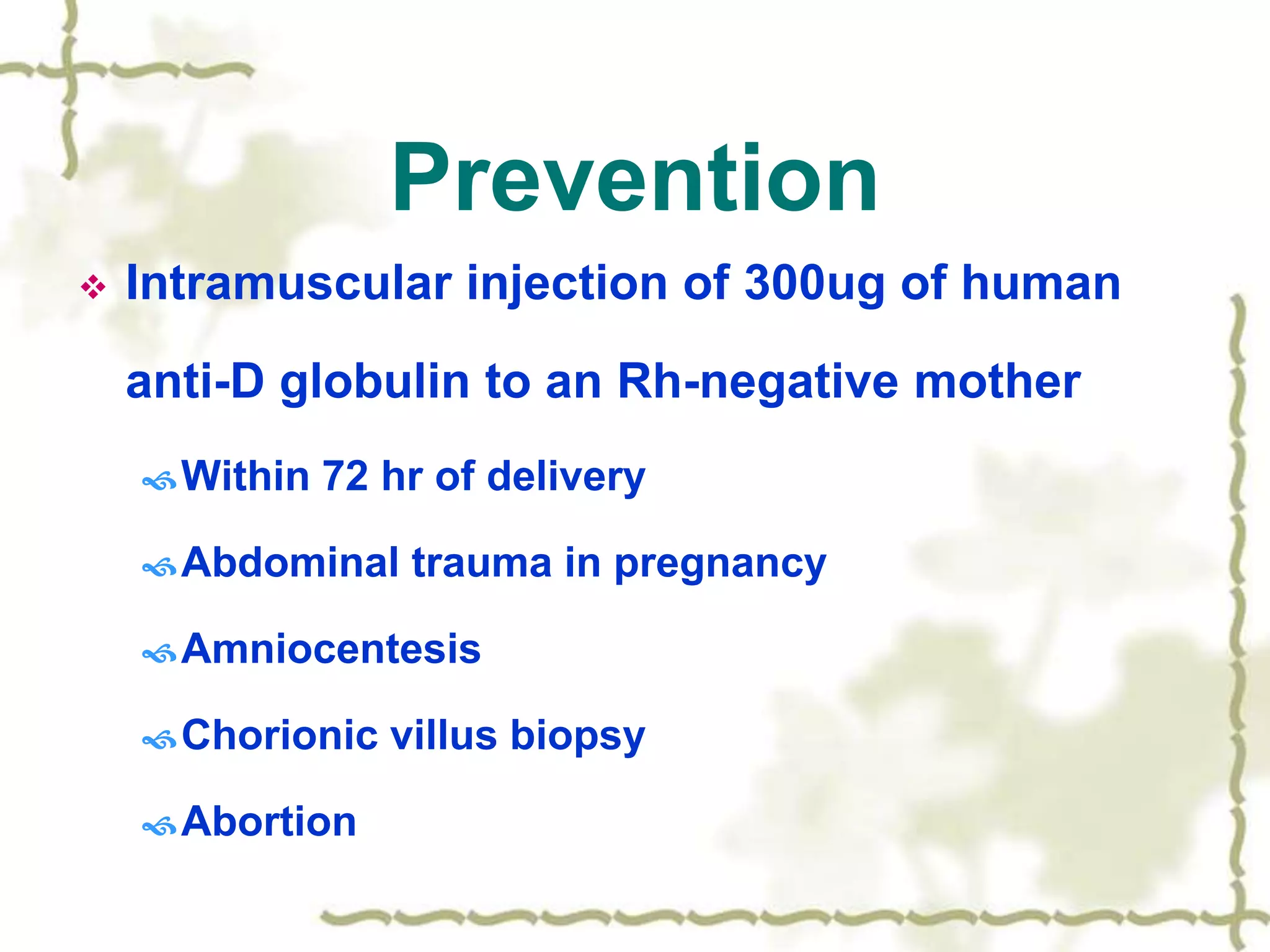
Prevention
 Intramuscular injection of 300ug of human
anti-D globulin to an Rh-negative mother
Within 72 hr of delivery
Abdominal trauma in pregnancy
Amniocentesis
Chorionic villus biopsy
Abortion
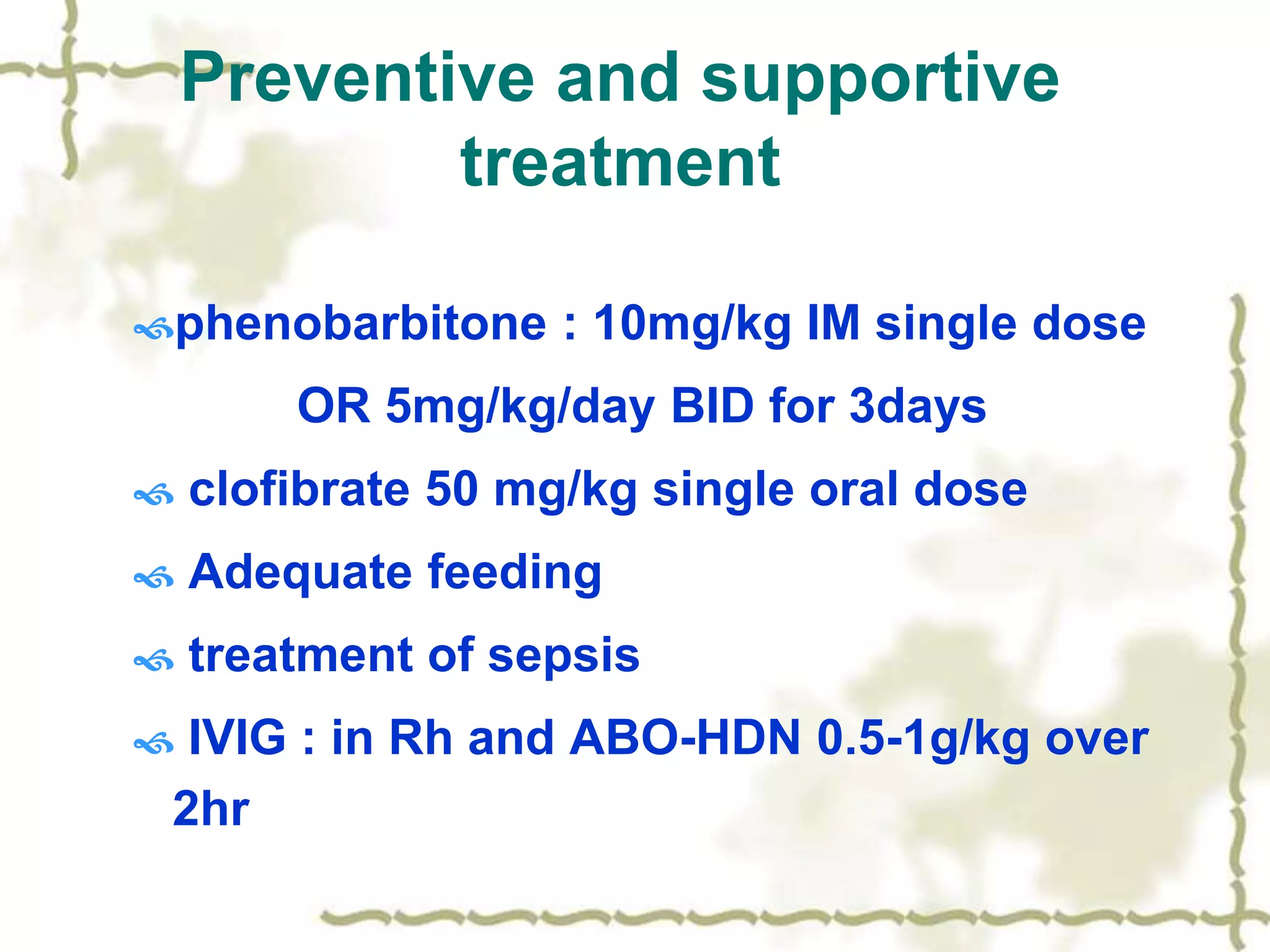
Preventive and supportive
treatment
phenobarbitone : 10mg/kg IM single dose
OR 5mg/kg/day BID for 3days
 clofibrate 50 mg/kg single oral dose
 Adequate feeding
 treatment of sepsis
 IVIG : in Rh and ABO-HDN 0.5-1g/kg over
2hr
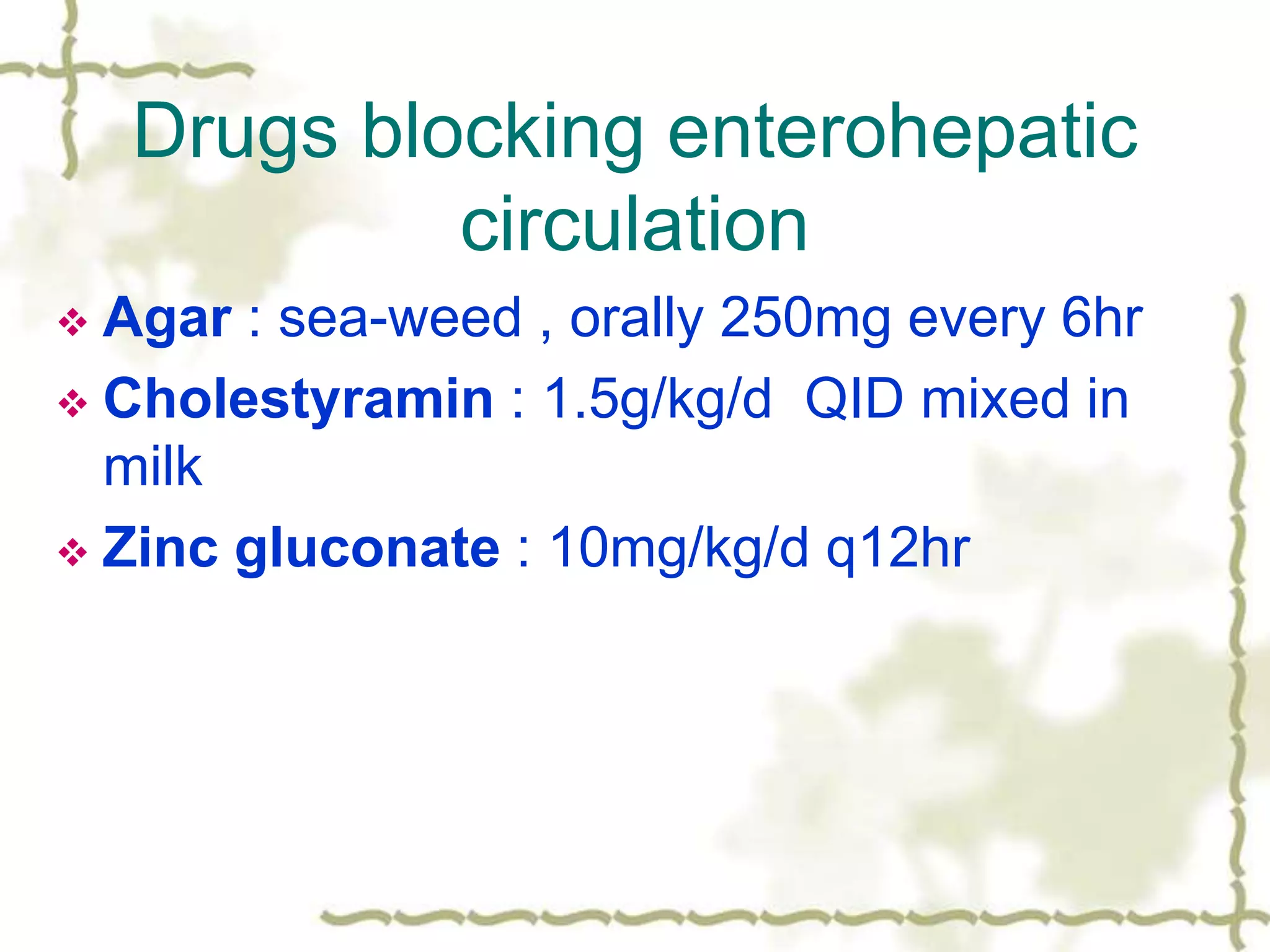
Drugs blocking enterohepatic
circulation
 Agar : sea-weed , orally 250mg every 6hr
 Cholestyramin : 1.5g/kg/d QID mixed in
milk
 Zinc gluconate : 10mg/kg/d q12hr
Miscellaneous drugs
 Orotic acid : precursor of UDPG-T its use
limited and cost is prohibitive
 Tin-mesoporphyrin: is a structural analog of
heme . It blocks the site on heme oxygenase
6 micromoles/kg IM single dose . Can also be used for
Crigler-Najar syndrome
 Albumin : 1g/kg (5%) 1hr before exchange
REFRENCES
 Care of the New Born MEHARBAN
SINGH
 Manual of Neonatal Care, 6th Edition
Cloherty, John P.; Eichenwald, Eric C.;
Stark, Ann R.
 Nelson Text book of Pediatric 20th
Edition

Abo incompatibility safiullah

  • 1.
  • 2.
    ABO INCOMPATIBILITY ‫وترتیب‬ ‫تهیه‬ : ‫هللا‬‫داکترصفی‬ ( ‫سلیمانخیل‬ ) ‫رهنما‬ ‫استاد‬ : ‫امیری‬ ‫هللا‬ ‫نعمت‬ ‫دکتور‬ ‫استاد‬
  • 3.
    Neonatal Hyperbilirubinemia • Visiblejaundice: • Adults: >2mg% • Newborns: >7mg • Up to 50% of all newborns may develop jaundice
  • 4.
    Source of Bilirubin •75%: from old RBCs released from RES • 25%: from ineffective erythropoyesis, myoglobine, cytochromes, catalase, peroxidase. • Production of bilirubin:. 6-10 mg/kg/day. (adults 3-4mg/kg/day) • 1gr Hemoglobine produces 34mg of bilirubin
  • 5.
  • 7.
    Best classified byage of onset and duration: 1. Early: within 24 hrs of life 2. Intermediate: 2 days to 2 weeks 3. Late: persists for >2 weeks Causes of neonatal jaundice
  • 8.
    Causes of neonataljaundice Early Intermediate Late/prolonged • Haemolytic causes: – Rh isoimmunisation – ABO incompatibility – G6PD deficiency • Congenital infection • Physiological jaundice • Breast feeding jaundice (inadequate intake) • Sepsis • Crigler-Najjar syndrome (glucuronyl transferase absent/reduced) • Polycythaemia, bruising • Conjugated (dark urine, pale stools): – Bile duct obstruction – Biliary atresia – Neonatal hepatitis • Unconjugated: – Breast milk jaundice – Infection – Hypothyroidism
  • 9.
    Physiological jaundice Characteristics • Appearsafter 24 hours of birth. • Maximum intensity by 4th-5th day in term & 7th day in preterm. • Serum level billirubine less than 15 mg/dl. • Clinically not detectable after 14 days. • Disappears without any treatment Note: Baby should, however, be watched for worsening jaundice.
  • 10.
    Why does physiologicaljaundice develop? • Increased bilirubin load. • Defective uptake from plasma • Defective conjugation. • Decreased excretion. • Increased entero-hepatic circulation.
  • 11.
    Pathological jaundice • Appearswithin 24 hours of age. • Increase of bilirubin > 5 mg/dl/day. • Serum bilirubin > 15 mg/dl. • Jaundice persisting after 14 days. • Stool clay/white colored and urine staining clothes yellow. • Direct bilirubin > 2 mg/dl.
  • 12.
    Risk factors forjaundice JAUNDICE • J - jaundice within first 24 hrs of life • A - a sibling who was jaundiced as neonate • U - unrecognized hemolysis • N – non-optimal sucking/nursing • D - deficiency of G6PD • I - infection • C – cephalhematoma /bruising • E - East Asian/North Indian
  • 13.
    Hemolytic disease ofthe newborn It is an isoimmunity hemolysis associated with ABO or Rh incompatibility. It results from transplacental passage of maternal antiboddy active against RBC antigens of the infant, leading to an increased rate of RBC destruction. It is an important cause of anemia and jaundice in newborn infant.
  • 14.
    ABO hemolytic disease ABOincompatibility Type O mothers Type A or B fetuses Presence of IgG anti-A or Anti-B antibodies in type O mother Frequently occurring during the first pregnancy without prior sensitization ABO incompatibility: 15% of pregnancies in US. 3% will develop significant jaundice.
  • 15.
    ABO Incompatibility This isa hemolytic disease caused by a reaction of maternal anti-A or anti-B antibodies with fetal A or B antigens  Usually milder than Rh except : sibling ABO , IgG anti A,B >1:64  The severity of hemolysis more in OA  The Antibody may produced to A&B antigen Contained in food , bacteria and vaccine
  • 16.
    ABO Incompatibility • Relativelymore common in female babies • Relatively milder in preterm • Direct coomb’s test is generally negative or weak positive
  • 17.
  • 18.
    Pathophysiology Red blood cellbreakdown Hyperbilirubinemia Jaundice Kernicterus Seizures etc. Anemia 1. Liver 2. Spleen 3. Heart 4. Hydrops
  • 19.
    Rh hemolytic disease Rhblood group antigens (C, c, D, d, E, e) D>E>C>c>e Pathophysiology of alloimmune hemolysis resulting from Rh incompatibility An Rh-negative mother An Rh-positive fetus Leakage of fetal RBC into maternal circulation Maternal sensitization to D antigen on fetal RBC
  • 20.
    Production and transplacentalpassage of maternal anti-D antibodies into fetal circulation Attachment of maternal antibodies to Rh-positive fetal RBC Destruction of antibody-coated fetal RBC
  • 21.
    Rh hemolytic diseasewas rare during the first pregnancy involving an Rh-positive fetus. Once sensitization has occurred, re-exposure to Rh D RBC in subsequent pregnancies leads to an anamnestic response, with an increase in the maternal anti-Rh D antibody titer. The likelihood of an infant being affected increased significantly with each subsequent pregnancy.
  • 22.
    Significant hemolysis occurringin the first pregnancy indicates prior maternal exposure to Rh-positive RBC. Fetal bleeding associated with a previous spontaneous or therapeutic abortion Ectopic pregnancy A variety of different prenatal procedures Transfusion of some other blood product containing Rh D RBC in an Rh-negative mother
  • 23.
    Drugs That CauseSignificant Displacement of Bilirubin from Albumin Fusidic acid Radiographic contrast Aspirin sulphonamides Tolbutamide Rapid infusions of albumin furoseide Rapid infusions of ampicillin Indomethacin ALB drugs
  • 24.
    • Early Phase: – Hypotonia , high-pitched cry, Poor suck, and lethargy • Intermediate phase: Hypertonia of extensor muscles (with opisthotonus, oculogyric crisis rigidity and retrocollis), seizures. • Advanced phase : seizures, hypotonia replaces hypertonia , opisthotonus Pronounced coma, and death Acute bilirubin encephalopathy
  • 25.
    Chronic bilirubin encephalopathy (Kernicterus) •Choreoathetoid • cerebral palsy • Upward gaze palsy • Sensor neural • hearing loss • intellectual deficits
  • 26.
    Kernicterus: * Bilirubin depositstypically in basal ganglia, hippocampus, substantia nigra, etc.
  • 27.
    Mechanism of neurotoxicityin kernicterus • Unbound (unconjugated) bilirubin is: • neurotoxic at high levels • lipophilic and can cross the blood-brain-barrier Long term clinical sequelae Bilirubin staining of affected areas Dysfunction and death of neurons Impairs mitochondrial functions neurotransmitter synthesis Binds to cell components Bilirubin accumulates at nerve terminals
  • 28.
    Clinical Manifestations  Jaundice Anemia  Hydrops  Massive enlargement of the liver and spleen  Bilirubin encephalopathy (Kernicterus)
  • 29.
    Hyperbilirubinemia & Clinical Outcomes: Depositsin skin and mucous membranes Unconjugate d bilirubin deposits in the brain Permanent neuronal damage JAUNDICE ACUTE BILIRUBIN ENCEPHALOPATHY KERNICTERUS
  • 30.
    Clinical Manifestations Clinical FeaturesOf Hemolytic Disease Clinical Features Rh ABO Frequency Unusual Common Anemia Marked Minimal Jaundice Marked Minimal to moderate Hydrops Common Rare Hepatosplenomegaly Marked Minimal Kernicterus Common Rare
  • 31.
    Laboratory Diagnosis Laboratory FeaturesOf Hemolytic Disease Laboratory Features Rh ABO blood type of Mother Rh negative O blood type of Infant Rh positive A or B Anemia Marked Minimal Direct Commb’s test Positive Negative Indirect Commb’s test Positive Usually positive Hyperbilirubinemia marked Variable RBC morphology Nucleated RBC Spherocytes
  • 32.
    Diagnosis  Antenatal Diagnosis History Expectantparents’ blood types Maternal titer of IgG antibodies to D or E (>1:32) At 12~16 wk At 28~32 wk At 36 wk Fetal Rh and ABO status Fetal jaundice level
  • 33.
    Diagnosis  Postnatal diagnosis Jaundiceat < 24 hr Anemia (Hematocrit and hemoglobin examination) Rh or ABO incompatibility Coomb’s test positive Examination for RBC antibodies in the mother’s serum
  • 34.
    Treatment  Main goals Toprevent intrauterine or extrauterine death of fetal or infant form severe anemia and hypoxic To avoid neurotoxicity from hyperbilirubinemia
  • 35.
    Treatment  Treatment ofthe unborn infant Utero transfusion Indication Hydrops Anemia (Hematocrit<30%) Method Packed RBC matching with the mother’s serum Umbilical vein transfusion
  • 36.
    Treatment Delivery in advance Indication Pulmonarymaturity Fetal distress Maternal titer of Rh antibodies > 1:32 35~37 wk of gestation
  • 37.
    Treatment  Treatment ofthe liveborn infant Immediate resuscitation and supportive therapy Temperature stabilization Correction of acidosis: 1-2mEq/kg of sodium bicarbonate A small transfusion compatible packed RBC Volume expansion for hypotension Provision of assisted ventilation for respiratory failure
  • 38.
    • Depends onthe cause and level and type of bilirubin • Unconjugated hyperbilirubinaemia: • Ensure adequate fluid intake • Phototherapy • IV immunoglobulin • Exchange transfusion • Conjugated hyperbilirubinaemia: • Ensure adequate nutrition • Treat underlying problem Treatment of Neonatal Jaundice
  • 39.
    Treatment Phototherapy Blue spectrum of425-475 nm (or White or Green) Irradiance:15μW/cm2/nm Distance : 15-20 cm Protection of eyes and genital Three photochemical reactions: 1). photo isomerization 2). Structural isomerization 3). Photo-oxidation
  • 40.
  • 41.
    Phototherapy Spectrum of light Blueis most effective (460 - 490 nm) Ultraviolet light (10 – 400 nm) Infrared light (600 – 700 nm) Phototherapy is NOT: • Ultraviolet light • Infrared light Bilirubin absorbance and transmittance Maisels MJ et al. N Engl J Med 2008;358:920-8 Bilirubin absorbance
  • 42.
    Phototherapy: Technique • Fluorescents,spots or biliblankets • Naked , covering eyes • Increase fluids 20-40 ml/kg/24h • Check bilirubin every 12-24hs • Stop: 13±0.7mg% in term, 10.7±1.2mg% in preterm • Check 12-24hs later for rebound • Phototherapy In ABO-HDN : if exceeds 10 mg/dL at 12 hours, 12 mg/dL at 18 hours, 14 mg/dL at 24 hours, or 15 mg/dL at any time. If the bilirubin reaches 20 mg/dL, an exchange transfusion is done.
  • 43.
    Phototherapy: Side effects •Increased water loss • Diarrhea • Retinal damage • Bronze baby, tanning • Mutations in DNA?  shield scrotum • Disturb of mother-infant interaction.
  • 44.
    Premature infants • 1.Infants <1,000 g. Phototherapy : within 24 hoursexchange transfusion :10 to 12 mg/dL. • 2. Infants 1,000 to 1,500 g. Phototherapy : 7 to 9 mg/dL exchange transfusion : 12 to 15 mg/dL. • 3. Infants 1,500 to 2,000 g. Phototherapy : 10 to 12 mg/dL and exchange transfusion : 15 to 18 mg/dL. • 4. Infants 2,000 to 2,500 g. Phototherapy :13 to 15 mg/dL and exchange transfusion :18 to 20 mg/dL.
  • 45.
    Copyright ©2004 AmericanAcademy of Pediatrics Subcommittee on Hyperbilirubinemia, Pediatrics 2004;114:297-316 Guidelines for phototherapy in hospitalized infants of 35 or more weeks' gestation
  • 46.
    Exchange transfusion Indication  CordHemoglobin <11g/dl  Cord bilirubin > 4.5mg/dl  Hydrops, hepatosplenomegaly and heart failure  Bilirubin in the 1st 12 of life>0.75mg/dl/hr  Bilirubin concentration>20mg/dl  The bilirubin level is rising >1 mg/dL/hour despite phototherapy.  Factors supporting early exchange transfusion: Previous kernicterus in a sibling, reticulocyte counts greater than 15%, asphyxia of neonate and premature infant
  • 47.
    Exchange transfusion Blood volumeof exchange transfusion Double-volume exchange transfusion :160ml/kg Blood choose of Rh incompatibility Rh in accordance with mother ABO in accordance with neonate Blood choose of ABO incompatibility Plasm of AB type RBC of O type
  • 48.
    Exchange transfusion Aims oftransfusions: a. Remove antibodies b. Remove bilirubin c. Correct anemia Potential complications: a. Infection b. Necrotizing enterocolitis NEC c. Thromboembolic complications
  • 49.
    Copyright ©2004 AmericanAcademy of Pediatrics Subcommittee on Hyperbilirubinemia, Pediatrics 2004;114:297-316 Guidelines for exchange transfusion in infants 35 or more weeks' gestation
  • 50.
    treatment of hyperbilirubinemiain healthy term babies Age (hr) phototherapy exchange transfusion Birth > 6 > 16 12 > 11 > 17 24-48 > 15 > 20 49-72 >18 >24 >72 >20 >25 #Phototherapy should result in a decline 1-2 mg/dL of total bilirubin within 4-6 hour, should continue to fall and remain below exchange transfusion levels. *Intensive phototherapy, prepare for exchange, exchange if bilirubin does not fall below exchange transfusion levels.
  • 51.
    Exchange Transfusion  Witha exchange transfusion, approximately 87% of blood voiume will be replaced  Serum bilirubin levels should decrease by 50%
  • 52.
    Prevention  Intramuscular injectionof 300ug of human anti-D globulin to an Rh-negative mother Within 72 hr of delivery Abdominal trauma in pregnancy Amniocentesis Chorionic villus biopsy Abortion
  • 53.
    Preventive and supportive treatment phenobarbitone: 10mg/kg IM single dose OR 5mg/kg/day BID for 3days  clofibrate 50 mg/kg single oral dose  Adequate feeding  treatment of sepsis  IVIG : in Rh and ABO-HDN 0.5-1g/kg over 2hr
  • 54.
    Drugs blocking enterohepatic circulation Agar : sea-weed , orally 250mg every 6hr  Cholestyramin : 1.5g/kg/d QID mixed in milk  Zinc gluconate : 10mg/kg/d q12hr
  • 55.
    Miscellaneous drugs  Oroticacid : precursor of UDPG-T its use limited and cost is prohibitive  Tin-mesoporphyrin: is a structural analog of heme . It blocks the site on heme oxygenase 6 micromoles/kg IM single dose . Can also be used for Crigler-Najar syndrome  Albumin : 1g/kg (5%) 1hr before exchange
  • 57.
    REFRENCES  Care ofthe New Born MEHARBAN SINGH  Manual of Neonatal Care, 6th Edition Cloherty, John P.; Eichenwald, Eric C.; Stark, Ann R.  Nelson Text book of Pediatric 20th Edition