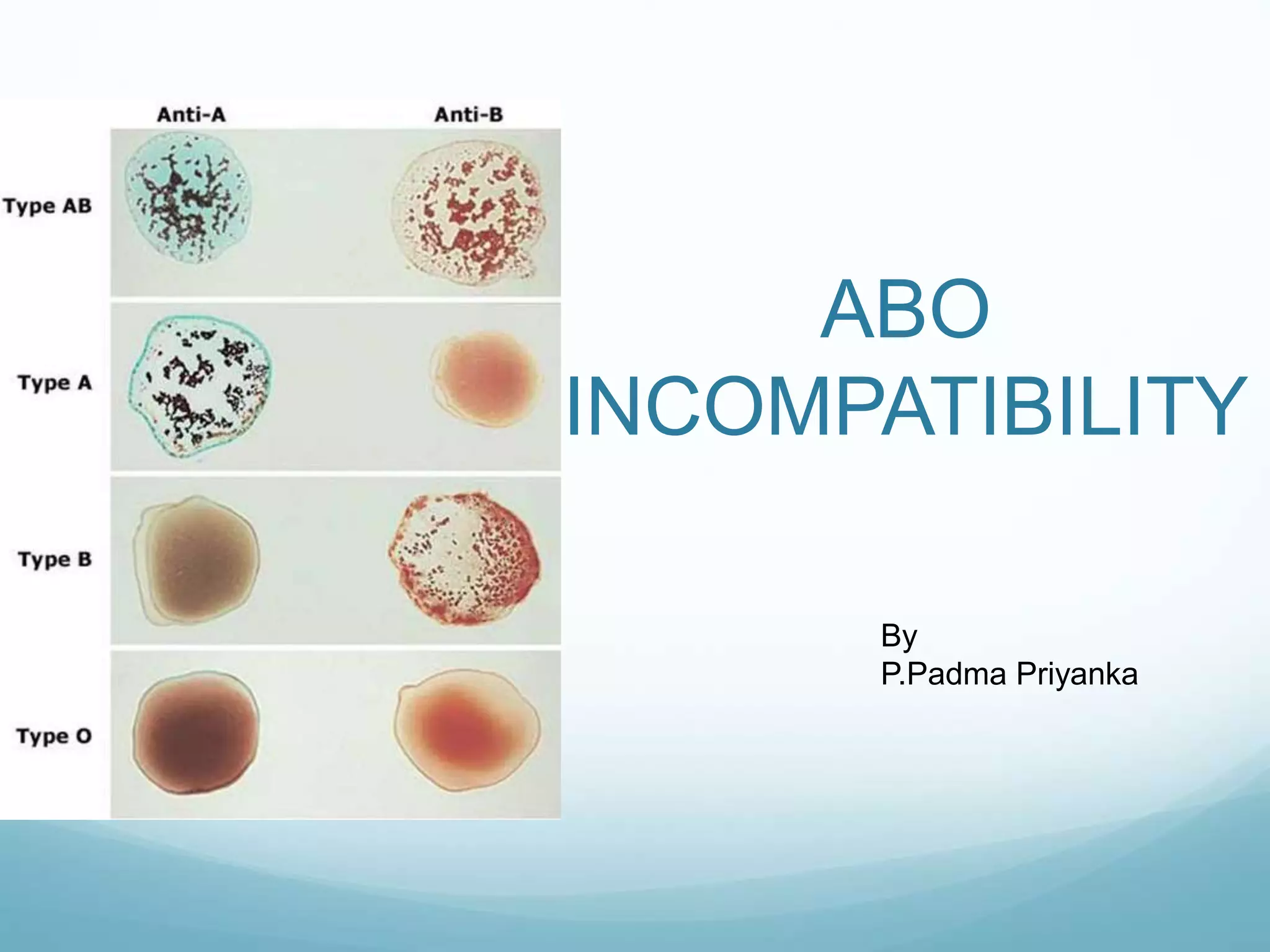
ABO
INCOMPATIBILITY
By
P.Padma Priyanka
CONTENTS
 INTRODUCTION
 BLOOD TYPES
 MODERATING FACTORS
 DIFFERENCE B/N ABO AND RH INCOMPATIBILITY
 HS AND ABO-HDN
 DIAGNOSIS- HISTORY,LABORATORY
 MANAGEMENT
 SUMMARY
INTRODUCTION
 ABO-Hemolytic disease of newborn
 25% of pregnancies
 HDN develops only in 1/10 such offsprings
 O group mother and A/B group fetus
 Female>male
 OA>OB
 Cause-reaction of maternal anti-A/B to antigen present
on RBC of fetus or newborn
 IgG antibodies cross the placenta
BLOOD TYPES
 ABO system in 1990
 A,B,AB,O
 Central principle is ANTIGENS
 Isoantibodies against isoantigens
 Important for transfusion
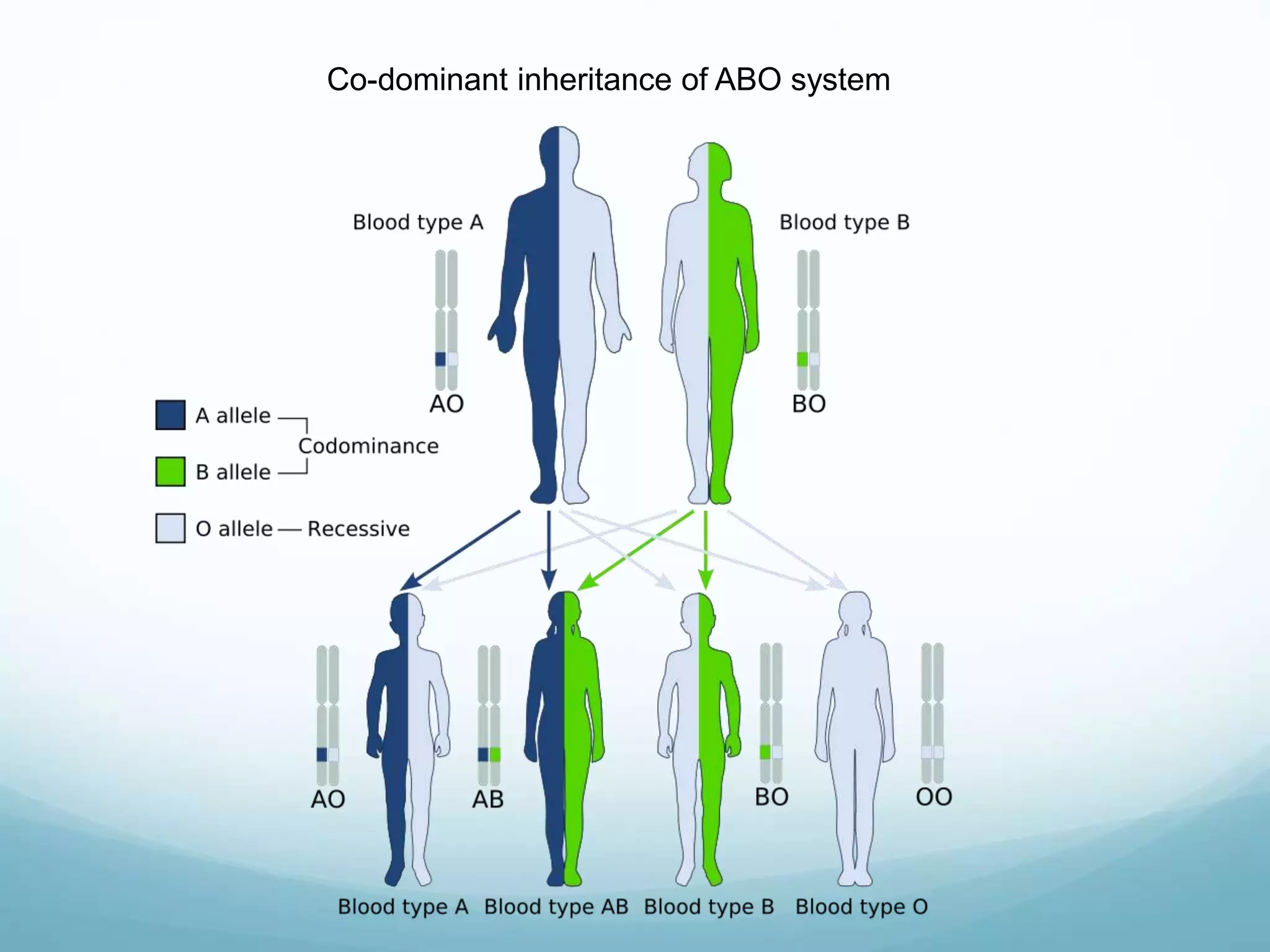
Co-dominant inheritance of ABO system
 ABO on 9q34 -glycosyltransferase
 A- N-acetyl galactosamine
 B- galactose
 H on 19
 H antigen-precursor
 Antigens contained in food,bacteria and vaccines
MODERATING FACTORS
 Mild nature and low incidence of ABO-HDN accounts
for
low antigenicity of AB factors
wide distribution
fewer antigen sites on preterm RBC
DIFF B/N ABO & RH
INCOMPATIBILTIES
 May occur in first born
 Increasing frequency of disease in subsequent
pregnancies is generally not present
 The subsequent babies may be more effected or less
effected or even spared
HS AND ABO-HDN
 Increased osmotic fragility, autohemolysis,
splenomegaly in both
 But autohemolysis is not corrected by glucose as in HS
 Family history,long-term course,MCHC differentiate HS
from ABO-HDN
DIAGNOSIS(suspected)
 Antenatally –
 Past history of ABO-HDN in previous sibling
 Titer of anti-A/anti-B in mother is >1:64
 Postnatally –
 Early onset of jaundice <24hrs
 A/B group baby of O mother
 Mild splenomegaly
 Anemia – usually absent
DIAGNOSIS(laboratory)
 Serum bilirubin
 Reticulocytosis
 Spherocytosis
 Fragility of RBC
 Confirmation of antibodies-eluted serum
 Direct coomb’s test
 Maternal IgG antibodies in ADCC assay
 Detection of antigen density on RBC
 High titres of anti-A/B hemolysins-in maternal serum
 Start intensive phototherapy if bilirubin exceeds
10mg/dl at 12hrs
12mg/dl at 18hrs
14mg/dl at 24hrs
15mg/dl at any time
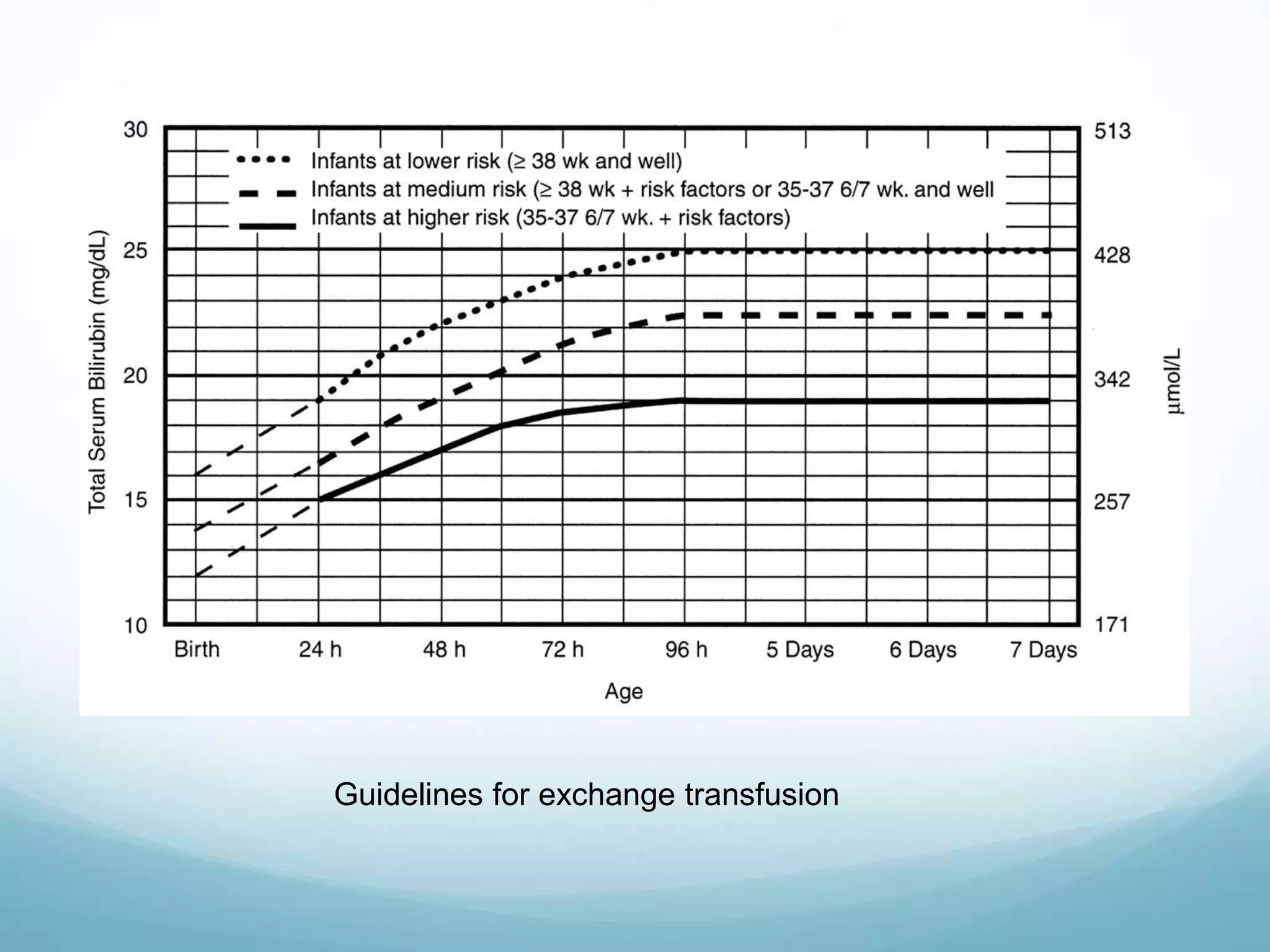
 Exchange transfusion-if it reaches 20mg/dl
MANAGEMENT
Guidelines for phototherapy
Guidelines for exchange transfusion
SUMMARY
 INCIDENCE
 O group mother and A/B group fetus
 Co-dominant inheritance
 HS and ABO-HDN
 Diagnosis
 Management –phototherapy and exchange transfusion
REFERENCES
 Manual of neonatal care-CLOHERTY
 Care of new born-MEHERBAN SINGH
 HARRISON’S principles of internal medicine
THANK YOU

ABO incompatibility

  • 1.
  • 2.
    CONTENTS  INTRODUCTION  BLOODTYPES  MODERATING FACTORS  DIFFERENCE B/N ABO AND RH INCOMPATIBILITY  HS AND ABO-HDN  DIAGNOSIS- HISTORY,LABORATORY  MANAGEMENT  SUMMARY
  • 3.
    INTRODUCTION  ABO-Hemolytic diseaseof newborn  25% of pregnancies  HDN develops only in 1/10 such offsprings  O group mother and A/B group fetus  Female>male  OA>OB  Cause-reaction of maternal anti-A/B to antigen present on RBC of fetus or newborn  IgG antibodies cross the placenta
  • 4.
    BLOOD TYPES  ABOsystem in 1990  A,B,AB,O  Central principle is ANTIGENS  Isoantibodies against isoantigens  Important for transfusion
  • 5.
  • 6.
     ABO on9q34 -glycosyltransferase  A- N-acetyl galactosamine  B- galactose  H on 19  H antigen-precursor  Antigens contained in food,bacteria and vaccines
  • 8.
    MODERATING FACTORS  Mildnature and low incidence of ABO-HDN accounts for low antigenicity of AB factors wide distribution fewer antigen sites on preterm RBC
  • 9.
    DIFF B/N ABO& RH INCOMPATIBILTIES  May occur in first born  Increasing frequency of disease in subsequent pregnancies is generally not present  The subsequent babies may be more effected or less effected or even spared
  • 10.
    HS AND ABO-HDN Increased osmotic fragility, autohemolysis, splenomegaly in both  But autohemolysis is not corrected by glucose as in HS  Family history,long-term course,MCHC differentiate HS from ABO-HDN
  • 11.
    DIAGNOSIS(suspected)  Antenatally – Past history of ABO-HDN in previous sibling  Titer of anti-A/anti-B in mother is >1:64  Postnatally –  Early onset of jaundice <24hrs  A/B group baby of O mother  Mild splenomegaly  Anemia – usually absent
  • 12.
    DIAGNOSIS(laboratory)  Serum bilirubin Reticulocytosis  Spherocytosis  Fragility of RBC  Confirmation of antibodies-eluted serum  Direct coomb’s test  Maternal IgG antibodies in ADCC assay  Detection of antigen density on RBC  High titres of anti-A/B hemolysins-in maternal serum
  • 13.
     Start intensivephototherapy if bilirubin exceeds 10mg/dl at 12hrs 12mg/dl at 18hrs 14mg/dl at 24hrs 15mg/dl at any time  Exchange transfusion-if it reaches 20mg/dl MANAGEMENT
  • 14.
  • 15.
  • 16.
    SUMMARY  INCIDENCE  Ogroup mother and A/B group fetus  Co-dominant inheritance  HS and ABO-HDN  Diagnosis  Management –phototherapy and exchange transfusion
  • 17.
    REFERENCES  Manual ofneonatal care-CLOHERTY  Care of new born-MEHERBAN SINGH  HARRISON’S principles of internal medicine
  • 18.