The liverhas a wide range of functions, including
detoxification of various metabolites,
protein synthesis, and production of biochemicals
necessary for digestion. The liver is necessary for
survival, and there is currently no way to
compensate for the absence of liver function in the
long term.
3.
LIVER FUNCTION TEST
USEDTO
Detect presence of liver disease
Distinguish among different types of liver
disaease.
Gauge the extent of known liver damage
Follow the response of treatment
Tests that measureBiosynthetic
function of liver
Serum Albumin
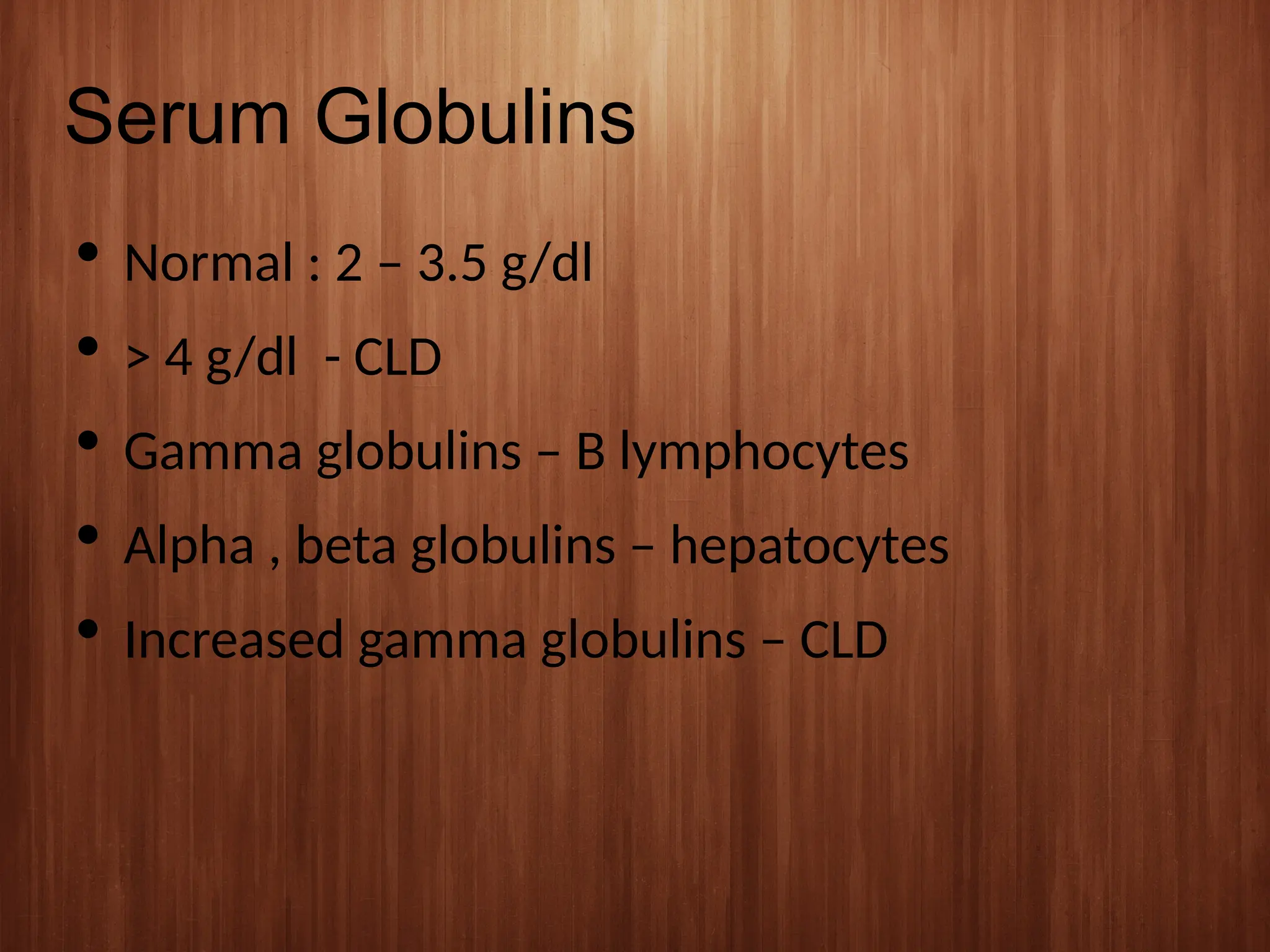
Serum Globulins
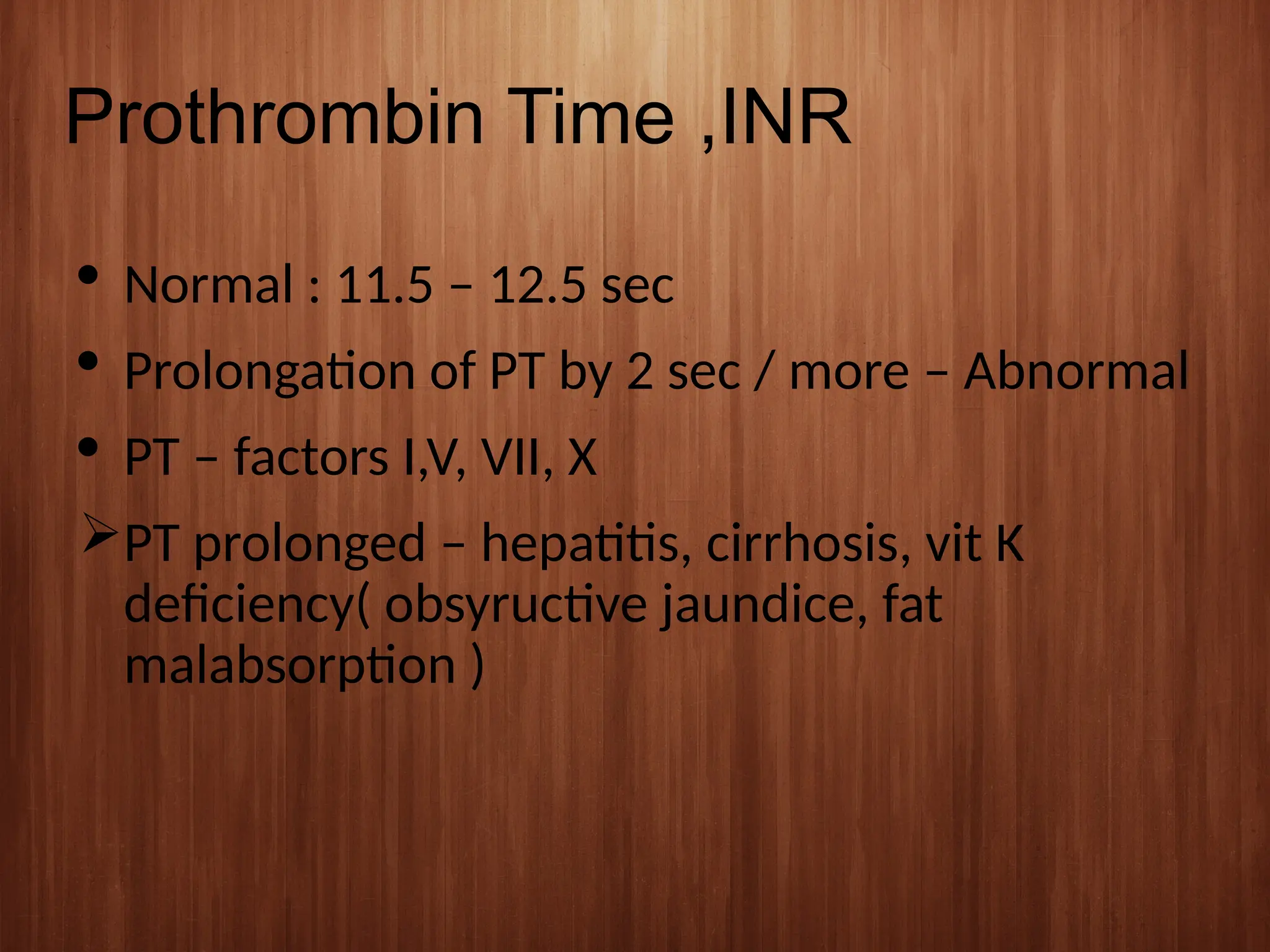
PT ,INR
6.
Serum Bilirubin
Abreak down product of porphyrin ring of
heme – containing proteins , found in blood in
2 fractions – conj/unconj
Conjugated : water soluble , so excreted by
kidneys
Unconjugated : insoluble in water , bound to
albumin in blood
About 300 mg of bilirubin is formed per day
7.
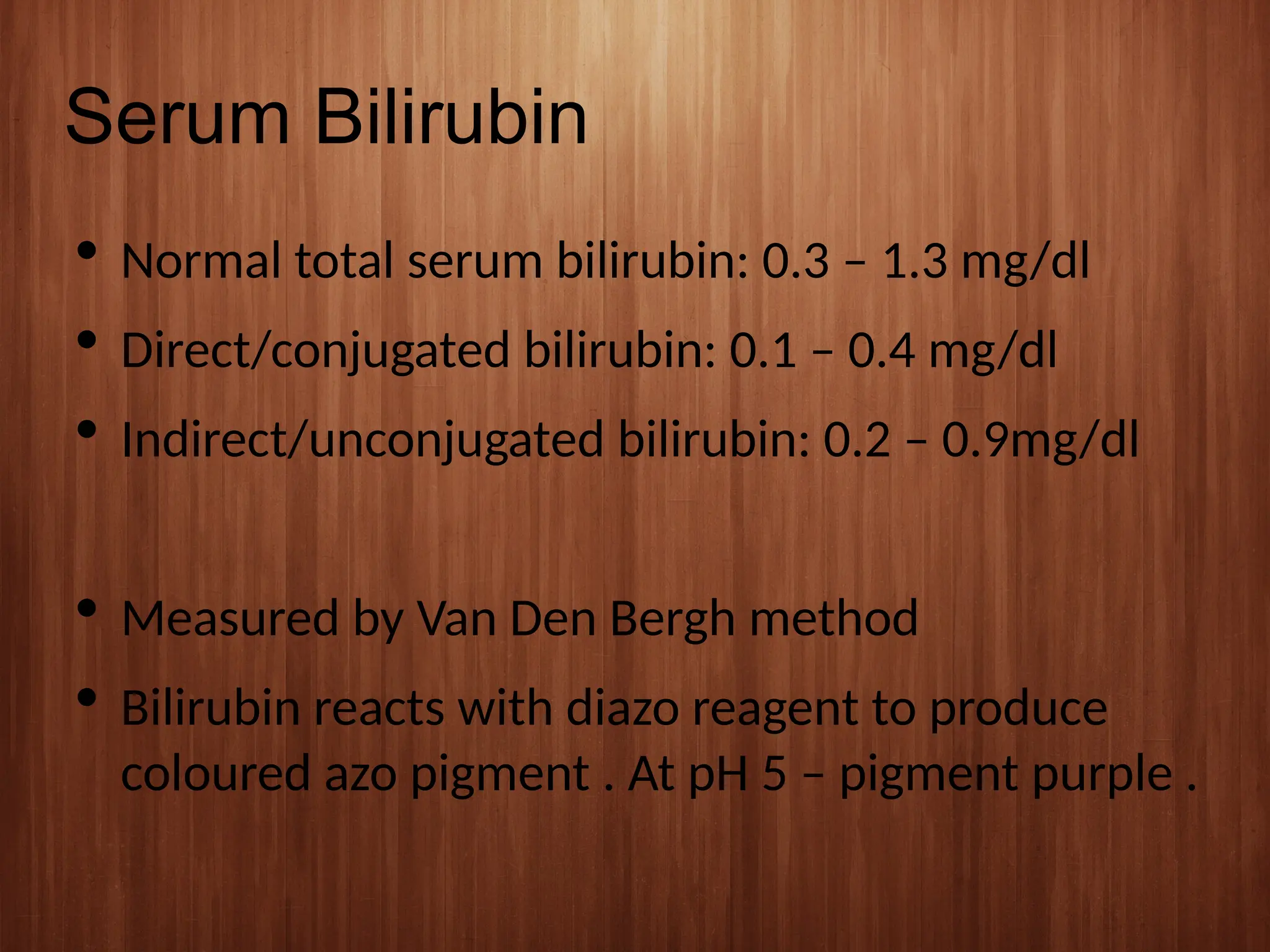
Serum Bilirubin
Normaltotal serum bilirubin: 0.3 – 1.3 mg/dl
Direct/conjugated bilirubin: 0.1 – 0.4 mg/dl
Indirect/unconjugated bilirubin: 0.2 – 0.9mg/dl
Measured by Van Den Bergh method
Bilirubin reacts with diazo reagent to produce
coloured azo pigment . At pH 5 – pigment purple .
Bilirubin istaken up into hepatocytes
, conjugated (modified to make it water-
soluble) by UDP-glucuronyl-transferase, and
secreted into the bile by CMOAT (MRP2),
which is excreted into the intestine.
10.
In theintestine, conjugated bilirubin may be (1)
metabolized by colonic bacteria, (2) eliminated,
(3) reabsorbed. Metabolism of bilirubin into
urobilinogen followed by reabsorption of
urobilinogen accounts for the yellow color of
urine as we urinate a downstream product of
urobilinogen. Further metabolism of
urobilinogen into stercobilin while in the bowels
accounts for the brown color of stool.
11.
Increased totalbilirubin (TBIL) causes jaundice, and can
indicate a number of problems:
1. Prehepatic: Increased bilirubin production. This can be
due to a number of causes, including hemolytic anemias
and internal hemorrhage.
2. Hepatic: Problems with the liver, which are reflected
as deficiencies in bilirubin metabolism (e.g., reduced
hepatocyte uptake, impaired conjugation of bilirubin,
and reduced hepatocyte secretion of bilirubin). Some
examples would be cirrhosis and viral hepatitis.
3. Posthepatic: Obstruction of the bile ducts, reflected as
deficiencies in bilirubin excretion. (Obstruction can be
located either within the liver or in the bile duct)
12.
Direct bilirubin(conjugated bilirubin)
Reference range0.1–0.4 mg/dLThe diagnosis is narrowed down
further by looking at the levels of direct bilirubin.
If direct (i.e. conjugated) bilirubin is normal, then the problem is
an excess of unconjugated bilirubin (indirect bilirubin), and the
location of the problem is upstream of bilirubin conjugation in
the liver. Hemolysis, viral hepatitis, or cirrhosis can be
suspected.
If direct bilirubin is elevated, then the liver is conjugating
bilirubin normally, but is not able to excrete it. Bile duct
obstruction by gallstones or cancer should be suspected.
13.
High Bilirubin inneonates
Neonates are especially vulnerable to bilirubin
levels due to an immature blood-brain barrier
that predisposed them to kernicterus / bilirubin
encephalopathy which can result in permanent
neurological damage. Neonates also have a low
amount of functional UDP-glucuronyl-transferase
and can have elevated unconjugated bilirubin
since conjugated is limited.
14.
Urine Bilirubin
Theconjugated bilirubin being water soluble is
excreted in urine.
This s contrast to unconjugated bilrirubin
which is not excreted
Biluribin in urine can be detected by fouchets
test or gmelins test.
15.
Serum Enzymes –reflect damage to
hepatocytes
Aminotransferases (AST,ALT) – sensitive
indicators of liver cell injury
Helpful in recognizing hepatocellular diseasess
such as hepatitis.
16.
Aspartate Aminotransferase
(SGOT) Referencerange6-40 IU/L
Aspartate transaminase (AST) also called serum glutamic
oxaloacetic transaminase (SGOT) or aspartate
aminotransferase (ASAT) is similar to ALT in that it is another
enzyme associated with liver parenchymal cells.
It is raised in acute liver damage, but is also present in red
blood cells, and cardiac and skeletal muscle and is therefore
not specific to the liver.
The ratio of AST to ALT is sometimes useful in differentiating
between causes of liver damage.[6][7]
Elevated AST levels are
not specific for liver damage, and AST has also been used as
a cardiac marker
17.
Alanine
Aminotransferase(SGPT)
Normal :7 – 41 U/L
ALT found primarily in liver.
Upto 300U/L – nonspecific , any type of liver
disorder(cirrhosis /malignancy)
>1000U/L – extensive hepatocellular damage
( viral hepatitis, ischemic liver injury , toxin /drug
induced liver injury )
Acute hepatocellular diseases – ALT >AST
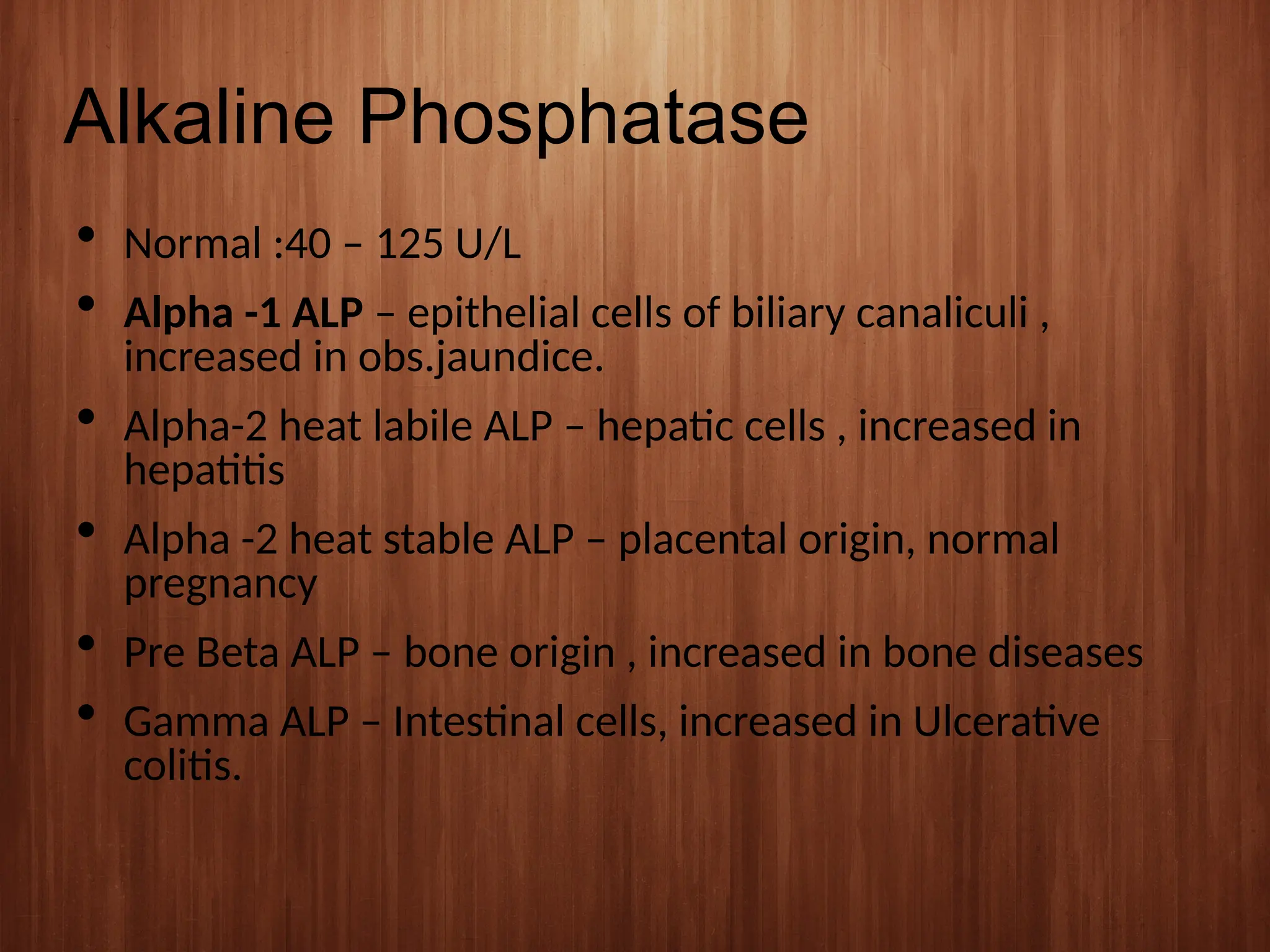
Alkaline Phosphatase
Normal:40 – 125 U/L
Alpha -1 ALP – epithelial cells of biliary canaliculi ,
increased in obs.jaundice.
Alpha-2 heat labile ALP – hepatic cells , increased in
hepatitis
Alpha -2 heat stable ALP – placental origin, normal
pregnancy
Pre Beta ALP – bone origin , increased in bone diseases
Gamma ALP – Intestinal cells, increased in Ulcerative
colitis.
20.
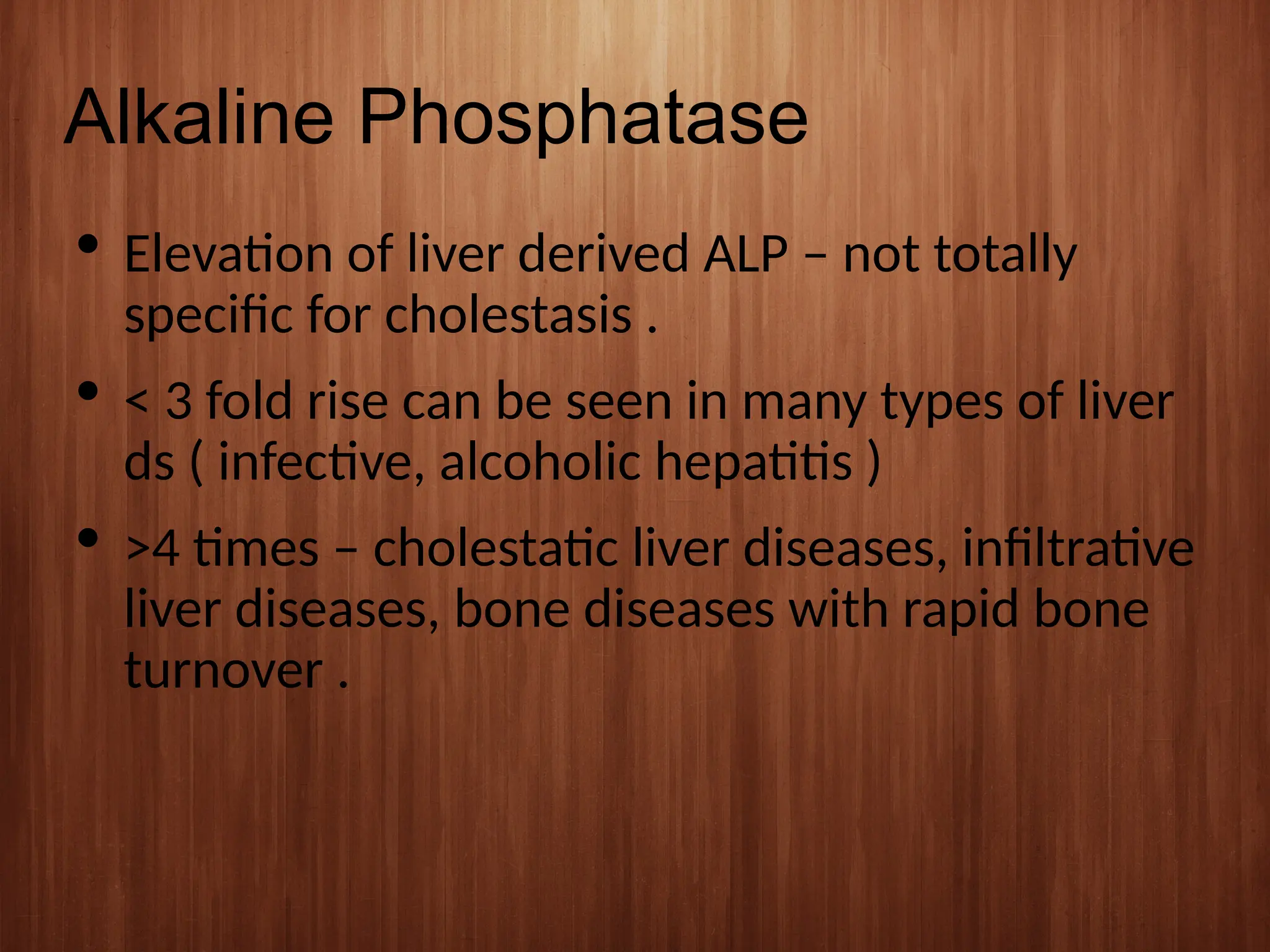
Alkaline Phosphatase
Elevationof liver derived ALP – not totally
specific for cholestasis .
< 3 fold rise can be seen in many types of liver
ds ( infective, alcoholic hepatitis )
>4 times – cholestatic liver diseases, infiltrative
liver diseases, bone diseases with rapid bone
turnover .
21.
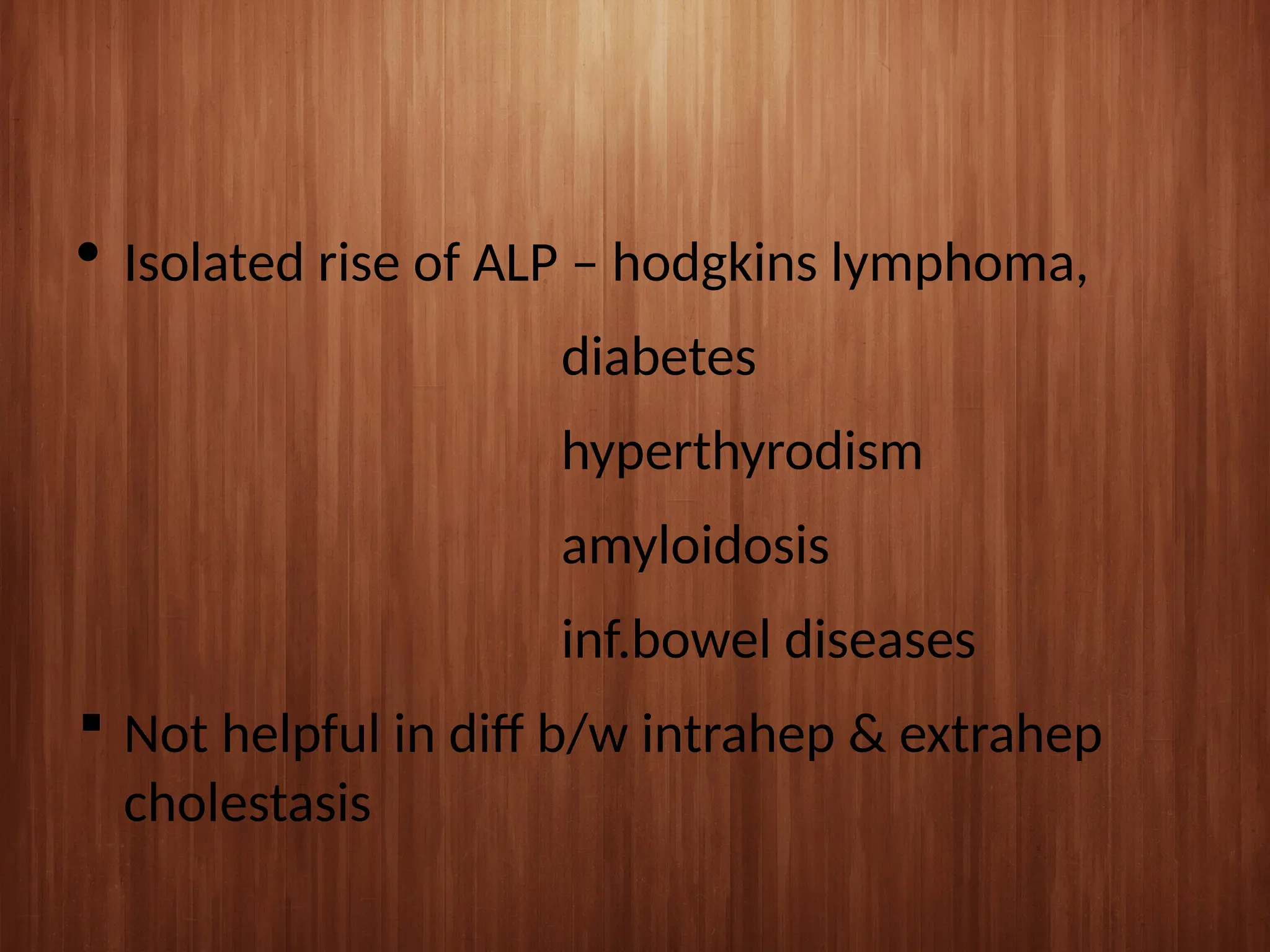
Isolated riseof ALP – hodgkins lymphoma,
diabetes
hyperthyrodism
amyloidosis
inf.bowel diseases
Not helpful in diff b/w intrahep & extrahep
cholestasis
22.
5’Nucleotidase
Normal :2– 10 U/L
Moderate elevated – hepatitis
Highly elevated – biliary obstruction
Unlike ALP , the level is unrelated with
osteoblastic activity ie.. Unaffected by bone
diseases.
23.
Gamma glutamyl transpeptidase
Used in body for synthesis of glutathione
Seen in liver, kidney, pancreas, intestinal cells,
prostate
Normal : 9 – 58 U/L
24.
GGT
Rised evenwhen other LFT are normal in
alcohalics.
GGT falls rapidly within few days after abstinence.
Mod rise – infective hepatitis, prostate Cancer
High rise – alcoholism,
obstructive jaundice,
neoplasms of liver
25.
Tests that measureBiosynthetic
function of liver – Serum Albumin
Produced by hepatocytes
Normal : 3.5 – 5 g/dl
Long half life :18 -20 days
Because of slow turnover Serum Albumin not a good
indicator of acute/mild hepatic dysfunction.
#8 Neonatal bil,-Dubin–Johnson syndrome is an autosomal recessive disorder that causes an increase of conjugated bilirubin in the serum without elevation of liverenzymes (ALT, AST).,, cirrohsis,sulfonamides,antipsychotic,hepatitis, Crigler–Najjar syndrome or CNS is a rare disorder affecting the metabolism of bilirubingilbert syn
#13 newborns are often treated with UV light to turn the hydrophobic, albumin-binding unconjugated bilirubin into a form that is more hydrophilic and able to be secreted out via urine, sparing the neonate's brain.
#18 cholestasis is a condition where bile cannot flow from the liver to the duodenum
![Aspartate Aminotransferase
(SGOT) Reference range6-40 IU/L
Aspartate transaminase (AST) also called serum glutamic
oxaloacetic transaminase (SGOT) or aspartate
aminotransferase (ASAT) is similar to ALT in that it is another
enzyme associated with liver parenchymal cells.
It is raised in acute liver damage, but is also present in red
blood cells, and cardiac and skeletal muscle and is therefore
not specific to the liver.
The ratio of AST to ALT is sometimes useful in differentiating
between causes of liver damage.[6][7]
Elevated AST levels are
not specific for liver damage, and AST has also been used as
a cardiac marker](https://image.slidesharecdn.com/liverfunctiontestsandjaundice-250719193034-5301e941/75/Liver-Function-Tests-and-Jaundice-with-types-ppt-16-2048.jpg)



![L8-Liver_Function_Test[1] SF.pptbwdqdbdwub](https://cdn.slidesharecdn.com/ss_thumbnails/l8-liverfunctiontest1sf-250507164033-55d694e3-thumbnail.jpg?width=640&height=640&fit=bounds)


