ABCs of IoT 
Consortiums 
Ian Skerrett 
Eclipse Foundation 
@ianskerrett
Safe Harbour
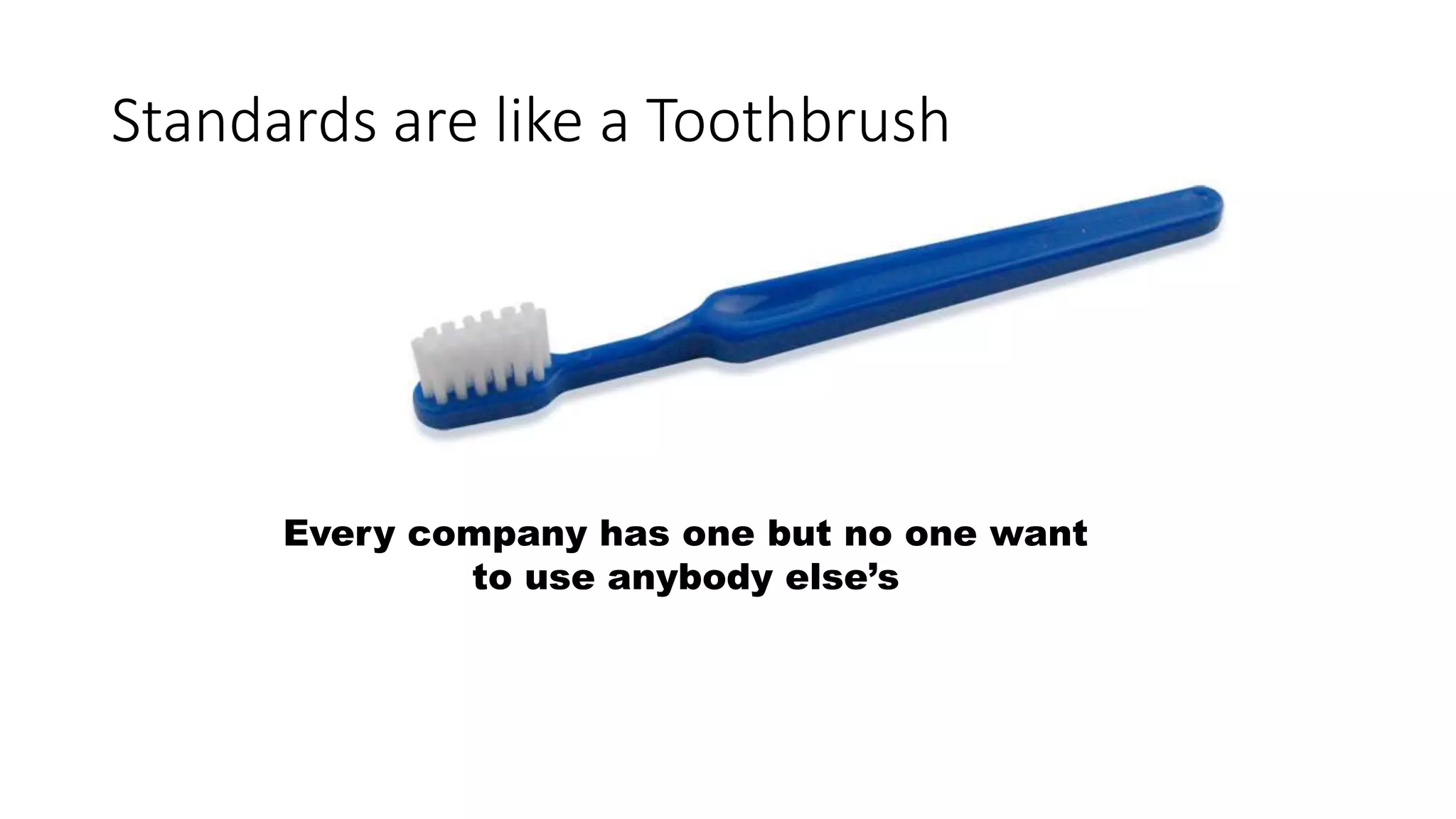
Standards are like a Toothbrush 
Every company has one but no one want 
to use anybody else’s
Old Dog New Trick
3.0 
Openness 
A B C D 
Availability + 
A B C D 
Adoption 
A B C D
New Kids
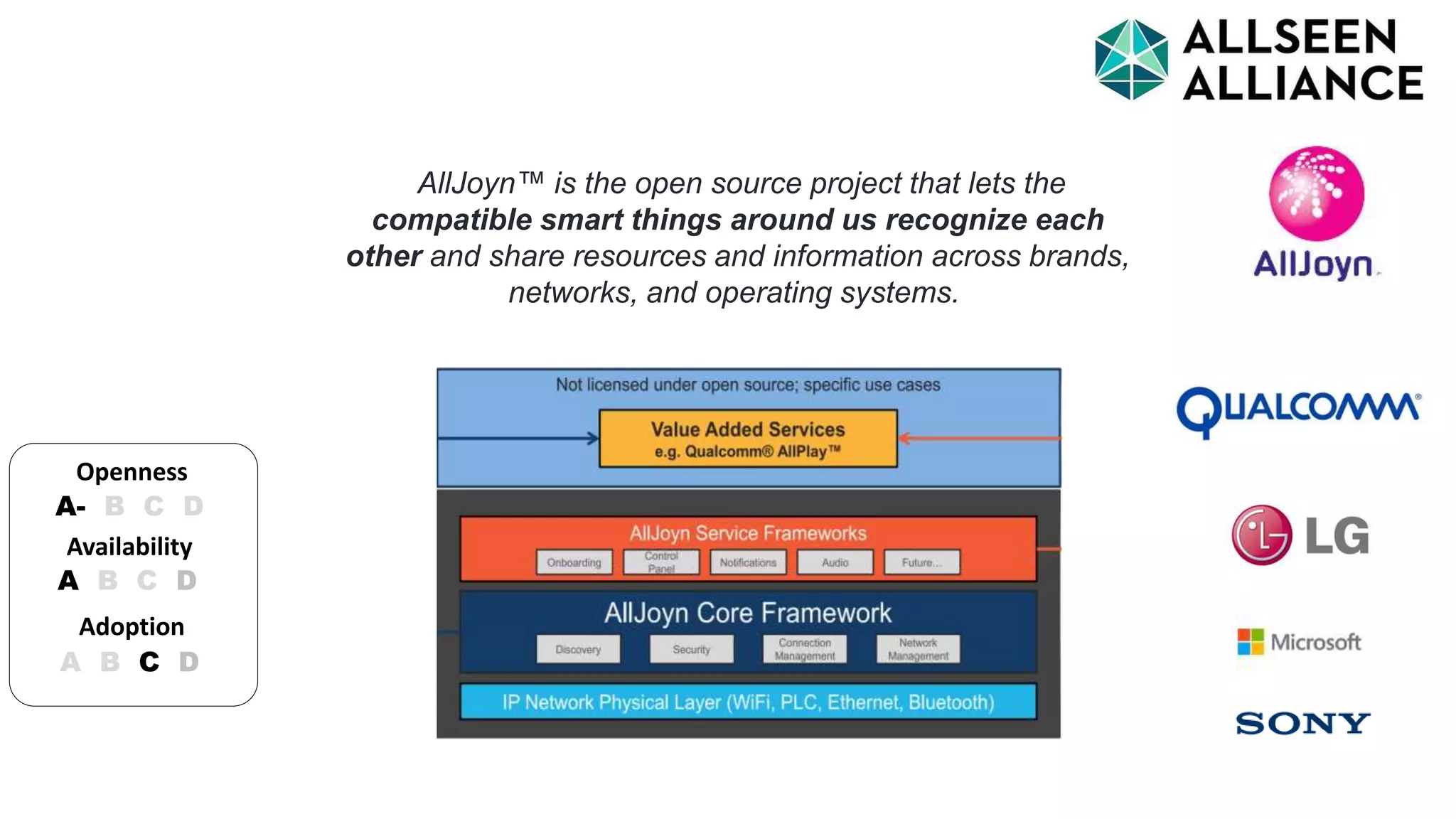
AllJoyn™ is the open source project that lets the 
compatible smart things around us recognize each 
other and share resources and information across brands, 
networks, and operating systems. 
Openness 
A- B C D 
Availability 
A B C D 
Adoption 
A B C D
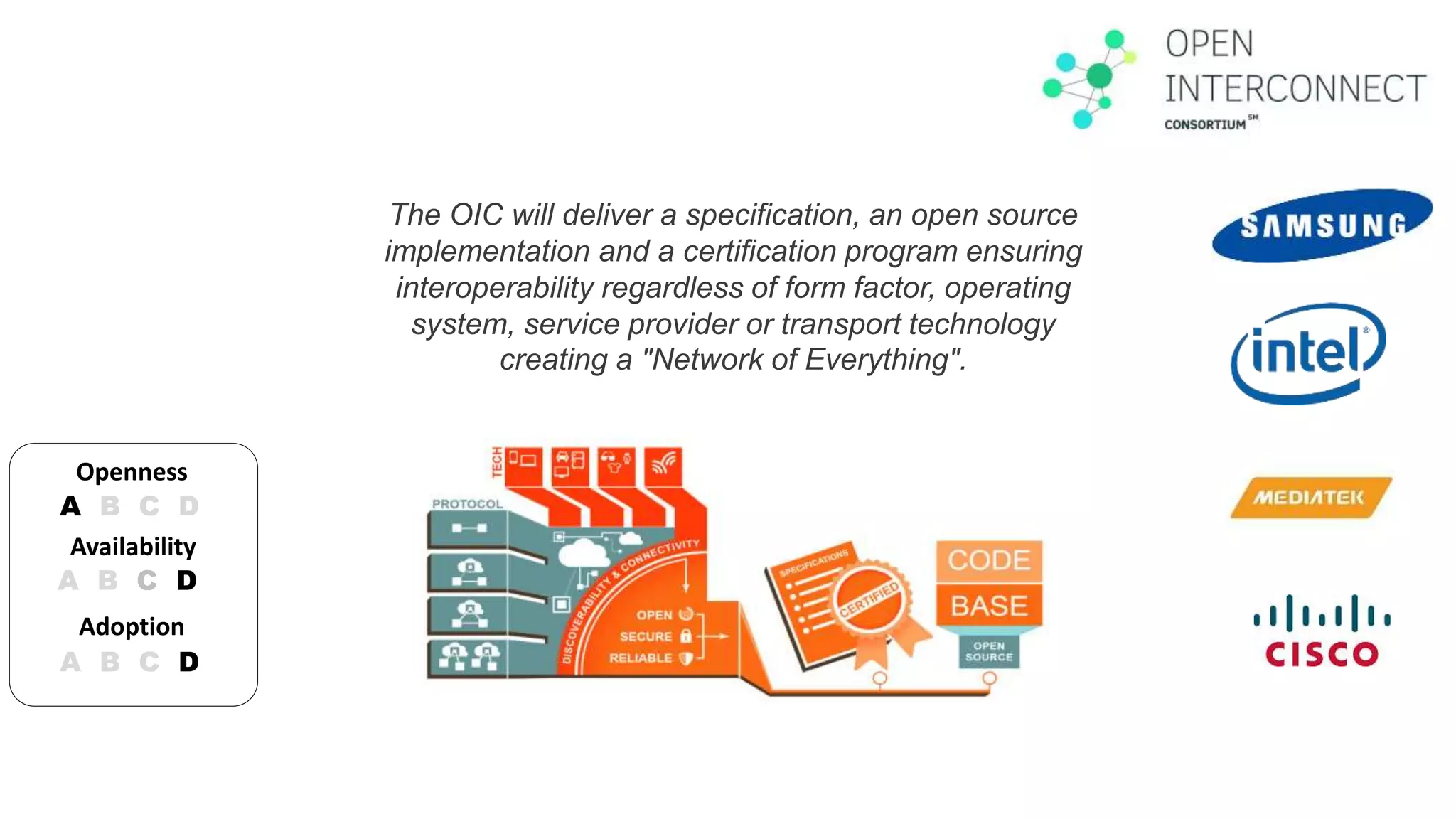
The OIC will deliver a specification, an open source 
implementation and a certification program ensuring 
interoperability regardless of form factor, operating 
system, service provider or transport technology 
creating a "Network of Everything". 
Openness 
A B C D 
Availability 
A B C D 
Adoption 
A B C D
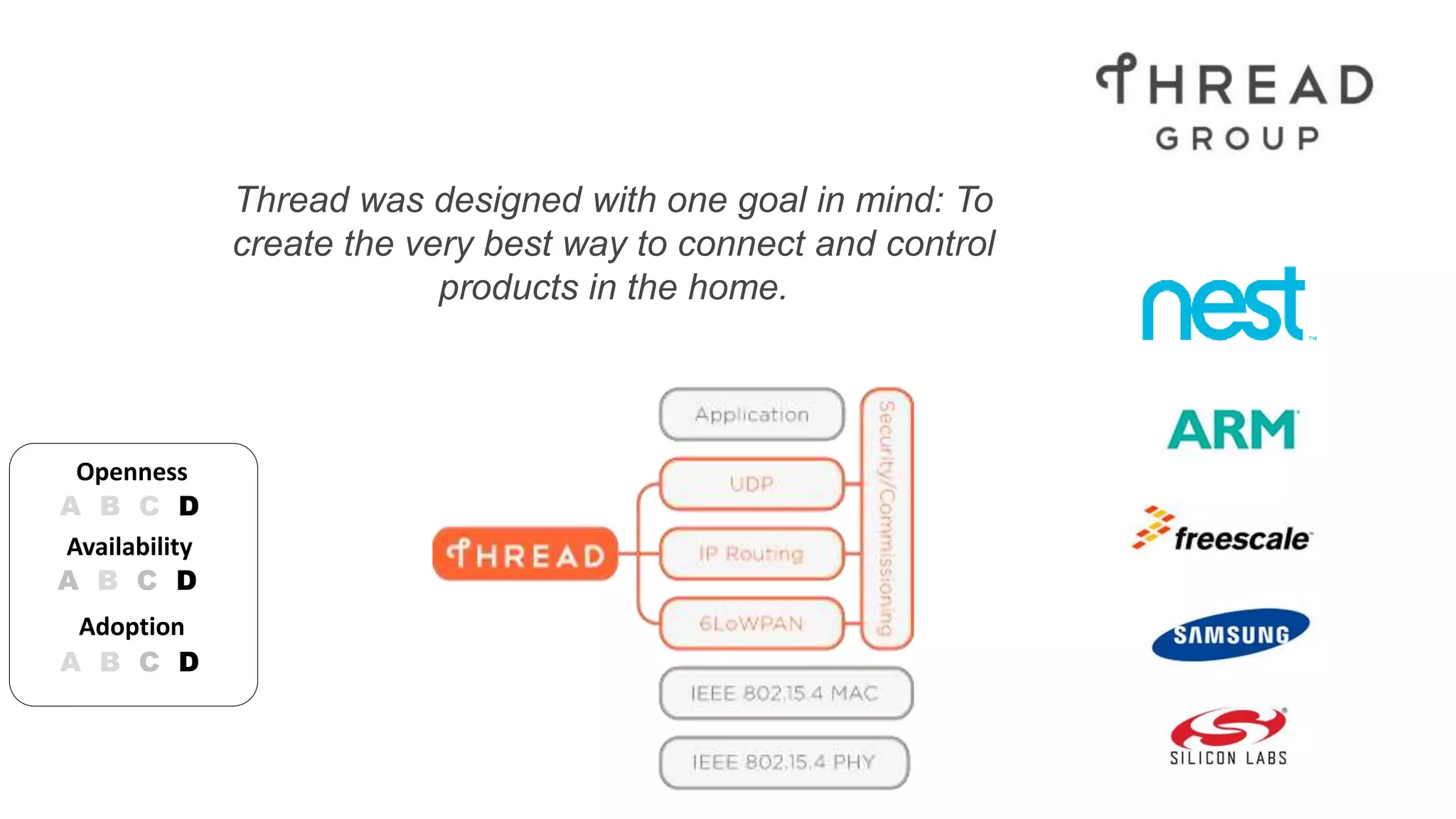
Thread was designed with one goal in mind: To 
create the very best way to connect and control 
products in the home. 
Openness 
A B C D 
Availability 
A B C D 
Adoption 
A B C D
Developer Focus
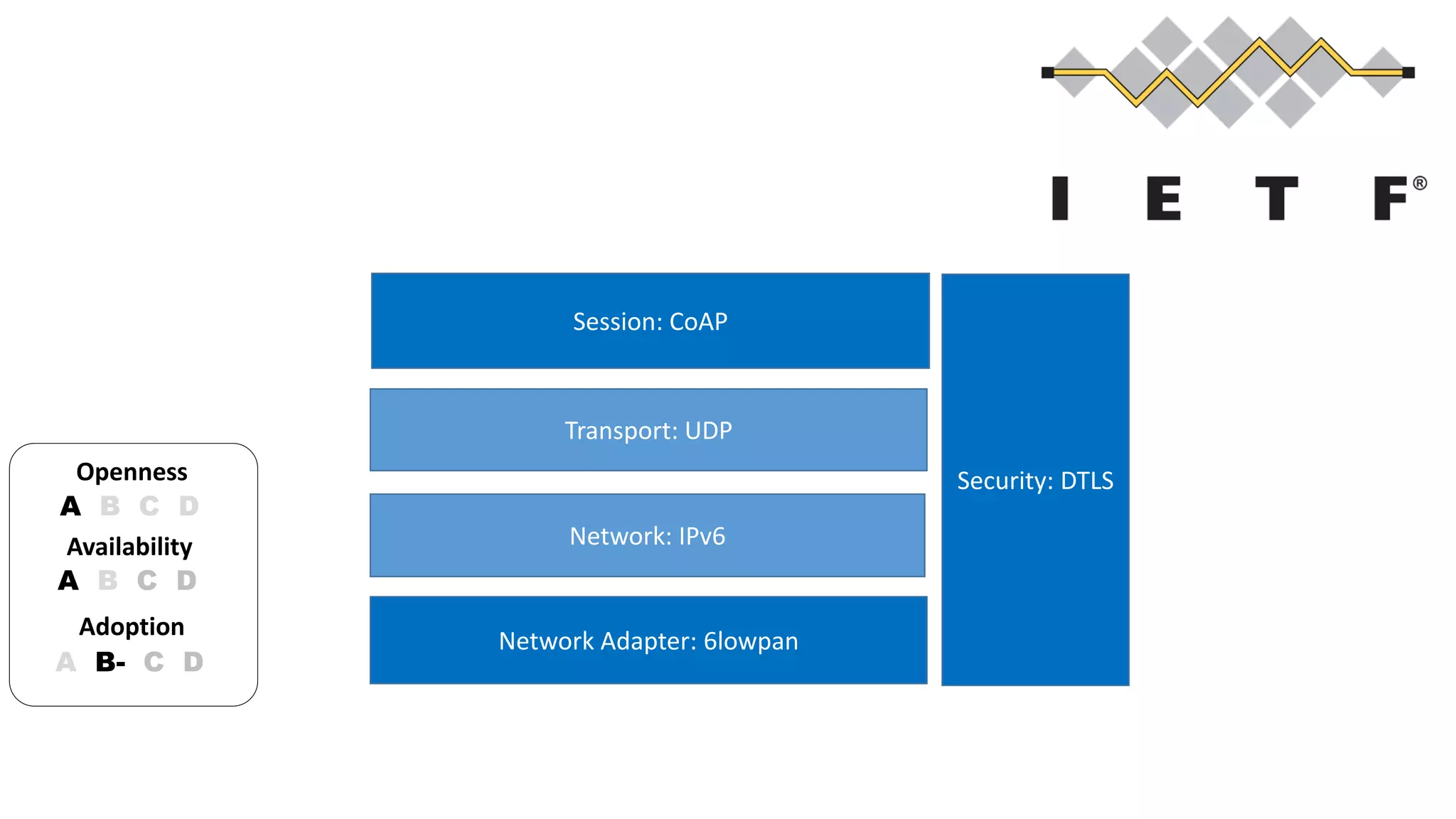
Session: CoAP 
Transport: UDP 
Network: IPv6 
Network Adapter: 6lowpan 
Openness 
A B C D 
Availability 
A B C D 
Adoption 
A B- C D 
Security: DTLS
MQTT is a machine-to-machine (M2M)/"Internet of 
Things" connectivity protocol. It was designed as an 
extremely lightweight publish/subscribe messaging 
transport. It is useful for connections with remote 
locations where a small code footprint is required 
and/or network bandwidth is at a premium. 
Openness 
A- B C D 
Availability 
A B C D 
Adoption 
A B C D
Lightweight M2M from the Open Mobile Alliance is 
fast becoming the global industry standard for M2M 
device management for the development of a fast, 
deployable, client-server specification to provide 
machine-to-machine service. 
Openness 
A- B C D 
Availability 
A B C D 
Adoption 
A B C+ D
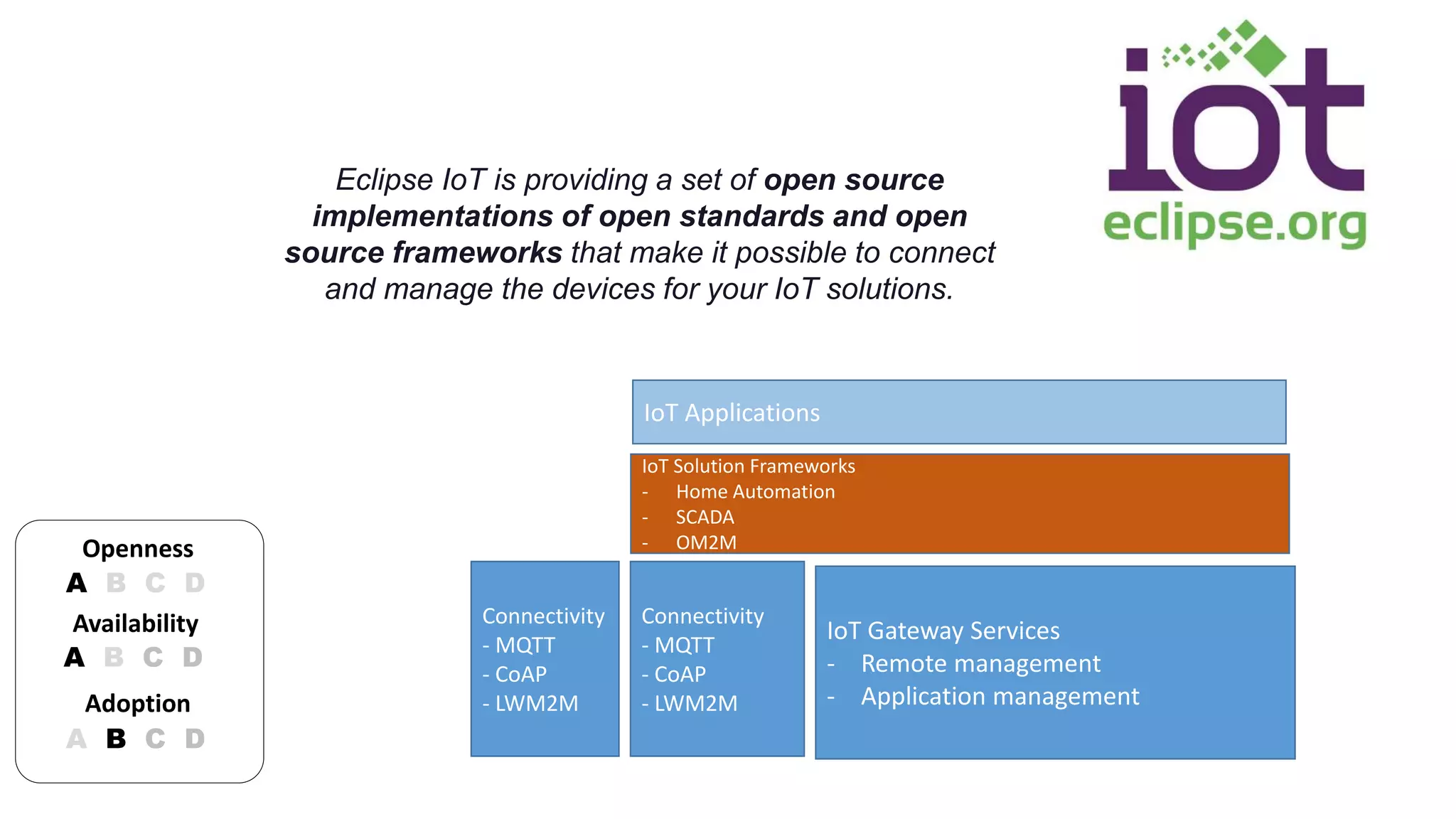
Eclipse IoT is providing a set of open source 
implementations of open standards and open 
source frameworks that make it possible to connect 
and manage the devices for your IoT solutions. 
Openness 
A B C D 
Availability 
A B C D 
Adoption 
A B C D 
Connectivity 
- MQTT 
- CoAP 
- LWM2M 
IoT Gateway Services 
- Remote management 
- Application management 
IoT Applications 
IoT Solution Frameworks 
- Home Automation 
- SCADA 
- OM2M 
Connectivity 
- MQTT 
- CoAP 
- LWM2M
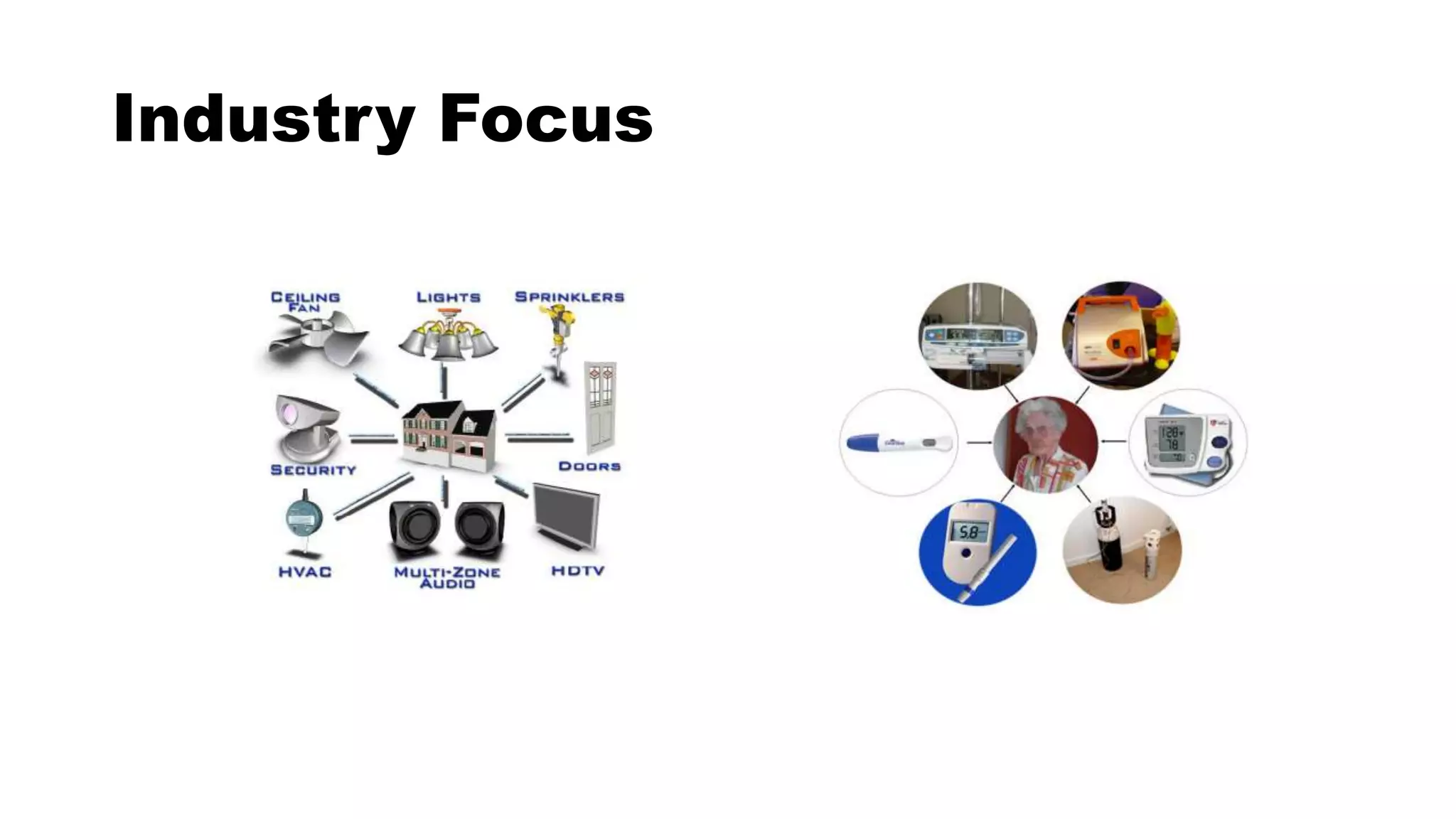
Industry Focus
The purpose and goal of oneM2M is to develop technical 
specifications which address the need for a common 
M2M Service Layer that can be readily embedded within 
various hardware and software, and relied upon to 
connect the myriad of devices in the field with M2M 
application servers worldwide. 
Openness 
A B C D 
Availability 
A B C D 
Adoption 
A B C D
Our scope has now been expanded to cover the 
entire spectrum of requirements for devices and 
service support in the digital home. Our projects fall 
within two main themes: connectivity and service 
enabling, with specific reference to smart home 
scenarios. 
Openness 
A B C D 
Availability 
A B C D 
Adoption 
A B C- D
Continua is dedicated to establishing a system of 
interoperable personal connected health solutions with 
the knowledge that extending those solutions into the 
home fosters independence, empowers individuals and 
provides the opportunity for truly personalized health and 
wellness management. 
Openness 
A B C D 
Availability 
A B C D 
Adoption 
A B C D
Founded in 1906, the IEC (International 
Electrotechnical Commission) is the world’s leading 
organization for the preparation and publication of 
International Standards for all electrical, electronic 
and related technologies. These are known 
collectively as “electrotechnology”. 
Openness 
A B C+ D 
Availability 
A B C D 
Adoption 
A B C D
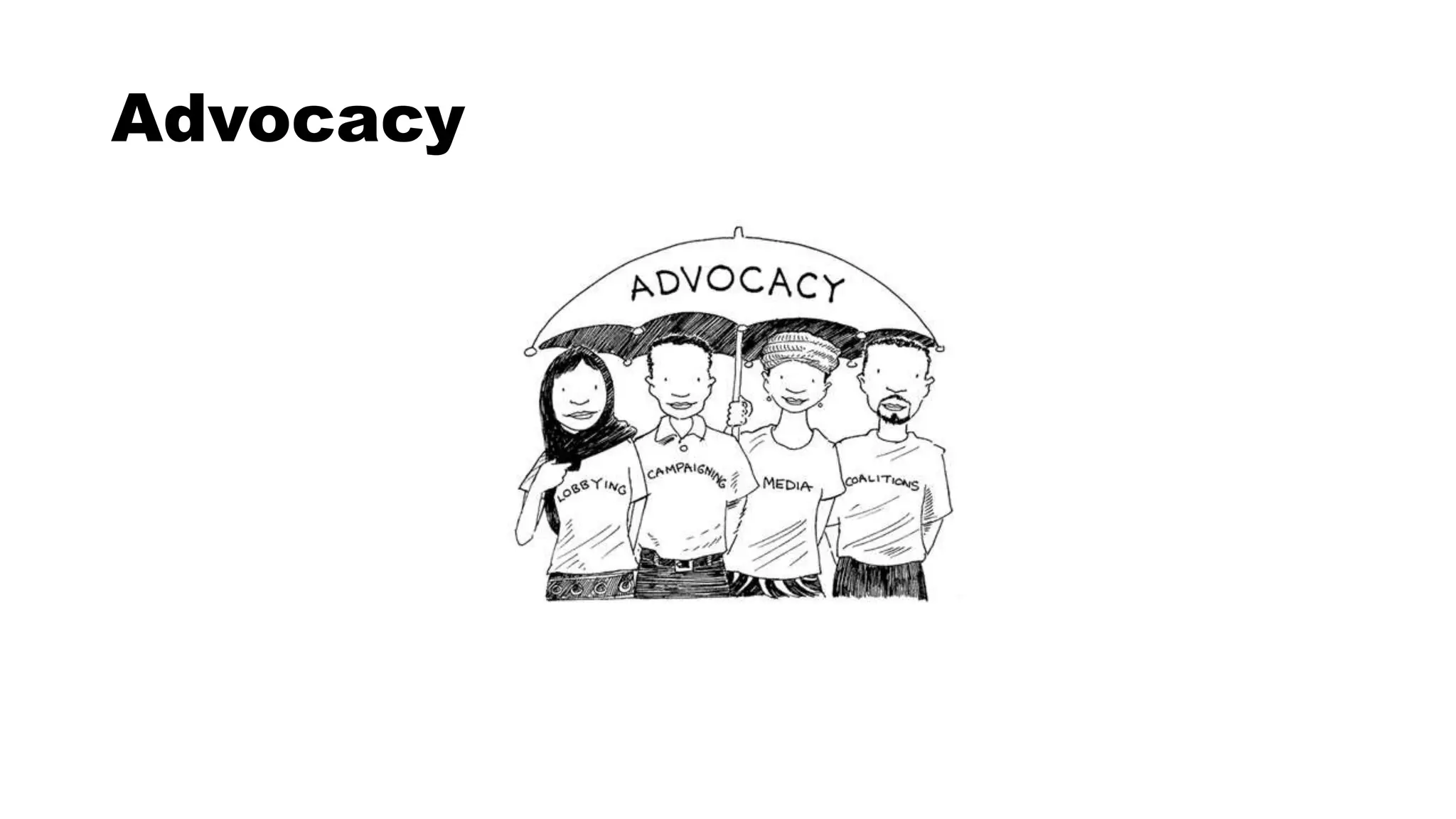
Advocacy
The Industrial Internet Consortium (IIC) was founded 
in March 2014 to bring together the organizations 
and technologies necessary to accelerate growth of 
the Industrial Internet by identifying, assembling and 
promoting best practices. 
Openness 
A B C D 
Availability 
A B C D 
Adoption 
A B C D
Since 2008, the IPSO Alliance has served as a 
resource center and thought leader seeking to 
establish the Internet Protocol as the basis for the 
connection of Smart Objects. The IPSO Alliance 
provides a foundation for industry growth by 
fostering awareness, providing education, promoting 
the industry, generating research, and creating a 
better understanding of IP and its role in the Internet 
of Things. 
Openness 
A B C D 
Availability 
A B C D 
Adoption 
A B C- D
The M2M Alliance represents the interests of the 
M2M industry by creating better general conditions 
for attractive and lucrative M2M solutions through 
the constant interaction among industry, R&D and 
policy makers. The promotion of uniform and cross-industry 
standards forms an important cornerstone 
for creating a future-proof foundation for new 
products and innovations. As an independent 
industry association the M2M Alliance supports its 
members in the growing M2M market as an ideal 
partner in the fields of hardware, software, 
Openness 
A B C D 
Availability integration and consulting. 
A B C D 
Adoption 
A B C- D
Standard
Open Will Win
Thank You 
Ian.Skerrett@eclipse.org 
@ianskerrett 
iot.eclipse.org

ABC of IoT Consortiums

  • 1.
    ABCs of IoT Consortiums Ian Skerrett Eclipse Foundation @ianskerrett
  • 2.
  • 5.
    Standards are likea Toothbrush Every company has one but no one want to use anybody else’s
  • 6.
  • 7.
    3.0 Openness AB C D Availability + A B C D Adoption A B C D
  • 8.
  • 9.
    AllJoyn™ is theopen source project that lets the compatible smart things around us recognize each other and share resources and information across brands, networks, and operating systems. Openness A- B C D Availability A B C D Adoption A B C D
  • 10.
    The OIC willdeliver a specification, an open source implementation and a certification program ensuring interoperability regardless of form factor, operating system, service provider or transport technology creating a "Network of Everything". Openness A B C D Availability A B C D Adoption A B C D
  • 11.
    Thread was designedwith one goal in mind: To create the very best way to connect and control products in the home. Openness A B C D Availability A B C D Adoption A B C D
  • 12.
  • 13.
    Session: CoAP Transport:UDP Network: IPv6 Network Adapter: 6lowpan Openness A B C D Availability A B C D Adoption A B- C D Security: DTLS
  • 14.
    MQTT is amachine-to-machine (M2M)/"Internet of Things" connectivity protocol. It was designed as an extremely lightweight publish/subscribe messaging transport. It is useful for connections with remote locations where a small code footprint is required and/or network bandwidth is at a premium. Openness A- B C D Availability A B C D Adoption A B C D
  • 15.
    Lightweight M2M fromthe Open Mobile Alliance is fast becoming the global industry standard for M2M device management for the development of a fast, deployable, client-server specification to provide machine-to-machine service. Openness A- B C D Availability A B C D Adoption A B C+ D
  • 16.
    Eclipse IoT isproviding a set of open source implementations of open standards and open source frameworks that make it possible to connect and manage the devices for your IoT solutions. Openness A B C D Availability A B C D Adoption A B C D Connectivity - MQTT - CoAP - LWM2M IoT Gateway Services - Remote management - Application management IoT Applications IoT Solution Frameworks - Home Automation - SCADA - OM2M Connectivity - MQTT - CoAP - LWM2M
  • 17.
  • 18.
    The purpose andgoal of oneM2M is to develop technical specifications which address the need for a common M2M Service Layer that can be readily embedded within various hardware and software, and relied upon to connect the myriad of devices in the field with M2M application servers worldwide. Openness A B C D Availability A B C D Adoption A B C D
  • 19.
    Our scope hasnow been expanded to cover the entire spectrum of requirements for devices and service support in the digital home. Our projects fall within two main themes: connectivity and service enabling, with specific reference to smart home scenarios. Openness A B C D Availability A B C D Adoption A B C- D
  • 20.
    Continua is dedicatedto establishing a system of interoperable personal connected health solutions with the knowledge that extending those solutions into the home fosters independence, empowers individuals and provides the opportunity for truly personalized health and wellness management. Openness A B C D Availability A B C D Adoption A B C D
  • 21.
    Founded in 1906,the IEC (International Electrotechnical Commission) is the world’s leading organization for the preparation and publication of International Standards for all electrical, electronic and related technologies. These are known collectively as “electrotechnology”. Openness A B C+ D Availability A B C D Adoption A B C D
  • 22.
  • 23.
    The Industrial InternetConsortium (IIC) was founded in March 2014 to bring together the organizations and technologies necessary to accelerate growth of the Industrial Internet by identifying, assembling and promoting best practices. Openness A B C D Availability A B C D Adoption A B C D
  • 24.
    Since 2008, theIPSO Alliance has served as a resource center and thought leader seeking to establish the Internet Protocol as the basis for the connection of Smart Objects. The IPSO Alliance provides a foundation for industry growth by fostering awareness, providing education, promoting the industry, generating research, and creating a better understanding of IP and its role in the Internet of Things. Openness A B C D Availability A B C D Adoption A B C- D
  • 25.
    The M2M Alliancerepresents the interests of the M2M industry by creating better general conditions for attractive and lucrative M2M solutions through the constant interaction among industry, R&D and policy makers. The promotion of uniform and cross-industry standards forms an important cornerstone for creating a future-proof foundation for new products and innovations. As an independent industry association the M2M Alliance supports its members in the growing M2M market as an ideal partner in the fields of hardware, software, Openness A B C D Availability integration and consulting. A B C D Adoption A B C- D
  • 26.
  • 27.
  • 28.
    Thank You Ian.Skerrett@eclipse.org @ianskerrett iot.eclipse.org

Editor's Notes

  • #2 Today I want to talk about all the different consortiums that have started around IoT. Someday it seems like a new consortium is started every week so it has become a crowded space.
  • #3 Before I get started, like some of my previous speakers I wanted to show my safe harbour slide. You shouldn’t make any boating, weather or purchasing decision based on this presentation.
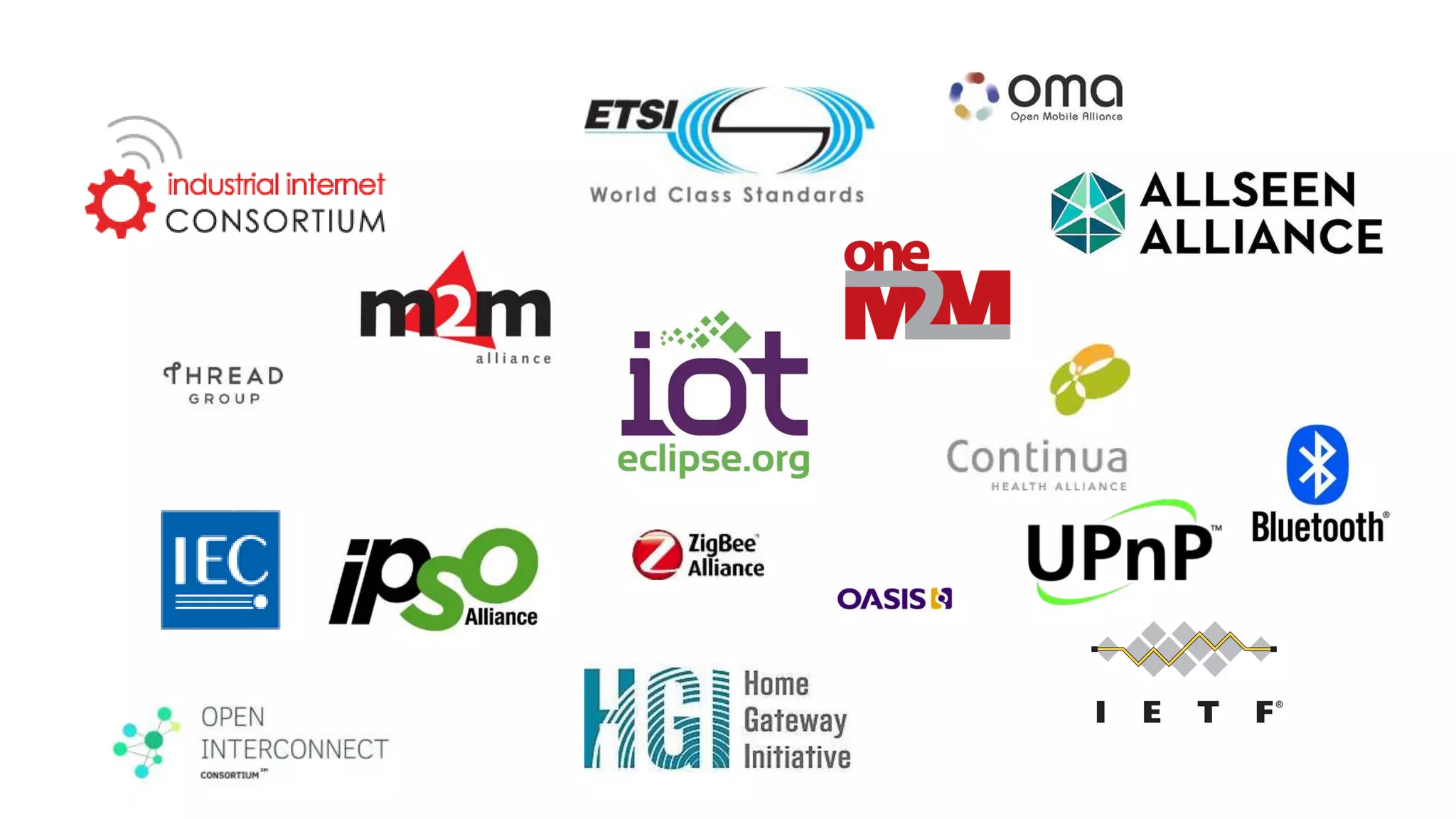
  • #4 IoT is definitely a hot topic and in the last two years a number of IoT consortiums have been started. I first became interested in tracking these consortiums because at Eclipse we believe IoT will only be successful if it is based on open source and open standards. At Eclipse we want to be the home for IoT open source technology and host implementations of open standards. Therefore it became important for me to start to understand what was out there. They are made of existing groups, like IETF, OASIS, my group Eclipse and new groups like Allseen, Thread and Industrial Internet Consortium. Each group has a specific focus and mission. Some will compete with each other and some are unique. What I want to do is provide a brief introduction to some of these groups and give a brief overview of how open they are, how real there are in terms of delivery on their mission and how widely adopted or popular. This isn’t going to be an exhaustive list but my hope is it will give you a sense of what is out there.
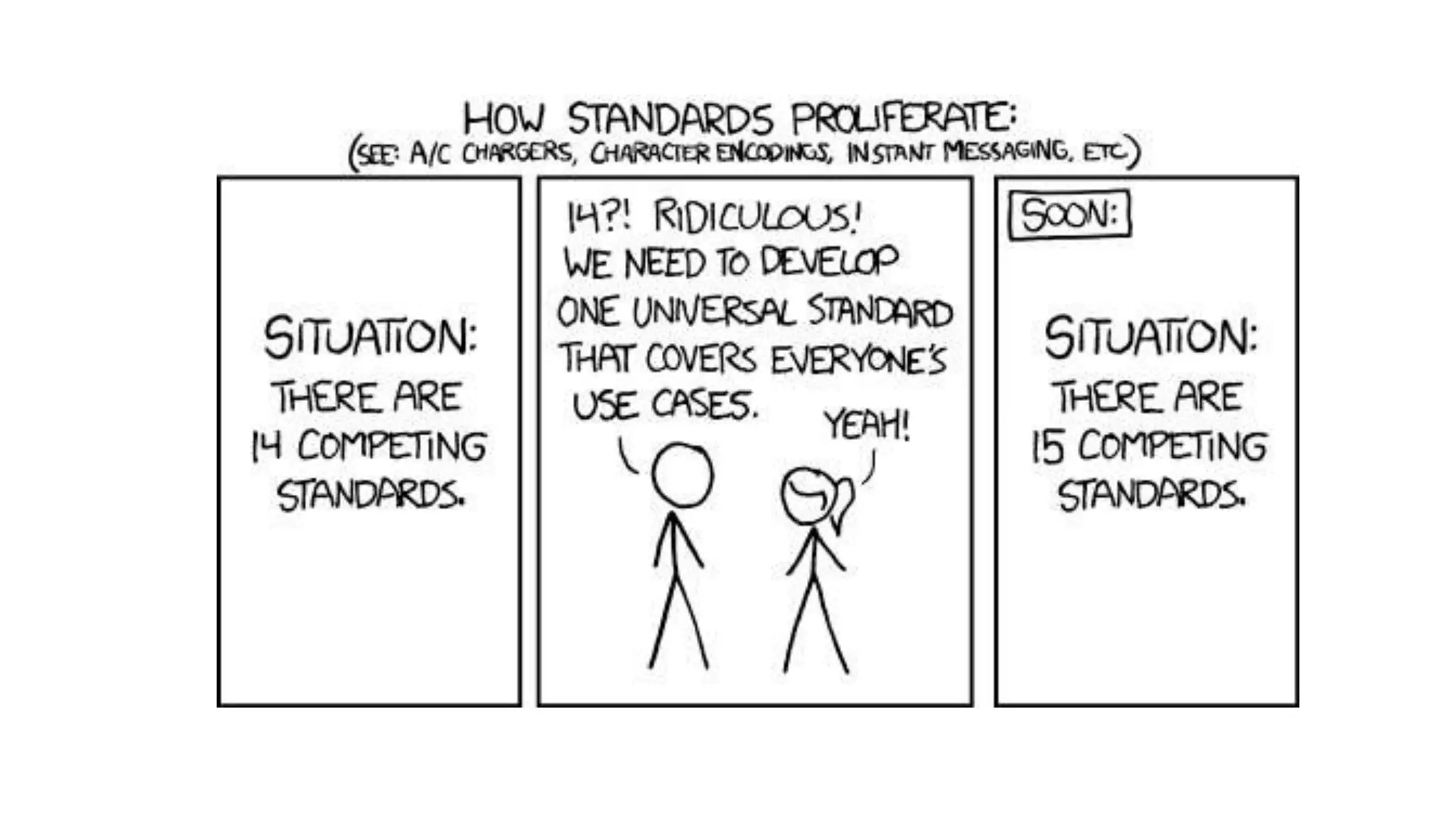
  • #5 I think the first think people think of is ‘why do we need these consortiums’. This comic from XKCD is pretty indicative of some of the efforts. There is a certain aspect and risk that people want to achieve one IoT standard. I don’t believe we will actually get to just one standard. However, I do believe that for IoT to succeed we do need a set of open standards and open source technology to make it a success.
  • #7 I think of the consortiums in different types of categories. The first are a set of existing groups that have been successful in their domain and are now expanding into the IoT. These include groups like Zigbee, Bluetooth and UPnP.
  • #8 All of these groups are updating their specification to be better suited for IoT. In particular they are producing new version for optimization of power management and interoperability. Zigbee just announced 3.0, Bluetooth announced Bluetooth LTE, now Bluetooth Smart and even UPnP has introduced their IoT version called UPnP+. These new versions and initiatives are still a work in progress but it is coming/ A particulate challenge with these groups is that they are very closed. To use their technology you need to license and often certify through membership of the Alliance. From an open source perspective, the IPR is often RAND so the issue of patents is not entirely clear for open source implementations. It is not impossible but it not are clear as some of the other organizations. The good news is that these groups do have wide adoption and acceptance in their markets.
  • #9 More interesting to me is a number of new kids that appear to be working on connectivity between devices. Organizations like Allseen, OIC and Thread appear to be staking out the territory of how you solve the challenge of getting all you home automation devices talking together. They are building frameworks on top of standards like Zigbee, Bluetooth, etc. Of all the consortiums, these 3 seem to be the most competitive. They are new and getting lots of hype so there appears to be momentum on their side
  • #10 The Allseen Alliance was created in 2013 by Qualcomm for their Alljoyn framework. Alljoyn has been around since 2011 but in 2013 Qualcomm decided they need a better governance model so they created a foundation. Of the 3 consortiums in this group, Allseen is the most advanced in they have code available. The framework itself is open source but under obscure open source license called ISC, which doesn’t have a patent clause. Allseen has also stated they will not do a standard so it binds everyone to the single Alljoyn implementation. Adoption of Alljoyn appears to be very modest.
  • #11 OIC was announced this year. It appears to be Intel’s and Samsung’s competitive response to Allseen. The missions is almost identical to Allseen. In public announcements, Intel claimed they created Allseen due to IP concerns. OIC is setup to be a standard and an open source implementation. They using the Apache license for the code, so they appear to be very open. However, they are just new so there is nothing available to download and there is no adoption.
  • #12 Thread was announced in 2014 too. It would appear to be Google/Nest response for an IoT consortium. The current IPR appears to be RAND so not particularly open.
  • #14 A group of consortiums focused on Developers.
  • #15 IEFT has been very active in the IoT space. In particular with 1) CoAP a RESTful application message protocol running on top of UDP. Suited for constrained device. 2) 6lowpan, IPv6 over low power personal networks, and 3) DTLS for device security. These efforts are available today but the adoption is limited. It is an
  • #16 OASIS has standardized another message protocol called MQTT. MQTT is a pub/sub protocol designed for constrained devices. Designed by IBM, it became an official OASIS standard in October 2014. Adoption of MQTT appears to be picking up, in particular vendors are supporting it in their platforms, including opensensors, IBM, 2lemetry, etc.
  • #17 OMA has a standard called Lightweight M2M for device management.