Strategic Company &
Market Analysis
2017 Master in
Management
IE Business School
Competitive Strategy
Company Analysis
Strategic Situation Analysis
Strategy Recommendations
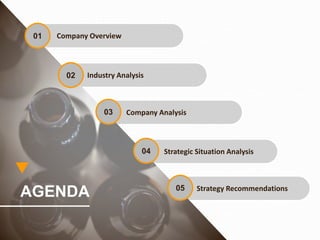
Company Overview
Industry Analysis
AGENDA
01
02
03
04
05
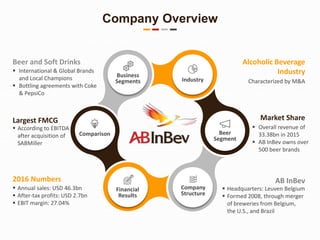
Company Overview
Business
Segments
 International & Global Brands
and Local Champions
 Bottling agreements with Coke
& PepsiCo
Beer and Soft Drinks
Comparison
 According to EBITDA
after acquisition of
SABMiller
Largest FMCG
Financial
Results
 Annual sales: USD 46.3bn
 After-tax profits: USD 2.7bn
 EBIT margin: 27.04%
2016 Numbers
Industry Characterized by M&A
Alcoholic Beverage
Industry
Beer
Segment
 Overall revenue of
33.38bn in 2015
 AB InBev owns over
500 beer brands
Market Share
Company
Structure
 Headquarters: Leuven Belgium
 Formed 2008, through merger
of breweries from Belgium,
the U.S., and Brazil
AB InBev
Industry Analysis
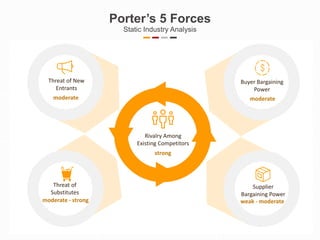
Porter’s 5 Forces
Static Industry Analysis
Threat of New
Entrants
moderate
Threat of
Substitutes
moderate - strong
Buyer Bargaining
Power
moderate
Supplier
Bargaining Power
weak - moderate
Rivalry Among
Existing Competitors
strong
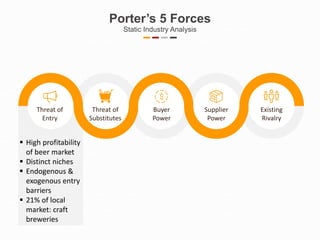
 High profitability
of beer market
 Distinct niches
 Endogenous &
exogenous entry
barriers
 21% of local
market: craft
breweries
Porter’s 5 Forces
Static Industry Analysis
Existing
Rivalry
Threat of
Entry
Buyer
Power
Supplier
Power
Threat of
Substitutes
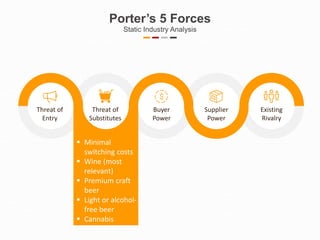
 Minimal
switching costs
 Wine (most
relevant)
 Premium craft
beer
 Light or alcohol-
free beer
 Cannabis
Porter’s 5 Forces
Static Industry Analysis
Existing
Rivalry
Threat of
Entry
Buyer
Power
Supplier
Power
Threat of
Substitutes
 Scattered end-
consumers
 Low threat of
home production
 Reliance on
retailers as
channel to market
 Declining demand
Porter’s 5 Forces
Static Industry Analysis
Existing
Rivalry
Threat of
Entry
Buyer
Power
Supplier
Power
Threat of
Substitutes
Heavy reliance
on external
suppliers (water,
grain, hop)
Resources
become scarcer
Need for high
quality
Porter’s 5 Forces
Static Industry Analysis
Existing
Rivalry
Threat of
Entry
Buyer
Power
Supplier
Power
Threat of
Substitutes
 Highly
concentrated
(CT: 2.22)
 4 giants control
50% of market
 Pred. HHI after
merger = 2.500
Porter’s 5 Forces
Static Industry Analysis
Existing
Rivalry
Threat of
Entry
Buyer
Power
Supplier
Power
Threat of
Substitutes
INDUSTRY
DYNAMICS
SEGMENTATION
Through Strategic Group Matrix
BroadNarrow
NarrowBroad
Product Portfolio
CustomerSegment
THE COMPETITIVE
ADVANTAGE
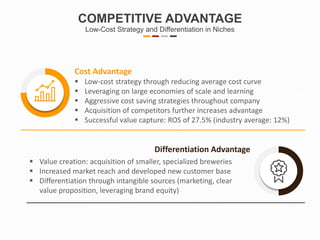
COMPETITIVE ADVANTAGE
Low-Cost Strategy and Differentiation in Niches
 Low-cost strategy through reducing average cost curve
 Leveraging on large economies of scale and learning
 Aggressive cost saving strategies throughout company
 Acquisition of competitors further increases advantage
 Successful value capture: ROS of 27.5% (industry average: 12%)
Cost Advantage
 Value creation: acquisition of smaller, specialized breweries
 Increased market reach and developed new customer base
 Differentiation through intangible sources (marketing, clear
value proposition, leveraging brand equity)
Differentiation Advantage
Strategic Situation Analysis
The SAB Miller Acquisition
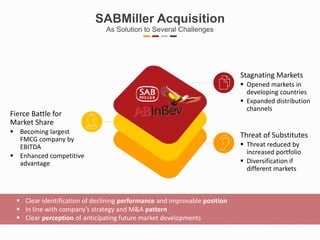
SABMiller Acquisition
As Solution to Several Challenges
Fierce Battle for
Market Share
 Becoming largest
FMCG company by
EBITDA
 Enhanced competitive
advantage
Stagnating Markets
 Opened markets in
developing countries
 Expanded distribution
channels
Threat of Substitutes
 Threat reduced by
increased portfolio
 Diversification if
different markets
 Clear identification of declining performance and improvable position
 In line with company’s strategy and M&A pattern
 Clear perception of anticipating future market developments
STRATEGY
RECOMMENDATIONS
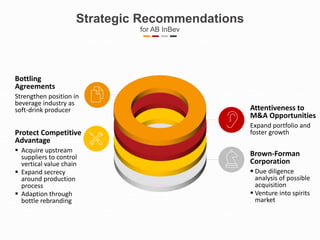
Strategic Recommendations
for AB InBev
Bottling
Agreements
Strengthen position in
beverage industry as
soft-drink producer Attentiveness to
M&A Opportunities
Expand portfolio and
foster growthProtect Competitive
Advantage
 Acquire upstream
suppliers to control
vertical value chain
 Expand secrecy
around production
process
 Adaption through
bottle rebranding
Brown-Forman
Corporation
 Due diligence
analysis of possible
acquisition
 Venture into spirits
market
Strategic Company &
Market Analysis
2017 Master in
Management
IE Business School
Competitive Strategy

AB InBev - Strategic Company Analysis

  • 1.
    Strategic Company & MarketAnalysis 2017 Master in Management IE Business School Competitive Strategy
  • 2.
    Company Analysis Strategic SituationAnalysis Strategy Recommendations Company Overview Industry Analysis AGENDA 01 02 03 04 05
  • 3.
    Company Overview Business Segments  International& Global Brands and Local Champions  Bottling agreements with Coke & PepsiCo Beer and Soft Drinks Comparison  According to EBITDA after acquisition of SABMiller Largest FMCG Financial Results  Annual sales: USD 46.3bn  After-tax profits: USD 2.7bn  EBIT margin: 27.04% 2016 Numbers Industry Characterized by M&A Alcoholic Beverage Industry Beer Segment  Overall revenue of 33.38bn in 2015  AB InBev owns over 500 beer brands Market Share Company Structure  Headquarters: Leuven Belgium  Formed 2008, through merger of breweries from Belgium, the U.S., and Brazil AB InBev
  • 4.
  • 5.
    Porter’s 5 Forces StaticIndustry Analysis Threat of New Entrants moderate Threat of Substitutes moderate - strong Buyer Bargaining Power moderate Supplier Bargaining Power weak - moderate Rivalry Among Existing Competitors strong
  • 6.
     High profitability ofbeer market  Distinct niches  Endogenous & exogenous entry barriers  21% of local market: craft breweries Porter’s 5 Forces Static Industry Analysis Existing Rivalry Threat of Entry Buyer Power Supplier Power Threat of Substitutes
  • 7.
     Minimal switching costs Wine (most relevant)  Premium craft beer  Light or alcohol- free beer  Cannabis Porter’s 5 Forces Static Industry Analysis Existing Rivalry Threat of Entry Buyer Power Supplier Power Threat of Substitutes
  • 8.
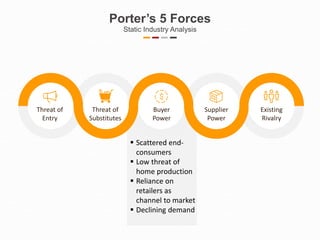
     Scattered end- consumers Low threat of home production  Reliance on retailers as channel to market  Declining demand Porter’s 5 Forces Static Industry Analysis Existing Rivalry Threat of Entry Buyer Power Supplier Power Threat of Substitutes
  • 9.
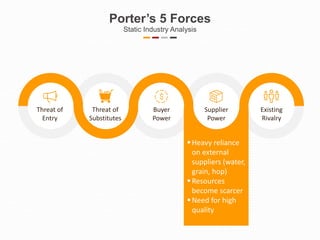
    Heavy reliance on external suppliers(water, grain, hop) Resources become scarcer Need for high quality Porter’s 5 Forces Static Industry Analysis Existing Rivalry Threat of Entry Buyer Power Supplier Power Threat of Substitutes
  • 10.
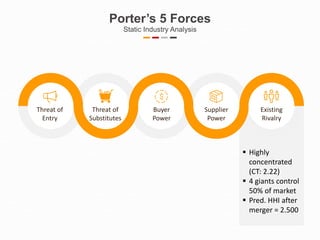
     Highly concentrated (CT: 2.22) 4 giants control 50% of market  Pred. HHI after merger = 2.500 Porter’s 5 Forces Static Industry Analysis Existing Rivalry Threat of Entry Buyer Power Supplier Power Threat of Substitutes
  • 11.
  • 12.
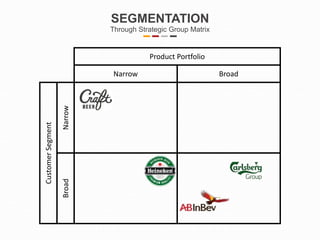
    SEGMENTATION Through Strategic GroupMatrix BroadNarrow NarrowBroad Product Portfolio CustomerSegment
  • 13.
  • 14.
    COMPETITIVE ADVANTAGE Low-Cost Strategyand Differentiation in Niches  Low-cost strategy through reducing average cost curve  Leveraging on large economies of scale and learning  Aggressive cost saving strategies throughout company  Acquisition of competitors further increases advantage  Successful value capture: ROS of 27.5% (industry average: 12%) Cost Advantage  Value creation: acquisition of smaller, specialized breweries  Increased market reach and developed new customer base  Differentiation through intangible sources (marketing, clear value proposition, leveraging brand equity) Differentiation Advantage
  • 15.
    Strategic Situation Analysis TheSAB Miller Acquisition
  • 16.
    SABMiller Acquisition As Solutionto Several Challenges Fierce Battle for Market Share  Becoming largest FMCG company by EBITDA  Enhanced competitive advantage Stagnating Markets  Opened markets in developing countries  Expanded distribution channels Threat of Substitutes  Threat reduced by increased portfolio  Diversification if different markets  Clear identification of declining performance and improvable position  In line with company’s strategy and M&A pattern  Clear perception of anticipating future market developments
  • 17.
  • 18.
    Strategic Recommendations for ABInBev Bottling Agreements Strengthen position in beverage industry as soft-drink producer Attentiveness to M&A Opportunities Expand portfolio and foster growthProtect Competitive Advantage  Acquire upstream suppliers to control vertical value chain  Expand secrecy around production process  Adaption through bottle rebranding Brown-Forman Corporation  Due diligence analysis of possible acquisition  Venture into spirits market
  • 19.
    Strategic Company & MarketAnalysis 2017 Master in Management IE Business School Competitive Strategy