MBA Class of ’14
MGMT614: Corporate Strategy| Group C
MBA Class of ’14
MGMT614: Corporate Strategy| Group C
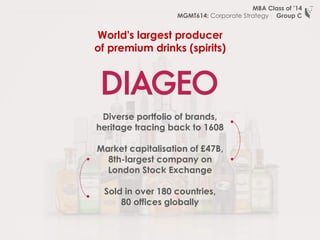
World's largest producer
of premium drinks (spirits)
Market capitalisation of £47B,
8th-largest company on
London Stock Exchange
Sold in over 180 countries,
80 offices globally
Diverse portfolio of brands,
heritage tracing back to 1608
PERFORMANCE
AMBITION
HOW
CAN DELIVER ITS
MBA Class of ’14
MGMT614: Corporate Strategy| Group C
AMBITION
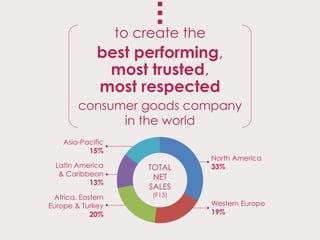
North America
33%Latin America
& Caribbean
13%
Asia-Pacific
15%
Africa, Eastern
Europe & Turkey
20%
Western Europe
19%
to create the
best performing,
most trusted,
most respected
consumer goods company
in the world
TOTAL
NET
SALES
(F13)
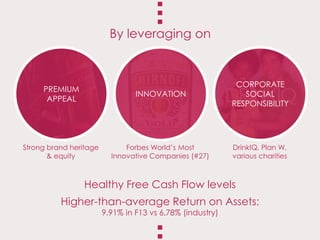
PREMIUM
APPEAL
CORPORATE
SOCIAL
RESPONSIBILITY
INNOVATION
Forbes World’s Most
Innovative Companies (#27)
Strong brand heritage
& equity
DrinkIQ, Plan W,
various charities
By leveraging on
Healthy Free Cash Flow levels
Higher-than-average Return on Assets:
9.91% in F13 vs 6.78% (industry)
INTERNAL
& EXTERNAL
ANALYSES
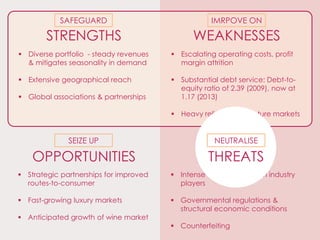
STRENGTHS WEAKNESSES
OPPORTUNITIES
 Diverse portfolio - steady revenues
& mitigates seasonality in demand
 Extensive geographical reach
 Global associations & partnerships
 Escalating operating costs, profit
margin attrition
 Substantial debt service: Debt-to-
equity ratio of 2.39 (2009), now at
1.17 (2013)
 Heavy reliance on mature markets
 Strategic partnerships for improved
routes-to-consumer
 Fast-growing luxury markets
 Anticipated growth of wine market
 Intense competition from industry
players
 Governmental regulations &
structural economic conditions
 Counterfeiting
SAFEGUARD IMRPOVE ON
SEIZE UP
THREATS
NEUTRALISE
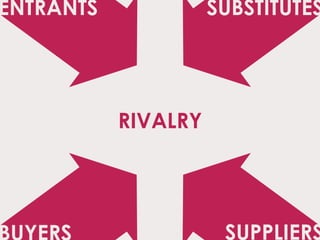
SUPPLIERS
ENTRANTS SUBSTITUTES
RIVALRY
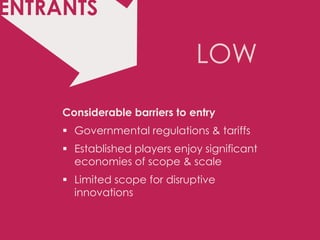
ENTRANTS
Considerable barriers to entry
 Governmental regulations & tariffs
 Established players enjoy significant
economies of scope & scale
 Limited scope for disruptive
innovations
LOW
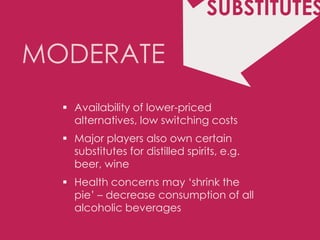
SUBSTITUTES
MODERATE
 Availability of lower-priced
alternatives, low switching costs
 Major players also own certain
substitutes for distilled spirits, e.g.
beer, wine
 Health concerns may ‘shrink the
pie’ – decrease consumption of all
alcoholic beverages
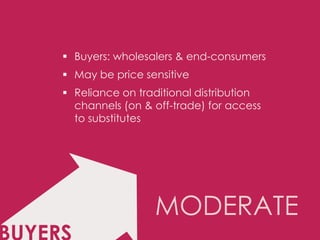
 Buyers: wholesalers & end-consumers
 May be price sensitive
 Reliance on traditional distribution
channels (on & off-trade) for access
to substitutes
MODERATE
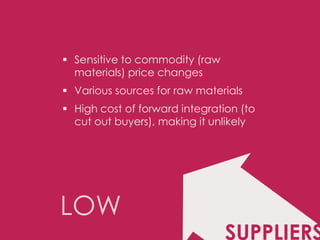
SUPPLIERS
 Sensitive to commodity (raw
materials) price changes
 Various sources for raw materials
 High cost of forward integration (to
cut out buyers), making it unlikely
LOW
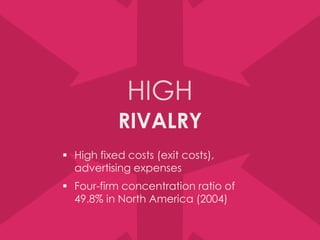
RIVALRY
 High fixed costs (exit costs),
advertising expenses
 Four-firm concentration ratio of
49.8% in North America (2004)
HIGH
KEY
STRATEGIC
ISSUES
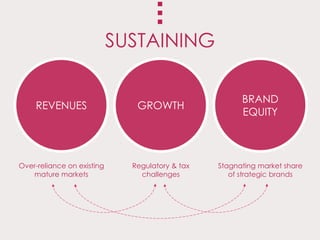
REVENUES
BRAND
EQUITY
GROWTH
SUSTAINING
Regulatory & tax
challenges
Over-reliance on existing
mature markets
Stagnating market share
of strategic brands
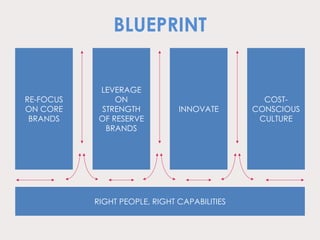
RE-FOCUS
ON CORE
BRANDS
LEVERAGE
ON
STRENGTH
OF RESERVE
BRANDS
INNOVATE
COST-
CONSCIOUS
CULTURE
RIGHT PEOPLE, RIGHT CAPABILITIES
BLUEPRINT
FINE PRINT
THANK YOU

MGMT614: Corporate Strategy for Diageo