INLAYS AND ONLAYS
By: Mustafa Salar
Supervisor: Dr. Karam Ahmed
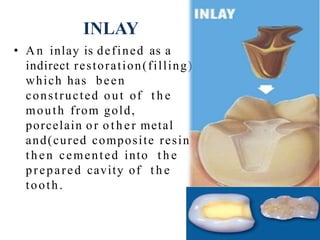
• A n inlay is defined as a
indirect restoration(filling)
which has been
constructed out of t h e
mouth from gold,
porcelain or other metal
and(cured composite resin)
then cemented into t h e
prepared cavity of t h e
tooth.
INLAY
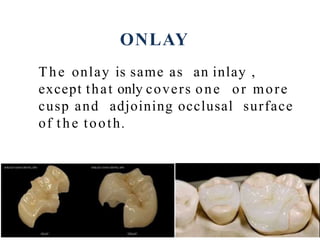
The onlay is same as an inlay ,
except that only covers one or more
cusp and adjoining occlusal surface
of the tooth.
ONLAY
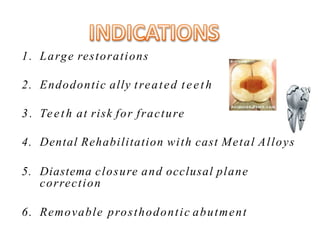
1. Large restorations
2. Endodontic ally treated teeth
3. Teeth at risk for fracture
4. Dental Rehabilitation with cast Metal Alloys
5. Diastema closure and occlusal plane
correction
6. Removable prosthodontic abutment
• High caries rate
• Young patients
• Esthetics
• Small restorations
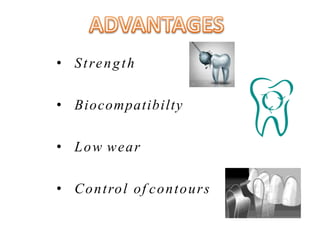
• Strength
• Biocompatibilty
• Low wear
• Control of contours
• Number of appointment
• Higher chair time
• Temporary Restorationa
• Cost
• Technique sensitive
• Splitting forces
METHODS
DIRECT
METHOD
INDIRECT
METHOD
6 flare
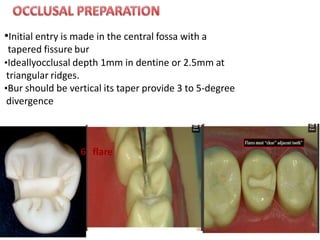
•Initial entry is made in the central fossa with a
tapered fissure bur
•Ideallyocclusal depth 1mm in dentine or 2.5mm at
triangular ridges.
•Bur should be vertical its taper provide 3 to 5-degree
divergence
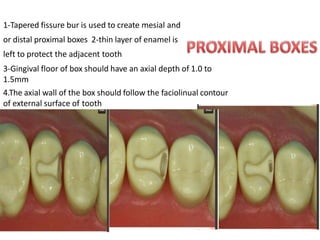
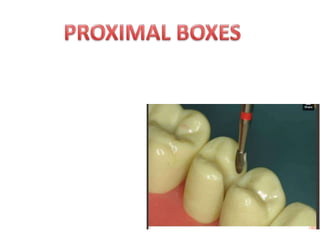
1-Tapered fissure bur is used to create mesial and
or distal proximal boxes 2-thin layer of enamel is
left to protect the adjacent tooth
3-Gingival floor of box should have an axial depth of 1.0 to
1.5mm
4.The axial wall of the box should follow the faciolinual contour
of external surface of tooth
1-All preparation floor and
should be smooth
2- all walls should be divergent
except axial
3-axial wall should be convergent
occlusally
Proximal bevel on facial and lingual walls of the box With garnet
disk OR THIN flame shape bur and blend with Gingival and occlusal
bevels.
The walls of the prep should diverge from the gingival floorin the
occlusal direction.
0.5 MM WIDE Bevels
wide
At occlusal proximal and gingival angles
Additional retention features
• Used when opposing walls (primary
retention) are short
 Dovtails
 Grooves
 slots
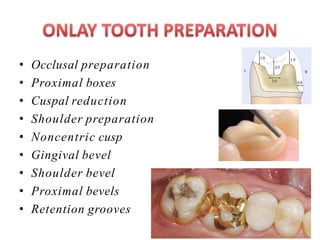
• Occlusal preparation
• Proximal boxes
• Cuspal reduction
• Shoulder preparation
• Noncentric cusp
• Gingival bevel
• Shoulder bevel
• Proximal bevels
• Retention grooves
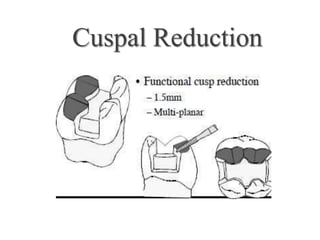
Cuspal Reduction
inlays&onlays
inlays&onlays
inlays&onlays
inlays&onlays
inlays&onlays
inlays&onlays

inlays&onlays

  • 1.
    INLAYS AND ONLAYS By:Mustafa Salar Supervisor: Dr. Karam Ahmed
  • 5.
    • A ninlay is defined as a indirect restoration(filling) which has been constructed out of t h e mouth from gold, porcelain or other metal and(cured composite resin) then cemented into t h e prepared cavity of t h e tooth. INLAY
  • 6.
    The onlay issame as an inlay , except that only covers one or more cusp and adjoining occlusal surface of the tooth. ONLAY
  • 8.
    1. Large restorations 2.Endodontic ally treated teeth 3. Teeth at risk for fracture 4. Dental Rehabilitation with cast Metal Alloys 5. Diastema closure and occlusal plane correction 6. Removable prosthodontic abutment
  • 9.
    • High cariesrate • Young patients • Esthetics • Small restorations
  • 10.
    • Strength • Biocompatibilty •Low wear • Control of contours
  • 11.
    • Number ofappointment • Higher chair time • Temporary Restorationa • Cost • Technique sensitive • Splitting forces
  • 12.
  • 16.
    6 flare •Initial entryis made in the central fossa with a tapered fissure bur •Ideallyocclusal depth 1mm in dentine or 2.5mm at triangular ridges. •Bur should be vertical its taper provide 3 to 5-degree divergence
  • 17.
    1-Tapered fissure buris used to create mesial and or distal proximal boxes 2-thin layer of enamel is left to protect the adjacent tooth 3-Gingival floor of box should have an axial depth of 1.0 to 1.5mm 4.The axial wall of the box should follow the faciolinual contour of external surface of tooth
  • 18.
    1-All preparation floorand should be smooth 2- all walls should be divergent except axial 3-axial wall should be convergent occlusally
  • 19.
    Proximal bevel onfacial and lingual walls of the box With garnet disk OR THIN flame shape bur and blend with Gingival and occlusal bevels. The walls of the prep should diverge from the gingival floorin the occlusal direction.
  • 20.
    0.5 MM WIDEBevels wide At occlusal proximal and gingival angles
  • 21.
    Additional retention features •Used when opposing walls (primary retention) are short  Dovtails  Grooves  slots
  • 23.
    • Occlusal preparation •Proximal boxes • Cuspal reduction • Shoulder preparation • Noncentric cusp • Gingival bevel • Shoulder bevel • Proximal bevels • Retention grooves
  • 24.