Standards-Based Grading (SBG)A Case Study…Kinda@MR_ABUD #TEAMPHYSICS
FIRST, SOME SBG CLARIFICATIONABUD IS:ABUD IS NOT:An expert on SBG…yetPaid by any SBG companyTelling you what to do in your classroomGoing to come and set up a complete “canned” SBG system for your classroomA proponent of SBGWell read and researched about SBGMarzano and O’Connor are two good sourcesExperienced implementing a SBG approach last yearWell-versed with Microsoft Excel, and that made SBG easierAvailable to answer questions about his experience & knowledge
Motivation for the ShiftMeaning of a gradeWhat you did vs. what you knowStudents motivated (by meaning of the grade) to do assignments/tasksLike finishing the weekend chores checklistFocus on learning and mastery is lostStudents “make up” missing work at the end of a marking period for credit to help their gradeWithout focus on learning for mastery, taking learning risks can be too costly
The ProblemHow might we make a gradebetter represent what students know rather than what they did?
The SolutionAt least, it was an attempt at one…
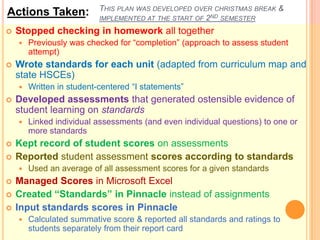
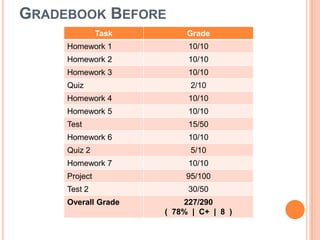
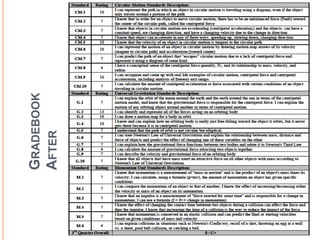
This plan was developed over christmas break & implemented at the start of 2nd semesterActions Taken: Stopped checking in homework all together Previously was checked for “completion” (approach to assess student attempt)Wrote standards for each unit (adapted from curriculum map and state HSCEs)Written in student-centered “I statements”Developed assessments that generated ostensible evidence of student learning on standardsLinked individual assessments (and even individual questions) to one or more standardsKept record of student scores on assessmentsReported student assessment scores according to standardsUsed an average of all assessment scores for a given standardsManaged Scores in Microsoft ExcelCreated “Standards” in Pinnacle instead of assignmentsInput standards scores in PinnacleCalculated summative score & reported all standards and ratings to students separately from their report card
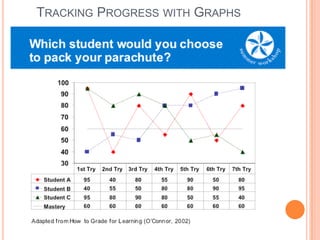
Tracking Progress with Graphs
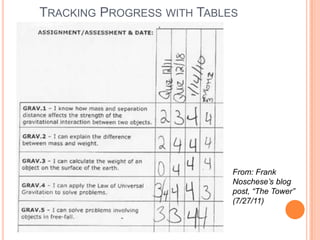
Tracking Progress with TablesFrom: Frank Noschese’s blog post, “The Tower” (7/27/11)
Gradebook Before
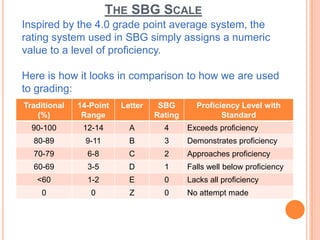
The SBG ScaleInspired by the 4.0 grade point average system, the rating system used in SBG simply assigns a numeric value to a level of proficiency.Here is how it looks in comparison to how we are used to grading:
GradebookAfter
FindingsStudents: Agreed with SBG as a means to more accurately reflect what they knowUsed the feedback from their SBG report to improve their understanding and strived for mastery (completed reassessments)Stopped copying just to get assignments completed so they would “get [their] points” toward a gradeShifted their focus from doing to learningStruggled with the adjustment to a different grading approach that Did not readily see how to use SBG feedback, or did not choose to use the SBG feedbackStill asked, “what assignments am I missing that my grade is so low?”Wished it had been implemented from day 1
Complaints & Criticisms of SBGStudents: Cognitive dissonance with regard to grading“What the formula” (WTF) moments occurred when students could not figure the calculation of their gradeSOLUTION: MORE TRANSPARENT PROCESSForces them to have to know itMany are used to being able to “fake it to make it” (the game of school)SOLUTION: START FROM DAY 1 & INTRODUCE PROCESS WITH AN INVITING EXPERIENCEMr. Abud, I was wondering what my grade is; it says “approaching proficiency” a bunch of times.
Complaints & Criticisms of SBGParents: Not possible with Pinnacle to see why their student has the grades on the standards that they doSearching for a missing “checklist” that their student did not completeSOLUTION: STUDENTS KEEP TRACK OF THEIR PROGRESSGrade lower than expected, yet student “does their work”Parents used to having completion accountability for students’ gradesSOLUTION: LETTERS HOME EXPLAINING PROCESSPerhaps my grade was artificially inflated by all that copying I did on my homework for  completion…
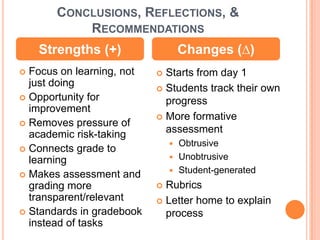
Conclusions, Reflections, & RecommendationsStrengths (+)Changes (∆)Focus on learning, not just doingOpportunity for improvementRemoves pressure of academic risk-taking Connects grade to learningMakes assessment and grading more transparent/relevantStandards in gradebook instead of tasksStarts from day 1Students track their own progressMore formative assessmentObtrusiveUnobtrusiveStudent-generatedRubricsLetter home to explain process
Next Steps…for Interested PartiesConsider How you ALREADY use rubrics to assess studentsWhat your performance objectives look likeTo what extent your assessments connect to your objectivesThe function of homework in your class (practice or chore)Reflect onHow often you have students wanting to make up missing work for points but gain nothing from doing that workThe extent to which a grade in your class truly reflects learningWhether your students are motivated to learn or do What opportunities exist for students to recover from early mistakes
ACTIONS YOU CAN TAKE TO TRY SBGThe following actions can be part of a small action research project in your own classroom:Consider for an upcoming unit/chapter/lesson/projectWriting objectives in “I statement” language that connect to your content standardsDeveloping assessments (formative and summative) that make it easy to observe proficiency with the objectivesAdding a rubric to that assessment if it doesn’t already have one (omit components unrelated to objectives, e.g., 1” margins)Creating proficiency rankings with explanations of each ranking levelAssessing students according to the rubric componentsReporting students’ scores on the rubric and generating a summative score as wellProviding students a means to track their own performanceDebriefing the grading approach with your class
Final ThoughtsSBG is not a replacement for a summative gradeIt just gives more substantive meaning to that gradeIt is completely possible to implement with any number of students in any content areaIt is best for teachingand learningIt promotes formative assessment, feedback, and student ownership over learningIt can be done in a low-tech (paper grids / graphs) or a high-tech way (Excel, Pinnacle, cloud-based apps)It is more “fun” when you do it with others
ResourcesSBG w/Voice

A Standards Based Grading Case Study...Kinda

  • 1.
    Standards-Based Grading (SBG)ACase Study…Kinda@MR_ABUD #TEAMPHYSICS
  • 2.
    FIRST, SOME SBGCLARIFICATIONABUD IS:ABUD IS NOT:An expert on SBG…yetPaid by any SBG companyTelling you what to do in your classroomGoing to come and set up a complete “canned” SBG system for your classroomA proponent of SBGWell read and researched about SBGMarzano and O’Connor are two good sourcesExperienced implementing a SBG approach last yearWell-versed with Microsoft Excel, and that made SBG easierAvailable to answer questions about his experience & knowledge
  • 3.
    Motivation for theShiftMeaning of a gradeWhat you did vs. what you knowStudents motivated (by meaning of the grade) to do assignments/tasksLike finishing the weekend chores checklistFocus on learning and mastery is lostStudents “make up” missing work at the end of a marking period for credit to help their gradeWithout focus on learning for mastery, taking learning risks can be too costly
  • 4.
    The ProblemHow mightwe make a gradebetter represent what students know rather than what they did?
  • 5.
    The SolutionAt least,it was an attempt at one…
  • 6.
    This plan wasdeveloped over christmas break & implemented at the start of 2nd semesterActions Taken: Stopped checking in homework all together Previously was checked for “completion” (approach to assess student attempt)Wrote standards for each unit (adapted from curriculum map and state HSCEs)Written in student-centered “I statements”Developed assessments that generated ostensible evidence of student learning on standardsLinked individual assessments (and even individual questions) to one or more standardsKept record of student scores on assessmentsReported student assessment scores according to standardsUsed an average of all assessment scores for a given standardsManaged Scores in Microsoft ExcelCreated “Standards” in Pinnacle instead of assignmentsInput standards scores in PinnacleCalculated summative score & reported all standards and ratings to students separately from their report card
  • 7.
  • 8.
    Tracking Progress withTablesFrom: Frank Noschese’s blog post, “The Tower” (7/27/11)
  • 9.
  • 10.
    The SBG ScaleInspiredby the 4.0 grade point average system, the rating system used in SBG simply assigns a numeric value to a level of proficiency.Here is how it looks in comparison to how we are used to grading:
  • 11.
  • 12.
    FindingsStudents: Agreed withSBG as a means to more accurately reflect what they knowUsed the feedback from their SBG report to improve their understanding and strived for mastery (completed reassessments)Stopped copying just to get assignments completed so they would “get [their] points” toward a gradeShifted their focus from doing to learningStruggled with the adjustment to a different grading approach that Did not readily see how to use SBG feedback, or did not choose to use the SBG feedbackStill asked, “what assignments am I missing that my grade is so low?”Wished it had been implemented from day 1
  • 13.
    Complaints & Criticismsof SBGStudents: Cognitive dissonance with regard to grading“What the formula” (WTF) moments occurred when students could not figure the calculation of their gradeSOLUTION: MORE TRANSPARENT PROCESSForces them to have to know itMany are used to being able to “fake it to make it” (the game of school)SOLUTION: START FROM DAY 1 & INTRODUCE PROCESS WITH AN INVITING EXPERIENCEMr. Abud, I was wondering what my grade is; it says “approaching proficiency” a bunch of times.
  • 14.
    Complaints & Criticismsof SBGParents: Not possible with Pinnacle to see why their student has the grades on the standards that they doSearching for a missing “checklist” that their student did not completeSOLUTION: STUDENTS KEEP TRACK OF THEIR PROGRESSGrade lower than expected, yet student “does their work”Parents used to having completion accountability for students’ gradesSOLUTION: LETTERS HOME EXPLAINING PROCESSPerhaps my grade was artificially inflated by all that copying I did on my homework for completion…
  • 15.
    Conclusions, Reflections, &RecommendationsStrengths (+)Changes (∆)Focus on learning, not just doingOpportunity for improvementRemoves pressure of academic risk-taking Connects grade to learningMakes assessment and grading more transparent/relevantStandards in gradebook instead of tasksStarts from day 1Students track their own progressMore formative assessmentObtrusiveUnobtrusiveStudent-generatedRubricsLetter home to explain process
  • 16.
    Next Steps…for InterestedPartiesConsider How you ALREADY use rubrics to assess studentsWhat your performance objectives look likeTo what extent your assessments connect to your objectivesThe function of homework in your class (practice or chore)Reflect onHow often you have students wanting to make up missing work for points but gain nothing from doing that workThe extent to which a grade in your class truly reflects learningWhether your students are motivated to learn or do What opportunities exist for students to recover from early mistakes
  • 17.
    ACTIONS YOU CANTAKE TO TRY SBGThe following actions can be part of a small action research project in your own classroom:Consider for an upcoming unit/chapter/lesson/projectWriting objectives in “I statement” language that connect to your content standardsDeveloping assessments (formative and summative) that make it easy to observe proficiency with the objectivesAdding a rubric to that assessment if it doesn’t already have one (omit components unrelated to objectives, e.g., 1” margins)Creating proficiency rankings with explanations of each ranking levelAssessing students according to the rubric componentsReporting students’ scores on the rubric and generating a summative score as wellProviding students a means to track their own performanceDebriefing the grading approach with your class
  • 18.
    Final ThoughtsSBG isnot a replacement for a summative gradeIt just gives more substantive meaning to that gradeIt is completely possible to implement with any number of students in any content areaIt is best for teachingand learningIt promotes formative assessment, feedback, and student ownership over learningIt can be done in a low-tech (paper grids / graphs) or a high-tech way (Excel, Pinnacle, cloud-based apps)It is more “fun” when you do it with others
  • 19.