A Sustainable Vision for Chiddingfold
Forest – Preparing a new Forest Design
Plan
Jay Doyle
District Ecologist
South England Forest District
May 2014
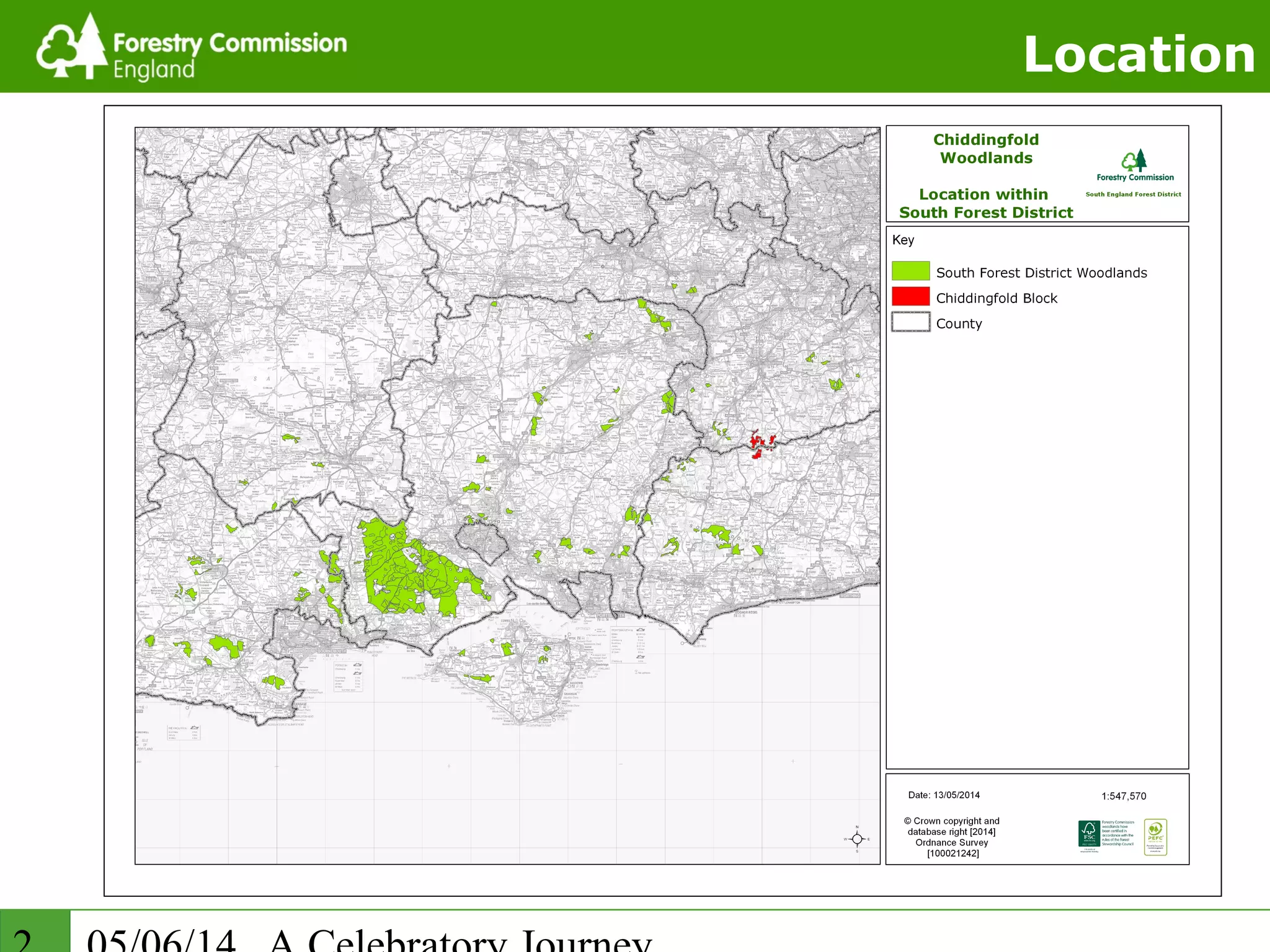
Location
Overview
• A Key Forest complex at the Northern edge of
the West Weald Landscape
• Forestry Commission England (FCE) manage
840 hectares (ha) of Chiddingfold Forest
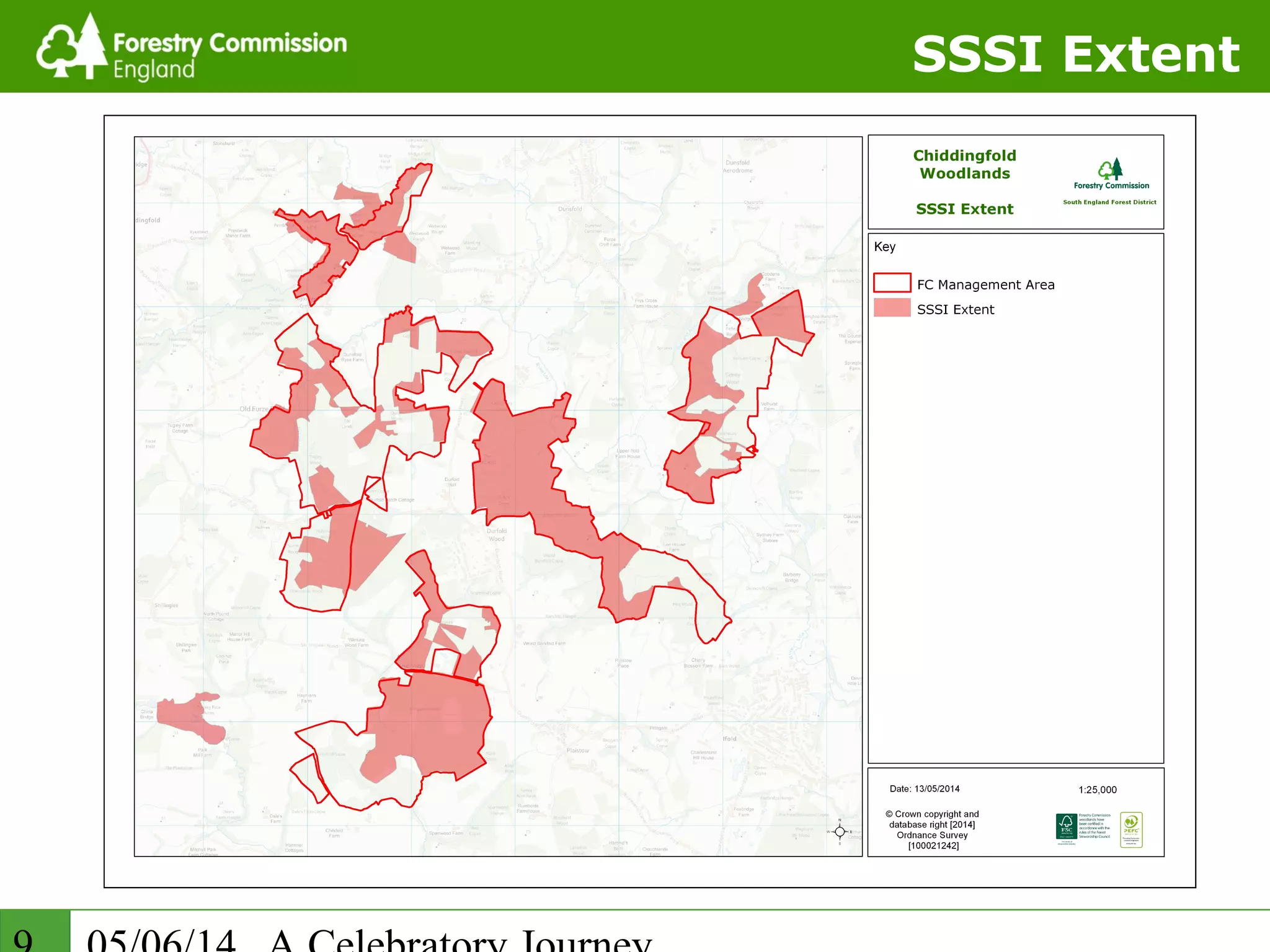
• 500 ha or 90% of the SSSI by area managed
by FCE
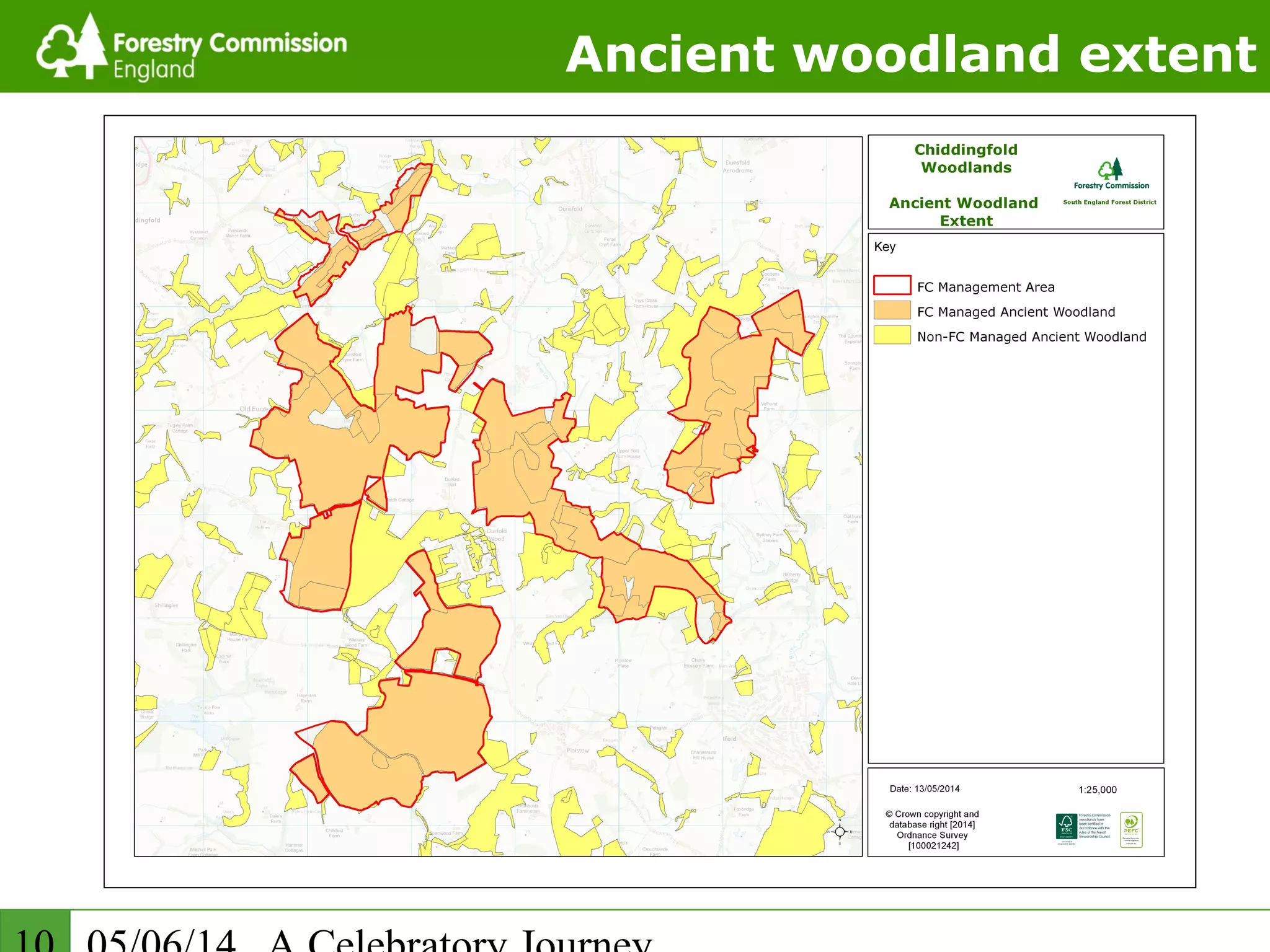
• Ancient woodland the dominant habitat
• Land acquired between 1922 and 1958
(majority of acquisitions during 1920’s)
• Significant conversion to coniferous plantation
post-WWII
Overview
• During 1999/2000 the entire Ancient
Woodland resource on the PFE surveyed
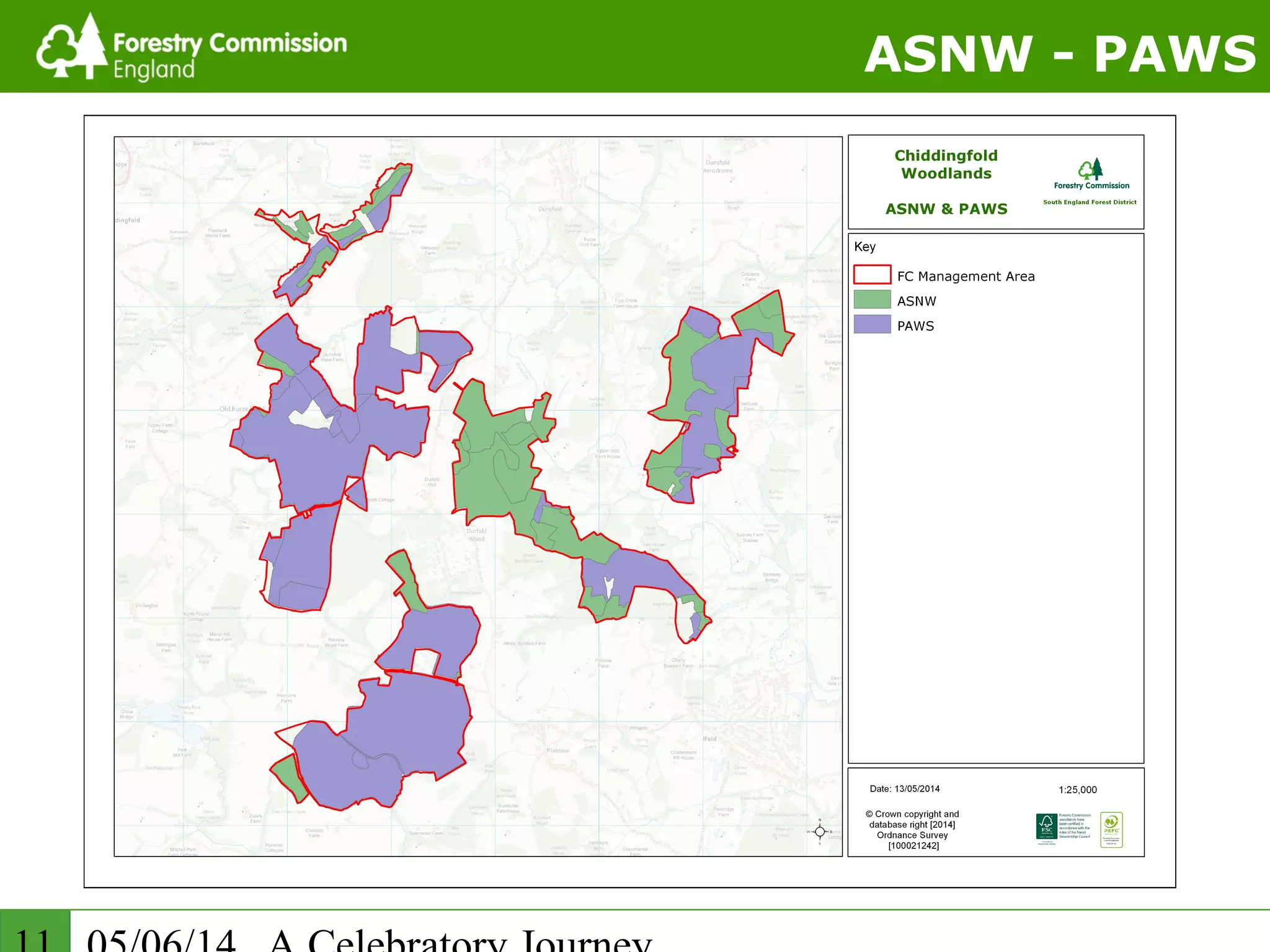
• Ancient & Native Woodland Restoration
commenced from 2000 onwards
• National Policy launched in Chiddingfold Forest
in 2005 – ‘Keepers of Time’
• Chiddingfold Forest is certified as been
sustainably managed by the UK Woodland
Assurance Standard (UKWAWS)
Key Policy Drivers
• UK Woodland Assurance Standard (UKWAS)
www.ukwas.org.uk
• UK Forestry Standard
www.forestry.gov.uk/ukfs
• Ancient Woodland Restoration - ‘Keepers of
Time’
• FC-BC Joint Strategy for the Public Forest
Estate – Chiddingfold a Priority Site
• Biodiversity 2020
• Woodland Policy Enabling Programme (WPEP)
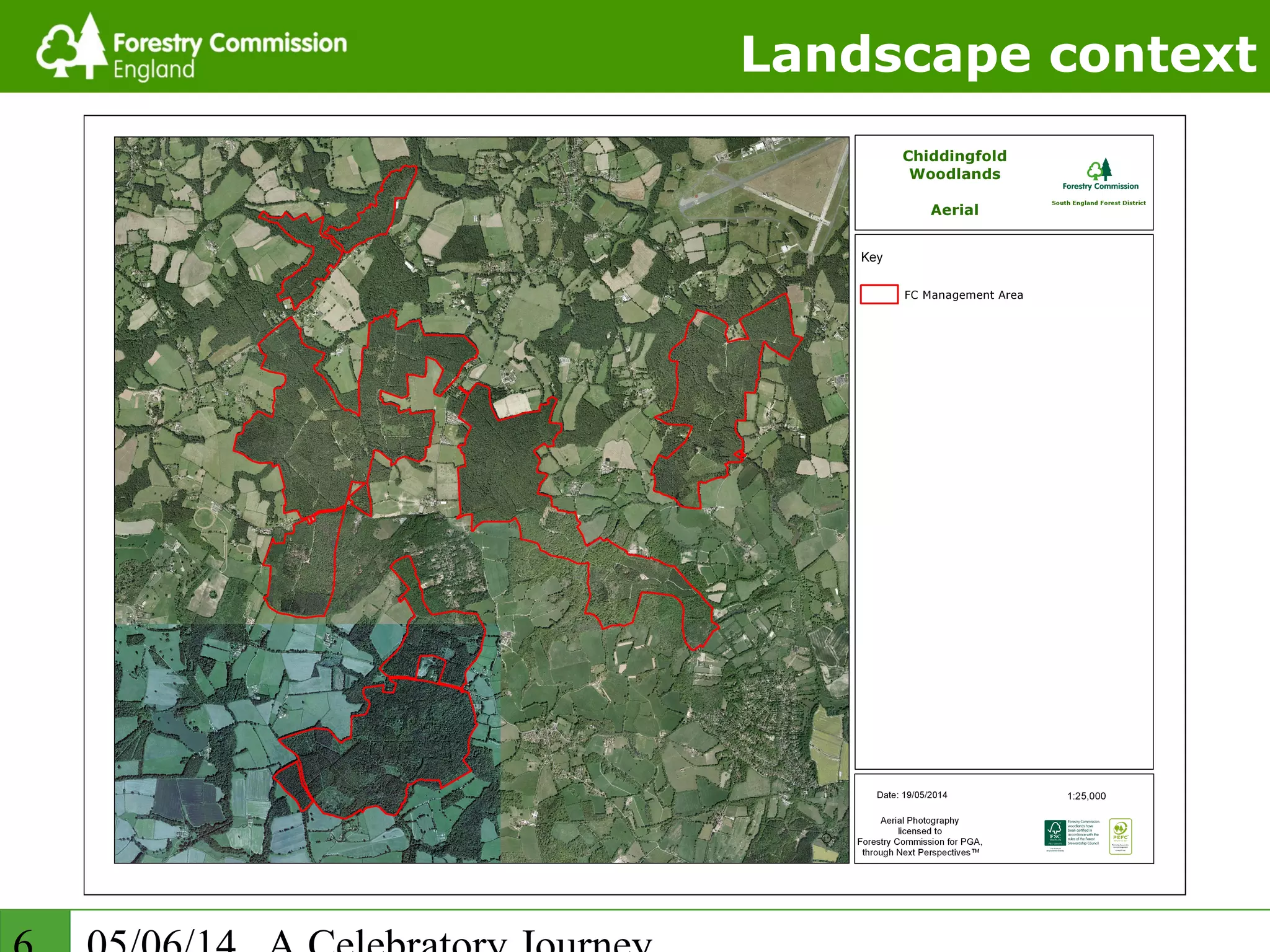
Landscape context
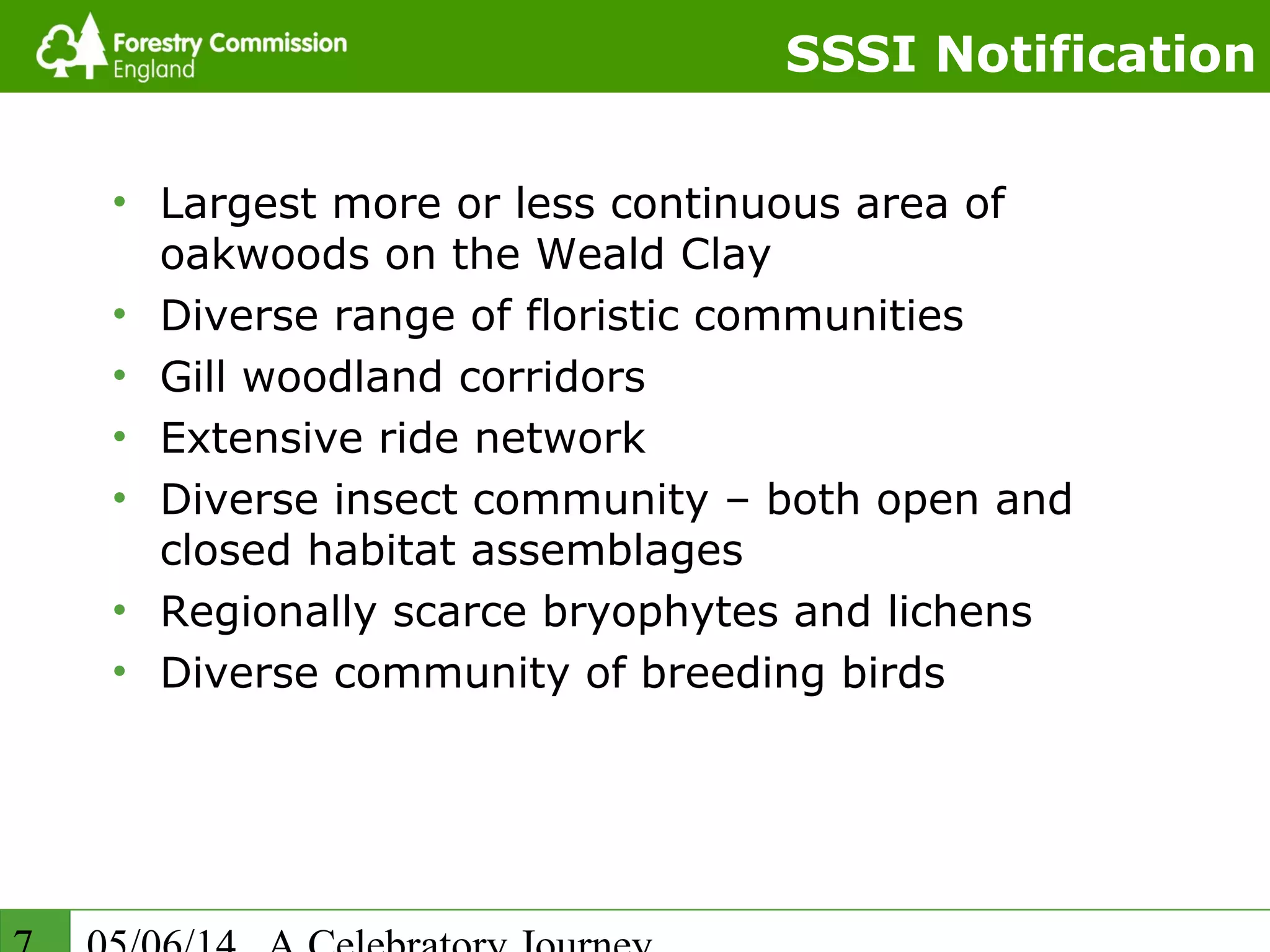
SSSI Notification
• Largest more or less continuous area of
oakwoods on the Weald Clay
• Diverse range of floristic communities
• Gill woodland corridors
• Extensive ride network
• Diverse insect community – both open and
closed habitat assemblages
• Regionally scarce bryophytes and lichens
• Diverse community of breeding birds
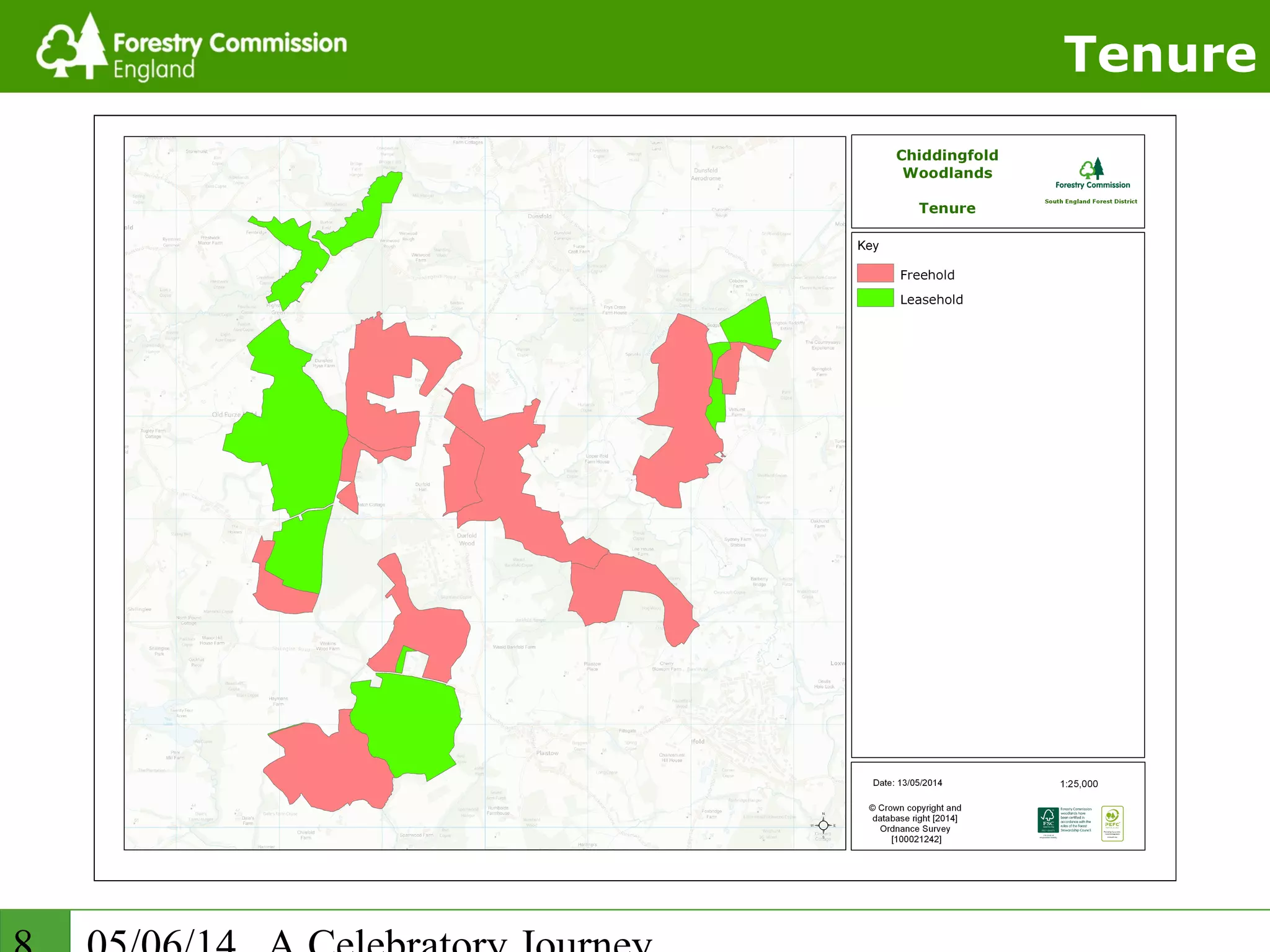
Tenure
SSSI Extent
Ancient woodland extent
ASNW - PAWS
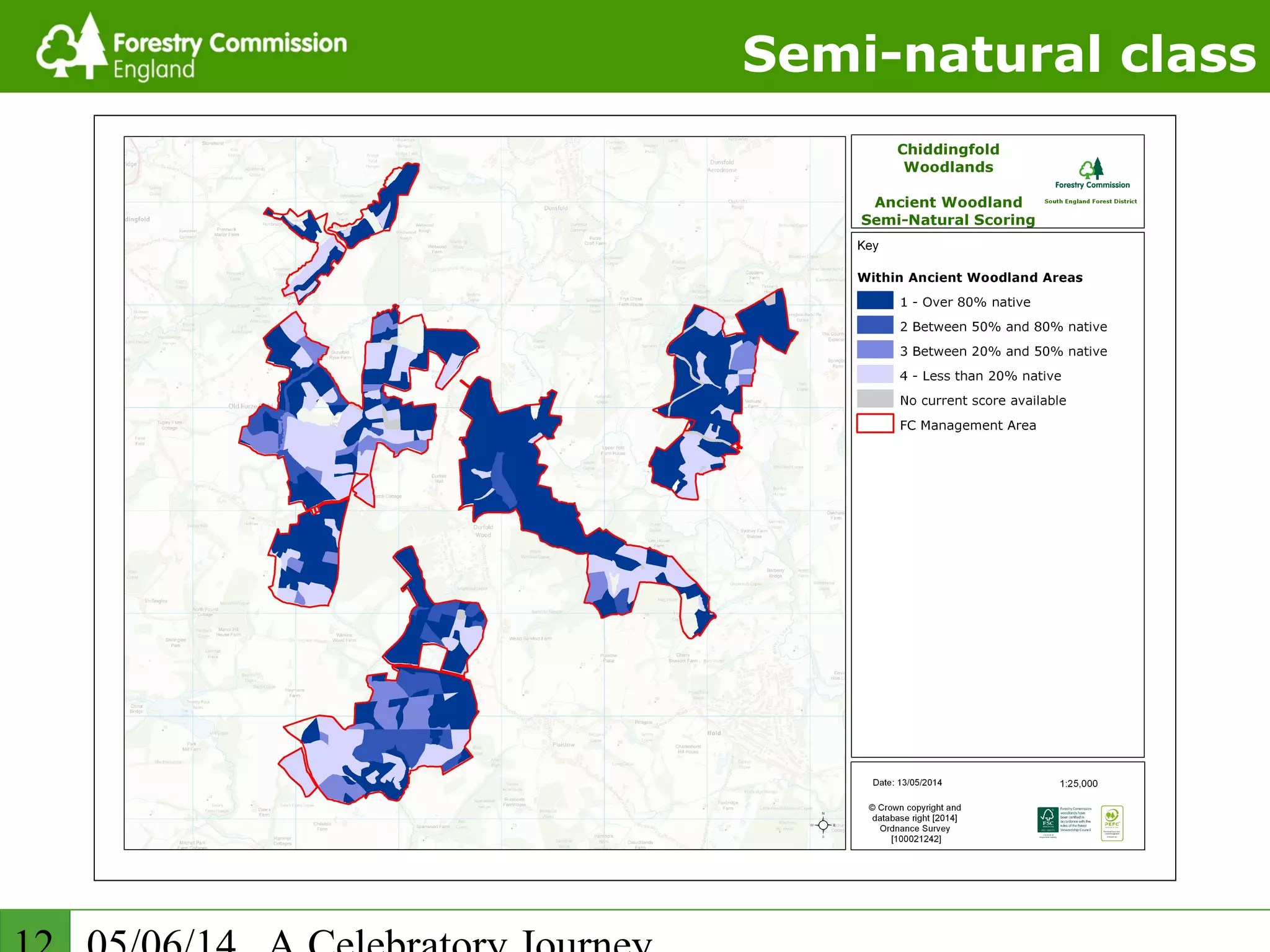
Semi-natural class
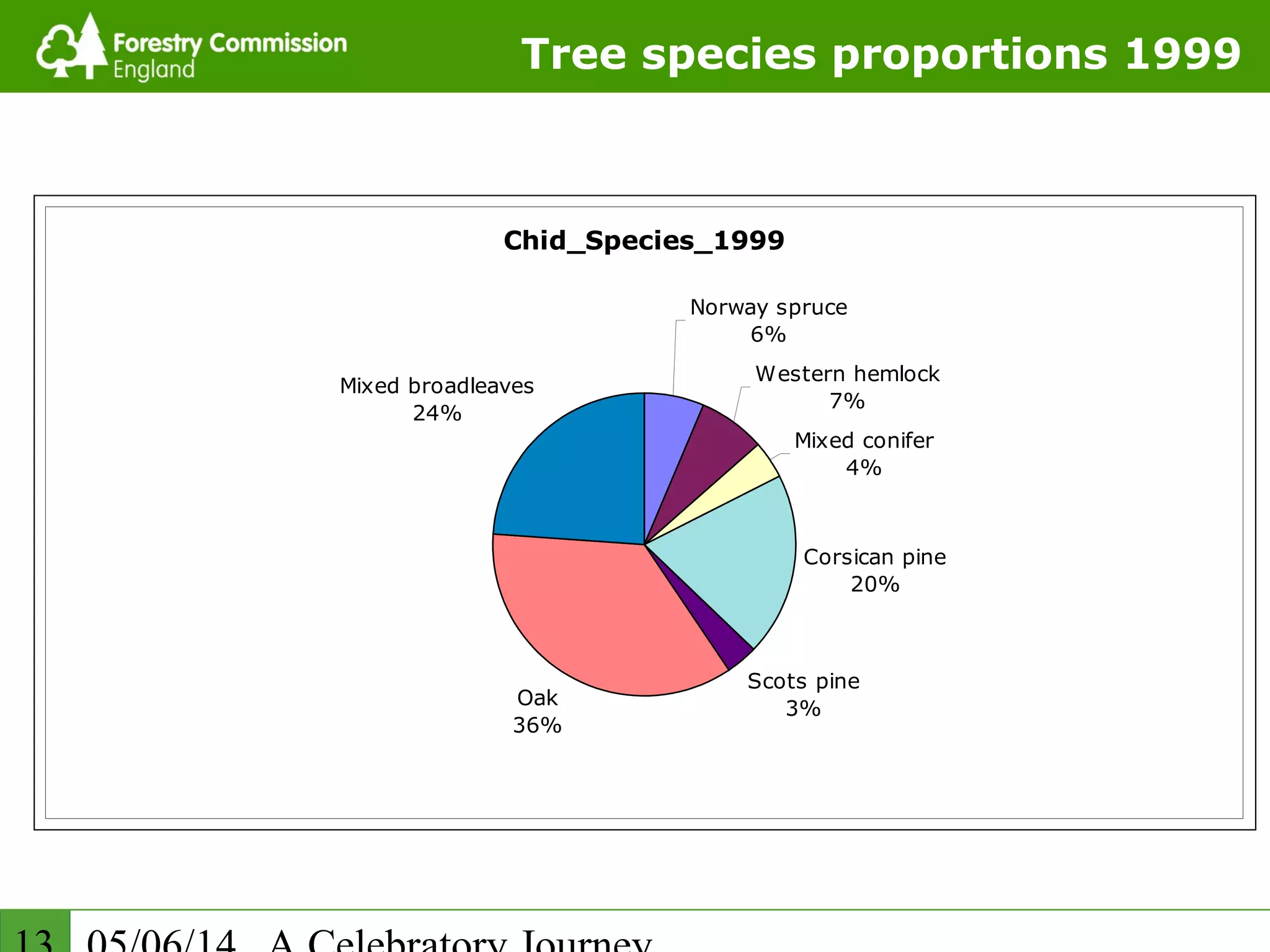
Tree species proportions 1999
Chid_Species_1999
Norway spruce
6%
Western hemlock
7%
Mixed conifer
4%
Corsican pine
20%
Scots pine
3%
Oak
36%
Mixed broadleaves
24%
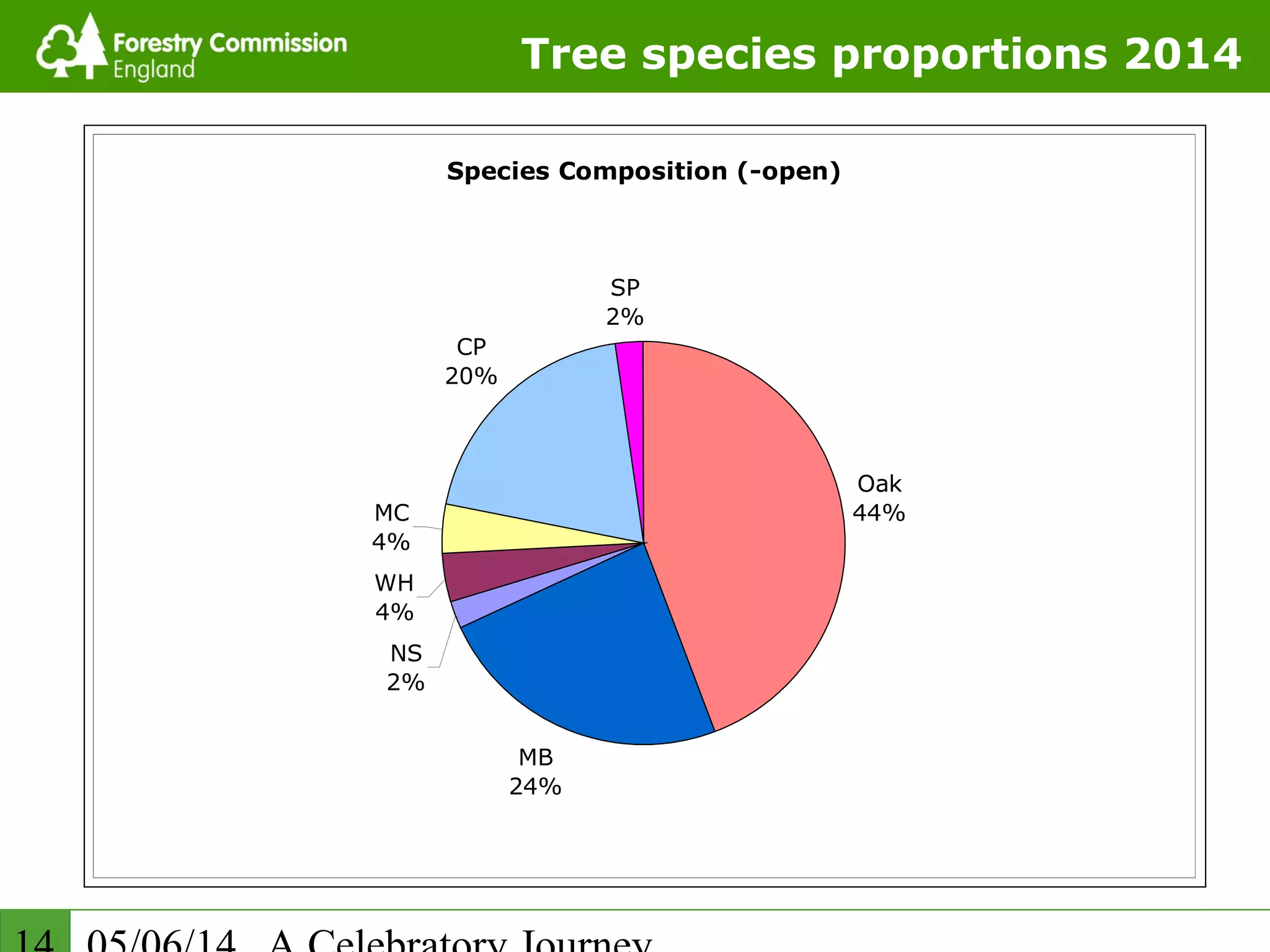
Tree species proportions 2014
Species Composition (-open)
Oak
44%
MB
24%
NS
2%
WH
4%
MC
4%
CP
20%
SP
2%
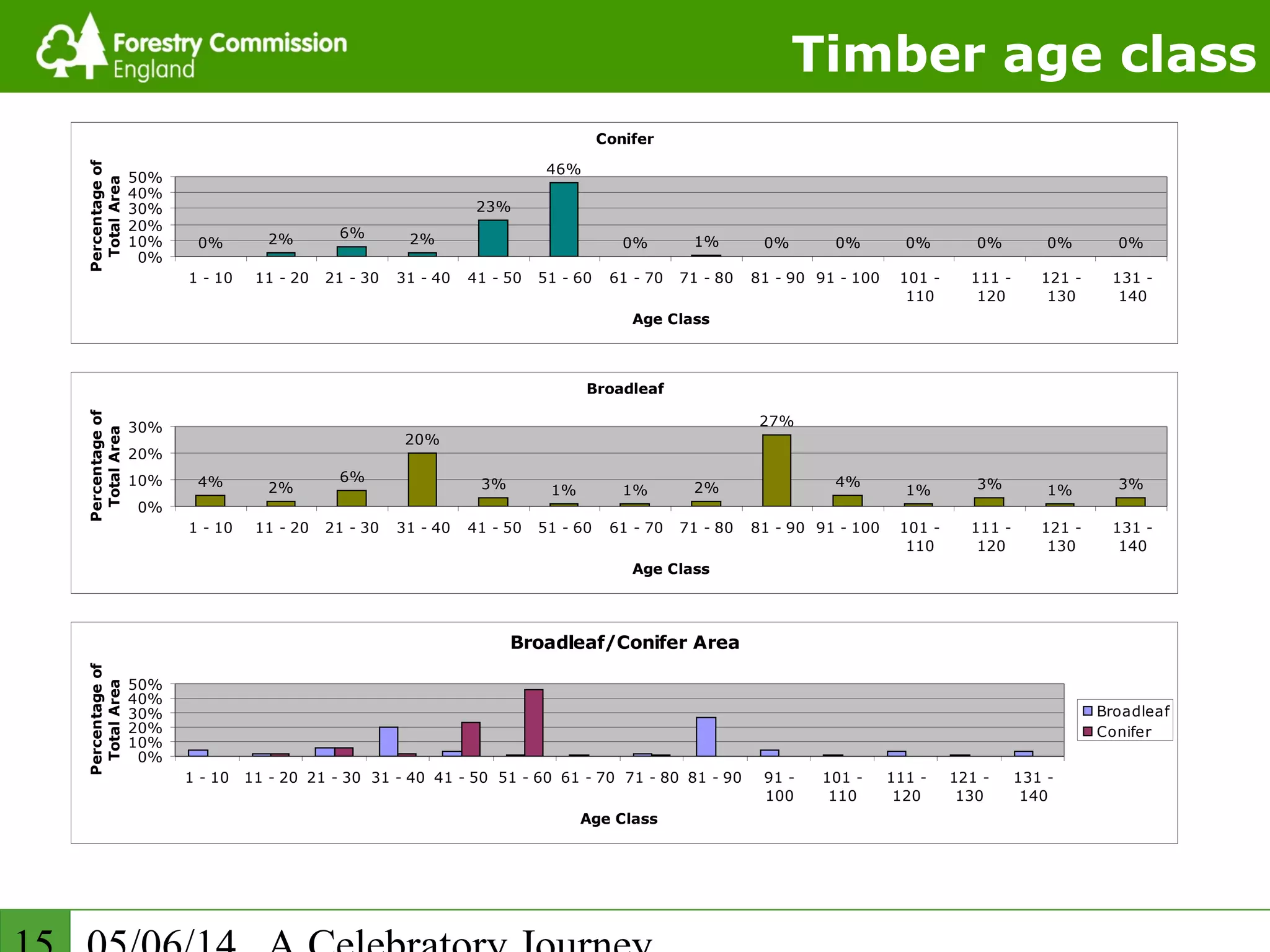
Timber age class
Broadleaf
4% 2%
6%
20%
3% 1% 1% 2%
27%
4%
1% 3% 1% 3%
0%
10%
20%
30%
1 - 10 11 - 20 21 - 30 31 - 40 41 - 50 51 - 60 61 - 70 71 - 80 81 - 90 91 - 100 101 -
110
111 -
120
121 -
130
131 -
140
Age Class
Percentageof
TotalArea
Conifer
0% 2% 6% 2%
23%
46%
0% 1% 0% 0% 0% 0% 0% 0%
0%
10%
20%
30%
40%
50%
1 - 10 11 - 20 21 - 30 31 - 40 41 - 50 51 - 60 61 - 70 71 - 80 81 - 90 91 - 100 101 -
110
111 -
120
121 -
130
131 -
140
Age Class
Percentageof
TotalArea
Broadleaf/Conifer Area
0%
10%
20%
30%
40%
50%
1 - 10 11 - 20 21 - 30 31 - 40 41 - 50 51 - 60 61 - 70 71 - 80 81 - 90 91 -
100
101 -
110
111 -
120
121 -
130
131 -
140
Age Class
Percentageof
TotalArea
Broadleaf
Conifer
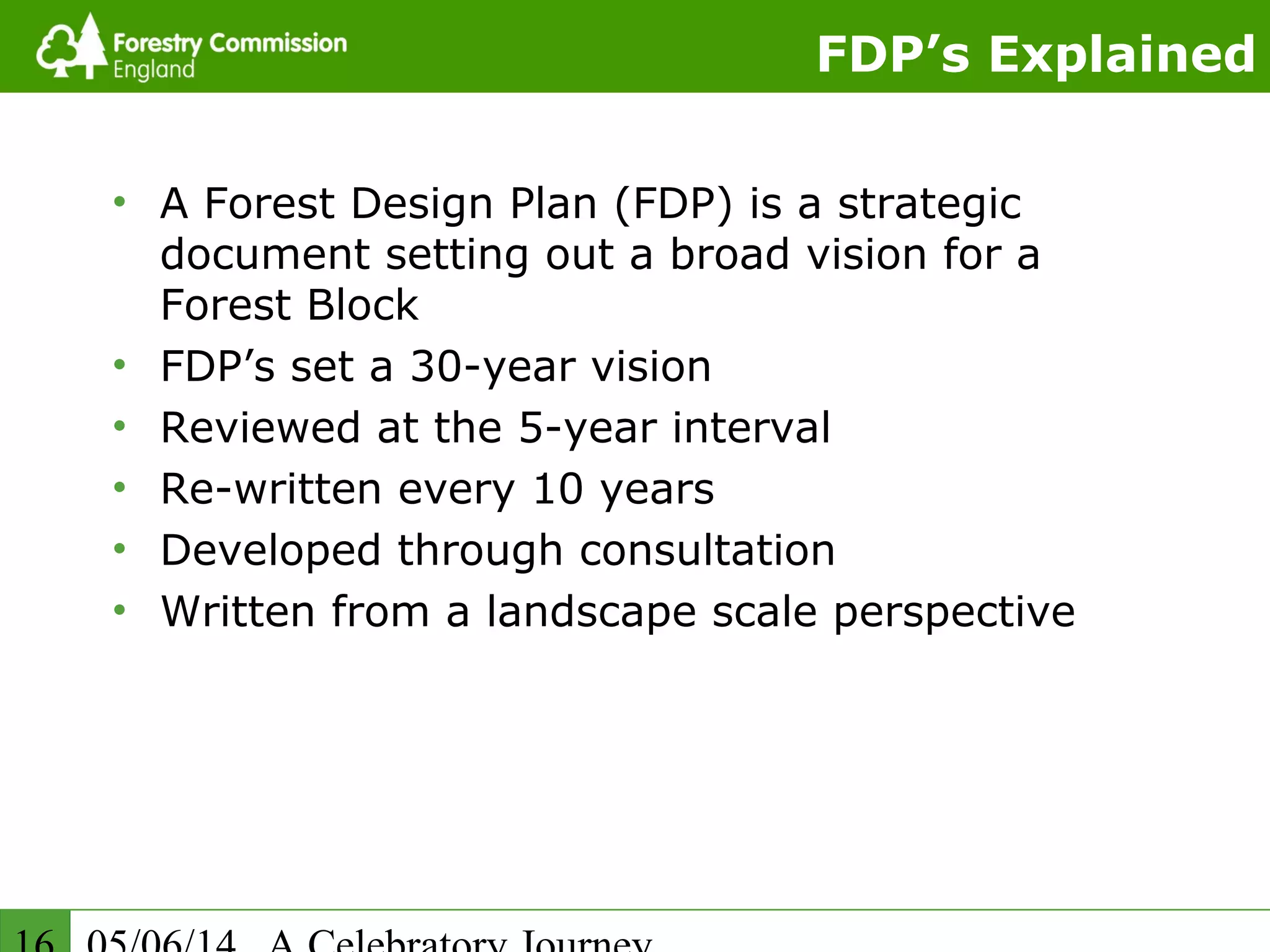
FDP’s Explained
• A Forest Design Plan (FDP) is a strategic
document setting out a broad vision for a
Forest Block
• FDP’s set a 30-year vision
• Reviewed at the 5-year interval
• Re-written every 10 years
• Developed through consultation
• Written from a landscape scale perspective
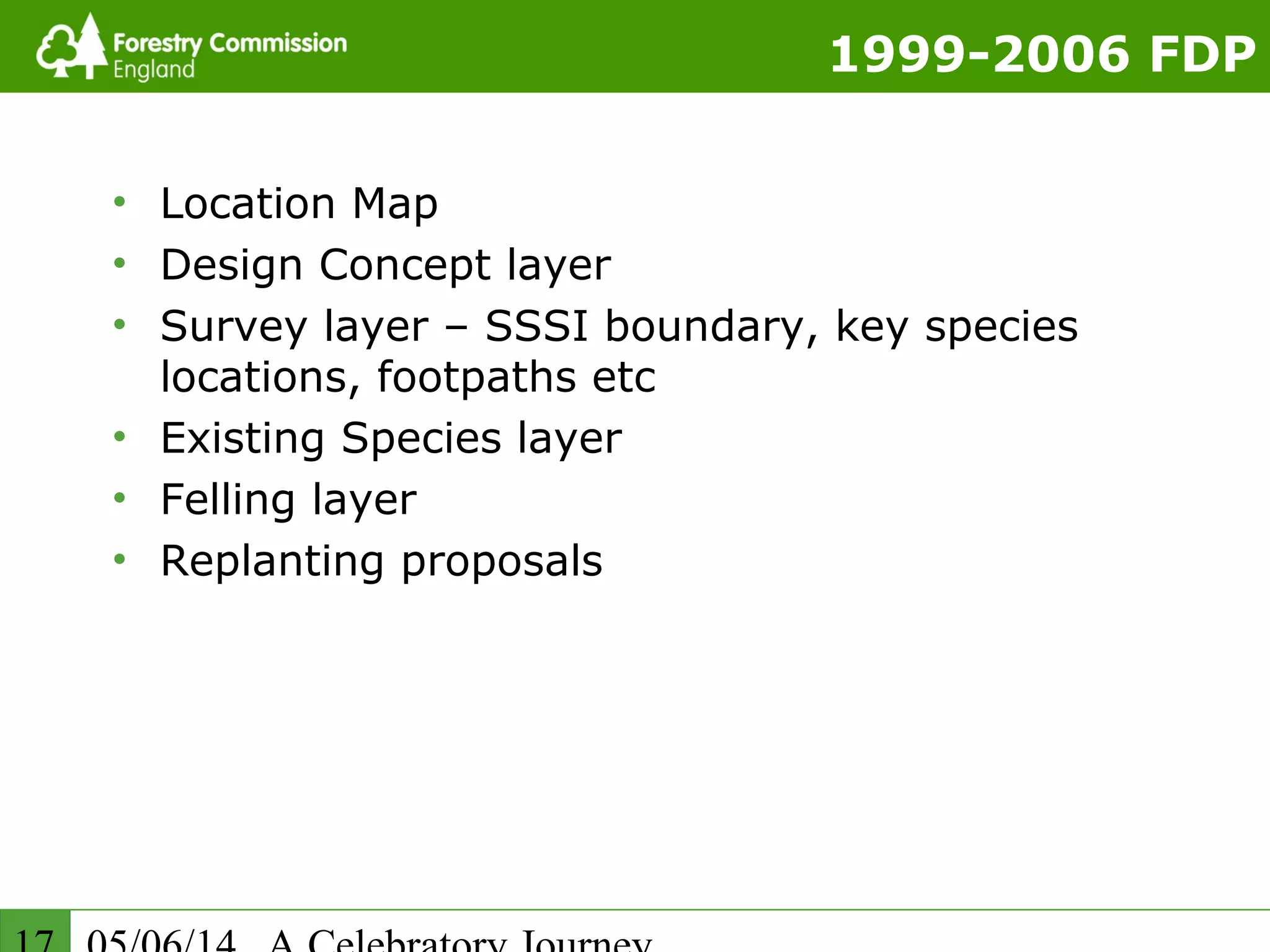
1999-2006 FDP
• Location Map
• Design Concept layer
• Survey layer – SSSI boundary, key species
locations, footpaths etc
• Existing Species layer
• Felling layer
• Replanting proposals
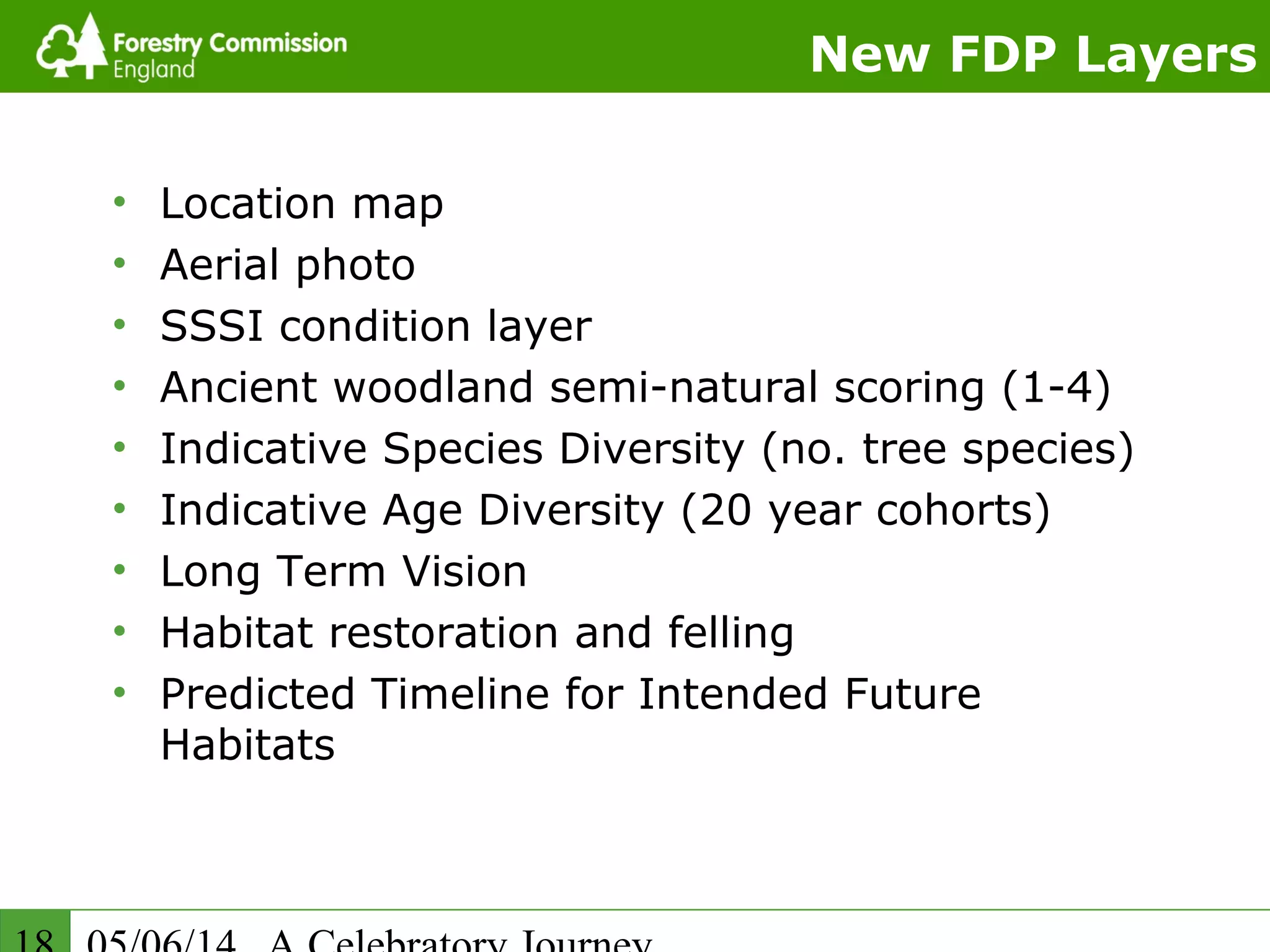
New FDP Layers
• Location map
• Aerial photo
• SSSI condition layer
• Ancient woodland semi-natural scoring (1-4)
• Indicative Species Diversity (no. tree species)
• Indicative Age Diversity (20 year cohorts)
• Long Term Vision
• Habitat restoration and felling
• Predicted Timeline for Intended Future
Habitats
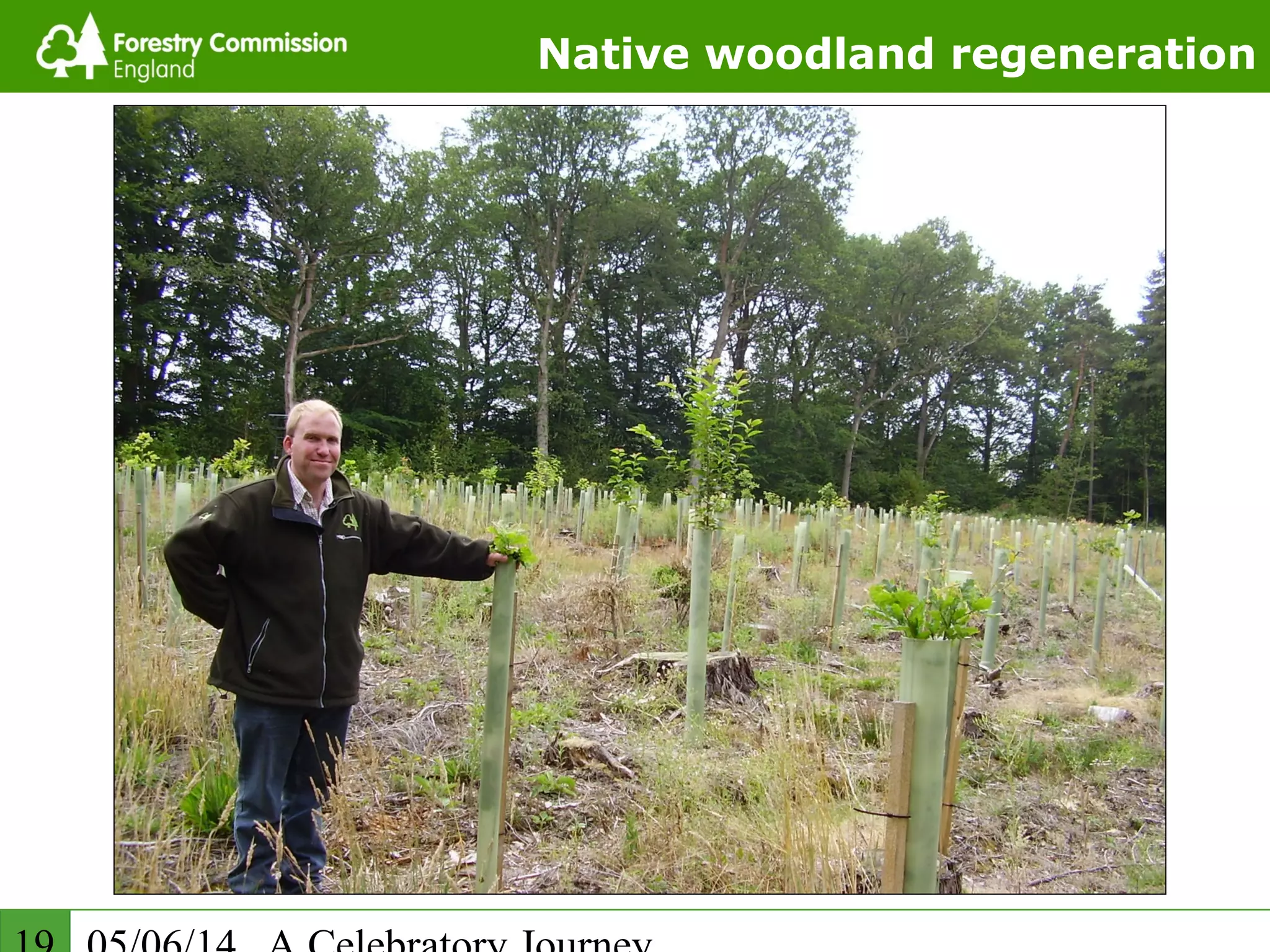
Native woodland regeneration
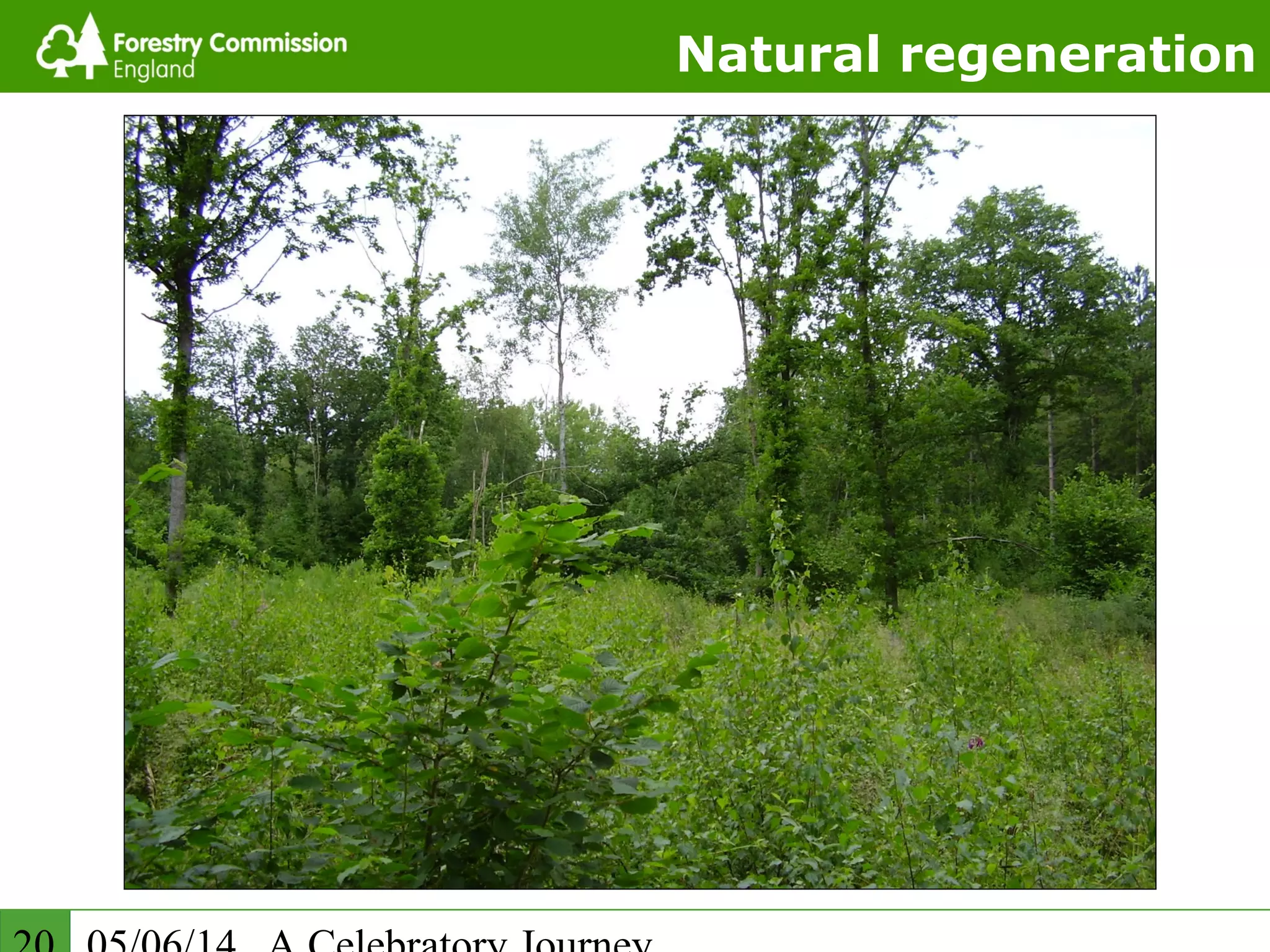
Natural regeneration
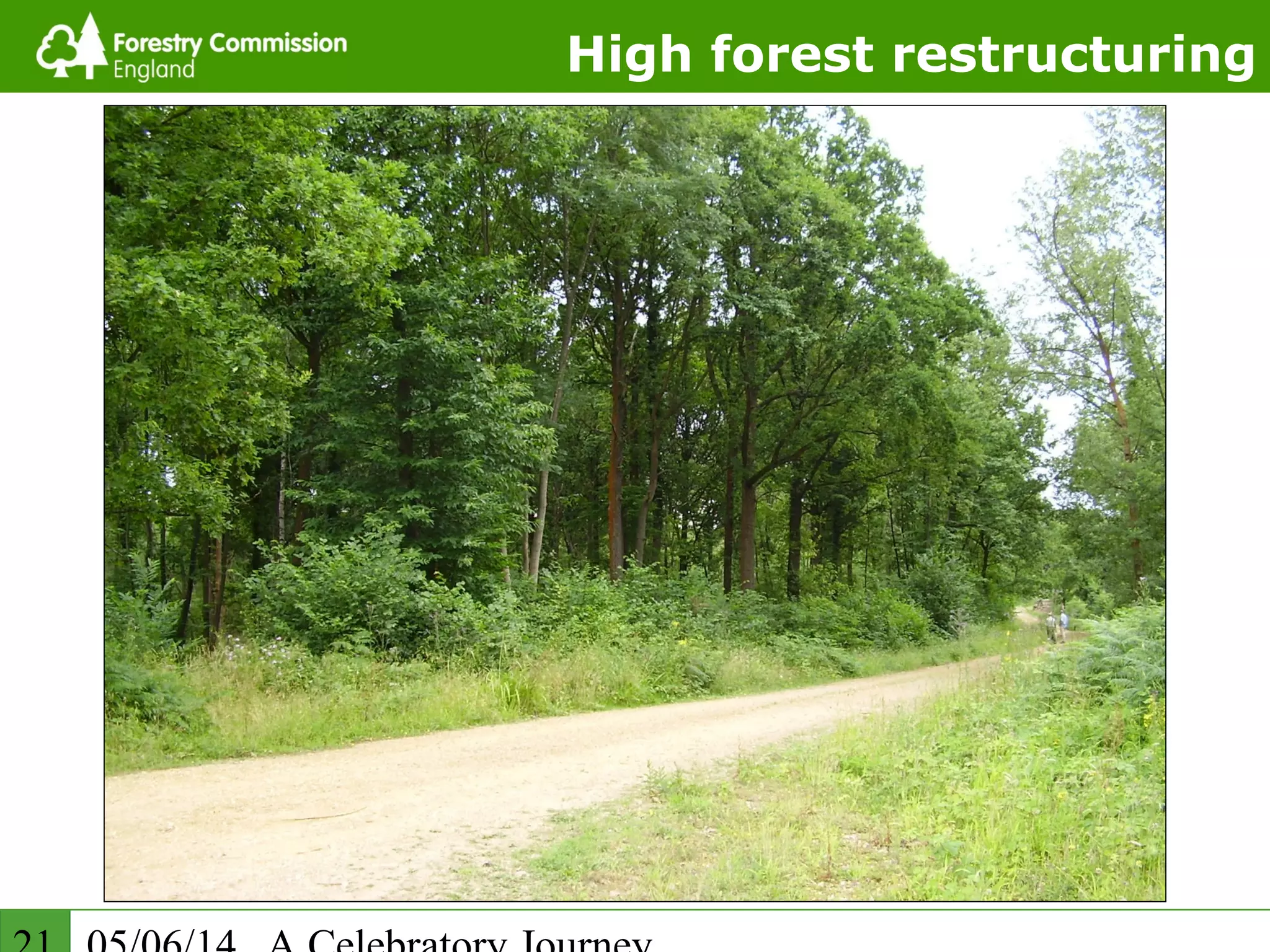
High forest restructuring
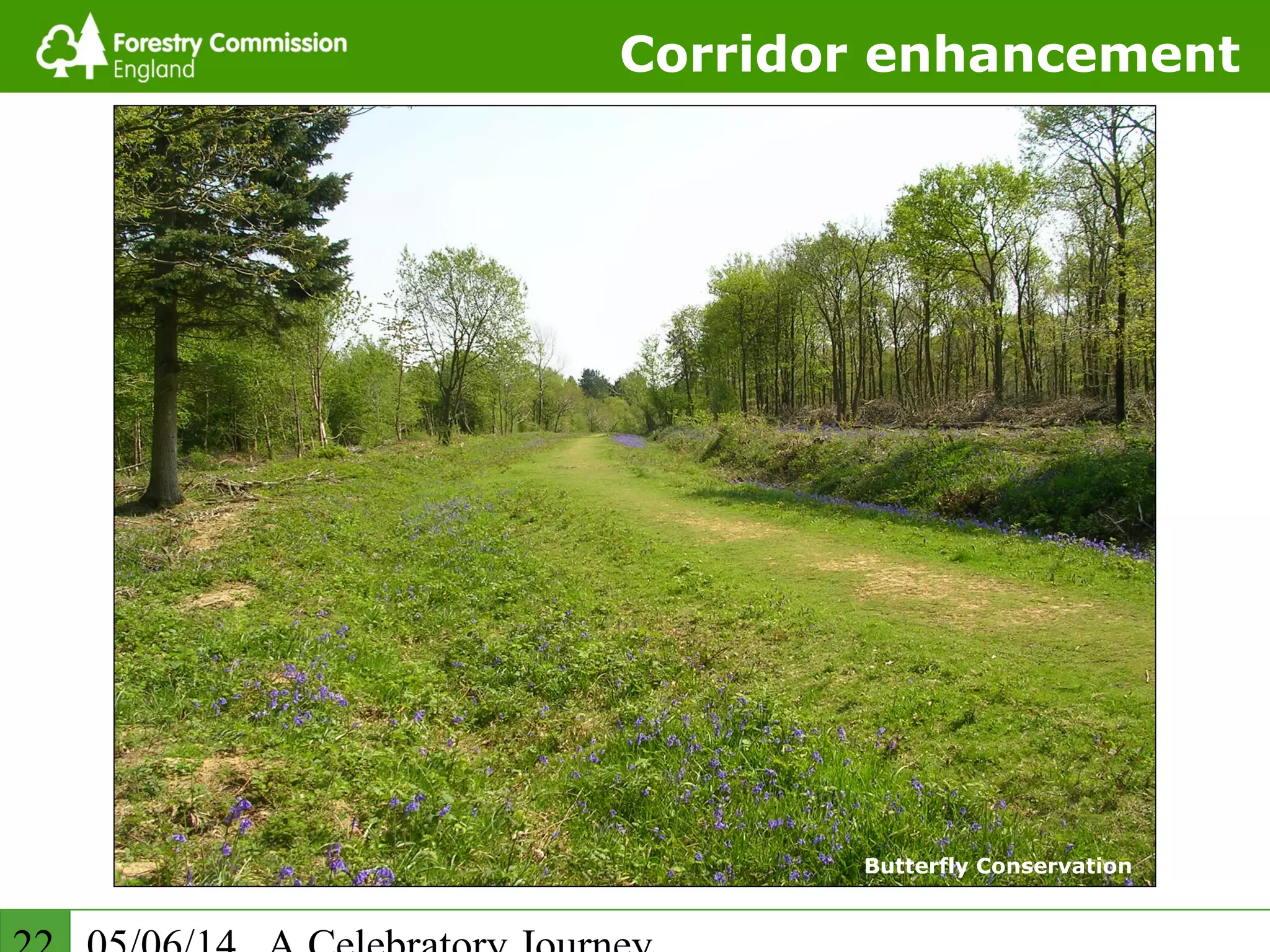
Corridor enhancement
Butterfly Conservation
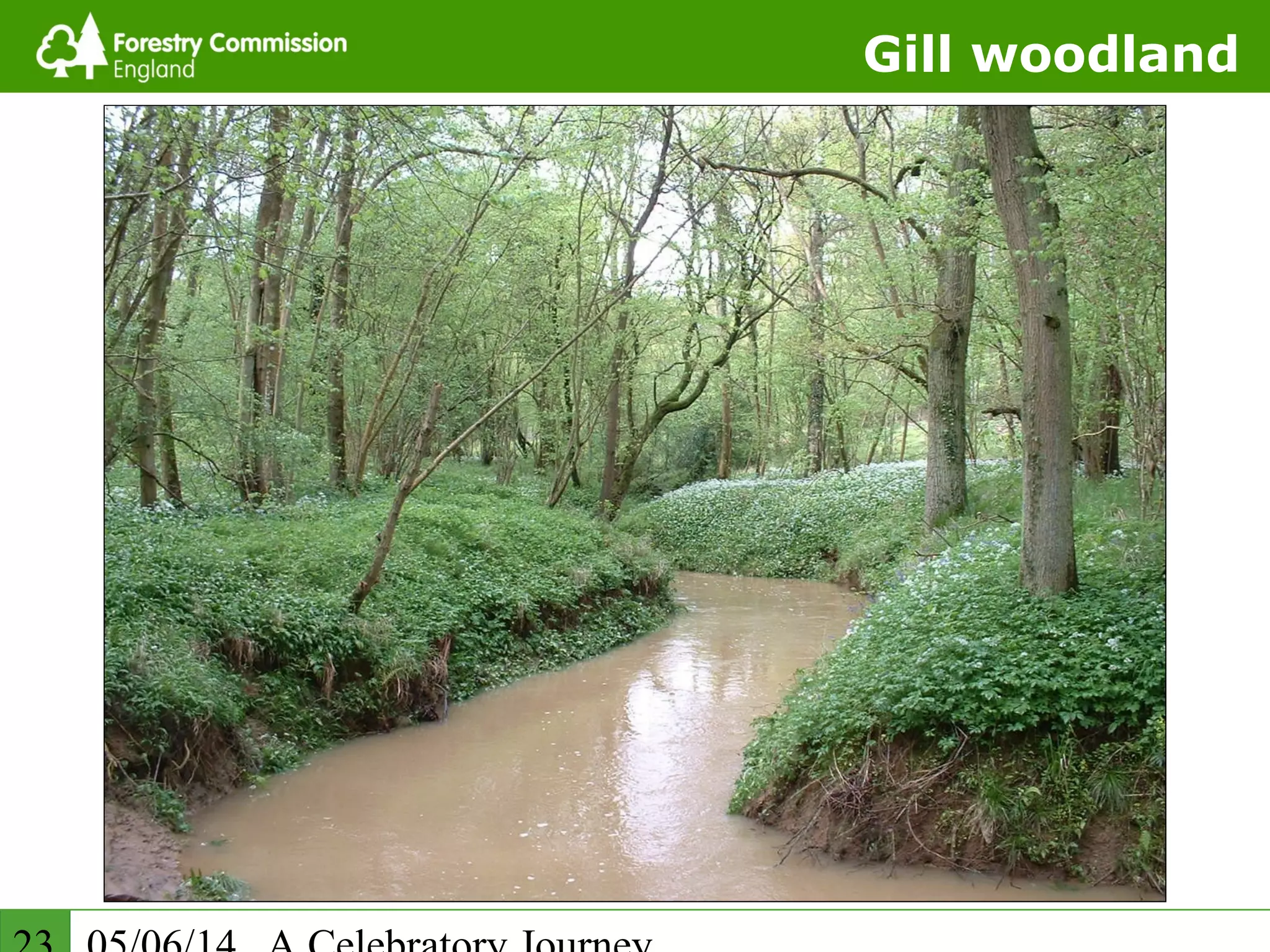
Gill woodland
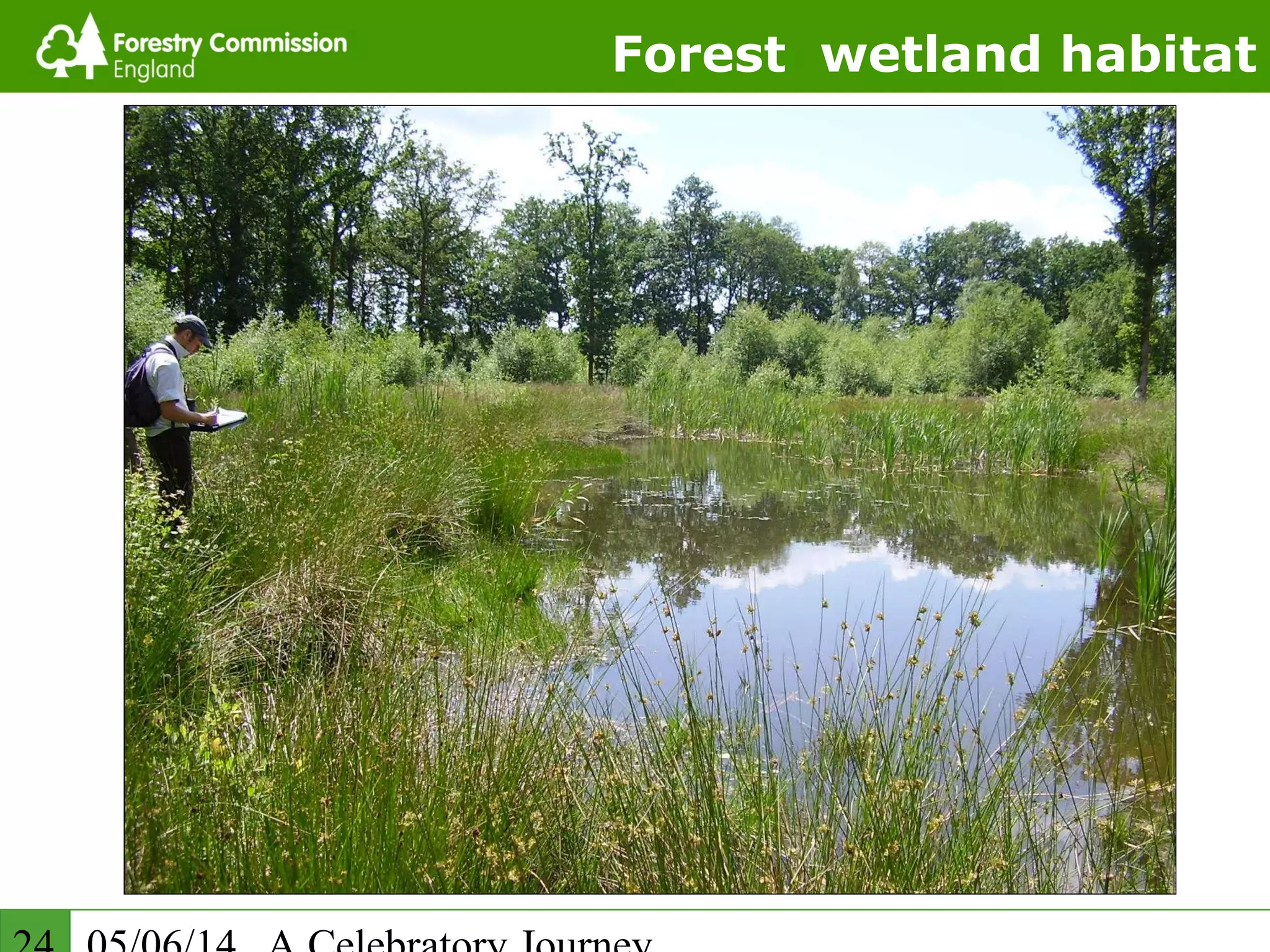
Forest wetland habitat
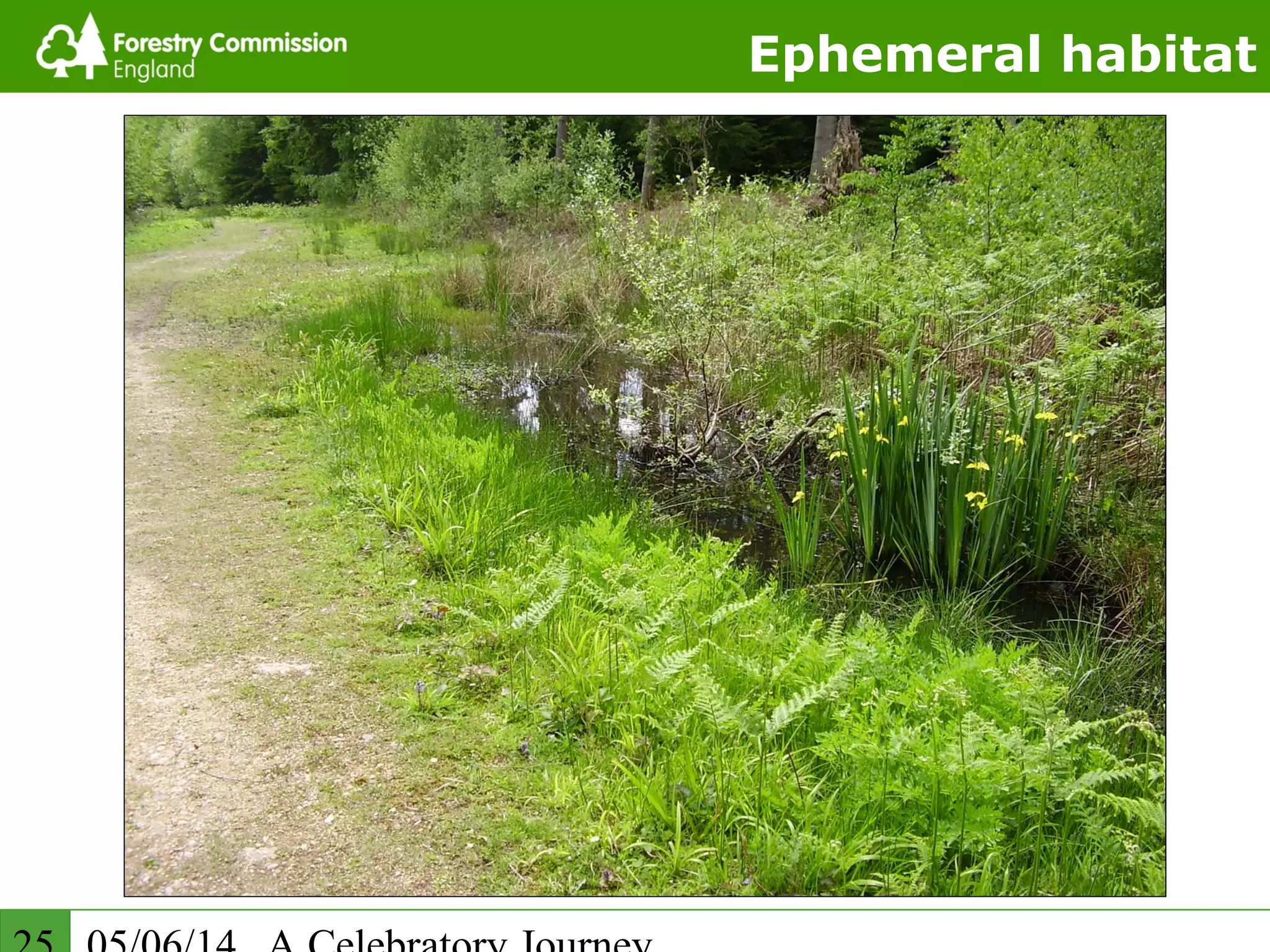
Ephemeral habitat
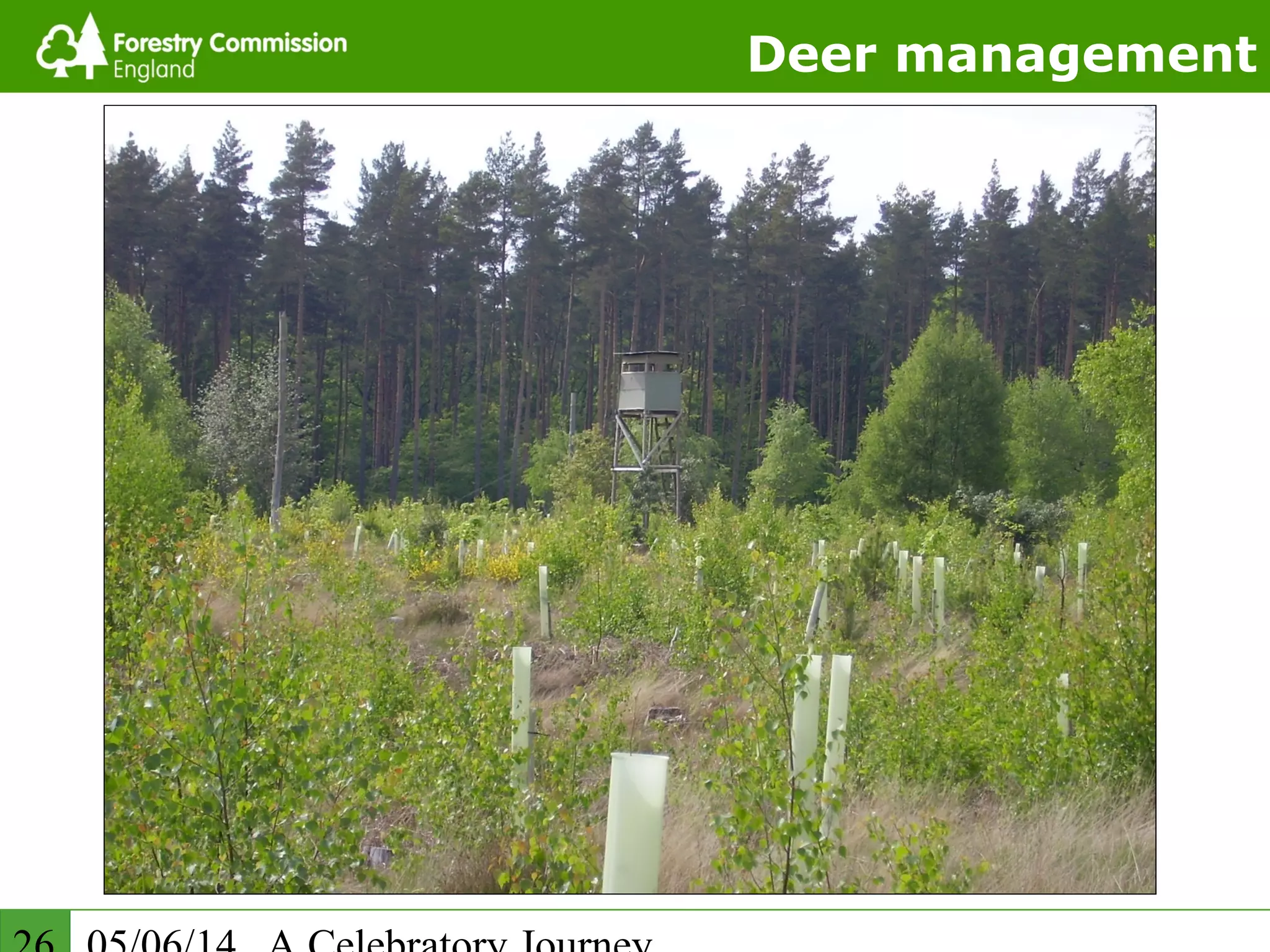
Deer management
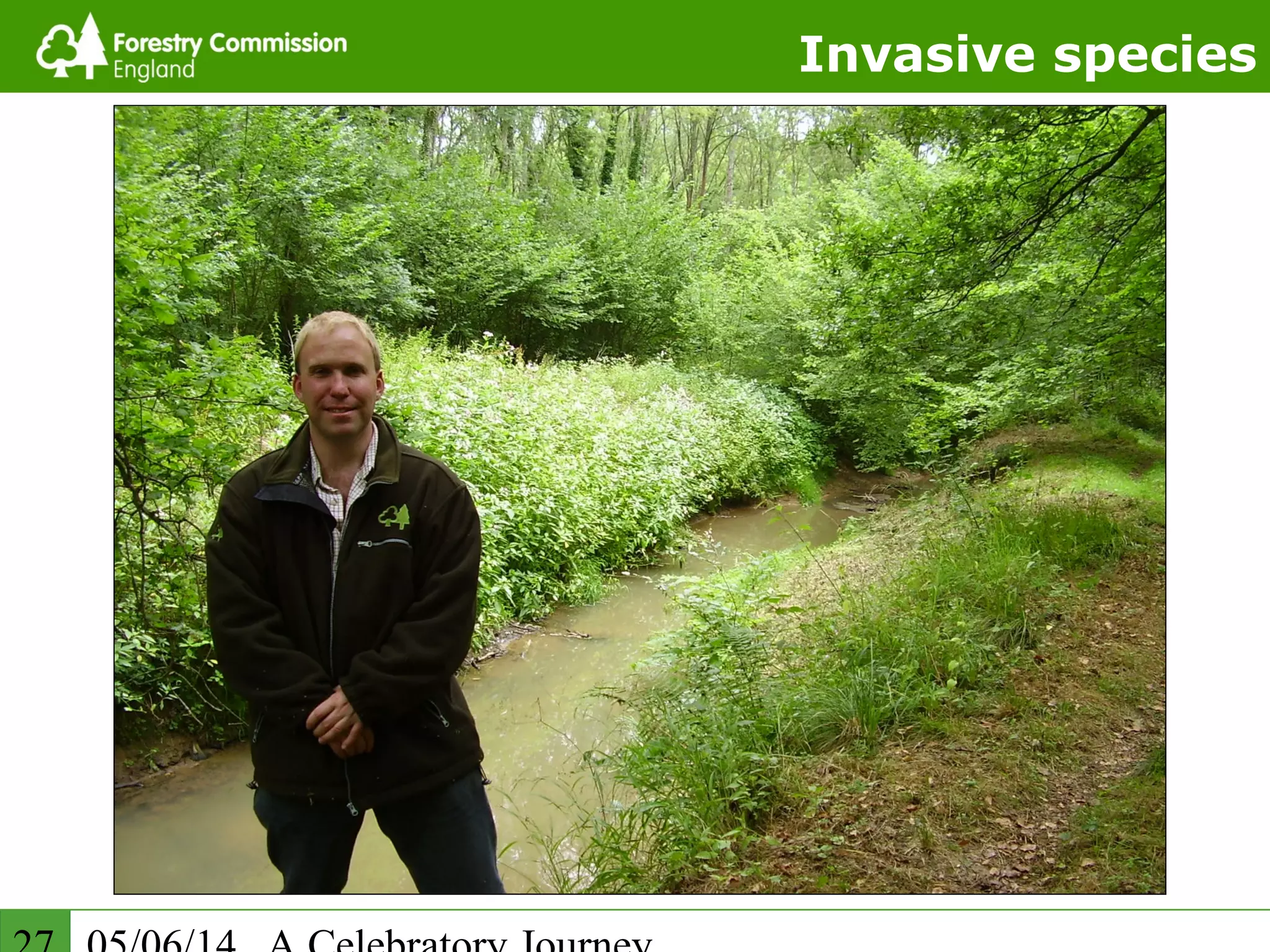
Invasive species
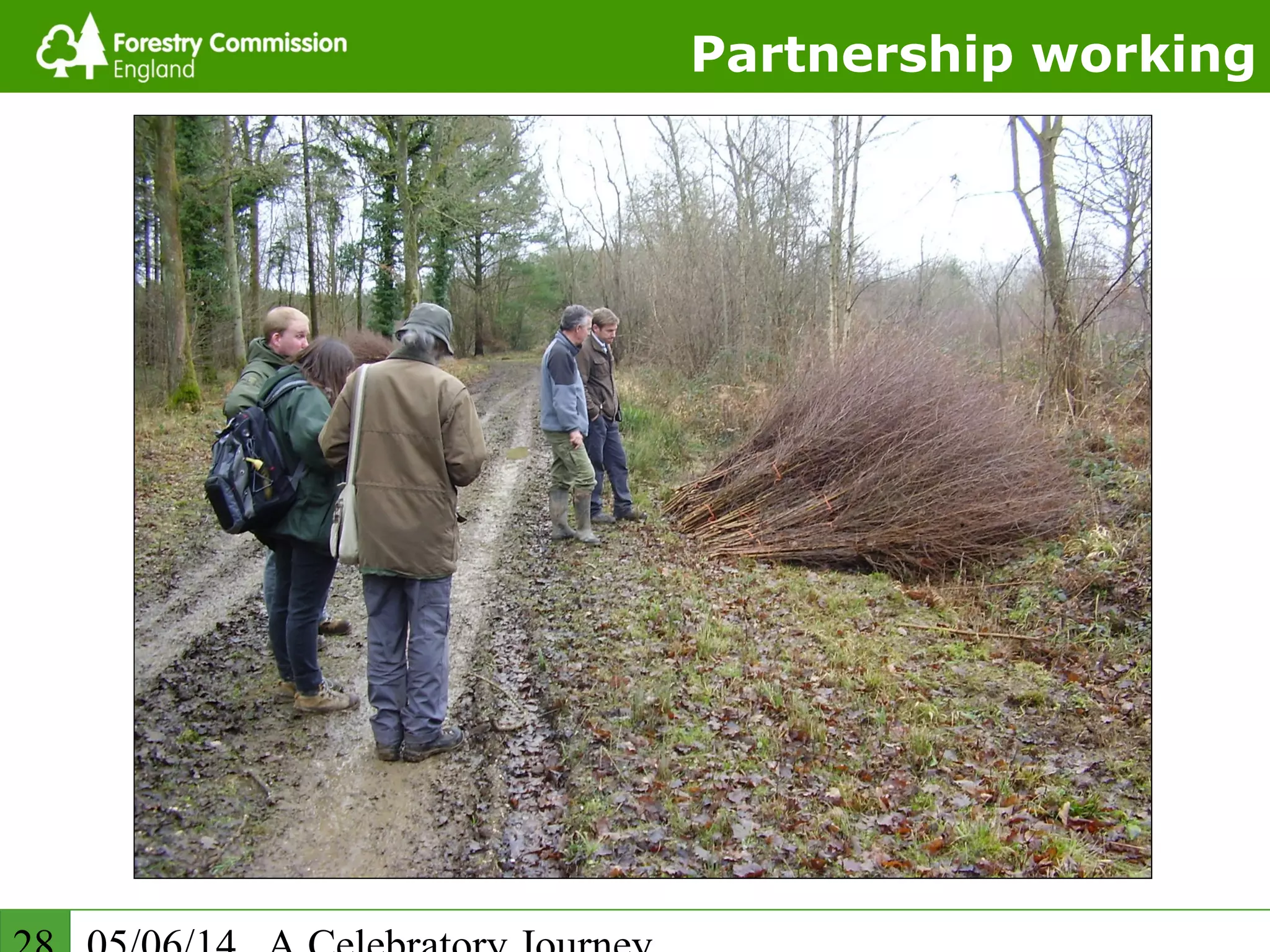
Partnership working
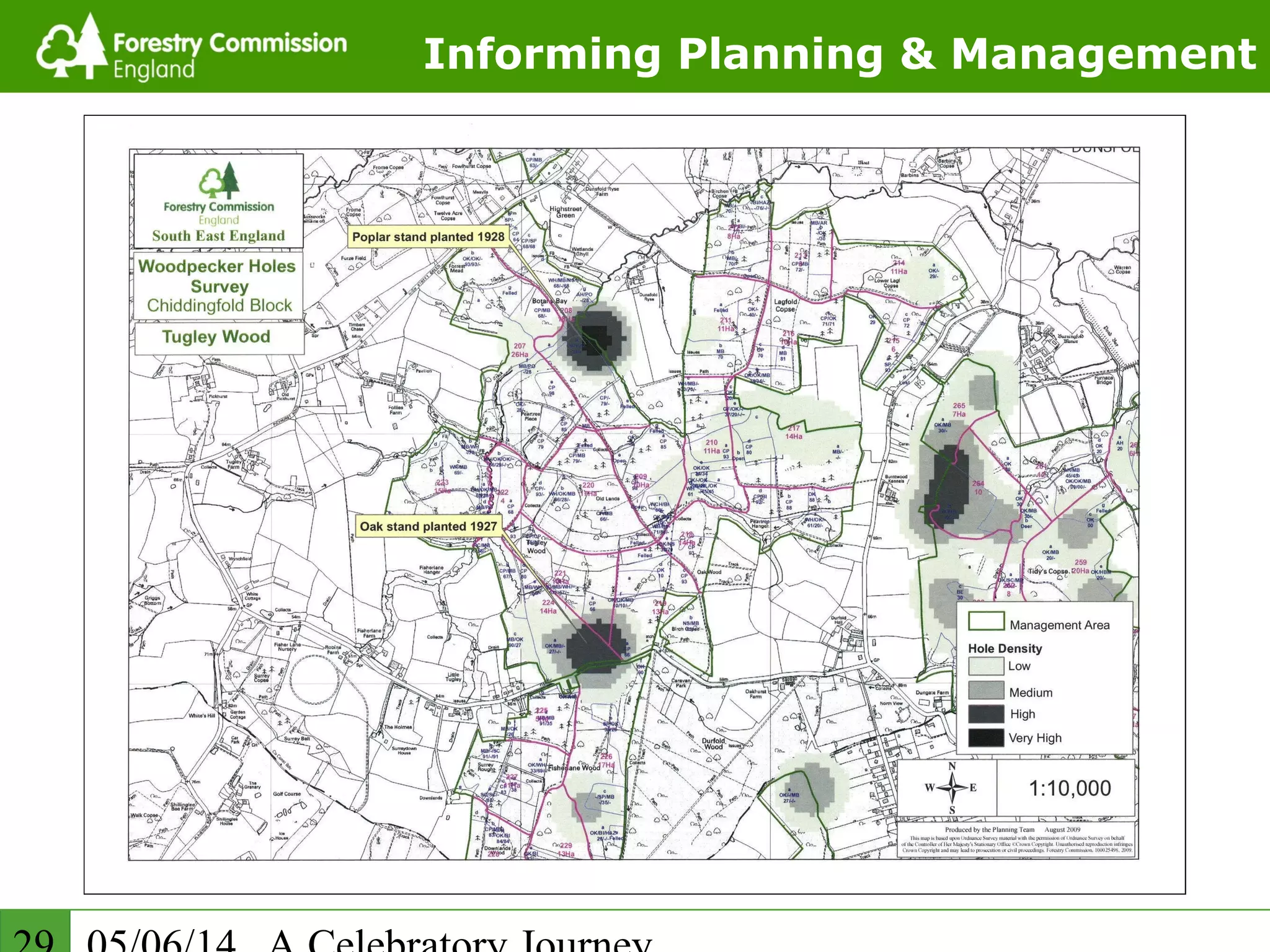
Informing Planning & Management
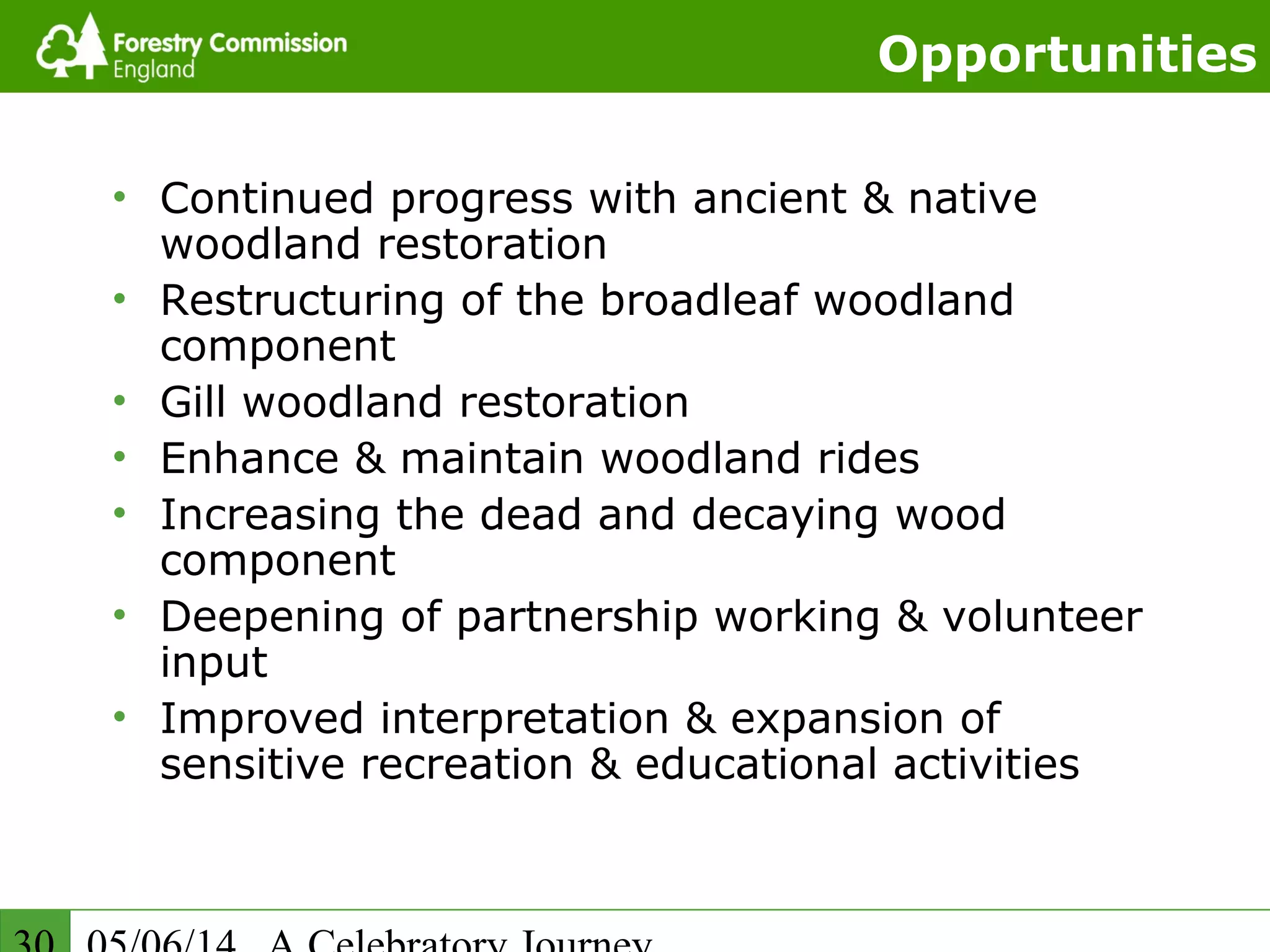
Opportunities
• Continued progress with ancient & native
woodland restoration
• Restructuring of the broadleaf woodland
component
• Gill woodland restoration
• Enhance & maintain woodland rides
• Increasing the dead and decaying wood
component
• Deepening of partnership working & volunteer
input
• Improved interpretation & expansion of
sensitive recreation & educational activities
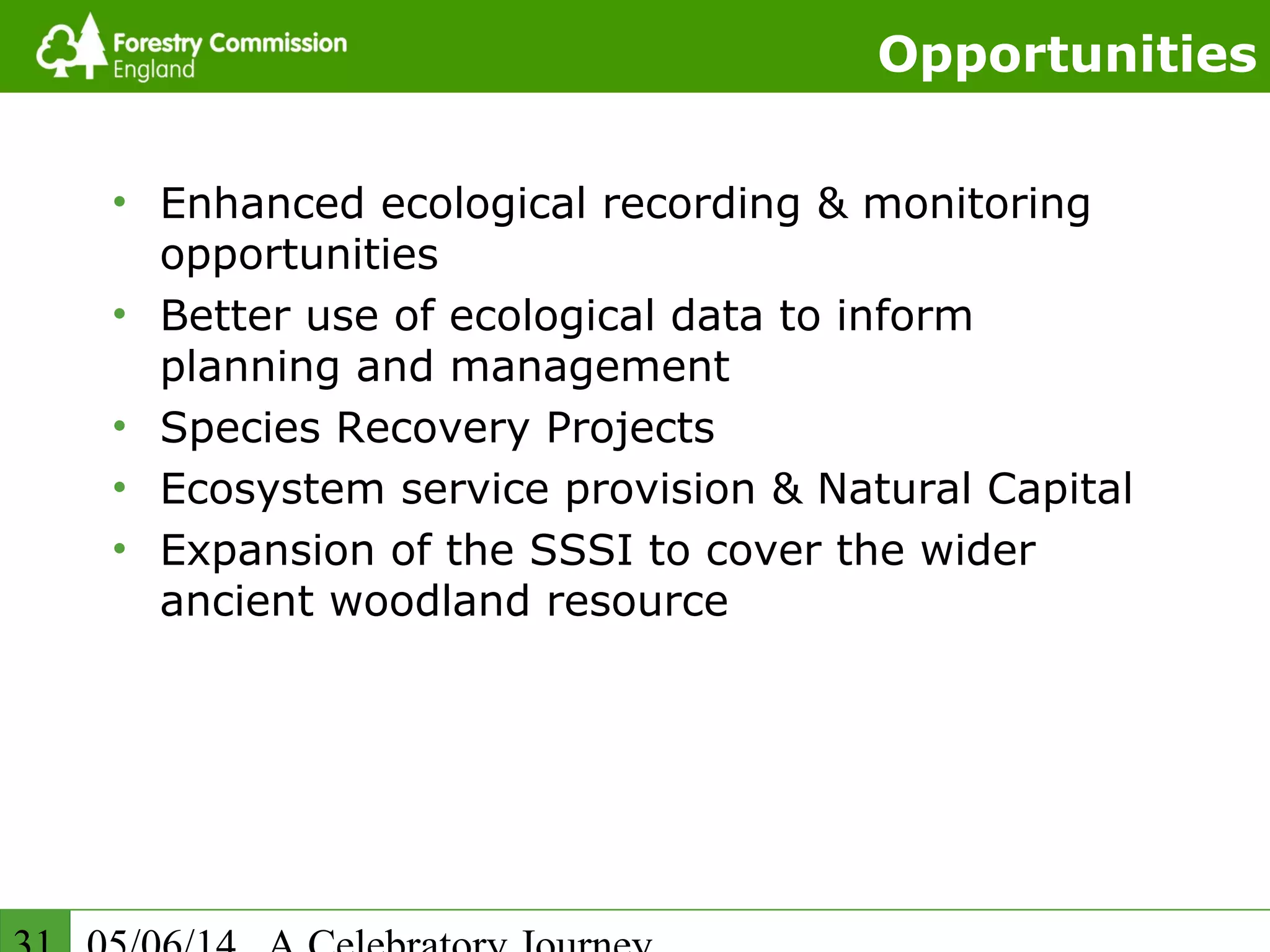
Opportunities
• Enhanced ecological recording & monitoring
opportunities
• Better use of ecological data to inform
planning and management
• Species Recovery Projects
• Ecosystem service provision & Natural Capital
• Expansion of the SSSI to cover the wider
ancient woodland resource
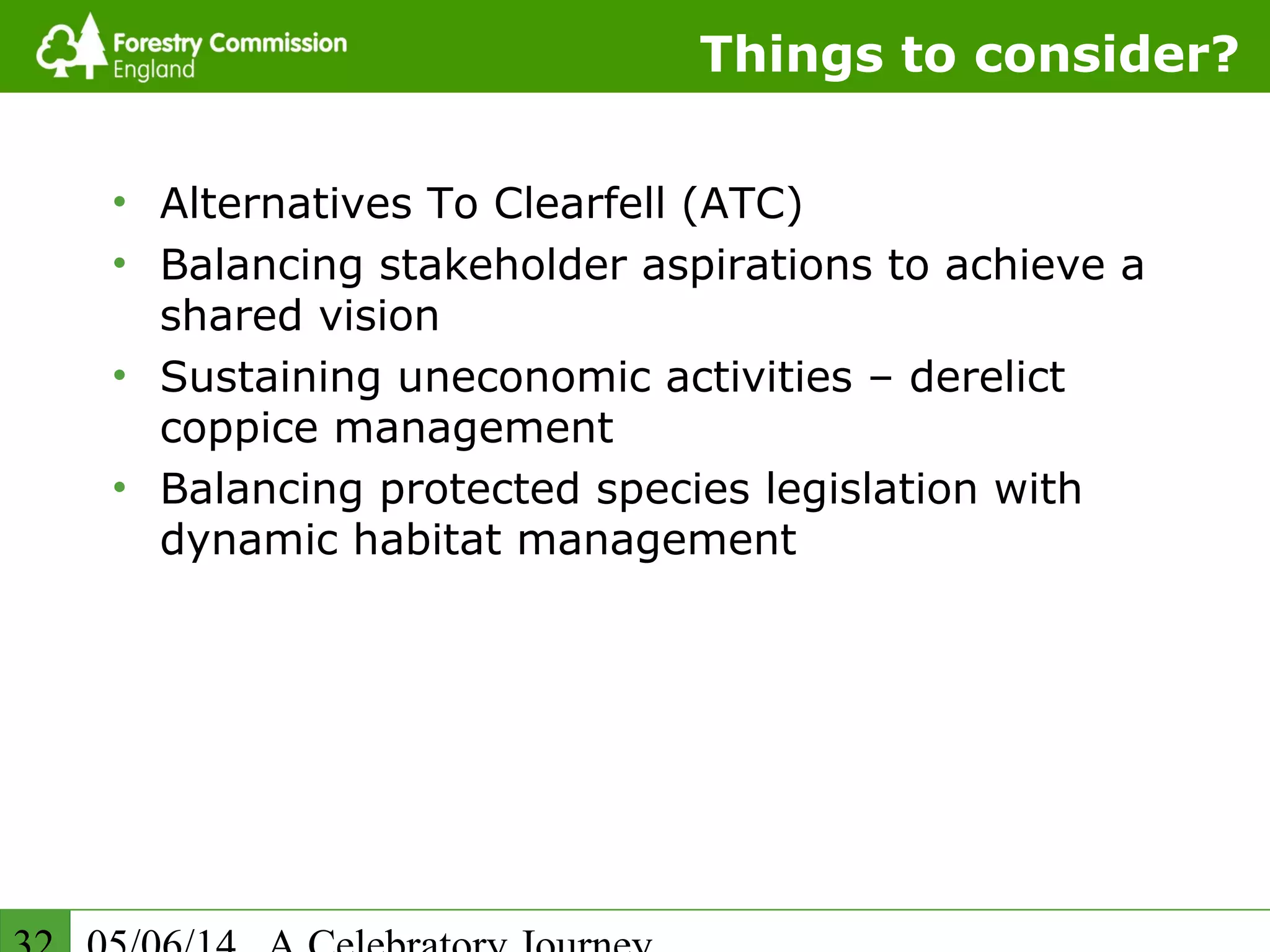
Things to consider?
• Alternatives To Clearfell (ATC)
• Balancing stakeholder aspirations to achieve a
shared vision
• Sustaining uneconomic activities – derelict
coppice management
• Balancing protected species legislation with
dynamic habitat management
Things to consider?
• Climate change – potential for increased
impact on woodland infrastructure
• Tree health – pathogens & pests
• Species resilience
• Invasive species – horizon scanning required
• Deer management – landscape scale solutions
the way forward
• A global timber market
Questions?
Jay Doyle
District Ecologist
South England Forest District
01483 326270
Jay.doyle@forestry.gsi.gov.uk

West Weald Landscape Project Conference: A secure future for Chiddingfold Forest

  • 1.
    A Sustainable Visionfor Chiddingfold Forest – Preparing a new Forest Design Plan Jay Doyle District Ecologist South England Forest District May 2014
  • 2.
  • 3.
    Overview • A KeyForest complex at the Northern edge of the West Weald Landscape • Forestry Commission England (FCE) manage 840 hectares (ha) of Chiddingfold Forest • 500 ha or 90% of the SSSI by area managed by FCE • Ancient woodland the dominant habitat • Land acquired between 1922 and 1958 (majority of acquisitions during 1920’s) • Significant conversion to coniferous plantation post-WWII
  • 4.
    Overview • During 1999/2000the entire Ancient Woodland resource on the PFE surveyed • Ancient & Native Woodland Restoration commenced from 2000 onwards • National Policy launched in Chiddingfold Forest in 2005 – ‘Keepers of Time’ • Chiddingfold Forest is certified as been sustainably managed by the UK Woodland Assurance Standard (UKWAWS)
  • 5.
    Key Policy Drivers •UK Woodland Assurance Standard (UKWAS) www.ukwas.org.uk • UK Forestry Standard www.forestry.gov.uk/ukfs • Ancient Woodland Restoration - ‘Keepers of Time’ • FC-BC Joint Strategy for the Public Forest Estate – Chiddingfold a Priority Site • Biodiversity 2020 • Woodland Policy Enabling Programme (WPEP)
  • 6.
  • 7.
    SSSI Notification • Largestmore or less continuous area of oakwoods on the Weald Clay • Diverse range of floristic communities • Gill woodland corridors • Extensive ride network • Diverse insect community – both open and closed habitat assemblages • Regionally scarce bryophytes and lichens • Diverse community of breeding birds
  • 8.
  • 9.
  • 10.
  • 11.
  • 12.
  • 13.
    Tree species proportions1999 Chid_Species_1999 Norway spruce 6% Western hemlock 7% Mixed conifer 4% Corsican pine 20% Scots pine 3% Oak 36% Mixed broadleaves 24%
  • 14.
    Tree species proportions2014 Species Composition (-open) Oak 44% MB 24% NS 2% WH 4% MC 4% CP 20% SP 2%
  • 15.
    Timber age class Broadleaf 4%2% 6% 20% 3% 1% 1% 2% 27% 4% 1% 3% 1% 3% 0% 10% 20% 30% 1 - 10 11 - 20 21 - 30 31 - 40 41 - 50 51 - 60 61 - 70 71 - 80 81 - 90 91 - 100 101 - 110 111 - 120 121 - 130 131 - 140 Age Class Percentageof TotalArea Conifer 0% 2% 6% 2% 23% 46% 0% 1% 0% 0% 0% 0% 0% 0% 0% 10% 20% 30% 40% 50% 1 - 10 11 - 20 21 - 30 31 - 40 41 - 50 51 - 60 61 - 70 71 - 80 81 - 90 91 - 100 101 - 110 111 - 120 121 - 130 131 - 140 Age Class Percentageof TotalArea Broadleaf/Conifer Area 0% 10% 20% 30% 40% 50% 1 - 10 11 - 20 21 - 30 31 - 40 41 - 50 51 - 60 61 - 70 71 - 80 81 - 90 91 - 100 101 - 110 111 - 120 121 - 130 131 - 140 Age Class Percentageof TotalArea Broadleaf Conifer
  • 16.
    FDP’s Explained • AForest Design Plan (FDP) is a strategic document setting out a broad vision for a Forest Block • FDP’s set a 30-year vision • Reviewed at the 5-year interval • Re-written every 10 years • Developed through consultation • Written from a landscape scale perspective
  • 17.
    1999-2006 FDP • LocationMap • Design Concept layer • Survey layer – SSSI boundary, key species locations, footpaths etc • Existing Species layer • Felling layer • Replanting proposals
  • 18.
    New FDP Layers •Location map • Aerial photo • SSSI condition layer • Ancient woodland semi-natural scoring (1-4) • Indicative Species Diversity (no. tree species) • Indicative Age Diversity (20 year cohorts) • Long Term Vision • Habitat restoration and felling • Predicted Timeline for Intended Future Habitats
  • 19.
  • 20.
  • 21.
  • 22.
  • 23.
  • 24.
  • 25.
  • 26.
  • 27.
  • 28.
  • 29.
  • 30.
    Opportunities • Continued progresswith ancient & native woodland restoration • Restructuring of the broadleaf woodland component • Gill woodland restoration • Enhance & maintain woodland rides • Increasing the dead and decaying wood component • Deepening of partnership working & volunteer input • Improved interpretation & expansion of sensitive recreation & educational activities
  • 31.
    Opportunities • Enhanced ecologicalrecording & monitoring opportunities • Better use of ecological data to inform planning and management • Species Recovery Projects • Ecosystem service provision & Natural Capital • Expansion of the SSSI to cover the wider ancient woodland resource
  • 32.
    Things to consider? •Alternatives To Clearfell (ATC) • Balancing stakeholder aspirations to achieve a shared vision • Sustaining uneconomic activities – derelict coppice management • Balancing protected species legislation with dynamic habitat management
  • 33.
    Things to consider? •Climate change – potential for increased impact on woodland infrastructure • Tree health – pathogens & pests • Species resilience • Invasive species – horizon scanning required • Deer management – landscape scale solutions the way forward • A global timber market
  • 34.
    Questions? Jay Doyle District Ecologist SouthEngland Forest District 01483 326270 Jay.doyle@forestry.gsi.gov.uk