Sensitive Ecosystem
  Inventory (SEI)
 Regional District of Okanagan Similkameen
              August 19, 2009
         Maureen V. Ketcheson R.P.Bio.

        Ecology Manager, Victoria Branch
               Dave Caswell R.P.Bio
        Project Manager, Kamloops Branch


                                             1
Outline
Introduction
Project Objectives
Background - Sensitive
Ecosystem Inventory
SEI Mapping Process
Results


                         2
Dave Caswell, RPBio                   Maureen V. Ketcheson,
Ecology Mgr, Kamloops                 RPBio – Ecology Mgr,
Branch.                               Victoria
  Born and raised in Merritt            Born and raised in Regina,
                                        Sheldon Williams Collegiate
  Educated at University College of
  the Cariboo                           Educated at U of R, U of Vic, and
                                        Lakehead U
  B.Sc Biology (wildlife) 1995
                                        B.Sc Biology (botany) M.Sc.
  Wildlife consultant since 1995
                                        Quantitative Ecology
  Wildlife generalist (songbirds,
                                        BC Ministry of Forest Regional
  mule deer)
                                        Ecologist, Nelson BC 1981-84
  Joined Timberline in Dec, 2007 –
                                        Consultant in eco mapping since
  Ecology Department Manager
                                        1984
                                        Ecology Manager for Timberline
                                        Victoria since 2005
                                        Specializing in TEM (terrestrial
                                        ecosystem mapping) and PEM
                                        (predictive ecosystem mapping) in
                                        BC
                                        Certified trainer in TEM and a
                                        “senior” PEM practitioner

                                                                            3
Project Objectives
To provide baseline mapping information to
support land use planning for parts of Electoral
Area H
The mapping will identify ecosystems which are:
sensitive / rare / fragile.
Identify the plant and wildlife Species at Risk
associated with these ecosystems.
Support management / best practices
recommendations for these ecosystems and
their associated SAR.

                                                   4
Background
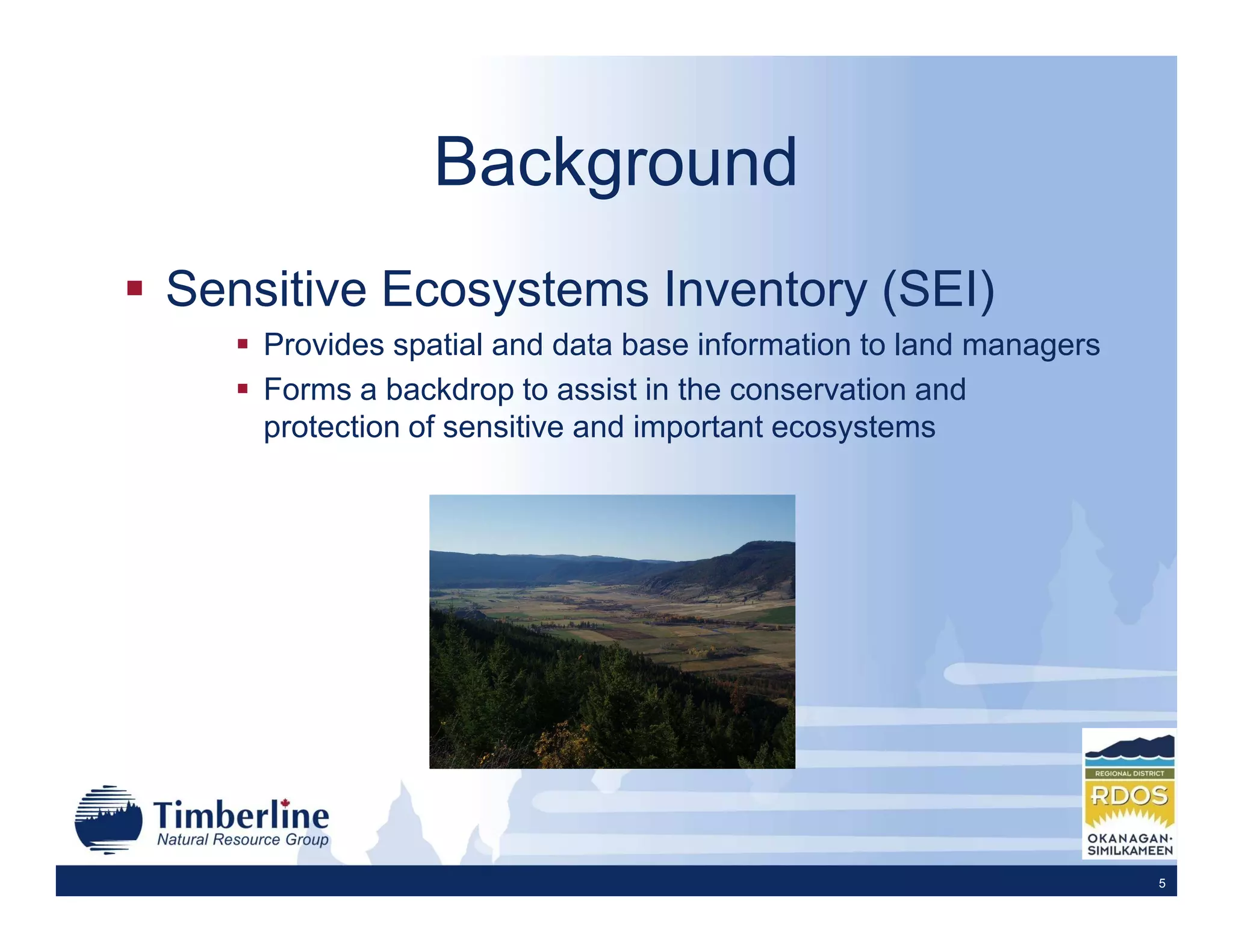
Sensitive Ecosystems Inventory (SEI)
    Provides spatial and data base information to land managers
    Forms a backdrop to assist in the conservation and
    protection of sensitive and important ecosystems


                                                                  5
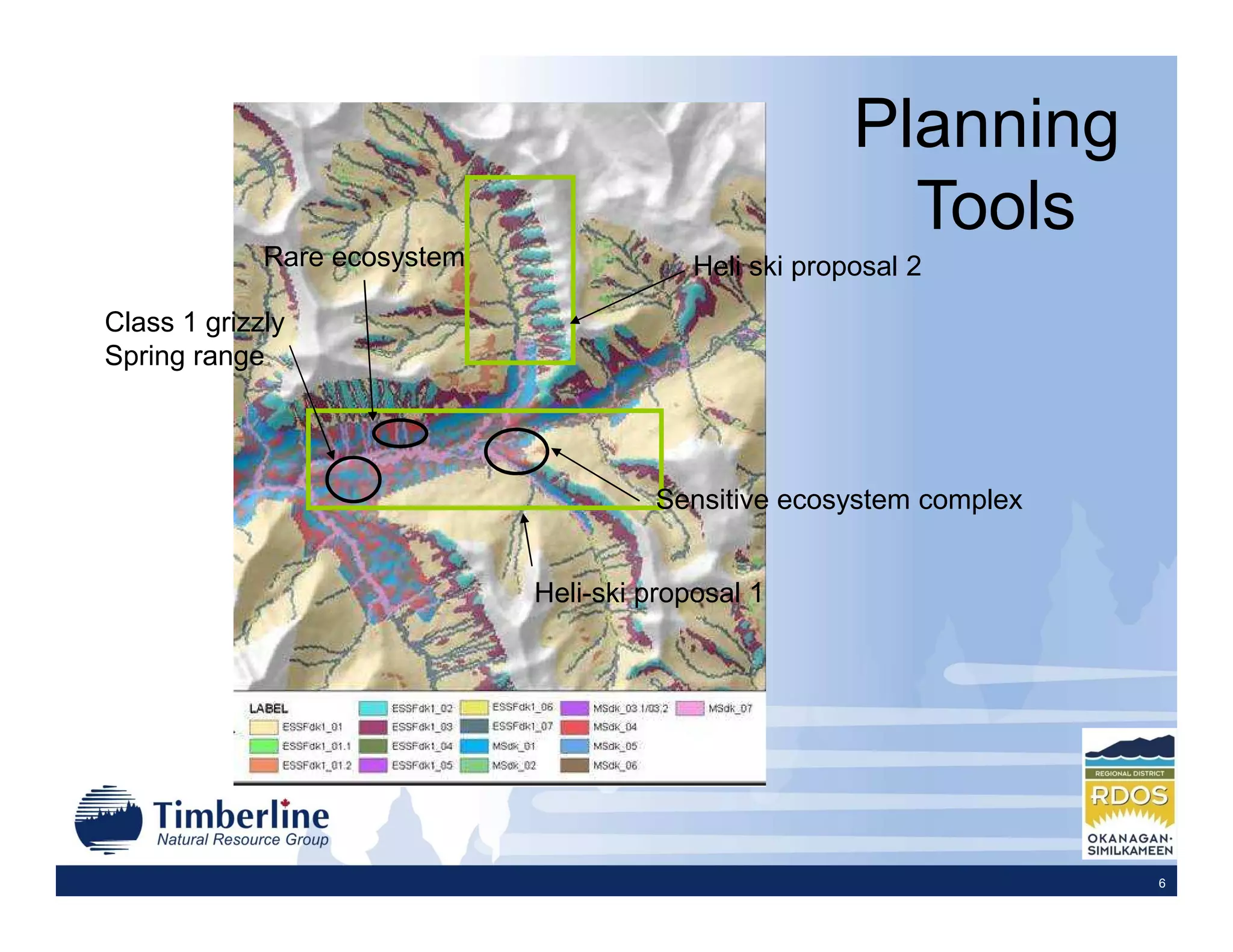
Planning
                                                          Tools
             Rare ecosystem                Heli ski proposal 2

Class 1 grizzly
Spring range


                                        Sensitive ecosystem complex


                              Heli-ski proposal 1


                                                                      6
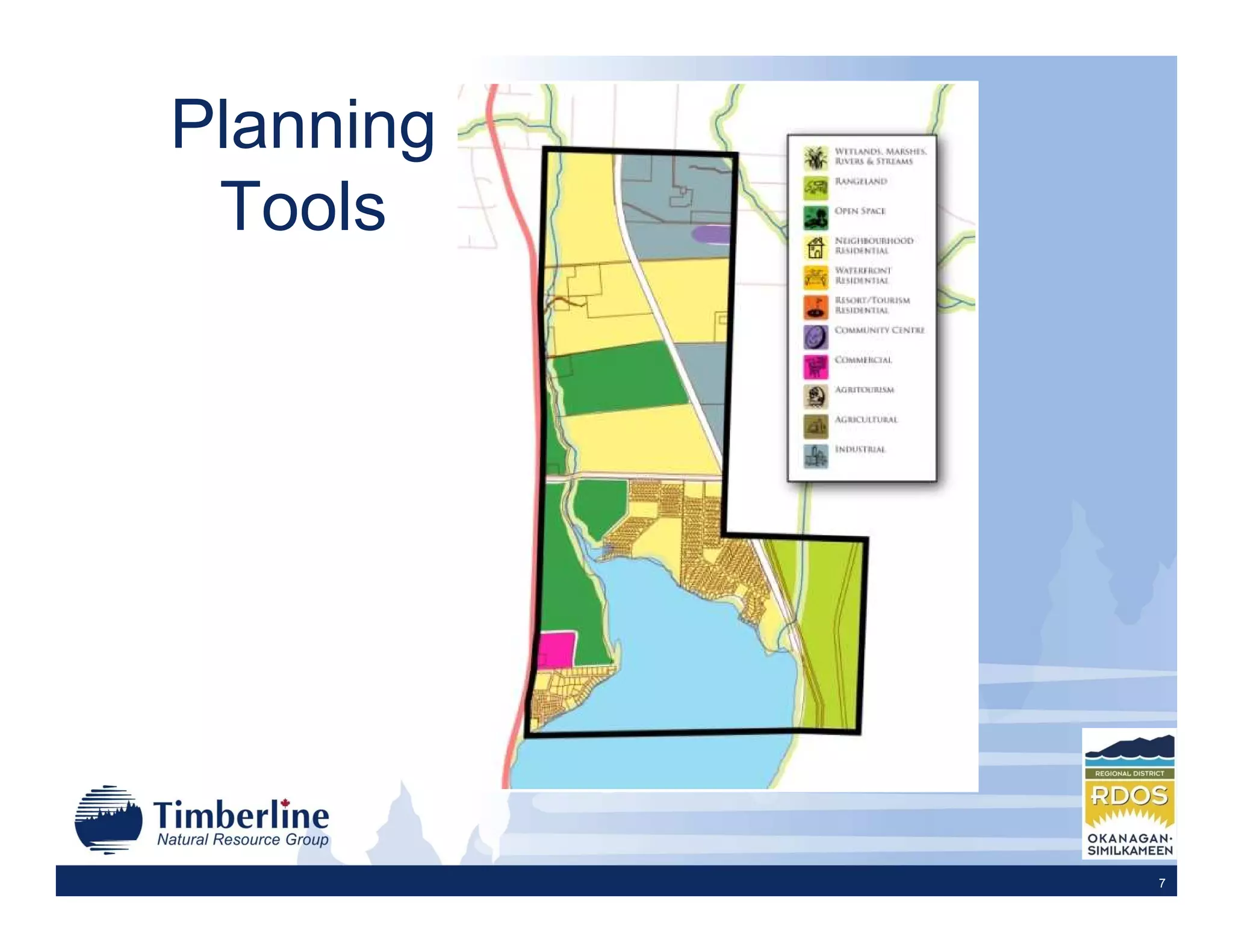
Planning
 Tools


           7
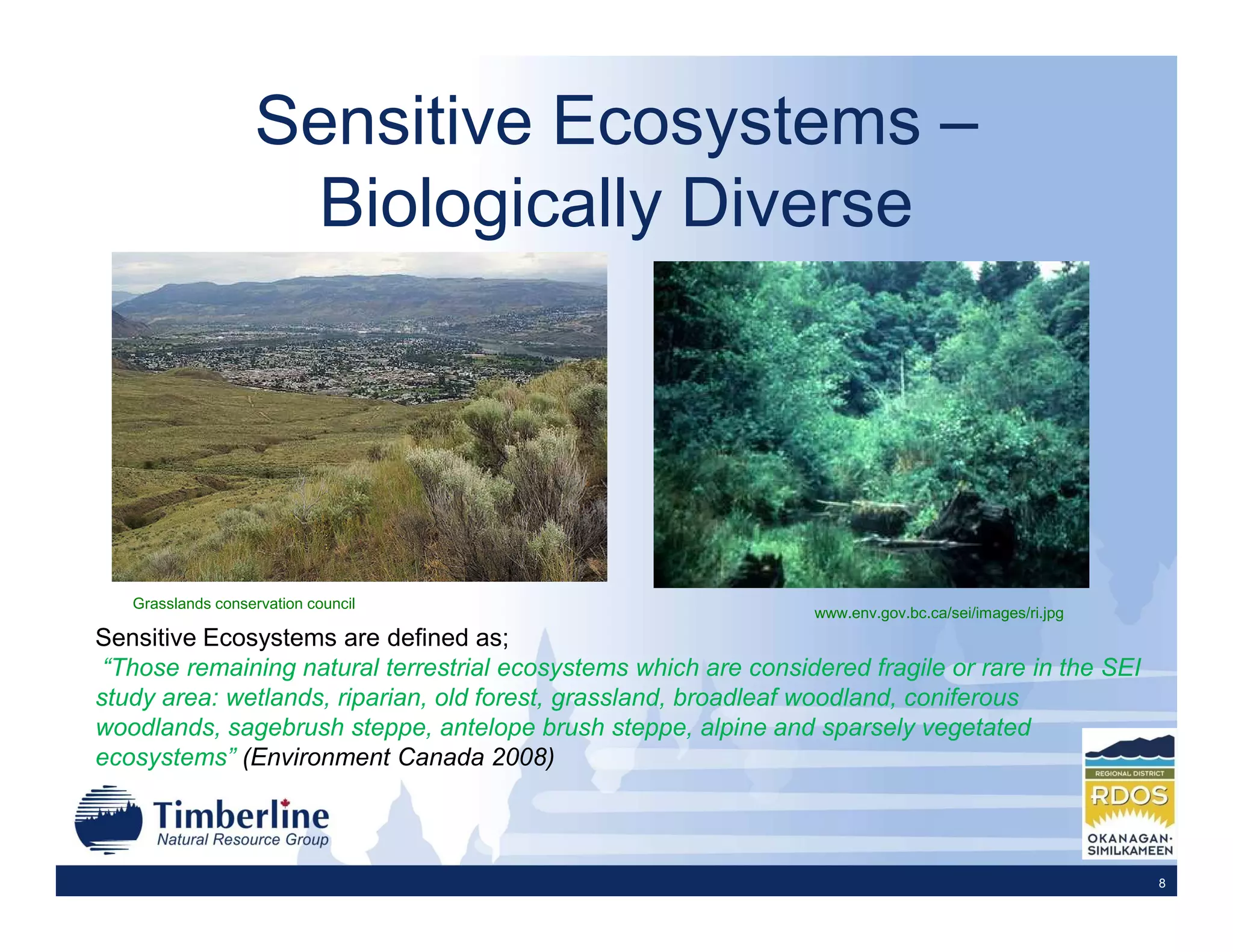
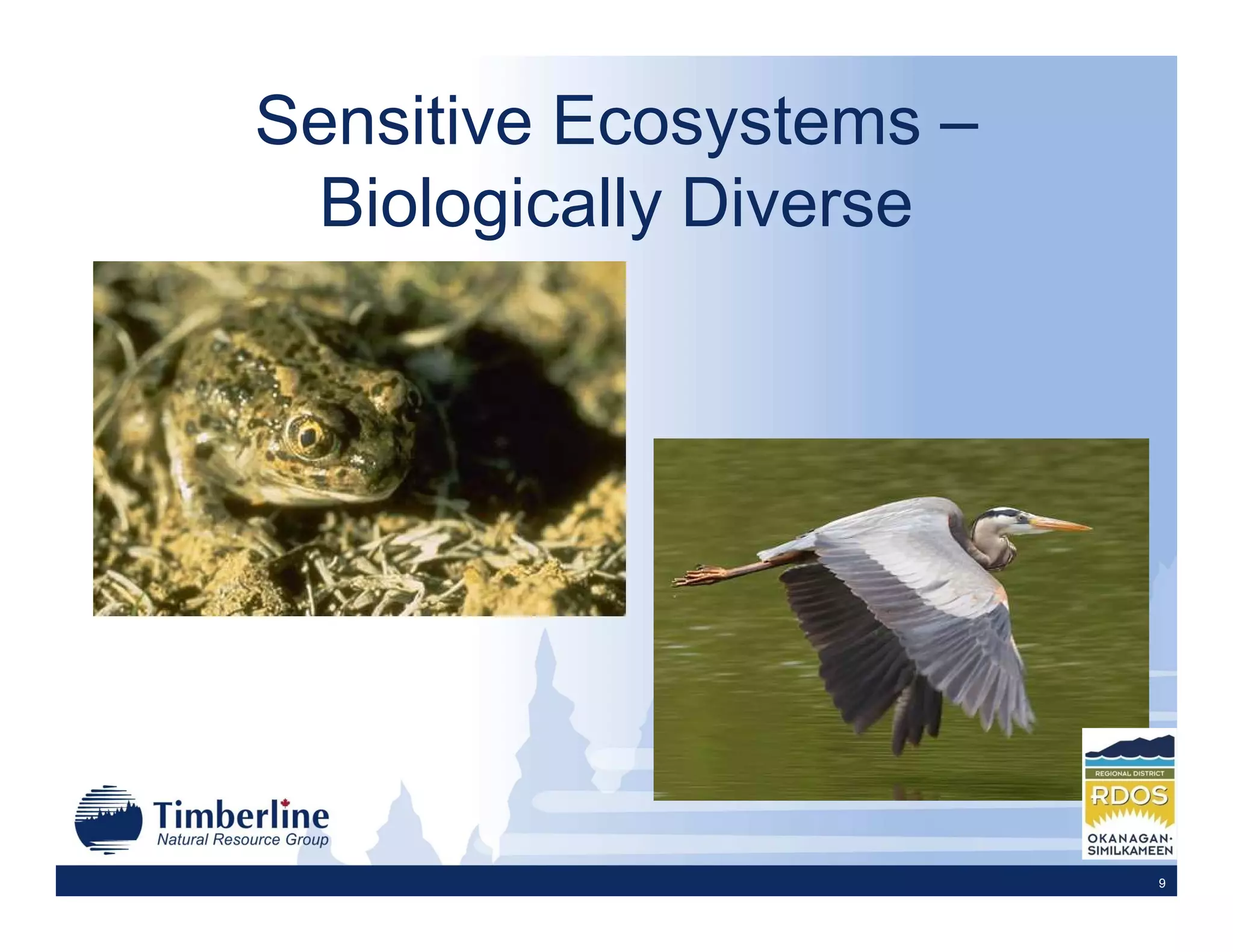
Sensitive Ecosystems –
                    Biologically Diverse


   Grasslands conservation council
                                                                  www.env.gov.bc.ca/sei/images/ri.jpg
Sensitive Ecosystems are defined as;
 “Those remaining natural terrestrial ecosystems which are considered fragile or rare in the SEI
study area: wetlands, riparian, old forest, grassland, broadleaf woodland, coniferous
woodlands, sagebrush steppe, antelope brush steppe, alpine and sparsely vegetated
ecosystems” (Environment Canada 2008)


                                                                                                        8
Sensitive Ecosystems –
 Biologically Diverse


                         9
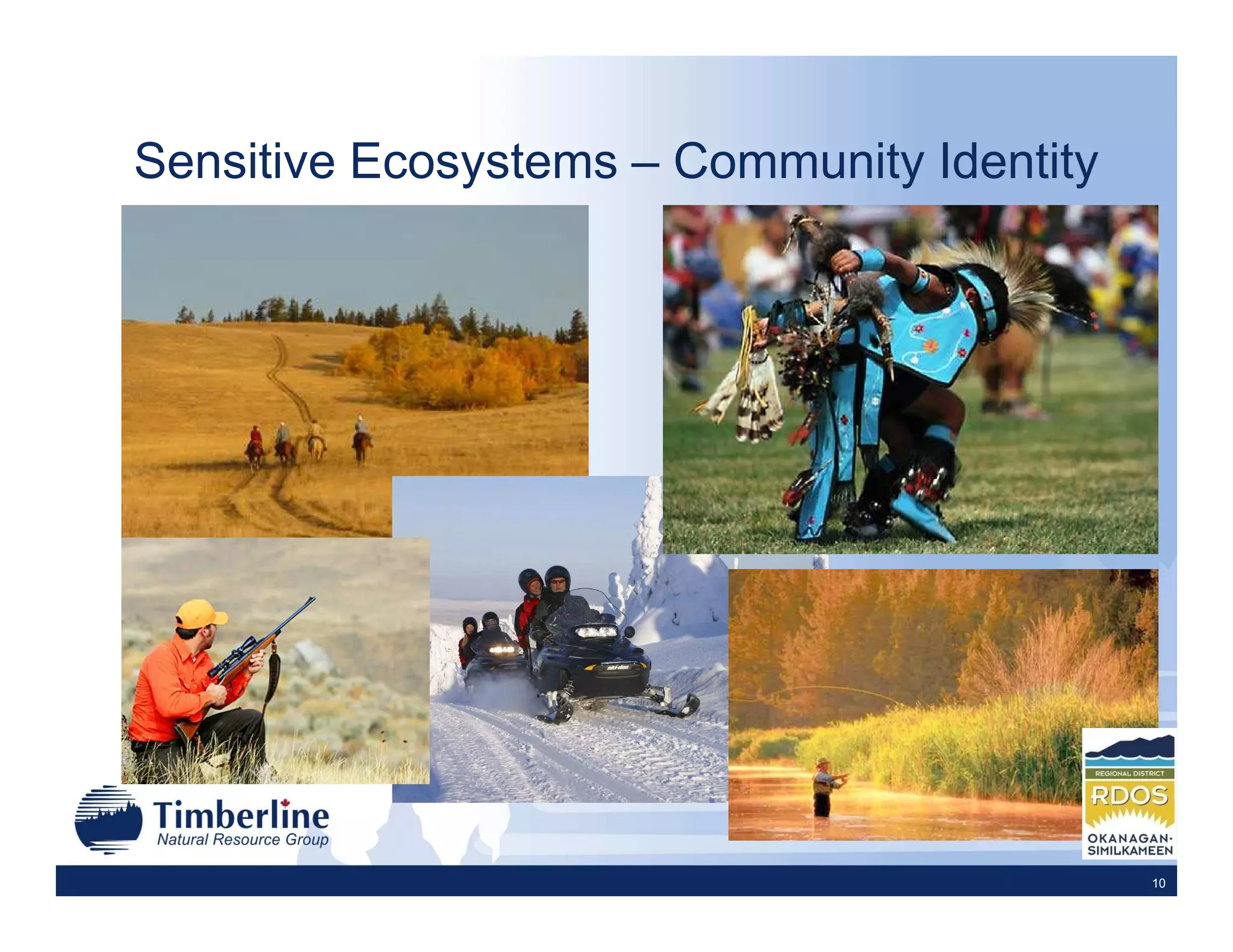
Sensitive Ecosystems – Community Identity


                                            10
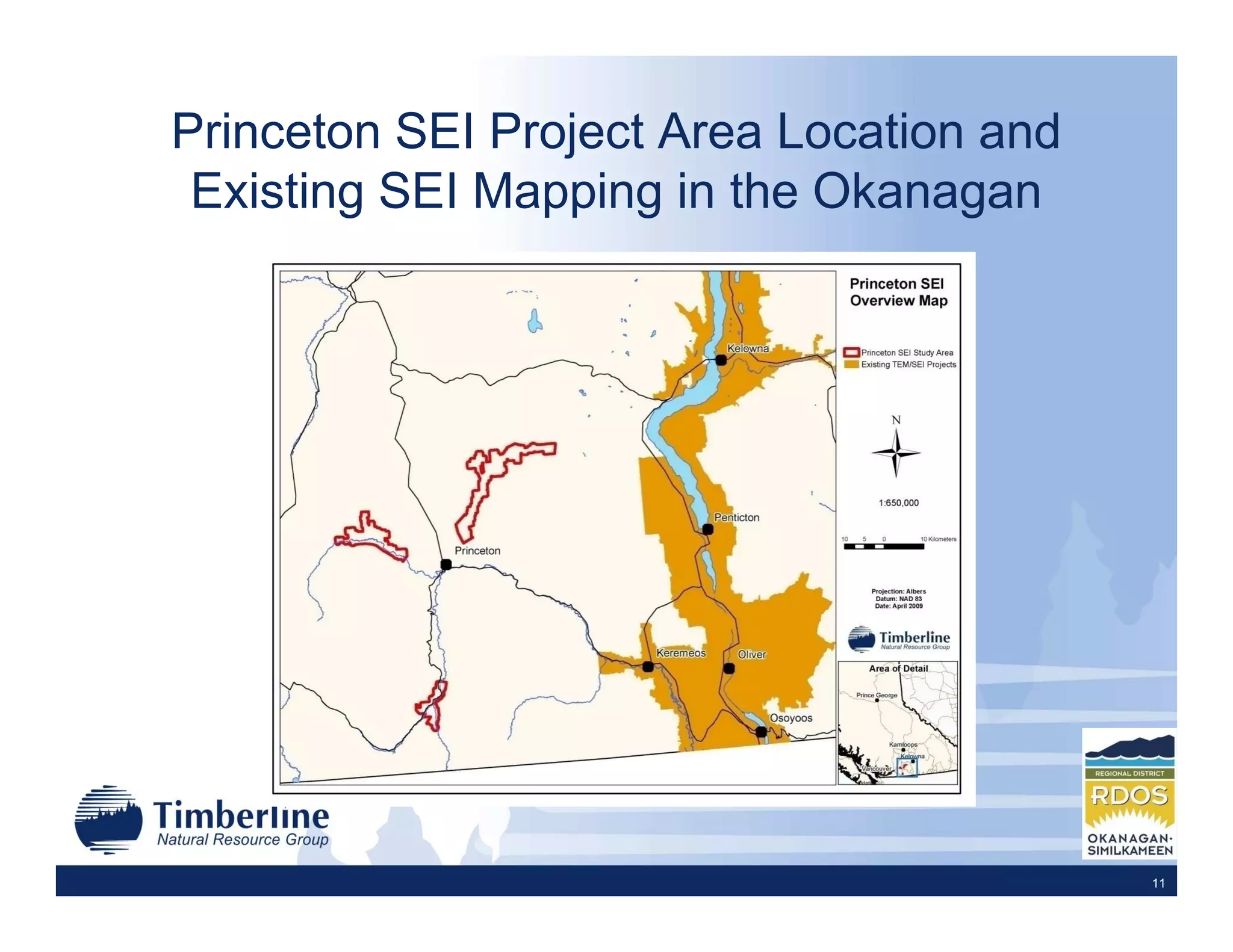
Princeton SEI Project Area Location and
 Existing SEI Mapping in the Okanagan


                                          11
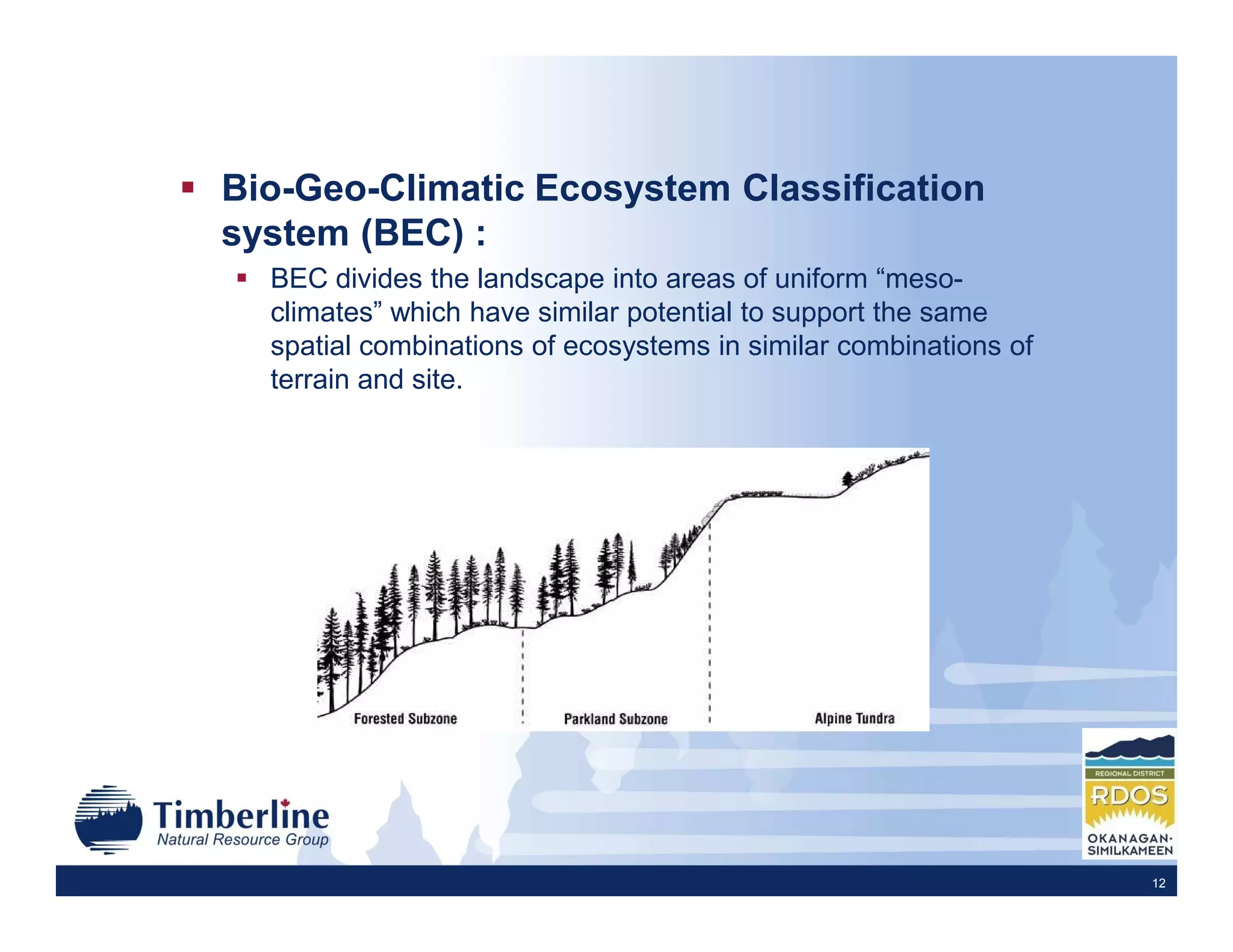
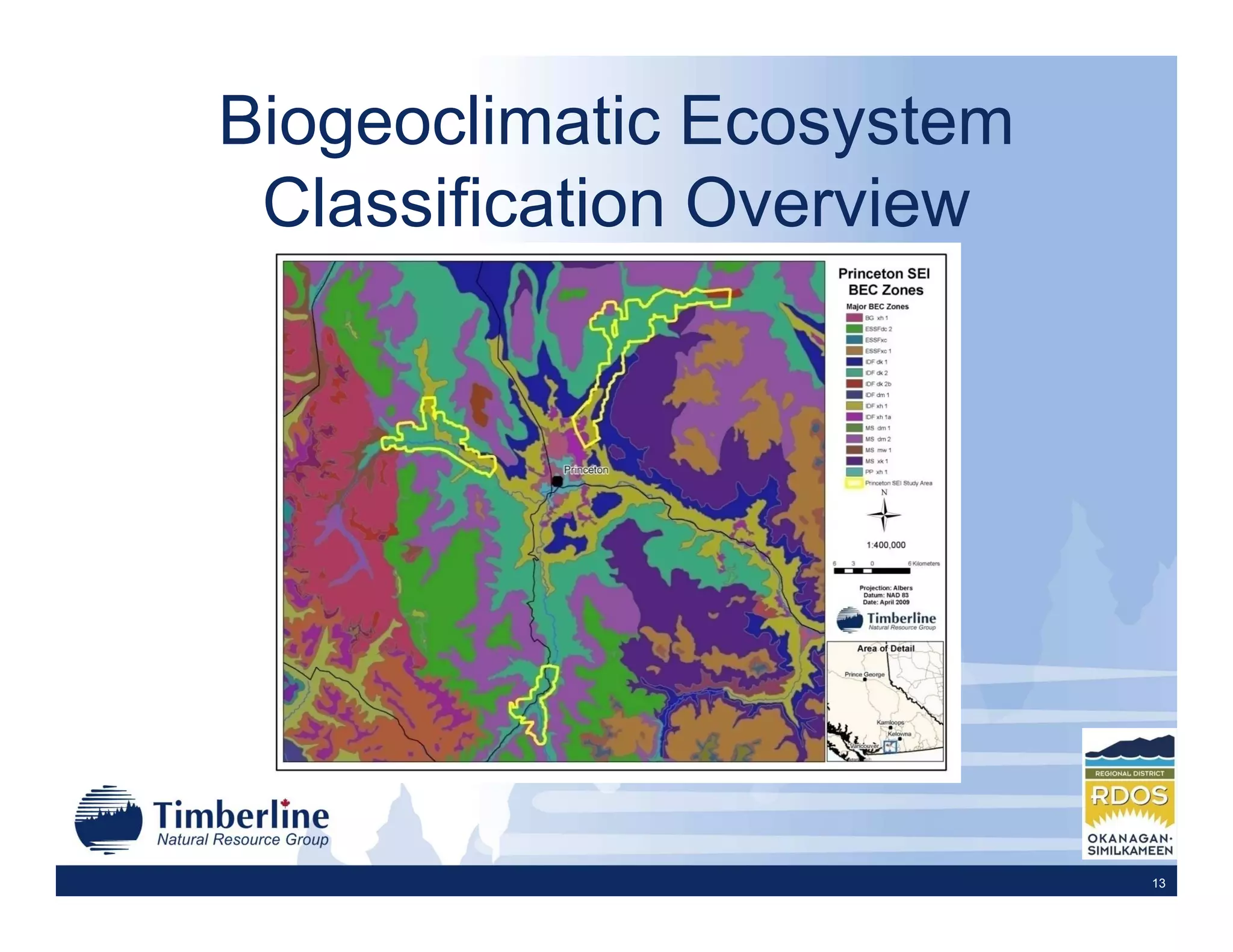
Bio-Geo-Climatic Ecosystem Classification
system (BEC) :
  BEC divides the landscape into areas of uniform “meso-
  climates” which have similar potential to support the same
  spatial combinations of ecosystems in similar combinations of
  terrain and site.


                                                                  12
Biogeoclimatic Ecosystem
 Classification Overview


                           13
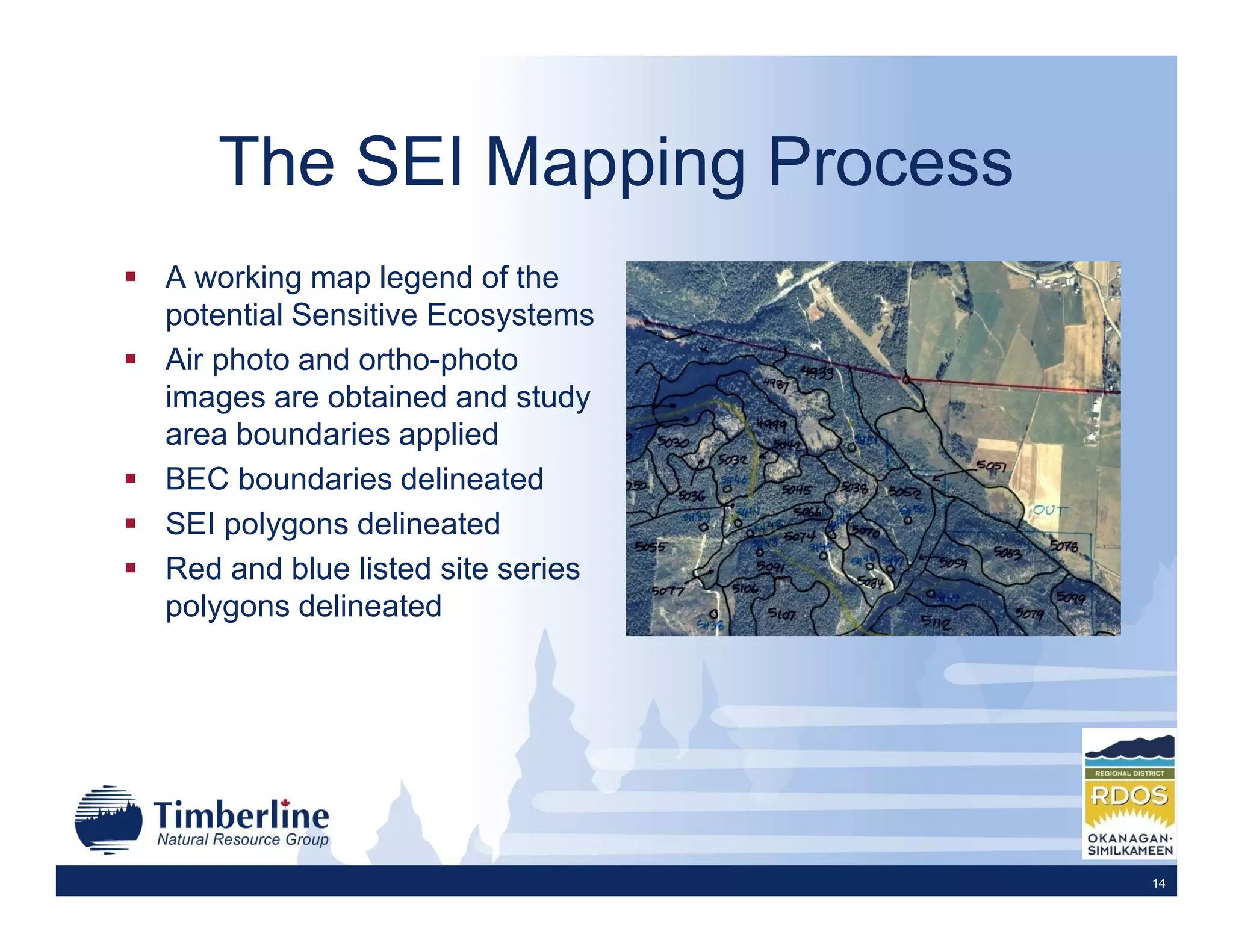
The SEI Mapping Process
A working map legend of the
potential Sensitive Ecosystems
Air photo and ortho-photo
images are obtained and study
area boundaries applied
BEC boundaries delineated
SEI polygons delineated
Red and blue listed site series
polygons delineated


                                  14
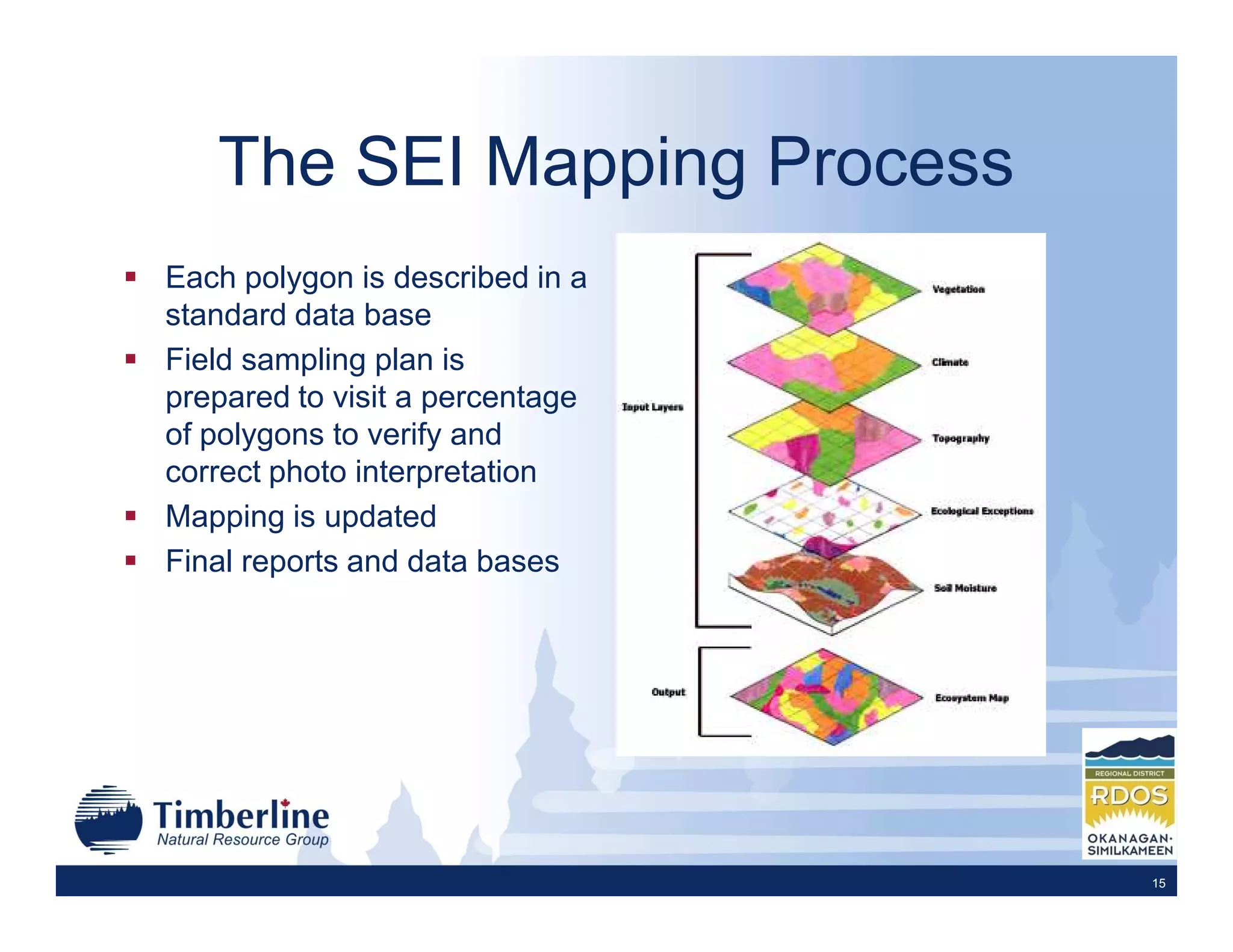
The SEI Mapping Process
Each polygon is described in a
standard data base
Field sampling plan is
prepared to visit a percentage
of polygons to verify and
correct photo interpretation
Mapping is updated
Final reports and data bases


                                 15
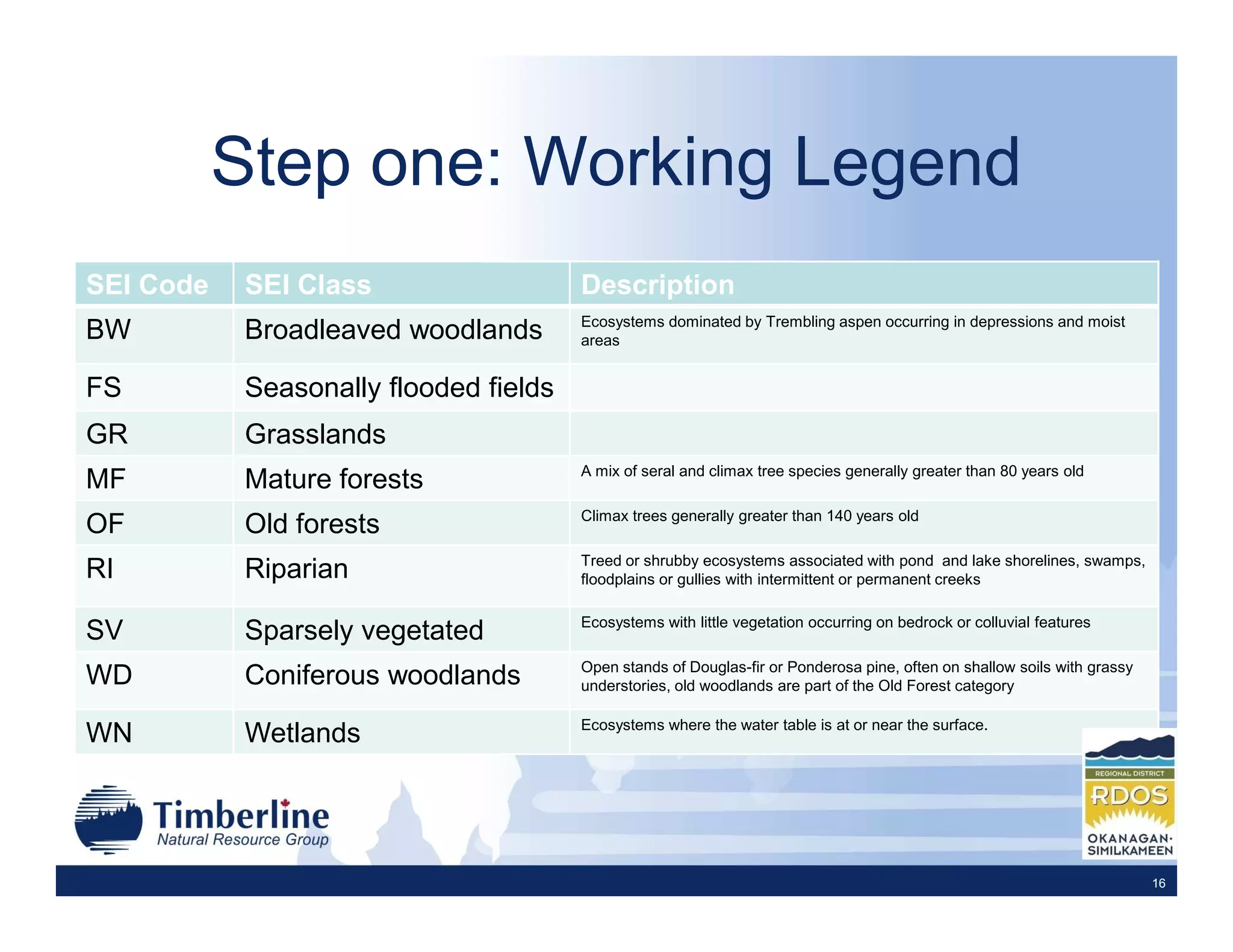
Step one: Working Legend
SEI Code    SEI Class                   Description
                                        Ecosystems dominated by Trembling aspen occurring in depressions and moist
BW          Broadleaved woodlands       areas


FS          Seasonally flooded fields
GR          Grasslands
                                        A mix of seral and climax tree species generally greater than 80 years old
MF          Mature forests
                                        Climax trees generally greater than 140 years old
OF          Old forests
                                        Treed or shrubby ecosystems associated with pond and lake shorelines, swamps,
RI          Riparian                    floodplains or gullies with intermittent or permanent creeks

                                        Ecosystems with little vegetation occurring on bedrock or colluvial features
SV          Sparsely vegetated
                                        Open stands of Douglas-fir or Ponderosa pine, often on shallow soils with grassy
WD          Coniferous woodlands        understories, old woodlands are part of the Old Forest category

                                        Ecosystems where the water table is at or near the surface.
WN          Wetlands


                                                                                                                           16
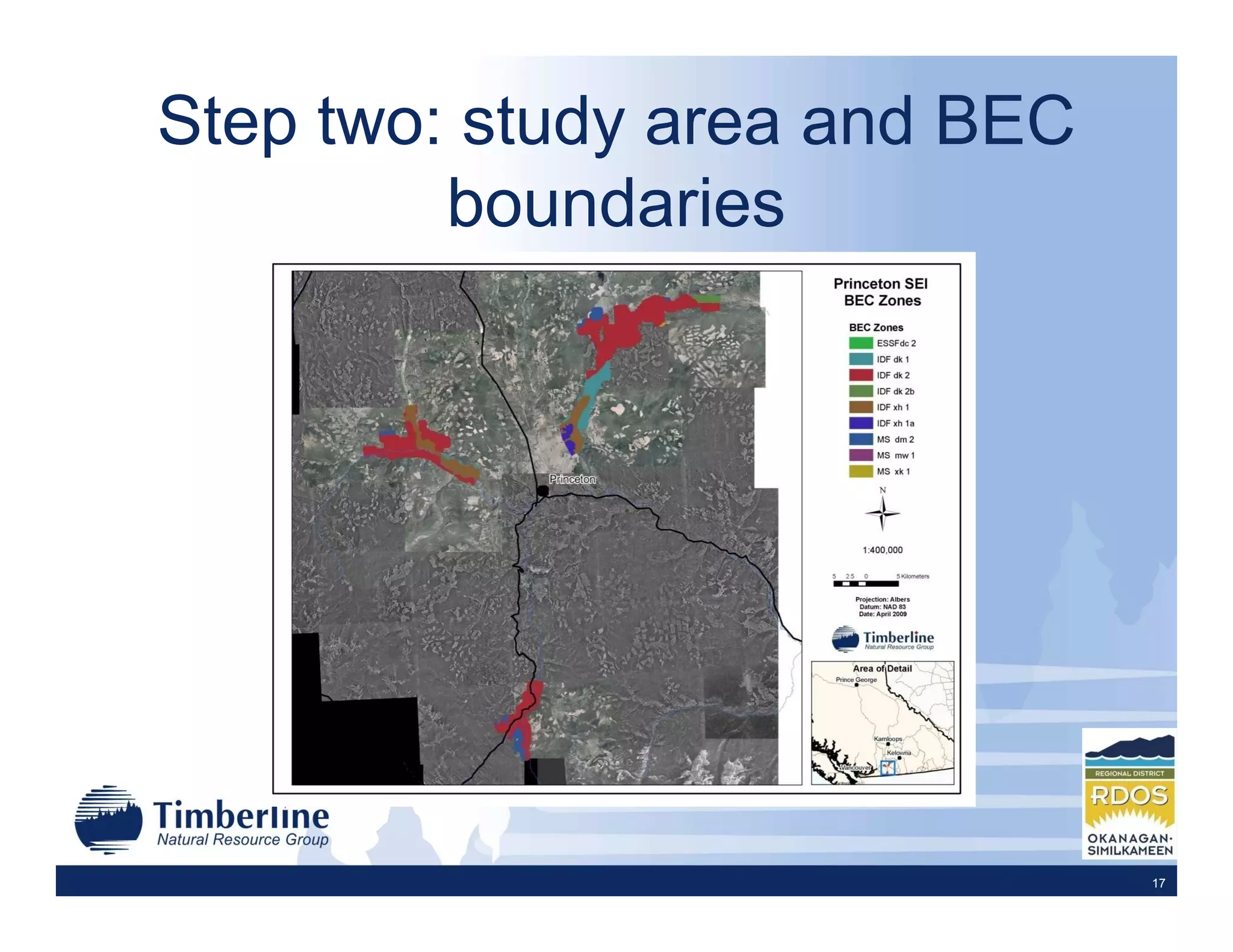
Step two: study area and BEC
         boundaries


                               17
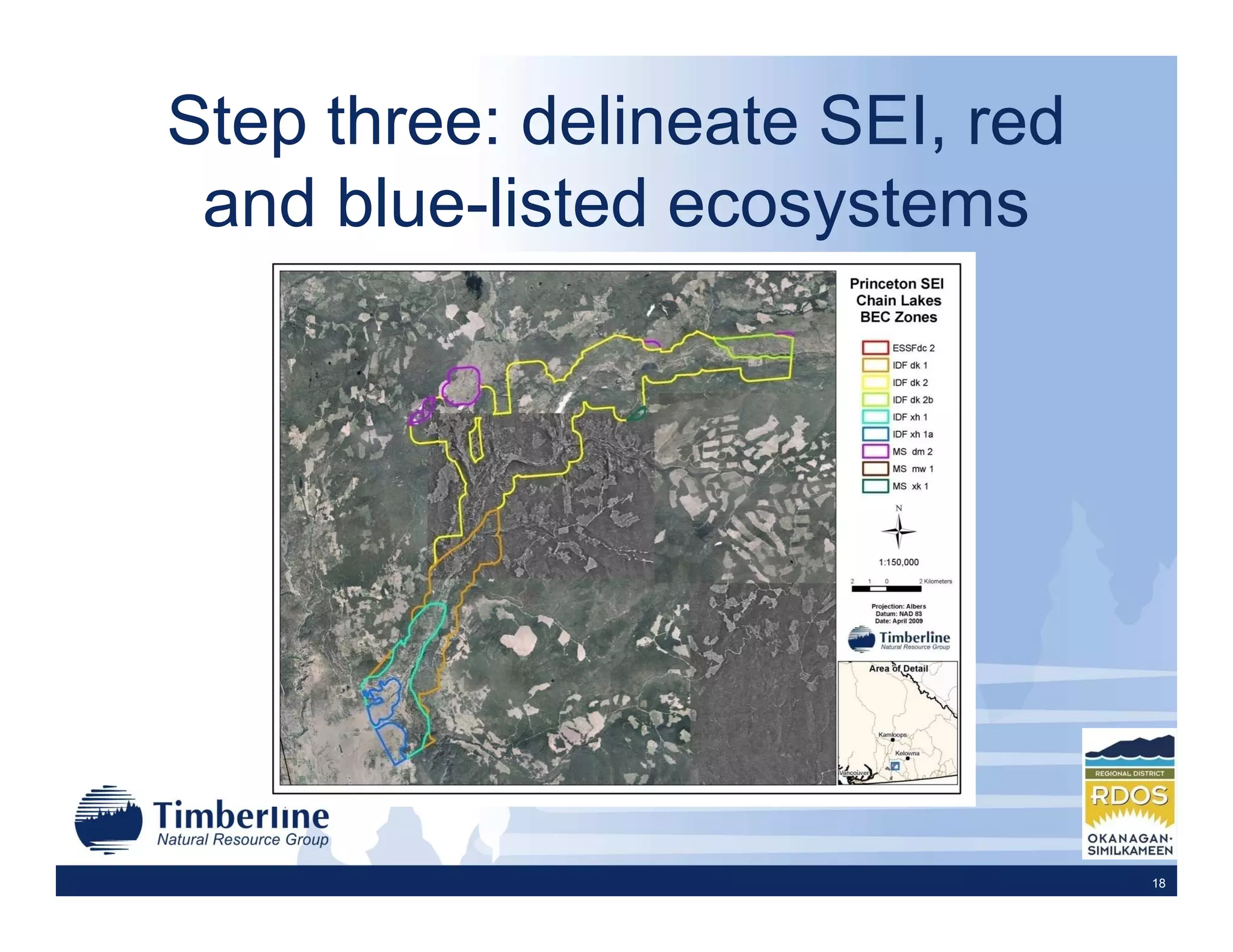
Step three: delineate SEI, red
 and blue-listed ecosystems


                                 18
Rare ecosystems have been identified by
the Conservation Data Center
  Red-listed ecosystems are defined as the ecological
  communities considered provincially rare, regardless
  of present day seral status
  Blue-listed plant communities considered provincially
  vulnerable, focus is often on mature and old seral
  stages


                                                          19
Rare and Endangered Species
COSEWIC – The Committee on the Status
of Endangered Wildlife in Canada
  Endangered, Threatened, Special Concern
BC Conservation Data Center: Ecosystem
Explorer Website:
http://a100.gov.bc.ca/pub/eswp


                                            20
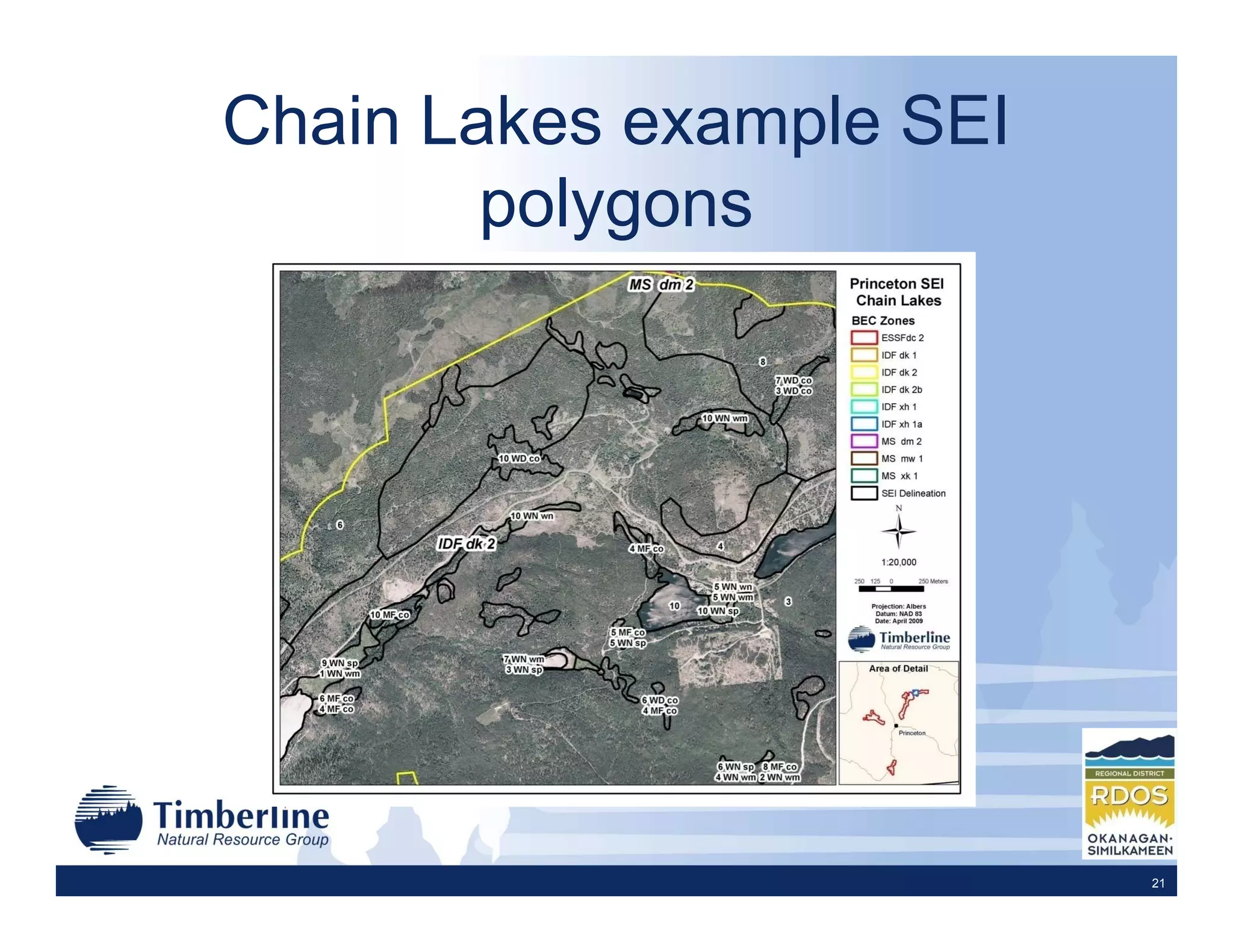
Chain Lakes example SEI
        polygons


                          21
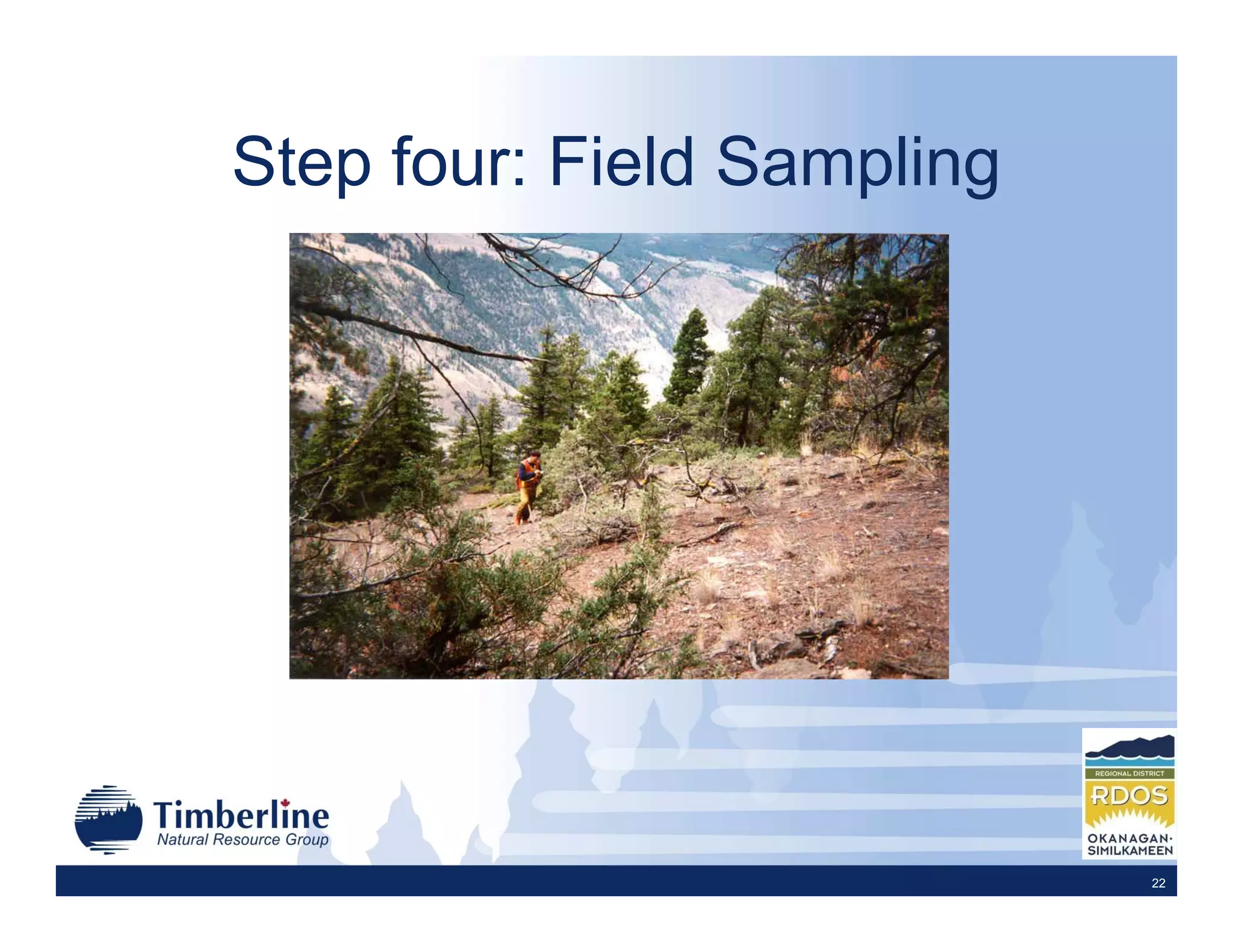
Step four: Field Sampling


                            22
Step five: Update Maps
Update maps with
information collected
in the field.


                              23
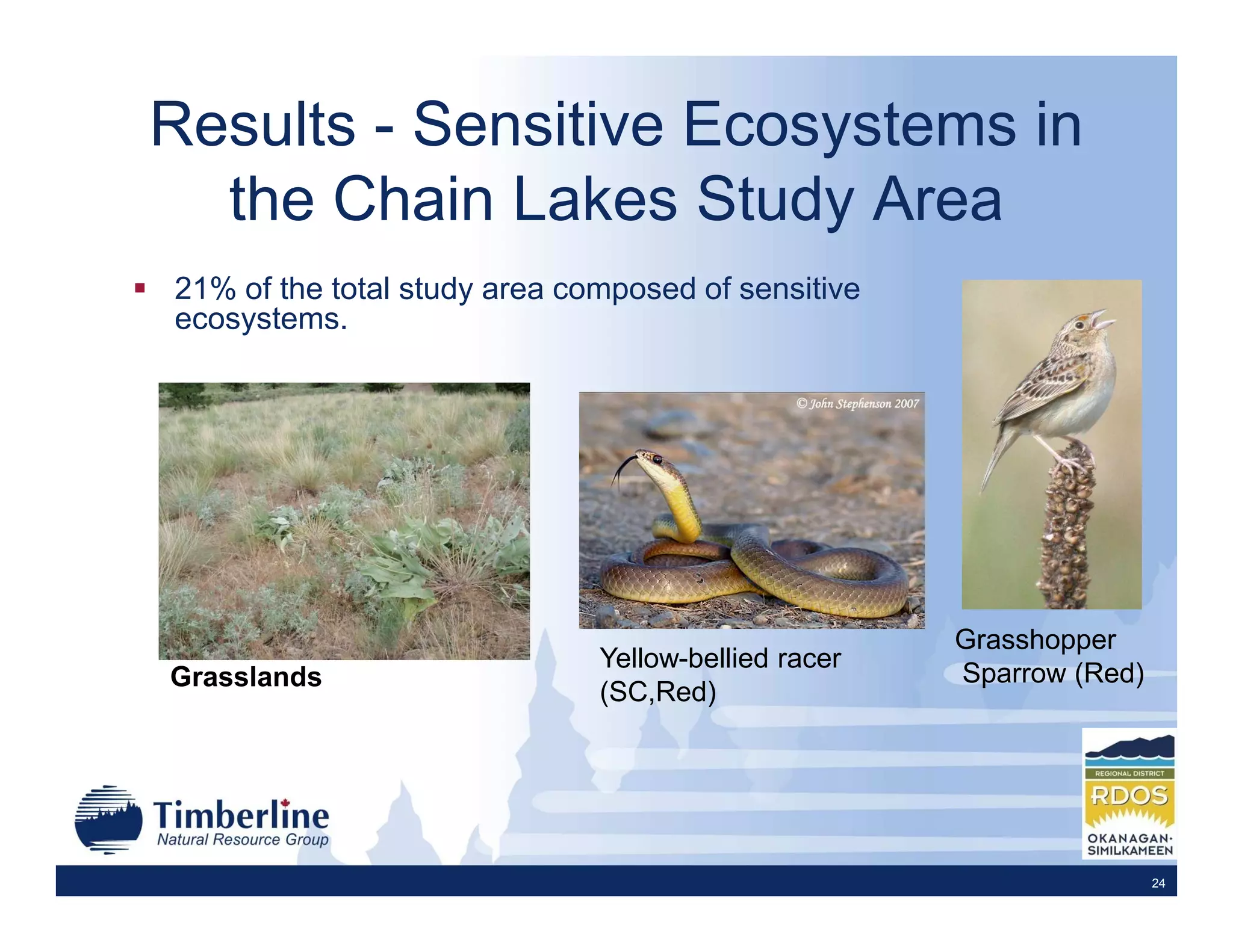
Results - Sensitive Ecosystems in
  the Chain Lakes Study Area
21% of the total study area composed of sensitive
ecosystems.


                                                     Grasshopper
                              Yellow-bellied racer
Grasslands                                           Sparrow (Red)
                              (SC,Red)


                                                                     24
Results - Sensitive Ecosystems
in the Chain Lakes Study Area


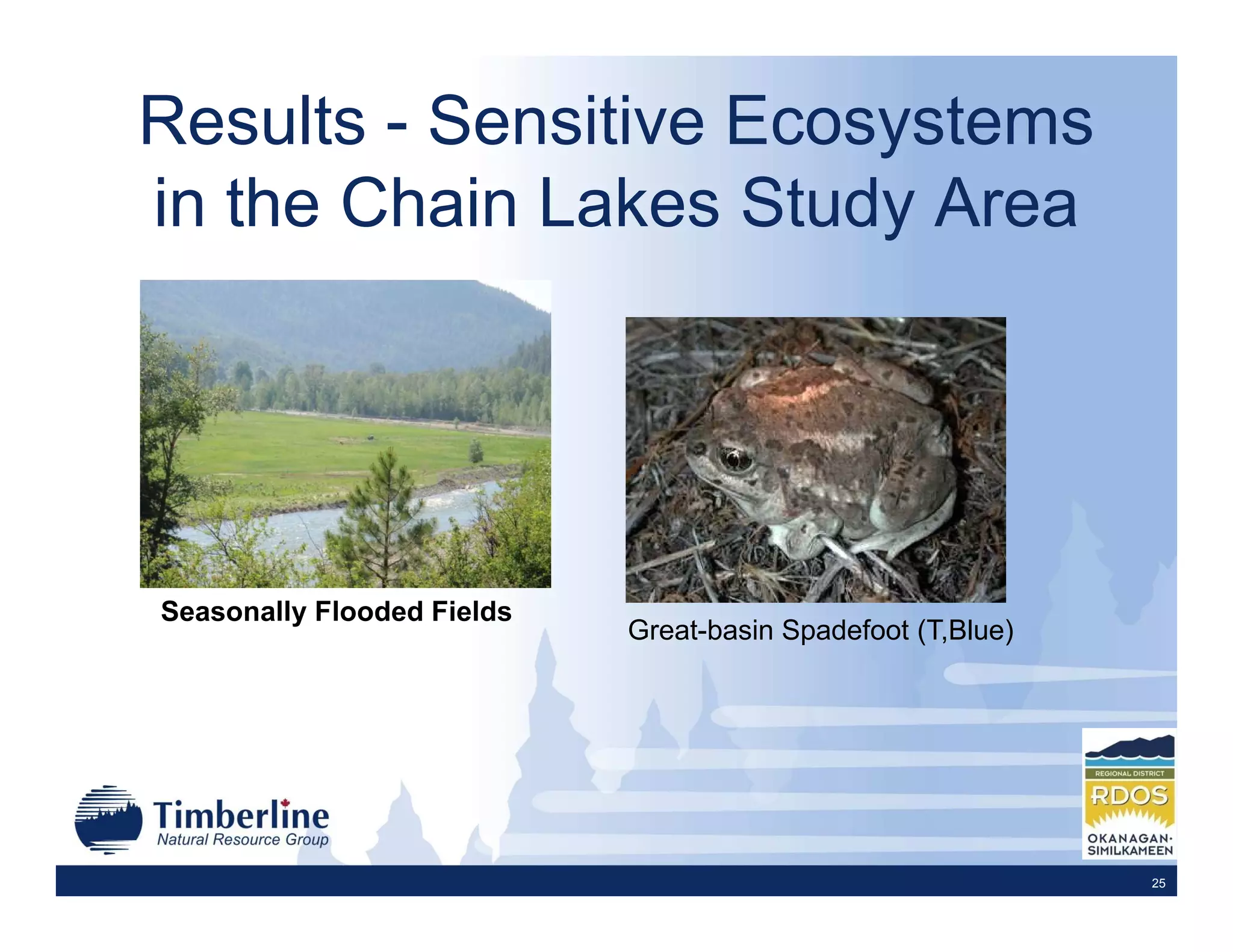
Seasonally Flooded Fields
                            Great-basin Spadefoot (T,Blue)


                                                             25
Results - Sensitive Ecosystems
in the Chain Lakes Study Area


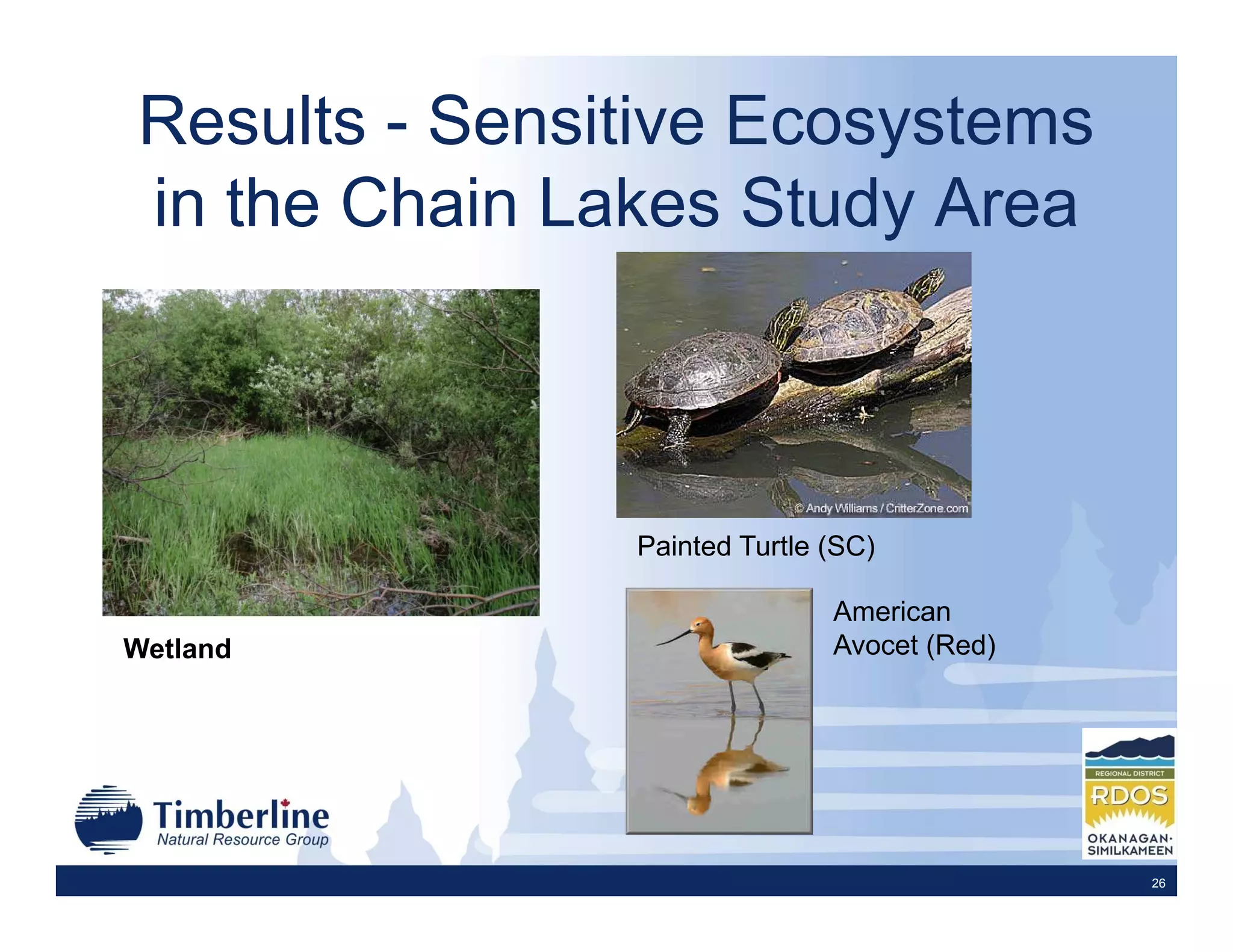
               Painted Turtle (SC)

                              American
Wetland                       Avocet (Red)


                                             26
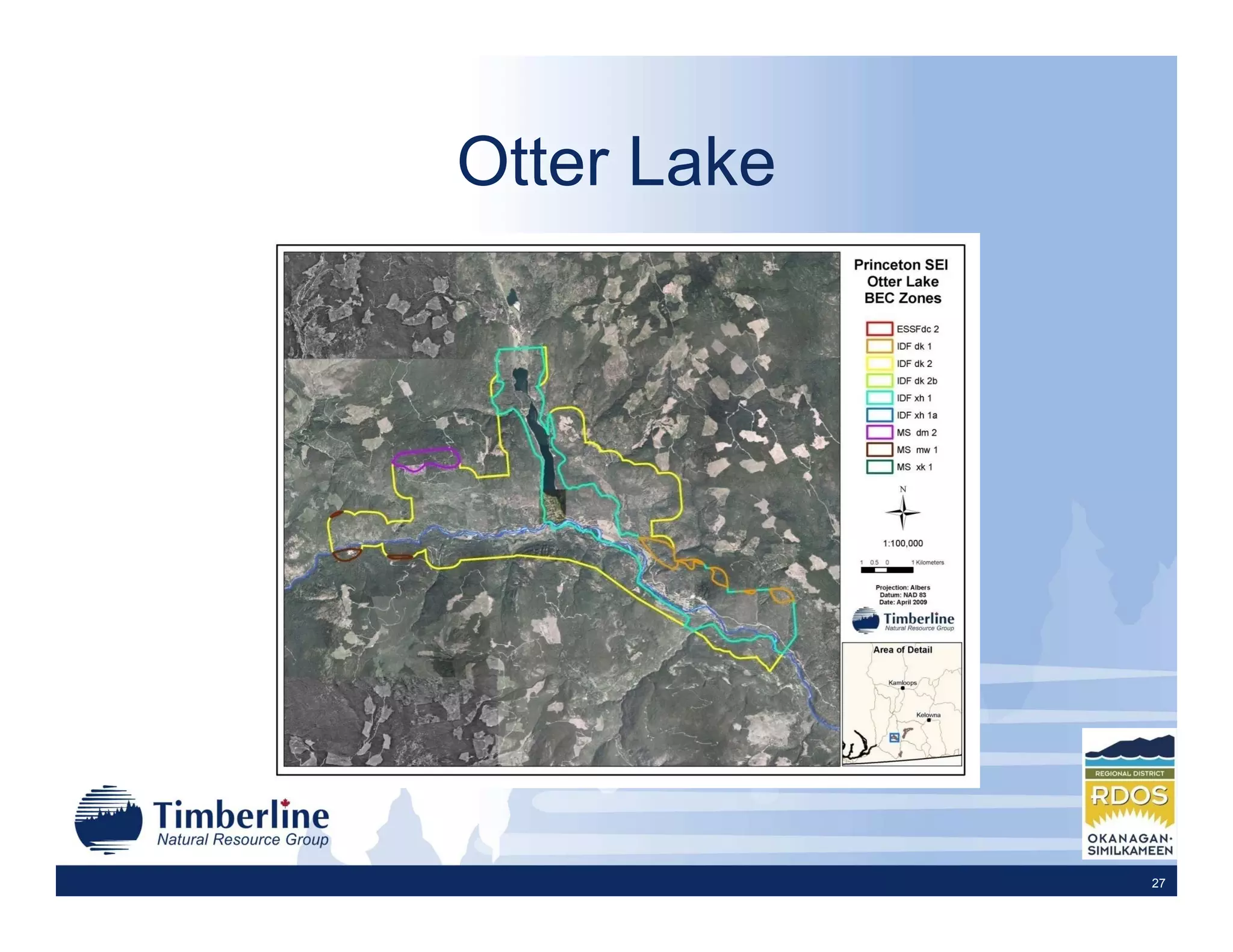
Otter Lake


             27
Results - Sensitive Ecosystems in
    the Otter Lake Study Area
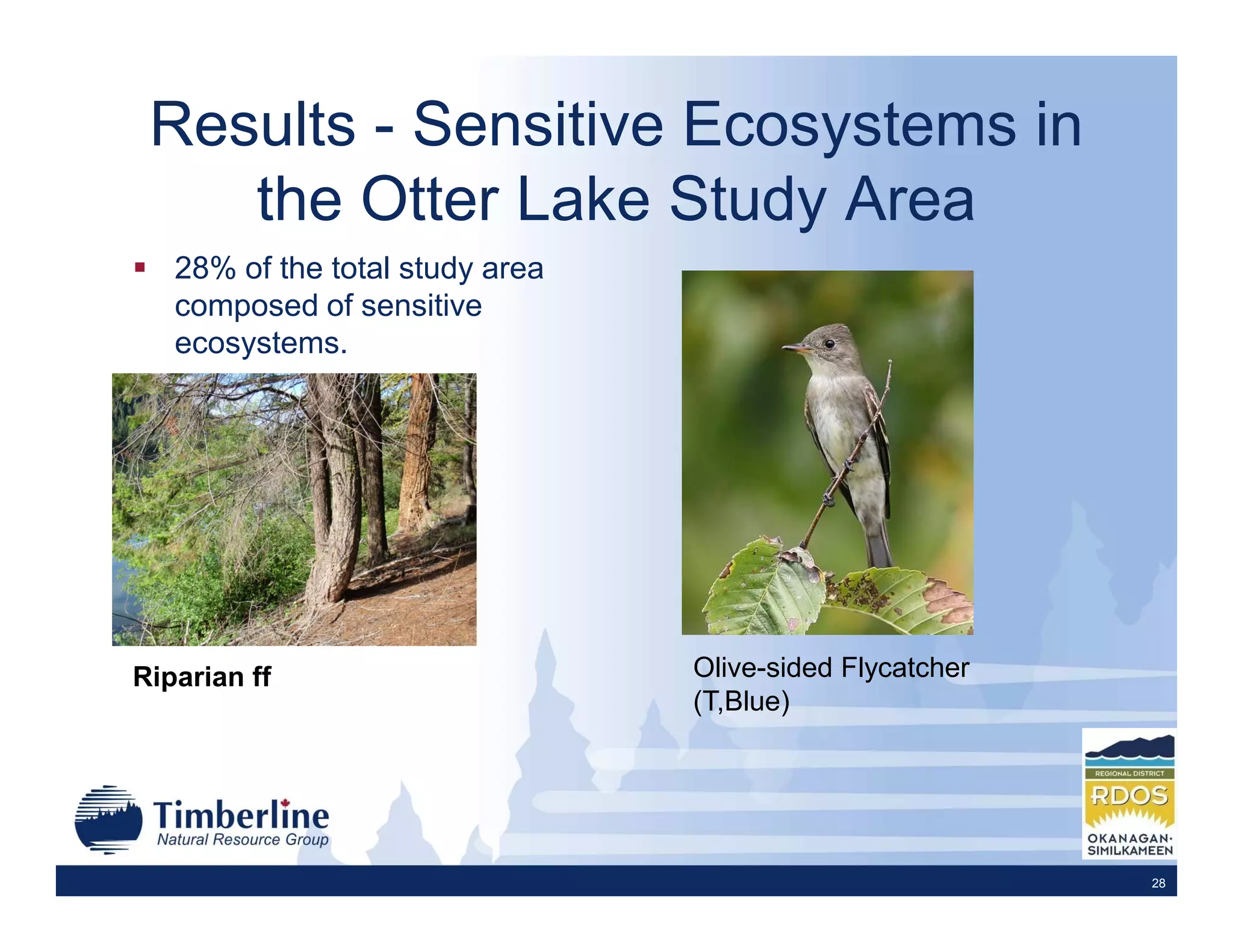
   28% of the total study area
   composed of sensitive
   ecosystems.


Riparian ff                      Olive-sided Flycatcher
                                 (T,Blue)


                                                          28
Results - Sensitive Ecosystems
 in the Otter Lake Study Area


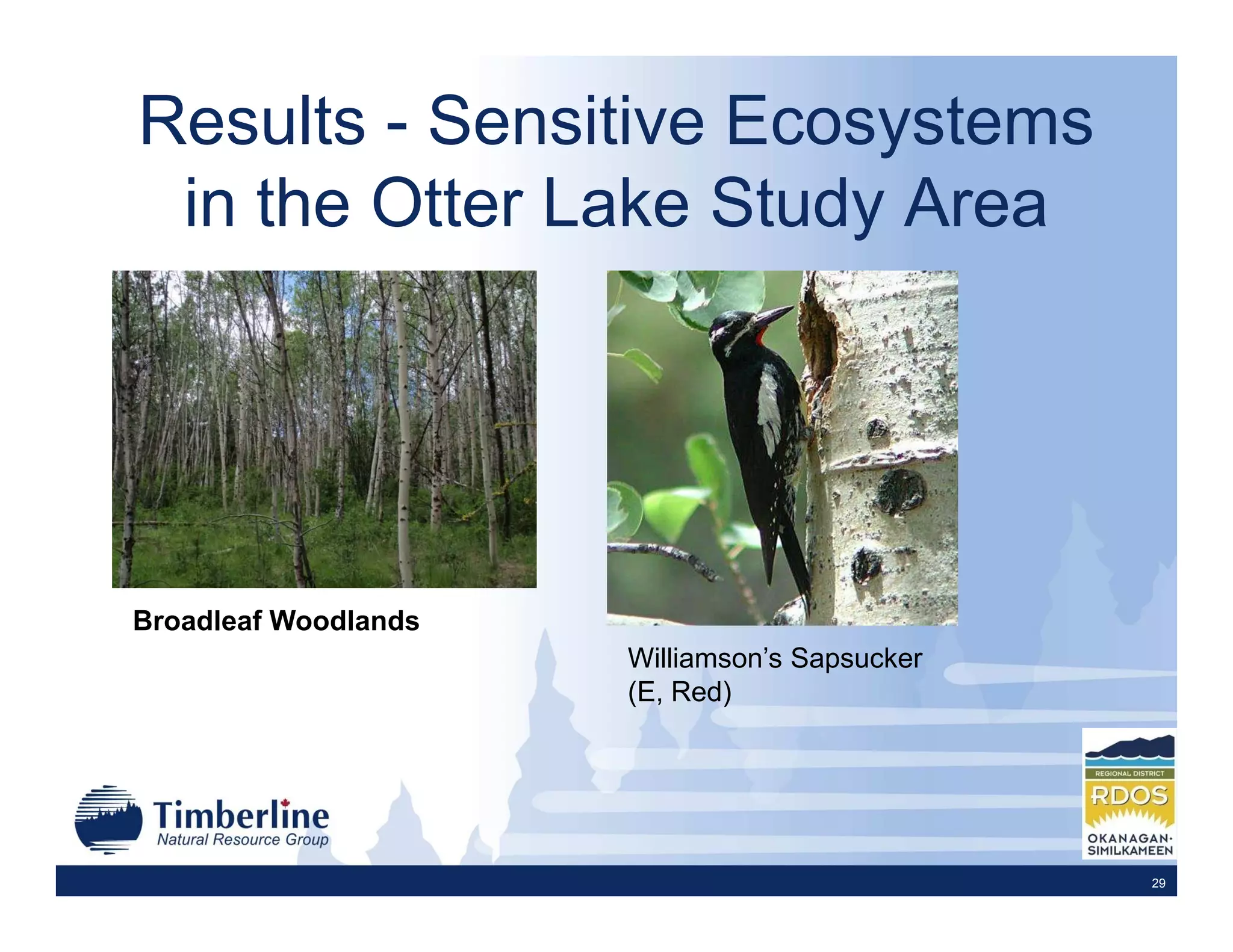
Broadleaf Woodlands
                      Williamson’s Sapsucker
                      (E, Red)


                                               29
Results - Sensitive Ecosystems
  in the Otter Lake Study Area


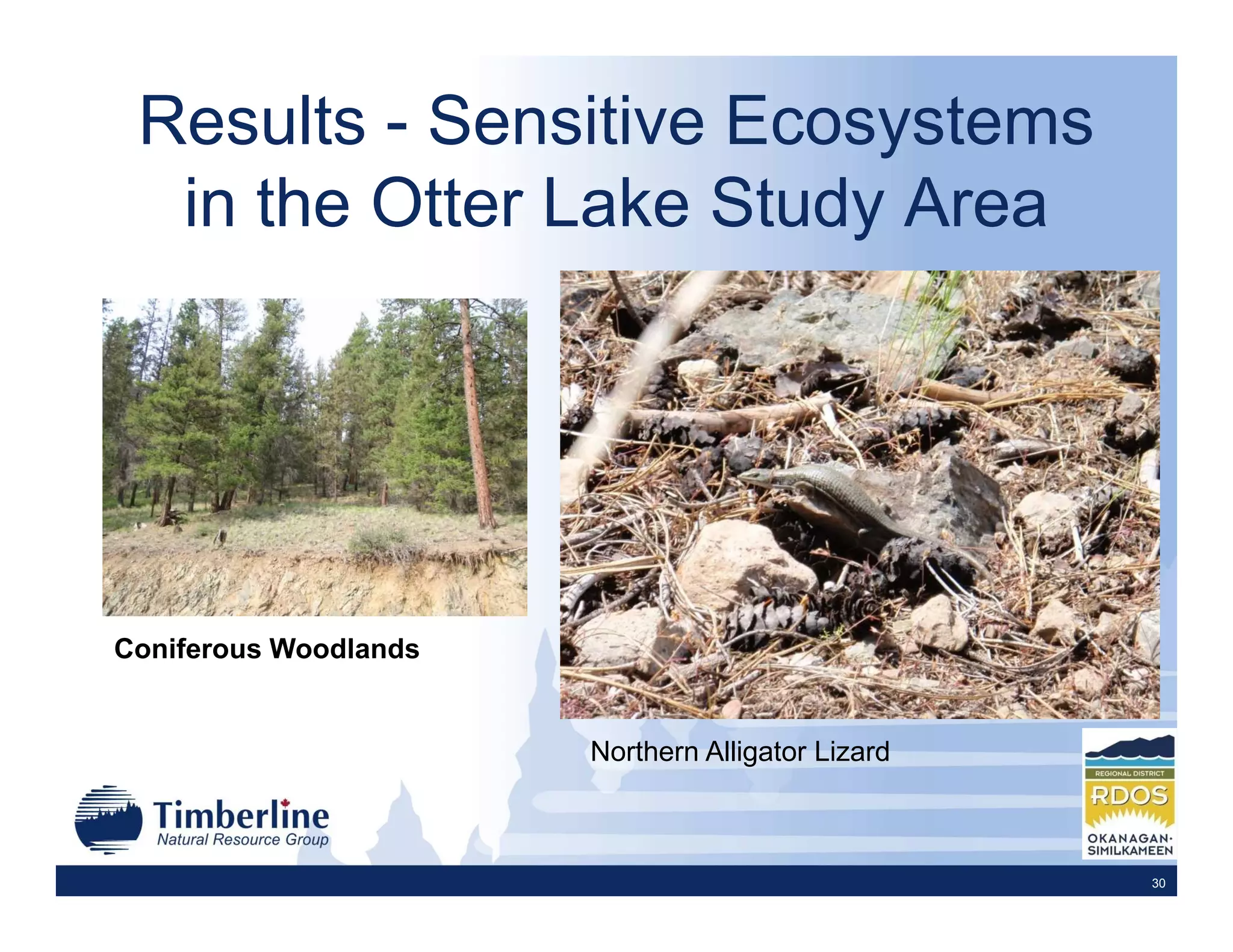
Coniferous Woodlands


                       Northern Alligator Lizard


                                                   30
Results - Sensitive Ecosystems
 in the Otter Lake Study Area


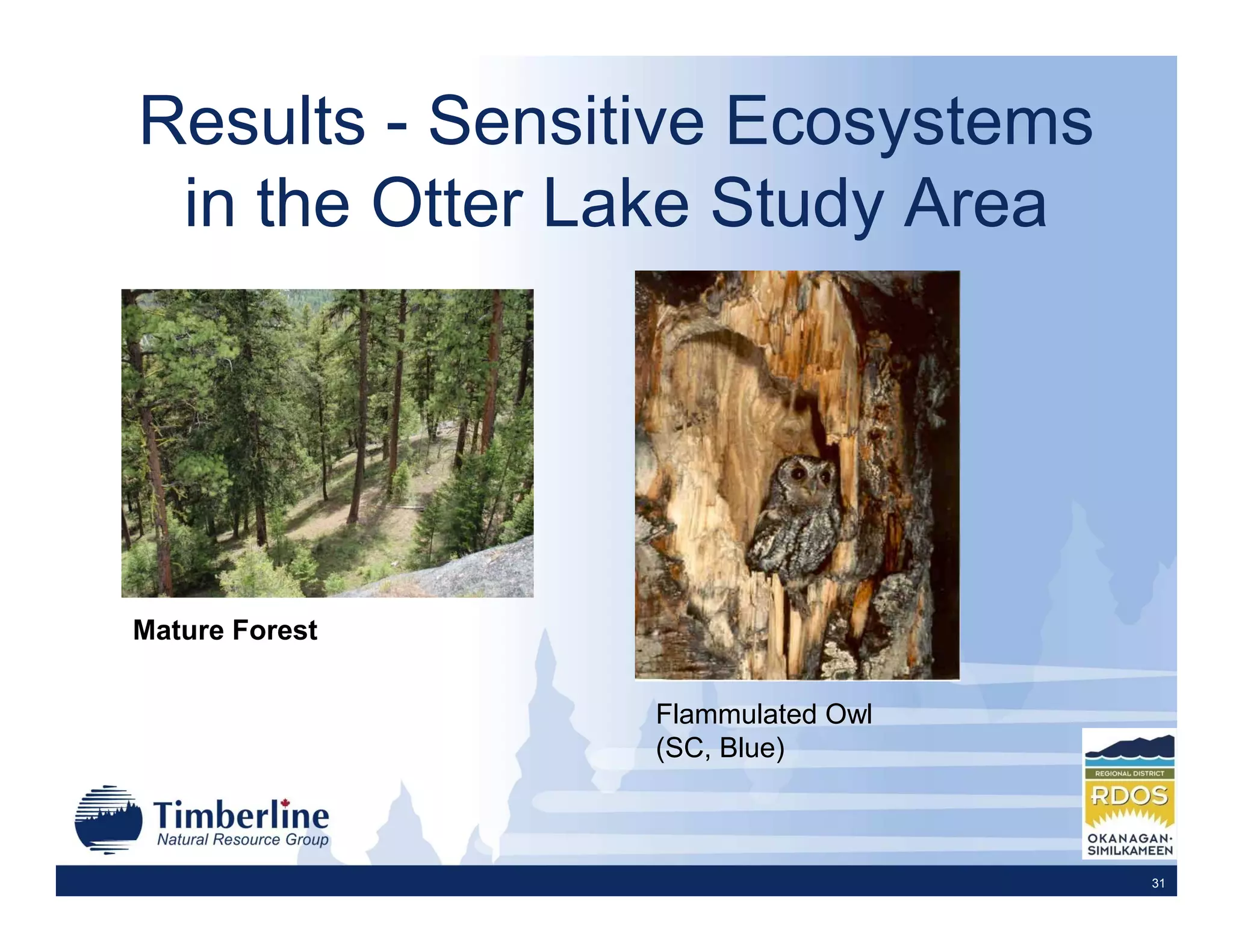
Mature Forest


                Flammulated Owl
                (SC, Blue)


                                  31
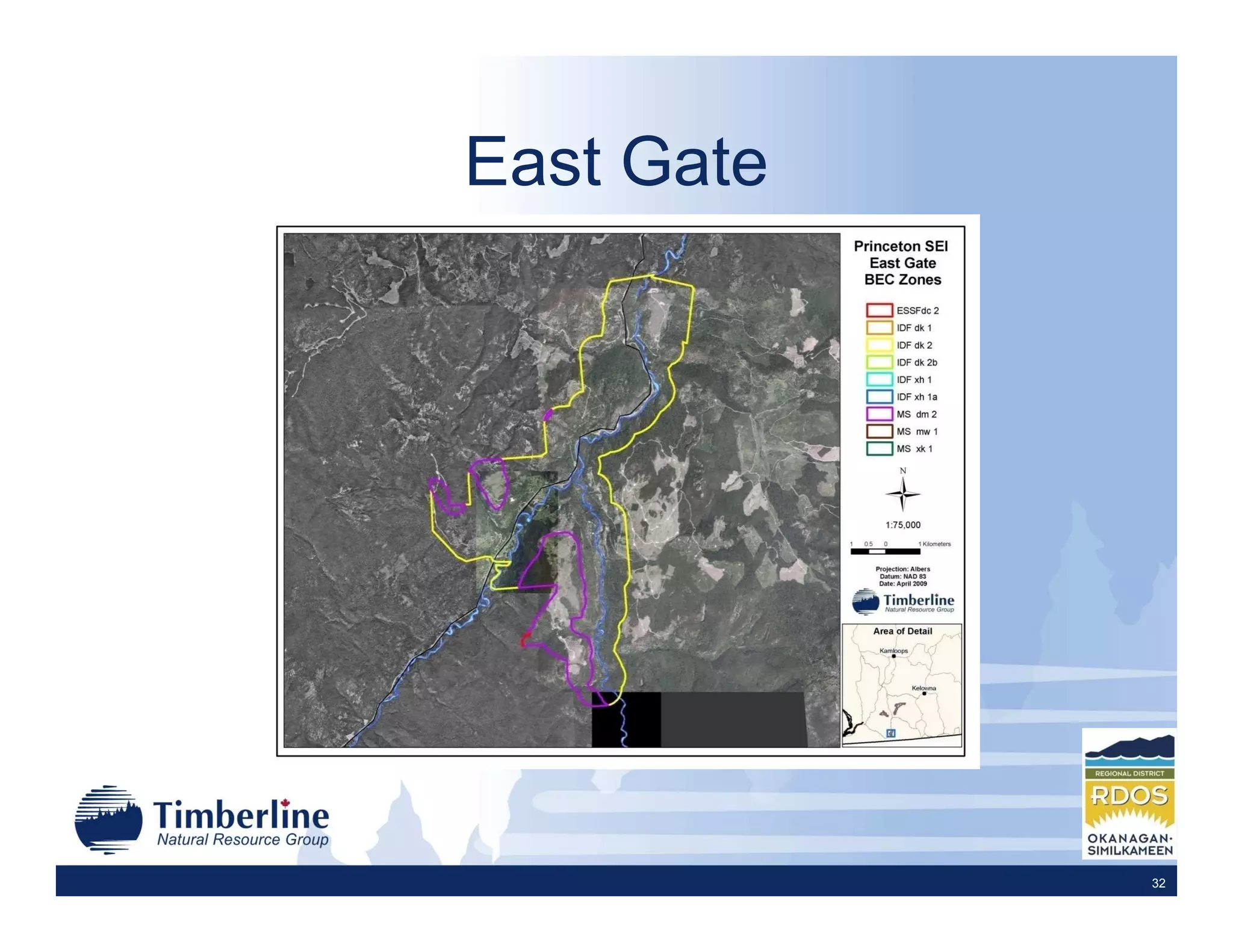
East Gate


            32
Results - Sensitive Ecosystems in
   the East Gate Study Area
31% of the total study area
composed of sensitive
ecosystems.


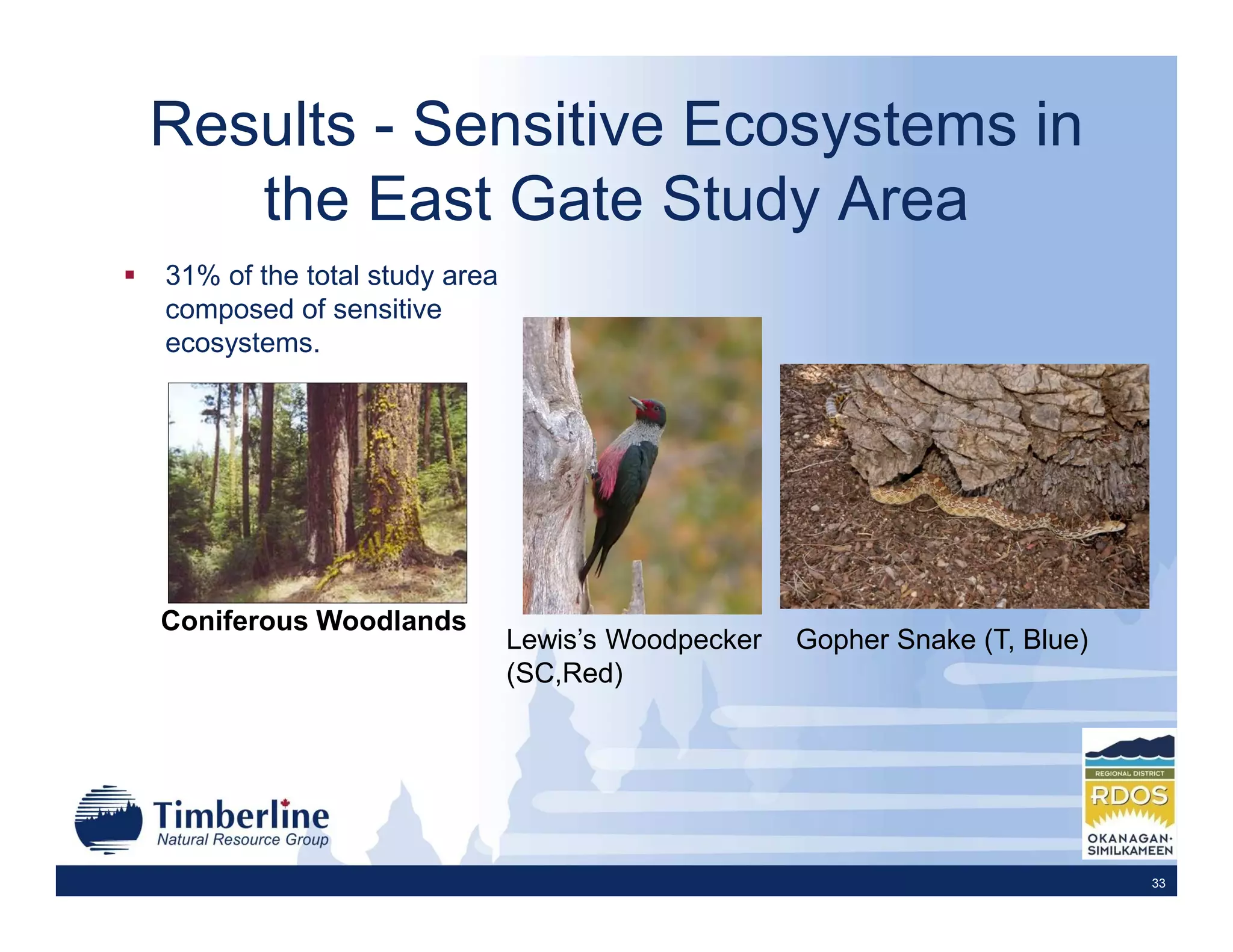
Coniferous Woodlands
                              Lewis’s Woodpecker   Gopher Snake (T, Blue)
                              (SC,Red)


                                                                            33
Results - Sensitive Ecosystems
 in the East Gate Study Area


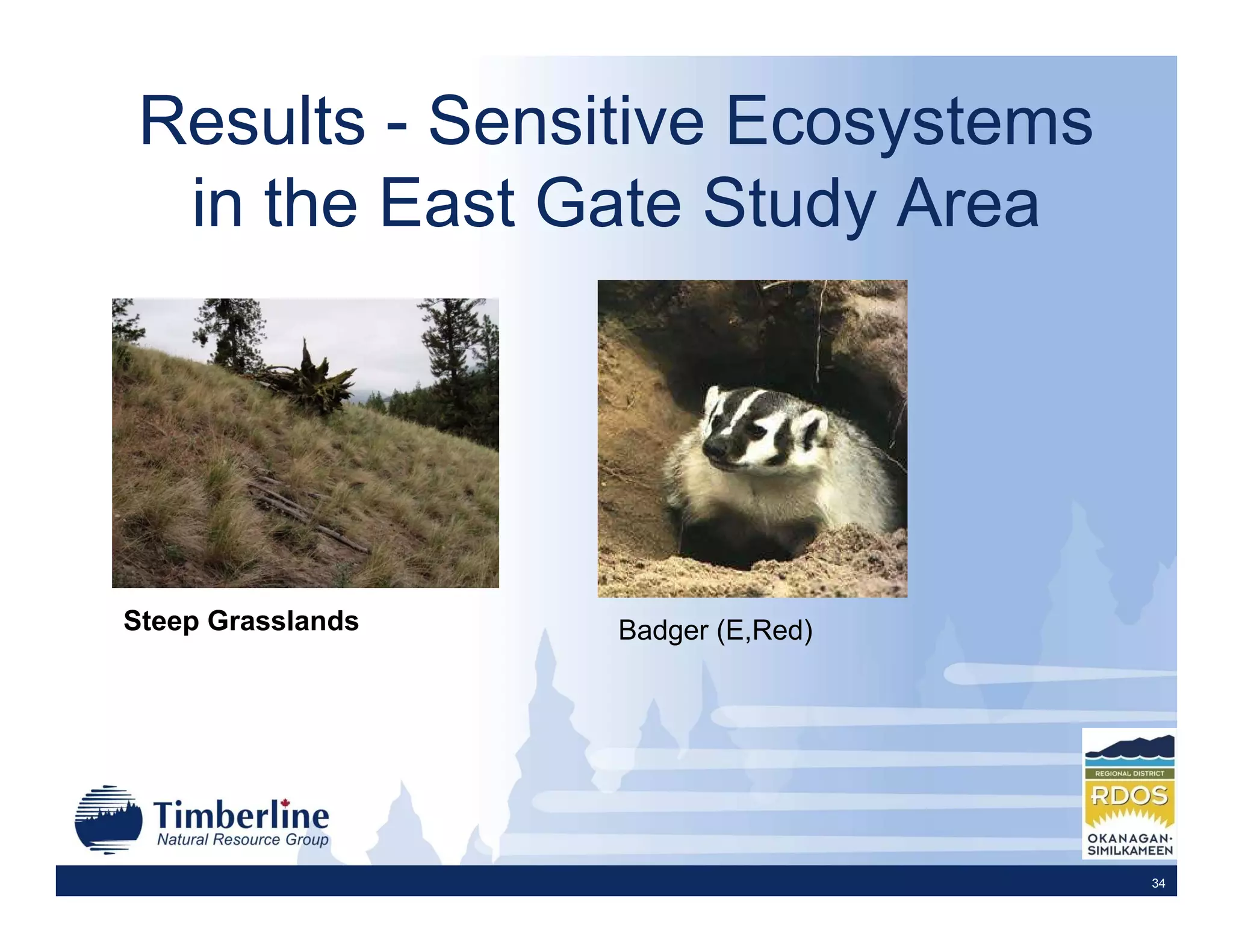
Steep Grasslands   Badger (E,Red)


                                    34
Results - Sensitive Ecosystems
 in the East Gate Study Area


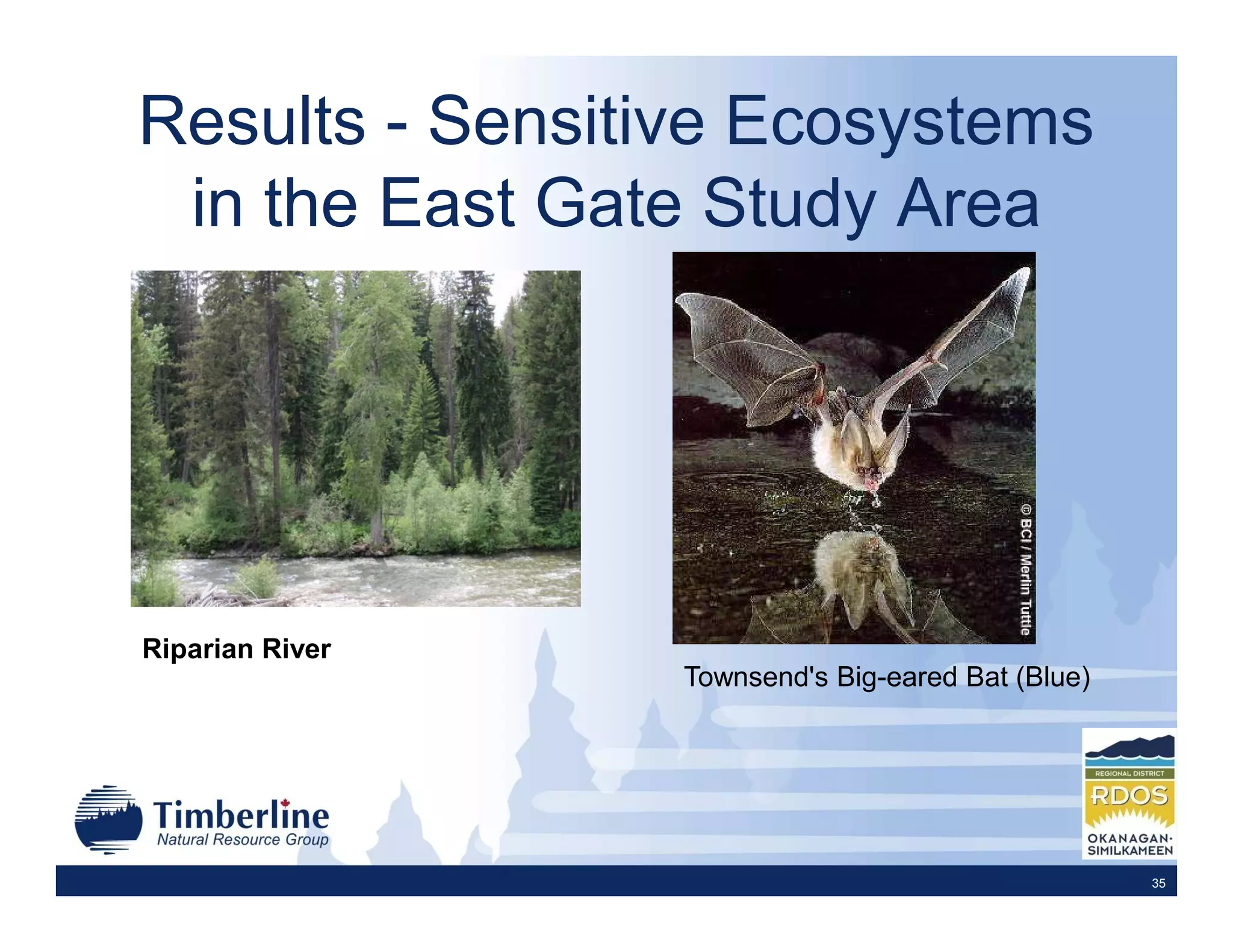
Riparian River
                 Townsend's Big-eared Bat (Blue)


                                                   35
Results - Sensitive Ecosystems in
the East Gate Study Area


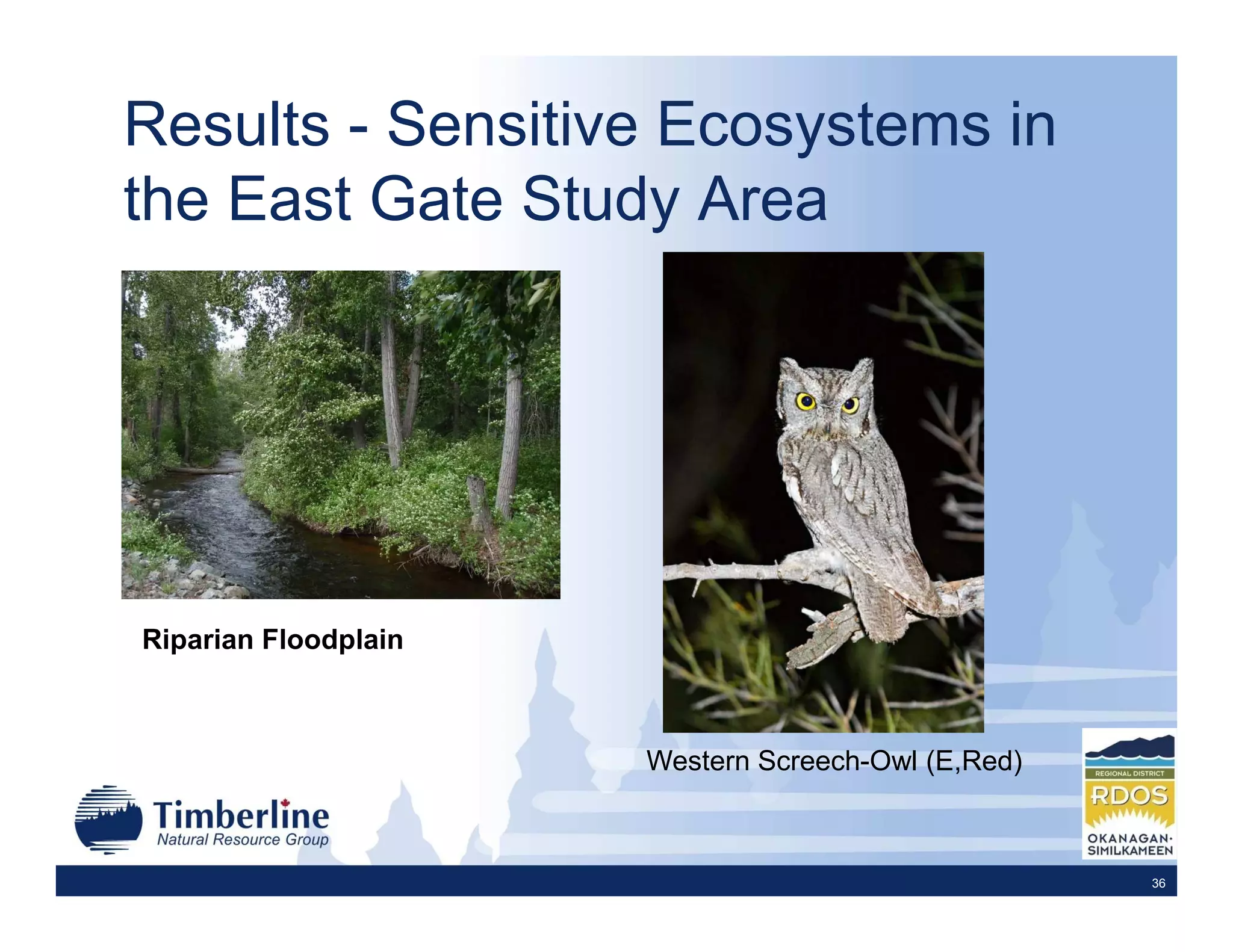
Riparian Floodplain


                      Western Screech-Owl (E,Red)


                                                    36
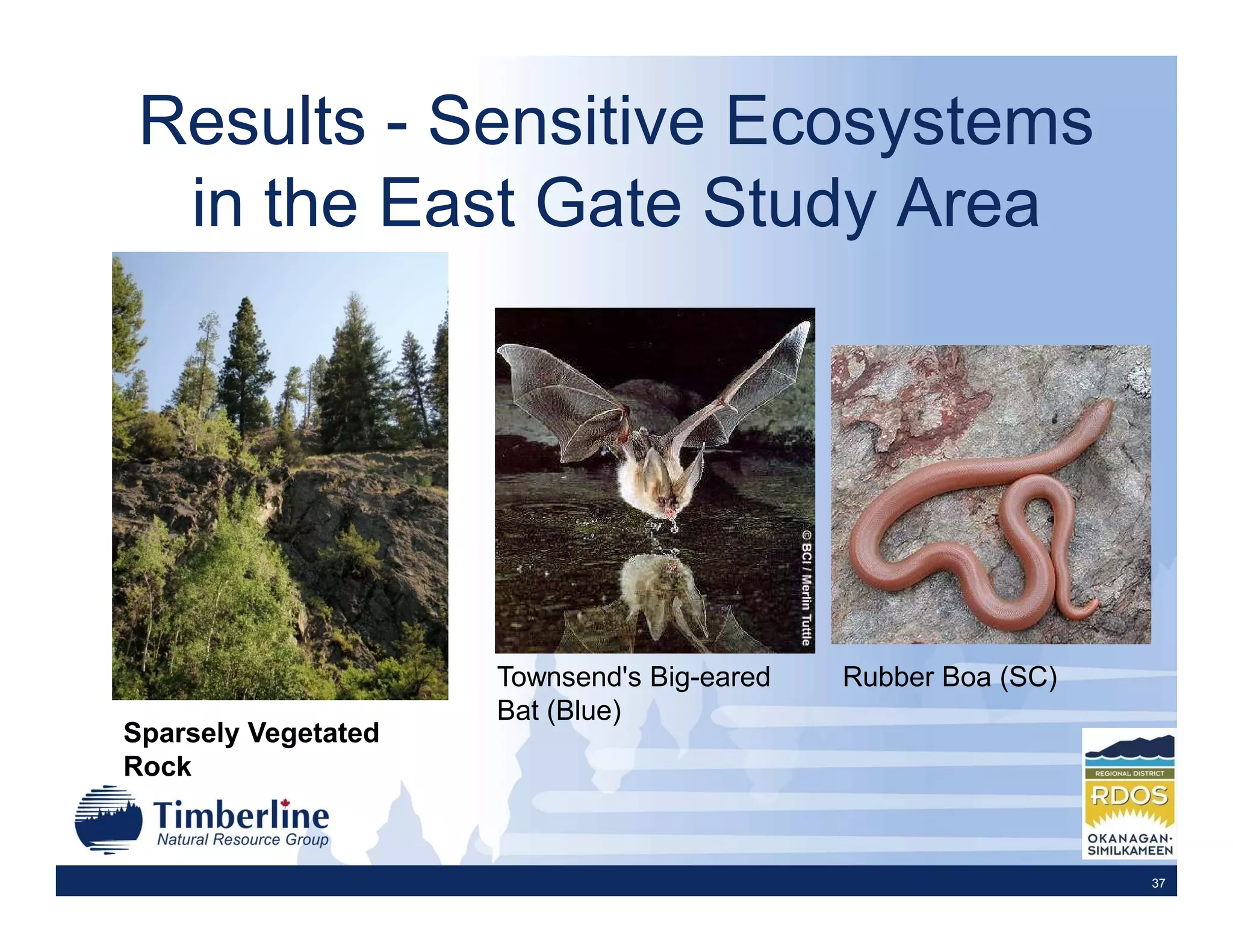
Results - Sensitive Ecosystems
  in the East Gate Study Area


                     Townsend's Big-eared   Rubber Boa (SC)
                     Bat (Blue)
Sparsely Vegetated
Rock


                                                              37
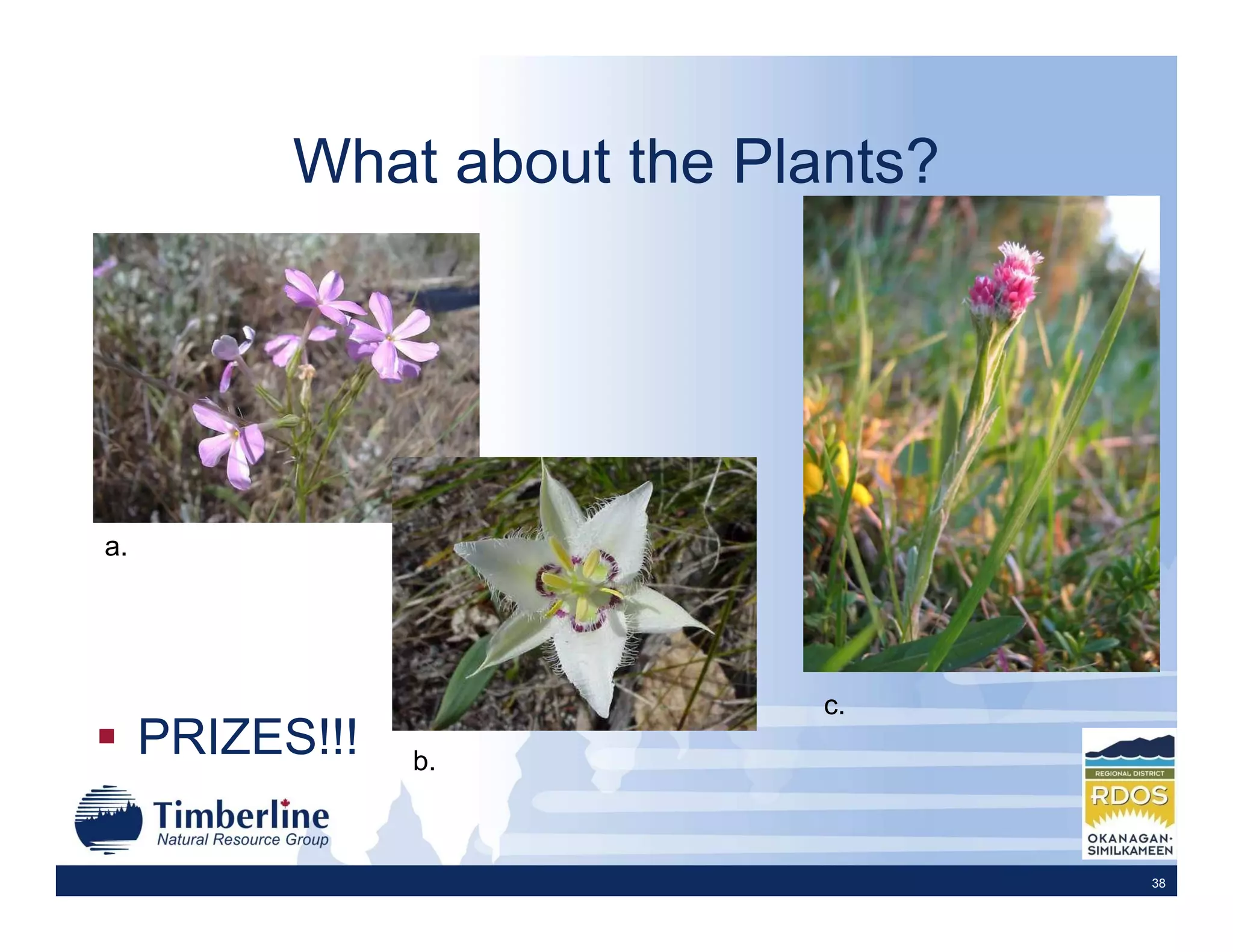
What about the Plants?


a.


                             c.
     PRIZES!!!   b.


                                    38
What about the Bugs?
         MORE PRIZES!!!


                          c.
a.


         b.

                               39
Questions?


             40
SEI Map Label Interpretation
Each polygon can have up to three SEI
subclasses or up to three red or blue listed
site series described in the data base
The proportional distribution of each is
described by a number between 1 and 10
as a “decile” distribution of that ecosystem


                                               41
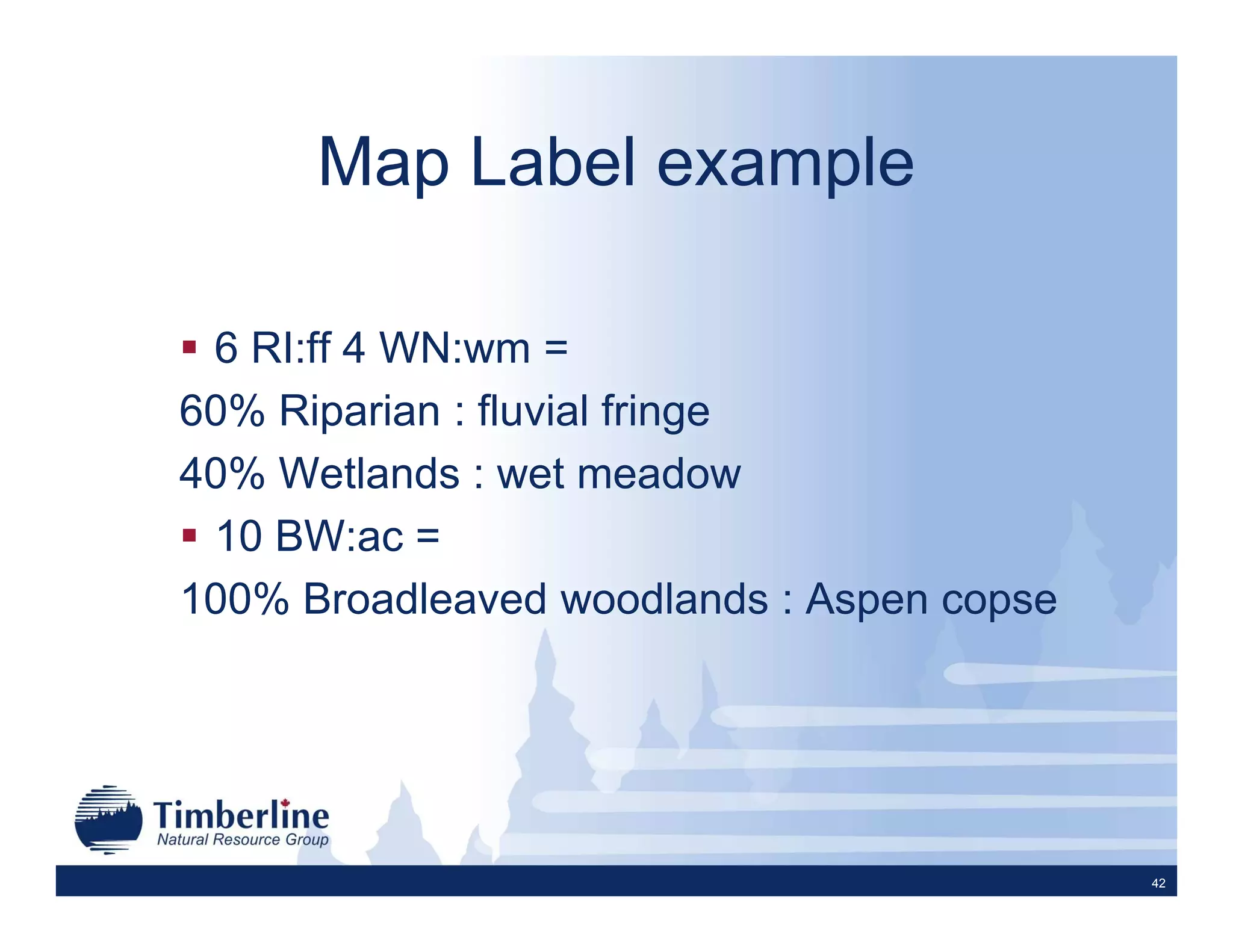
Map Label example

 6 RI:ff 4 WN:wm =
60% Riparian : fluvial fringe
40% Wetlands : wet meadow
 10 BW:ac =
100% Broadleaved woodlands : Aspen copse


                                           42
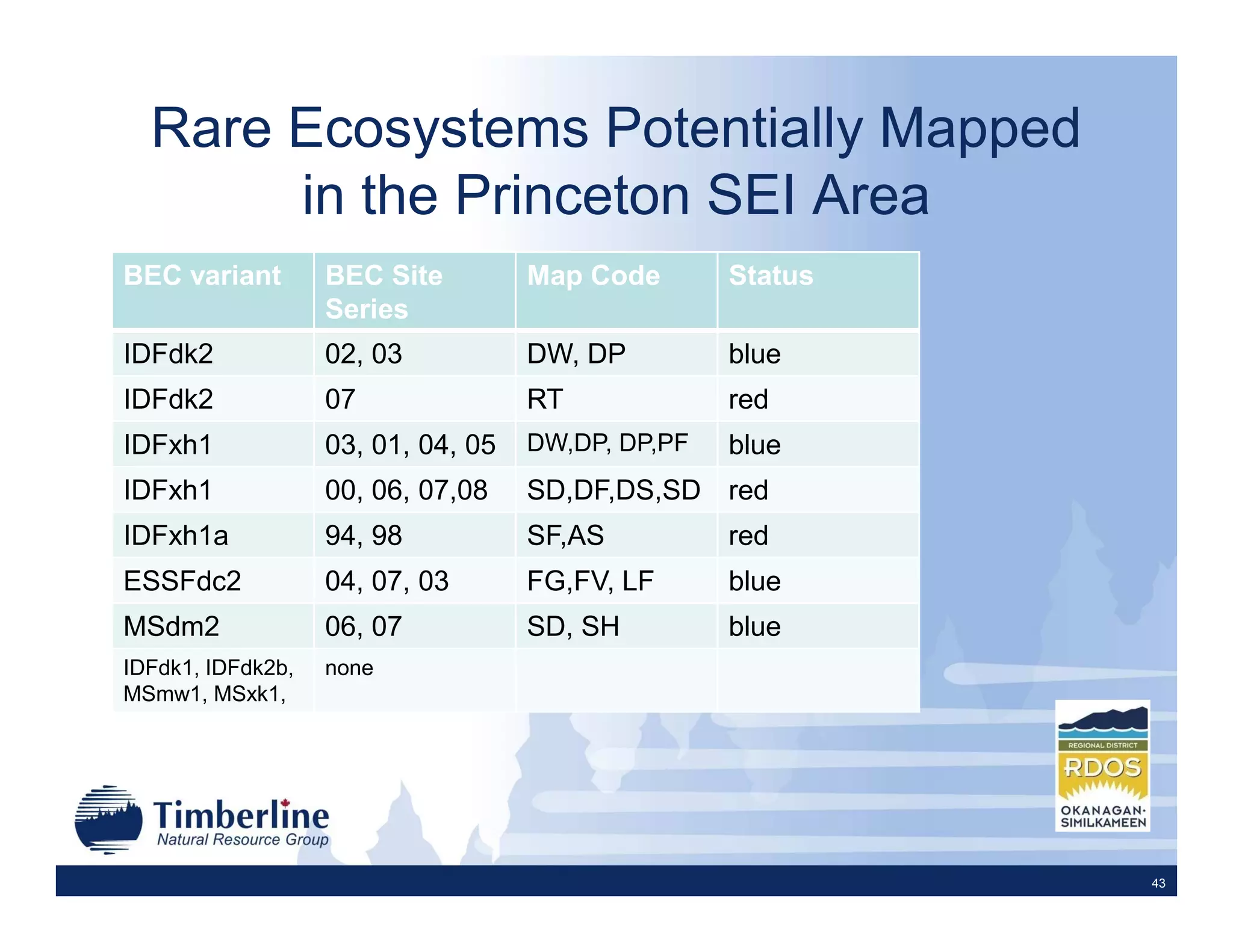
Rare Ecosystems Potentially Mapped
       in the Princeton SEI Area
BEC variant        BEC Site         Map Code       Status
                   Series
IDFdk2             02, 03           DW, DP         blue
IDFdk2             07               RT             red
IDFxh1             03, 01, 04, 05   DW,DP, DP,PF   blue
IDFxh1             00, 06, 07,08    SD,DF,DS,SD red
IDFxh1a            94, 98           SF,AS          red
ESSFdc2            04, 07, 03       FG,FV, LF      blue
MSdm2              06, 07           SD, SH         blue
IDFdk1, IDFdk2b,   none
MSmw1, MSxk1,


                                                            43

Princeton Sei Presentation August 19 [Compatibility Mode]

  • 1.
    Sensitive Ecosystem Inventory (SEI) Regional District of Okanagan Similkameen August 19, 2009 Maureen V. Ketcheson R.P.Bio. Ecology Manager, Victoria Branch Dave Caswell R.P.Bio Project Manager, Kamloops Branch 1
  • 2.
    Outline Introduction Project Objectives Background -Sensitive Ecosystem Inventory SEI Mapping Process Results 2
  • 3.
    Dave Caswell, RPBio Maureen V. Ketcheson, Ecology Mgr, Kamloops RPBio – Ecology Mgr, Branch. Victoria Born and raised in Merritt Born and raised in Regina, Sheldon Williams Collegiate Educated at University College of the Cariboo Educated at U of R, U of Vic, and Lakehead U B.Sc Biology (wildlife) 1995 B.Sc Biology (botany) M.Sc. Wildlife consultant since 1995 Quantitative Ecology Wildlife generalist (songbirds, BC Ministry of Forest Regional mule deer) Ecologist, Nelson BC 1981-84 Joined Timberline in Dec, 2007 – Consultant in eco mapping since Ecology Department Manager 1984 Ecology Manager for Timberline Victoria since 2005 Specializing in TEM (terrestrial ecosystem mapping) and PEM (predictive ecosystem mapping) in BC Certified trainer in TEM and a “senior” PEM practitioner 3
  • 4.
    Project Objectives To providebaseline mapping information to support land use planning for parts of Electoral Area H The mapping will identify ecosystems which are: sensitive / rare / fragile. Identify the plant and wildlife Species at Risk associated with these ecosystems. Support management / best practices recommendations for these ecosystems and their associated SAR. 4
  • 5.
    Background Sensitive Ecosystems Inventory(SEI) Provides spatial and data base information to land managers Forms a backdrop to assist in the conservation and protection of sensitive and important ecosystems 5
  • 6.
    Planning Tools Rare ecosystem Heli ski proposal 2 Class 1 grizzly Spring range Sensitive ecosystem complex Heli-ski proposal 1 6
  • 7.
  • 8.
    Sensitive Ecosystems – Biologically Diverse Grasslands conservation council www.env.gov.bc.ca/sei/images/ri.jpg Sensitive Ecosystems are defined as; “Those remaining natural terrestrial ecosystems which are considered fragile or rare in the SEI study area: wetlands, riparian, old forest, grassland, broadleaf woodland, coniferous woodlands, sagebrush steppe, antelope brush steppe, alpine and sparsely vegetated ecosystems” (Environment Canada 2008) 8
  • 9.
    Sensitive Ecosystems – Biologically Diverse 9
  • 10.
    Sensitive Ecosystems –Community Identity 10
  • 11.
    Princeton SEI ProjectArea Location and Existing SEI Mapping in the Okanagan 11
  • 12.
    Bio-Geo-Climatic Ecosystem Classification system(BEC) : BEC divides the landscape into areas of uniform “meso- climates” which have similar potential to support the same spatial combinations of ecosystems in similar combinations of terrain and site. 12
  • 13.
  • 14.
    The SEI MappingProcess A working map legend of the potential Sensitive Ecosystems Air photo and ortho-photo images are obtained and study area boundaries applied BEC boundaries delineated SEI polygons delineated Red and blue listed site series polygons delineated 14
  • 15.
    The SEI MappingProcess Each polygon is described in a standard data base Field sampling plan is prepared to visit a percentage of polygons to verify and correct photo interpretation Mapping is updated Final reports and data bases 15
  • 16.
    Step one: WorkingLegend SEI Code SEI Class Description Ecosystems dominated by Trembling aspen occurring in depressions and moist BW Broadleaved woodlands areas FS Seasonally flooded fields GR Grasslands A mix of seral and climax tree species generally greater than 80 years old MF Mature forests Climax trees generally greater than 140 years old OF Old forests Treed or shrubby ecosystems associated with pond and lake shorelines, swamps, RI Riparian floodplains or gullies with intermittent or permanent creeks Ecosystems with little vegetation occurring on bedrock or colluvial features SV Sparsely vegetated Open stands of Douglas-fir or Ponderosa pine, often on shallow soils with grassy WD Coniferous woodlands understories, old woodlands are part of the Old Forest category Ecosystems where the water table is at or near the surface. WN Wetlands 16
  • 17.
    Step two: studyarea and BEC boundaries 17
  • 18.
    Step three: delineateSEI, red and blue-listed ecosystems 18
  • 19.
    Rare ecosystems havebeen identified by the Conservation Data Center Red-listed ecosystems are defined as the ecological communities considered provincially rare, regardless of present day seral status Blue-listed plant communities considered provincially vulnerable, focus is often on mature and old seral stages 19
  • 20.
    Rare and EndangeredSpecies COSEWIC – The Committee on the Status of Endangered Wildlife in Canada Endangered, Threatened, Special Concern BC Conservation Data Center: Ecosystem Explorer Website: http://a100.gov.bc.ca/pub/eswp 20
  • 21.
    Chain Lakes exampleSEI polygons 21
  • 22.
    Step four: FieldSampling 22
  • 23.
    Step five: UpdateMaps Update maps with information collected in the field. 23
  • 24.
    Results - SensitiveEcosystems in the Chain Lakes Study Area 21% of the total study area composed of sensitive ecosystems. Grasshopper Yellow-bellied racer Grasslands Sparrow (Red) (SC,Red) 24
  • 25.
    Results - SensitiveEcosystems in the Chain Lakes Study Area Seasonally Flooded Fields Great-basin Spadefoot (T,Blue) 25
  • 26.
    Results - SensitiveEcosystems in the Chain Lakes Study Area Painted Turtle (SC) American Wetland Avocet (Red) 26
  • 27.
  • 28.
    Results - SensitiveEcosystems in the Otter Lake Study Area 28% of the total study area composed of sensitive ecosystems. Riparian ff Olive-sided Flycatcher (T,Blue) 28
  • 29.
    Results - SensitiveEcosystems in the Otter Lake Study Area Broadleaf Woodlands Williamson’s Sapsucker (E, Red) 29
  • 30.
    Results - SensitiveEcosystems in the Otter Lake Study Area Coniferous Woodlands Northern Alligator Lizard 30
  • 31.
    Results - SensitiveEcosystems in the Otter Lake Study Area Mature Forest Flammulated Owl (SC, Blue) 31
  • 32.
  • 33.
    Results - SensitiveEcosystems in the East Gate Study Area 31% of the total study area composed of sensitive ecosystems. Coniferous Woodlands Lewis’s Woodpecker Gopher Snake (T, Blue) (SC,Red) 33
  • 34.
    Results - SensitiveEcosystems in the East Gate Study Area Steep Grasslands Badger (E,Red) 34
  • 35.
    Results - SensitiveEcosystems in the East Gate Study Area Riparian River Townsend's Big-eared Bat (Blue) 35
  • 36.
    Results - SensitiveEcosystems in the East Gate Study Area Riparian Floodplain Western Screech-Owl (E,Red) 36
  • 37.
    Results - SensitiveEcosystems in the East Gate Study Area Townsend's Big-eared Rubber Boa (SC) Bat (Blue) Sparsely Vegetated Rock 37
  • 38.
    What about thePlants? a. c. PRIZES!!! b. 38
  • 39.
    What about theBugs? MORE PRIZES!!! c. a. b. 39
  • 40.
  • 41.
    SEI Map LabelInterpretation Each polygon can have up to three SEI subclasses or up to three red or blue listed site series described in the data base The proportional distribution of each is described by a number between 1 and 10 as a “decile” distribution of that ecosystem 41
  • 42.
    Map Label example 6 RI:ff 4 WN:wm = 60% Riparian : fluvial fringe 40% Wetlands : wet meadow 10 BW:ac = 100% Broadleaved woodlands : Aspen copse 42
  • 43.
    Rare Ecosystems PotentiallyMapped in the Princeton SEI Area BEC variant BEC Site Map Code Status Series IDFdk2 02, 03 DW, DP blue IDFdk2 07 RT red IDFxh1 03, 01, 04, 05 DW,DP, DP,PF blue IDFxh1 00, 06, 07,08 SD,DF,DS,SD red IDFxh1a 94, 98 SF,AS red ESSFdc2 04, 07, 03 FG,FV, LF blue MSdm2 06, 07 SD, SH blue IDFdk1, IDFdk2b, none MSmw1, MSxk1, 43