#NEDAS
2
PLATINUM
GOLD SILVER
Thank You To Our 2017 Annual Sponsors
3
February 2018 - NEDAS DC Social
May 9, 2018 - NEDAS Chicago Social *NEW*
July 18, 2018 - NEDAS Boston Symposium
September 6, 2018 - NEDAS NYC Summit
NEDAS Annual Sponsorships now available! Expand and grow your business in 2018 by becoming a NEDAS
Annual Sponsor and let us help you reach your goals. For more information, contact: info@nedas.com.
Save the Date - NEDAS 2018 Events
Presenter
Presented by JMA Wireless
Andrew Otete
Product Line Engineer
Objectives
 Understand what a Software Defined Remote Unit is
 Define the need for a Software Defined Remote Unit
 Identify the challenges faced by other solutions
 List the advantages of the SDRU
 Relate features to the total cost of ownership
5
Solving the Rollout Puzzle
 Different carriers have different time frames when
joining a DAS system
 Different carriers will add bands at different times
 Carriers sometimes postpone joining a DAS for one
reason or another
 When the decision is made to join a DAS then
implementation is a priority
 Constricted time-frames for access are sometimes a
problem
6
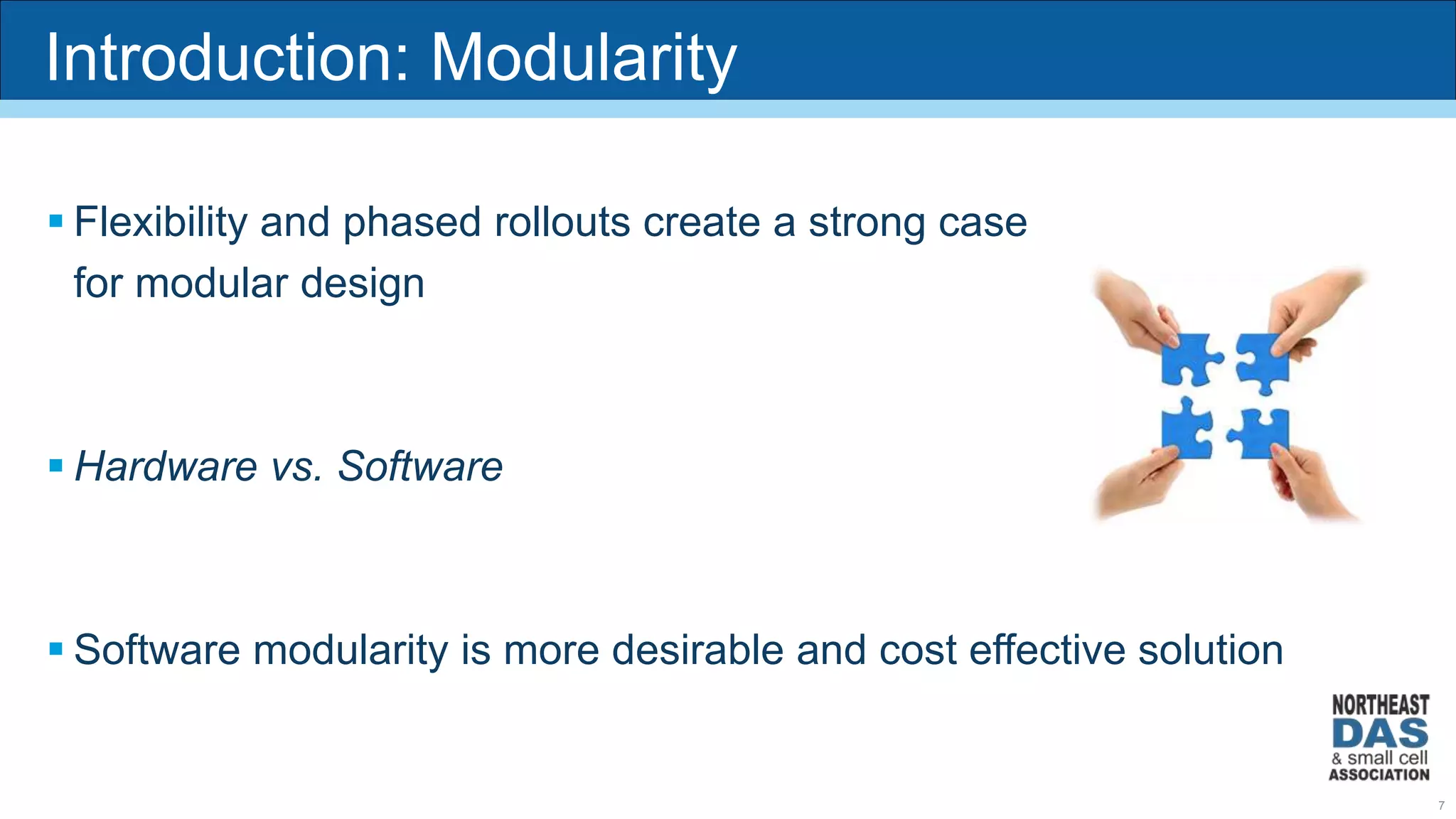
 Flexibility and phased rollouts create a strong case
for modular design
 Hardware vs. Software
 Software modularity is more desirable and cost effective solution
Introduction: Modularity
7
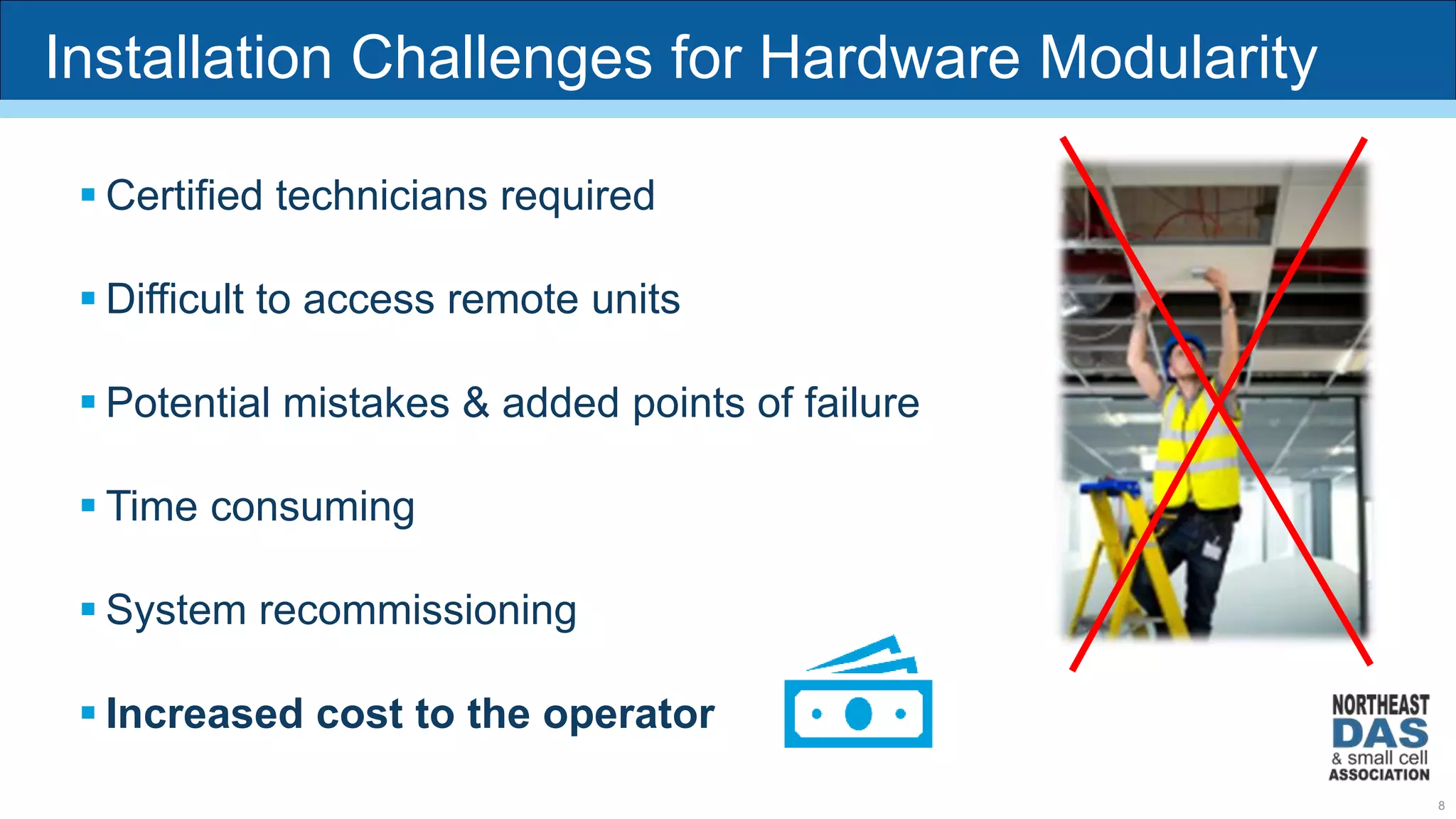
Installation Challenges for Hardware Modularity
 Certified technicians required
 Difficult to access remote units
 Potential mistakes & added points of failure
 Time consuming
 System recommissioning
 Increased cost to the operator
8
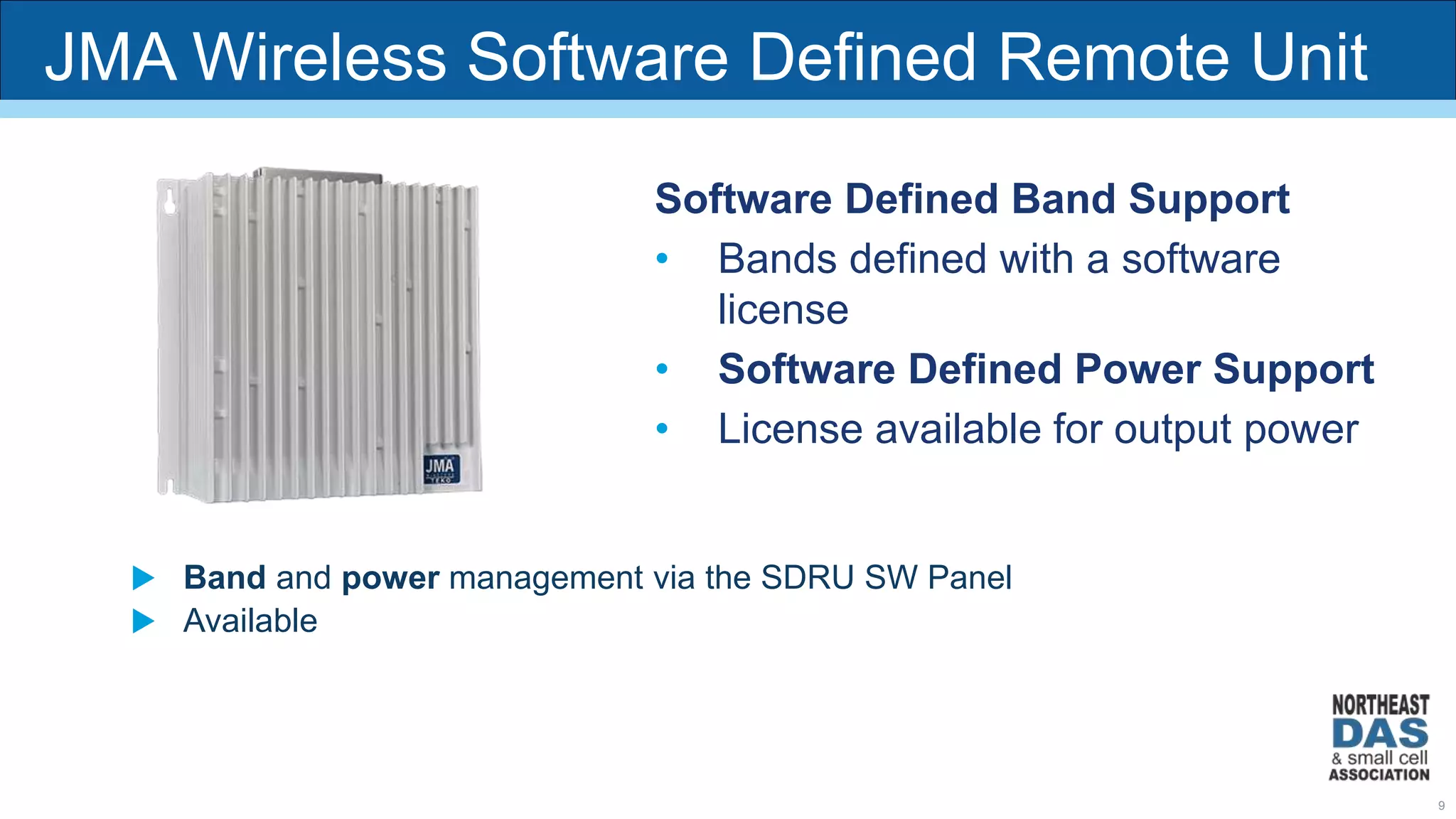
JMA Wireless Software Defined Remote Unit
Software Defined Band Support
• Bands defined with a software
license
• Software Defined Power Support
• License available for output power
 Band and power management via the SDRU SW Panel
 Available
9
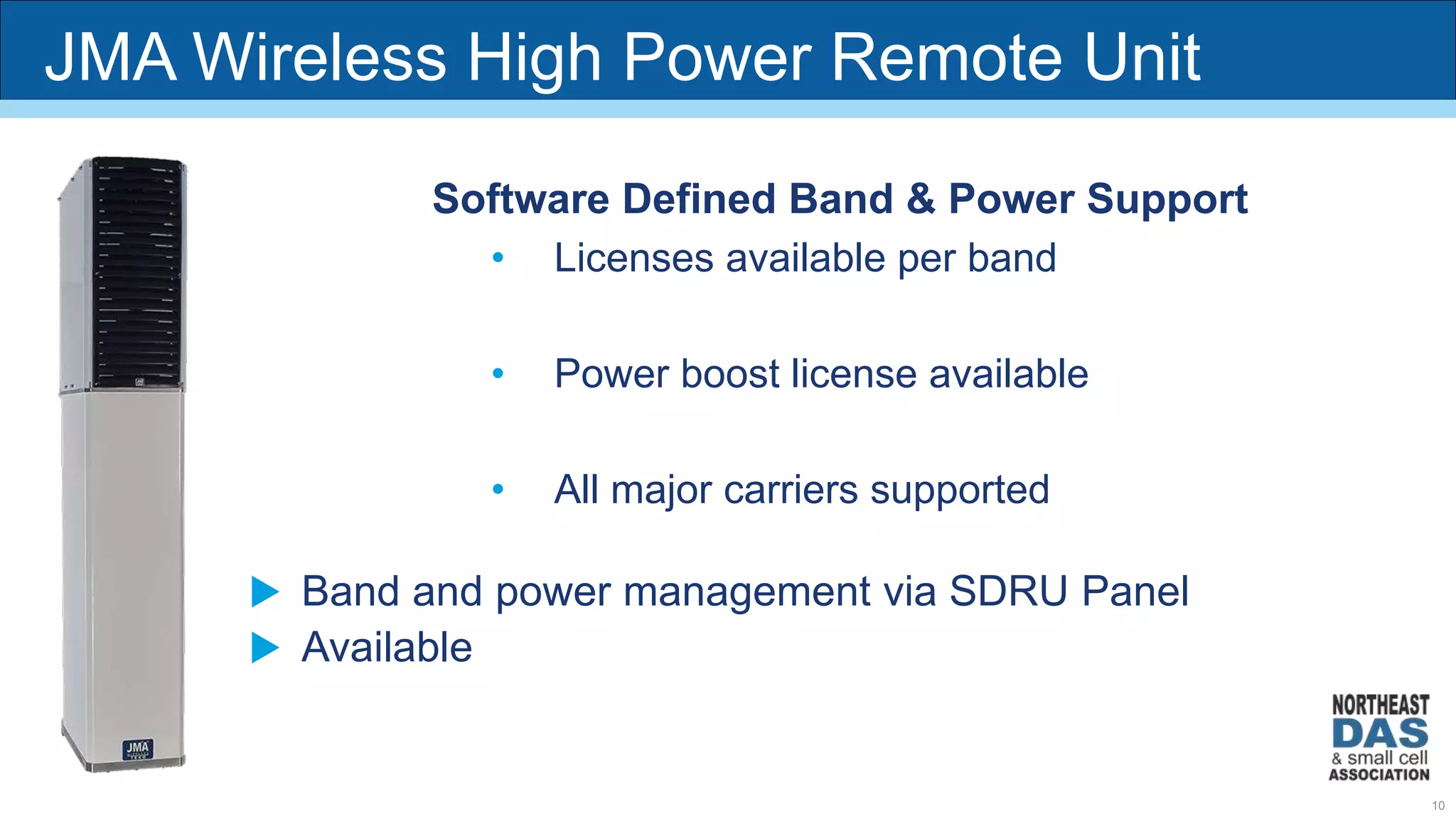
JMA Wireless High Power Remote Unit
Software Defined Band & Power Support
• Licenses available per band
• Power boost license available
• All major carriers supported
 Band and power management via SDRU Panel
 Available
10
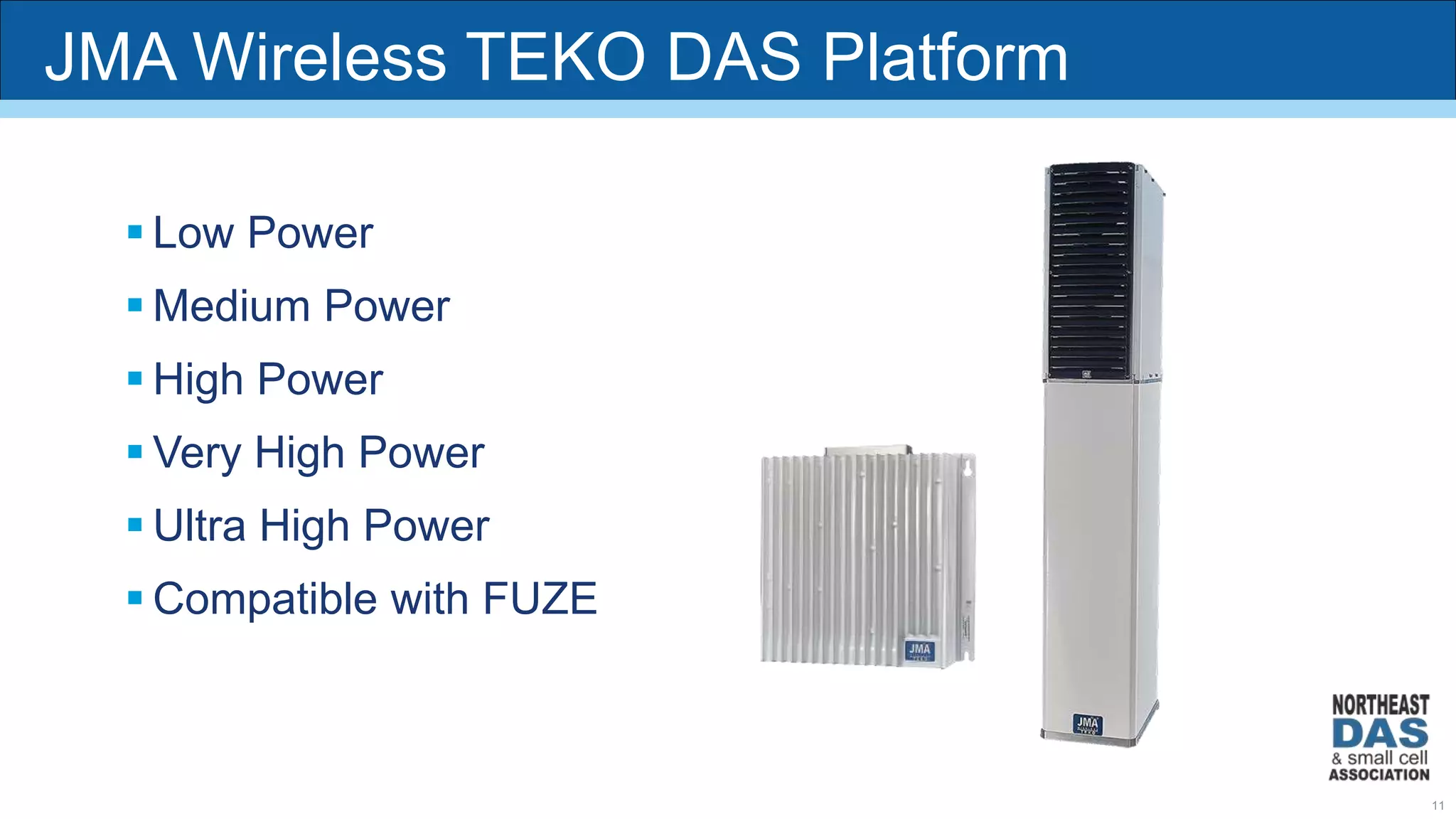
JMA Wireless TEKO DAS Platform
 Low Power
 Medium Power
 High Power
 Very High Power
 Ultra High Power
 Compatible with FUZE
11
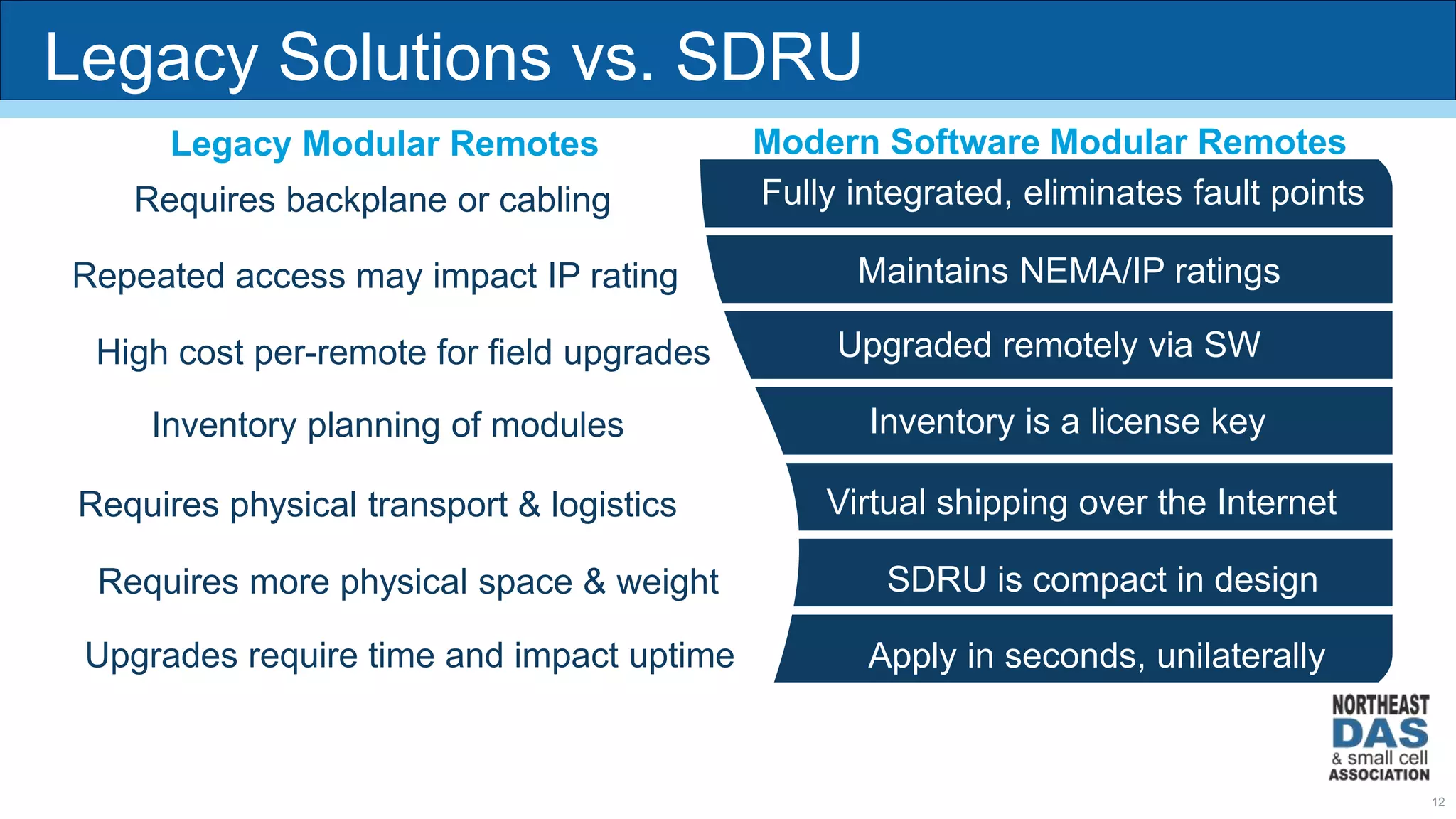
Legacy Solutions vs. SDRU
Requires physical transport & logistics
Inventory planning of modules
Requires more physical space & weight
Upgrades require time and impact uptime
High cost per-remote for field upgrades
Repeated access may impact IP rating Maintains NEMA/IP ratings
Upgraded remotely via SW
Inventory is a license key
Apply in seconds, unilaterally
Virtual shipping over the Internet
SDRU is compact in design
Fully integrated, eliminates fault pointsRequires backplane or cabling
Legacy Modular Remotes Modern Software Modular Remotes
12
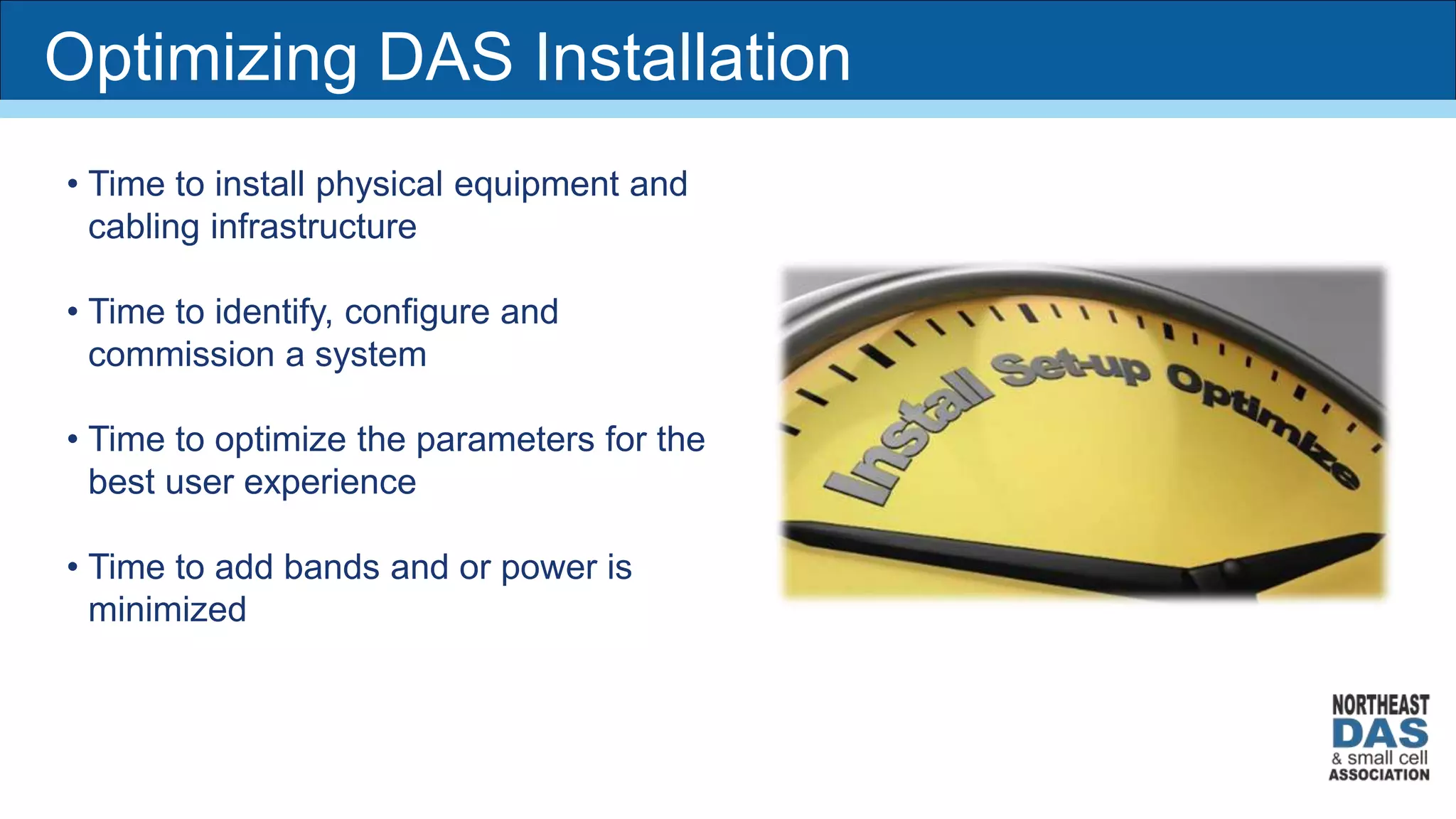
Optimizing DAS Installation
• Time to install physical equipment and
cabling infrastructure
• Time to identify, configure and
commission a system
• Time to optimize the parameters for the
best user experience
• Time to add bands and or power is
minimized
TCO Benefits:
Overall reduced OPEX and CAPEX!
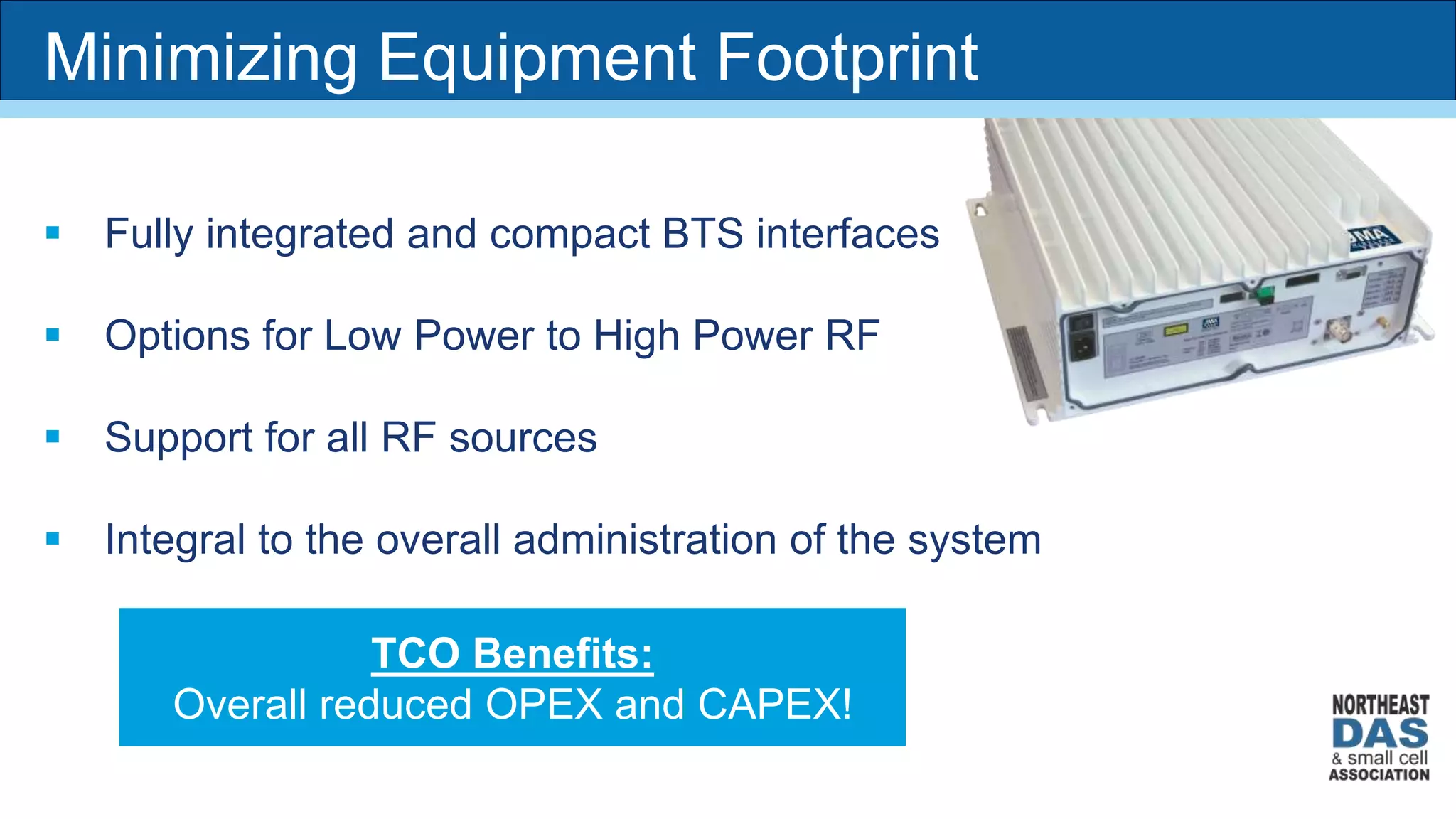
 Fully integrated and compact BTS interfaces
 Options for Low Power to High Power RF
 Support for all RF sources
 Integral to the overall administration of the system
Minimizing Equipment Footprint
 Smaller footprint reduces cost
 Remote Units can vary in size significantly
 Power classes are important
 Should be able to mix and match power classes as needed
Minimizing Equipment Footprint
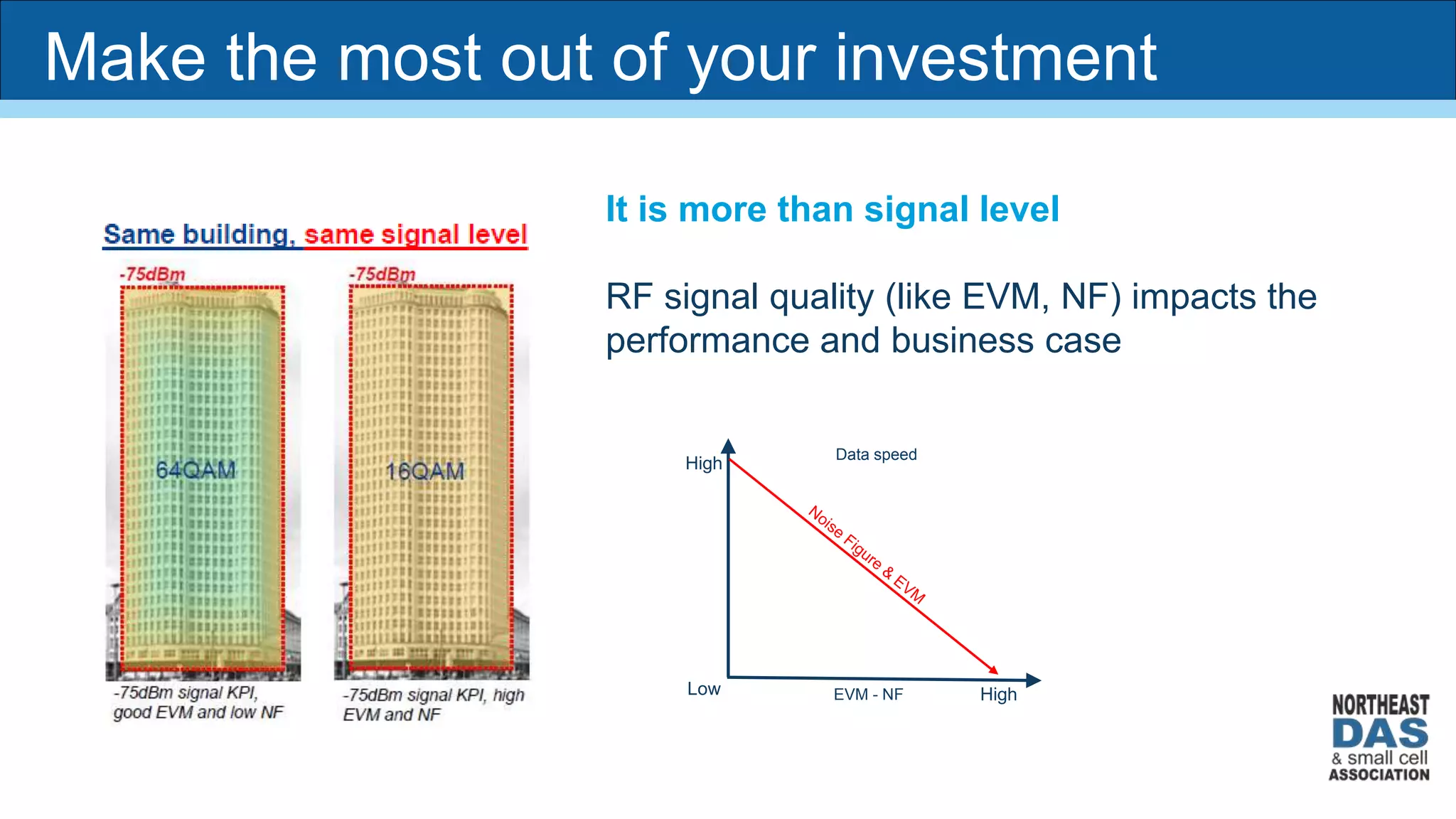
It is more than signal level
RF signal quality (like EVM, NF) impacts the
performance and business case
Data speed
Low
High
HighEVM - NF
Make the most out of your investment
DAS Site 1 DAS Site n
SNMP
EMS
Teko
OMC
SNMP v3
Spectrum Analysis
Site Administration
HTTPS
(VPN Option)
Spectrum Analysis Spectrum Analysis
Site / Mobile / Remote
Web-based Admin
Teko Multi-Site NOC
Management / Alarms
3rd Party NOC
Element Management
SNMP / VPN
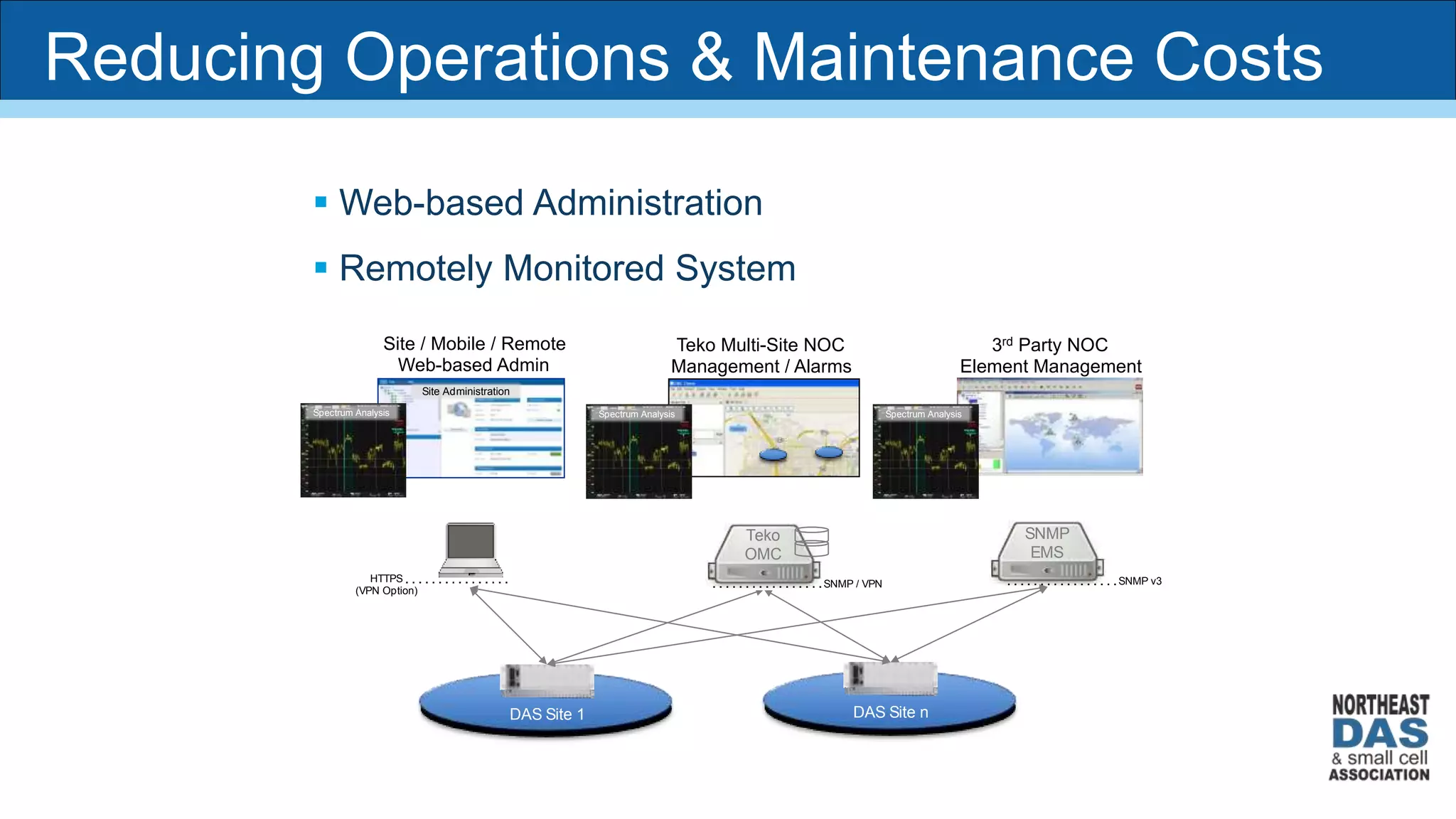
 Web-based Administration
 Remotely Monitored System
Reducing Operations & Maintenance Costs
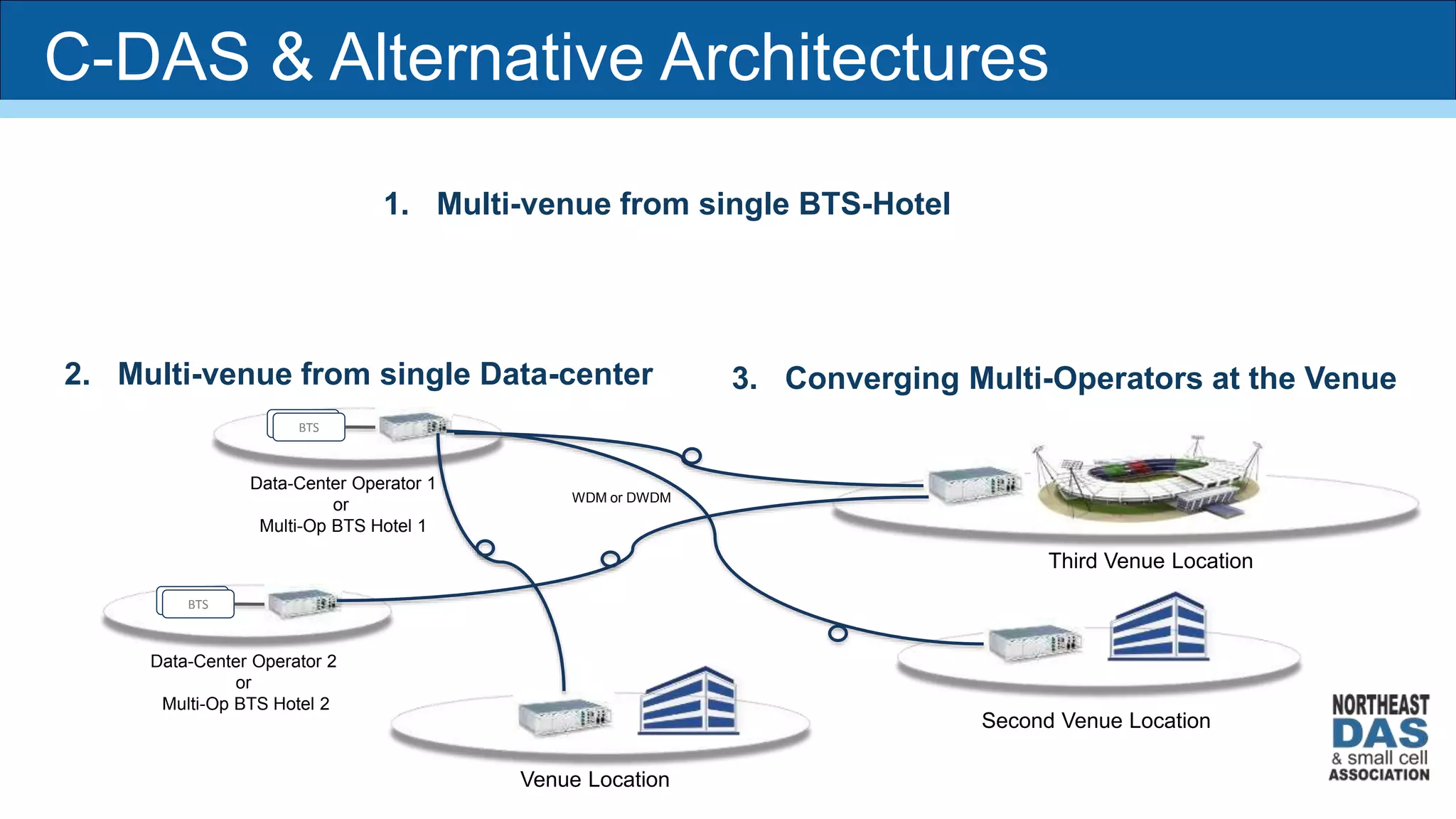
Venue Location
Third Venue Location
Second Venue Location
BTS
Data-Center Operator 1
or
Multi-Op BTS Hotel 1
BTS
WDM or DWDM
2. Multi-venue from single Data-center
1. Multi-venue from single BTS-Hotel
Data-Center Operator 2
or
Multi-Op BTS Hotel 2
3. Converging Multi-Operators at the Venue
C-DAS & Alternative Architectures
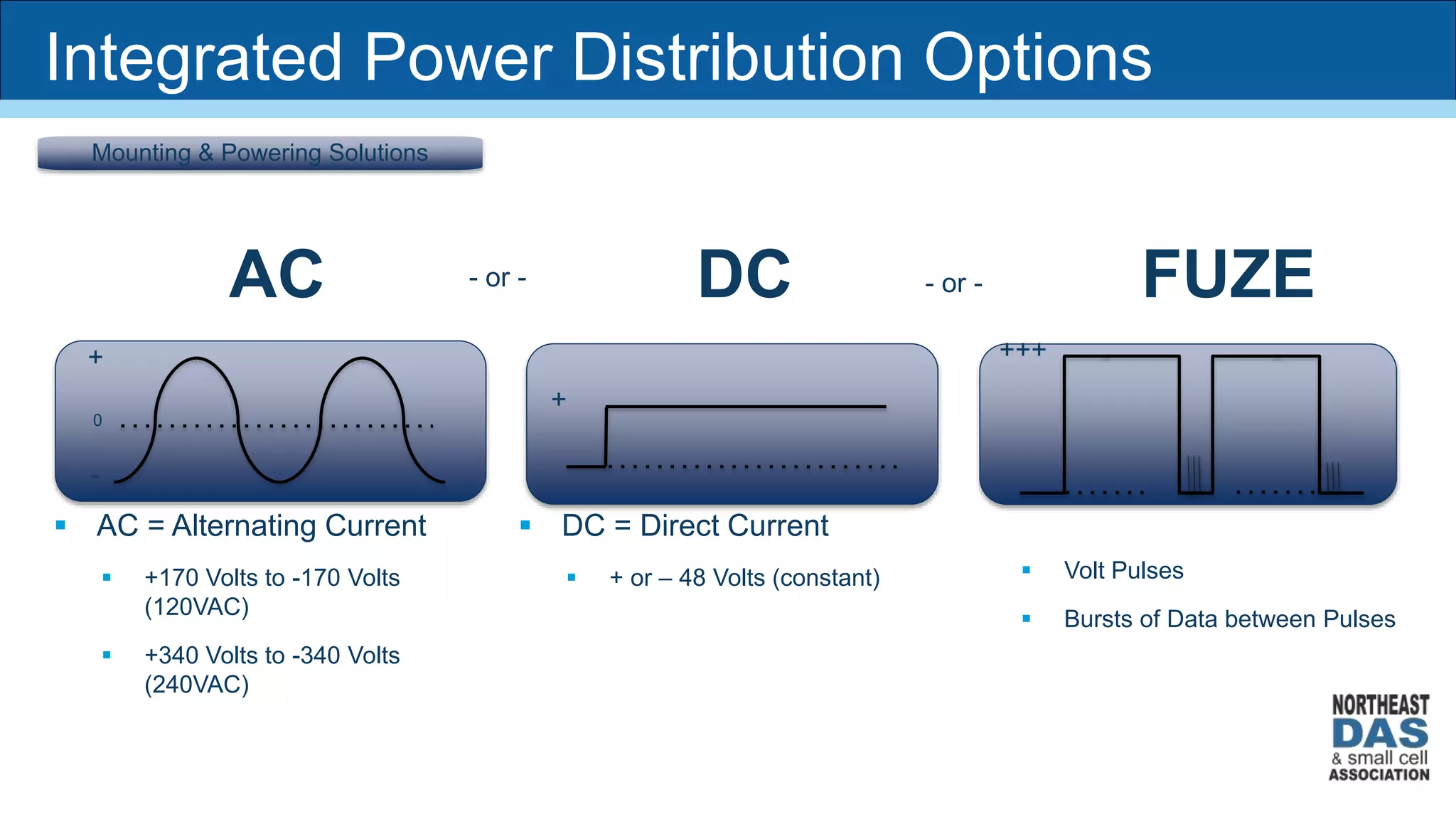
+++
+
+
-
0
AC FUZEDC- or - - or -
Mounting & Powering Solutions
 AC = Alternating Current
 +170 Volts to -170 Volts
(120VAC)
 +340 Volts to -340 Volts
(240VAC)
 DC = Direct Current
 + or – 48 Volts (constant)  Volt Pulses
 Bursts of Data between Pulses
Integrated Power Distribution Options
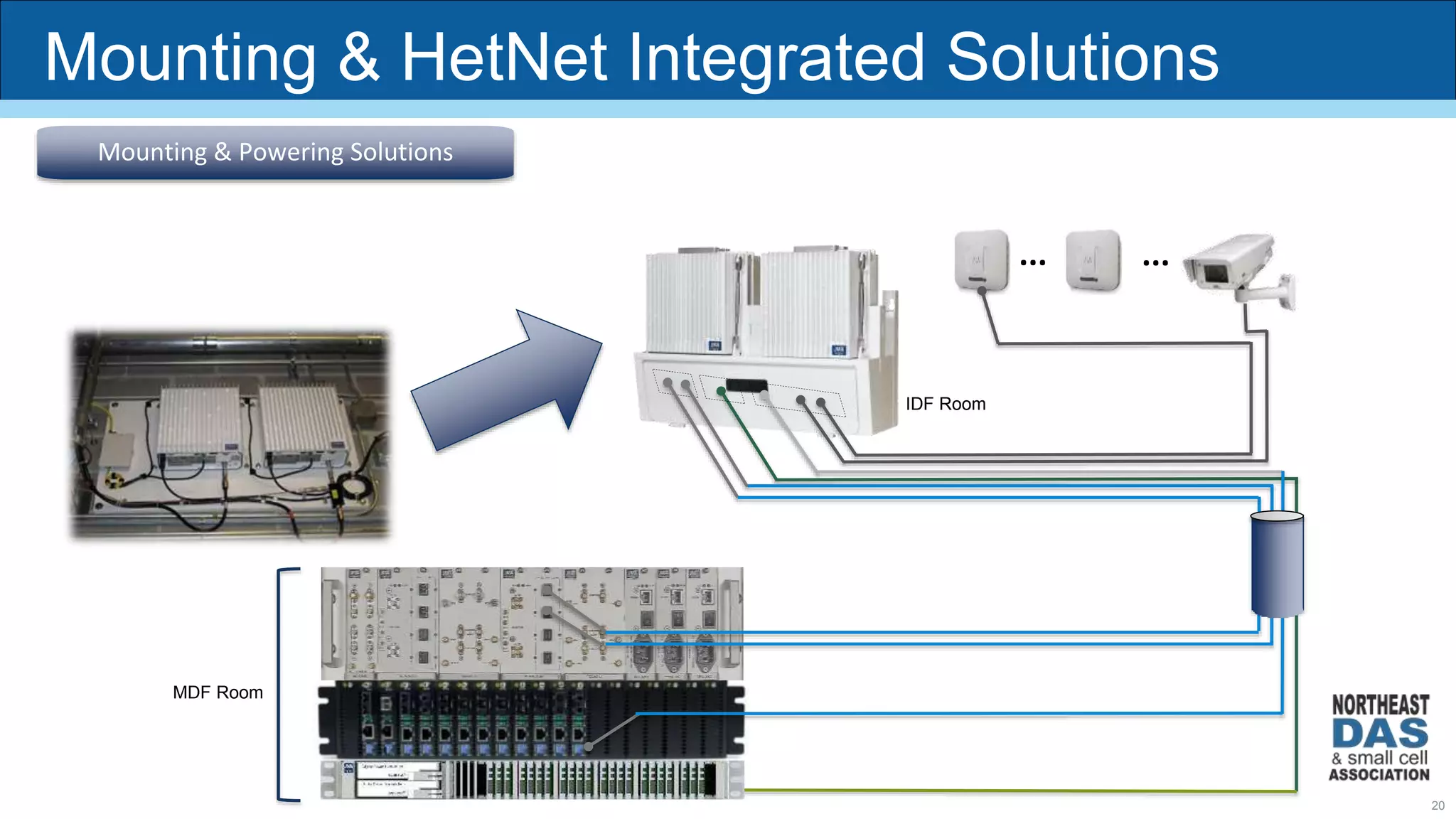
MDF Room
... ...
Mounting & Powering Solutions
IDF Room
20
Mounting & HetNet Integrated Solutions
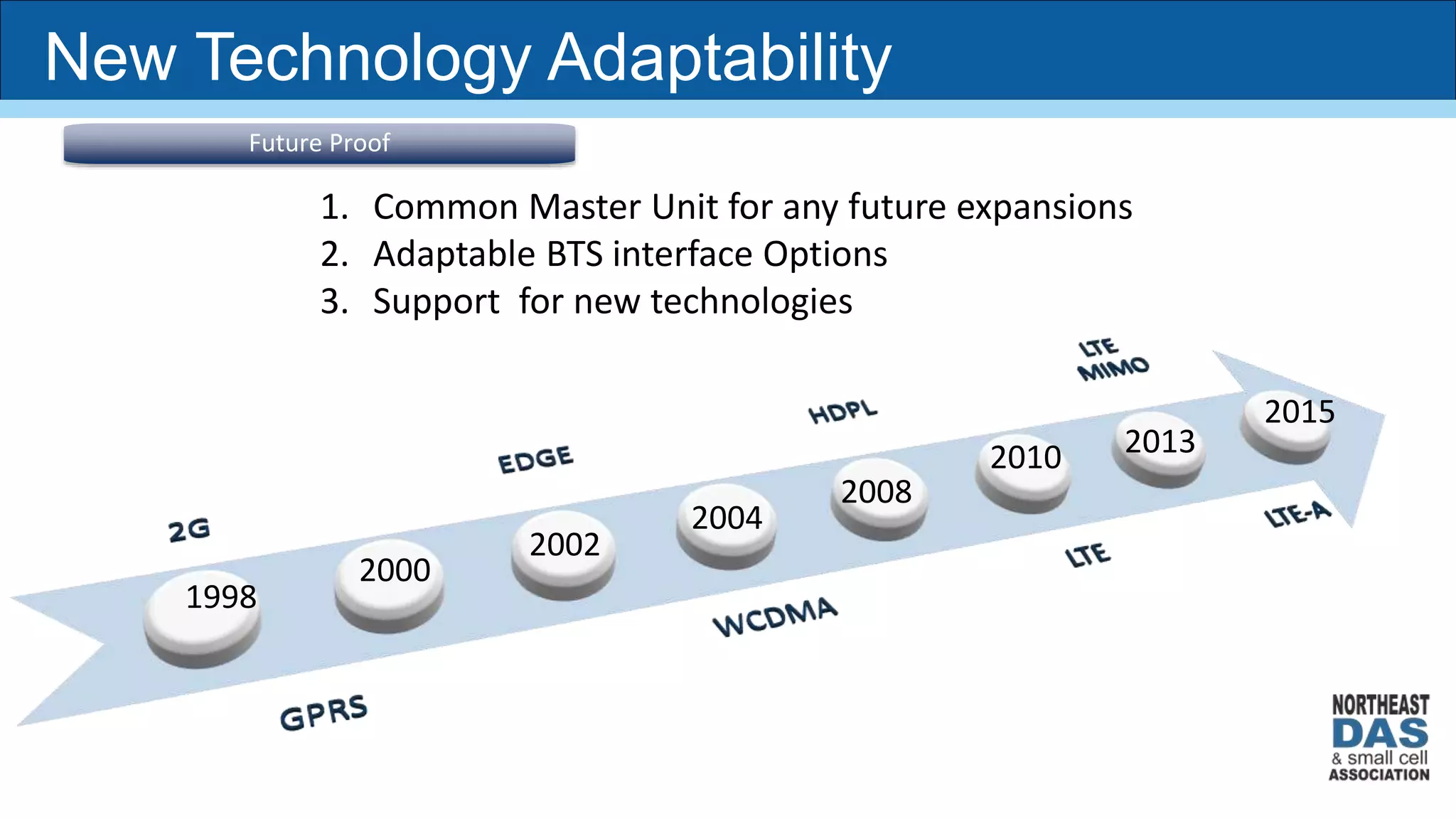
1998
2000
2002
2004
2008
2010
2015
2013
Future Proof
1. Common Master Unit for any future expansions
2. Adaptable BTS interface Options
3. Support for new technologies
New Technology Adaptability
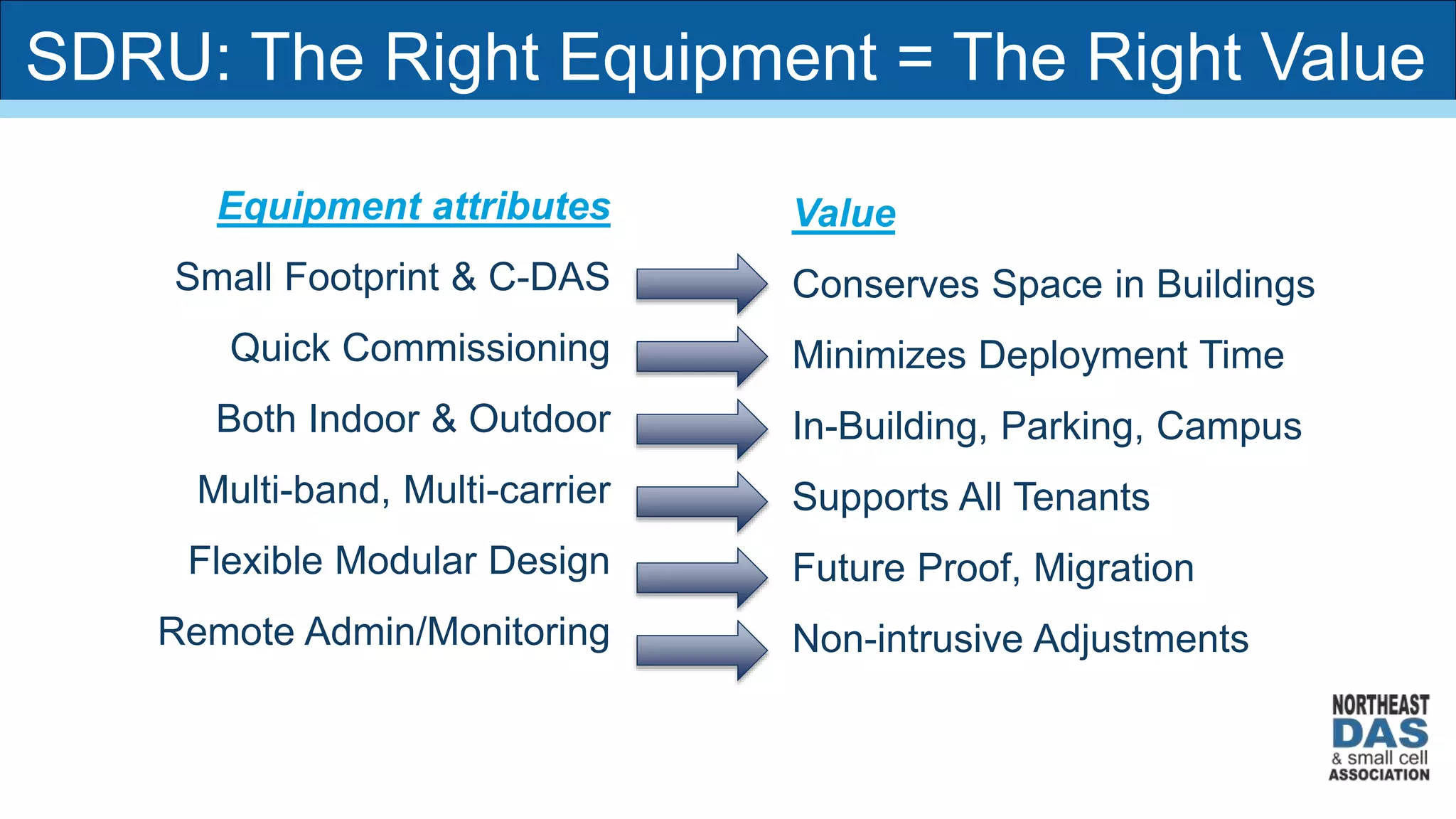
Equipment attributes
Small Footprint & C-DAS
Quick Commissioning
Both Indoor & Outdoor
Multi-band, Multi-carrier
Flexible Modular Design
Remote Admin/Monitoring
Value
Conserves Space in Buildings
Minimizes Deployment Time
In-Building, Parking, Campus
Supports All Tenants
Future Proof, Migration
Non-intrusive Adjustments
SDRU: The Right Equipment = The Right Value
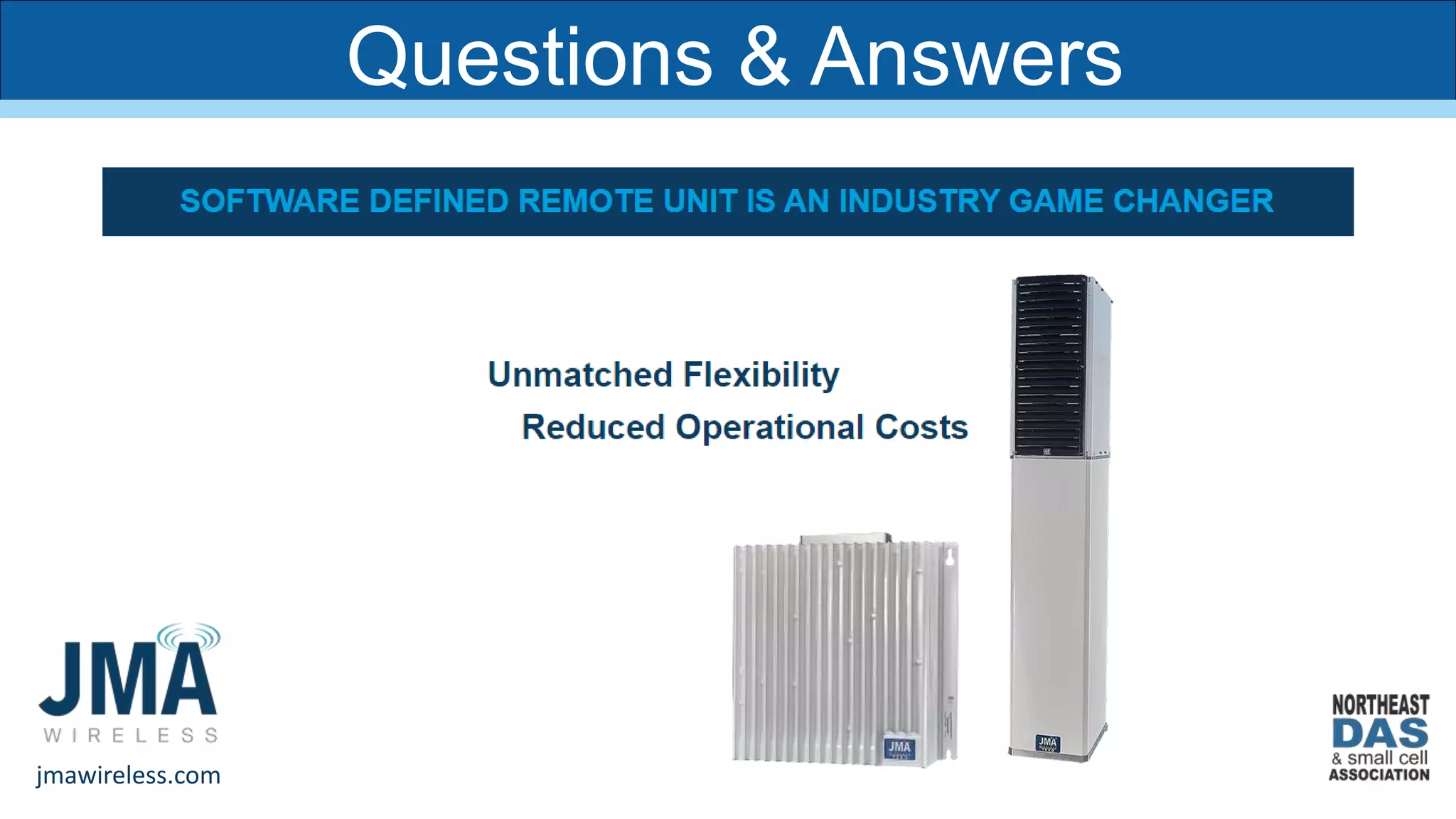
Questions & Answers
jmawireless.com

A recap of the JMA webinar hosted by NEDAS on December 13, 2017)

  • 1.
  • 2.
    2 PLATINUM GOLD SILVER Thank YouTo Our 2017 Annual Sponsors
  • 3.
    3 February 2018 -NEDAS DC Social May 9, 2018 - NEDAS Chicago Social *NEW* July 18, 2018 - NEDAS Boston Symposium September 6, 2018 - NEDAS NYC Summit NEDAS Annual Sponsorships now available! Expand and grow your business in 2018 by becoming a NEDAS Annual Sponsor and let us help you reach your goals. For more information, contact: info@nedas.com. Save the Date - NEDAS 2018 Events
  • 4.
    Presenter Presented by JMAWireless Andrew Otete Product Line Engineer
  • 5.
    Objectives  Understand whata Software Defined Remote Unit is  Define the need for a Software Defined Remote Unit  Identify the challenges faced by other solutions  List the advantages of the SDRU  Relate features to the total cost of ownership 5
  • 6.
    Solving the RolloutPuzzle  Different carriers have different time frames when joining a DAS system  Different carriers will add bands at different times  Carriers sometimes postpone joining a DAS for one reason or another  When the decision is made to join a DAS then implementation is a priority  Constricted time-frames for access are sometimes a problem 6
  • 7.
     Flexibility andphased rollouts create a strong case for modular design  Hardware vs. Software  Software modularity is more desirable and cost effective solution Introduction: Modularity 7
  • 8.
    Installation Challenges forHardware Modularity  Certified technicians required  Difficult to access remote units  Potential mistakes & added points of failure  Time consuming  System recommissioning  Increased cost to the operator 8
  • 9.
    JMA Wireless SoftwareDefined Remote Unit Software Defined Band Support • Bands defined with a software license • Software Defined Power Support • License available for output power  Band and power management via the SDRU SW Panel  Available 9
  • 10.
    JMA Wireless HighPower Remote Unit Software Defined Band & Power Support • Licenses available per band • Power boost license available • All major carriers supported  Band and power management via SDRU Panel  Available 10
  • 11.
    JMA Wireless TEKODAS Platform  Low Power  Medium Power  High Power  Very High Power  Ultra High Power  Compatible with FUZE 11
  • 12.
    Legacy Solutions vs.SDRU Requires physical transport & logistics Inventory planning of modules Requires more physical space & weight Upgrades require time and impact uptime High cost per-remote for field upgrades Repeated access may impact IP rating Maintains NEMA/IP ratings Upgraded remotely via SW Inventory is a license key Apply in seconds, unilaterally Virtual shipping over the Internet SDRU is compact in design Fully integrated, eliminates fault pointsRequires backplane or cabling Legacy Modular Remotes Modern Software Modular Remotes 12
  • 13.
    Optimizing DAS Installation •Time to install physical equipment and cabling infrastructure • Time to identify, configure and commission a system • Time to optimize the parameters for the best user experience • Time to add bands and or power is minimized
  • 14.
    TCO Benefits: Overall reducedOPEX and CAPEX!  Fully integrated and compact BTS interfaces  Options for Low Power to High Power RF  Support for all RF sources  Integral to the overall administration of the system Minimizing Equipment Footprint
  • 15.
     Smaller footprintreduces cost  Remote Units can vary in size significantly  Power classes are important  Should be able to mix and match power classes as needed Minimizing Equipment Footprint
  • 16.
    It is morethan signal level RF signal quality (like EVM, NF) impacts the performance and business case Data speed Low High HighEVM - NF Make the most out of your investment
  • 17.
    DAS Site 1DAS Site n SNMP EMS Teko OMC SNMP v3 Spectrum Analysis Site Administration HTTPS (VPN Option) Spectrum Analysis Spectrum Analysis Site / Mobile / Remote Web-based Admin Teko Multi-Site NOC Management / Alarms 3rd Party NOC Element Management SNMP / VPN  Web-based Administration  Remotely Monitored System Reducing Operations & Maintenance Costs
  • 18.
    Venue Location Third VenueLocation Second Venue Location BTS Data-Center Operator 1 or Multi-Op BTS Hotel 1 BTS WDM or DWDM 2. Multi-venue from single Data-center 1. Multi-venue from single BTS-Hotel Data-Center Operator 2 or Multi-Op BTS Hotel 2 3. Converging Multi-Operators at the Venue C-DAS & Alternative Architectures
  • 19.
    +++ + + - 0 AC FUZEDC- or- - or - Mounting & Powering Solutions  AC = Alternating Current  +170 Volts to -170 Volts (120VAC)  +340 Volts to -340 Volts (240VAC)  DC = Direct Current  + or – 48 Volts (constant)  Volt Pulses  Bursts of Data between Pulses Integrated Power Distribution Options
  • 20.
    MDF Room ... ... Mounting& Powering Solutions IDF Room 20 Mounting & HetNet Integrated Solutions
  • 21.
    1998 2000 2002 2004 2008 2010 2015 2013 Future Proof 1. CommonMaster Unit for any future expansions 2. Adaptable BTS interface Options 3. Support for new technologies New Technology Adaptability
  • 22.
    Equipment attributes Small Footprint& C-DAS Quick Commissioning Both Indoor & Outdoor Multi-band, Multi-carrier Flexible Modular Design Remote Admin/Monitoring Value Conserves Space in Buildings Minimizes Deployment Time In-Building, Parking, Campus Supports All Tenants Future Proof, Migration Non-intrusive Adjustments SDRU: The Right Equipment = The Right Value
  • 23.