
A guide to style guides

     By Julie Espinosa, at March
             Commpose
                               Reach me:
                                  My blog
                              My portfolio
                           @julieespinosa
Why should you care about them?

   "Hammering out style details at the beginning
   saves needless time and expense to clean up
   these small details at the end of a large project."

                       —Angie Halama, of Brain Traffic
Purpose

   Consistency
   Clears up confusion among multiple contributors to a project
   One centralized resource
   Resolves questions on frequently problematic elements
   Tool in editorial strategy, part of a larger content strategy
   Project- or subject-specific.

What it isn't
   exhaustive, i.e. it should not replicate or replace a whole
   dictionary (or Google)
Essentials

  Capitalization
  Abbreviations
  Tone and brand voice
  Spelling
  Usage
  Punctuation

Specify primary reference material and a real person

         If it’s not listed here, please consult the AP Stylebook. If you still
         can’t find it, call Edith Editor at 555-CAT-SUPQ or e-mail her.
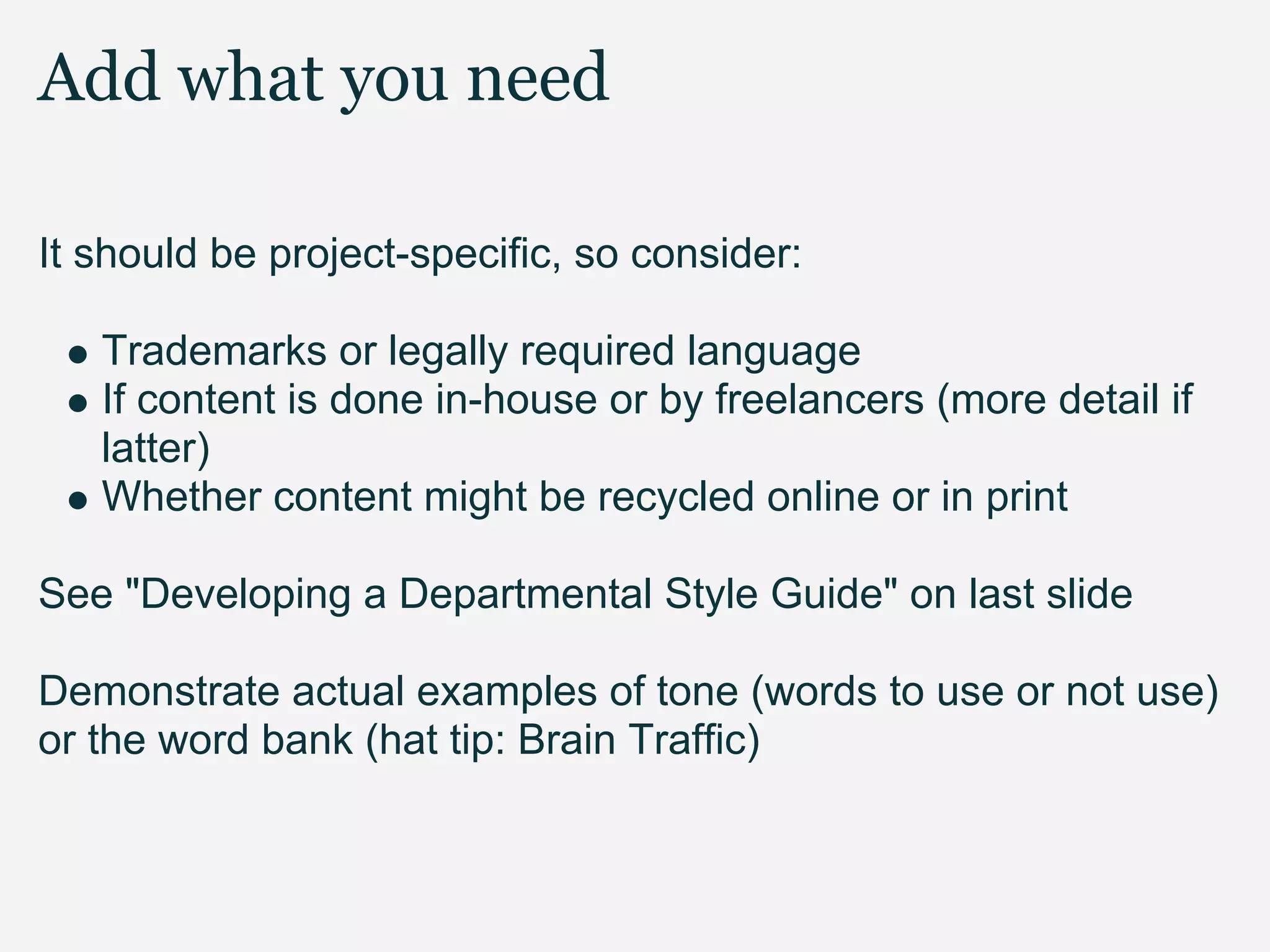
Add what you need

It should be project-specific, so consider:

   Trademarks or legally required language
   If content is done in-house or by freelancers (more detail if
   latter)
   Whether content might be recycled online or in print

See "Developing a Departmental Style Guide" on last slide

Demonstrate actual examples of tone (words to use or not use)
or the word bank (hat tip: Brain Traffic)
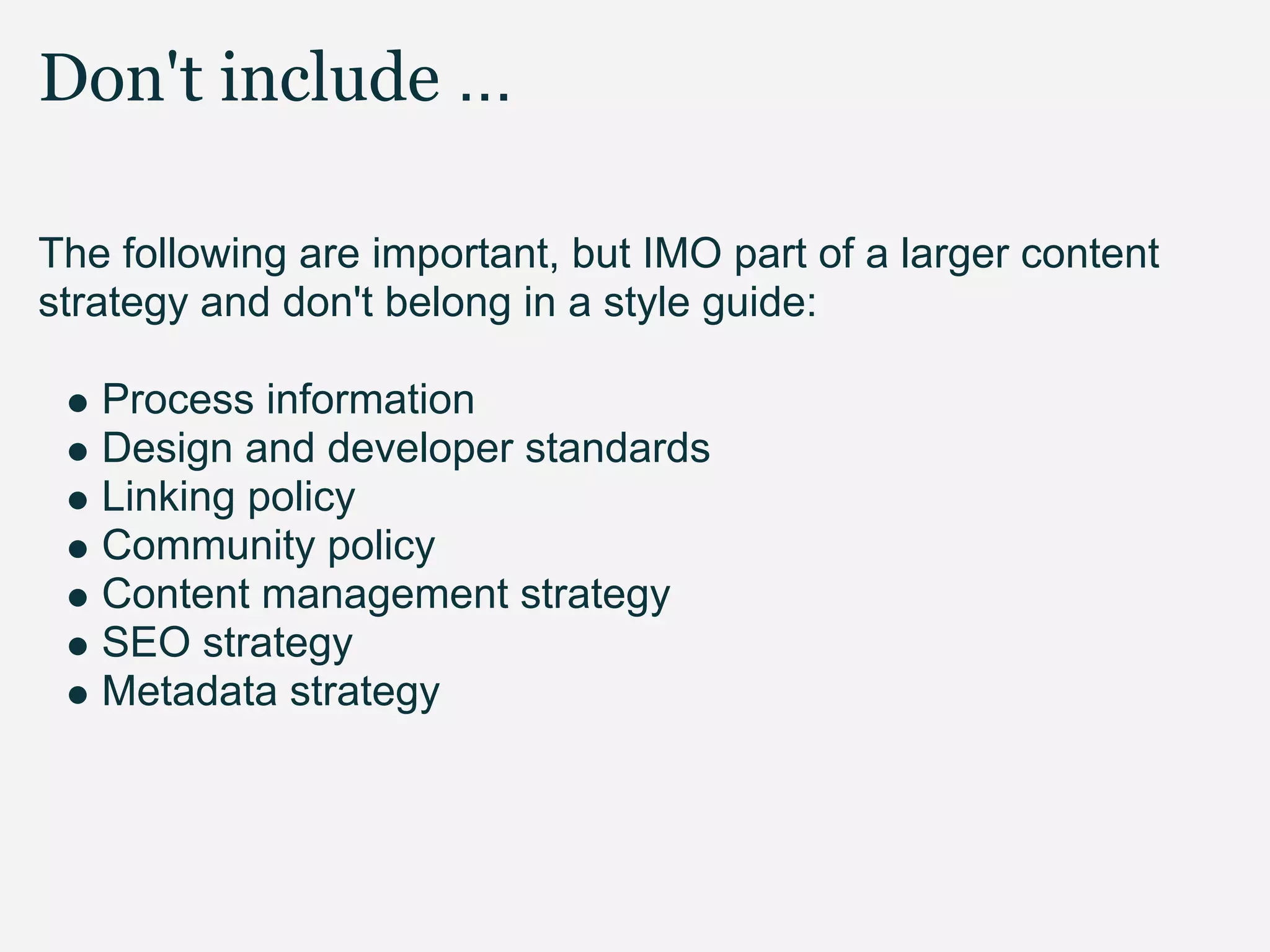
Don't include ...

The following are important, but IMO part of a larger content
strategy and don't belong in a style guide:

   Process information
   Design and developer standards
   Linking policy
   Community policy
   Content management strategy
   SEO strategy
   Metadata strategy
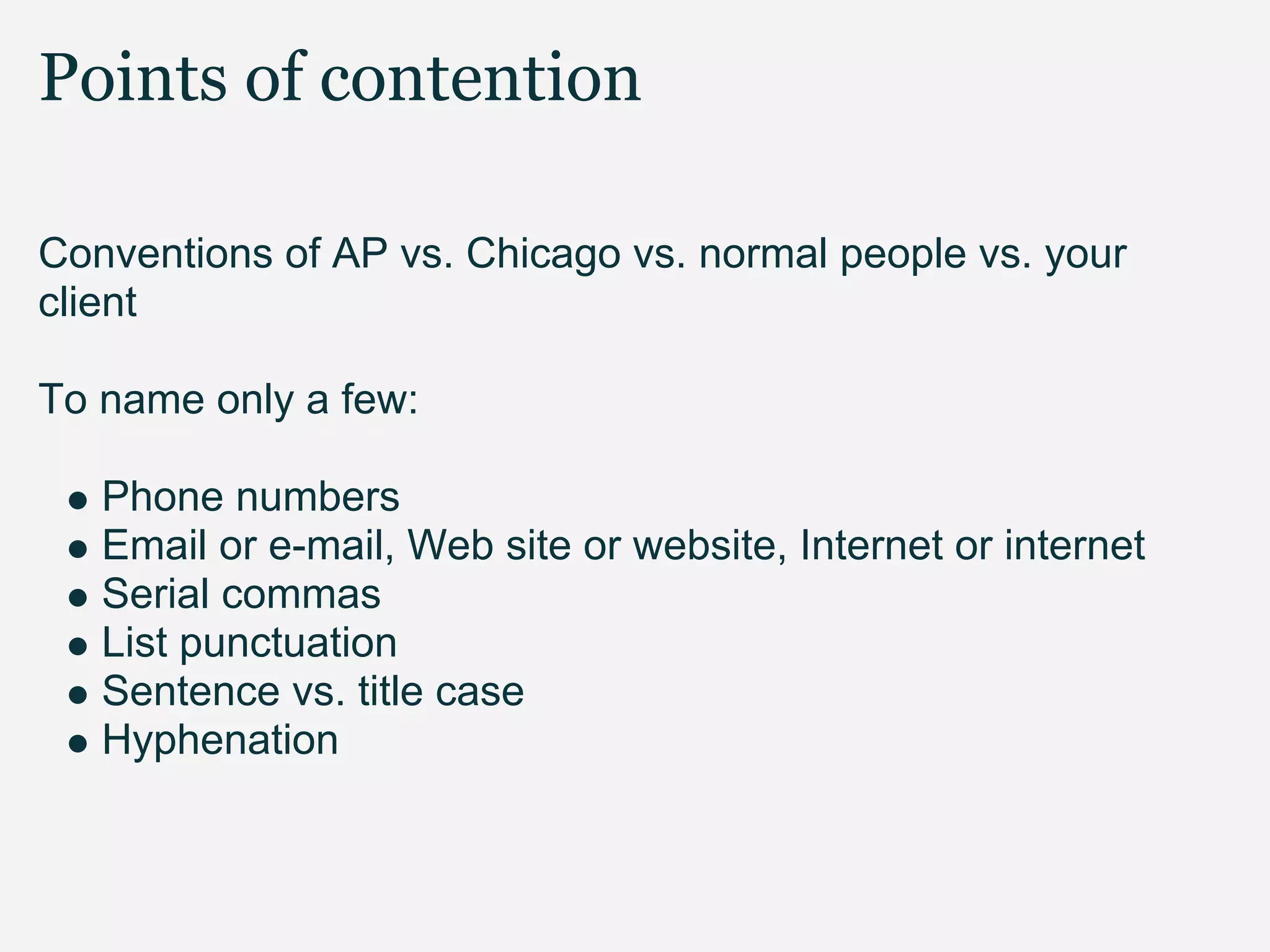
Points of contention

Conventions of AP vs. Chicago vs. normal people vs. your
client

To name only a few:

   Phone numbers
   Email or e-mail, Web site or website, Internet or internet
   Serial commas
   List punctuation
   Sentence vs. title case
   Hyphenation
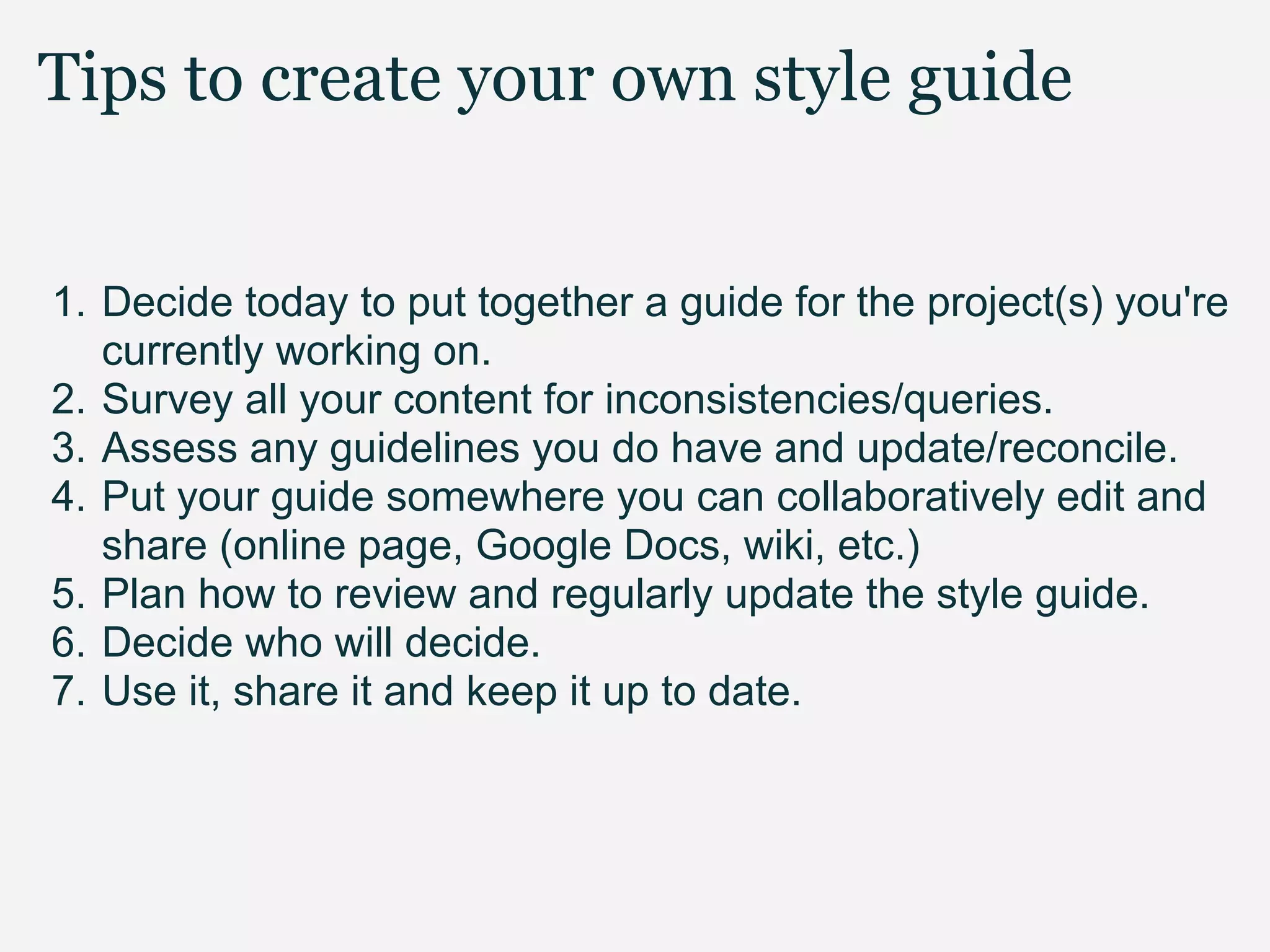
Tips to create your own style guide


1. Decide today to put together a guide for the project(s) you're
   currently working on.
2. Survey all your content for inconsistencies/queries.
3. Assess any guidelines you do have and update/reconcile.
4. Put your guide somewhere you can collaboratively edit and
   share (online page, Google Docs, wiki, etc.)
5. Plan how to review and regularly update the style guide.
6. Decide who will decide.
7. Use it, share it and keep it up to date.
Questions?
Resources

Developing a Departmental Style Guide by Jean Weber
Web Content Style Guides that Don’t Suck by Kristina
Halvorson
5 Tips on Working with a Style Guide by Elizabeth Saloka


apstylebook.com
The Chicago Manual of Style
The Elements of Style

A Guide to Style Guides

  • 1.
    A guide tostyle guides By Julie Espinosa, at March Commpose Reach me: My blog My portfolio @julieespinosa
  • 2.
    Why should youcare about them? "Hammering out style details at the beginning saves needless time and expense to clean up these small details at the end of a large project." —Angie Halama, of Brain Traffic
  • 3.
    Purpose Consistency Clears up confusion among multiple contributors to a project One centralized resource Resolves questions on frequently problematic elements Tool in editorial strategy, part of a larger content strategy Project- or subject-specific. What it isn't exhaustive, i.e. it should not replicate or replace a whole dictionary (or Google)
  • 5.
    Essentials Capitalization Abbreviations Tone and brand voice Spelling Usage Punctuation Specify primary reference material and a real person If it’s not listed here, please consult the AP Stylebook. If you still can’t find it, call Edith Editor at 555-CAT-SUPQ or e-mail her.
  • 6.
    Add what youneed It should be project-specific, so consider: Trademarks or legally required language If content is done in-house or by freelancers (more detail if latter) Whether content might be recycled online or in print See "Developing a Departmental Style Guide" on last slide Demonstrate actual examples of tone (words to use or not use) or the word bank (hat tip: Brain Traffic)
  • 7.
    Don't include ... Thefollowing are important, but IMO part of a larger content strategy and don't belong in a style guide: Process information Design and developer standards Linking policy Community policy Content management strategy SEO strategy Metadata strategy
  • 8.
    Points of contention Conventionsof AP vs. Chicago vs. normal people vs. your client To name only a few: Phone numbers Email or e-mail, Web site or website, Internet or internet Serial commas List punctuation Sentence vs. title case Hyphenation
  • 9.
    Tips to createyour own style guide 1. Decide today to put together a guide for the project(s) you're currently working on. 2. Survey all your content for inconsistencies/queries. 3. Assess any guidelines you do have and update/reconcile. 4. Put your guide somewhere you can collaboratively edit and share (online page, Google Docs, wiki, etc.) 5. Plan how to review and regularly update the style guide. 6. Decide who will decide. 7. Use it, share it and keep it up to date.
  • 10.
  • 11.
    Resources Developing a DepartmentalStyle Guide by Jean Weber Web Content Style Guides that Don’t Suck by Kristina Halvorson 5 Tips on Working with a Style Guide by Elizabeth Saloka apstylebook.com The Chicago Manual of Style The Elements of Style