Texas Campus STaR Chart Sidney Lanier Elementary Alicia Davis Dallas ISD
Overview Long-Range Plan for Technology, 2006-2020 Texas Campus STaR Chart Four Key Area Domains Teaching and Learning Educator Preparation and Development Leadership, Administration, and Instructional Support Infrastructure for Technology Current Trends Lanier Campus  STaR  Chart Lanier vs. Texas Statewide Campuses Moving Forward Next Steps Works Cited
Long-Range Plan for Technology 2006-2020 “ To reach goals of this Long-Range Plan for Technology, 2006-2020, strategies must be put in place that can be accomplished and measured over time.  The recommendations for Teaching and Learning; Educator Preparation and Development; Leadership, Administration and Instructional Support; and infrastructure for Technology implemented together will help realize the overarching vision of the plan by 2020.”  Long-Range Plan for Technology, 2006-2020 (November 2006) Long-Range Plan for Technology Overview
What is the Texas Campus STaR Chart? A tool designed for use in technology planning, budgeting for resources, and evaluation of progress in local technology projects. Produces a profile of your campus’ status toward reaching the goals of the Long Range Plan for Technology (LRPT) and No Child Left Behind Profile Indicators place your campus at one of four levels of progress in each key area:  Early Tech, Developing Tech, Advanced Tech or Target Tech. http://starchart.esc12.net/ Overview
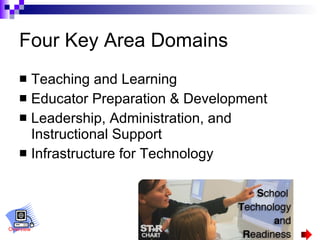
Four Key Area Domains Teaching and Learning Educator Preparation & Development Leadership, Administration, and Instructional Support Infrastructure for Technology Overview
Teaching & Learning Adjust and meet the needs of a diverse student population  Technology must be integrated seamlessly in the classroom  Critical and analytical skills must be taught and explored to allow students to be independent thinkers and learners Overview
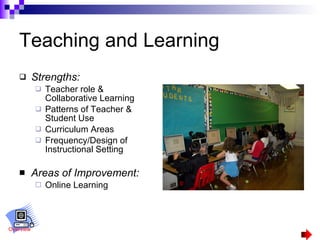
Teaching and Learning Strengths: Teacher role & Collaborative Learning Patterns of Teacher & Student Use Curriculum Areas Frequency/Design of Instructional Setting Areas of Improvement: Online Learning Overview
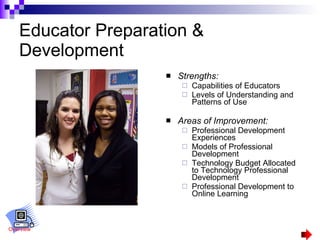
Educator Preparation & Development Ongoing professional development is essential to incorporate technology to support the curriculum  It is critical that preparation programs are modeling the appropriate use of technology for new teachers Facilitate and manage 21st century skills to reach academic achievement Overview
Educator Preparation & Development Strengths:  Capabilities of Educators Levels of Understanding and Patterns of Use Areas of Improvement: Professional Development Experiences Models of Professional Development Technology Budget Allocated to Technology Professional Development Professional Development to Online Learning Overview
Leadership, Administration, and Instructional Support Administrators must create a shared vision Model and use effective technologies Budget and plan to increase technology resources  Overview
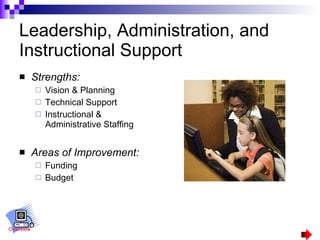
Leadership, Administration, and Instructional Support Strengths: Vision & Planning Technical Support Instructional & Administrative Staffing Areas of Improvement: Funding Budget Overview
Infrastructure for Technology Offer high-speed connectivity  Equip campus with digital tools and resources for all learners  Provide an infrastructure that is safe, secure, and reliable Overview
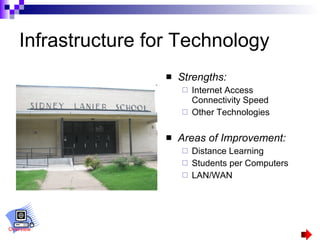
Infrastructure for Technology Strengths: Internet Access Connectivity Speed Other Technologies Areas of Improvement: Distance Learning Students per Computers LAN/WAN Overview
Overview
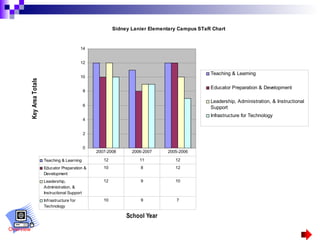
Current Trends - Lanier Key Area totals have received a  marginal increase  over the last 3 years in the following area: Infrastructure for Technology Inconsistencies in Key Areas: Educator Preparation and Development Administration and Leadership Teaching and Learning Overview
Lanier vs. Texas Statewide Campuses How does Lanier compare in relation to other campuses in Texas? About average in the following Key Areas T & L, Educ. Prep, and Admin & Support Slightly below the state average Infrastructure of Technology Overview
How does Lanier Elementary move forward from here? Continue to prepare 21st century learners for their future Utilize Distance Learning opportunities for online professional development Administration should  assess the strengths and weaknesses of technology implementation Overview
Next Steps Teachers must no longer be the gatekeepers of education but allow the world of technology to enter into the classrooms to aid in student learning and development.  Overview
Works Cited Instructional Materials and Educational Technology Division, Texas Education Agency. (2006, Fall) Texas Star Chart,  Retrieved on June 10, 2009, Lamar University, Instructional Technology site:  http://starchart.esc12.net/docs/TxCSC.pdf Texas Education Agency (2006, November)  Texas Long-Star Plan, 2006-2020,  Retrieved on June 10, 2009, Lamar University, Instructional Technology site:   http://ritter.tea.state.tx.us/technology/lrpt/LRPTCompleteDec06.pdf Overview
School Contact Information Sidney Lanier Elementary 1400 Walmsley Avenue Dallas, TX 75287 (972) 794-4400 School Motto: “Where all great dreams are possible”

Lanier Campus S Ta R Chart

  • 1.
    Texas Campus STaRChart Sidney Lanier Elementary Alicia Davis Dallas ISD
  • 2.
    Overview Long-Range Planfor Technology, 2006-2020 Texas Campus STaR Chart Four Key Area Domains Teaching and Learning Educator Preparation and Development Leadership, Administration, and Instructional Support Infrastructure for Technology Current Trends Lanier Campus STaR Chart Lanier vs. Texas Statewide Campuses Moving Forward Next Steps Works Cited
  • 3.
    Long-Range Plan forTechnology 2006-2020 “ To reach goals of this Long-Range Plan for Technology, 2006-2020, strategies must be put in place that can be accomplished and measured over time. The recommendations for Teaching and Learning; Educator Preparation and Development; Leadership, Administration and Instructional Support; and infrastructure for Technology implemented together will help realize the overarching vision of the plan by 2020.” Long-Range Plan for Technology, 2006-2020 (November 2006) Long-Range Plan for Technology Overview
  • 4.
    What is theTexas Campus STaR Chart? A tool designed for use in technology planning, budgeting for resources, and evaluation of progress in local technology projects. Produces a profile of your campus’ status toward reaching the goals of the Long Range Plan for Technology (LRPT) and No Child Left Behind Profile Indicators place your campus at one of four levels of progress in each key area: Early Tech, Developing Tech, Advanced Tech or Target Tech. http://starchart.esc12.net/ Overview
  • 5.
    Four Key AreaDomains Teaching and Learning Educator Preparation & Development Leadership, Administration, and Instructional Support Infrastructure for Technology Overview
  • 6.
    Teaching & LearningAdjust and meet the needs of a diverse student population Technology must be integrated seamlessly in the classroom Critical and analytical skills must be taught and explored to allow students to be independent thinkers and learners Overview
  • 7.
    Teaching and LearningStrengths: Teacher role & Collaborative Learning Patterns of Teacher & Student Use Curriculum Areas Frequency/Design of Instructional Setting Areas of Improvement: Online Learning Overview
  • 8.
    Educator Preparation &Development Ongoing professional development is essential to incorporate technology to support the curriculum It is critical that preparation programs are modeling the appropriate use of technology for new teachers Facilitate and manage 21st century skills to reach academic achievement Overview
  • 9.
    Educator Preparation &Development Strengths: Capabilities of Educators Levels of Understanding and Patterns of Use Areas of Improvement: Professional Development Experiences Models of Professional Development Technology Budget Allocated to Technology Professional Development Professional Development to Online Learning Overview
  • 10.
    Leadership, Administration, andInstructional Support Administrators must create a shared vision Model and use effective technologies Budget and plan to increase technology resources Overview
  • 11.
    Leadership, Administration, andInstructional Support Strengths: Vision & Planning Technical Support Instructional & Administrative Staffing Areas of Improvement: Funding Budget Overview
  • 12.
    Infrastructure for TechnologyOffer high-speed connectivity Equip campus with digital tools and resources for all learners Provide an infrastructure that is safe, secure, and reliable Overview
  • 13.
    Infrastructure for TechnologyStrengths: Internet Access Connectivity Speed Other Technologies Areas of Improvement: Distance Learning Students per Computers LAN/WAN Overview
  • 14.
  • 15.
    Current Trends -Lanier Key Area totals have received a marginal increase over the last 3 years in the following area: Infrastructure for Technology Inconsistencies in Key Areas: Educator Preparation and Development Administration and Leadership Teaching and Learning Overview
  • 16.
    Lanier vs. TexasStatewide Campuses How does Lanier compare in relation to other campuses in Texas? About average in the following Key Areas T & L, Educ. Prep, and Admin & Support Slightly below the state average Infrastructure of Technology Overview
  • 17.
    How does LanierElementary move forward from here? Continue to prepare 21st century learners for their future Utilize Distance Learning opportunities for online professional development Administration should assess the strengths and weaknesses of technology implementation Overview
  • 18.
    Next Steps Teachersmust no longer be the gatekeepers of education but allow the world of technology to enter into the classrooms to aid in student learning and development. Overview
  • 19.
    Works Cited InstructionalMaterials and Educational Technology Division, Texas Education Agency. (2006, Fall) Texas Star Chart, Retrieved on June 10, 2009, Lamar University, Instructional Technology site: http://starchart.esc12.net/docs/TxCSC.pdf Texas Education Agency (2006, November) Texas Long-Star Plan, 2006-2020, Retrieved on June 10, 2009, Lamar University, Instructional Technology site: http://ritter.tea.state.tx.us/technology/lrpt/LRPTCompleteDec06.pdf Overview
  • 20.
    School Contact InformationSidney Lanier Elementary 1400 Walmsley Avenue Dallas, TX 75287 (972) 794-4400 School Motto: “Where all great dreams are possible”