Implementing a PLE in a secondary
school context by using free Web2.0
                tools


             Technology, Police, and Management Faculty
                               TU Delft
                              April 2012
                                                          Challenge the future   1
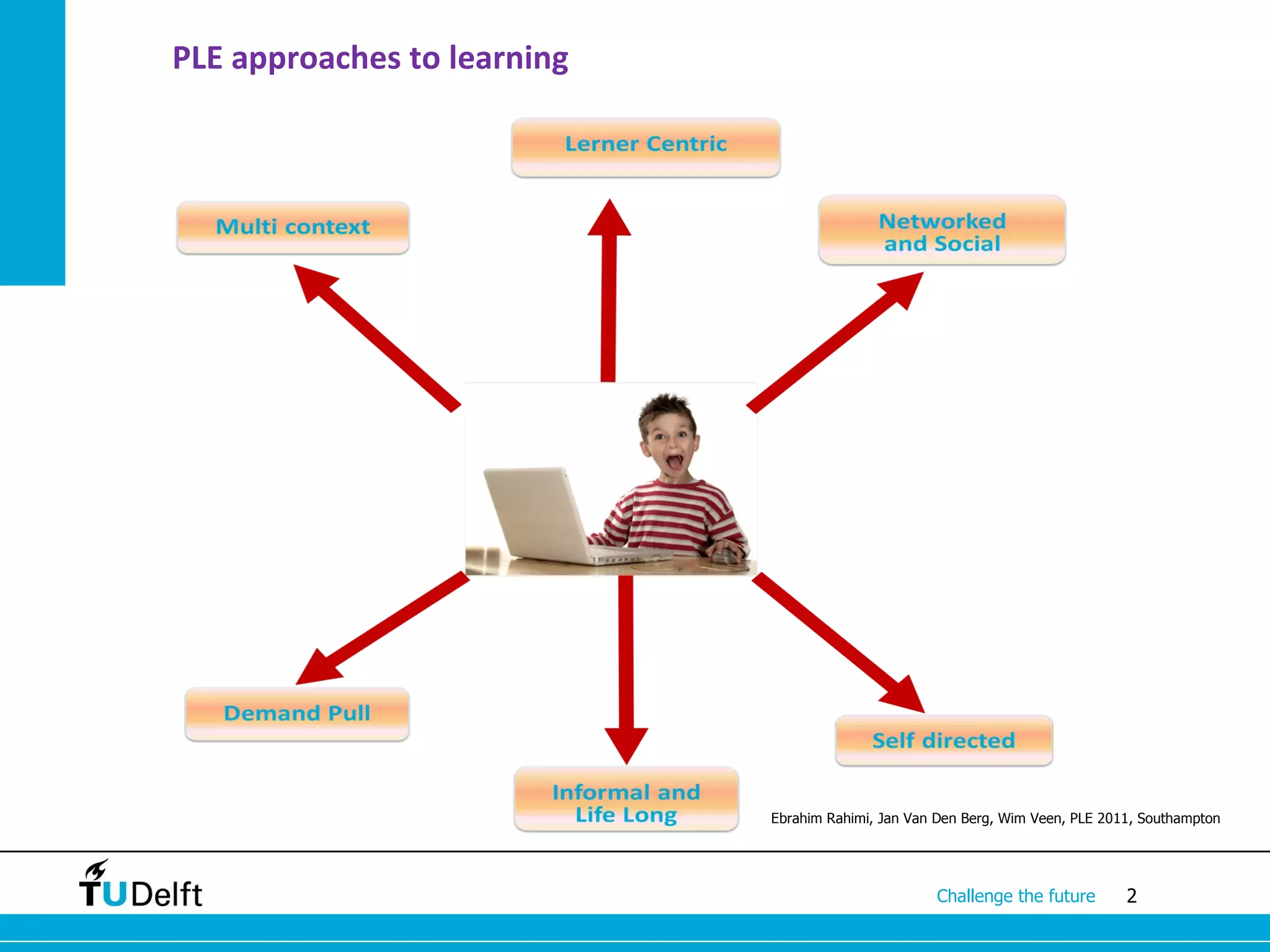
PLE approaches to learning


                             Ebrahim Rahimi, Jan Van Den Berg, Wim Veen, PLE 2011, Southampton


                                                    Challenge the future        2
Key Challenge for formal education


How should a PLE-based learning environment be designed
  and integrated into educational settings to meet the
     heterogeneous Learning demands of students?


                                          Challenge the future   3
About our Research


                     Challenge the future   4
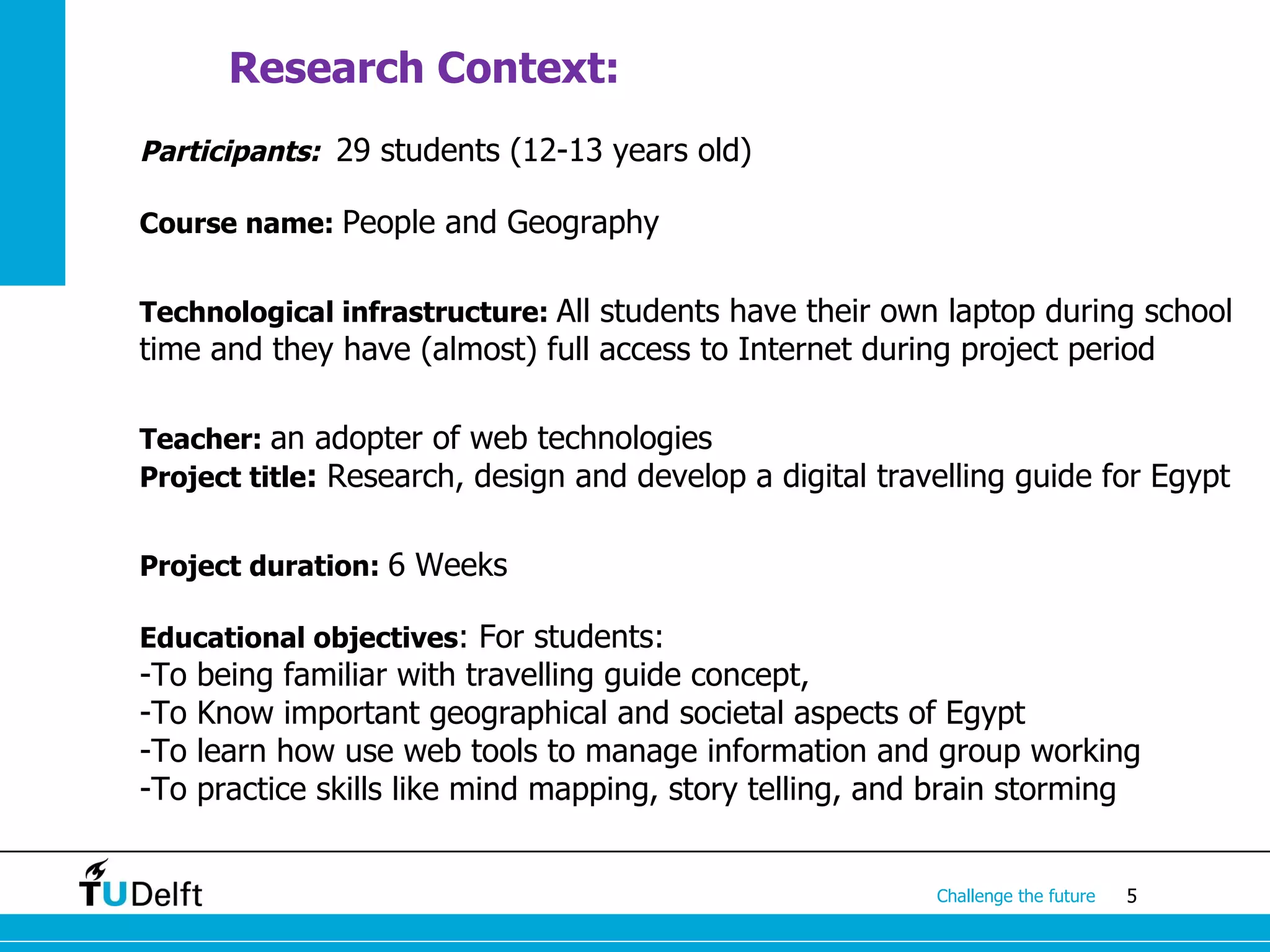
Research Context:
Participants: 29 students (12-13 years old)

Course name: People and Geography


Technological infrastructure: All students have their own laptop during school
time and they have (almost) full access to Internet during project period

Teacher: an adopter of web technologies
Project title: Research, design and develop a digital travelling guide for Egypt


Project duration: 6 Weeks

Educational objectives: For students:
-To   being familiar with travelling guide concept,
-To   Know important geographical and societal aspects of Egypt
-To   learn how use web tools to manage information and group working
-To   practice skills like mind mapping, story telling, and brain storming


                                                           Challenge the future   5
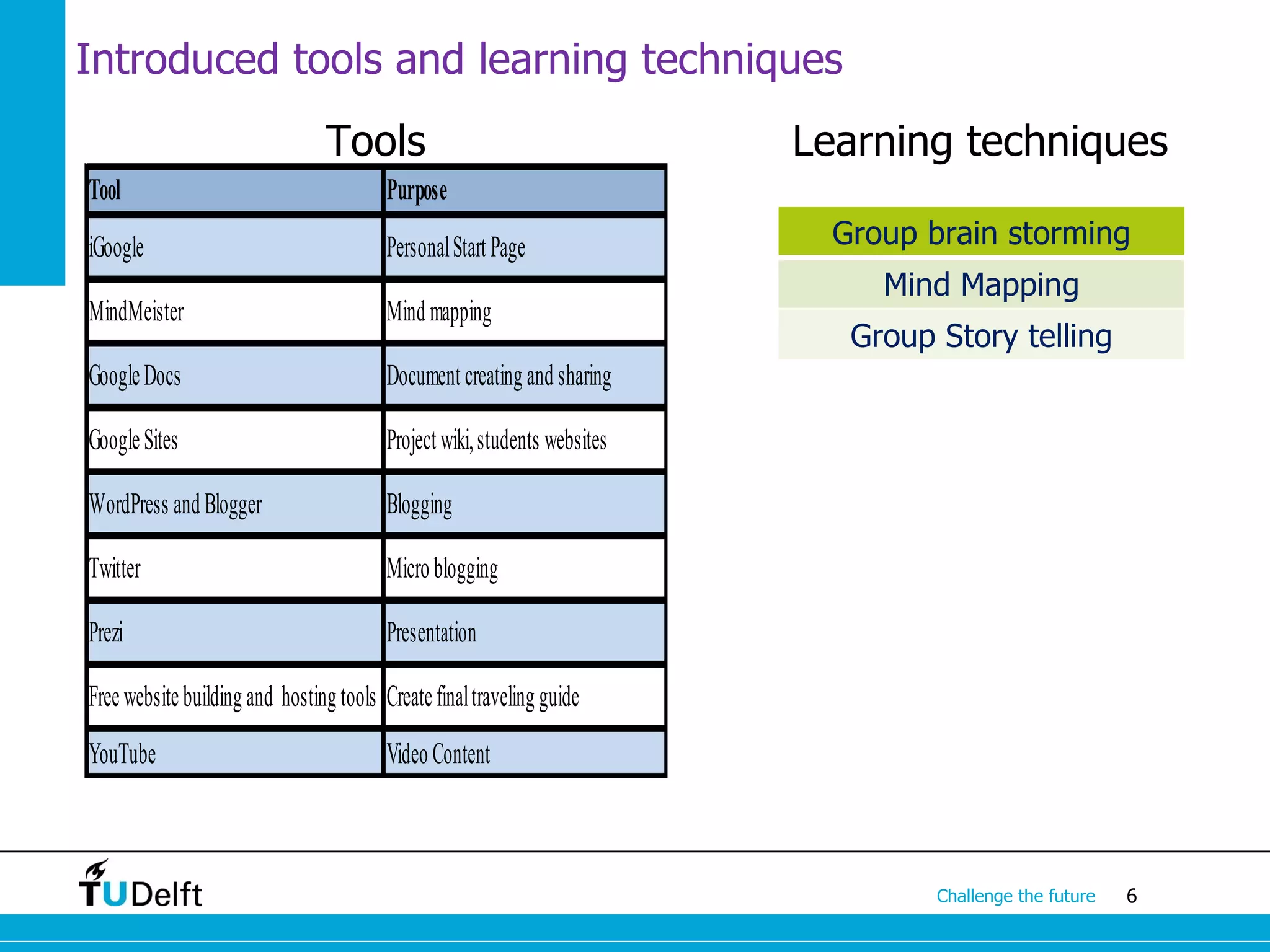
Introduced tools and learning techniques
                                Tools                                      Learning techniques
Tool                                     Purpose
iGoogle                                  Personal Start Page                 Group brain storming
                                                                                Mind Mapping
MindMeister                              Mind mapping
                                                                              Group Story telling
Google Docs                              Document creating and sharing

Google Sites                             Project wiki, students websites

WordPress and Blogger                    Blogging

Twitter                                  Micro blogging

Prezi                                    Presentation

Free website building and hosting tools Create final traveling guide
YouTube                                  Video Content


                                                                                    Challenge the future   6
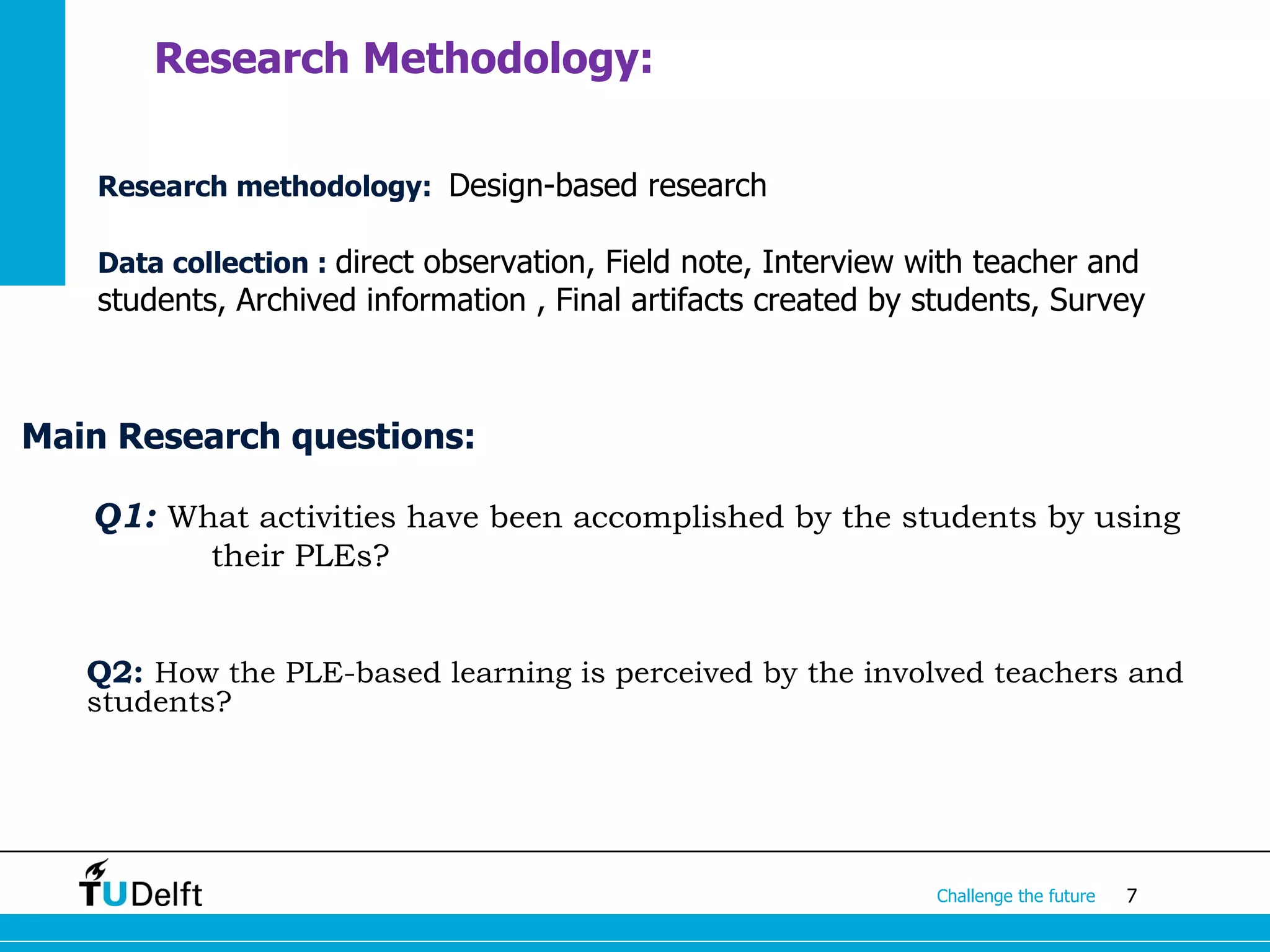
Research Methodology:

    Research methodology: Design-based research

    Data collection : direct observation, Field note, Interview with teacher and
    students, Archived information , Final artifacts created by students, Survey


Main Research questions:

   Q1: What activities have been accomplished by the students by using
            their PLEs?


   Q2: How the PLE-based learning is perceived by the involved teachers and
   students?


                                                                 Challenge the future   7
Research Design


                  Challenge the future   8
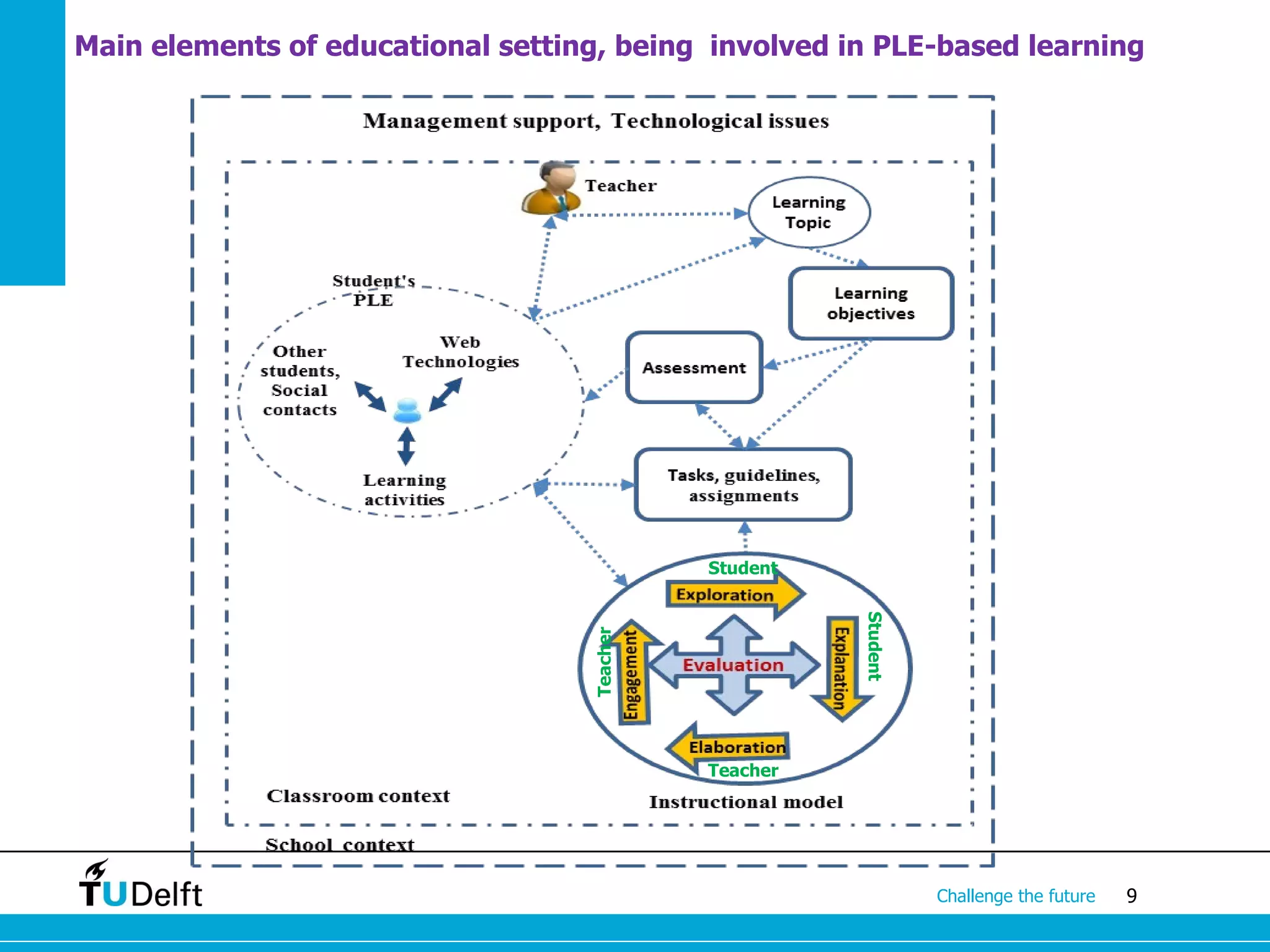
Main elements of educational setting, being involved in PLE-based learning


                                             Student


                                                       Student
                                   Teacher


                                             Teacher


                                                                 Challenge the future   9
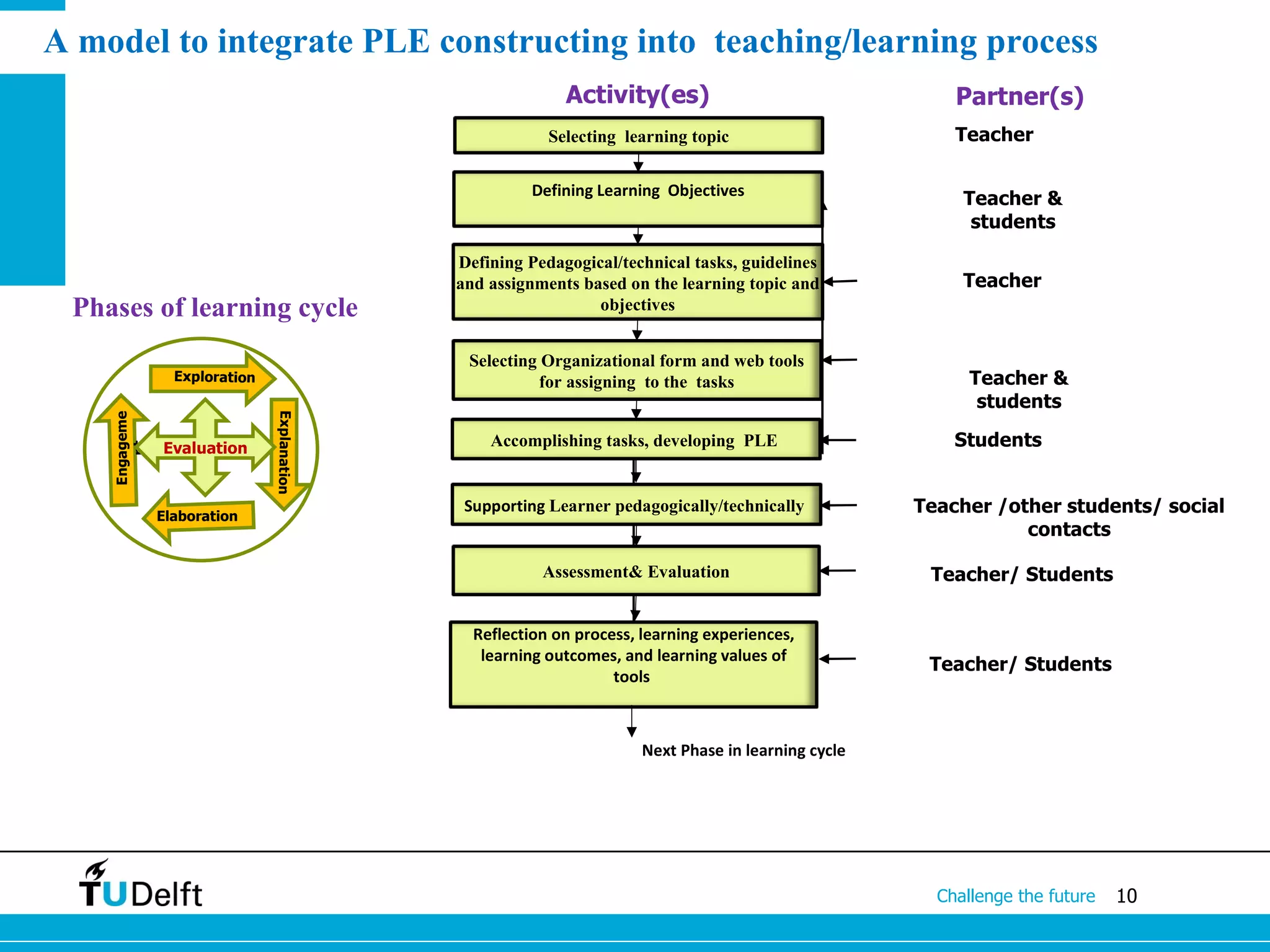
A model to integrate PLE constructing into teaching/learning process
                                                           Activity(es)                                  Partner(s)
                                                         Selecting learning topic                        Teacher

                                                       Defining Learning Objectives
                                                                                                          Teacher &
                                                                                                           students

                                             Defining Pedagogical/technical tasks, guidelines
                                             and assignments based on the learning topic and              Teacher
 Phases of learning cycle                                      objectives


                                              Selecting Organizational form and web tools
                 Exploration                            for assigning to the tasks                         Teacher &
                                                                                                            students
                               Explanation
    Engageme


               Evaluation                        Accomplishing tasks, developing PLE                     Students
       nt


               Elaboration
                                              Supporting Learner pedagogically/technically           Teacher /other students/ social
                                                                                                                contacts

                                                        Assessment& Evaluation                        Teacher/ Students


                                               Reflection on process, learning experiences,
                                                learning outcomes, and learning values of
                                                                                                      Teacher/ Students
                                                                  tools


                                                                      Next Phase in learning cycle


                                                                                                       Challenge the future   10
Results


          Challenge the future   11
Question 1:

      How do students integrate PLE tools into their learning
      activities?


                                                   Challenge the future   12
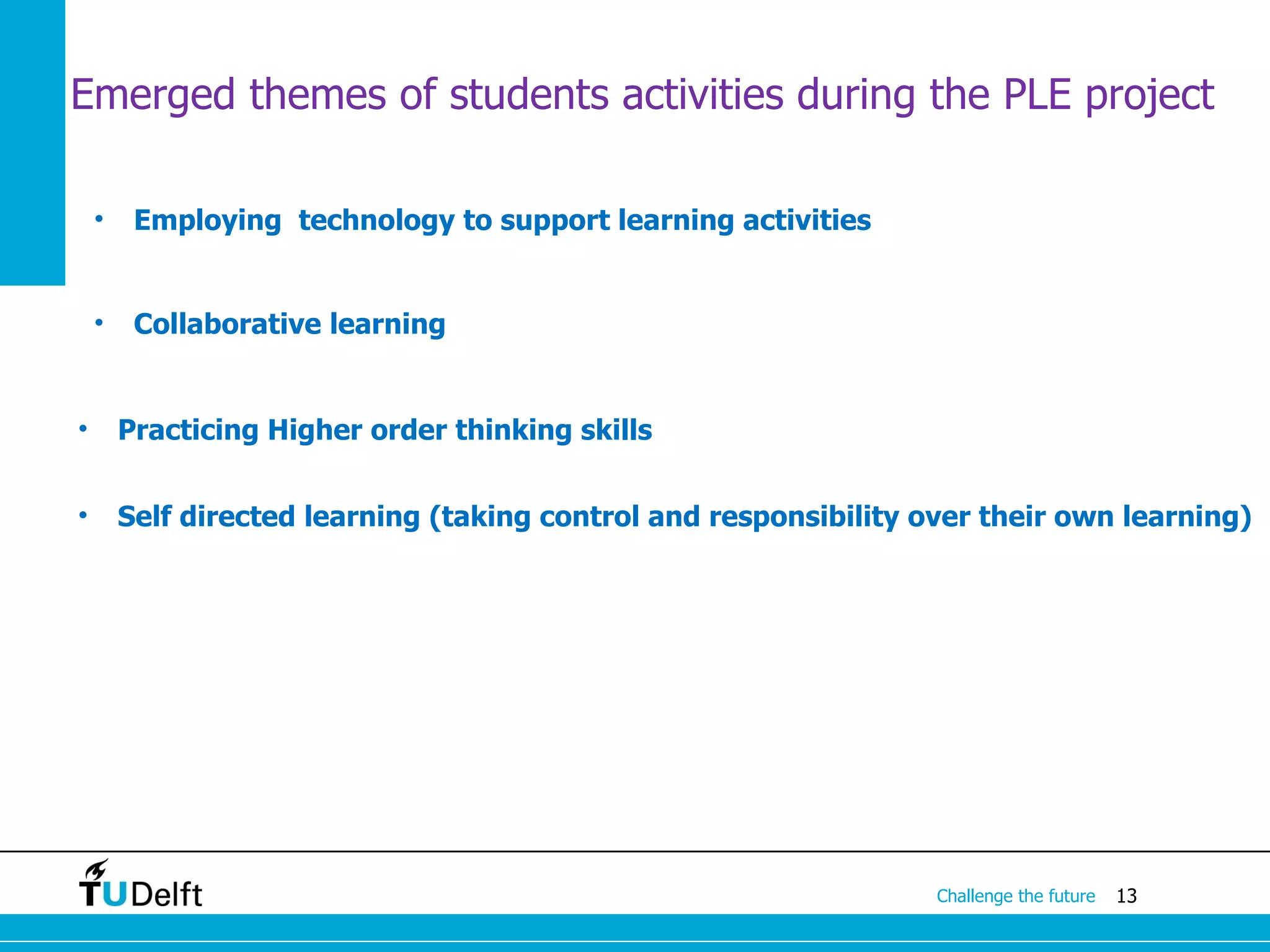
Emerged themes of students activities during the PLE project

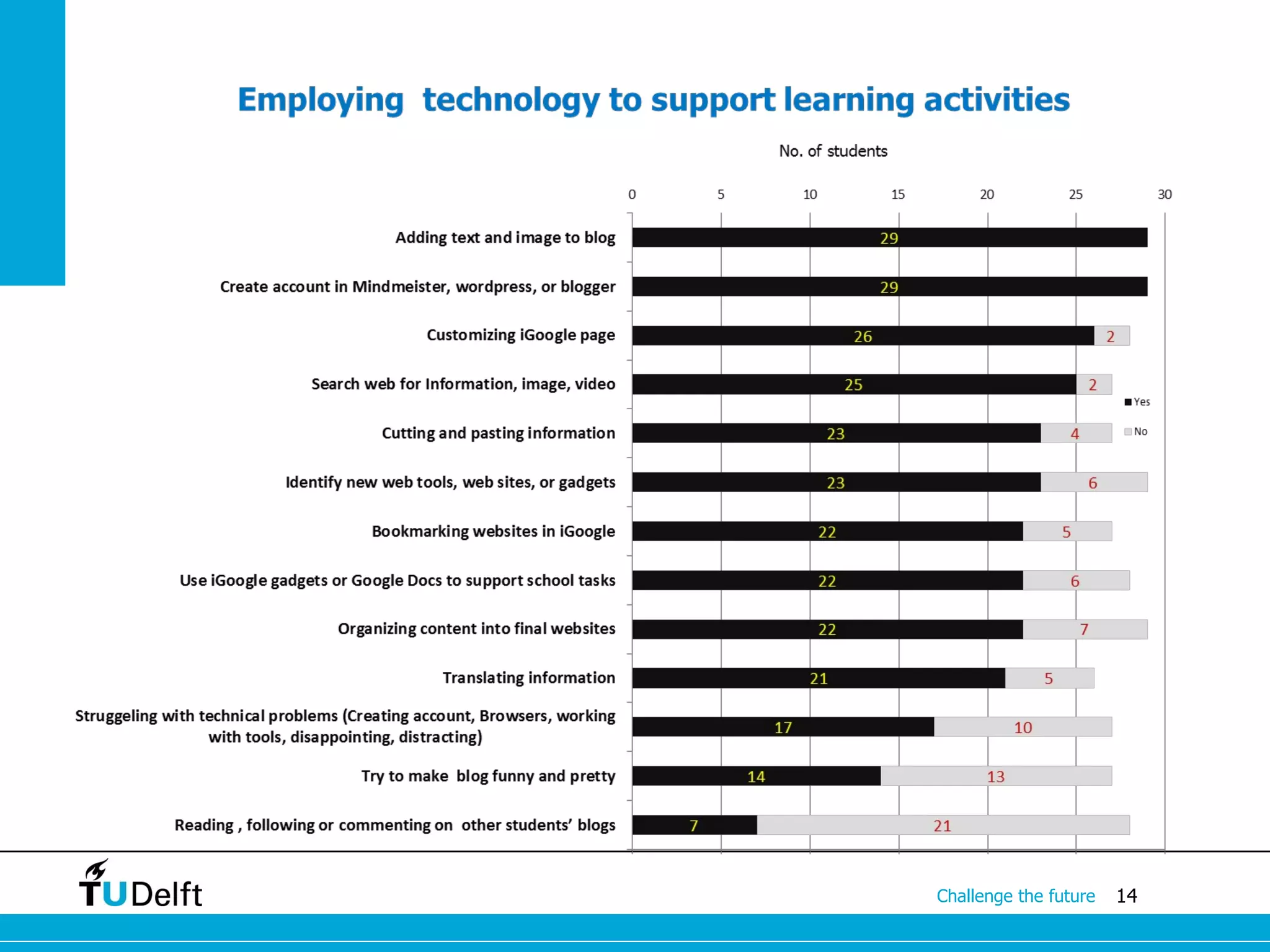
    •    Employing technology to support learning activities


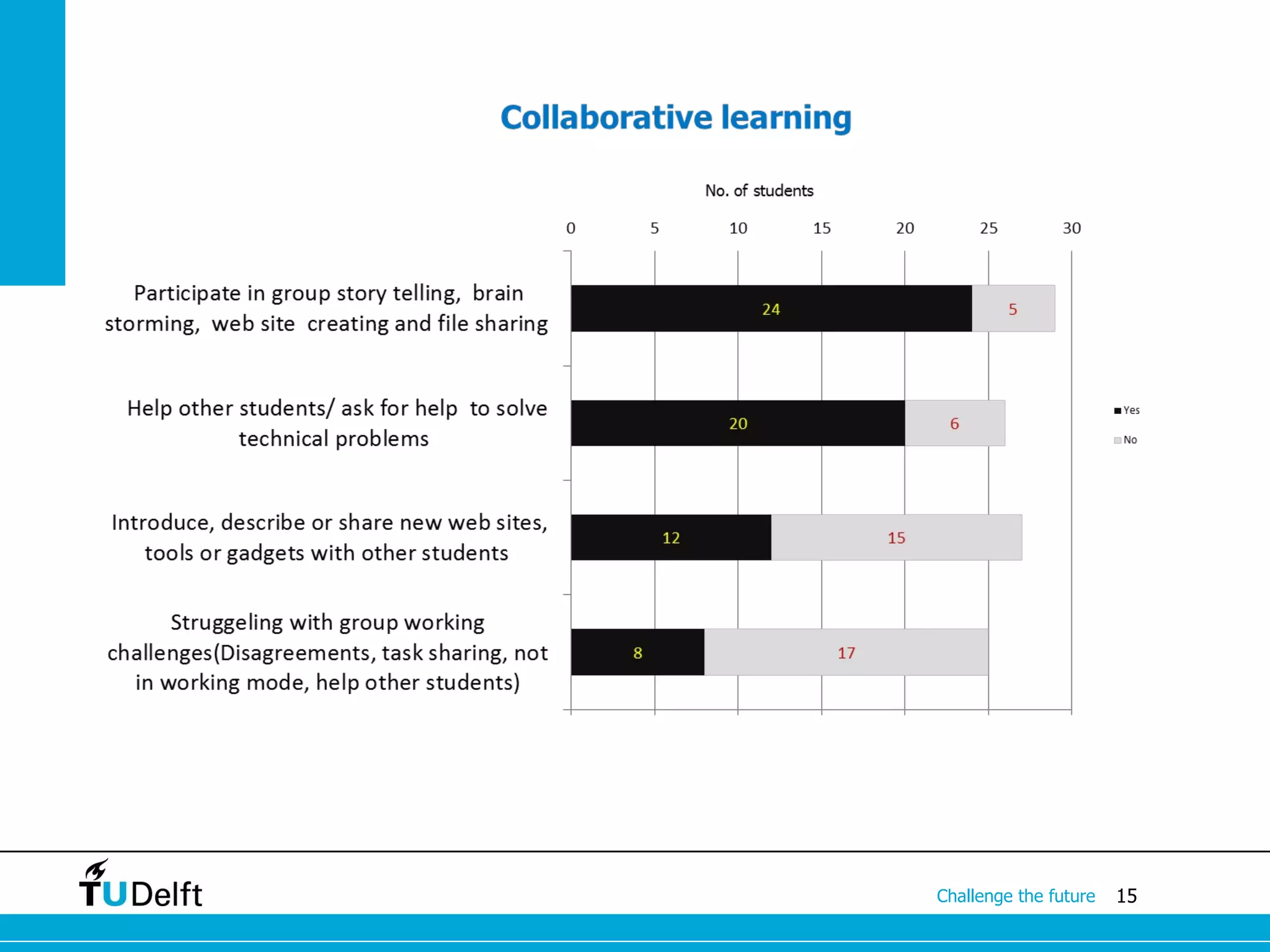
    •    Collaborative learning


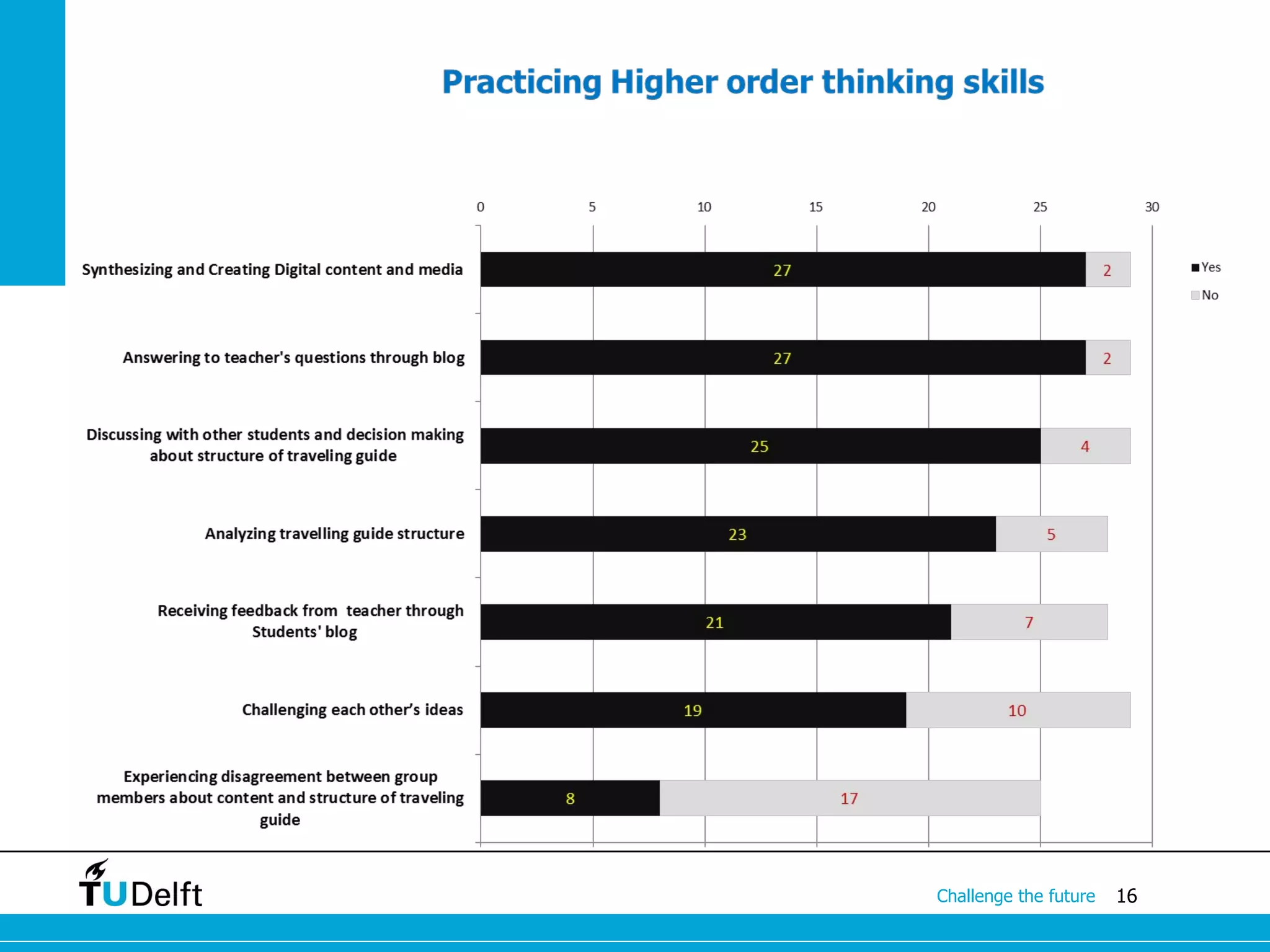
•       Practicing Higher order thinking skills


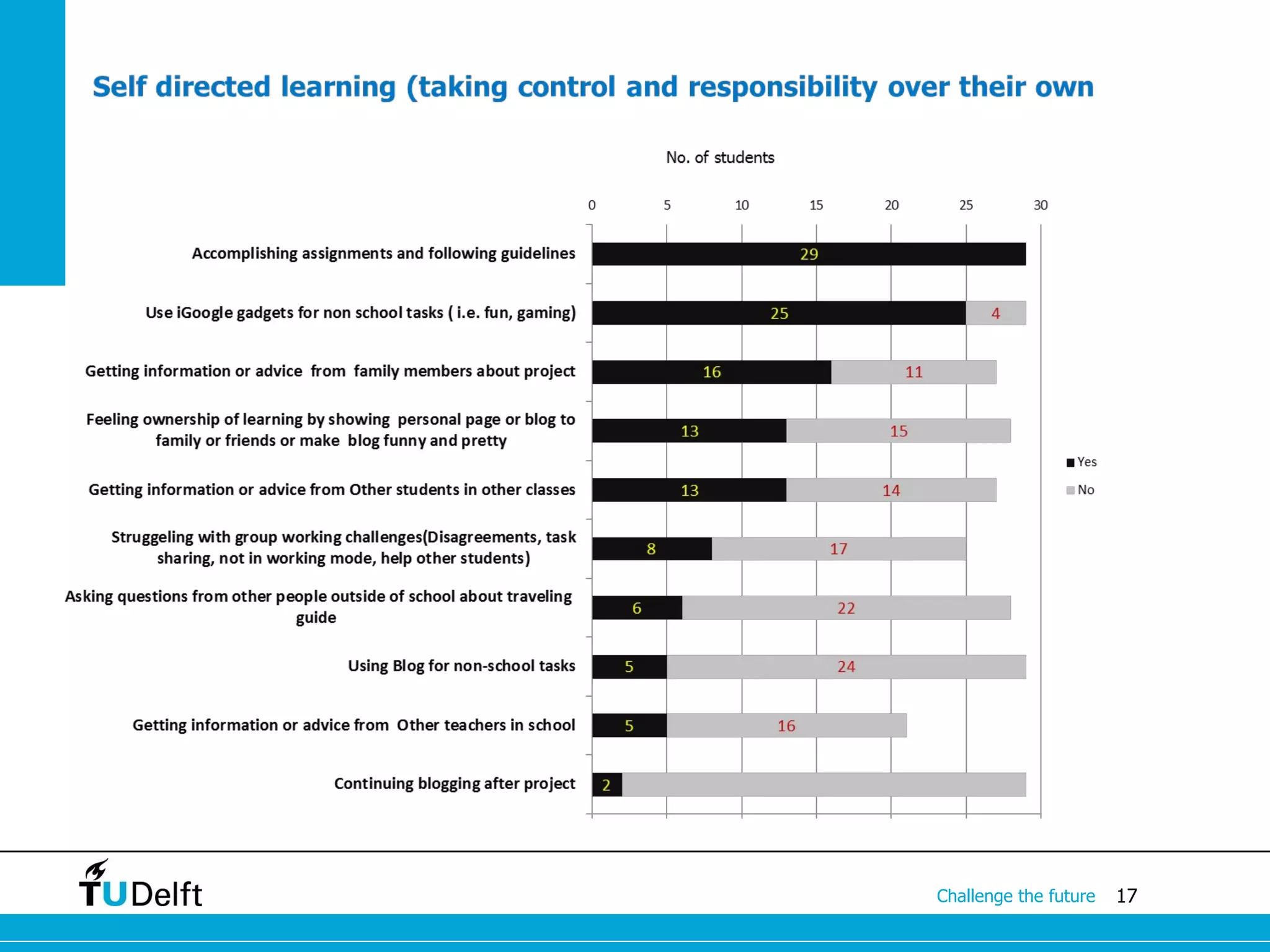
•       Self directed learning (taking control and responsibility over their own learning)


                                                                   Challenge the future   13
Challenge the future   14
Challenge the future   15
Challenge the future   16
Challenge the future   17
Question 2:

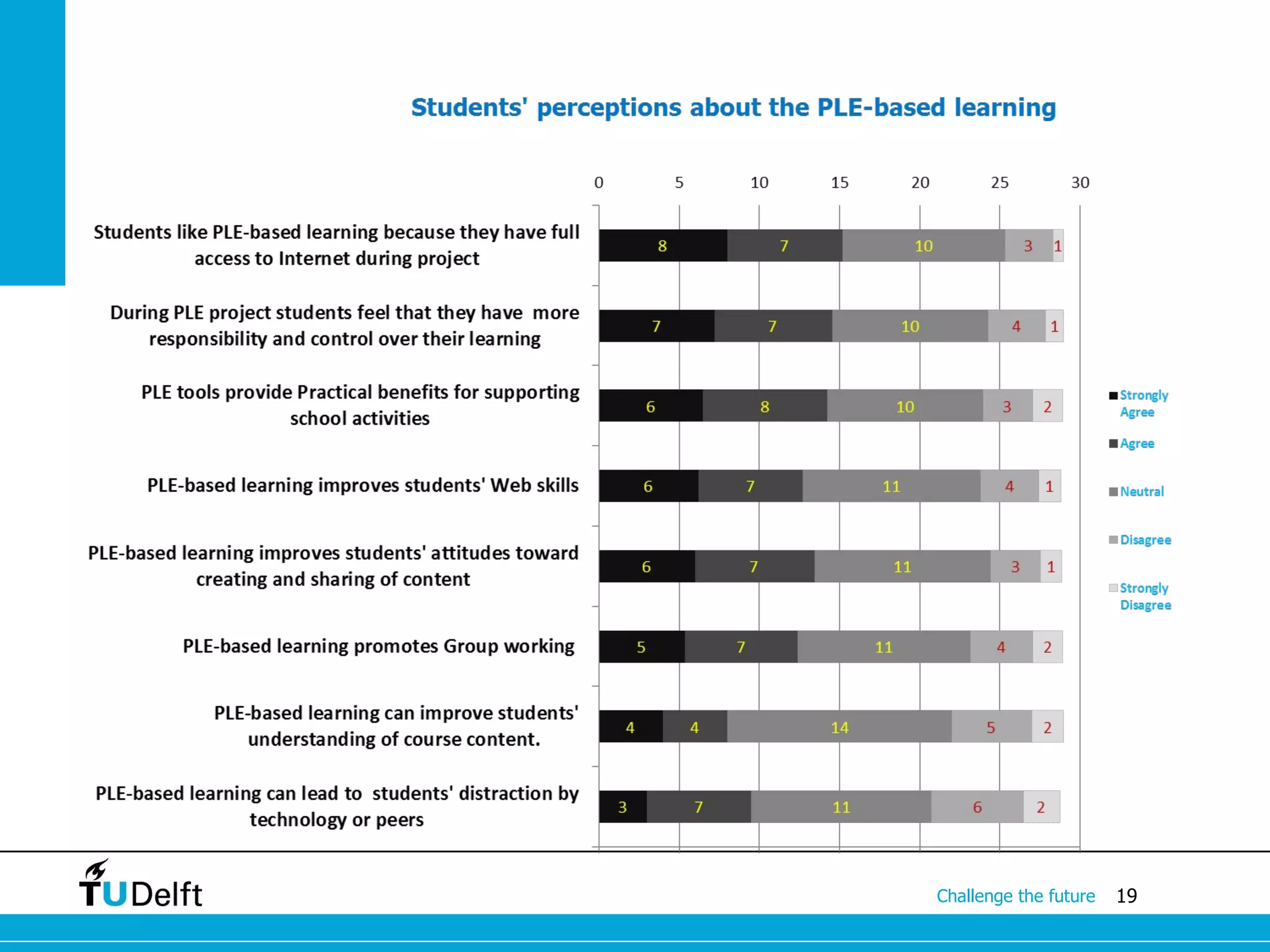
      What are the students’ and teachers’ perceptions about the
      PLE project?


                                                   Challenge the future   18
Challenge the future   19
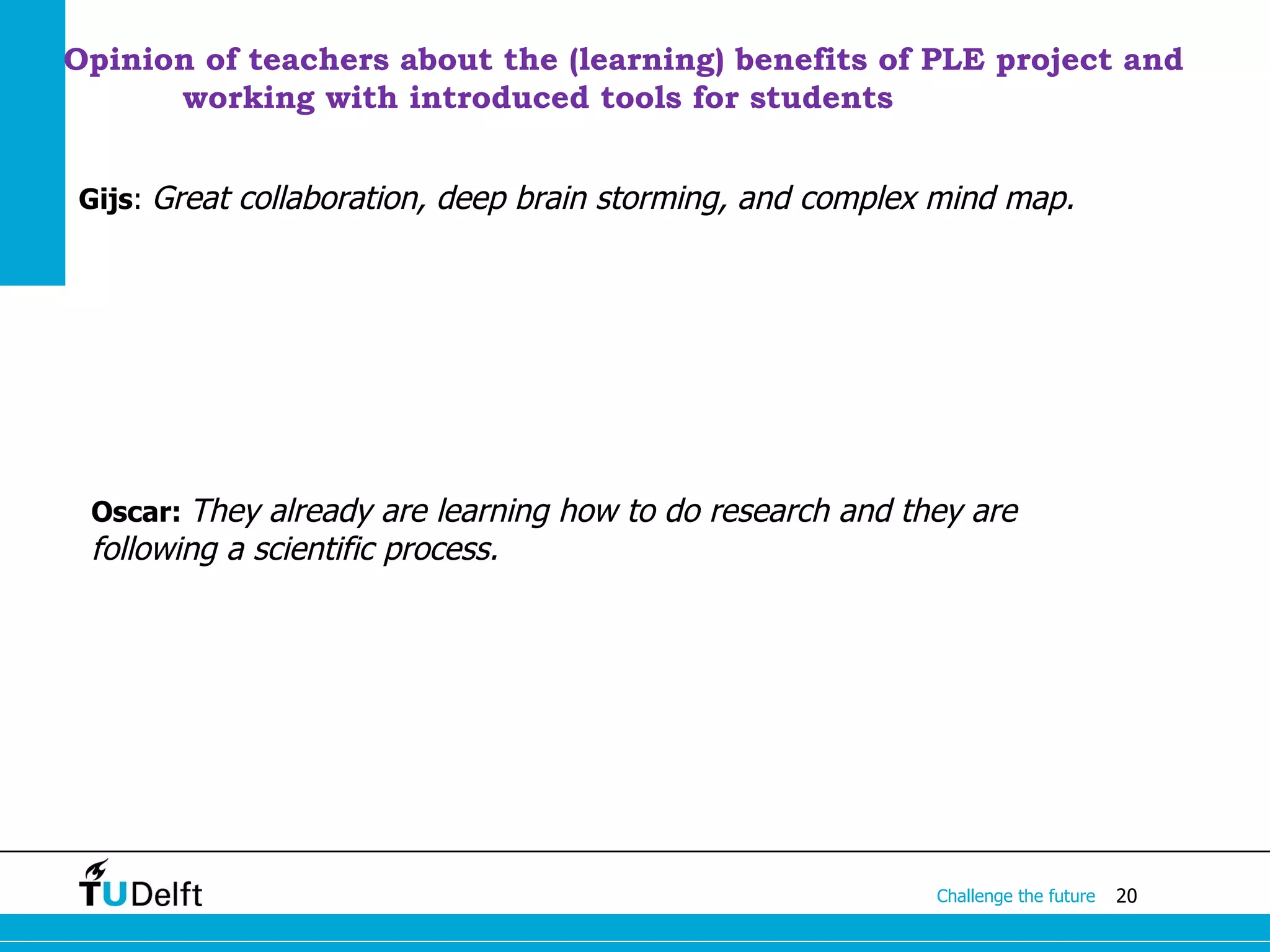
Opinion of teachers about the (learning) benefits of PLE project and
      working with introduced tools for students


Gijs: Great collaboration, deep brain storming, and complex mind map.


 Oscar: They already are learning how to do research and they are
 following a scientific process.


                                                           Challenge the future   20
Conclusions:

  1- Lack of reflection on the learning process and enough time can lead to taking a
procedural surface learning strategy by the students. (i.e. in this project, the students
 were being more busy with visual aspects of final websites than quality of content)


 2- students need teacher’s support and facilitation to realize learning benefits of
 not-ready-for-learning web2.0 tools and to integrate them, efficiently, into their
                               learning activities.

  3- To improve students’ control over learning ,PLE tools should be positioned
   within learning process comprised of active teaching and learning methods.

  4-Shifting from a teacher-centered to a student-centered learning environment
 commonly conflicts with students and teachers’ past educational experiences and
      requires a shift in their conceptions of what learning involves and what
               constitutes appropriate roles of students and teachers.
    Getting involved students in designing learning activities might facilitate this
                                         shift.

                                                                Challenge the future   21
Posed questions:


-How can students be involved in designing of learning activities?


-What factors can encourage students to create and use PLE to support their
learning activities?


                                                             Challenge the future   22
Thank You:

              By: Ebrahim Rahimi
              E.rahimi@tudelft.nl

      Blog: Ebrahimrahimi.wordpress.com

                 Project website:
https://sites.google.com/site/amaduespleproject/


                                           Challenge the future   23

Ple in secondary schools

  • 1.
    Implementing a PLEin a secondary school context by using free Web2.0 tools Technology, Police, and Management Faculty TU Delft April 2012 Challenge the future 1
  • 2.
    PLE approaches tolearning Ebrahim Rahimi, Jan Van Den Berg, Wim Veen, PLE 2011, Southampton Challenge the future 2
  • 3.
    Key Challenge forformal education How should a PLE-based learning environment be designed and integrated into educational settings to meet the heterogeneous Learning demands of students? Challenge the future 3
  • 4.
    About our Research Challenge the future 4
  • 5.
    Research Context: Participants: 29students (12-13 years old) Course name: People and Geography Technological infrastructure: All students have their own laptop during school time and they have (almost) full access to Internet during project period Teacher: an adopter of web technologies Project title: Research, design and develop a digital travelling guide for Egypt Project duration: 6 Weeks Educational objectives: For students: -To being familiar with travelling guide concept, -To Know important geographical and societal aspects of Egypt -To learn how use web tools to manage information and group working -To practice skills like mind mapping, story telling, and brain storming Challenge the future 5
  • 6.
    Introduced tools andlearning techniques Tools Learning techniques Tool Purpose iGoogle Personal Start Page Group brain storming Mind Mapping MindMeister Mind mapping Group Story telling Google Docs Document creating and sharing Google Sites Project wiki, students websites WordPress and Blogger Blogging Twitter Micro blogging Prezi Presentation Free website building and hosting tools Create final traveling guide YouTube Video Content Challenge the future 6
  • 7.
    Research Methodology: Research methodology: Design-based research Data collection : direct observation, Field note, Interview with teacher and students, Archived information , Final artifacts created by students, Survey Main Research questions: Q1: What activities have been accomplished by the students by using their PLEs? Q2: How the PLE-based learning is perceived by the involved teachers and students? Challenge the future 7
  • 8.
    Research Design Challenge the future 8
  • 9.
    Main elements ofeducational setting, being involved in PLE-based learning Student Student Teacher Teacher Challenge the future 9
  • 10.
    A model tointegrate PLE constructing into teaching/learning process Activity(es) Partner(s) Selecting learning topic Teacher Defining Learning Objectives Teacher & students Defining Pedagogical/technical tasks, guidelines and assignments based on the learning topic and Teacher Phases of learning cycle objectives Selecting Organizational form and web tools Exploration for assigning to the tasks Teacher & students Explanation Engageme Evaluation Accomplishing tasks, developing PLE Students nt Elaboration Supporting Learner pedagogically/technically Teacher /other students/ social contacts Assessment& Evaluation Teacher/ Students Reflection on process, learning experiences, learning outcomes, and learning values of Teacher/ Students tools Next Phase in learning cycle Challenge the future 10
  • 11.
    Results Challenge the future 11
  • 12.
    Question 1: How do students integrate PLE tools into their learning activities? Challenge the future 12
  • 13.
    Emerged themes ofstudents activities during the PLE project • Employing technology to support learning activities • Collaborative learning • Practicing Higher order thinking skills • Self directed learning (taking control and responsibility over their own learning) Challenge the future 13
  • 14.
  • 15.
  • 16.
  • 17.
  • 18.
    Question 2: What are the students’ and teachers’ perceptions about the PLE project? Challenge the future 18
  • 19.
  • 20.
    Opinion of teachersabout the (learning) benefits of PLE project and working with introduced tools for students Gijs: Great collaboration, deep brain storming, and complex mind map. Oscar: They already are learning how to do research and they are following a scientific process. Challenge the future 20
  • 21.
    Conclusions: 1-Lack of reflection on the learning process and enough time can lead to taking a procedural surface learning strategy by the students. (i.e. in this project, the students were being more busy with visual aspects of final websites than quality of content) 2- students need teacher’s support and facilitation to realize learning benefits of not-ready-for-learning web2.0 tools and to integrate them, efficiently, into their learning activities. 3- To improve students’ control over learning ,PLE tools should be positioned within learning process comprised of active teaching and learning methods. 4-Shifting from a teacher-centered to a student-centered learning environment commonly conflicts with students and teachers’ past educational experiences and requires a shift in their conceptions of what learning involves and what constitutes appropriate roles of students and teachers. Getting involved students in designing learning activities might facilitate this shift. Challenge the future 21
  • 22.
    Posed questions: -How canstudents be involved in designing of learning activities? -What factors can encourage students to create and use PLE to support their learning activities? Challenge the future 22
  • 23.
    Thank You: By: Ebrahim Rahimi E.rahimi@tudelft.nl Blog: Ebrahimrahimi.wordpress.com Project website: https://sites.google.com/site/amaduespleproject/ Challenge the future 23