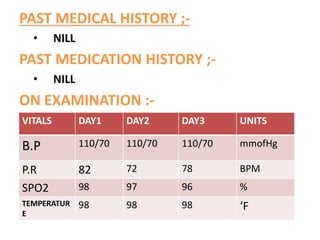
PAST MEDICAL HISTORY ;-
• NILL
PAST MEDICATION HISTORY ;-
• NILL
ON EXAMINATION :-
VITALS DAY1 DAY2 DAY3 UNITS
B.P 110/70 110/70 110/70 mmofHg
P.R 82 72 78 BPM
SPO2 98 97 96 %
TEMPERATUR
E
98 98 98 ‘F
LABORATORY INVESTIGATIONS :-
CBP OBSERVED VALUE NORMAL VALUE
Hb 13.8 mg/dl 13.5-15.5 g/dl
WBC 18,000cells/cu mm 4000-- 11000cells/cu mm
RBC 4.5 million cells / cu mm 4.5-6.0million cells/ cu
mm
BLOOD UREA 18 mg/dl 5-20 mg/dl
S.CREATININE 1.3 mg/dl 0.7-1.35 mg/dl
BLEEDING TIME 1.0 minute 1-3 minutes
CLOTTING TIME 1.45seconds 3-7minutes
DIAGNOSIS ;-
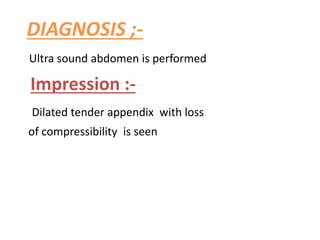
Ultra sound abdomen is performed
Impression :-
Dilated tender appendix with loss
of compressibility is seen
SOAP NOTES :-
Subjective findings :-
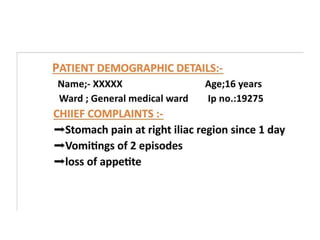
• Stomach pain at night since 1day
• Vomitings of 2 episodes
• Loss of appetite
Objective findings :-
Ultra sound abdomen ; dilated appendix with loss of
compressibility is seen
Assesment :-
From subjective and objective findings the case is diagnosed as
appendicitis
TREATMENT :-
Appendectomy is done
• Inj.Pantop 40mg
• Inj.Zofer 2mg/ml
• Inj.Xylocaine 20mg/ml
• Inj.Sulcef 1.5gm
• Inj.Metrogyl 500mg /100ml
• Inj.Diclo 25mg/ml
DRUG CHART :-
DRUG
NAME
CATEG
ORY
MOA USE
ROA
FRE
QUE
NCY
DAYS
D1 D2 D3
Inj.pantop
[pantaprazol
e]
H+/k+
inhibotor
It inhibit final
step in gastric
acid production
Decrease
acid
secretion
IV OD + + +
Inj.zofer
[ondansetro
n]
5HT3
antagonist
It inhibits
seratonin
To treat
nausea
vomitings
IV BD + + +
Inj.xylocain
e[lidocaine]
Local
anesthetic
It blocks
VGSCs
Used to
numb an
area
IV OD + - -
Inj.sulcef
[cefaperazo
ne
salbactum
Cephalos
porin
&beta
lactamase
inhibitors
Inhibits cell
wall synthesis
To treat
bacterial
infections
IV BD + + +
Inj.metrogyl
[metronidaz
ole]
nitroimid
azole
It inhibits
protein
synthesis
Bacterial&
parasitic
infections
IV BD + + +
Disease information on appemdicitis:-
Definition;-
Appendicitis is the inflammation of the vermiform
appendix that develops most commonly in adolescents
and adults
Epidemiology;-
• Appendicitis is the most common acute surgical
condition of the abdomen
• Approximately 7% of the population will have
appendicitis in their life time
• With the peak incidence occuring between ages of 10
to 30 years
Etiology;-
Obstructive causes;-
• Fecalith that acculde the lumen of the appendix
• Swelling of the bowel wall
Non obstructive causes;-
• Haematogenous spread of infection
• Vascular occlusion
• Diet lacking fibres
• Less water intake
Pathophysiology;-
Due to etiologic factors
Obstruction of appendix
[due to fecalith ,tumor]
Increased intraluminal pressure
Results in severe pain[appendicitis]
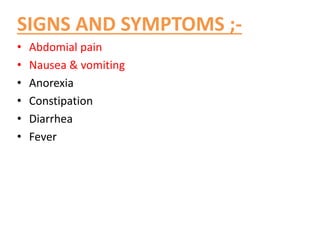
SIGNS AND SYMPTOMS ;-
• Abdomial pain
• Nausea & vomiting
• Anorexia
• Constipation
• Diarrhea
• Fever
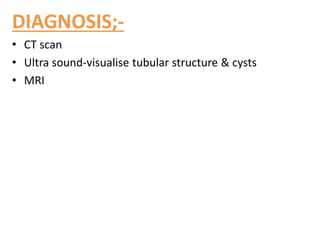
DIAGNOSIS;-
• CT scan
• Ultra sound-visualise tubular structure & cysts
• MRI
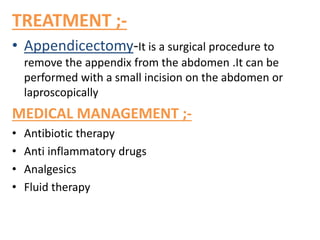
TREATMENT ;-
• Appendicectomy-It is a surgical procedure to
remove the appendix from the abdomen .It can be
performed with a small incision on the abdomen or
laproscopically
MEDICAL MANAGEMENT ;-
• Antibiotic therapy
• Anti inflammatory drugs
• Analgesics
• Fluid therapy
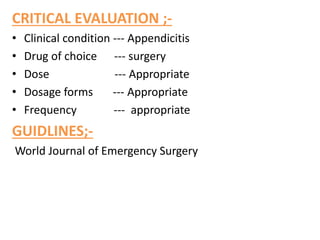
CRITICAL EVALUATION ;-
• Clinical condition --- Appendicitis
• Drug of choice --- surgery
• Dose --- Appropriate
• Dosage forms --- Appropriate
• Frequency --- appropriate
GUIDLINES;-
World Journal of Emergency Surgery
LIFE STYLE MODIFICATION ;-
• Avoid spicy foods
• Take plenty of water
• Improving posture of the body after the surgery
PATIENT COUNSELLING;-
REGARDING DISEASE;-
It is an inflammation of the vermiform appendix
REGARDING MEDICATION;-
• Inj.Pantop 40mg---to decrease acid level in stomach
• Inj.Zofer 2mg/ml—to treat vomitings and nausea
• Inj.Xylocaine 20mg/ml—to cause numbness during surgery
• Inj.Sulcef 1.5gm--- to treat bacterial infections
• Inj.Metrogyl 500mg /100ml---to treat bacterial &parasitic
infections
• Inj.Diclo 25mg/ml ----to treat pain
REFERENCE;-
Harsha mohan
WWW. Drugs.com
APPENDICITIS-2.pptx

APPENDICITIS-2.pptx

  • 3.
    PAST MEDICAL HISTORY;- • NILL PAST MEDICATION HISTORY ;- • NILL ON EXAMINATION :- VITALS DAY1 DAY2 DAY3 UNITS B.P 110/70 110/70 110/70 mmofHg P.R 82 72 78 BPM SPO2 98 97 96 % TEMPERATUR E 98 98 98 ‘F
  • 4.
    LABORATORY INVESTIGATIONS :- CBPOBSERVED VALUE NORMAL VALUE Hb 13.8 mg/dl 13.5-15.5 g/dl WBC 18,000cells/cu mm 4000-- 11000cells/cu mm RBC 4.5 million cells / cu mm 4.5-6.0million cells/ cu mm BLOOD UREA 18 mg/dl 5-20 mg/dl S.CREATININE 1.3 mg/dl 0.7-1.35 mg/dl BLEEDING TIME 1.0 minute 1-3 minutes CLOTTING TIME 1.45seconds 3-7minutes
  • 5.
    DIAGNOSIS ;- Ultra soundabdomen is performed Impression :- Dilated tender appendix with loss of compressibility is seen
  • 6.
    SOAP NOTES :- Subjectivefindings :- • Stomach pain at night since 1day • Vomitings of 2 episodes • Loss of appetite Objective findings :- Ultra sound abdomen ; dilated appendix with loss of compressibility is seen Assesment :- From subjective and objective findings the case is diagnosed as appendicitis
  • 7.
    TREATMENT :- Appendectomy isdone • Inj.Pantop 40mg • Inj.Zofer 2mg/ml • Inj.Xylocaine 20mg/ml • Inj.Sulcef 1.5gm • Inj.Metrogyl 500mg /100ml • Inj.Diclo 25mg/ml
  • 8.
    DRUG CHART :- DRUG NAME CATEG ORY MOAUSE ROA FRE QUE NCY DAYS D1 D2 D3 Inj.pantop [pantaprazol e] H+/k+ inhibotor It inhibit final step in gastric acid production Decrease acid secretion IV OD + + + Inj.zofer [ondansetro n] 5HT3 antagonist It inhibits seratonin To treat nausea vomitings IV BD + + + Inj.xylocain e[lidocaine] Local anesthetic It blocks VGSCs Used to numb an area IV OD + - - Inj.sulcef [cefaperazo ne salbactum Cephalos porin &beta lactamase inhibitors Inhibits cell wall synthesis To treat bacterial infections IV BD + + + Inj.metrogyl [metronidaz ole] nitroimid azole It inhibits protein synthesis Bacterial& parasitic infections IV BD + + +
  • 9.
    Disease information onappemdicitis:- Definition;- Appendicitis is the inflammation of the vermiform appendix that develops most commonly in adolescents and adults Epidemiology;- • Appendicitis is the most common acute surgical condition of the abdomen • Approximately 7% of the population will have appendicitis in their life time • With the peak incidence occuring between ages of 10 to 30 years
  • 10.
    Etiology;- Obstructive causes;- • Fecaliththat acculde the lumen of the appendix • Swelling of the bowel wall Non obstructive causes;- • Haematogenous spread of infection • Vascular occlusion • Diet lacking fibres • Less water intake
  • 11.
    Pathophysiology;- Due to etiologicfactors Obstruction of appendix [due to fecalith ,tumor] Increased intraluminal pressure Results in severe pain[appendicitis]
  • 12.
    SIGNS AND SYMPTOMS;- • Abdomial pain • Nausea & vomiting • Anorexia • Constipation • Diarrhea • Fever
  • 13.
    DIAGNOSIS;- • CT scan •Ultra sound-visualise tubular structure & cysts • MRI
  • 14.
    TREATMENT ;- • Appendicectomy-Itis a surgical procedure to remove the appendix from the abdomen .It can be performed with a small incision on the abdomen or laproscopically MEDICAL MANAGEMENT ;- • Antibiotic therapy • Anti inflammatory drugs • Analgesics • Fluid therapy
  • 15.
    CRITICAL EVALUATION ;- •Clinical condition --- Appendicitis • Drug of choice --- surgery • Dose --- Appropriate • Dosage forms --- Appropriate • Frequency --- appropriate GUIDLINES;- World Journal of Emergency Surgery
  • 16.
    LIFE STYLE MODIFICATION;- • Avoid spicy foods • Take plenty of water • Improving posture of the body after the surgery
  • 17.
    PATIENT COUNSELLING;- REGARDING DISEASE;- Itis an inflammation of the vermiform appendix REGARDING MEDICATION;- • Inj.Pantop 40mg---to decrease acid level in stomach • Inj.Zofer 2mg/ml—to treat vomitings and nausea • Inj.Xylocaine 20mg/ml—to cause numbness during surgery • Inj.Sulcef 1.5gm--- to treat bacterial infections • Inj.Metrogyl 500mg /100ml---to treat bacterial &parasitic infections • Inj.Diclo 25mg/ml ----to treat pain
  • 18.