ACUTE APPENDICITIS:
COMPLICATIONS & TREATMENT
DR AMIT GUPTA
ASSOCIATE PROFESSOR
DEPARTMENT OF SURGERY
PATHOLOGY AND PATHOGENESIS
 Appendix lumen obstruction leads to congestion within the appendix
 Inflammatory exudate and mucous increases luminal pressure
 Initial stage might resolve in some patients
 Appendix may distend with mucus- mucocele
APPENDICITIS COMPLICATIONS
 Gangrenous Appendicitis:
 Thrombosis of the appendiceal artery and veins
 Perforation:
 complication rates 58 %
 perforation rate increased at both ends of the age spectrum
 Peri-appendiceal abscess:
 most frequent complication
 peri-appendiceal fibrinous adhesions
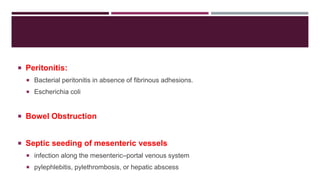
 Peritonitis:
 Bacterial peritonitis in absence of fibrinous adhesions.
 Escherichia coli
 Bowel Obstruction
 Septic seeding of mesenteric vessels
 infection along the mesenteric–portal venous system
 pylephlebitis, pylethrombosis, or hepatic abscess
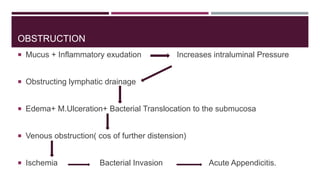
OBSTRUCTION
 Mucus + Inflammatory exudation Increases intraluminal Pressure
 Obstructing lymphatic drainage
 Edema+ M.Ulceration+ Bacterial Translocation to the submucosa
 Venous obstruction( cos of further distension)
 Ischemia Bacterial Invasion Acute Appendicitis.
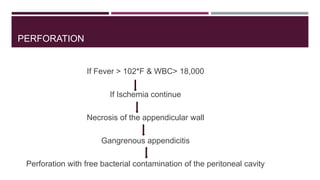
PERFORATION
If Fever > 102*F & WBC> 18,000
If Ischemia continue
Necrosis of the appendicular wall
Gangrenous appendicitis
Perforation with free bacterial contamination of the peritoneal cavity
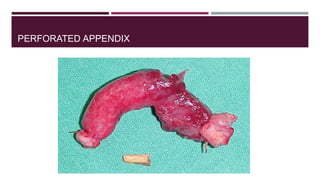
PERFORATED APPENDIX
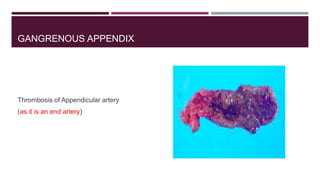
GANGRENOUS APPENDIX
Thrombosis of Appendicular artery
(as it is an end artery)
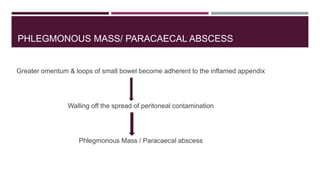
PHLEGMONOUS MASS/ PARACAECAL ABSCESS
Greater omentum & loops of small bowel become adherent to the inflamed appendix
Walling off the spread of peritoneal contamination
Phlegmonous Mass / Paracaecal abscess
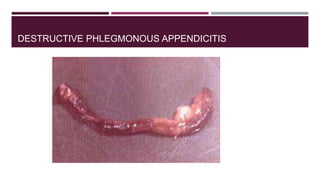
DESTRUCTIVE PHLEGMONOUS APPENDICITIS
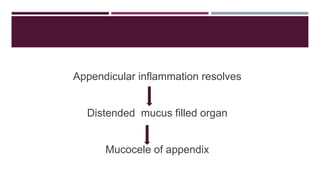
Appendicular inflammation resolves
Distended mucus filled organ
Mucocele of appendix
SYMPTOMS
Pain
 Initially periumbilical region
 Pain shift to right iliac fossa
 Parietal peritoneum irritated and inflamed
Anorexia
Nausea/ vomiting
CLINICAL SIGN
 Pyrexia: Low grade after 6 hours
 Tenderness (localized) in the RIF
 Muscle guarding
 Rebound Tenderness/ BLUMBERG’S Sign
 Tachycardia: Perforation, Gangrene & Peritonitis
SIGN TO ELICIT APPENDICITIS
 Rovsing’s Sign
 Psoas Sign
 Obturator Sign
 Dunphy’s Sign: Any movement ( Coughing) causes Pain.
 Mc Burney’s Point -Tenderness
INVESTIGATION
 TLC- Raised: 10000 to 18000 ( Neutrophils >75%).
 If TLC >18000 (suspect perforation)
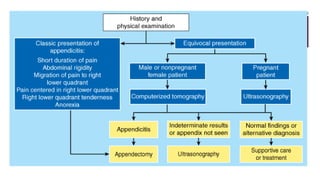
 Abdominal X-Ray
 Abdominal Ultra sonography
 CT Scan
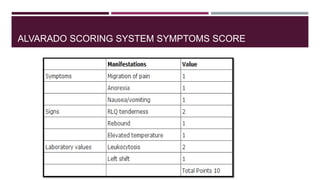
ALVARADO SCORING SYSTEM SYMPTOMS SCORE
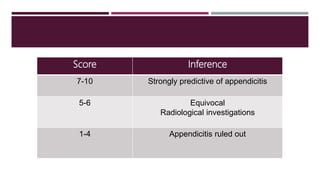
Score Inference
7-10 Strongly predictive of appendicitis
5-6 Equivocal
Radiological investigations
1-4 Appendicitis ruled out
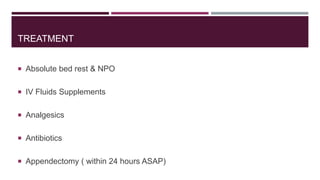
TREATMENT
 Absolute bed rest & NPO
 IV Fluids Supplements
 Analgesics
 Antibiotics
 Appendectomy ( within 24 hours ASAP)
INDICATIONS OF APPENDECTOMY
 Acute Appendicitis
 Recurrent Appendicitis
 Mucocele of Appendix
 Carcinoma
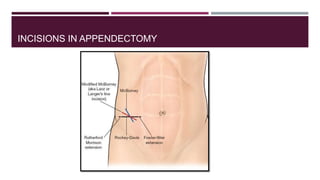
INCISIONS IN APPENDECTOMY
COMPLICATION OF APPENDECTOMY
 Wound Infection
 Intra-abdominal abscess
 Ileus
 Respiratory complication like
pneumonia
 Portal Pyaemia
 Adhesive Intestinal
Obstruction
 Faecal Fistula
 Richter’s Hernia
 DVT & Embolism
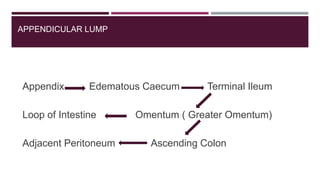
APPENDICULAR LUMP
Appendix Edematous Caecum Terminal Ileum
Loop of Intestine Omentum ( Greater Omentum)
Adjacent Peritoneum Ascending Colon
PRESENTATION OF APPENDICULAR LUMP
 Usually on 3rd day of attack of appendicitis.
 Lump in Right iliac Fossa
 Guarding over the lump
 Tenderness
 Fever/ Increase pulse
Appendicular Lump- Don’t Operate (??)
 Severe adhesion/ Difficult to separate the part
 Bloody and dangerous to operate
 Risk of Faecal fistula
 Risk of iatrogenic injury
OCHSNER- SHERREN REGIMEN
 Ist mark the size of the swelling for further assessment
 NPO & IV Fluid supplements
 Antibiotics, Analgesics
 Temp, Pulse( 4 hourly) & Fluid record charting
 Allow oral liquid on subsequent days.
OCHSNER- SHERREN REGIMEN
 If more vomiting- antiemetic &/+ PPI
 If size of the lump decreases – continue the same.
 After 6-8 weeks = Interval Appendectomy (current literature does not support this view)
 Prognosis: 90% success rate for this regimen.
 Failure to this regimen: suspect Crohn’s & or Carcinoma
CRITERIA FOR STOPPAGE OF CONSERVATIVE TREATMENT IN
APPEDICULAR LUMP
 Rising pulse rate
 Rising temperature
 Increasing or spreading abdominal pain
 Increasing size of mass
 Vomiting or copious gastric aspirate

appendicitis.ppt

  • 1.
    ACUTE APPENDICITIS: COMPLICATIONS &TREATMENT DR AMIT GUPTA ASSOCIATE PROFESSOR DEPARTMENT OF SURGERY
  • 2.
    PATHOLOGY AND PATHOGENESIS Appendix lumen obstruction leads to congestion within the appendix  Inflammatory exudate and mucous increases luminal pressure  Initial stage might resolve in some patients  Appendix may distend with mucus- mucocele
  • 3.
    APPENDICITIS COMPLICATIONS  GangrenousAppendicitis:  Thrombosis of the appendiceal artery and veins  Perforation:  complication rates 58 %  perforation rate increased at both ends of the age spectrum  Peri-appendiceal abscess:  most frequent complication  peri-appendiceal fibrinous adhesions
  • 4.
     Peritonitis:  Bacterialperitonitis in absence of fibrinous adhesions.  Escherichia coli  Bowel Obstruction  Septic seeding of mesenteric vessels  infection along the mesenteric–portal venous system  pylephlebitis, pylethrombosis, or hepatic abscess
  • 5.
    OBSTRUCTION  Mucus +Inflammatory exudation Increases intraluminal Pressure  Obstructing lymphatic drainage  Edema+ M.Ulceration+ Bacterial Translocation to the submucosa  Venous obstruction( cos of further distension)  Ischemia Bacterial Invasion Acute Appendicitis.
  • 6.
    PERFORATION If Fever >102*F & WBC> 18,000 If Ischemia continue Necrosis of the appendicular wall Gangrenous appendicitis Perforation with free bacterial contamination of the peritoneal cavity
  • 7.
  • 8.
    GANGRENOUS APPENDIX Thrombosis ofAppendicular artery (as it is an end artery)
  • 9.
    PHLEGMONOUS MASS/ PARACAECALABSCESS Greater omentum & loops of small bowel become adherent to the inflamed appendix Walling off the spread of peritoneal contamination Phlegmonous Mass / Paracaecal abscess
  • 10.
  • 11.
    Appendicular inflammation resolves Distendedmucus filled organ Mucocele of appendix
  • 12.
    SYMPTOMS Pain  Initially periumbilicalregion  Pain shift to right iliac fossa  Parietal peritoneum irritated and inflamed Anorexia Nausea/ vomiting
  • 13.
    CLINICAL SIGN  Pyrexia:Low grade after 6 hours  Tenderness (localized) in the RIF  Muscle guarding  Rebound Tenderness/ BLUMBERG’S Sign  Tachycardia: Perforation, Gangrene & Peritonitis
  • 14.
    SIGN TO ELICITAPPENDICITIS  Rovsing’s Sign  Psoas Sign  Obturator Sign  Dunphy’s Sign: Any movement ( Coughing) causes Pain.  Mc Burney’s Point -Tenderness
  • 15.
    INVESTIGATION  TLC- Raised:10000 to 18000 ( Neutrophils >75%).  If TLC >18000 (suspect perforation)  Abdominal X-Ray  Abdominal Ultra sonography  CT Scan
  • 16.
  • 17.
    Score Inference 7-10 Stronglypredictive of appendicitis 5-6 Equivocal Radiological investigations 1-4 Appendicitis ruled out
  • 19.
    TREATMENT  Absolute bedrest & NPO  IV Fluids Supplements  Analgesics  Antibiotics  Appendectomy ( within 24 hours ASAP)
  • 20.
    INDICATIONS OF APPENDECTOMY Acute Appendicitis  Recurrent Appendicitis  Mucocele of Appendix  Carcinoma
  • 21.
  • 22.
    COMPLICATION OF APPENDECTOMY Wound Infection  Intra-abdominal abscess  Ileus  Respiratory complication like pneumonia  Portal Pyaemia  Adhesive Intestinal Obstruction  Faecal Fistula  Richter’s Hernia  DVT & Embolism
  • 23.
    APPENDICULAR LUMP Appendix EdematousCaecum Terminal Ileum Loop of Intestine Omentum ( Greater Omentum) Adjacent Peritoneum Ascending Colon
  • 24.
    PRESENTATION OF APPENDICULARLUMP  Usually on 3rd day of attack of appendicitis.  Lump in Right iliac Fossa  Guarding over the lump  Tenderness  Fever/ Increase pulse
  • 25.
    Appendicular Lump- Don’tOperate (??)  Severe adhesion/ Difficult to separate the part  Bloody and dangerous to operate  Risk of Faecal fistula  Risk of iatrogenic injury
  • 26.
    OCHSNER- SHERREN REGIMEN Ist mark the size of the swelling for further assessment  NPO & IV Fluid supplements  Antibiotics, Analgesics  Temp, Pulse( 4 hourly) & Fluid record charting  Allow oral liquid on subsequent days.
  • 27.
    OCHSNER- SHERREN REGIMEN If more vomiting- antiemetic &/+ PPI  If size of the lump decreases – continue the same.  After 6-8 weeks = Interval Appendectomy (current literature does not support this view)  Prognosis: 90% success rate for this regimen.  Failure to this regimen: suspect Crohn’s & or Carcinoma
  • 28.
    CRITERIA FOR STOPPAGEOF CONSERVATIVE TREATMENT IN APPEDICULAR LUMP  Rising pulse rate  Rising temperature  Increasing or spreading abdominal pain  Increasing size of mass  Vomiting or copious gastric aspirate