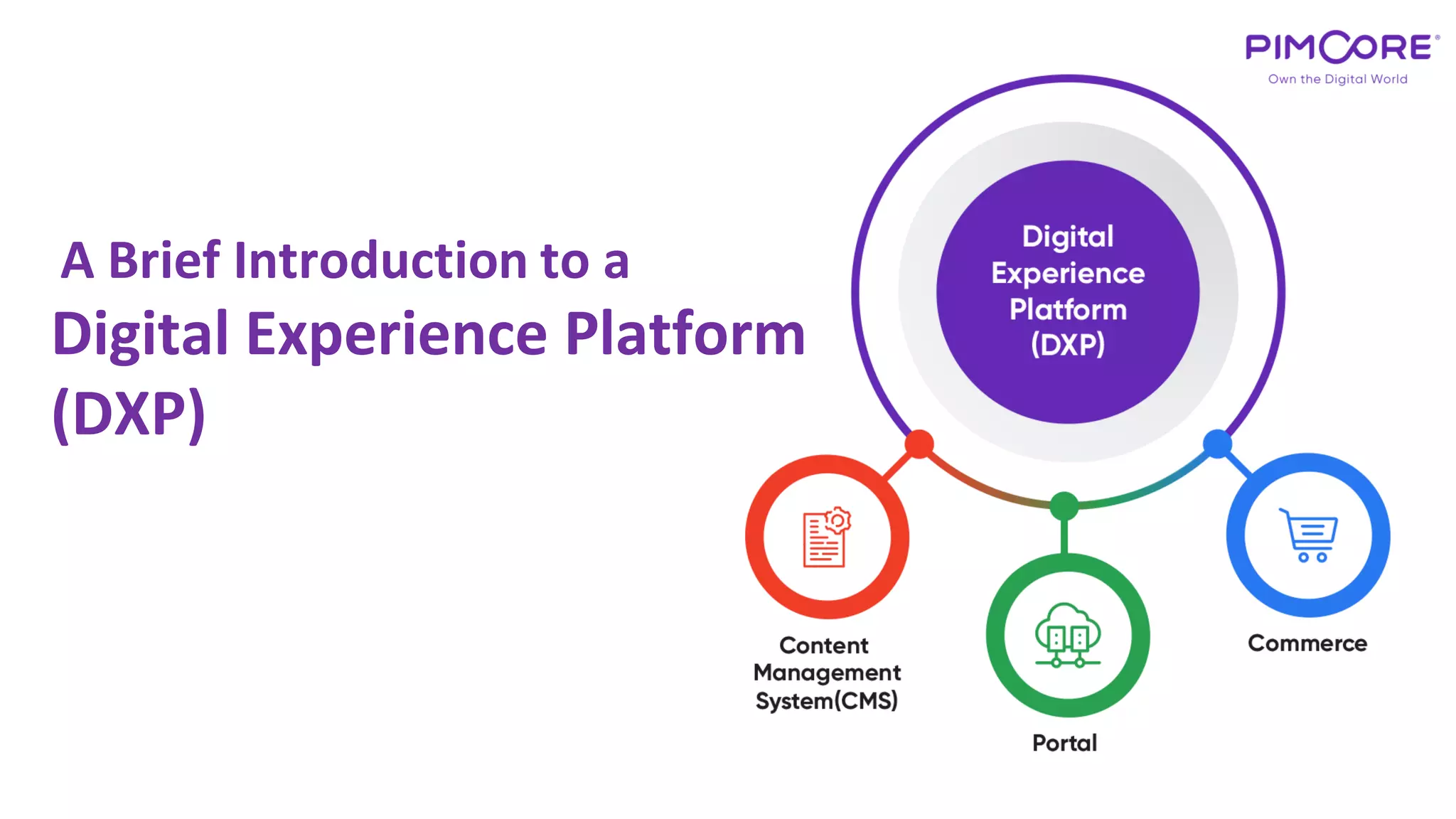

A Brief Introduction to a
Digital Experience Platform
(DXP)
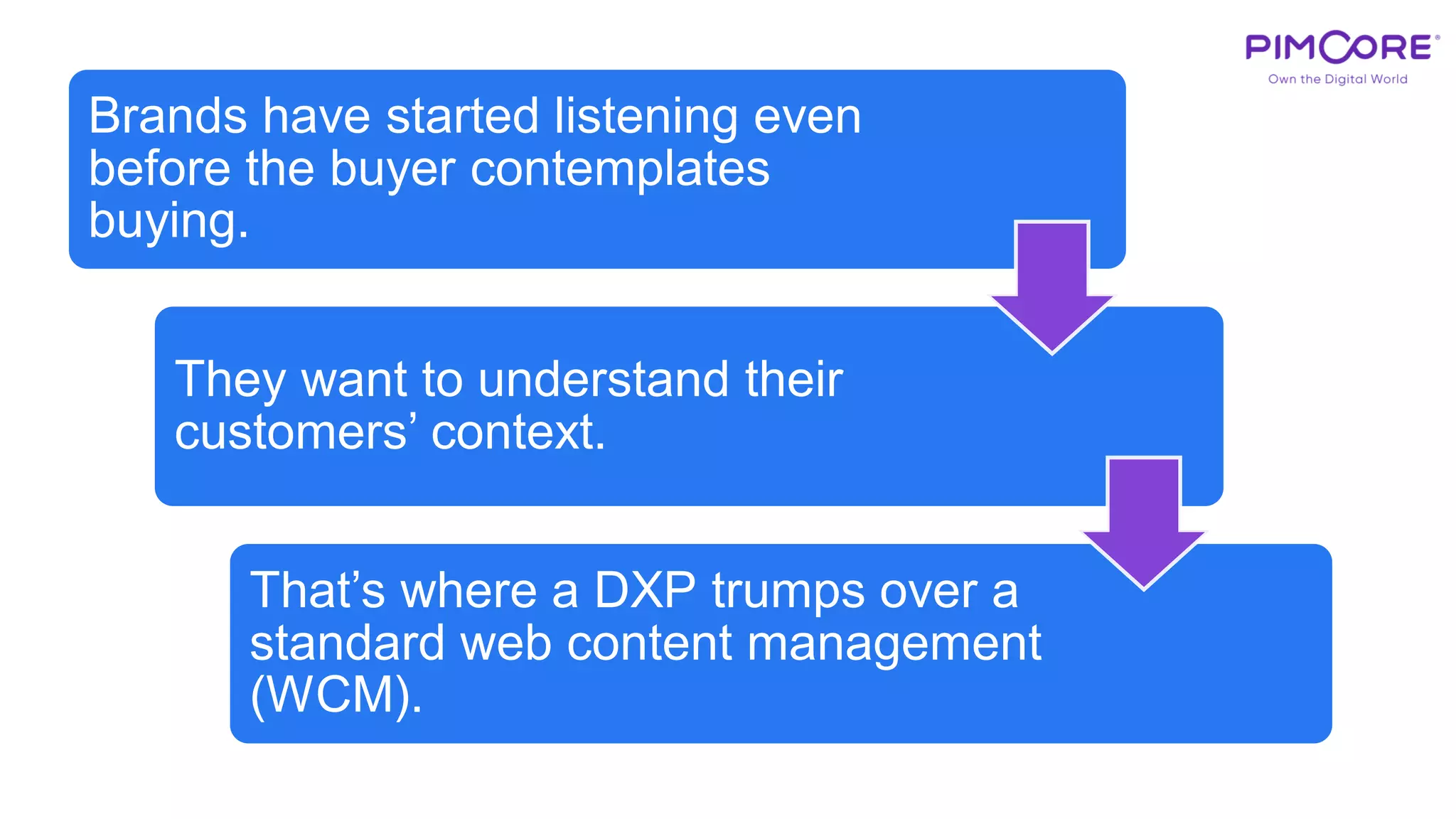
Brands have started listening even
before the buyer contemplates
buying.
They want to understand their
customers’ context.
That’s where a DXP trumps over a
standard WCM
Brands have started listening even
before the buyer contemplates
buying.
They want to understand their
customers’ context.
That’s where a DXP trumps over a
standard web content management
(WCM).
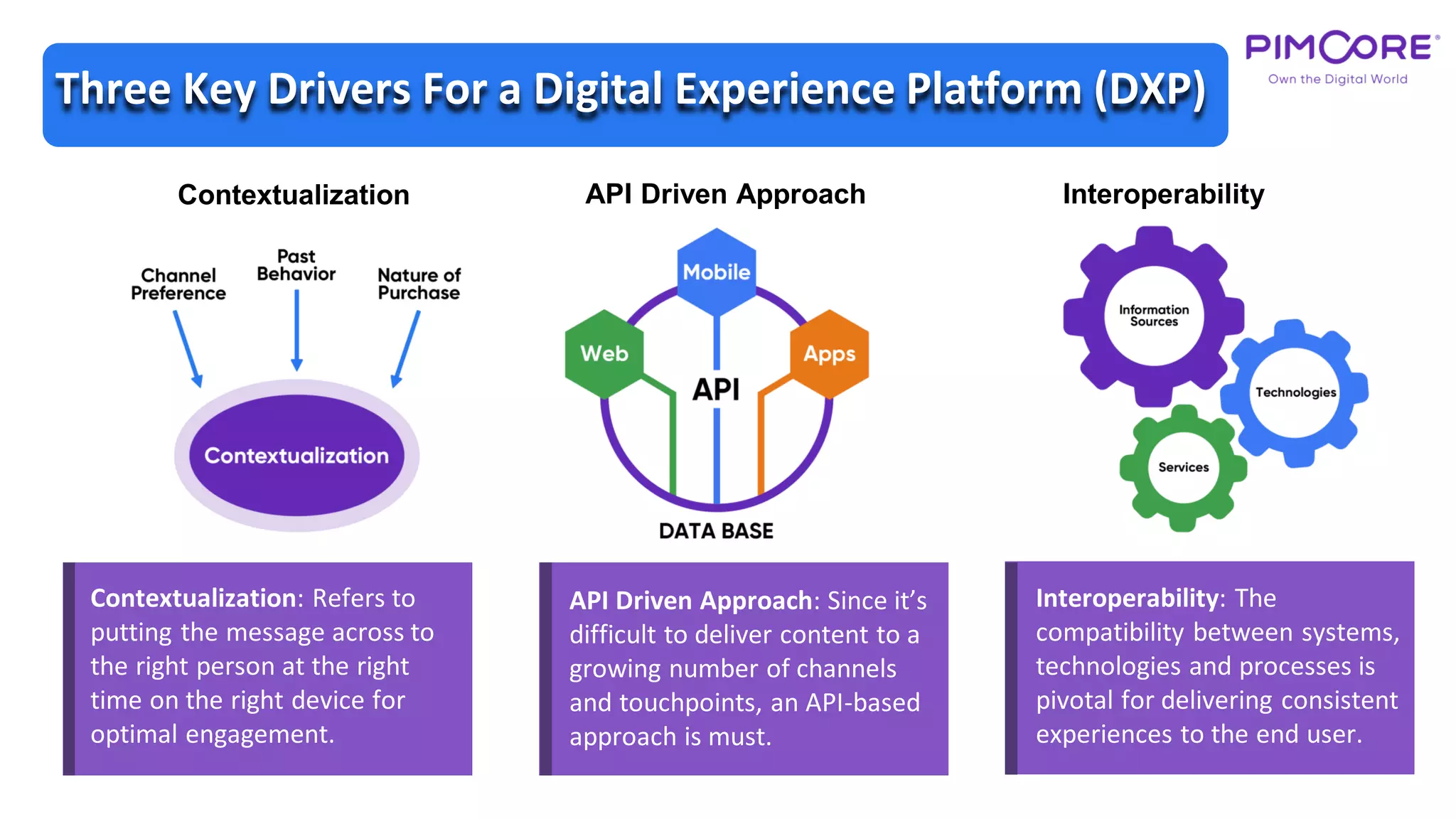
Contextualization: Refers to
putting the message across to
the right person at the right
time on the right device for
optimal engagement.
API Driven ApproachContextualization Interoperability
Three Key Drivers For a Digital Experience Platform (DXP)
API Driven Approach: Since it’s
difficult to deliver content to a
growing number of channels
and touchpoints, an API-based
approach is must.
Interoperability: The
compatibility between systems,
technologies and processes is
pivotal for delivering consistent
experiences to the end user.
Here Are 6 Steps That Go
Into Building DXP:
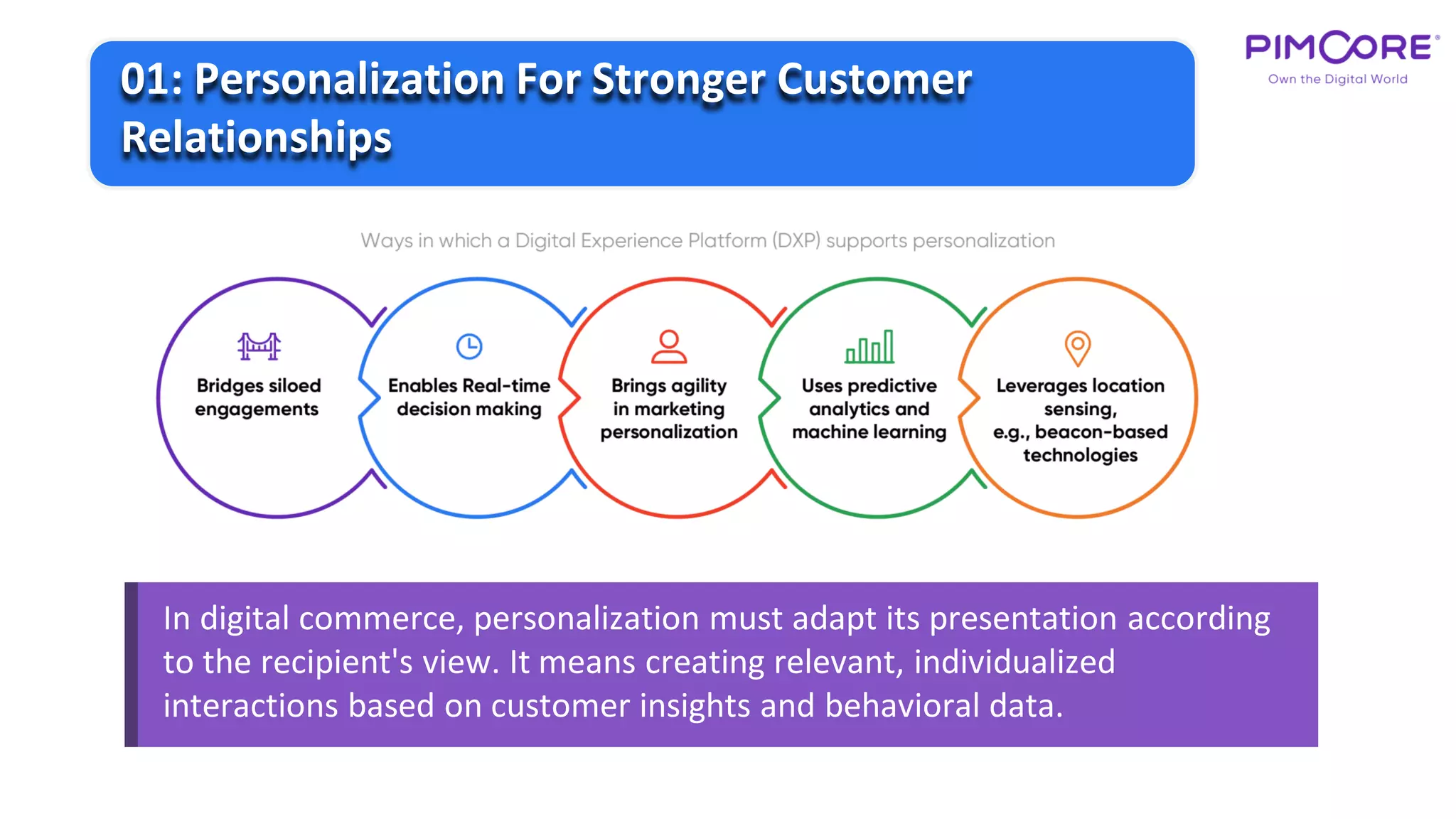
In digital commerce, personalization must adapt its presentation according
to the recipient's view. It means creating relevant, individualized
interactions based on customer insights and behavioral data.
01: Personalization For Stronger Customer
Relationships
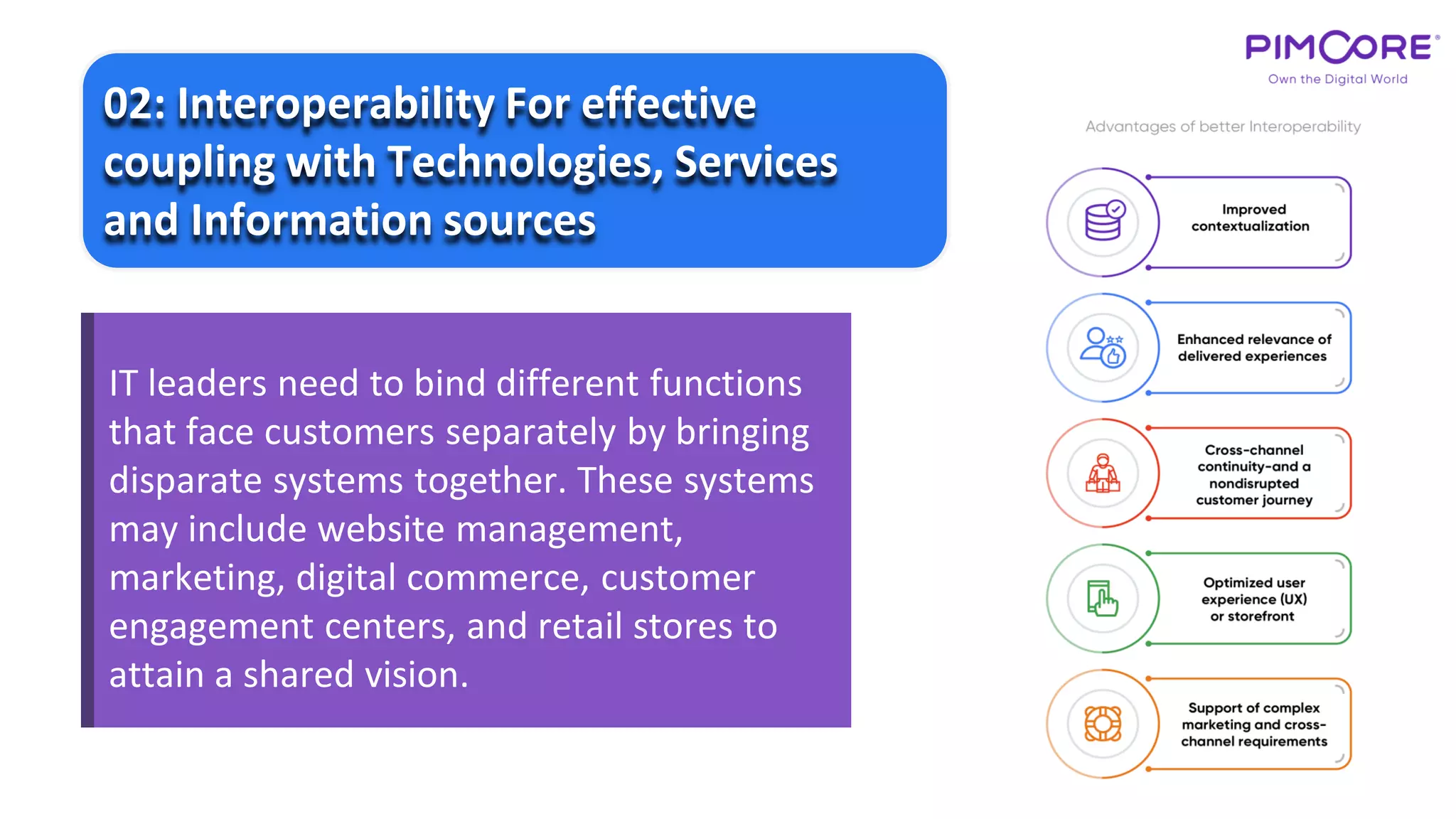
IT leaders need to bind different functions
that face customers separately by bringing
disparate systems together. These systems
may include website management,
marketing, digital commerce, customer
engagement centers, and retail stores to
attain a shared vision.
02: Interoperability For effective
coupling with Technologies, Services
and Information sources
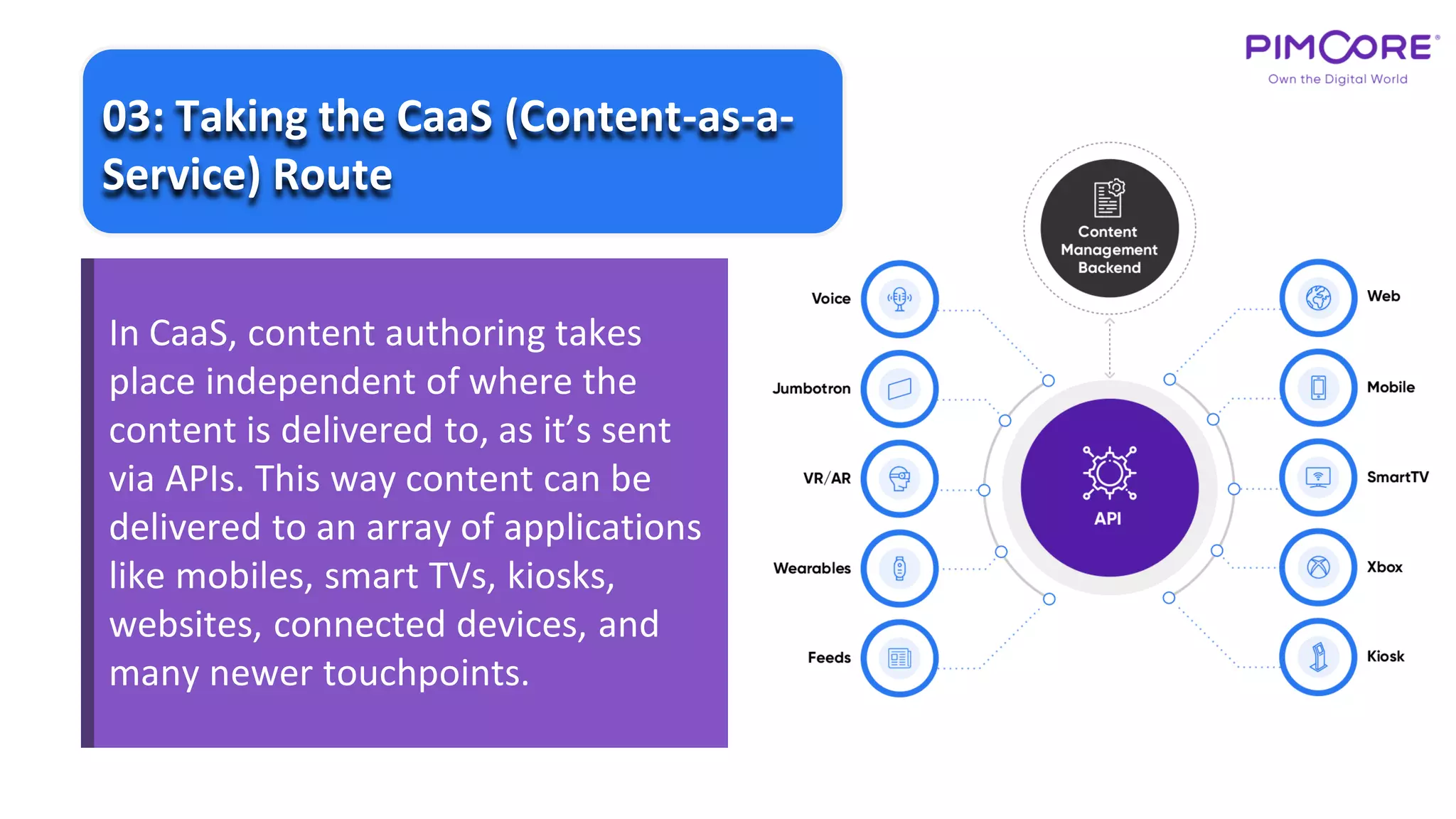
In CaaS, content authoring takes
place independent of where the
content is delivered to, as it’s sent
via APIs. This way content can be
delivered to an array of applications
like mobiles, smart TVs, kiosks,
websites, connected devices, and
many newer touchpoints.
03: Taking the CaaS (Content-as-a-
Service) Route
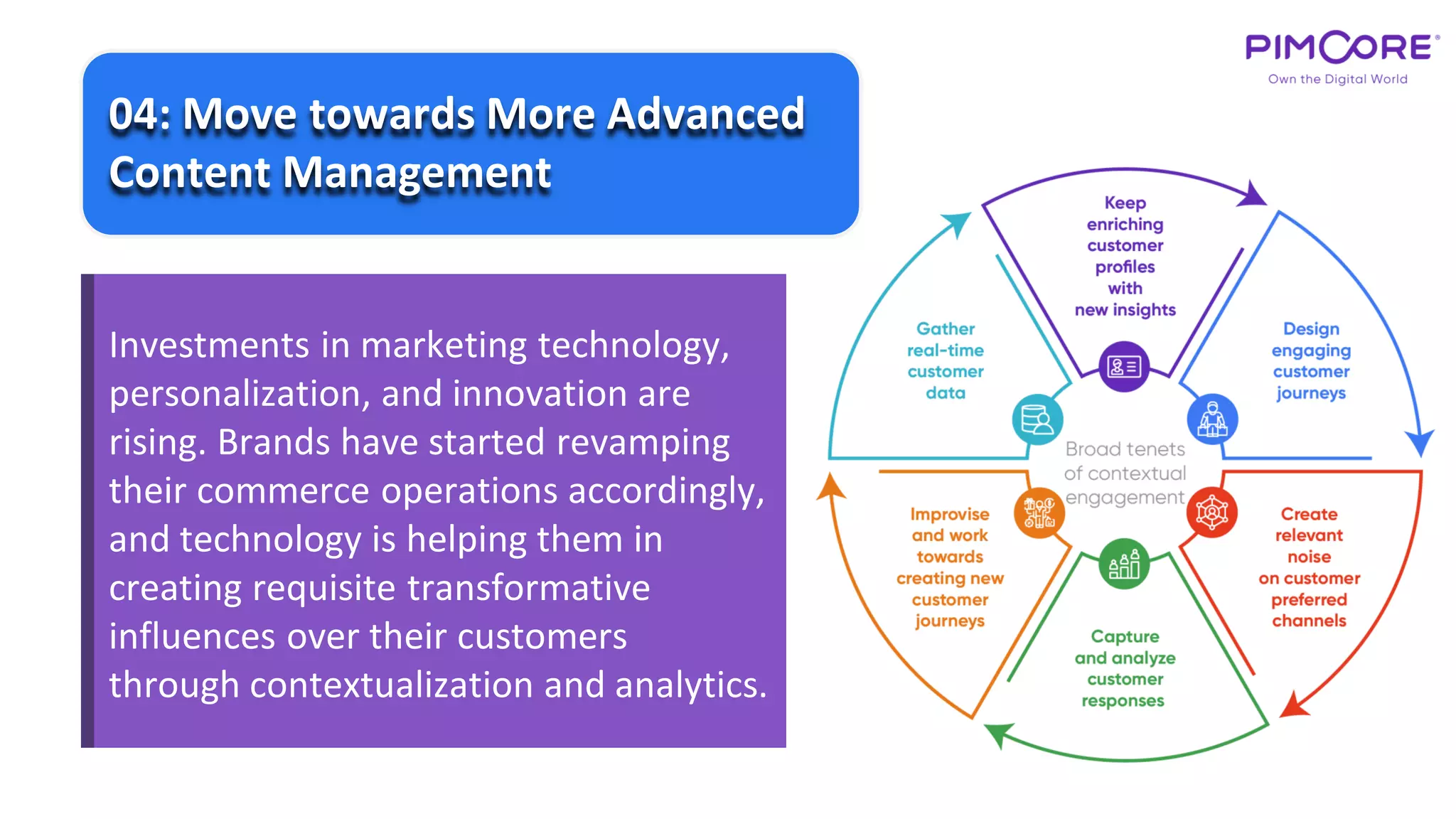
Investments in marketing technology,
personalization, and innovation are
rising. Brands have started revamping
their commerce operations accordingly,
and technology is helping them in
creating requisite transformative
influences over their customers
through contextualization and analytics.
04: Move towards More Advanced
Content Management
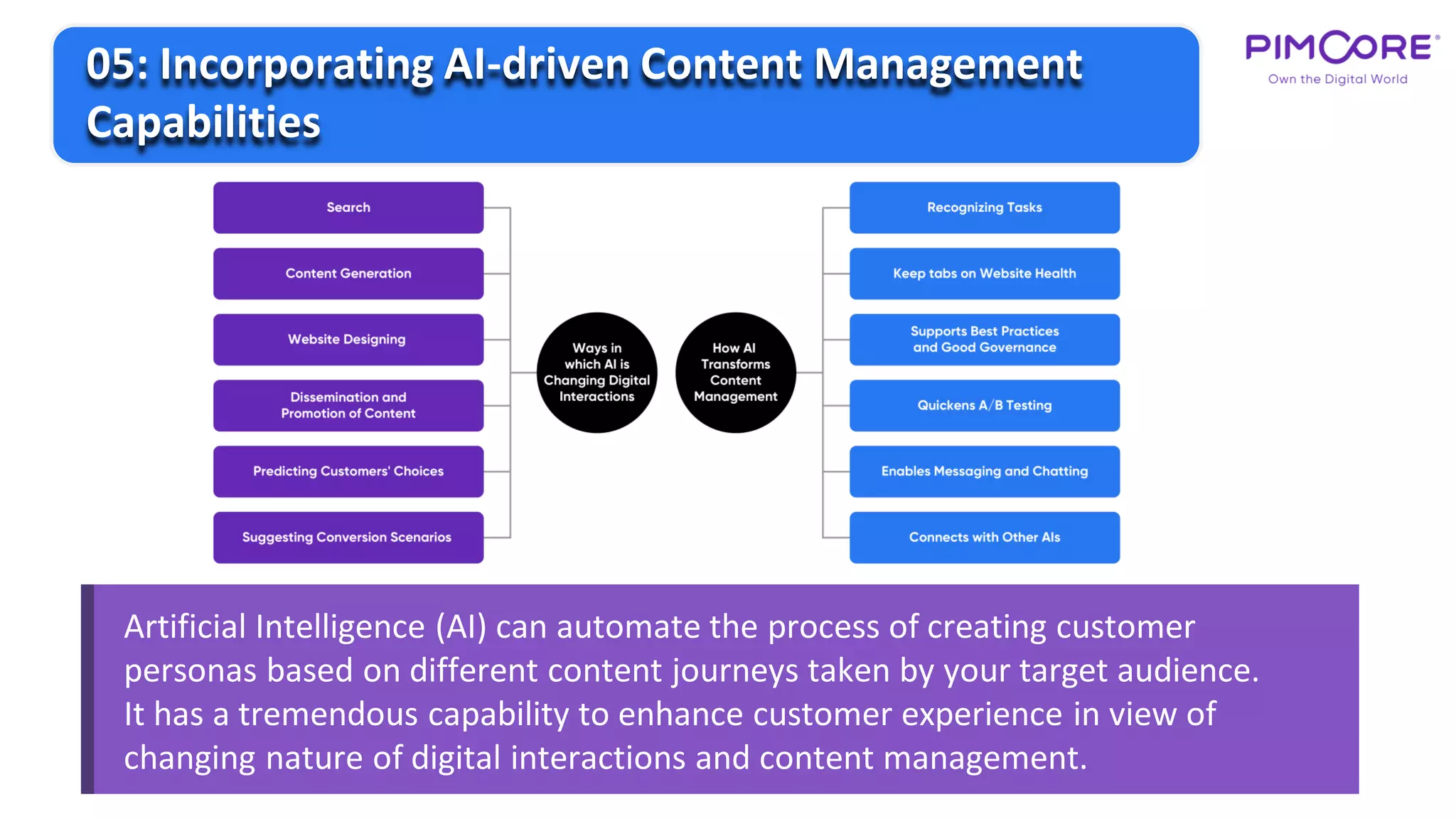
Artificial Intelligence (AI) can automate the process of creating customer
personas based on different content journeys taken by your target audience.
It has a tremendous capability to enhance customer experience in view of
changing nature of digital interactions and content management.
05: Incorporating AI-driven Content Management
Capabilities
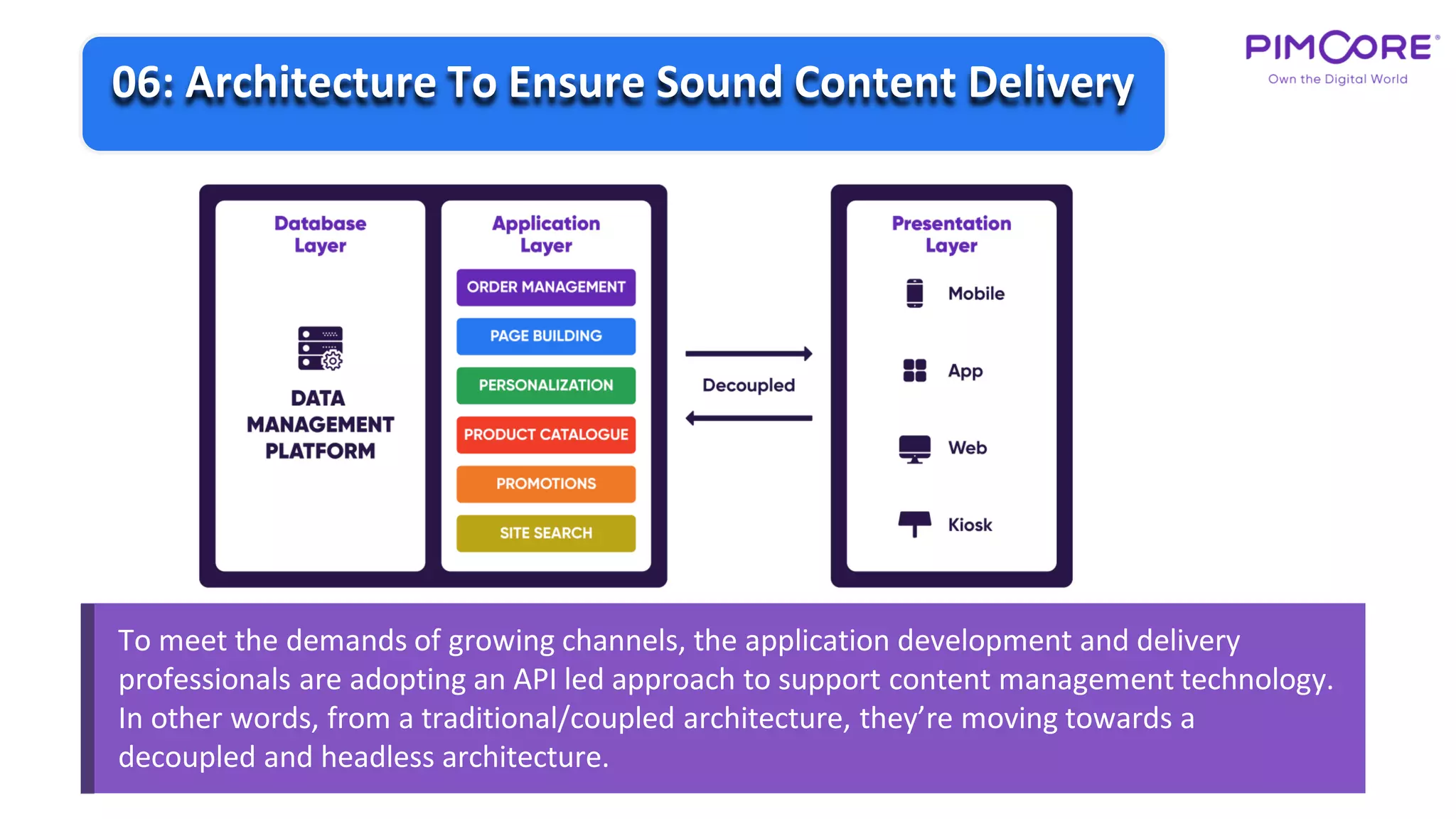
To meet the demands of growing channels, the application development and delivery
professionals are adopting an API led approach to support content management technology.
In other words, from a traditional/coupled architecture, they’re moving towards a
decoupled and headless architecture.
06: Architecture To Ensure Sound Content Delivery
https://www.pimcore.com/en/try
Try a Free Demo Now
If you’re looking to provide your customers a
seamless digital experience to boost loyalty and
grow sales, Pimcore’s open-source digital experience
(DXP) platform, built on an integrated, modular set
of technologies can help with targeted, personalized
digital experiences.
Thanks

A Brief Introduction to a Digital Experience Platform (DXP)

  • 1.
    A Brief Introductionto a Digital Experience Platform (DXP)
  • 2.
    Brands have startedlistening even before the buyer contemplates buying. They want to understand their customers’ context. That’s where a DXP trumps over a standard WCM Brands have started listening even before the buyer contemplates buying. They want to understand their customers’ context. That’s where a DXP trumps over a standard web content management (WCM).
  • 3.
    Contextualization: Refers to puttingthe message across to the right person at the right time on the right device for optimal engagement. API Driven ApproachContextualization Interoperability Three Key Drivers For a Digital Experience Platform (DXP) API Driven Approach: Since it’s difficult to deliver content to a growing number of channels and touchpoints, an API-based approach is must. Interoperability: The compatibility between systems, technologies and processes is pivotal for delivering consistent experiences to the end user.
  • 4.
    Here Are 6Steps That Go Into Building DXP:
  • 5.
    In digital commerce,personalization must adapt its presentation according to the recipient's view. It means creating relevant, individualized interactions based on customer insights and behavioral data. 01: Personalization For Stronger Customer Relationships
  • 6.
    IT leaders needto bind different functions that face customers separately by bringing disparate systems together. These systems may include website management, marketing, digital commerce, customer engagement centers, and retail stores to attain a shared vision. 02: Interoperability For effective coupling with Technologies, Services and Information sources
  • 7.
    In CaaS, contentauthoring takes place independent of where the content is delivered to, as it’s sent via APIs. This way content can be delivered to an array of applications like mobiles, smart TVs, kiosks, websites, connected devices, and many newer touchpoints. 03: Taking the CaaS (Content-as-a- Service) Route
  • 8.
    Investments in marketingtechnology, personalization, and innovation are rising. Brands have started revamping their commerce operations accordingly, and technology is helping them in creating requisite transformative influences over their customers through contextualization and analytics. 04: Move towards More Advanced Content Management
  • 9.
    Artificial Intelligence (AI)can automate the process of creating customer personas based on different content journeys taken by your target audience. It has a tremendous capability to enhance customer experience in view of changing nature of digital interactions and content management. 05: Incorporating AI-driven Content Management Capabilities
  • 10.
    To meet thedemands of growing channels, the application development and delivery professionals are adopting an API led approach to support content management technology. In other words, from a traditional/coupled architecture, they’re moving towards a decoupled and headless architecture. 06: Architecture To Ensure Sound Content Delivery
  • 11.
    https://www.pimcore.com/en/try Try a FreeDemo Now If you’re looking to provide your customers a seamless digital experience to boost loyalty and grow sales, Pimcore’s open-source digital experience (DXP) platform, built on an integrated, modular set of technologies can help with targeted, personalized digital experiences.
  • 12.