PRODUCT
INFORMATION
MANAGEMENT
(PIM)
A Quick Guide to:
PRODUCT INFORMATION
MANAGEMENT (PIM)
PIM refers to a set of business practices for
managing product information needed for
marketing and selling of products through an
organization's distribution channels so that
relevant, accurate, and complete product data
could be delivered consistently to customer
touchpoints.
WHAT IS
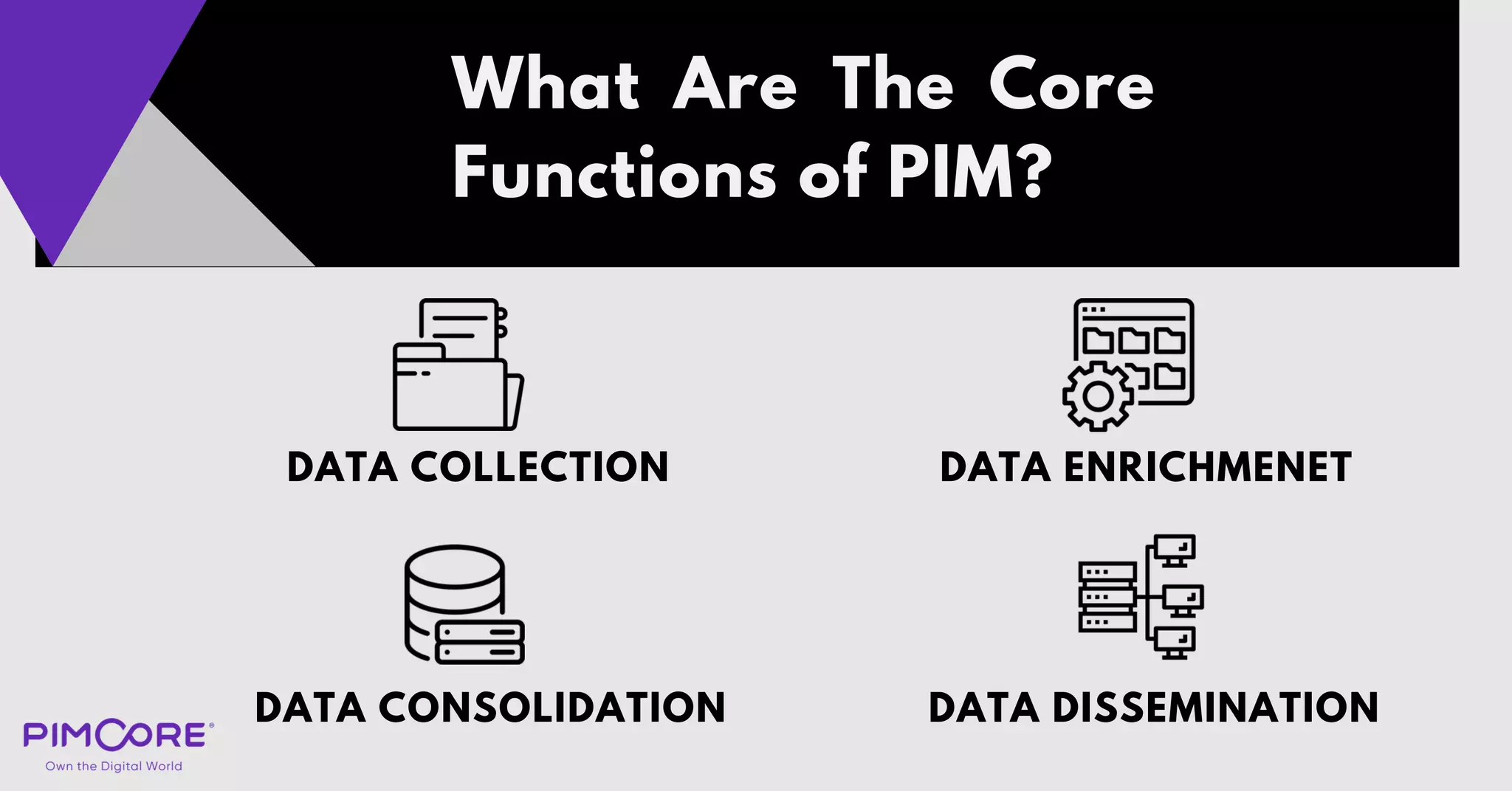
What Are The Core
Functions of PIM?
DATA COLLECTION
DATA CONSOLIDATION
DATA ENRICHMENET
DATA DISSEMINATION
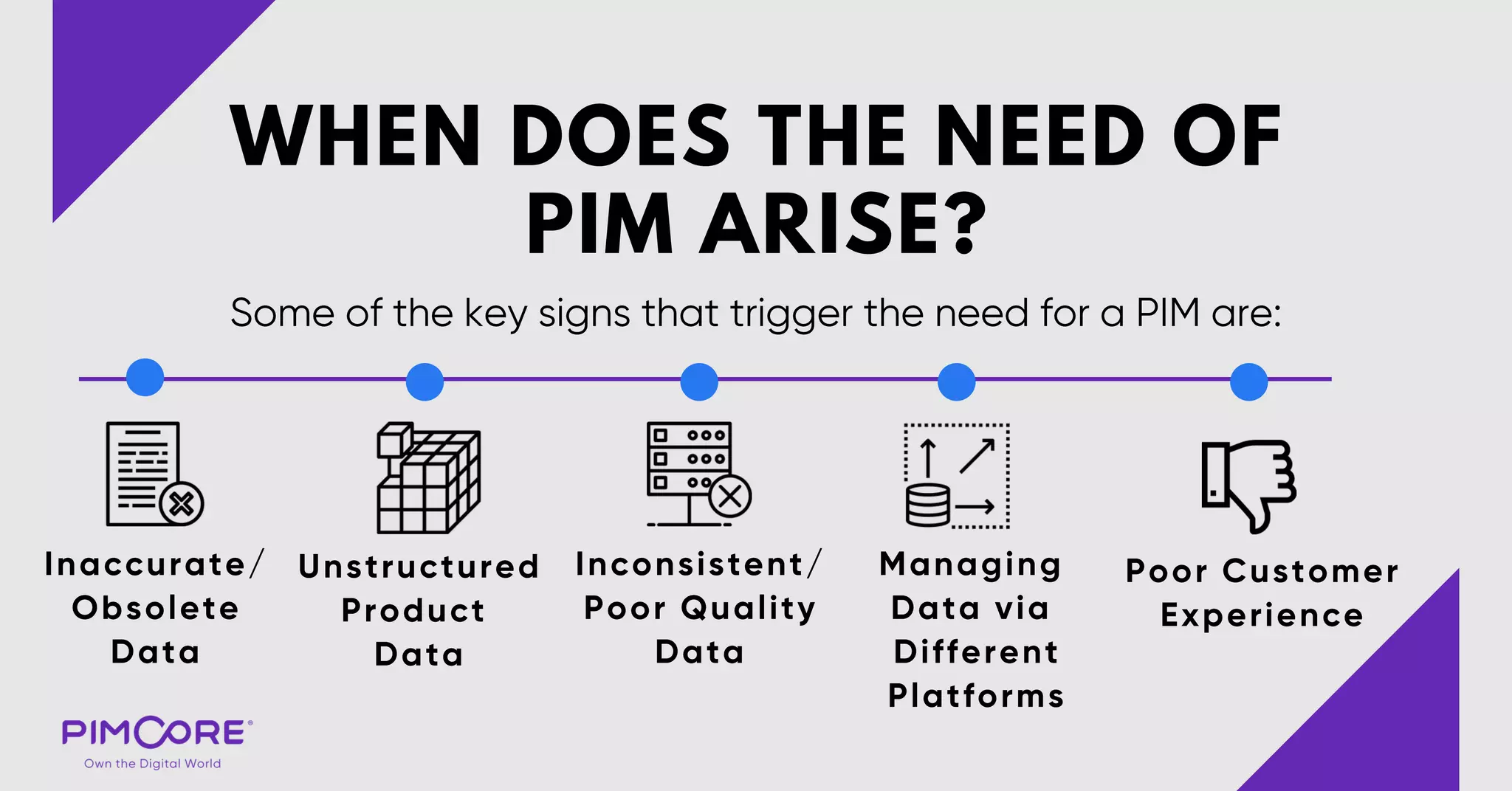
WHEN DOES THE NEED OF
PIM ARISE?
Inaccurate/
Obsolete
Data
Some of the key signs that trigger the need for a PIM are:
Unstructured
Product
Data
Inconsistent/
Poor Quality
Data
Managing
Data via
Different
Platforms
Poor Customer
Experience
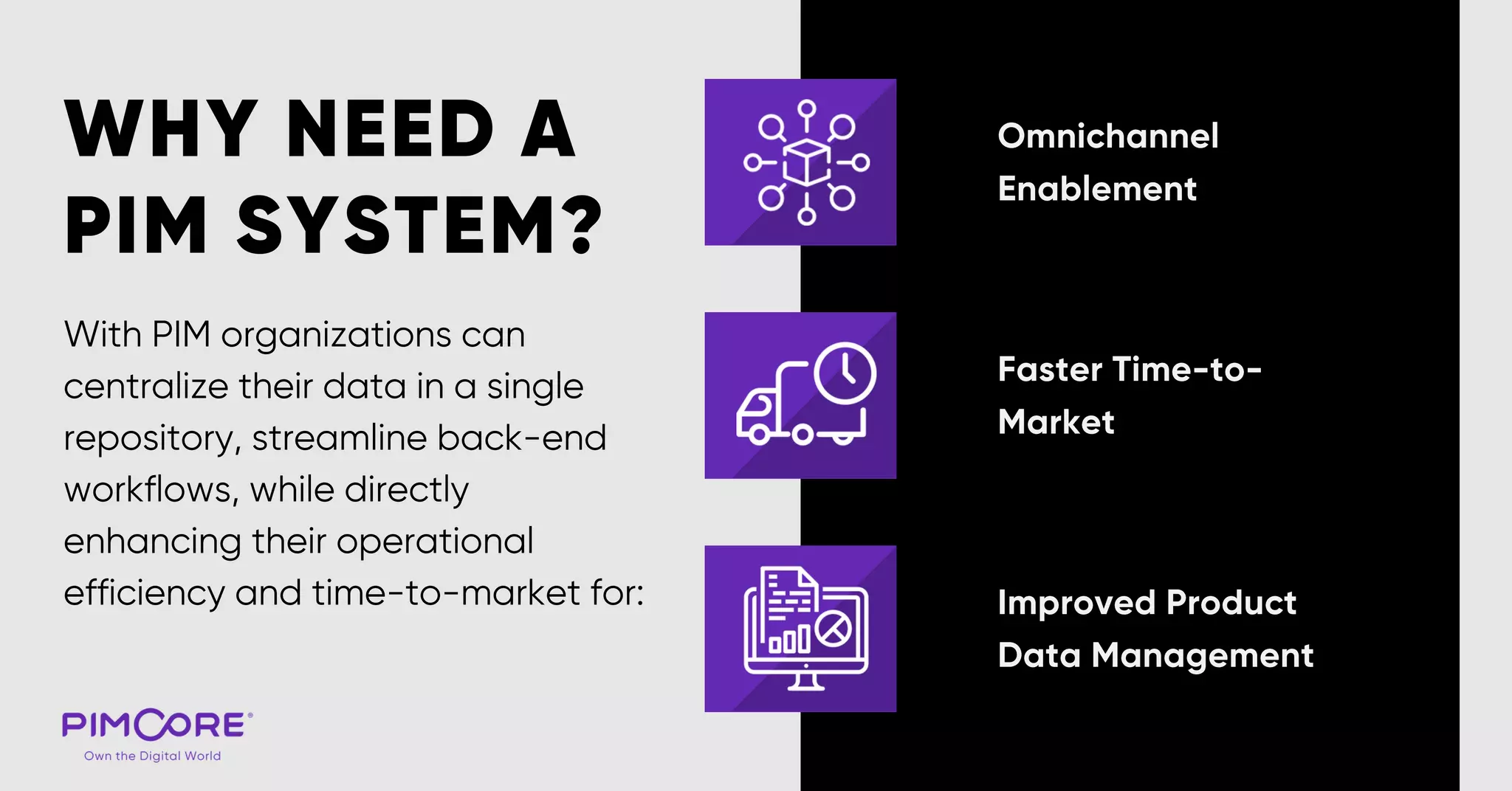
With PIM organizations can
centralize their data in a single
repository, streamline back-end
workflows, while directly
enhancing their operational
efficiency and time-to-market for:
WHY NEED A
PIM SYSTEM?
Omnichannel
Enablement
Faster Time-to-
Market
Improved Product
Data Management
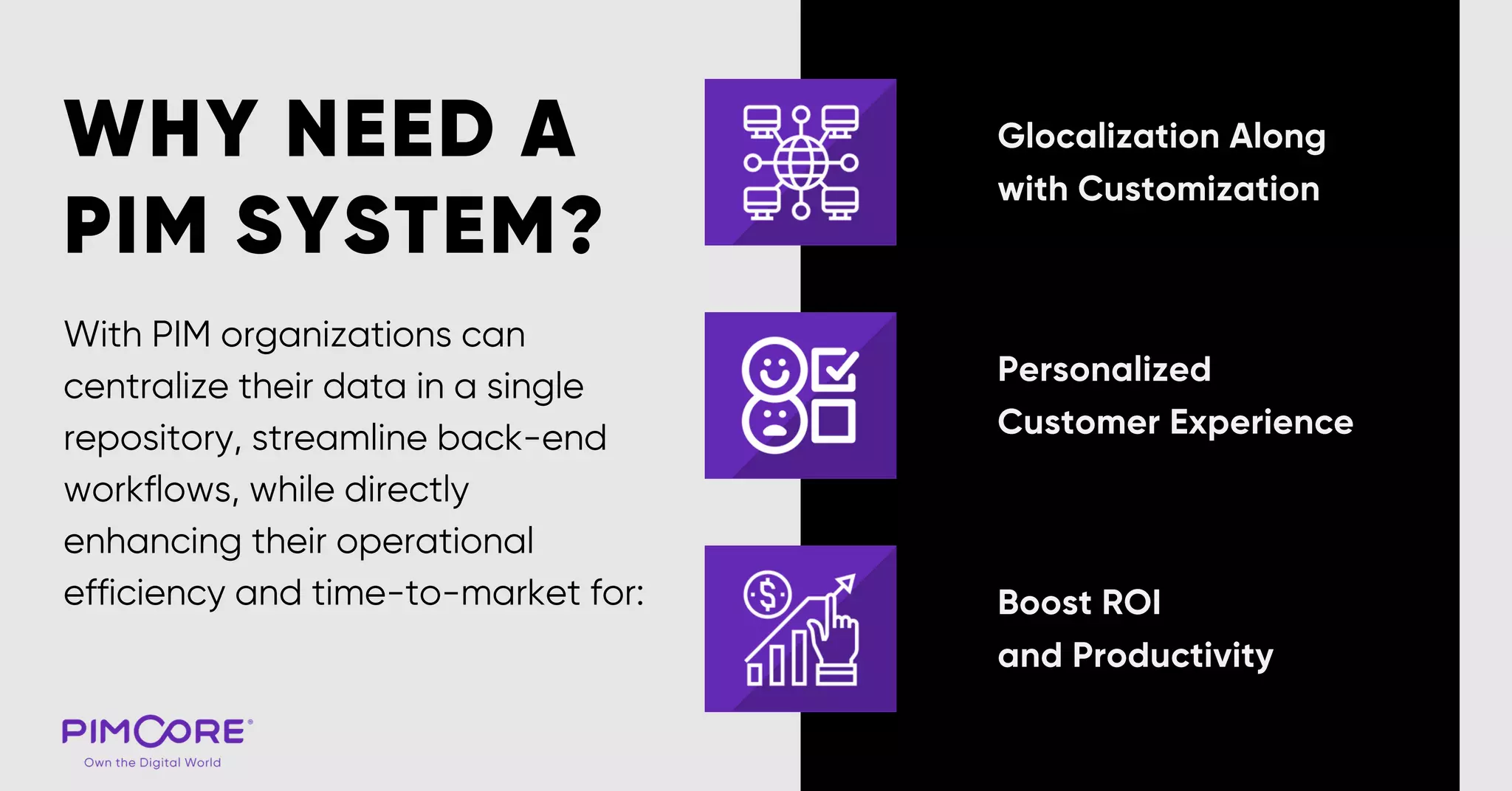
With PIM organizations can
centralize their data in a single
repository, streamline back-end
workflows, while directly
enhancing their operational
efficiency and time-to-market for:
WHY NEED A
PIM SYSTEM?
Glocalization Along
with Customization
Personalized
Customer Experience
Boost ROI
and Productivity
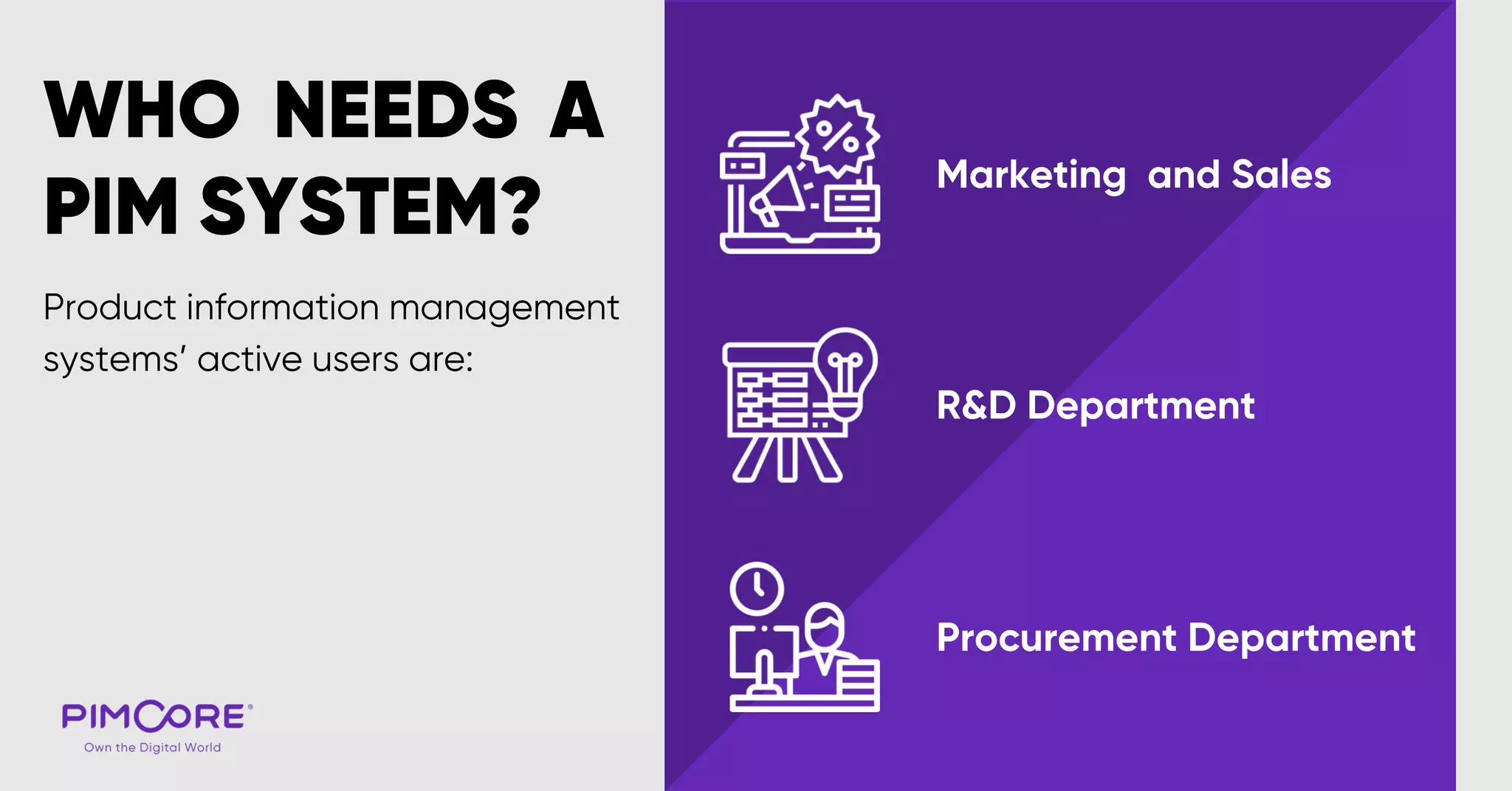
WHO NEEDS A
PIM SYSTEM?
Product information management
systems’ active users are:
Marketing and Sales
R&D Department
Procurement Department
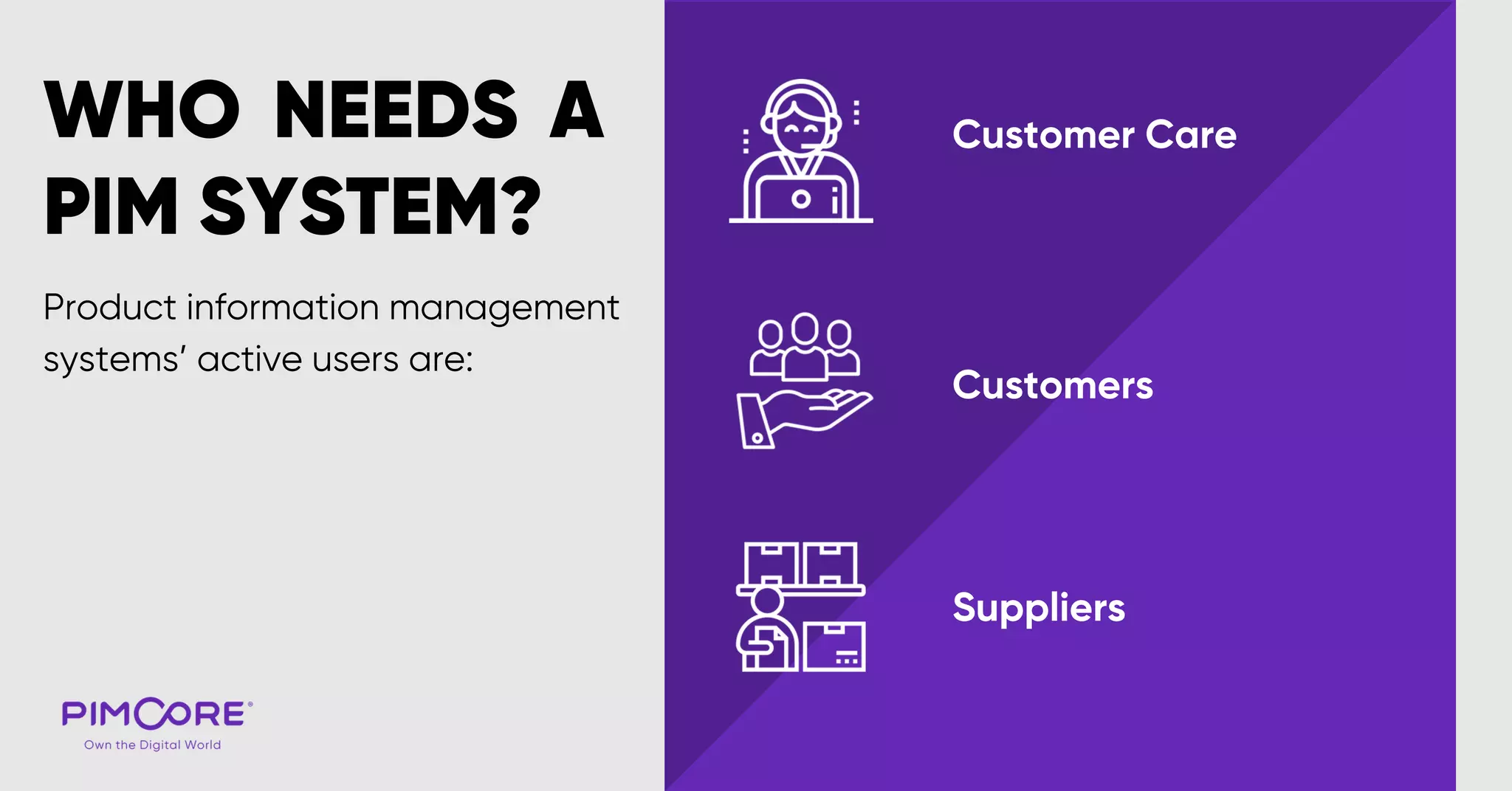
WHO NEEDS A
PIM SYSTEM?
Product information management
systems’ active users are:
Customer Care
Customers
Suppliers
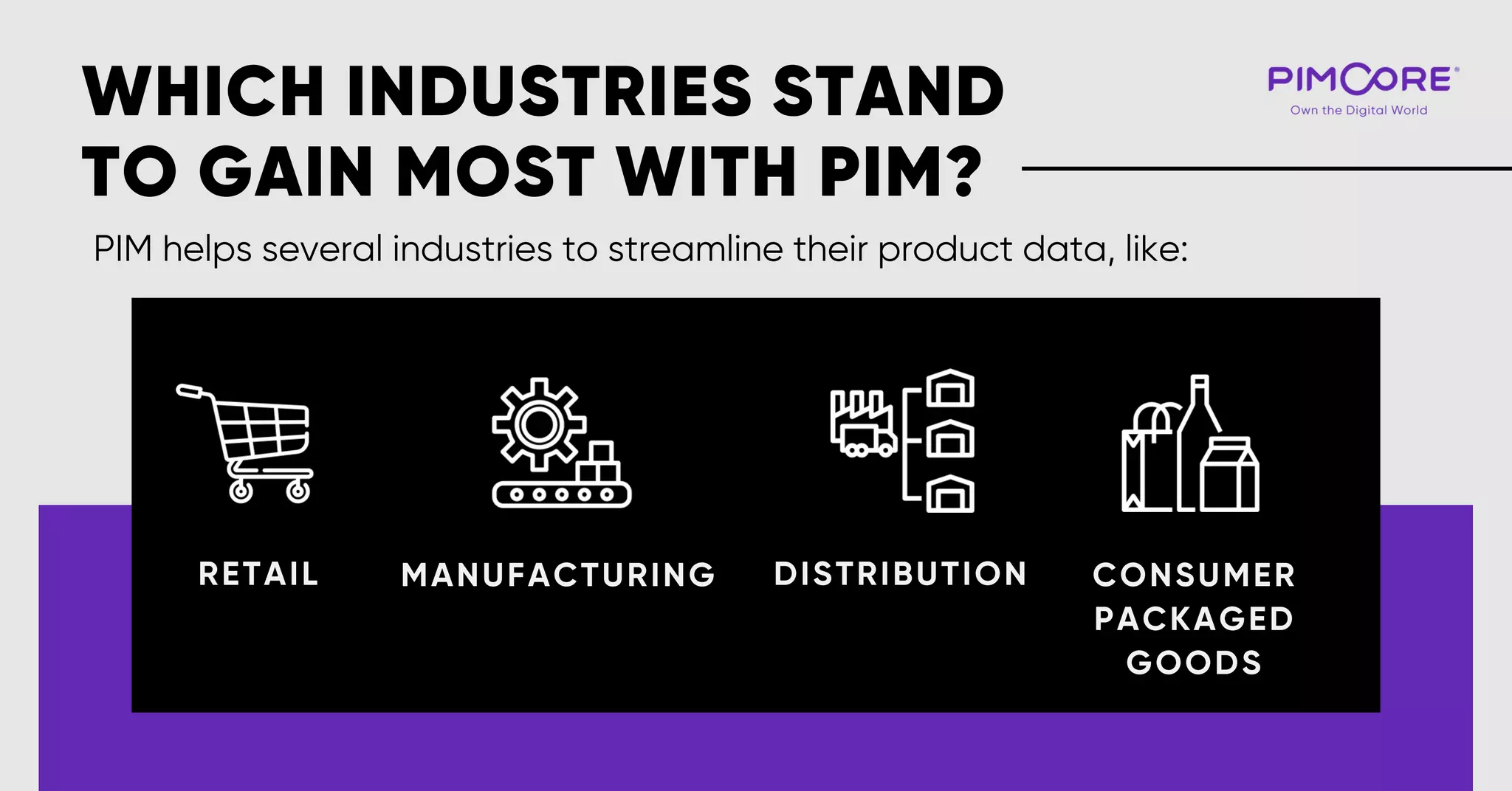
WHICH INDUSTRIES STAND
TO GAIN MOST WITH PIM?
RETAIL MANUFACTURING DISTRIBUTION CONSUMER
PACKAGED
GOODS
PIM helps several industries to streamline their product data, like:
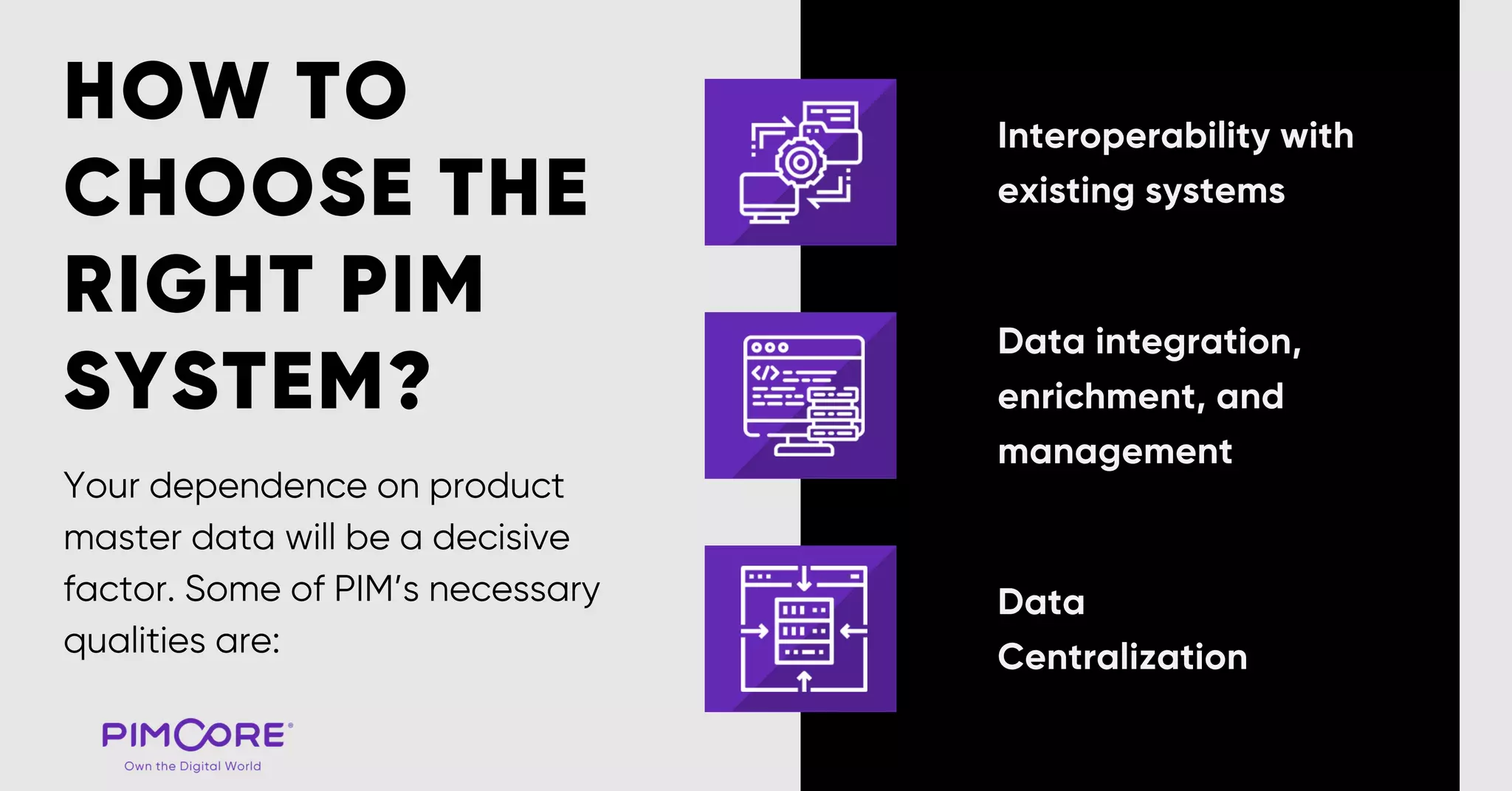
HOW TO
CHOOSE THE
RIGHT PIM
SYSTEM?
Interoperability with
existing systems
Data integration,
enrichment, and
management
Data
Centralization
Your dependence on product
master data will be a decisive
factor. Some of PIM’s necessary
qualities are:
HOW TO
CHOOSE THE
RIGHT PIM
SYSTEM?
Easy adoption of
current processes
Adaptability across
locations and
languages
Your dependence on product
master data will be a decisive
factor. Some of PIM’s necessary
qualities are:
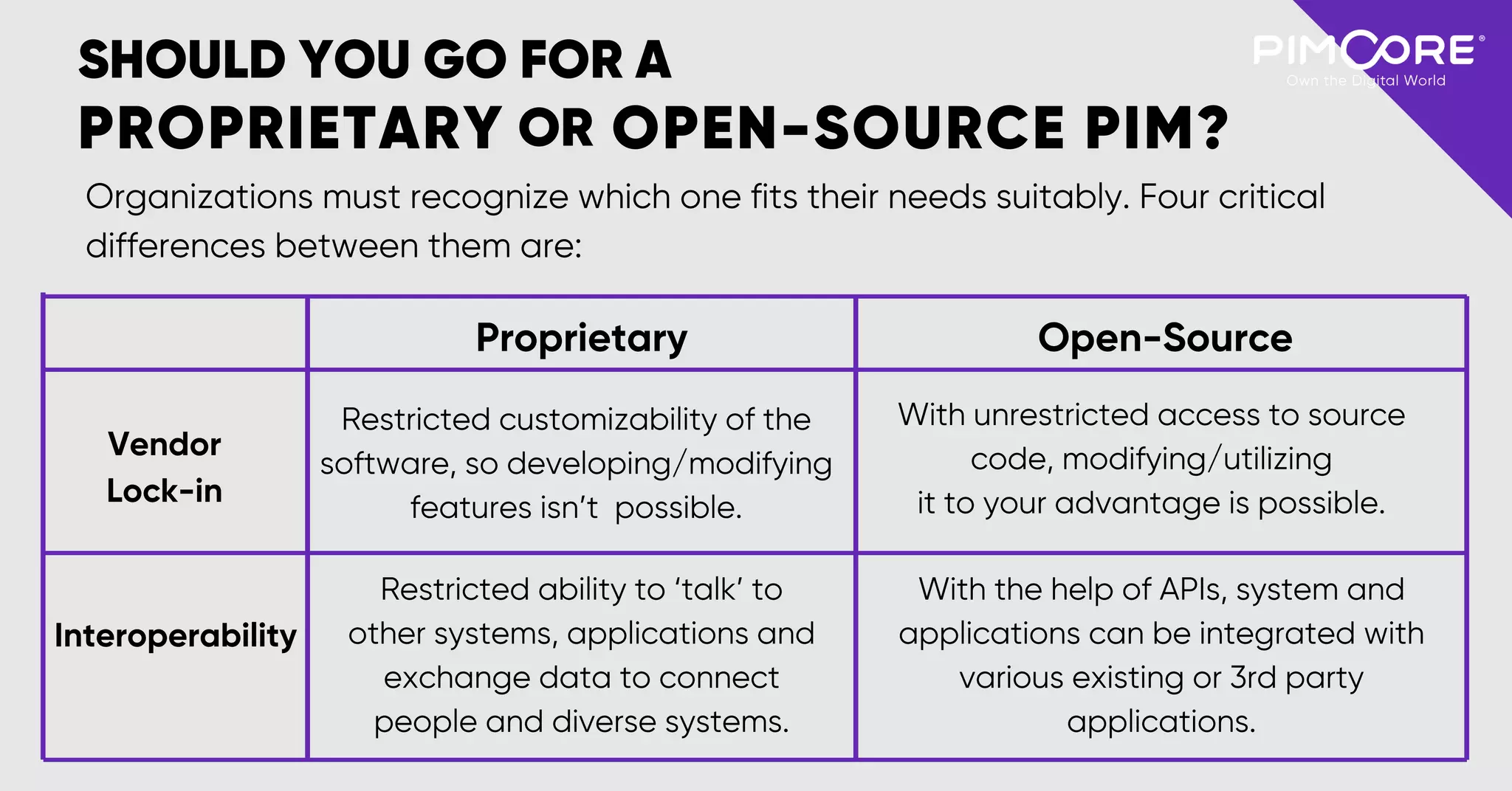
Restricted customizability of the
software, so developing/modifying
features isn’t possible.
SHOULD YOU GO FOR A
OPEN-SOURCE PIM?
Organizations must recognize which one fits their needs suitably. Four critical
differences between them are:
Interoperability
Vendor
Lock-in
Restricted ability to ‘talk’ to
other systems, applications and
exchange data to connect
people and diverse systems.
With unrestricted access to source
code, modifying/utilizing
it to your advantage is possible.
With the help of APIs, system and
applications can be integrated with
various existing or 3rd party
applications.
Proprietary Open-Source
PROPRIETARY OR
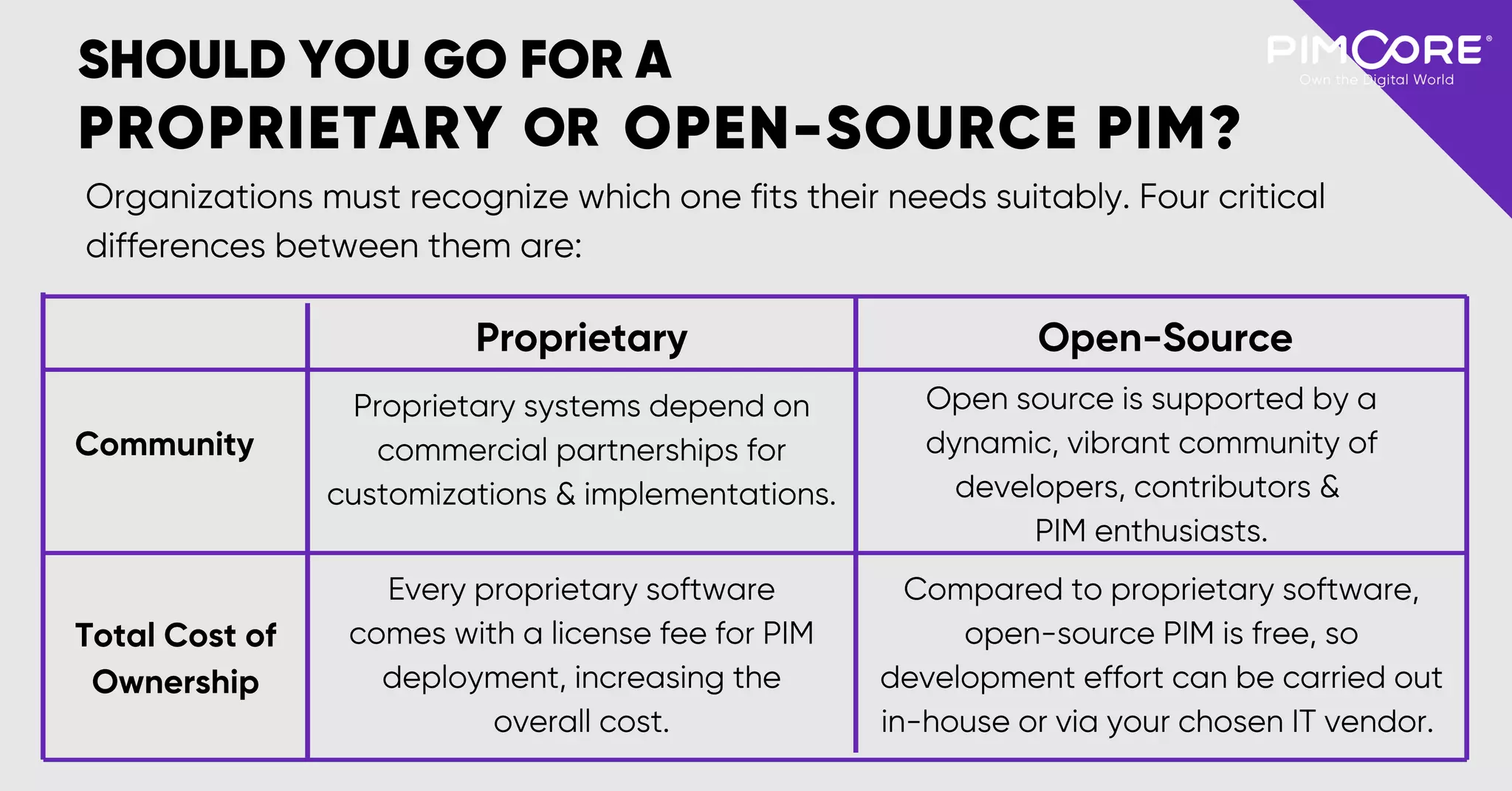
SHOULD YOU GO FOR A
OPEN-SOURCE PIM?
Organizations must recognize which one fits their needs suitably. Four critical
differences between them are:
Total Cost of
Ownership
Community
Proprietary systems depend on
commercial partnerships for
customizations & implementations.
Every proprietary software
comes with a license fee for PIM
deployment, increasing the
overall cost.
Open source is supported by a
dynamic, vibrant community of
developers, contributors &
PIM enthusiasts.
Compared to proprietary software,
open-source PIM is free, so
development effort can be carried out
in-house or via your chosen IT vendor.
Proprietary Open-Source
PROPRIETARY OR
DELIVER MEANINGFUL,
INTUITIVE, AND
PERSONALIZED CUSTOMER
EXPERIENCES WITH
PIMCORE OPEN
SOURCE PIM!
https://pimcore.com/en
Twitter Linkedin
TRY A FREE DEMO NOW
https://www.pimcore.com/en/try
http://www.facebook.com
/pimcore/
http://twitter.com/
pimcore/
https://www.linkedin.com/
company/pimcore/
Facebook

A Quick Guide to Product Information Management (PIM)

  • 1.
  • 2.
    PRODUCT INFORMATION MANAGEMENT (PIM) PIMrefers to a set of business practices for managing product information needed for marketing and selling of products through an organization's distribution channels so that relevant, accurate, and complete product data could be delivered consistently to customer touchpoints. WHAT IS
  • 3.
    What Are TheCore Functions of PIM? DATA COLLECTION DATA CONSOLIDATION DATA ENRICHMENET DATA DISSEMINATION
  • 4.
    WHEN DOES THENEED OF PIM ARISE? Inaccurate/ Obsolete Data Some of the key signs that trigger the need for a PIM are: Unstructured Product Data Inconsistent/ Poor Quality Data Managing Data via Different Platforms Poor Customer Experience
  • 5.
    With PIM organizationscan centralize their data in a single repository, streamline back-end workflows, while directly enhancing their operational efficiency and time-to-market for: WHY NEED A PIM SYSTEM? Omnichannel Enablement Faster Time-to- Market Improved Product Data Management
  • 6.
    With PIM organizationscan centralize their data in a single repository, streamline back-end workflows, while directly enhancing their operational efficiency and time-to-market for: WHY NEED A PIM SYSTEM? Glocalization Along with Customization Personalized Customer Experience Boost ROI and Productivity
  • 7.
    WHO NEEDS A PIMSYSTEM? Product information management systems’ active users are: Marketing and Sales R&D Department Procurement Department
  • 8.
    WHO NEEDS A PIMSYSTEM? Product information management systems’ active users are: Customer Care Customers Suppliers
  • 9.
    WHICH INDUSTRIES STAND TOGAIN MOST WITH PIM? RETAIL MANUFACTURING DISTRIBUTION CONSUMER PACKAGED GOODS PIM helps several industries to streamline their product data, like:
  • 10.
    HOW TO CHOOSE THE RIGHTPIM SYSTEM? Interoperability with existing systems Data integration, enrichment, and management Data Centralization Your dependence on product master data will be a decisive factor. Some of PIM’s necessary qualities are:
  • 11.
    HOW TO CHOOSE THE RIGHTPIM SYSTEM? Easy adoption of current processes Adaptability across locations and languages Your dependence on product master data will be a decisive factor. Some of PIM’s necessary qualities are:
  • 12.
    Restricted customizability ofthe software, so developing/modifying features isn’t possible. SHOULD YOU GO FOR A OPEN-SOURCE PIM? Organizations must recognize which one fits their needs suitably. Four critical differences between them are: Interoperability Vendor Lock-in Restricted ability to ‘talk’ to other systems, applications and exchange data to connect people and diverse systems. With unrestricted access to source code, modifying/utilizing it to your advantage is possible. With the help of APIs, system and applications can be integrated with various existing or 3rd party applications. Proprietary Open-Source PROPRIETARY OR
  • 13.
    SHOULD YOU GOFOR A OPEN-SOURCE PIM? Organizations must recognize which one fits their needs suitably. Four critical differences between them are: Total Cost of Ownership Community Proprietary systems depend on commercial partnerships for customizations & implementations. Every proprietary software comes with a license fee for PIM deployment, increasing the overall cost. Open source is supported by a dynamic, vibrant community of developers, contributors & PIM enthusiasts. Compared to proprietary software, open-source PIM is free, so development effort can be carried out in-house or via your chosen IT vendor. Proprietary Open-Source PROPRIETARY OR
  • 14.
    DELIVER MEANINGFUL, INTUITIVE, AND PERSONALIZEDCUSTOMER EXPERIENCES WITH PIMCORE OPEN SOURCE PIM! https://pimcore.com/en
  • 15.
    Twitter Linkedin TRY AFREE DEMO NOW https://www.pimcore.com/en/try http://www.facebook.com /pimcore/ http://twitter.com/ pimcore/ https://www.linkedin.com/ company/pimcore/ Facebook