Energy Management Impact on
Distributed Control Systems
(DCS) in Industrial Environments
Executive summary
Today, the pressure is on enterprises to meet
environmental targets. The prospect of losing business
if sustainability objectives are not met is very real. This
is leading to a future where top environmental
performers will become market leaders. To remain
competitive, companies need to produce goods in an
energy efficient manner. This paper examines
industrial efficiency improvement measures that focus
on equipment, process, and people.
by Peter Hogg
998-2095-07-26-13AR0
Energy Management Impact on Distributed Control Systems (DCS) in Industrial Environments
Schneider Electric White Paper Revision 0 Page 2
According to a 2012 Accenture Carbon Disclosure Project (CPD) survey
1
, 4% of large
corporations said they deselected suppliers who fail to meet environmental objectives, and 39%
project that they will soon follow this lead. This increasing focus on sustainable production is
driven by regulation but also by the ability of sustainability-focused companies to outperform their
peers.
Strategies for energy efficient production need to embrace a holistic approach in order to achieve
the targets of 20-30% carbon emissions reduction which are in place around the world. The
approach needs to focus on more efficient equipment, process changes, and operator
engagement to make and retain significant energy savings.
Many companies have started on this journey, with initial steps involving deployment of some
power metering and software dashboards. Most of these systems, however, fail to link the
consumption with specific production efforts and operational tasks. Therefore, the conversion to
real energy savings is low.
In this paper key benefits of “energy-aware distributed control systems (DCS)” are explained. In
addition, linkages between production and energy are examined, and the resulting increases in
energy efficiency are highlighted.
The industrial sector is by far the largest consumer of world energy
2
, and for many industrial
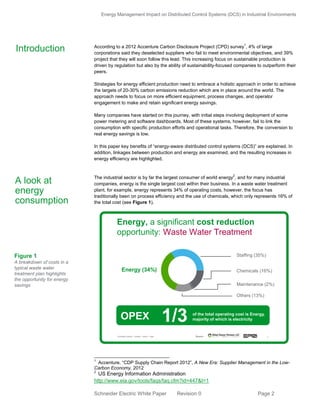
companies, energy is the single largest cost within their business. In a waste water treatment
plant, for example, energy represents 34% of operating costs, however, the focus has
traditionally been on process efficiency and the use of chemicals, which only represents 16% of
the total cost (see Figure 1).
1
Accenture, “CDP Supply Chain Report 2012”, A New Era: Supplier Management in the Low-
Carbon Economy, 2012
2
US Energy Information Administration
http://www.eia.gov/tools/faqs/faq.cfm?id=447&t=1
Introduction
A look at
energy
consumption
Schneider Electric 2- Division - Name – Date
2%
Staffing (35%)
Chemicals (16%)
Maintenance (2%)
Others (13%)
Source:
Energy, a significant cost reduction
opportunity: Waste Water Treatment
Energy (34%)
OPEX of the total operating cost is Energy,
majority of which is electricity1/3
Figure 1
A breakdown of costs in a
typical waste water
treatment plan highlights
the opportunity for energy
savings
Energy Management Impact on Distributed Control Systems (DCS) in Industrial Environments
Schneider Electric White Paper Revision 0 Page 3
Production efficiency has always been the focus of industrial enterprises. Two assumptions drive
this behaviour:
1. An efficient process utilizes as little energy as is required
2. The cost of energy is so small that consumption in any one location has a low impact
on the costs of the plant.
In today’s environment, this second assumption is proving to be outdated. The world’s expanding
population and increased standard of living
3
has driven up the demand for energy. In fact, it is
estimated that energy usage will double by 2050 and that electrical consumption will double by
2030
4
. This increase in demand will not only increase operating costs, it will necessitate the
deployment of a new generation of physical infrastructure equipment (e.g., power, cooling,
control) and this will drive increases in capital costs. To compound the problem, climate experts
are indicating that carbon emissions will have to be cut by a factor of 2 over the same time period
(by 2050). The global community of consumers now realizes the negative impact of carbon on
the environment. In fact, most consumers are prepared to pay higher prices for goods produced
in a sustainable manner
5
.
How much do we need to reduce?
Energy consumption is on the rise and set to almost double between 1990 and 2035
6
. The
majority of this rise will come from non-OECD nations and is driven by long term economic
growth. Increasing standards of living require increasing manufactured goods but increased
energy to produce them is not sustainable. The history of the world shows that growth is almost
always accompanied by an increase in energy consumption.
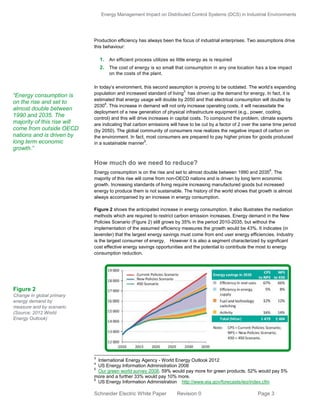
Figure 2 shows the anticipated increase in energy consumption. It also illustrates the mediation
methods which are required to restrict carbon emission increases. Energy demand in the New
Policies Scenario (Figure 2) still grows by 35% in the period 2010-2035, but without the
implementation of the assumed efficiency measures the growth would be 43%. It indicates (in
lavender) that the largest energy savings must come from end user energy efficiencies. Industry
is the largest consumer of energy. However it is also a segment characterized by significant
cost effective energy savings opportunities and the potential to contribute the most to energy
consumption reduction.
3
International Energy Agency - World Energy Outlook 2012
4
US Energy Information Administration 2008
5
Our green world survey 2008. 59% would pay more for green products. 52% would pay 5%
more and a further 33% would pay 10% more.
6
US Energy Information Administration http://www.eia.gov/forecasts/ieo/index.cfm
“Energy consumption is
on the rise and set to
almost double between
1990 and 2035. The
majority of this rise will
come from outside OECD
nations and is driven by
long term economic
growth.”
Figure 2
Change in global primary
energy demand by
measure and by scenario
(Source: 2012 World
Energy Outlook)
Energy Management Impact on Distributed Control Systems (DCS) in Industrial Environments
Schneider Electric White Paper Revision 0 Page 4
Managing energy
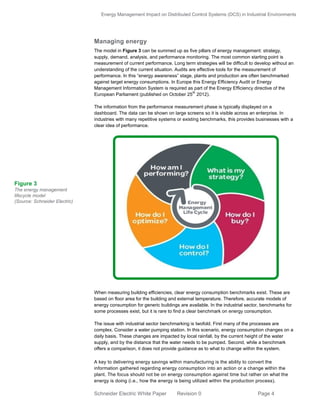
The model in Figure 3 can be summed up as five pillars of energy management: strategy,
supply, demand, analysis, and performance monitoring. The most common starting point is
measurement of current performance. Long term strategies will be difficult to develop without an
understanding of the current situation. Audits are effective tools for the measurement of
performance. In this “energy awareness” stage, plants and production are often benchmarked
against target energy consumptions. In Europe this Energy Efficiency Audit or Energy
Management Information System is required as part of the Energy Efficiency directive of the
European Parliament (published on October 25
th
2012).
The information from the performance measurement phase is typically displayed on a
dashboard. The data can be shown on large screens so it is visible across an enterprise. In
industries with many repetitive systems or existing benchmarks, this provides businesses with a
clear idea of performance.
When measuring building efficiencies, clear energy consumption benchmarks exist. These are
based on floor area for the building and external temperature. Therefore, accurate models of
energy consumption for generic buildings are available. In the industrial sector, benchmarks for
some processes exist, but it is rare to find a clear benchmark on energy consumption.
The issue with industrial sector benchmarking is twofold. First many of the processes are
complex. Consider a water pumping station. In this scenario, energy consumption changes on a
daily basis. These changes are impacted by local rainfall, by the current height of the water
supply, and by the distance that the water needs to be pumped. Second, while a benchmark
offers a comparison, it does not provide guidance as to what to change within the system.
A key to delivering energy savings within manufacturing is the ability to convert the
information gathered regarding energy consumption into an action or a change within the
plant. The focus should not be on energy consumption against time but rather on what the
energy is doing (i.e., how the energy is being utilized within the production process).
Figure 3
The energy management
lifecycle model
(Source: Schneider Electric)
Energy Management Impact on Distributed Control Systems (DCS) in Industrial Environments
Schneider Electric White Paper Revision 0 Page 5
To form an accurate link between production and the energy consumed, energy information
in alignment with process data needs to be collected. The cleaner the relationship between
the action and the data collected, the more accurate the analysis, and the better the results.
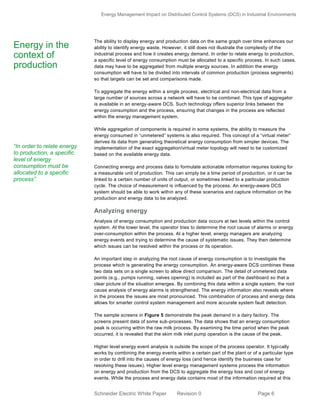
Within a typical control system (See Figure 4), a large number of energy consuming
elements exist. Each of these elements contains one or more of our sources of energy
(water, air, gas, electricity and / or steam). Some pieces of process equipment may actually
change energy source based on the user’s strategy in the management of energy supply.
Energy management can enhance DCS performance when collection of data from energy
data sources and from energy consuming devices is possible. If power meters are in place
they may already be connected to systems which communicate data via power system
protocols such as IEC 61850. The DCS should communicate with these power meters and
with energy systems and other systems in order to collect the energy data.
Lower accuracy estimated energy data can also be extracted from many types of energy-
consuming process equipment. In some cases it is calculated or approximated through the
use of process values which are known to be correlated to energy usage (virtual metering).
The process of collecting comprehensive data from production system throughput has been
difficult in the past because of multiple vendors and standards.
The Open Device Vendors Association (ODVA) has created harmonized standards for the
measurement and transfer of energy data within control systems. Support for standards like
these enables energy management to be rapidly implemented on sites where multiple
automation vendor solutions are deployed.
Figure 4
A typical distributed control
system (DCS) architecture
Energy Management Impact on Distributed Control Systems (DCS) in Industrial Environments
Schneider Electric White Paper Revision 0 Page 6
The ability to display energy and production data on the same graph over time enhances our
ability to identify energy waste. However, it still does not illustrate the complexity of the
industrial process and how it creates energy demand. In order to relate energy to production,
a specific level of energy consumption must be allocated to a specific process. In such cases,
data may have to be aggregated from multiple energy sources. In addition the energy
consumption will have to be divided into intervals of common production (process segments)
so that targets can be set and comparisons made.
To aggregate the energy within a single process, electrical and non-electrical data from a
large number of sources across a network will have to be combined. This type of aggregator
is available in an energy-aware DCS. Such technology offers superior links between the
energy consumption and the process, ensuring that changes in the process are reflected
within the energy management system.
While aggregation of components is required in some systems, the ability to measure the
energy consumed in “unmetered” systems is also required. This concept of a “virtual meter”
derives its data from generating theoretical energy consumption from simpler devices. The
implementation of the exact aggregation/virtual meter topology will need to be customized
based on the available energy data.
Connecting energy and process data to formulate actionable information requires looking for
a measurable unit of production. This can simply be a time period of production, or it can be
linked to a certain number of units of output, or sometimes linked to a particular production
cycle. The choice of measurement is influenced by the process. An energy-aware DCS
system should be able to work within any of these scenarios and capture information on the
production and energy data to be analyzed.
Analyzing energy
Analysis of energy consumption and production data occurs at two levels within the control
system. At the lower level, the operator tries to determine the root cause of alarms or energy
over-consumption within the process. At a higher level, energy managers are analyzing
energy events and trying to determine the cause of systematic issues. They then determine
which issues can be resolved within the process or its operation.
An important step in analyzing the root cause of energy consumption is to investigate the
process which is generating the energy consumption. An energy-aware DCS combines these
two data sets on a single screen to allow direct comparison. The detail of unmetered data
points (e.g., pumps running, valves opening) is included as part of the dashboard so that a
clear picture of the situation emerges. By combining this data within a single system, the root
cause analysis of energy alarms is strengthened. The energy information also reveals where
in the process the issues are most pronounced. This combination of process and energy data
allows for smarter control system management and more accurate system fault detection.
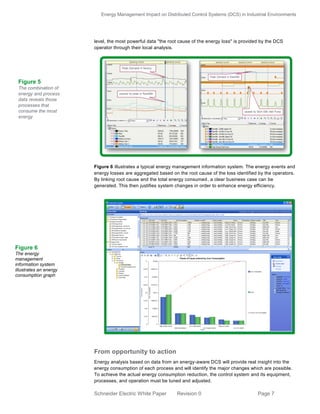
The sample screens in Figure 5 demonstrate the peak demand in a dairy factory. The
screens present data of some sub-processes. The data shows that an energy consumption
peak is occurring within the raw milk process. By examining the time period when the peak
occurred, it is revealed that the skim milk inlet pump operation is the cause of the peak.
Higher level energy event analysis is outside the scope of the process operator. It typically
works by combining the energy events within a certain part of the plant or of a particular type
in order to drill into the causes of energy loss (and hence identify the business case for
resolving these issues). Higher level energy management systems process the information
on energy and production from the DCS to aggregate the energy loss and cost of energy
events. While the process and energy data contains most of the information required at this
Energy in the
context of
production
“In order to relate energy
to production, a specific
level of energy
consumption must be
allocated to a specific
process”.
Energy Management Impact on Distributed Control Systems (DCS) in Industrial Environments
Schneider Electric White Paper Revision 0 Page 7
level, the most powerful data "the root cause of the energy loss" is provided by the DCS
operator through their local analysis.
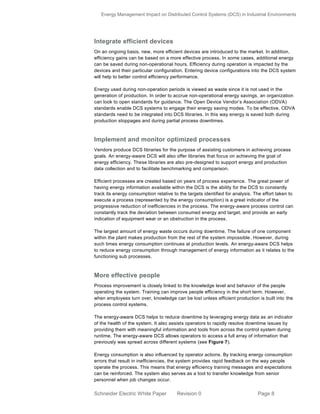
Figure 6 illustrates a typical energy management information system. The energy events and
energy losses are aggregated based on the root cause of the loss identified by the operators.
By linking root cause and the total energy consumed, a clear business case can be
generated. This then justifies system changes in order to enhance energy efficiency.
From opportunity to action
Energy analysis based on data from an energy-aware DCS will provide real insight into the
energy consumption of each process and will identify the major changes which are possible.
To achieve the actual energy consumption reduction, the control system and its equipment,
processes, and operation must be tuned and adjusted.
Figure 6
The energy
management
information system
illustrates an energy
consumption graph
Figure 5
The combination of
energy and process
data reveals those
processes that
consume the most
energy
Energy Management Impact on Distributed Control Systems (DCS) in Industrial Environments
Schneider Electric White Paper Revision 0 Page 8
Integrate efficient devices
On an ongoing basis, new, more efficient devices are introduced to the market. In addition,
efficiency gains can be based on a more effective process. In some cases, additional energy
can be saved during non-operational hours. Efficiency during operation is impacted by the
devices and their particular configuration. Entering device configurations into the DCS system
will help to better control efficiency performance.
Energy used during non-operation periods is viewed as waste since it is not used in the
generation of production. In order to accrue non-operational energy savings, an organization
can look to open standards for guidance. The Open Device Vendor’s Association (ODVA)
standards enable DCS systems to engage their energy saving modes. To be effective, ODVA
standards need to be integrated into DCS libraries. In this way energy is saved both during
production stoppages and during partial process downtimes.
Implement and monitor optimized processes
Vendors produce DCS libraries for the purpose of assisting customers in achieving process
goals. An energy-aware DCS will also offer libraries that focus on achieving the goal of
energy efficiency. These libraries are also pre-designed to support energy and production
data collection and to facilitate benchmarking and comparison.
Efficient processes are created based on years of process experience. The great power of
having energy information available within the DCS is the ability for the DCS to constantly
track its energy consumption relative to the targets identified for analysis. The effort taken to
execute a process (represented by the energy consumption) is a great indicator of the
progressive reduction of inefficiencies in the process. The energy-aware process control can
constantly track the deviation between consumed energy and target, and provide an early
indication of equipment wear or an obstruction in the process.
The largest amount of energy waste occurs during downtime. The failure of one component
within the plant makes production from the rest of the system impossible. However, during
such times energy consumption continues at production levels. An energy-aware DCS helps
to reduce energy consumption through management of energy information as it relates to the
functioning sub processes.
More effective people
Process improvement is closely linked to the knowledge level and behavior of the people
operating the system. Training can improve people efficiency in the short term. However,
when employees turn over, knowledge can be lost unless efficient production is built into the
process control systems.
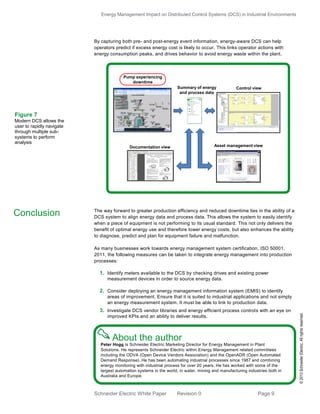
The energy-aware DCS helps to reduce downtime by leveraging energy data as an indicator
of the health of the system. It also assists operators to rapidly resolve downtime issues by
providing them with meaningful information and tools from across the control system during
runtime. The energy-aware DCS allows operators to access a full array of information that
previously was spread across different systems (see Figure 7).
Energy consumption is also influenced by operator actions. By tracking energy consumption
errors that result in inefficiencies, the system provides rapid feedback on the way people
operate the process. This means that energy efficiency training messages and expectations
can be reinforced. The system also serves as a tool to transfer knowledge from senior
personnel when job changes occur.
Energy Management Impact on Distributed Control Systems (DCS) in Industrial Environments
Schneider Electric White Paper Revision 0 Page 9
By capturing both pre- and post-energy event information, energy-aware DCS can help
operators predict if excess energy cost is likely to occur. This links operator actions with
energy consumption peaks, and drives behavior to avoid energy waste within the plant.
The way forward to greater production efficiency and reduced downtime lies in the ability of a
DCS system to align energy data and process data. This allows the system to easily identify
when a piece of equipment is not performing to its usual standard. This not only delivers the
benefit of optimal energy use and therefore lower energy costs, but also enhances the ability
to diagnose, predict and plan for equipment failure and malfunction.
As many businesses work towards energy management system certification, ISO 50001,
2011, the following measures can be taken to integrate energy management into production
processes:
1. Identify meters available to the DCS by checking drives and existing power
measurement devices in order to source energy data.
2. Consider deploying an energy management information system (EMIS) to identify
areas of improvement. Ensure that it is suited to industrial applications and not simply
an energy measurement system. It must be able to link to production data.
3. Investigate DCS vendor libraries and energy efficient process controls with an eye on
improved KPIs and an ability to deliver results.
Peter Hogg is Schneider Electric Marketing Director for Energy Management in Plant
Solutions. He represents Schneider Electric within Energy Management related committees
including the ODVA (Open Device Vendors Association) and the OpenADR (Open Automated
Demand Response). He has been automating industrial processes since 1987 and combining
energy monitoring with industrial process for over 20 years. He has worked with some of the
largest automation systems in the world, in water, mining and manufacturing industries both in
Australia and Europe.
Conclusion
Figure 7
Modern DCS allows the
user to rapidly navigate
through multiple sub-
systems to perform
analysis
Pump experiencing
downtime
Asset management viewDocumentation view
Control viewSummary of energy
and process data
©2013SchneiderElectric.Allrightsreserved.
About the author

998 2095-07-26-13 ar0-en

  • 1.
    Energy Management Impacton Distributed Control Systems (DCS) in Industrial Environments Executive summary Today, the pressure is on enterprises to meet environmental targets. The prospect of losing business if sustainability objectives are not met is very real. This is leading to a future where top environmental performers will become market leaders. To remain competitive, companies need to produce goods in an energy efficient manner. This paper examines industrial efficiency improvement measures that focus on equipment, process, and people. by Peter Hogg 998-2095-07-26-13AR0
  • 2.
    Energy Management Impacton Distributed Control Systems (DCS) in Industrial Environments Schneider Electric White Paper Revision 0 Page 2 According to a 2012 Accenture Carbon Disclosure Project (CPD) survey 1 , 4% of large corporations said they deselected suppliers who fail to meet environmental objectives, and 39% project that they will soon follow this lead. This increasing focus on sustainable production is driven by regulation but also by the ability of sustainability-focused companies to outperform their peers. Strategies for energy efficient production need to embrace a holistic approach in order to achieve the targets of 20-30% carbon emissions reduction which are in place around the world. The approach needs to focus on more efficient equipment, process changes, and operator engagement to make and retain significant energy savings. Many companies have started on this journey, with initial steps involving deployment of some power metering and software dashboards. Most of these systems, however, fail to link the consumption with specific production efforts and operational tasks. Therefore, the conversion to real energy savings is low. In this paper key benefits of “energy-aware distributed control systems (DCS)” are explained. In addition, linkages between production and energy are examined, and the resulting increases in energy efficiency are highlighted. The industrial sector is by far the largest consumer of world energy 2 , and for many industrial companies, energy is the single largest cost within their business. In a waste water treatment plant, for example, energy represents 34% of operating costs, however, the focus has traditionally been on process efficiency and the use of chemicals, which only represents 16% of the total cost (see Figure 1). 1 Accenture, “CDP Supply Chain Report 2012”, A New Era: Supplier Management in the Low- Carbon Economy, 2012 2 US Energy Information Administration http://www.eia.gov/tools/faqs/faq.cfm?id=447&t=1 Introduction A look at energy consumption Schneider Electric 2- Division - Name – Date 2% Staffing (35%) Chemicals (16%) Maintenance (2%) Others (13%) Source: Energy, a significant cost reduction opportunity: Waste Water Treatment Energy (34%) OPEX of the total operating cost is Energy, majority of which is electricity1/3 Figure 1 A breakdown of costs in a typical waste water treatment plan highlights the opportunity for energy savings
  • 3.
    Energy Management Impacton Distributed Control Systems (DCS) in Industrial Environments Schneider Electric White Paper Revision 0 Page 3 Production efficiency has always been the focus of industrial enterprises. Two assumptions drive this behaviour: 1. An efficient process utilizes as little energy as is required 2. The cost of energy is so small that consumption in any one location has a low impact on the costs of the plant. In today’s environment, this second assumption is proving to be outdated. The world’s expanding population and increased standard of living 3 has driven up the demand for energy. In fact, it is estimated that energy usage will double by 2050 and that electrical consumption will double by 2030 4 . This increase in demand will not only increase operating costs, it will necessitate the deployment of a new generation of physical infrastructure equipment (e.g., power, cooling, control) and this will drive increases in capital costs. To compound the problem, climate experts are indicating that carbon emissions will have to be cut by a factor of 2 over the same time period (by 2050). The global community of consumers now realizes the negative impact of carbon on the environment. In fact, most consumers are prepared to pay higher prices for goods produced in a sustainable manner 5 . How much do we need to reduce? Energy consumption is on the rise and set to almost double between 1990 and 2035 6 . The majority of this rise will come from non-OECD nations and is driven by long term economic growth. Increasing standards of living require increasing manufactured goods but increased energy to produce them is not sustainable. The history of the world shows that growth is almost always accompanied by an increase in energy consumption. Figure 2 shows the anticipated increase in energy consumption. It also illustrates the mediation methods which are required to restrict carbon emission increases. Energy demand in the New Policies Scenario (Figure 2) still grows by 35% in the period 2010-2035, but without the implementation of the assumed efficiency measures the growth would be 43%. It indicates (in lavender) that the largest energy savings must come from end user energy efficiencies. Industry is the largest consumer of energy. However it is also a segment characterized by significant cost effective energy savings opportunities and the potential to contribute the most to energy consumption reduction. 3 International Energy Agency - World Energy Outlook 2012 4 US Energy Information Administration 2008 5 Our green world survey 2008. 59% would pay more for green products. 52% would pay 5% more and a further 33% would pay 10% more. 6 US Energy Information Administration http://www.eia.gov/forecasts/ieo/index.cfm “Energy consumption is on the rise and set to almost double between 1990 and 2035. The majority of this rise will come from outside OECD nations and is driven by long term economic growth.” Figure 2 Change in global primary energy demand by measure and by scenario (Source: 2012 World Energy Outlook)
  • 4.
    Energy Management Impacton Distributed Control Systems (DCS) in Industrial Environments Schneider Electric White Paper Revision 0 Page 4 Managing energy The model in Figure 3 can be summed up as five pillars of energy management: strategy, supply, demand, analysis, and performance monitoring. The most common starting point is measurement of current performance. Long term strategies will be difficult to develop without an understanding of the current situation. Audits are effective tools for the measurement of performance. In this “energy awareness” stage, plants and production are often benchmarked against target energy consumptions. In Europe this Energy Efficiency Audit or Energy Management Information System is required as part of the Energy Efficiency directive of the European Parliament (published on October 25 th 2012). The information from the performance measurement phase is typically displayed on a dashboard. The data can be shown on large screens so it is visible across an enterprise. In industries with many repetitive systems or existing benchmarks, this provides businesses with a clear idea of performance. When measuring building efficiencies, clear energy consumption benchmarks exist. These are based on floor area for the building and external temperature. Therefore, accurate models of energy consumption for generic buildings are available. In the industrial sector, benchmarks for some processes exist, but it is rare to find a clear benchmark on energy consumption. The issue with industrial sector benchmarking is twofold. First many of the processes are complex. Consider a water pumping station. In this scenario, energy consumption changes on a daily basis. These changes are impacted by local rainfall, by the current height of the water supply, and by the distance that the water needs to be pumped. Second, while a benchmark offers a comparison, it does not provide guidance as to what to change within the system. A key to delivering energy savings within manufacturing is the ability to convert the information gathered regarding energy consumption into an action or a change within the plant. The focus should not be on energy consumption against time but rather on what the energy is doing (i.e., how the energy is being utilized within the production process). Figure 3 The energy management lifecycle model (Source: Schneider Electric)
  • 5.
    Energy Management Impacton Distributed Control Systems (DCS) in Industrial Environments Schneider Electric White Paper Revision 0 Page 5 To form an accurate link between production and the energy consumed, energy information in alignment with process data needs to be collected. The cleaner the relationship between the action and the data collected, the more accurate the analysis, and the better the results. Within a typical control system (See Figure 4), a large number of energy consuming elements exist. Each of these elements contains one or more of our sources of energy (water, air, gas, electricity and / or steam). Some pieces of process equipment may actually change energy source based on the user’s strategy in the management of energy supply. Energy management can enhance DCS performance when collection of data from energy data sources and from energy consuming devices is possible. If power meters are in place they may already be connected to systems which communicate data via power system protocols such as IEC 61850. The DCS should communicate with these power meters and with energy systems and other systems in order to collect the energy data. Lower accuracy estimated energy data can also be extracted from many types of energy- consuming process equipment. In some cases it is calculated or approximated through the use of process values which are known to be correlated to energy usage (virtual metering). The process of collecting comprehensive data from production system throughput has been difficult in the past because of multiple vendors and standards. The Open Device Vendors Association (ODVA) has created harmonized standards for the measurement and transfer of energy data within control systems. Support for standards like these enables energy management to be rapidly implemented on sites where multiple automation vendor solutions are deployed. Figure 4 A typical distributed control system (DCS) architecture
  • 6.
    Energy Management Impacton Distributed Control Systems (DCS) in Industrial Environments Schneider Electric White Paper Revision 0 Page 6 The ability to display energy and production data on the same graph over time enhances our ability to identify energy waste. However, it still does not illustrate the complexity of the industrial process and how it creates energy demand. In order to relate energy to production, a specific level of energy consumption must be allocated to a specific process. In such cases, data may have to be aggregated from multiple energy sources. In addition the energy consumption will have to be divided into intervals of common production (process segments) so that targets can be set and comparisons made. To aggregate the energy within a single process, electrical and non-electrical data from a large number of sources across a network will have to be combined. This type of aggregator is available in an energy-aware DCS. Such technology offers superior links between the energy consumption and the process, ensuring that changes in the process are reflected within the energy management system. While aggregation of components is required in some systems, the ability to measure the energy consumed in “unmetered” systems is also required. This concept of a “virtual meter” derives its data from generating theoretical energy consumption from simpler devices. The implementation of the exact aggregation/virtual meter topology will need to be customized based on the available energy data. Connecting energy and process data to formulate actionable information requires looking for a measurable unit of production. This can simply be a time period of production, or it can be linked to a certain number of units of output, or sometimes linked to a particular production cycle. The choice of measurement is influenced by the process. An energy-aware DCS system should be able to work within any of these scenarios and capture information on the production and energy data to be analyzed. Analyzing energy Analysis of energy consumption and production data occurs at two levels within the control system. At the lower level, the operator tries to determine the root cause of alarms or energy over-consumption within the process. At a higher level, energy managers are analyzing energy events and trying to determine the cause of systematic issues. They then determine which issues can be resolved within the process or its operation. An important step in analyzing the root cause of energy consumption is to investigate the process which is generating the energy consumption. An energy-aware DCS combines these two data sets on a single screen to allow direct comparison. The detail of unmetered data points (e.g., pumps running, valves opening) is included as part of the dashboard so that a clear picture of the situation emerges. By combining this data within a single system, the root cause analysis of energy alarms is strengthened. The energy information also reveals where in the process the issues are most pronounced. This combination of process and energy data allows for smarter control system management and more accurate system fault detection. The sample screens in Figure 5 demonstrate the peak demand in a dairy factory. The screens present data of some sub-processes. The data shows that an energy consumption peak is occurring within the raw milk process. By examining the time period when the peak occurred, it is revealed that the skim milk inlet pump operation is the cause of the peak. Higher level energy event analysis is outside the scope of the process operator. It typically works by combining the energy events within a certain part of the plant or of a particular type in order to drill into the causes of energy loss (and hence identify the business case for resolving these issues). Higher level energy management systems process the information on energy and production from the DCS to aggregate the energy loss and cost of energy events. While the process and energy data contains most of the information required at this Energy in the context of production “In order to relate energy to production, a specific level of energy consumption must be allocated to a specific process”.
  • 7.
    Energy Management Impacton Distributed Control Systems (DCS) in Industrial Environments Schneider Electric White Paper Revision 0 Page 7 level, the most powerful data "the root cause of the energy loss" is provided by the DCS operator through their local analysis. Figure 6 illustrates a typical energy management information system. The energy events and energy losses are aggregated based on the root cause of the loss identified by the operators. By linking root cause and the total energy consumed, a clear business case can be generated. This then justifies system changes in order to enhance energy efficiency. From opportunity to action Energy analysis based on data from an energy-aware DCS will provide real insight into the energy consumption of each process and will identify the major changes which are possible. To achieve the actual energy consumption reduction, the control system and its equipment, processes, and operation must be tuned and adjusted. Figure 6 The energy management information system illustrates an energy consumption graph Figure 5 The combination of energy and process data reveals those processes that consume the most energy
  • 8.
    Energy Management Impacton Distributed Control Systems (DCS) in Industrial Environments Schneider Electric White Paper Revision 0 Page 8 Integrate efficient devices On an ongoing basis, new, more efficient devices are introduced to the market. In addition, efficiency gains can be based on a more effective process. In some cases, additional energy can be saved during non-operational hours. Efficiency during operation is impacted by the devices and their particular configuration. Entering device configurations into the DCS system will help to better control efficiency performance. Energy used during non-operation periods is viewed as waste since it is not used in the generation of production. In order to accrue non-operational energy savings, an organization can look to open standards for guidance. The Open Device Vendor’s Association (ODVA) standards enable DCS systems to engage their energy saving modes. To be effective, ODVA standards need to be integrated into DCS libraries. In this way energy is saved both during production stoppages and during partial process downtimes. Implement and monitor optimized processes Vendors produce DCS libraries for the purpose of assisting customers in achieving process goals. An energy-aware DCS will also offer libraries that focus on achieving the goal of energy efficiency. These libraries are also pre-designed to support energy and production data collection and to facilitate benchmarking and comparison. Efficient processes are created based on years of process experience. The great power of having energy information available within the DCS is the ability for the DCS to constantly track its energy consumption relative to the targets identified for analysis. The effort taken to execute a process (represented by the energy consumption) is a great indicator of the progressive reduction of inefficiencies in the process. The energy-aware process control can constantly track the deviation between consumed energy and target, and provide an early indication of equipment wear or an obstruction in the process. The largest amount of energy waste occurs during downtime. The failure of one component within the plant makes production from the rest of the system impossible. However, during such times energy consumption continues at production levels. An energy-aware DCS helps to reduce energy consumption through management of energy information as it relates to the functioning sub processes. More effective people Process improvement is closely linked to the knowledge level and behavior of the people operating the system. Training can improve people efficiency in the short term. However, when employees turn over, knowledge can be lost unless efficient production is built into the process control systems. The energy-aware DCS helps to reduce downtime by leveraging energy data as an indicator of the health of the system. It also assists operators to rapidly resolve downtime issues by providing them with meaningful information and tools from across the control system during runtime. The energy-aware DCS allows operators to access a full array of information that previously was spread across different systems (see Figure 7). Energy consumption is also influenced by operator actions. By tracking energy consumption errors that result in inefficiencies, the system provides rapid feedback on the way people operate the process. This means that energy efficiency training messages and expectations can be reinforced. The system also serves as a tool to transfer knowledge from senior personnel when job changes occur.
  • 9.
    Energy Management Impacton Distributed Control Systems (DCS) in Industrial Environments Schneider Electric White Paper Revision 0 Page 9 By capturing both pre- and post-energy event information, energy-aware DCS can help operators predict if excess energy cost is likely to occur. This links operator actions with energy consumption peaks, and drives behavior to avoid energy waste within the plant. The way forward to greater production efficiency and reduced downtime lies in the ability of a DCS system to align energy data and process data. This allows the system to easily identify when a piece of equipment is not performing to its usual standard. This not only delivers the benefit of optimal energy use and therefore lower energy costs, but also enhances the ability to diagnose, predict and plan for equipment failure and malfunction. As many businesses work towards energy management system certification, ISO 50001, 2011, the following measures can be taken to integrate energy management into production processes: 1. Identify meters available to the DCS by checking drives and existing power measurement devices in order to source energy data. 2. Consider deploying an energy management information system (EMIS) to identify areas of improvement. Ensure that it is suited to industrial applications and not simply an energy measurement system. It must be able to link to production data. 3. Investigate DCS vendor libraries and energy efficient process controls with an eye on improved KPIs and an ability to deliver results. Peter Hogg is Schneider Electric Marketing Director for Energy Management in Plant Solutions. He represents Schneider Electric within Energy Management related committees including the ODVA (Open Device Vendors Association) and the OpenADR (Open Automated Demand Response). He has been automating industrial processes since 1987 and combining energy monitoring with industrial process for over 20 years. He has worked with some of the largest automation systems in the world, in water, mining and manufacturing industries both in Australia and Europe. Conclusion Figure 7 Modern DCS allows the user to rapidly navigate through multiple sub- systems to perform analysis Pump experiencing downtime Asset management viewDocumentation view Control viewSummary of energy and process data ©2013SchneiderElectric.Allrightsreserved. About the author