910 Series Continuous Landfill
    & Bio-Gas Analyzers
    Description, Installation, and
     Preventative Maintenance
        Recommendations
                        Prepared by:
       David Sheasby, NOVA Technical Sales Department
Introduction


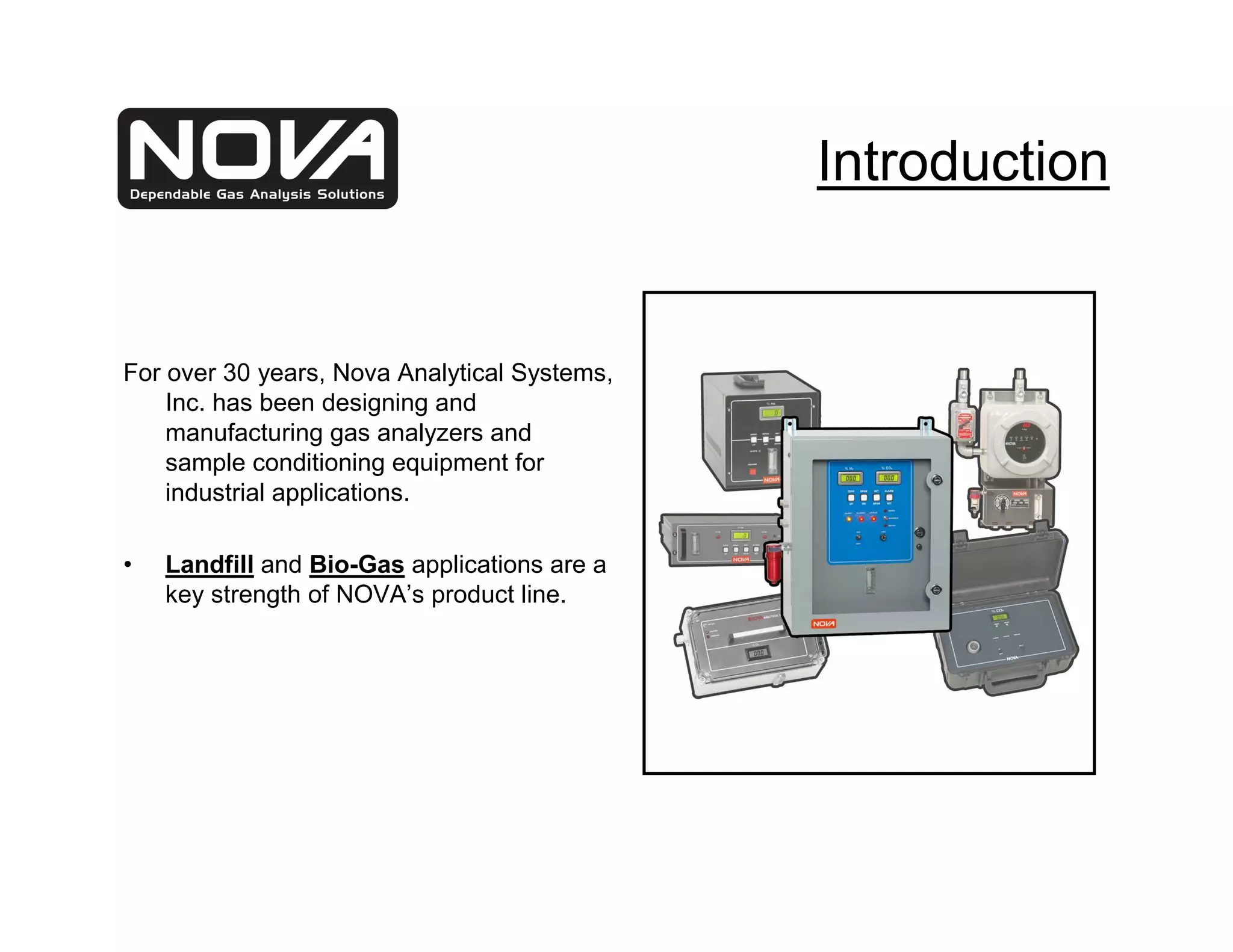
For over 30 years, Nova Analytical Systems,
    Inc. has been designing and
    manufacturing gas analyzers and
    sample conditioning equipment for
    industrial applications.

•   Landfill and Bio-Gas applications are a
    key strength of NOVA’s product line.
Introduction

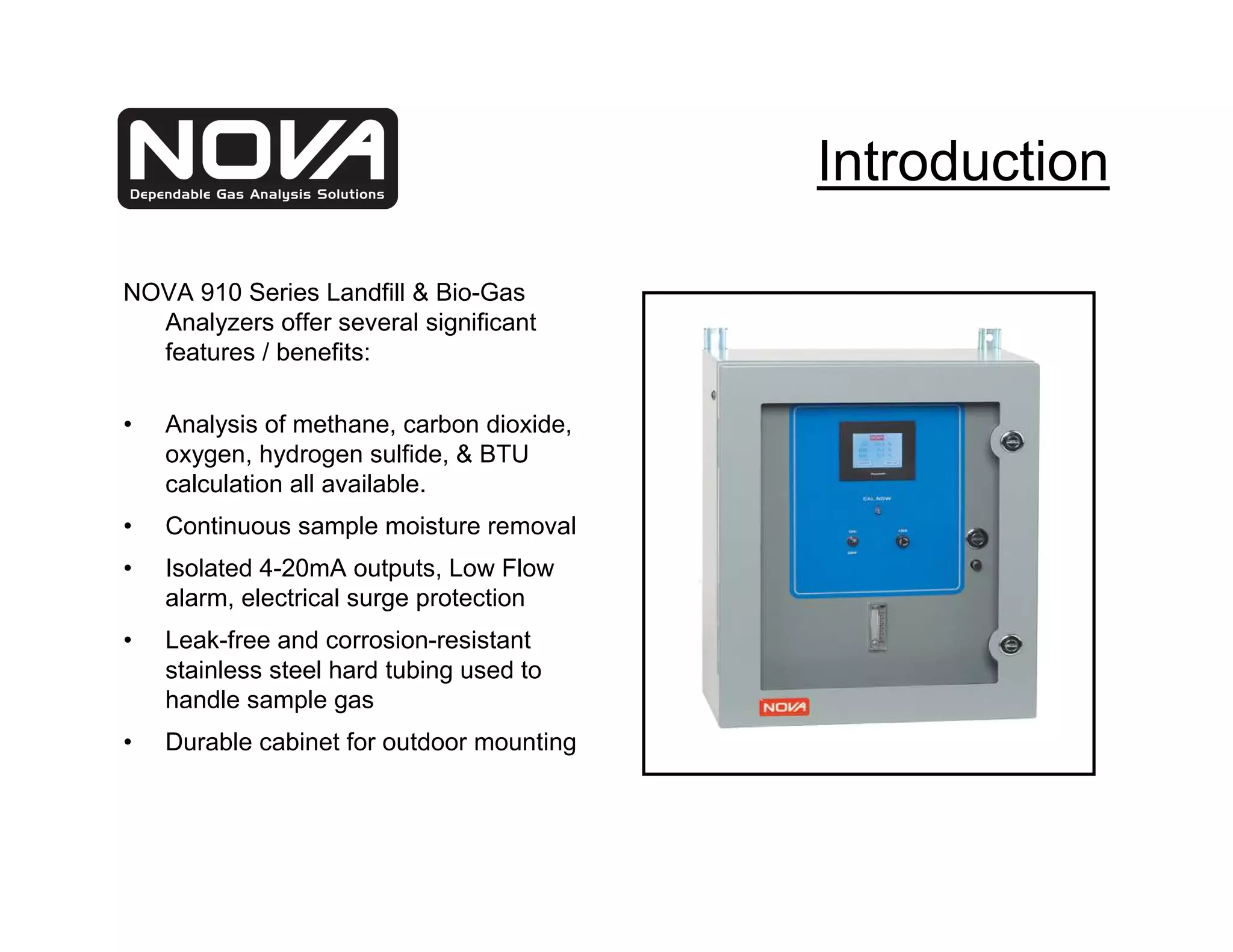
NOVA 910 Series Landfill & Bio-Gas
  Analyzers offer several significant
  features / benefits:

•   Analysis of methane, carbon dioxide,
    oxygen, hydrogen sulfide, & BTU
    calculation all available.
•   Continuous sample moisture removal
•   Isolated 4-20mA outputs, Low Flow
    alarm, electrical surge protection
•   Leak-free and corrosion-resistant
    stainless steel hard tubing used to
    handle sample gas
•   Durable cabinet for outdoor mounting
Overview

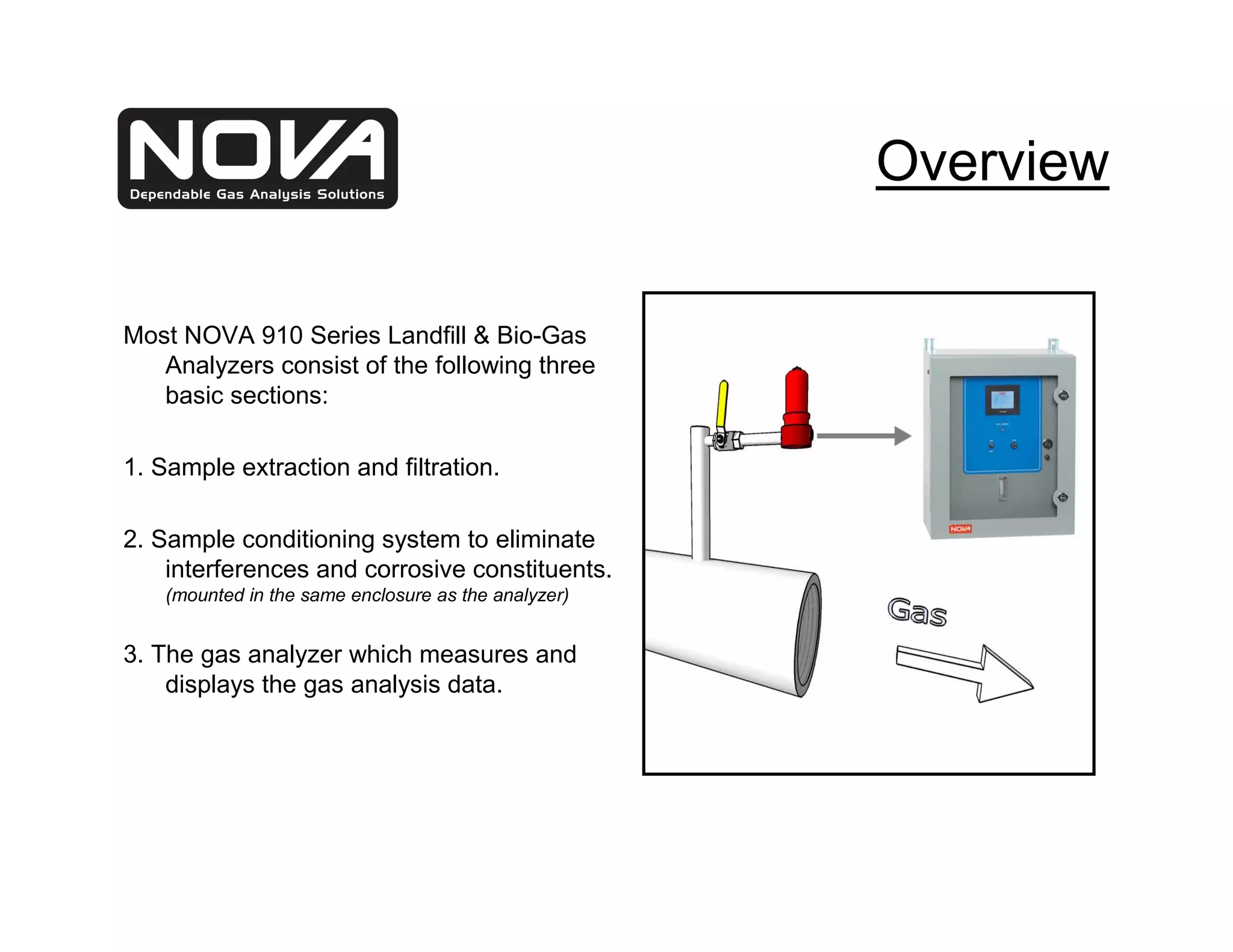
Most NOVA 910 Series Landfill & Bio-Gas
   Analyzers consist of the following three
   basic sections:

1. Sample extraction and filtration.

2. Sample conditioning system to eliminate
    interferences and corrosive constituents.
    (mounted in the same enclosure as the analyzer)


3. The gas analyzer which measures and
    displays the gas analysis data.
Sample Extraction


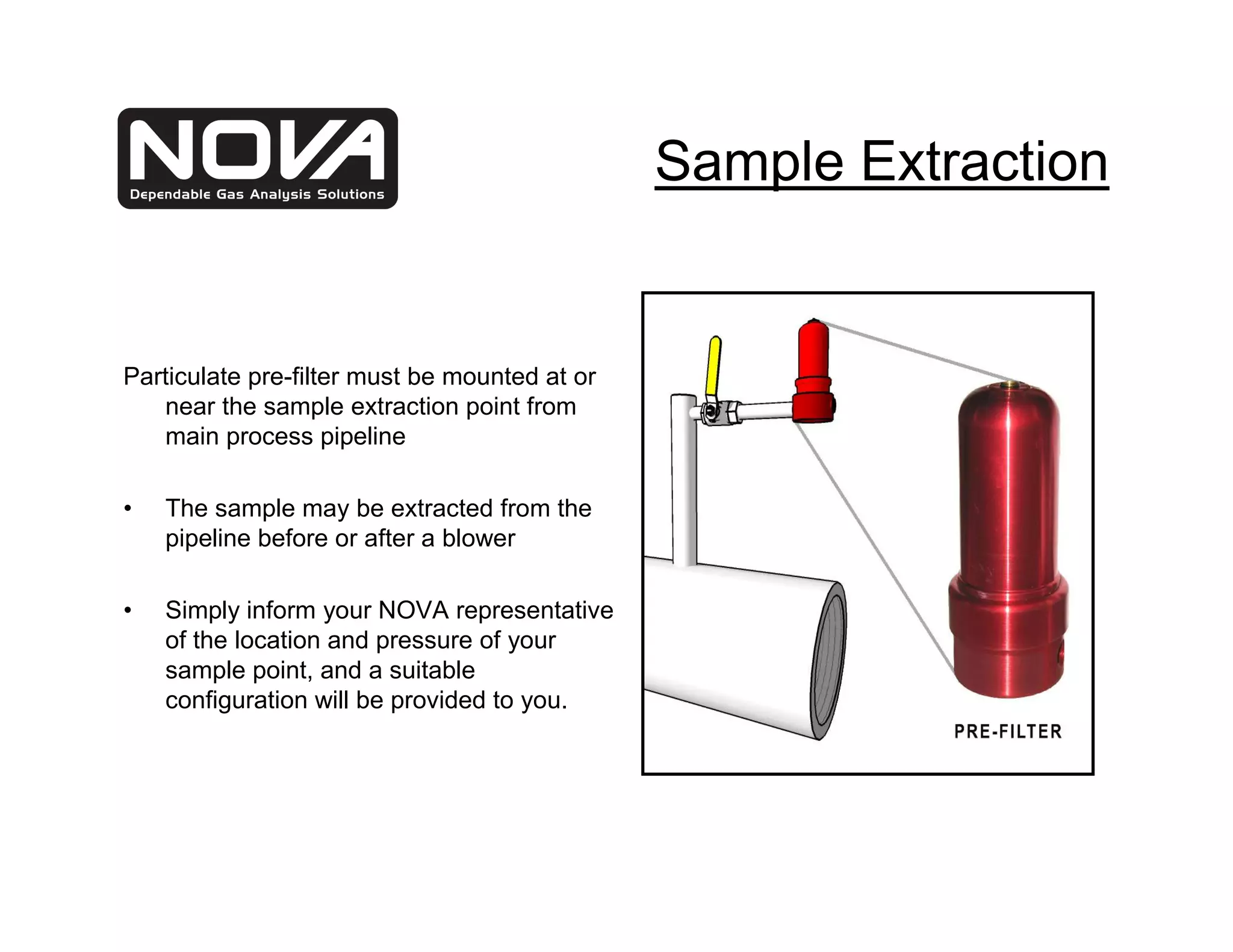
Particulate pre-filter must be mounted at or
   near the sample extraction point from
   main process pipeline

•   The sample may be extracted from the
    pipeline before or after a blower

•   Simply inform your NOVA representative
    of the location and pressure of your
    sample point, and a suitable
    configuration will be provided to you.
Sample Conditioning

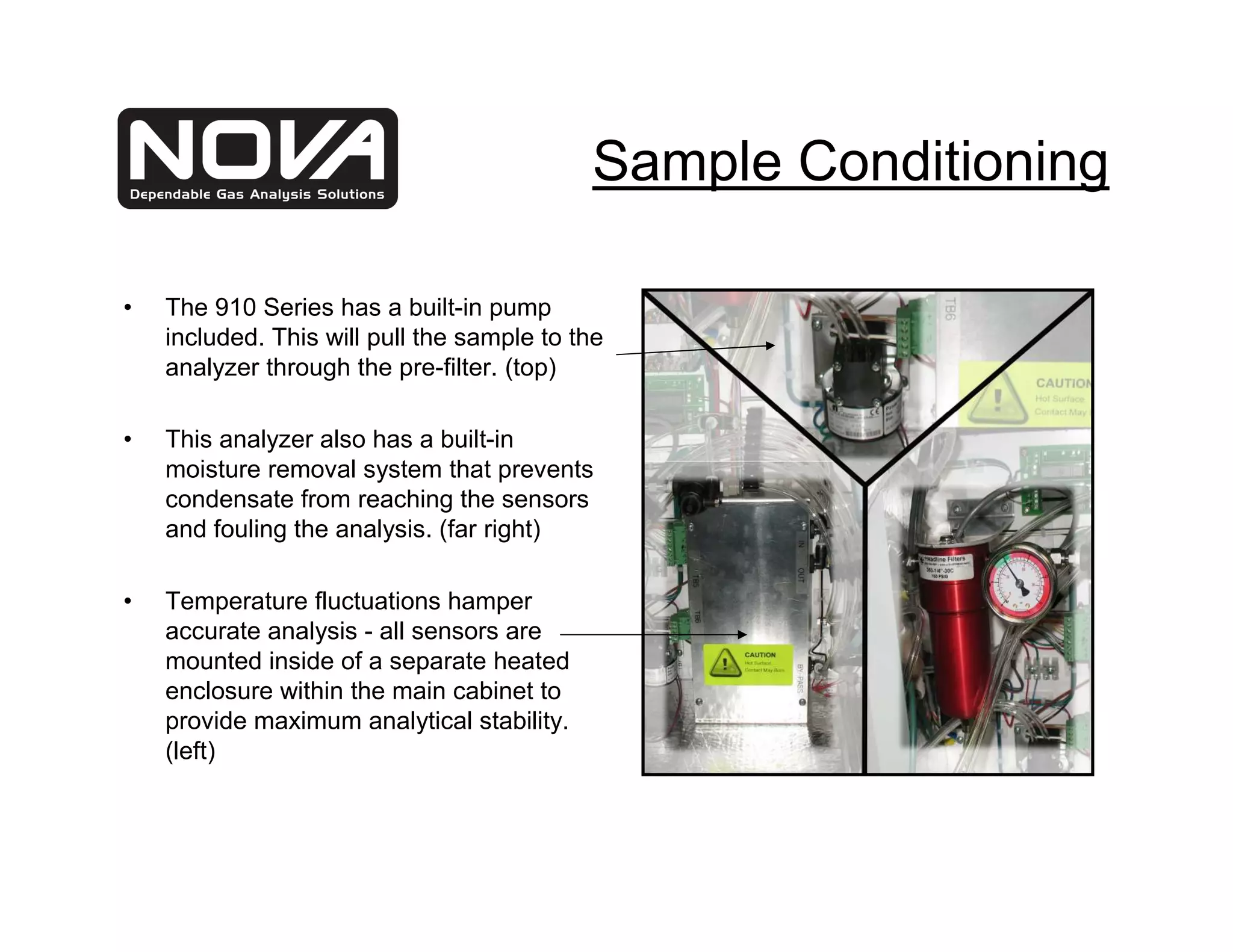
•   The 910 Series has a built-in pump
    included. This will pull the sample to the
    analyzer through the pre-filter. (top)

•   This analyzer also has a built-in
    moisture removal system that prevents
    condensate from reaching the sensors
    and fouling the analysis. (far right)

•   Temperature fluctuations hamper
    accurate analysis - all sensors are
    mounted inside of a separate heated
    enclosure within the main cabinet to
    provide maximum analytical stability.
    (left)
Cabinet Features

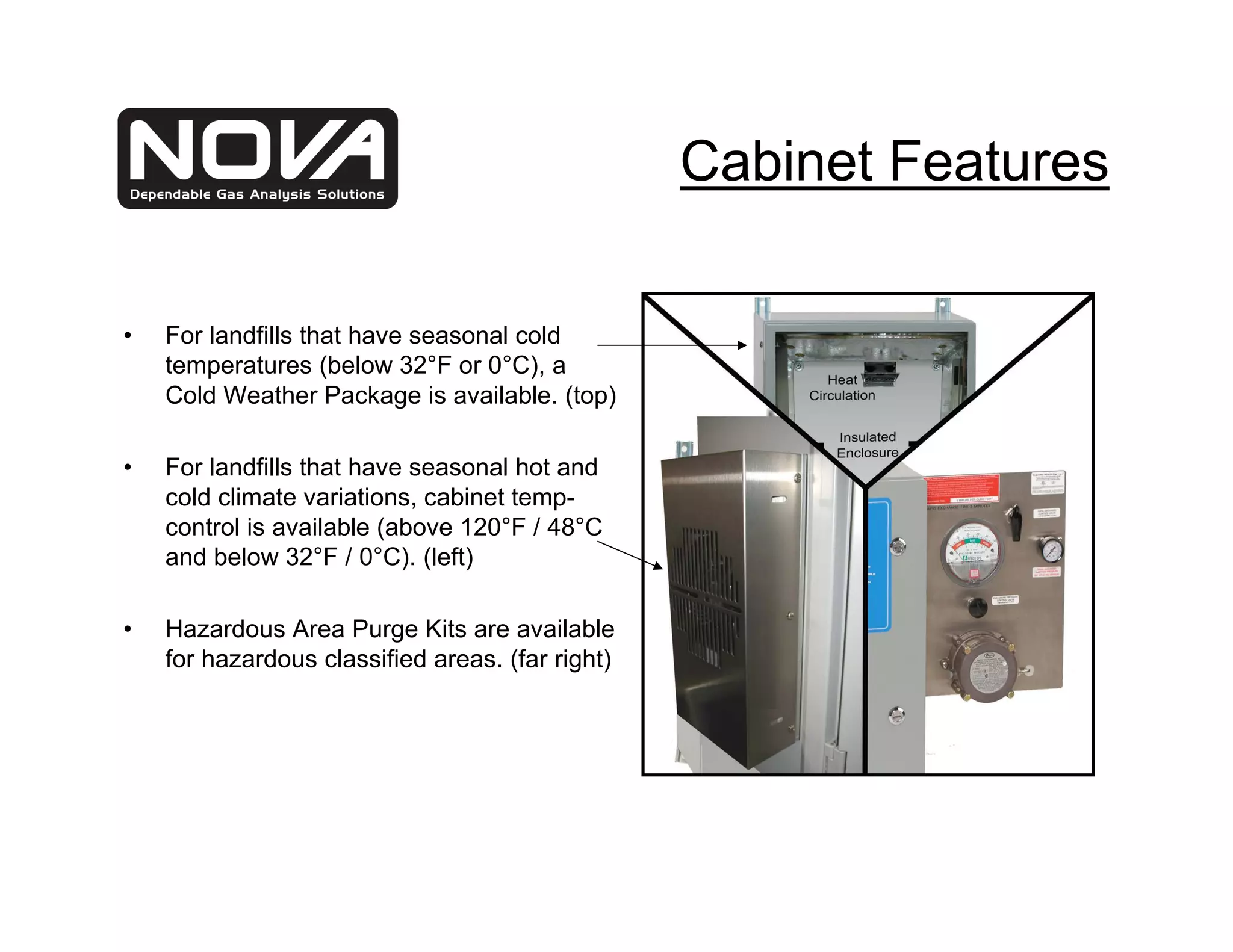
•   For landfills that have seasonal cold
    temperatures (below 32°F or 0°C), a
    Cold Weather Package is available. (top)

•   For landfills that have seasonal hot and
    cold climate variations, cabinet temp-
    control is available (above 120°F / 48°C
    and below 32°F / 0°C). (left)

•   Hazardous Area Purge Kits are available
    for hazardous classified areas. (far right)
Installation

Correct installation is not too difficult, but is
   critical to proper analyzer functionality.

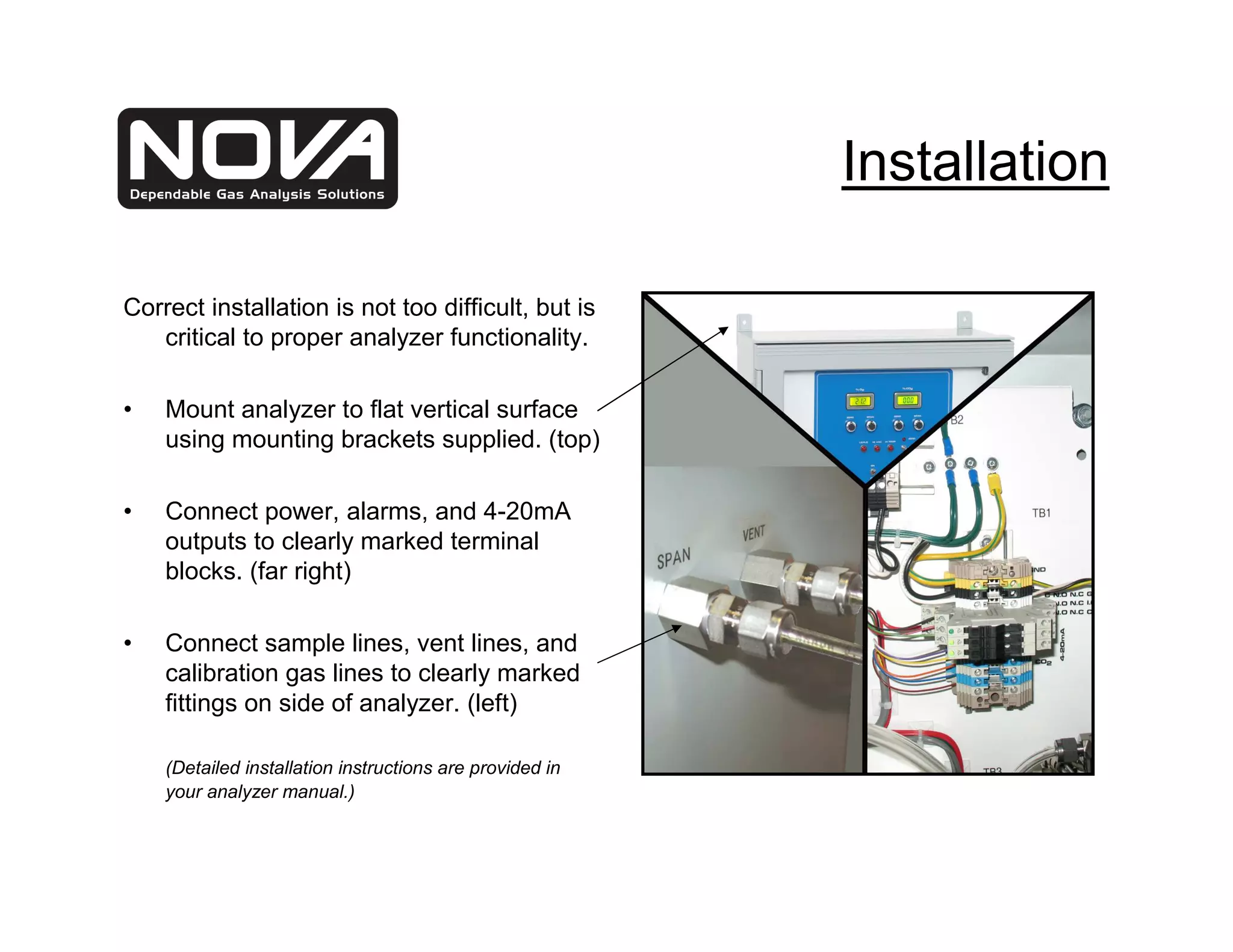
•   Mount analyzer to flat vertical surface
    using mounting brackets supplied. (top)

•   Connect power, alarms, and 4-20mA
    outputs to clearly marked terminal
    blocks. (far right)

•   Connect sample lines, vent lines, and
    calibration gas lines to clearly marked
    fittings on side of analyzer. (left)

    (Detailed installation instructions are provided in
    your analyzer manual.)
System Maintenance


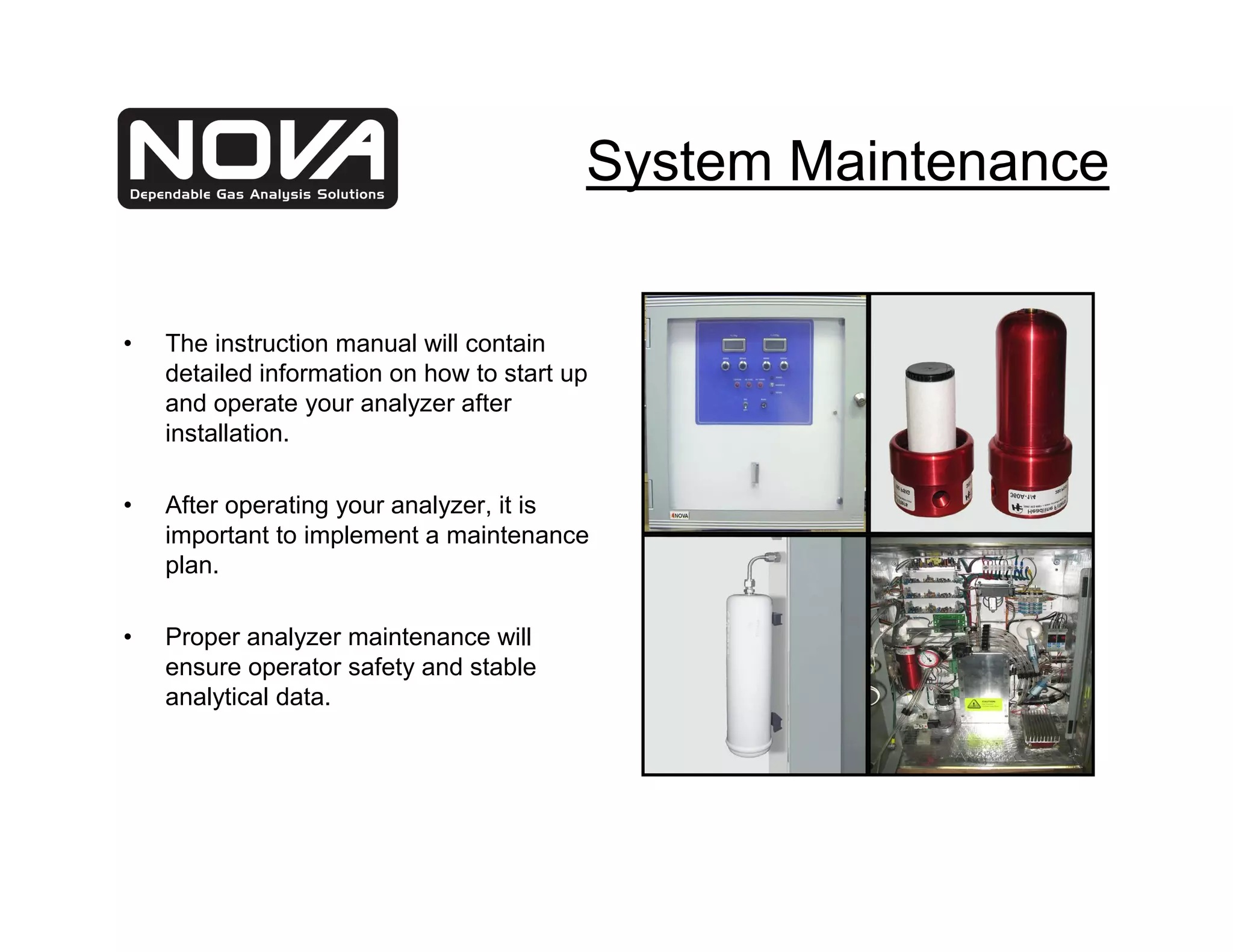
•   The instruction manual will contain
    detailed information on how to start up
    and operate your analyzer after
    installation.

•   After operating your analyzer, it is
    important to implement a maintenance
    plan.

•   Proper analyzer maintenance will
    ensure operator safety and stable
    analytical data.
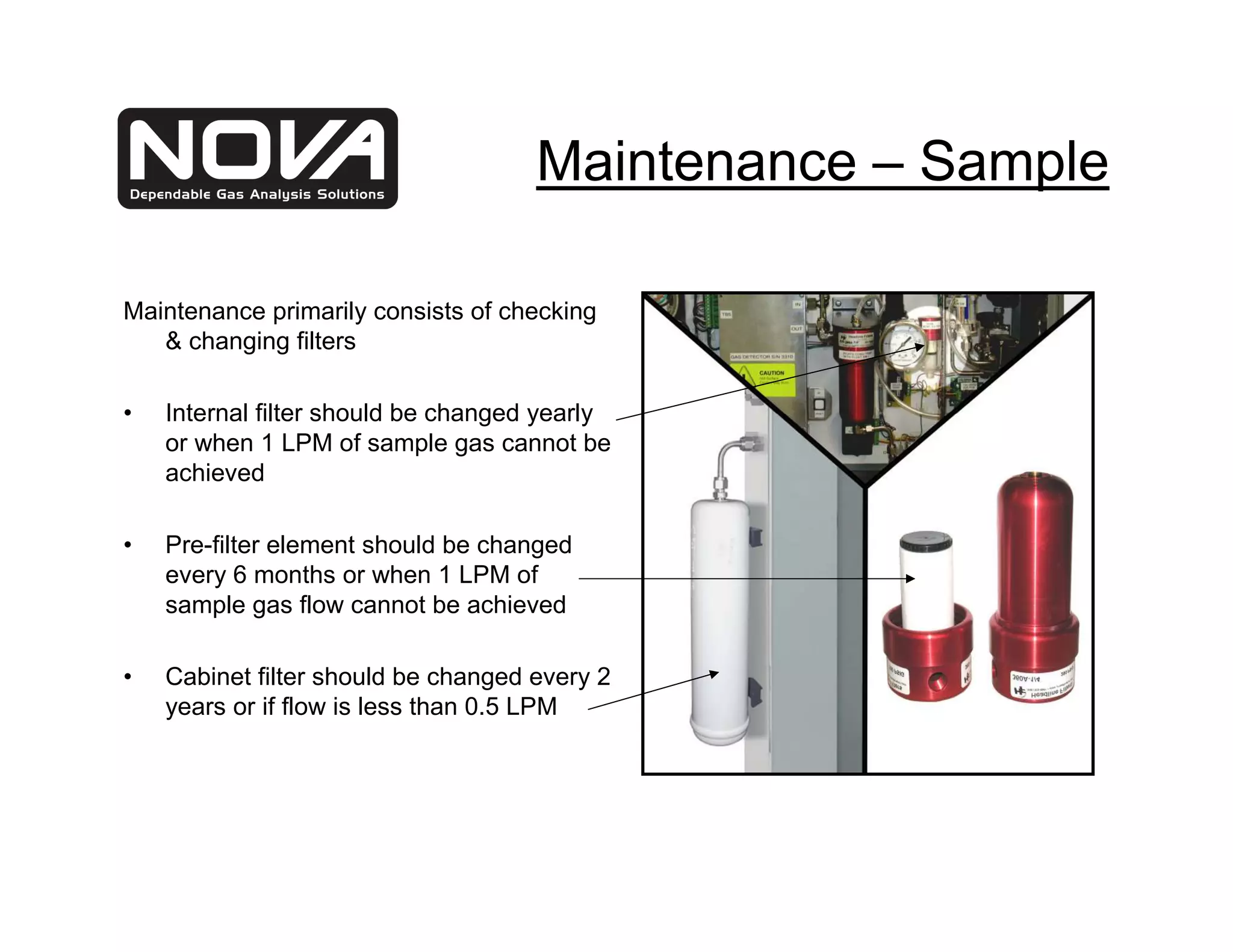
Maintenance – Sample

Maintenance primarily consists of checking
   & changing filters

•   Internal filter should be changed yearly
    or when 1 LPM of sample gas cannot be
    achieved

•   Pre-filter element should be changed
    every 6 months or when 1 LPM of
    sample gas flow cannot be achieved

•   Cabinet filter should be changed every 2
    years or if flow is less than 0.5 LPM
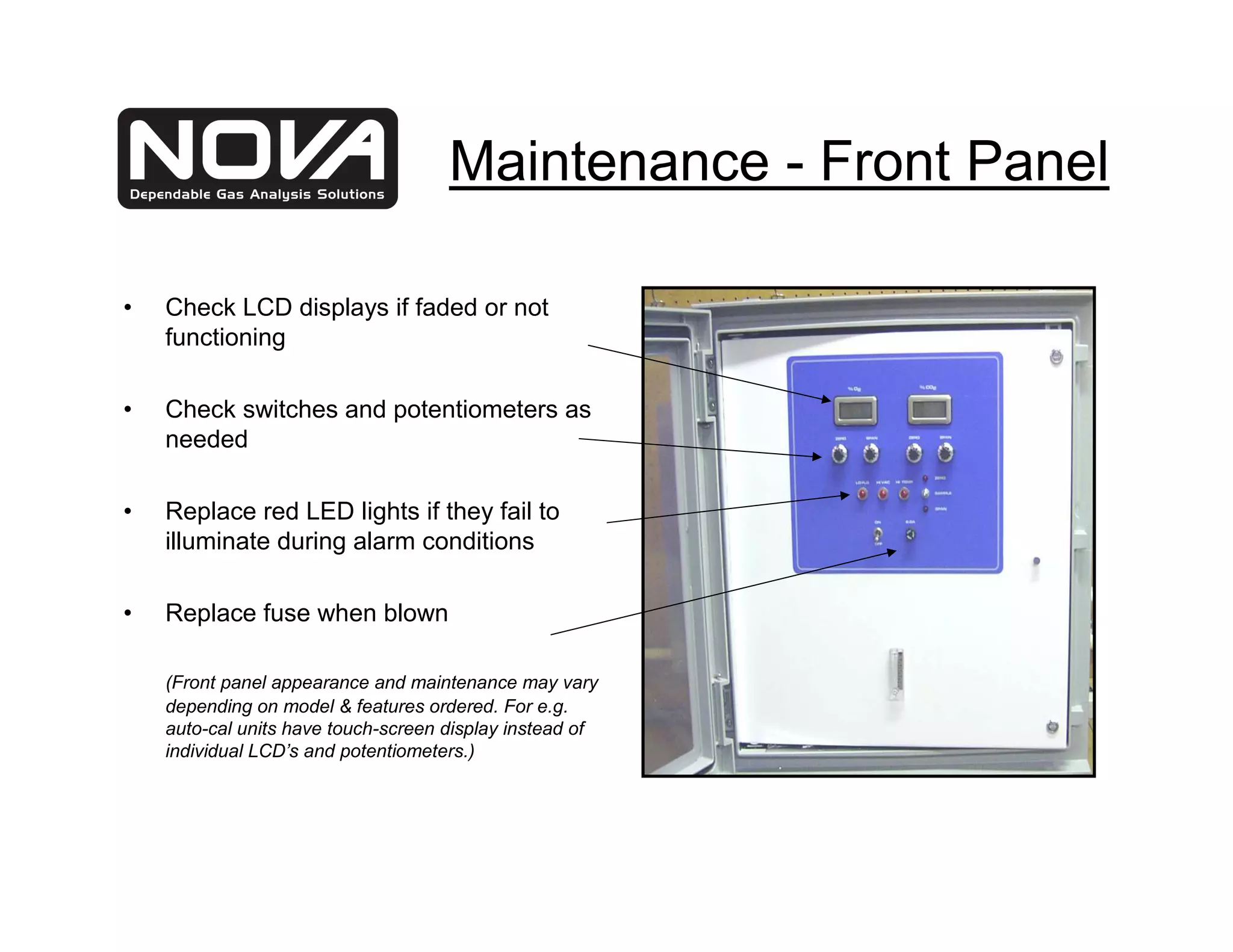
Maintenance - Front Panel

•   Check LCD displays if faded or not
    functioning

•   Check switches and potentiometers as
    needed

•   Replace red LED lights if they fail to
    illuminate during alarm conditions

•   Replace fuse when blown

    (Front panel appearance and maintenance may vary
    depending on model & features ordered. For e.g.
    auto-cal units have touch-screen display instead of
    individual LCD’s and potentiometers.)
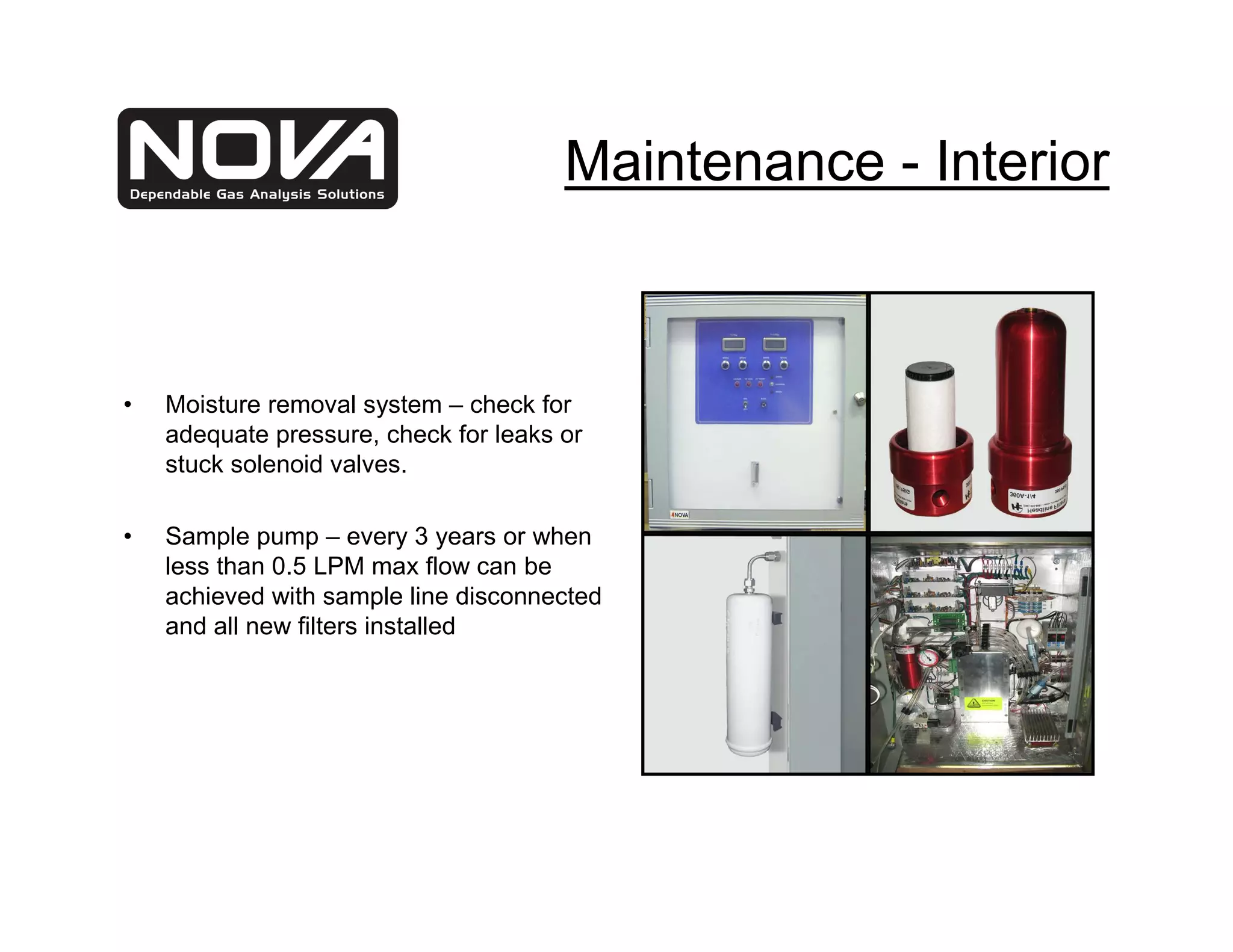
Maintenance - Interior


•   Moisture removal system – check for
    adequate pressure, check for leaks or
    stuck solenoid valves.

•   Sample pump – every 3 years or when
    less than 0.5 LPM max flow can be
    achieved with sample line disconnected
    and all new filters installed
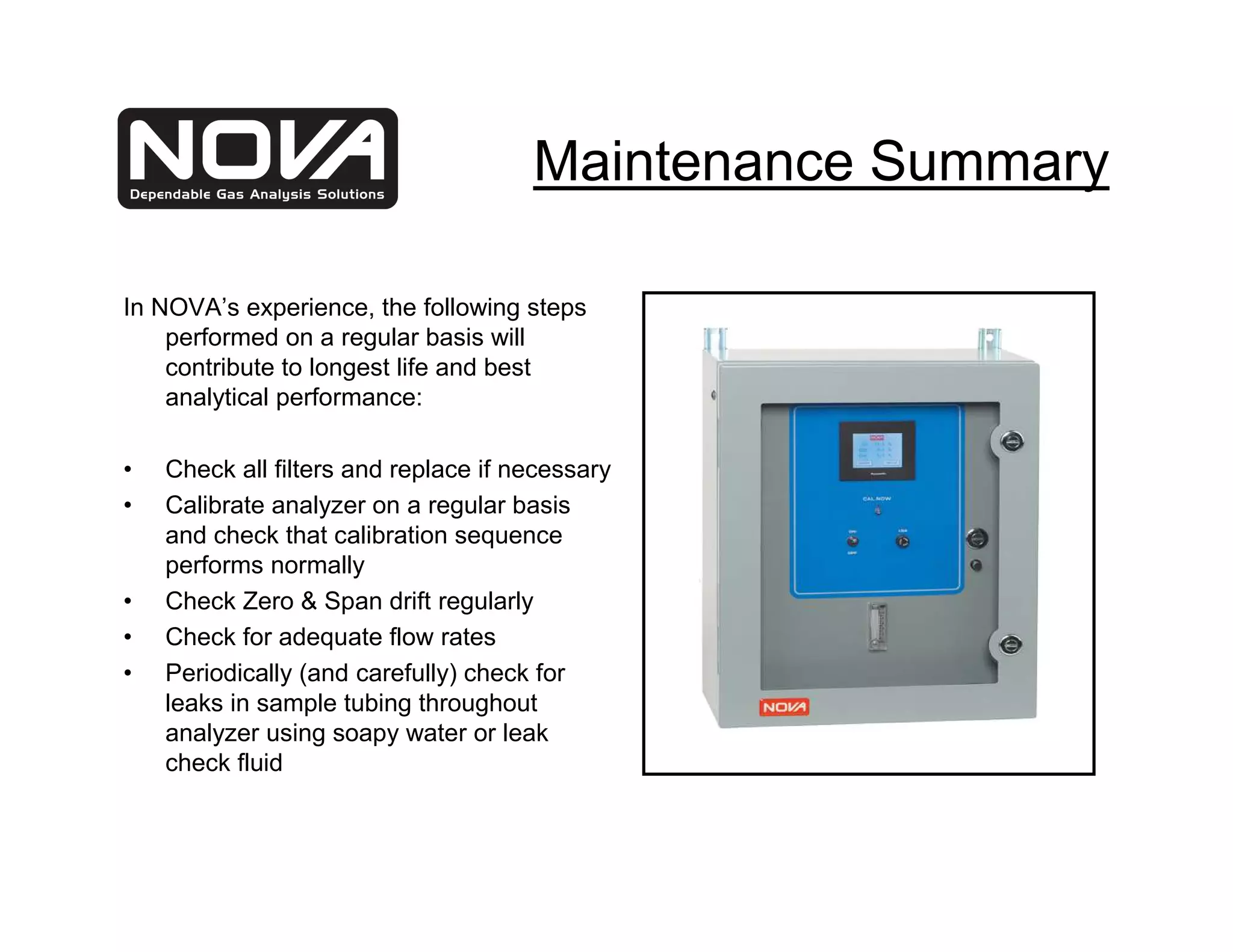
Maintenance Summary

In NOVA’s experience, the following steps
    performed on a regular basis will
    contribute to longest life and best
    analytical performance:

•   Check all filters and replace if necessary
•   Calibrate analyzer on a regular basis
    and check that calibration sequence
    performs normally
•   Check Zero & Span drift regularly
•   Check for adequate flow rates
•   Periodically (and carefully) check for
    leaks in sample tubing throughout
    analyzer using soapy water or leak
    check fluid
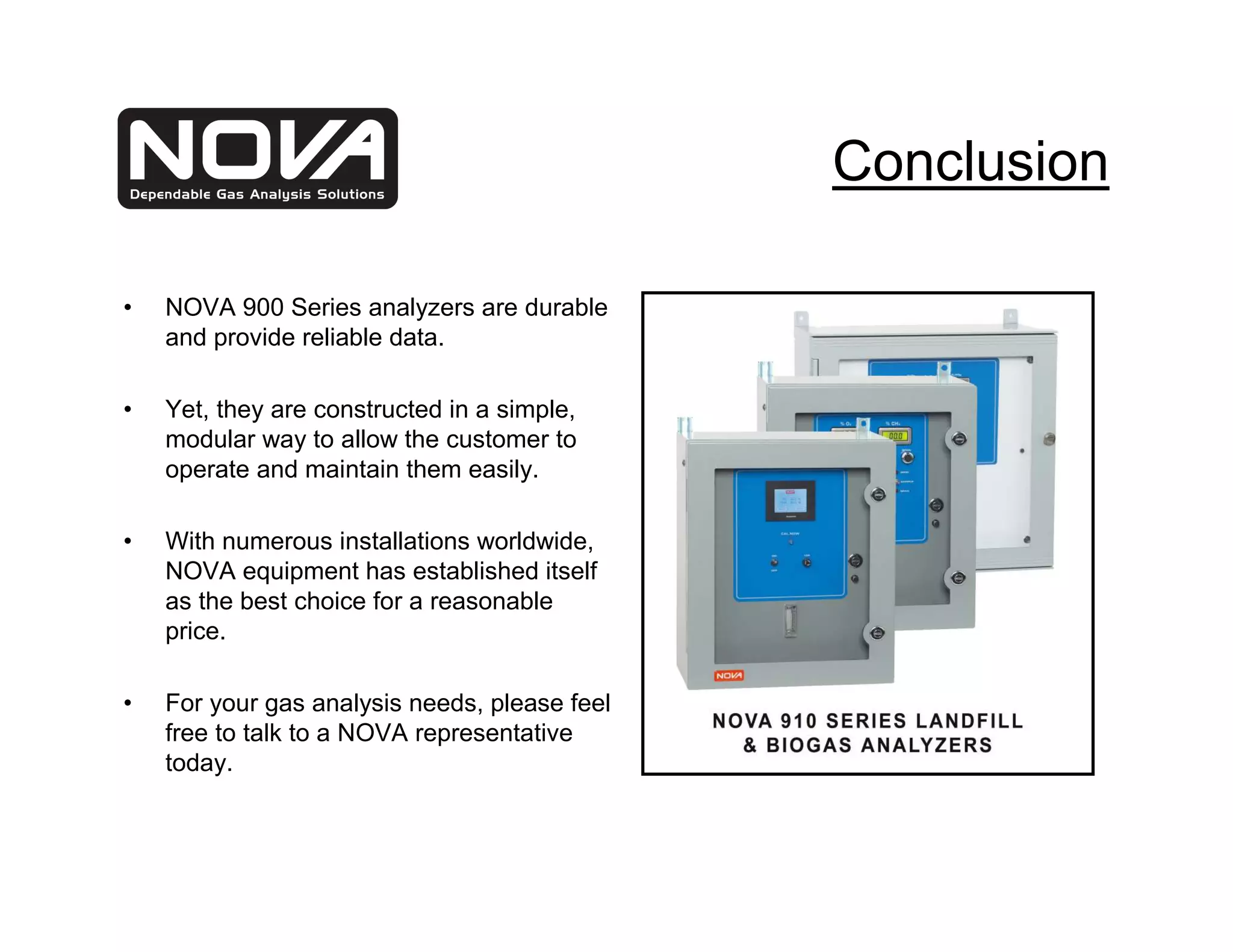
Conclusion

•   NOVA 900 Series analyzers are durable
    and provide reliable data.

•   Yet, they are constructed in a simple,
    modular way to allow the customer to
    operate and maintain them easily.

•   With numerous installations worldwide,
    NOVA equipment has established itself
    as the best choice for a reasonable
    price.

•   For your gas analysis needs, please feel
    free to talk to a NOVA representative
    today.
Thank you for considering
        NOVA

910 System Overview1

  • 1.
    910 Series ContinuousLandfill & Bio-Gas Analyzers Description, Installation, and Preventative Maintenance Recommendations Prepared by: David Sheasby, NOVA Technical Sales Department
  • 2.
    Introduction For over 30years, Nova Analytical Systems, Inc. has been designing and manufacturing gas analyzers and sample conditioning equipment for industrial applications. • Landfill and Bio-Gas applications are a key strength of NOVA’s product line.
  • 3.
    Introduction NOVA 910 SeriesLandfill & Bio-Gas Analyzers offer several significant features / benefits: • Analysis of methane, carbon dioxide, oxygen, hydrogen sulfide, & BTU calculation all available. • Continuous sample moisture removal • Isolated 4-20mA outputs, Low Flow alarm, electrical surge protection • Leak-free and corrosion-resistant stainless steel hard tubing used to handle sample gas • Durable cabinet for outdoor mounting
  • 4.
    Overview Most NOVA 910Series Landfill & Bio-Gas Analyzers consist of the following three basic sections: 1. Sample extraction and filtration. 2. Sample conditioning system to eliminate interferences and corrosive constituents. (mounted in the same enclosure as the analyzer) 3. The gas analyzer which measures and displays the gas analysis data.
  • 5.
    Sample Extraction Particulate pre-filtermust be mounted at or near the sample extraction point from main process pipeline • The sample may be extracted from the pipeline before or after a blower • Simply inform your NOVA representative of the location and pressure of your sample point, and a suitable configuration will be provided to you.
  • 6.
    Sample Conditioning • The 910 Series has a built-in pump included. This will pull the sample to the analyzer through the pre-filter. (top) • This analyzer also has a built-in moisture removal system that prevents condensate from reaching the sensors and fouling the analysis. (far right) • Temperature fluctuations hamper accurate analysis - all sensors are mounted inside of a separate heated enclosure within the main cabinet to provide maximum analytical stability. (left)
  • 7.
    Cabinet Features • For landfills that have seasonal cold temperatures (below 32°F or 0°C), a Cold Weather Package is available. (top) • For landfills that have seasonal hot and cold climate variations, cabinet temp- control is available (above 120°F / 48°C and below 32°F / 0°C). (left) • Hazardous Area Purge Kits are available for hazardous classified areas. (far right)
  • 8.
    Installation Correct installation isnot too difficult, but is critical to proper analyzer functionality. • Mount analyzer to flat vertical surface using mounting brackets supplied. (top) • Connect power, alarms, and 4-20mA outputs to clearly marked terminal blocks. (far right) • Connect sample lines, vent lines, and calibration gas lines to clearly marked fittings on side of analyzer. (left) (Detailed installation instructions are provided in your analyzer manual.)
  • 9.
    System Maintenance • The instruction manual will contain detailed information on how to start up and operate your analyzer after installation. • After operating your analyzer, it is important to implement a maintenance plan. • Proper analyzer maintenance will ensure operator safety and stable analytical data.
  • 10.
    Maintenance – Sample Maintenanceprimarily consists of checking & changing filters • Internal filter should be changed yearly or when 1 LPM of sample gas cannot be achieved • Pre-filter element should be changed every 6 months or when 1 LPM of sample gas flow cannot be achieved • Cabinet filter should be changed every 2 years or if flow is less than 0.5 LPM
  • 11.
    Maintenance - FrontPanel • Check LCD displays if faded or not functioning • Check switches and potentiometers as needed • Replace red LED lights if they fail to illuminate during alarm conditions • Replace fuse when blown (Front panel appearance and maintenance may vary depending on model & features ordered. For e.g. auto-cal units have touch-screen display instead of individual LCD’s and potentiometers.)
  • 12.
    Maintenance - Interior • Moisture removal system – check for adequate pressure, check for leaks or stuck solenoid valves. • Sample pump – every 3 years or when less than 0.5 LPM max flow can be achieved with sample line disconnected and all new filters installed
  • 13.
    Maintenance Summary In NOVA’sexperience, the following steps performed on a regular basis will contribute to longest life and best analytical performance: • Check all filters and replace if necessary • Calibrate analyzer on a regular basis and check that calibration sequence performs normally • Check Zero & Span drift regularly • Check for adequate flow rates • Periodically (and carefully) check for leaks in sample tubing throughout analyzer using soapy water or leak check fluid
  • 14.
    Conclusion • NOVA 900 Series analyzers are durable and provide reliable data. • Yet, they are constructed in a simple, modular way to allow the customer to operate and maintain them easily. • With numerous installations worldwide, NOVA equipment has established itself as the best choice for a reasonable price. • For your gas analysis needs, please feel free to talk to a NOVA representative today.
  • 15.
    Thank you forconsidering NOVA