Mapping research on hydropower and sustainability in
the Brazilian Amazon: advances, gaps in knowledge and
future directions
Simone Athayde1
, Mason Mathews2
, Stephanie Bohlman3
,
Walterlina Brasil4
, Carolina RC Doria5
, Jynessa Dutka-Gianelli6
,
Philip M Fearnside7
, Bette Loiselle8
, Elineide E Marques9
,
Theodore S Melis10
, Brent Millikan11
, Evandro M Moretto12
,
Anthony Oliver-Smith13
, Amintas Rossete14
, Raffaele Vacca15
and
David Kaplan16
In the last twenty years, multiple large and small hydroelectric
dams have begun to transform the Amazonian region, spawning
a growing volume of academic research across diverse
disciplinary and interdisciplinary fields. In this article, we offer a
critical review of recent research related to hydropower and
sustainability with a focuson the Brazilian Amazon. We revisit the
sustainability concept to include the contribution of various
knowledge fields and perspectives for understanding, managing
and making decisions about social-ecological systems
transformedbydams.WeconductedaliteraturereviewinWebof
Science of academic publications centered in the past 5 years
(2014–2019), on diverse aspects of hydropower planning,
construction, operation and monitoring in the Brazilian Amazon.
We present results of a co-occurrence network analysis of
publications, highlighting bridging fields, network
disconnections, and opportunities for interdisciplinary research.
Finally, we report recent advances in the understanding and
management of social-ecological systems in Amazonian
watersheds,includingbiophysical,socio-economic,governance
and development processes linked to hydropower planning and
implementation. This review identifies knowledge gaps and
future research directions, highlighting opportunities for
improved communication among scientists, practitioners,
decision-makers, indigenous peoples and local communities.
Addresses
1
Tropical Conservation and Development Program (TCD), Center for
Latin American Studies, University of Florida, 381 Grinter Hall, P.O. Box
115530, Gainesville, FL, 32611-5530, USA
2
Natural Hazards Center, University of Colorado Boulder, Boulder, USA
3
School of Forest Resources and Conservation (SFRC), University of
Florida, Gainesville, USA
4
Department of Education, Federal University of Rondoˆ nia (UNIR), Porto
Velho, Brazil
5
Laboratory of Ichthyology and Fisheries, Department of Biology,
Federal University of Rondoˆ nia (UNIR), Porto Velho, Brazil
6
Department of Community Sustainability, Michigan State University
(MSU), USA
7
National Institute for Amazonian Research (INPA), Manaus, Brazil
8
Department of Wildlife Ecology and Conservation (WEC) and Tropical
Conservation and Development Program (TCD), Center for Latin
American Studies, University of Florida, Gainesville, USA
9
Graduate Program in Environmental Sciences, (PPGCiamb),
Department of Biology, Federal University of Tocantins, Palmas, Brazil
10
U. S. Geological Survey (USGS), Southwest Biological Science
Center, Flagstaff, USA
11
International Rivers Network, Amazon Program, Brası´lia, Brazil
12
Institute of Energy and Environment, School of Arts, Sciences and
Humanities, University of Sa˜ o Paulo, Sa˜ o Paulo, Brazil
13
Department of Anthropology, University of Florida, Gainesville, USA
14
Faculty of Agrarian Sciences, State University of Mato Grosso
(UNEMAT), Nova Xavantina, Brazil
15
Department of Sociology and Criminology and Law, University of
Florida, Gainesville, USA
16
Engineering School of Sustainable Infrastructure and Environment
(ESSIE), Department of Environmental Engineering Sciences, University
of Florida, Gainesville, USA
Corresponding author: Athayde, Simone (simonea@ufl.edu)
Current Opinion in Environmental Sustainability 2019, 37:50–69
This review comes from a themed issue on Sustainability challenges
Edited by Emilio F Moran and Simone Athayde
For a complete overview see the Issue and the Editorial
Available online 1st August 2019
https://doi.org/10.1016/j.cosust.2019.06.004
1877-3435/ã 2019 Elsevier B.V. All rights reserved.
Introduction
The Amazon River basin is the largest freshwater system
in the world, providing critical benefits to local popula-
tions, national societies and humanity at large. Despite
the relatively conserved state of Amazonian watersheds
compared to US or European rivers, these ecosystems are
facing rapid transformations caused by agricultural expan-
sion, urbanization, overharvesting of animal and plant
species, and infrastructure development [1,2
,3
,4].
As a region of global superlatives hosting enormous cultural
and biological diversity, the Amazon is also a relatively
untapped source of energy for Latin American countries
reliant on hydroelectric energy [5]. Construction of
Available online at www.sciencedirect.com
ScienceDirect
Current Opinion in Environmental Sustainability 2019, 37:50–69 www.sciencedirect.com
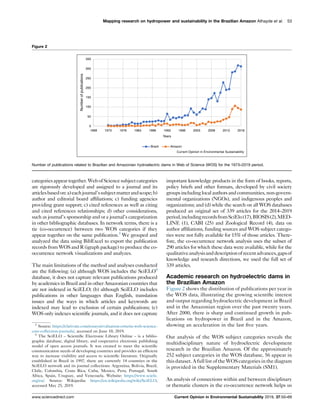
hydroelectric dams (both large and small) on tributaries of the
Amazon River in Brazil (see Figure 1) has advanced over the
past two decades as a result of long-term governmental plans
geared towards increased energy security, economic growth,
industrialization and improved living standards [5–7]. These
efforts are part of the Initiative for the Integration of the
Regional Infra-structure of South America (IIRSA), which
seeks to transform Amazonia into a continental source of
hydropower and linked by an intermodal hub of roads, ports,
waterways, and railroads [8]. The effects of social-ecological
transformationstriggeredbydams,suchasresourceextraction
and associated infrastructure development in the Brazilian
Amazon, will be magnified by existing and proposed dams in
the Amazon–Andes region [2
,9,10
]. The rapid pace of
planned development, the spatial scale of effects, and the
potential for detrimental and irreversible loss of biodiversity
and globally important environmental services, make this
hydrologic transformation unprecedented in its conse-
quences. Large dams are predicted to have wide-spread
impacts on watersheds, forests, people, economies and cli-
mate, from local to global scales [2
,11
,12
]. Small dams are
also modifying the Amazon landscape at an increasing rate,
supported by international and national policies and regula-
tions that often include less strict environmental licensing
processes [13
,14
].
Despite a history of hydropower development in the Amazon
since the 1970s, the cumulative, synergistic and long-term
effects of dams on rivers, forests, and social systems are still
underestimated in planning, decision-making and manage-
ment [2
,15–18]. Gaps in understanding are largely due to
lackofrigorous,independentresearch,lackofarticulationand
integration of existing data and knowledge, as well as due to a
piece-meal approach to studies informing environmental and
social impact assessments and mitigation. Further, the short
time period allowed for pre-dam and post-dam monitoring
limits opportunities for improving management and possible
dam re-operation to better meet multiple objectives, efforts
that have been implemented in other regulated rivers of the
world (e.g. Colorado River in the US) [19].
Sustainability science focuses on generating, articulating
and applying knowledge to development problems, gover-
nance and decision-making,from local to global scales [20].
In order to meet the needs of present generations without
compromising those of future ones, as sustainability is
defined, decision-makers need to map-out and consider
the best existing science and knowledge. This entails
including multiple perspectives (i.e. embracing pluralism),
options and trade-offs in planning and decision-making,
and requires greater integration of different types of infor-
mation and knowledge held by diverse social groups,
scientists, practitioners and other relevant actors [21–23].
Social-ecological systems (SES) can be conceptualized as
systems composed of hierarchical nested elements: resource
Mapping research on hydropower and sustainability in the Brazilian Amazon Athayde et al. 51
Figure 1
BRAZIL
Peru
Ecuador
Colombia
Venezuela
Guiana
Suriname French
Guiana
Watersheds
South America
Protected areas
Indigenous lands
Major rivers
Amazon
Madeira
Tapajos
Xingu
Araguaia - Tocantins
Planned
Planned
Inventoried
Inventoried
Operation
Operation
Small Hydropower
Projects (SHPs)
Large Hydropower
Projects (LHPs)
Bolivia
500
Km
N
20’0’0”S
10’0’0”S
0’0’0”
80’0’0”W 70’0’0”W 60’0’0”W 50’0’0”W
Current Opinion in Environmental Sustainability
Map of the Amazon basin showing small (SHPs) and large (LHPs) hydropower projects planned, inventoried and in operation in major Brazilian
watersheds. Sources: SHPs and LHPs: ANEEL (2019); Protected Areas, Brazilian rivers, watersheds: MMA; Indigenous lands: FUNAI; South
American rivers: HydroSHEDS.
www.sciencedirect.com Current Opinion in Environmental Sustainability 2019, 37:50–69
units (natural) and users (human), resource systems (linked
natural-human systems), governance systems and wider
social, economic and political settings at different scales
[24]. We broadly define institutions as systems of established
and prevalent social rules that structure social interactions
[25]. Governance includes the development and application
of principles, rules and norms and the enabling of institutions
that guide public and private interactions in managing social-
ecological systems [26]. Managing SES sustainably in the
contextofdamsinvolves:(1)understandingandmodelingthe
interactions of a system’s components at different spatial and
temporal scales; and (2) making informed decisions based on
assessment of these interactions [27,28].
In Amazonian countries, insufficient assessment and
monitoring of social-ecological transformations associated
with hydropower are worsened by the limited and/or
inadequate participation of social actors in the planning,
construction, monitoring, mitigation and operational
stages of dam implementation [29,30
,31,32]. Inconsis-
tencies within and across governmental institutions and
policies and poor communication between stakeholders
(academics, civil society, government, private companies,
communities) have exacerbated social conflicts, increased
judicialization processes, and resulted in poor perfor-
mance of mitigation and monitoring programs
[30
,33
,34,35]. In particular, the recent planning and
construction of hydroelectric dams across major river
basins in the Brazilian Amazon (Tocantins, Madeira,
Xingu, and Tapajo´s) have triggered violent conflicts,
lacked adequate consultation with indigenous and tradi-
tional communities, and have been notorious for violation
of human rights and corruption scandals [33
,35–37].
In this article, we review recent advances in research and
knowledge production on hydropower development in the
BrazilianAmazoninthelastfiveyears,identifyingprogresson
key themes and disciplinary fields, as well as knowledge gaps
and future research directions. The synthesis and review
process, including the definition of key fields, themes and
criticalquestions,arebasedonanalysesoftheWebofScience
(WOS) database of scientific publications, as well as from
collaborative work done among members of the Amazon
Dams Research Network (ADN/RBA/RIRA).1
We begin
by presenting results of analyses of WOS data focused on
publications about Brazilian and Amazon dams, showing how
research on this topic has developed through time. We then
provide a co-occurrence network analysis for a subset of
290 articles about Brazilian Amazon hydroelectric dams pub-
lishedinthelastfiveyears(2014–2019),highlightingthemain
disciplinary fields that are contributing knowledge on this
topic, how they are connected, what fields are more central to
this subject, and which ones are acting as disciplinary bridges.
Next, we present a critical analysis of this set of publications,
synthesizing information on academic fields, institutions and
funding sources. Finally, we offer a critical review of recent
advances, gaps of knowledge and future research directions.
Methods
This review is based on compilation, synthesis and analysis
of data on scientific publications found in the Web of
Science2
(WOS) database (including all databases available)
fordifferent time periods and with different geographic foci.
Weinitiallyconductedasearchusingtheterms‘Brazil’AND
‘dam and/or dams; and/or hydroelectric; and/or hydropower’
for the 1968–2019 period (50 years), which produced
3866 records. We then conducted a search for the same
period replacing ‘Brazil’ by ‘Amazon or Amazonian’ as a key
word,whichproduced847records.Thefirstyeartopresenta
publication record on this topic for Brazil was 1973.
We conducted an analysis of themes and subject co-
occurrence patterns in existing published research on dams
focused on hydropower development in the Brazilian Ama-
zon. Analyses of co-authorship patterns in journal articles
havebeen used tomeasurethegrowthofteam science [38],
studytheevolutionofscientificfields[39],identifyresearch
groups and communities [40–42], explain research perfor-
mance [43], and identify influential scientists [44], among
other things. While co-authorship studies are concerned
withprofessional relationshipsamongscientiststhatleadto
publications, a subject co-occurrence analysis can reveal
the connections and gaps between the scientific disciplines
that shape academic knowledge production.
For the analysis of co-occurrence of subject categories in the
samepublications,wecleanedtheinitialdatasetof471records
to include only publications related to hydropower in the
BrazilianAmazon,whichproducedasetof339peer-reviewed
articles for the 2014–2019 period. In this set, we analyzed the
290recordsforwhichfulldataonco-authorship,WOSsubject
categories,organizationsandfundingwereavailable.Weused
the subset of 290 publications with complete data to charac-
terize the most studied topics in recent research related to
hydropower, identify which WOS subject categories are
represented, and measure how and where these subject
52 Sustainability challenges
1
The Amazon Dams Network is a transdisciplinary international
network of researchers and various stakeholders studying hydropower
development in the Amazon. It is named Amazon Dams Research
Network in the US (ADN); Rede de Pesquisa em Barragens Amazoˆnicas
(RBA) in Brazil; and Red de Investigacio´n en Represas Amazo´nicas
(RIRA) in Amazonian Spanish-speaking countries. More information:
www.amazondamsnetwork.org.
2
The Web of Science (WOS), previously known as Web of Knowl-
edge, is an online subscription-based scientific citation indexing service
that provides a comprehensive citation search. The Web of Science Core
Collection consists of six online databases: Science Citation Index;
Social Sciences Citation Index. Arts and Humanities Citation Index;
Emerging Sources Citation Index; Book Citation Index; and Conference
Proceedings Citation Index. Additional databases available in WOS
searches include SciELO Citation Index; BIOSIS Citation Index;
MEDLINE1; CABI; and Zoological records. Website: https://
clarivate.com/products/web-of-science/ Source: Wikipedia: https://en.
wikipedia.org/wiki/Web_of_Science, accessed May 25, 2019.
Current Opinion in Environmental Sustainability 2019, 37:50–69 www.sciencedirect.com
categoriesappeartogether.WebofSciencesubjectcategories
are rigorously developed and assigned to a journal and its
articlesbasedon:a)eachjournal’ssubjectmatterandscope;b)
author and editorial board affiliations; c) funding agencies
providing grant support; c) cited references as well as citing
and cited references relationships; d) other considerations,
such as journal’s sponsorship and or a journal’s categorization
in other bibliographic databases. In network terms, there is a
tie (co-occurrence) between two WOS categories if they
appear together on the same publication.3
We grouped and
analyzed the data using BibExcel to export the publication
records from WOS and R (igraph package) to produce the co-
occurrence network visualizations and analyzes.
The main limitations of the method and analyses conducted
are the following: (a) although WOS includes the SciELO4
database, it does not capture relevant publications produced
by academics in Brazil and in other Amazonian countries that
are not indexed in SciELO; (b) although SciELO includes
publications in other languages than English, translation
issues and the ways in which articles and keywords are
indexed may lead to exclusion of certain publications; (c)
WOS only indexes scientific journals, and it does not capture
important knowledge products in the form of books, reports,
policy briefs and other formats, developed by civil society
groups including local authors and communities, non-govern-
mental organizations (NGOs), and indigenous peoples and
organizations; and (d) while the search on all WOS databases
produced an original set of 339 articles for the 2014–2019
period,includingrecordsfromSciElo(17),BIOSIS(2),MED-
LINE (1), CABI (25) and Zoological Record (4), data on
author affiliations, funding sources and WOS subject catego-
ries were not fully available for 15% of those articles. There-
fore, the co-occurrence network analysis uses the subset of
290 articles for which these data were available, while for the
qualitativeanalysisanddescriptionofrecentadvances,gapsof
knowledge and research directions, we used the full set of
339 articles.
Academic research on hydroelectric dams in
the Brazilian Amazon
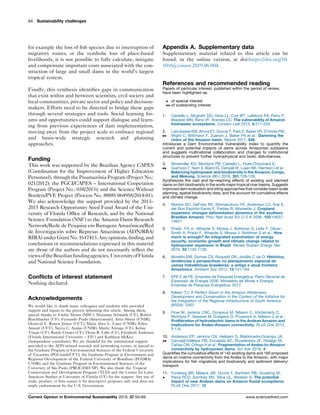
Figure 2 shows the distribution of publications per year in
the WOS data, illustrating the growing scientific interest
and output regarding hydroelectric development in Brazil
and in the Amazonian region over the past twenty years.
After 2000, there is sharp and continued growth in pub-
lications on hydropower in Brazil and in the Amazon,
showing an acceleration in the last five years.
Our analysis of the WOS subject categories reveals the
multidisciplinary nature of hydroelectric development
research in the Brazilian Amazon. Of the approximately
252 subject categories in the WOS database, 56 appear in
this dataset. A full list of the WOScategories in the diagram
is provided in the Supplementary Materials (SM1).
An analysis of connections within and between disciplinary
or thematic clusters in the co-occurrence network helps us
Mapping research on hydropower and sustainability in the Brazilian Amazon Athayde et al. 53
Figure 2
Numberofpublications
Brazil Amazon
Years
350
300
250
200
150
100
50
0
1968 1973 1978 1983 1988 1993 1998 2003 2008 2013 2018
Current Opinion in Environmental Sustainability
Number of publications related to Brazilian and Amazonian hydroelectric dams in Web of Science (WOS) for the 1973–2019 period.
3
Source: https://clarivate.com/essays/evaluation-criteria-web-science-
core-collection-journals/, accessed on June 10, 2019.
4
The SciELO – Scientific Electronic Library Online – is a biblio-
graphic database, digital library, and cooperative electronic publishing
model of open access journals. It was created to meet the scientific
communication needs of developing countries and provides an efficient
way to increase visibility and access to scientific literature. Originally
established in Brazil in 1997, there are currently 14 countries in the
SciELO network and its journal collections: Argentina, Bolivia, Brazil,
Chile, Colombia, Costa Rica, Cuba, Mexico, Peru, Portugal, South
Africa, Spain, Uruguay, and Venezuela. Website: https://www.scielo.
org/en/. Source: Wikipedia: https://en.wikipedia.org/wiki/SciELO,
accessed May 25, 2019.
www.sciencedirect.com Current Opinion in Environmental Sustainability 2019, 37:50–69
understand how researchers with different academic back-
grounds tend to develop interdisciplinary teams in hydro-
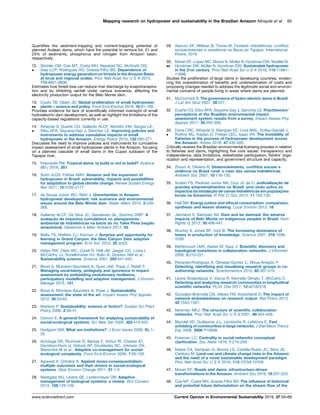
power-related research (Figure 3). In Figure 3, nodes repre-
sent WOS subject categories and two categories are
connected if they tend to appear together in the WOS
description of the same publications on hydroelectric dams.
Polygons around nodes show clusters of more densely con-
nected categories as identified by the Louvain algorithm for
network cluster detection.
Isolatesorsmallclustersintheco-occurrencenetworkreveal
more peripheral and insular disciplinary areas, with limited
connections to other disciplines in Brazilian Amazon hydro-
power research, such as Computer Science and Electrical
Engineering, Tropical Medicine, and Animal Sciences. By
contrast, central nodes in large and central clusters represent
disciplinary fields that tend to connectwith a higher number
of other fields in multi- or interdisciplinary research efforts.
As an example of such connections, the Water Resources
category (55) emerges as a hub of connections between all
major subject areas (i.e., clusters) in hydropower research,
except for Energy and Fuels. The subjects of Ecology (13),
Environmental Sciences (22), Green and Sustainable Sci-
ence and Technology (30), and Energy and Fuels (16) also
appear to be central and bridge to other peripheral or
“satellite” fields. By detecting subject categories that span
researchers from different disciplinary clusters, we can
design strategies to create scientific bridges and facilitate
communicationandcollaborationacrossdisciplinarydivides.
In addition to identifying the linkages between subject
categories, our analysis also identifies some of the gaps that
may be fertile ground to produce innovation and new
knowledgeinresearchonhydroelectricdamsintheBrazilian
Amazon. For example, in Figure 3 there is no connection
between the Electrical Engineering/Computer Science
cluster and the Water Resources cluster, a gap or “structural
hole” that may represent an opportunity for novel collabora-
tions and potential innovations [40]. Tropical Medicine is
also an isolate cluster, which could be connected to Zoology
and Health Sciences by new, interdisciplinary research.
Table 1 lists the top ten subject categories in Brazilian
hydroelectricdam-relatedpublicationsthathavethehighest
number of between-cluster ties in Figure 3, revealing a
tendency for interdisciplinary research. While these catego-
ries do not always align exactly to traditional academic
disciplines, they help us identify the types of cross-cutting
bridging subjects of interest to people who are currently
studying hydropower in Brazil.
Additional analyses of the network measured centrality5
of different subjects in the networks and captured the
level of involvement, bridging, and influence of nodes
54 Sustainability challenges
Figure 3
Computer Science 
Electrical Engineering
Water Resources,
Geosciences, Geography 
Engineering
Fisheries  Zoology
Environmental Sciences,
Health, Conservation 
Atmospheric Sciences
Energy  Fuels
Social Sciences
Humanities 
Area Studies
Biochemistry, Cell 
Molecular Biology
Animal Sciences
Tropical Medicine
Current Opinion in Environmental Sustainability
Network of co-occurrences between WOS subject categories in publications on Brazilian Amazon hydroelectric dams for the 2014–2019 period.
Nodes are WOS subject categories, links are co-occurrences. Black lines are links between nodes in the same Louvain cluster, red lines are links
between nodes in different clusters. Node numeric IDs and corresponding categories are provided in the Supplementary Materials (SM1).
5
Degree centrality is a simple count of the links a node has in a
network, capturing involvement, activity and potential influence.
Betweenness centrality measures the extent to which a node sits on
the shortest paths between other nodes, capturing bridging and broker-
age between otherwise disconnected areas of the network [45].
Current Opinion in Environmental Sustainability 2019, 37:50–69 www.sciencedirect.com
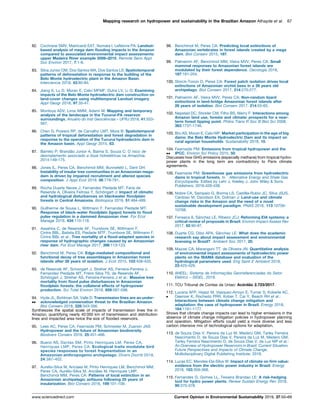
[45]. The fields of Environmental Sciences (22), Water
Resources (55), Marine and Freshwater Biology (38),
Environmental Studies (23), Energy and Fuels (16),
Ecology (13), Geosciences (29), Economics (14), Green
and Sustainable Science and Technology (30), and Zool-
ogy (56) present high values of degree centrality (number
of connections to other subjects), providing support for
interdisciplinary communication and collaboration. The
fields of Environmental Sciences (22), Water Resources
(55), Marine and Freshwater Biology (38), Environmental
Studies (23), Ecology (13), and Geosciences (29) show
high values of betweenness centrality, a characteristic of
nodes that create rare bridges between distant and other-
wise unconnected fields. The interdisciplinary field of
Green and Sustainable Science and Technology (30)
provides an important connection between biophysical/
environmental and social sciences fields (Figure 4).
Recent advances and gaps of research on
hydropower in the Brazilian Amazon
For the subset of 290 articles published between 2014–
2019 focusing on hydropower in the Brazilian Amazon,
Environmental Sciences occupies the leading position
with 60 records, followed by Ecology (32), Energy and
Fuels (30), Biodiversity Conservation (28), Multidisci-
plinary Sciences (28), Environmental Studies (26), Green
Sustainable Science Technology (26), and Water
Resources (22). In addition to the field of Environmental
Studies, Social Sciences are also represented in Environ-
mental Sciences and Multidisciplinary Sciences, as well
as in Geography (19), Economics (11), Interdisciplinary
Social Sciences (9), Law (7) and Development Studies (6)
(see SM 4 for more details). Determining an exact fit for
articles within the WOS categories can be difficult, since
they often fall in more than one category, and there is a
lack of clear criteria distinguishing some categories, espe-
cially for the more multi-disciplinary and/or interdisci-
plinary fields such as Environmental Sciences and Mul-
tidisciplinary Sciences. For example, Biodiversity
Conservation is a highly ranked category, but can be
assumed to be represented in other fields such as Ecology,
Fisheries, Marine and Freshwater Biology, and Environ-
mental Sciences. Climate change also did not appear as a
separate category, but an additional search reveals that
32 of the 290 records from WOS Core Collection mention
or focus on climate change issues related to hydropower.
By compiling and synthesizing the recent literature from
this 2014–2019 subset, we identified three main areas of
interdisciplinary research that represent the current state
of knowledge on hydropower and sustainability in the
Brazilian Amazon: (a) Biophysical and social-ecological
processes; (b) Energy and infrastructure; and (c) Gover-
nance and development (including social benefits and
impacts of dams). Belo Monte dam in the Xingu has
the highest number of publications (62), followed by
Santo Antoˆnio and/or Jirau dams in the Madeira river
(38), Tapajo´s (14) and Tocantins dams (14). Below, we
synthesize main advances and knowledge gaps drawing
from the complete set of 339 publications for the 2014–
2019 timeframe, detailed on Table 2.
Biophysical and social-ecological processes
Water is arguably the defining physical characteristic of the
Amazonbasin.Waterquantityandqualityareintegratorsof
the coupled natural and human processes that occur within
the watershed [48], and both are directly and indirectly
affected by hydropower [11
]. Dam construction [2
,49
],
land use change [50,51], climate change [52,53
], and their
interactions [12
] have all been shown to play major roles in
altering riverine hydrology in the Amazon [54
], with
cascading effects across social and ecological systems
[55
]. For example, changes in riverine hydrology and
connectivity alter patterns of floodplain forest inundation
[56] and productivity [12
], interrupt fish migrations
[3
,11
], reduce fisheries production [51], and modify
catchment sediment transport [2
] and biogeochemistry
[57–61] across vast spatiotemporal scales. While flow and
sediment transport are well described via process-based
watershed models [62], and several watershed models have
been developed and applied to the Amazon basin [48,63]
and subbasin scales [64–67], model application within the
broader context of social, ecological, and climate change is
less developed. This more comprehensive approach is
crucial for: (1) developing relevant future scenarios; (2)
testing conceptual models of system behavior; and (3)
guiding adaptive management strategies [68–71]. For
example, Stickler et al. [12
] and Mohor et al. [72] show
how projected increases in deforestation and decreases in
rainfall are likely to reduce electricity generation potential,
exemplifying how interactions among hydropower, land
use,andclimatedrivefuturesystemstates.Additionalwork
is needed to couple watershed-scale hydrological and sedi-
mentological models with models of ecosystem functions
and services to better predict hydropower impacts on
ecological and social systems. These efforts are limited,
however, by gaps in understanding about specific interac-
tions among several biophysical processes (e.g. hydrology
Mapping research on hydropower and sustainability in the Brazilian Amazon Athayde et al. 55
Table 1
Top ten Web of Science categories with ties to other Louvain
groups
ID WOS category In group ties Out group ties
22 Environmental sciences 5 7
13 Ecology 5 4
30 Green and sustainable
science and technology
3 4
55 Water resources 2 4
16 Energy and fuels 2 4
23 Environmental studies 10 3
14 Economics 5 2
38 Marine and freshwater biology 4 2
6 Biodiversity conservation 2 1
19 Environmental engineering 1 1
www.sciencedirect.com Current Opinion in Environmental Sustainability 2019, 37:50–69
andgeomorphology,fishandfisheries,terrestrialecosystem
feedbacks, and climate change), which we aim to synthe-
size below and in Table 2.
Dam-induced changes in the physical and chemical
regimes of rivers alter the diversity, composition, distri-
bution and abundance of fish [10
,73,74], threatening
one-third of the world’s freshwater fish biodiversity [3
].
Changes in the seasonal flood pulse and river connectivity
interrupt the migration, recruitment, and development of
Amazonian fish species [10
,75], negatively impacting
reproduction and reducing catches both upstream and
downstream of dams [10
,75,76]. Transformations in
Amazonian fisheries have significant local, regional, and
transnational socio-economic impacts [33
,76,77], which
are also of critical cultural and economic importance for
indigenous peoples and riverine communities [78]. While
biological, functional [79] and trophic indicators [80] of
fish diversity and abundance have been developed, a lack
of long-term monitoring in the Amazon Basin makes
identification of impacts and trade-offs during dam plan-
ning and licensing processes extremely difficult [33
,77].
Other major knowledge gaps include a limited under-
standing of flow-ecology relationships for the incredible
diversity of Amazonian fish species [85] and inadequate
guidance for hydropower and fish passage design that
56 Sustainability challenges
Figure 4
(a)
= Environmental Sciences
= Environmental Studies
= Energy  Fuels
= Ecology
= Ecology
= Geosciences, Multidisciplinary
= Economics
= Green  Suatainable Sciences  Technology
= Zoology
= Water Resources
= Water Resources
= Marine  Freshwater Biology
(b)
Current Opinion in Environmental Sustainability
Network of co-occurrences between WOS subject categories in Brazilian hydroelectric dam publications. (a) Categories sized by degree centrality.
Larger size indicates more connections with other categories. (b) Categories sized by betweenness centrality. Larger size indicates categories that
bridge distant and otherwise unconnected areas in the network. Red nodes are the categories with the highest values of degree and betweenness
centrality.
Current Opinion in Environmental Sustainability 2019, 37:50–69 www.sciencedirect.com
prevent fish mortality and injury [81] and which are
relevant to the local setting and associated species [87].
Beyond the river, terrestrial ecosystem transformations
associated with dams are poorly understood in the Ama-
zon [9] and worldwide. It is well-established that dams
cause direct deforestation via reservoir impoundment
[82]. Dams, however, cause significant indirect forest loss
and degradation through at least three pathways [55
].
First, land use change associated with dams causes defor-
estation and degradation of upland forests [83–87]. Sec-
ond, dams alter river and floodplain hydrology, which
changes the structure and function of riparian and flood-
plain forests [88–93]. Third, dam-associated infrastruc-
ture (e.g. transmission lines; [94
]) causes additional
direct and indirect deforestation. Together, these dam-
induced terrestrial ecosystem impacts have cascading
effects on biodiversity and ecosystem services [95], with
evidence of wide-ranging impacts on birds [96–98], mam-
mals [99], insects [100], and reptiles [101]. Current
research tends to focus on a single dam, and there is a
need to broaden this perspective to consider cumulative
impacts, both from multiple dams and from interacting
drivers. For example, indirect links between dams and
deforestation may intensify synergies between forest loss
and climate change, that alter fire dynamics and river
flows across basins [12
,53
,102]. Overall, the mecha-
nisms by which dams impact forests, land-cover, and
livelihoods (e.g. Bro et al. [103]) need to be better under-
stood to predict, manage and mitigate these impacts.
Interactions among dams, water, fish, and terrestrial eco-
systems are all affected by (and affect) the climate
through biophysical drivers and feedbacks. Notably, trop-
ical dams and reservoirs have been shown to emit signifi-
cant amounts of greenhouse gases (GHGs) [104
]. While
a considerable amount is known about GHG emissions
from Amazonian dams [105], additional measurements
are needed to reduce uncertainties and support better
process-based emission models [60,61]. However, we
argue that the most pressing need is the interpretation
of existing information to advise policy, since changes in
the methods for estimating GHG emissions are more
likely to affect the magnitude of emissions attributed
Mapping research on hydropower and sustainability in the Brazilian Amazon Athayde et al. 57
Figure 5
Current Opinion in Environmental Sustainability
(Box 1). Treemap graph showing the main funding agencies (with five or more records) for peer-reviewed publications on hydroelectric dams in
the Brazilian Amazon, from a subset of 290 Web of Science publications, for the 2014–2019 period. Additional information available in
Supplementary Materials # 3 (SM 3).
www.sciencedirect.com Current Opinion in Environmental Sustainability 2019, 37:50–69
to dams than additional measurements. For example,
adopting a 20-year versus a 100-year time period when
equating the warming potential of carbon dioxide and
methane emissions would drastically alter assessments of
the overall efficiency of dams as a renewable electricity
source. We contend that the shorter timeframe is more
relevanttotheperiodwhennewandplannedAmazondams
will emit large amounts of methane. Such emissions will
have outsized effects on global warming, which are pro-
jected to drive changes in precipitation and temperature
regimes and negatively affect many biophysical processes
[102,106].
Energy and infrastructure
Energy and infrastructure are important themes related to
hydropower governance and Amazonian sustainability.
Public policies and institutions related to hydroelectric
development include, for instance, watershed manage-
ment policies, electric sector reforms, environmental
impact assessments, mitigation and monitoring policies
and processes, economic and non-economic valuations,
anddecision-makinginstrumentsatdifferentscales.There
are gaps of knowledge and opportunities for improvement
of licensing policies and social-environmental impact
assessment instruments [14
,107–109]. One such a knowl-
edgegap isa surprisingpaucityofresearchandpublications
about small dams across Brazilian and Amazonian water-
sheds [14
]. Incentives and policy regulations have contrib-
uted to a fivefold increase in the number of small dams in
the last 20 years, with 87 currently operating and 256 inven-
toried in Brazilian Amazonian rivers [13
,110]. There is a
need for research on the socio-economic costs and benefits
of both large and small dams, including the cumulative
impacts of cascades of dams on Amazonian river systems
[14
]. The same is true for transmission lines, which licens-
ing processes and impact evaluation have been conducted
independently and not articulated with hydropower plan-
ning [94
]. It is necessary to move from the project-to-
project logic to adopt planning instruments such as the
Strategic Environmental Assessment at regional and basin-
wide scales, as the Brazilian Federal Court of Auditors
(TCU) recently recommended after assessing lessons
learned from dam development in the Amazon [111].
Studies focusing on trade-offs between diverse energy
generation options, as well as on future scenarios of
energy production risks and costs under climate change
are extremely important to inform infrastructure planning
and climate change adaptation and mitigation invest-
ments [5,112
,113,114]. Lucena et al. [112
] found that
climate change impacts can lead to higher emissions in
the absence of climate mitigation policies, and that miti-
gation can lead to a lower total investment level.
Research conducted under the Energy and Fuels WOS
theme has also focused on technological tools to aid in
planning and reducing the economic risk of dependency
on the hydro-thermal operating system in place in Brazil;
comparison of pumped-storage versus conventional res-
ervoir dams; as well as on energy efficiency; innovations
and alternative energy generation sources contributing to
diversify the energy generation mix [5,115–117].
Fewer research efforts and publications have focused on
cost overruns and delays in the construction of mega
58 Sustainability challenges
Box 1 Organizations and Funding of Research on Hydropower in
the Brazilian Amazon
The principal organizations of authors publishing peer-reviewed
research on Amazonian hydropower in the last five years are Brazi-
lian Universities, among which the National Institute for Amazonian
Research (INPA) plays a leading role (49 records) followed by Federal
Universities of: Para´ (UFPA, 34); Rondoˆ nia (UNIR, 27); Rio de Janeiro
(UFRJ, 27); Amazonas (UFAM, 19); Universidade de Sa˜ o Paulo (USP,
18); and ten other Brazilian Universities (see SM 2). Internationally,
authors and co-authors of these publications are from the University
of Florida (UF, 11), University of East Anglia (11), Institute de
Recherche pour Le Development (IRD, 10), Centre National de la
Recherche Scietifique (CNRS, 7), Michigan State University (MSU, 7)
and Sorbonne Universite´ (7), among others. Authors from Brazilian
and international NGOs have also contributed for this topic, including
the World Wildlife Fund (WWF), the Wildlife Conservation Society
(WCS), the Conservation Strategy Fund (CSF), The Nature Conser-
vancy (TNC) and the Instituto de Pesquisas da Amazoˆ nia (IPAM),
among others.
Research funding has been provided mainly by Brazilian government
research agencies, notably by the National Council for Scientific and
Technological Development (CNPq), with 39.3% of the publication
records, followed by the Coordination for the Improvement of Higher
Education Personnel (CAPES, 22.1%), the Sa˜ o Paulo State Research
Foundation (FAPESP, 7.2%), the Amazonas State Research Foun-
dation (FAPEAM 6.6%) and INPA (5.5%) (Figure 5). Outside Brazil,
the main funding agencies are the National Science Foundation
(NSF) and the Natural Environment Research Council (NERC), with
4.5% and 3.8% of the records (additional details in SM 3). It is also
worthy noting the contribution of the private sector, represented by
the dam-building companies Santo Antoˆ nio Energia (3.8%, Santo
Antoˆ nio dam in the Madeira river) and Norte Energia (2.1%, Belo
Monte dam in the Xingu river). Two international NGOs with pro-
grams in Brazil also appeared among the top 20 funding organiza-
tions: the World Wildlife Fund (WWF, 2.4%) and the Wildlife Con-
servation Society (WCS, 2.1%).
Many CNPq and CAPES programs have supported the internatio-
nalization of science through initiatives such as the Science Without
Borders Program, which was terminated during the presidential
administration of Michel Temer. Brazilian science is to face a large
budgetary cut under current president Jair Bolsonaro, who in April of
2019 announced that the budget of the Ministry of Science, Tech-
nology, Innovation and Communication would be cut in half, and
CNPq scholarship programs would be cut as well.6
Our analyses
show that Brazilian science and funding has been critical to advance
research on Amazonian hydropower. Continued funding support is
needed to address the risks and uncertainties that a changing cli-
mate and a changing Amazon are already experiencing given the
fast-paced development of socio-economic activities and the
advance of extractive and infrastructure frontiers [46,47].
6
Brazil slashes funding to scientists. The planet may suffer: https://
www.nationalgeographic.com/environment/2019/04/brazil-cuts-
funding-scientists-grad-students-environment-suffers/.
Current Opinion in Environmental Sustainability 2019, 37:50–69 www.sciencedirect.com
MappingresearchonhydropowerandsustainabilityintheBrazilianAmazonAthaydeetal.59
Table 2
Main advances and gaps for research on hydropower development in the Brazilian Amazon, organized by interdisciplinary topics from the literature review conducted for
339 publications obtained in the Web of Science for the 2014–2019 period
Interdisciplinary
topic
Main themes Advances Gaps Main WOS
disciplinary
categories
Reference
numbers
Biophysical and
social-
ecological
processes
Hydrology and
geomorphology
- Existing dams significantly impact hydrologic regime
across Brazilian Amazon
- Lowland dams with large reservoirs cause highest
hydrologic alteration, but small dams are increasing
rapidly and cause large impacts per electricity
production
- Existing and planned Andean dams threaten
connectivity with major impacts to fish, sediments, and
nutrients
- Dam vulnerability index developed to guide future
hydropower
- Cumulative ecohydrological impacts of small and
large dams on flow regime and
sediment/nutrient transport
- Coupling watershed models with climate change
models and models of specific ecosystem structure,
function, and services
- Uncertainty about range of potential future climate
impacts on spatiotemporal trends in river flow
- Potential for dam design or sediment management
techniques to mitigate trapping
Environmental
sciences/studies,
water resources,
geosciences,
meteorology and
atmospheric
sciences
[2
]
[10
]
[11
]
[13
]
[49
]
Biophysical and
social-
ecological
processes
Fish and fisheries - Freshwater fish diversity threatened by existing and
planned dams globally
- Andes-Amazon connectivity threatened by dams
- Fisheries declines observed upstream and
downstream of major dam projects
- Major impacts of fisheries losses across economic,
social, and cultural systems
- Limited explanatory power of hydrological control on
fisheries production
- Species and/or functional-group-specific flow-
ecology relationships
- Data scarcity, both on spatiotemporal availability of
ichthyofauna data as well as socio-economic impacts
on livelihoods of fishers and resettled communities,
including through the lens of gender and
intergenerational differences.
- Fish passage technologies relevant to tropical
species and reservoirs
Ecology, fisheries,
biodiversity
conservation
[3
]
[10
]
[33
]
[76–79]
[81]
Biophysical and
social-
ecological
processes
Terrestrial
ecosystem
feedbacks
- Direct and indirect land use change occurs from
reservoir inundation, deforestation, changes in riparian
and floodplain forest hydrology, and energy-
associated infrastructure
- Transmission line impacts likely exceed reservoir
impacts (by area) and are underacknowledged in dam
planning and management
- Coupled feedbacks between dams and deforestation
may exacerbate connections between forest loss and
climate, fire, and river flow
- Research tends to focus on a single dam, need to
consider cumulative impacts from other dams and
drivers of change.
- Mechanisms by which dams indirectly impact
forests, land-cover, and livelihoods need to be better
understood to predict, manage and mitigate these
impacts.
- Need to study-coupled impacts of land use change,
climate change, and hydropower development on
sediment production and transport
Environmental
sciences/studies,
geosciences,
meteorology and
atmospheric
sciences, ecology
[12
]
[48]
[77,78]
[82–87]
[94
]
[102]
Biophysical and
social-
ecological
processes
Climate change - Tropical reservoirs may be a major source of
methane, exacerbating global warming
- Selection of reference time frame is critical for
calculating net warming potential of hydropower-
based electricity production
- Global climate projections project spatially variable
changes in precipitation, evapotranspiration, and flow
regimes, with most drying in the south and southeast
- Climate change projected to increase flows and
inundation in NW Amazon and decrease flows in the
eastern Amazon
- Need for regional climate models that include
feedbacks among hydropower development,
deforestation, reservoir emissions, warming and
precipitation regimes
- Impacts of greenhouse gas emission calculations and
uncertainty are not represented in policy
- Methane flux from dam degassing and downstream
fluxes are poorly constrained
- Net lifecycle carbon accounting for tropical
hydropower remains hotly debated in the literature and
policy arenas
Environmental
sciences/studies
meteorology and
atmospheric
sciences
multidisciplinary
sciences
energy and fuels
ecology
biodiversity
conservation
[15]
[102]
[104
,105,106]
www.sciencedirect.comCurrentOpinioninEnvironmentalSustainability2019,37:50–69
60Sustainabilitychallenges
Table 2 (Continued )
Interdisciplinary
topic
Main themes Advances Gaps Main WOS
disciplinary
categories
Reference
numbers
Energy and
infrastructure
Energy scenarios;
alternatives and
intersections with
other
infrastructure and
power generation
options;
intersections
between
electricity
generation and
climate change;
energy efficiency;
technological
tools; feasibility
and siting of
dams, critique of
dams as clean
energy; and
public policies
- Opportunities to improve licensing processes and
social-environmental impact assessment instruments
- Paucity of research on small dams across the
Amazon
- Transmission lines are not integrated to hydropower
planning
- Climate change impacts can lead to higher emissions
and higher cost in the absence of climate mitigation
policies in hydropower planning
- Investing in energy efficiency, innovations and
alternative energy generation sources can contribute
to lower dependency and risks of the thermo-hydro
system
- Estimates of cost overruns and delays in the
construction of Jirau, Santo Antoˆ nio and Belo Monte
dams totaled 91%, 64% and 70% above the initial
budget
- Good practices in cumulative impact assessment at
regional and basin-wide scales considering other
infrastructure projects and relevant policies and
programs
- Developing tools to enhance access to data and
information/public participation in decision-making
- Integrated assessment evaluation and planning for
small and large hydropower including transmission
lines
- Trade-offs between diverse energy choices and
arrangements according to the perspective of different
actors
- Pluralistic valuation in environmental impact
assessment
- Integrated modelling of climate change, energy
production from various sources, risks and costs
- Investigating the cost of corruption for megaprojects
- Investigating cost overruns and delays of projects
Environmental
sciences, green
sustainable science
technology,
environmental
engineering and
energy and fuels
[5]
[13
,14
]
[18]
[94
]
[111,112
]
[117,118
,119]
[167
]
Governance,
development
and social
impacts of
dams
Public health and
sanitation,
infectious
diseases,
psychology and
water
contamination,
socio-economic
and cultural
impacts,
distribution of
costs and
benefits, social
movements,
social conflicts,
psychological
impacts and
symbolic losses,
human rights,
development-
forced
displacement and
resettlement and
public policies
- Dams contribute to trigger infectious diseases
outbreaks, which risks and costs are not accounted for
during planning and licensing of projects.
- Lack of data constrains the capacity to distinguish
between positive and negative impacts, patterns,
specificities and cumulative social impact processes
at local, regional and basin-wide scales.
- Belo Monte and Madeira dams have led to social
conflicts, judicialization, violation of human rights,
gender-differentiated impacts, and destruction of
indigenous peoples and local communities’
livelihoods.
-Local communities do not have access to information
produced by researchers and scientists.
- Indigenous and local knowledge are not considered
in planning and decision-making of hydropower.
- Benefits of dams are realized at the national scale,
while costs are felt in local and regional scales.
- Socio-economic benefits and negative impacts are
complex and occur through multiple spatiotemporal
scales and involve multiple dimensions
- Identifying public policy gaps affecting basic
sanitation, water resources and infectious diseases
outbreaks in existing cases to inform planning.
- Developing studies focusing on how different people
(women, children, elderly, as well as diverse cultural
groups) may be differently impacted by dams
- Social impacts in general: difficulty defining who are
‘affected’ by dams, which has socio-economic, rights
and justice implications
- Studies are done at the project scale, but effects are
systemic and cumulative
- Understanding the interconnections between forced
displacement and social-ecological processes
upstream and downstream of dams
- More integrated studies are needed, moving from a
project by project to a regional, systemic scale
Tropical medicine,
social sciences
interdisciplinary,
parasitology,
environmental
sciences and
environmental
studies, geography,
economics, law and
development studies
[30
]
[34,35]
[124]
[129
,133]
[143–145]
[158–163]
CurrentOpinioninEnvironmentalSustainability2019,37:50–69www.sciencedirect.com
infrastructure projects. Callegari et al. [118
] estimated the
probabilitydistributionfunctionofcostoverrunsanddelays
in the construction of Jirau, Santo Antoˆnio and Belo Monte
dams in the Brazilian Amazon, finding a cost overrun of
respectively 91%, 64% and 70% more than the initial
budget for all three cases. Considering the pros and cons
of this technique, the authors suggest that policy makers
should increase their budgets around 75% above the initial
estimates to ensure within 50% certainty that their final
costs will be within budget. According to these estimates
and experiences from other parts of the world, the bigger
the project, the higher the risk of cost overruns with greater
exposuretomacroeconomicrisks[119],raisingthequestion
that if the numbers were higher as they should be, whether
the dams would be economically justifiable.
Governance and development
Despite global efforts (e.g. World Commission of Dams
report of 2000 [120]) directed to improve public partici-
pation, transparency and protection of human rights in
hydropower planning and implementation, several pro-
blems still persist across the global north and south [30
]
in regard to governance, development and the social
impacts of dams.
Kirchherr and Charles [121
] proposed a ‘matrix
framework’ to guide scholarly research on the social
impacts of dams, defining three main components: Infra-
structure, Livelihood and Community, each one with
subcomponents, and connected to the dimensions of
space, time and value (positive or negative). The Infra-
structure component can be compared to the ‘Energy and
Infrastructure’ theme above. Aspects of the other com-
ponents and subcomponents will be briefly approached
here under the socio-economic and socio-cultural change
and public health and sanitation topics. In this framework,
we miss a rights/justice subcomponent under the Com-
munity component, as well as a Governance component,
to include public participation and power in decision-
making.
The definition of ‘who is impacted’ (‘atingidos’ in Portu-
guese) is crucial in the characterization of social impacts
and compensation of hydropower development in the
Amazon [122]. Despite similarities of socio-economic
benefits and negative impacts of dams around the globe
[121
], the Amazonian region has some specificities that
need to be considered in both planning and decision-
making (Figure 6). These are related to, for example, the
huge social and cultural diversity present in the region,
where indigenous ethnicities, Afro-descendant groups,
riverine communities, urban populations, family farmers
and others, share the region and its water and forest
resources [123,33
].
In the recent cases of Belo Monte and Santo Antoˆnio and
Jirau dams, hydropower development has led to social
conflicts [124–126], judicialization [35], violation of
human rights [37,127,128], gender differentiated
impacts and violence [128,129
], and destruction of
indigenous and traditional communities’ livelihoods
and sacred sites [35,103,130–135]. Indigenous commu-
nities and social movements have formed alliances that
strengthened resistance against these projects [135,136].
Several indigenous peoples and local communities have
developed community consultation protocols in a pro-
cess of self-regimenting the Indigenous and Tribal Peo-
ples Convention, C169 of the International Labour
Organization (of which Brazil is signatory), which deter-
mine the right to Free, Prior and Informed Consultation
of indigenous peoples and traditional populations (in the
case of Brazil) in relation to projects, policies or activities
that may affect their livelihoods and/or territories [137–
139].
Often, local communities do not have access to scientific
publications describing the system that they live in and
that they understand from their own perspective
[140,141]. For instance, fishers affected by the Madeira
dams have asked ADN researchers to translate findings of
their research in a way that they could understand [140].
On the other hand, indigenous and local knowledge7
(ILK) held by indigenous peoples and local communities
who have a long-term experiential knowledge of Amazo-
nian social-ecological systems are frequently disregarded
in the process of planning and decision-making
[33
,130,142].
Hydroelectric dams may affect human health in different
ways, upstream and downstream, in both rural and urban
settings. Dams can impact human health through changes
inwaterquality,groundwatercontamination[143],changes
in access to sanitation and medical services due to the
increased flow of people and workers to the dam sites
[144,145], psychological impacts by loss of traditional live-
lihoods and displacement [133,146], changes in livelihood
styles [30
,37,129
], food security and diets [33
,147],
increased spread of infectious and sexually transmitted
diseases [148,149], increased exposure to mercury and
others [150]. We found a big gap in publications focusing
on sexually transmitted diseases in the dataset compiled
Mapping research on hydropower and sustainability in the Brazilian Amazon Athayde et al. 61
7
In this paper we adopt the Intergovernmental Science-Policy Plat-
form on Biodiversity and Ecosystem Services (IPBES) definition of
Indigenous and traditional populations: ‘Indigenous and local knowl-
edge systems are understood to be dynamic bodies of integrated, holis-
tic, social and ecological knowledge, practices and beliefs pertaining to
the relationship of living beings, including people, with one another and
with their environment. Indigenous and local knowledge is grounded in
territory, is highly diverse and is continuously evolving through the
interaction of experiences, innovations and different types of knowledge
(written, oral, visual, tacit, practical, and scientific). Such knowledge can
provide information, methods, theory and practice for sustainable eco-
system management. Indigenous and local knowledge systems have
been, and continue to be, empirically tested, applied, contested and
validated through different means in different contexts’ [170].
www.sciencedirect.com Current Opinion in Environmental Sustainability 2019, 37:50–69
from WOS, despite the expected increased risk of STDs
associated with hydropower development.
Regarding socio-economic development, although the
primary benefits of a hydroelectric plant are found at
the national scale [151], it is at the local and regional
scales that the main negative impacts of forced displace-
ment and resettlement, deforestation of productive land,
abrupt population increase, increased demand for infra-
structure and services, loss of social cohesion, and impacts
on livelihoods and loss of income are felt
[30
,103,119,152–156]. Contrasting to this suite of poten-
tial negative impacts, dam builders and supporters defend
the argument that hydroelectric plants promote improve-
ments in the socio-economic conditions of the host local-
ities [157,158]. This controversy has motivated the emer-
gence of research aiming to elucidate if and how
hydroelectric dams may be inducers or constrainers of
local development.
For the Jirau, Santo Antoˆnio and Belo Monte hydroelec-
tric plants, Moran et al. [30
] found that promised jobs
practically disappeared in less than five years after con-
struction. Studies carried out in other Brazilian regions
show that temporary economic growth during the con-
struction phase is frequently the main benefit associated
with hydropower implementation in municipalities
flooded by dams [158–161]. However, economic growth
is generally not accompanied by or not correlated with
improvements in other social development indicators
such as social inequality, child labor, sanitary problems,
fertility rate, and education [158,162].
Randell [163] conducted a longitudinal study of wealth
and subjective well-being perception among communi-
ties displaced by the Belo Monte dam, finding that the
majority of interviewed people reported increased wealth,
particularly those that did not own land before dam
construction, those who gained assets, and those who
remained closer to the original study area. Nevertheless,
the author recognizes the importance of collecting addi-
tional data after the completion of dam construction, as
well as to include other affected social groups and popu-
lations in such studies.
62 Sustainability challenges
Figure 6
Current Opinion in Environmental Sustainability
Public hearing for the Belo Monte hydroelectric dam held in Altamira, Brazil, in 2009. Photo: Lalo de Almeida, courtesy.
Current Opinion in Environmental Sustainability 2019, 37:50–69 www.sciencedirect.com
In general, these studies show two convergences: that
there is short-term economic growth followed by
medium-term shrinkage (probably due to the large
investments that occur during the construction phase);
and that the results achieved are quite dependent on
each study’s context, making it hard to estimate stan-
dards that allow for an integrated view. Socio-economic
impacts are complex, occur through multiple spatiotem-
poral scales [164,165] and involve multiple dimensions
[121
,166].
Future directions and conclusions
The analysis of hydropower-related publications in the
Brazilian Amazon illustrates a high degree of interdisci-
plinary research related to the subfields of environmental
sciences, ecology and water resources, but indicates that
research bridging these fields, especially the green and
sustainable science and technology and the energy and
fuels categories, provide opportunities for new integrative
knowledge production. Further, we suggest that analyses
of existing legal and policy frameworks and instruments
might be used as points of departure to identify knowl-
edge gaps, synthesize existing information, and provide
policy-oriented solutions that can be implemented
through social learning and management approaches
[167
].
Themapofinstitutionsandfundingorganizationsinvolved
inresearchonhydropowerintheBrazilian Amazon demon-
strates the important leadership that Brazilian researchers
and universities play in advancing research on this topic, as
well as the fundamental support provided by the Brazilian
funding agencies. It is critical to provide the necessary
support for strengthening science education and research
in Brazil, especially in Amazonian universities, which are
well positioned to address the local challenges and risks
associated with existing and planned hydropower projects.
This can be further supported by enhancement of under-
graduate and graduate programs providing students and
faculty with opportunities for national and international
mobility8
, securing funding for scholarships, field research
and equipment, and by partnering with national and inter-
national agencies and institutions.
To move towards more resilient and sustainable pathways
for the Brazilian Amazon, future research on Amazonian
hydropower might focus on deepening the understanding
of:
a) The definition of direct and indirect impacts, who is
impacted and what are the impacted areas by different
hydropower projects. These debates and analyses
should be addressed by research frameworks and
licensing instruments, which may alleviate the mis-
match between scientific findings, policy instruments,
and the reality on the ground. This has also important
implications for managing conflicts and legal processes
around the definition of who will be compensated by
dam-companies and the planning of displacement and
resettlement programs.
b) Temporal variation and magnitude of impacts on
linked aquatic, terrestrial and social subsystems as
well as understanding, mitigating, monitoring and
compensating upstream and downstream impacts.
This has important implications for designing and
operating dams, duration of monitoring and mitigation
programs, development of compensation programs,
and understanding cumulative and synergistic impacts
in watershed and regional planning.
c) The distribution of costs and benefits of large and
small dams across temporal and geopolitical scales,
considering multiple valuation approaches, the diver-
sity of stakeholders receiving the benefits and bearing
the costs of these projects, as well as gender and
intergenerational differences and implications.
d) Geopolitical issues around transnational rivers and
dams, which are relevant for the Amazon, the Mekong,
the Congo and other transnational watersheds around
the world. Flows of water, sediment, fish and other
aquatic and terrestrial animal species, climate and
often people are not restricted by political boundaries.
Understanding these processes requires basin-wide
efforts and long-term monitoring. In the policy arena,
managing these systems involves promoting interna-
tional and cross-sectorial dialogue and negotiations,
enhanced public participation and transnational
watershed independent committees to inform and
influence decision-making on transnational rivers
[2
].
e) Assessment of cumulative impacts that embrace the
perspective that the biological, social and economic
impacts in a locality are product of the interaction of
hydroelectric-triggered transformations with other
existing projects and actions [121
,168,169]. In this
perspective, the focus is no longer the hydroelectric
project, but the local and regional social-ecological
systems affected by multiple actions or projects (e.g.
dams, roads, climate change, demographic change,
etc.). To address cumulative impacts, understanding
must involve the local and regional natural resource
bases, the knowledge and input of indigenous and
local communities, and the socio-economic and gov-
ernance contexts that shape social-ecological systems.
The synthesis of recent academic production on hydro-
power development in the Brazilian Amazon presented in
this article provides evidence of the unsustainable path
created by large and small dams built in Amazonian rivers
from a social, economic and environmental standpoints.
As it is impossible to monetarily quantify many impacts,
Mapping research on hydropower and sustainability in the Brazilian Amazon Athayde et al. 63
8
Such as the ‘Bionorte’ program, the Pro´-Amazoˆnia Program, the
PROCAD, the Science Without Borders, and others supported by
CAPES: https://www.capes.gov.br/.
www.sciencedirect.com Current Opinion in Environmental Sustainability 2019, 37:50–69
for example the loss of fish species due to interruption of
migratory routes, or the symbolic loss of place-based
livelihoods, it is not possible to fully calculate, mitigate
and compensate important costs associated with the con-
struction of large and small dams in the world’s largest
tropical system.
Finally, this synthesis identifies gaps in communication
that exist within and between scientists, civil society and
local communities, private sector and policy and decision-
makers. Efforts need to be directed to bridge these gaps
through several strategies and tools. Social learning for-
ums and opportunities could support dialogue and learn-
ing from previous experiences of dam implementation,
moving away from the project scale to embrace regional
and basin-wide strategic research and planning
approaches.
Funding
This work was supported by the Brazilian Agency CAPES
(Coordination for the Improvement of Higher Education
Personnel), through the Proamazoˆnia Program (Project No.:
021/2012); the PGCI/CAPES – International Cooperation
Program (Project No.: 038/2013); and the Science Without
Borders/PVE Project (Process No. 88881.064958/2014-01).
We also acknowledge the support provided by the 2013–
2015 Research Opportunity Seed Fund Award of the Uni-
versity of Florida Office of Research, and by the National
Science Foundation (NSF) to the Amazon Dams Research
Network/Rede de Pesquisa em Barragens Amazoˆnicas/Red
de Investigacio´n sobre Represas Amazo´nicas (ADN/RBA/
RIRA) under Grant No. 1617413. Any opinions, finding, and
conclusions or recommendations expressed in this material
are those of the authors and do not necessarily reflect the
viewsoftheBrazilianfundingagencies,UniversityofFlorida
and National Science Foundation.
Conflicts of interest statement
Nothing declared.
Acknowledgements
We would like to thank many colleagues and students who provided
support and inputs to the process informing this article. Among them,
special thanks to Emilio Moran (MSU), Marianne Schmink (UF), Robert
Buschbacher (UF), Fernando Prado (Sinerconsult), Artur Moret (UNIR),
Dernival V. Ramos Ju´nior (UFT), Maria Alice L. Lima (UNIR), Ellen
Amaral (UFT), Neiva C. Arau´jo (UNIR), Marliz Arteaga (UF), Kelsie
Timpe (UF), Randy Crones (UF), Denis R. Valle (UF), Elizabeth Anderson
(Florida International University – FIU) and Kathleen McKee
(independent consultant). We are thankful for the institutional support
provided to the ADN-related research and networking events, in special to
the Graduate Program in Environmental Sciences of the Federal University
of Tocantins (PGCiamb/UFT); the Graduate Program in Environment and
Regional Development of the Federal University of Rondoˆnia (PGDRA/
UNIR); and the Graduate Program in Environmental Sciences of the
University of Sa˜o Paulo (PROCAM/USP). We also thank the Tropical
Conservation and Development Program (TCD) and the Center for Latin
American Studies at University of Florida (UF) for the support. Any use of
trade, product, or firm names is for descriptive purposes only and does not
imply endorsement by the U.S. Government.
Appendix A. Supplementary data
Supplementary material related to this article can be
found, in the online version, at doi:https://doi.org/10.
1016/j.cosust.2019.06.004.
References and recommended reading
Papers of particular interest, published within the period of review,
have been highlighted as:
 of special interest
 of outstanding interest
1. Castello L, Mcgrath DG, Hess LL, Coe MT, Lefebvre PA, Petry P,
Macedo MN, Reno´ VF, Arantes CC: The vulnerability of Amazon
freshwater ecosystems. Conserv Lett 2013, 6:217-229.
2.

Latrubesse EM, Arima EY, Dunne T, Park E, Baker VR, D’Horta FM,
Wight C, Wittmann F, Zuanon J, Baker PA et al.: Damming the
rivers of the Amazon basin. Nature 2017, 546.
Introduces a Dam Environmental Vulnerability Index to quantify the
current and potential impacts of dams across Amazonian subbasins
and suggests multinational collaboration and changes to institutional
structures to prevent further hydrophysical and biotic disturbances.
3.

Winemiller KO, McIntyre PB, Castello L, Fluet-Chouinard E,
Giarrizzo T, Nam S, Baird IG, Darwall W, Lujan NK, Harrison I et al.:
Balancing hydropower and biodiversity in the Amazon, Congo,
and Mekong. Science (80-) 2016, 351:128-129.
Synthesizes the vast and far-reaching effects of existing and planned
dams on fish biodiversity in the worls major tropical river basins. Suggests
improved dam evaluation and siting approaches that consider basin scale
planning, spatial biodiversity data, and the account for cumulative effects
and climate change.
4. Morton DC, DeFries RS, Shimabukuro YE, Anderson LO, Arai E,
del Bon Espirito-Santo F, Freitas R, Morisette J: Cropland
expansion changes deforestation dynamics in the southern
Brazilian Amazon. Proc Natl Acad Sci U S A 2006, 103:14637-
14641.
5. Prado FA Jr, Athayde S, Mossa J, Bohlman S, Leite F, Oliver-
Smith A, Prado F, Athayde S, Mossa J, Bohlman S et al.: How
much is enough? An integrated examination of energy
security, economic growth and climate change related to
hydropower expansion in Brazil. Renew Sustain Energy Rev
2016, 53:1132-1136.
6. Moretto EM, Gomes CS, Roquetti DR, Jorda˜ o C de O: Histo´ rico,
tendeˆ ncias e perspectivas no planejamento espacial de
usinas hidrele´ tricas brasileiras: a antiga e atual fronteira
Amazoˆ nica. Ambient Soc 2012, 15:141-164.
7. EPE E de PE, Empresa de Pesquisa Energe´ tica: Plano Decenal de
Expansa˜o de Energia 2026. Ministe´ rio de Minas e Energia.
Empresa de Pesquisa Energe´ tica; 2017.
8. Killeen TJ: A Perfect Storm in the Amazon Wilderness:
Development and Conservation in the Context of the Initiative for
the Integration of the Regional Infrastructure of South America
(IIRSA). 2007.
9. Finer M, Jenkins CNC, Dynesius M, Nilsson C, Vo¨ ro¨ smarty C,
McIntyre P, Gessner M, Dudgeon D, Prusevich A, Nilsson C et al.:
Proliferation of hydroelectric dams in the Andean Amazon and
implications for Andes-Amazon connectivity. PLoS One 2012,
7:1-9.
10.

Anderson EP, Jenkins CN, Heilpern S, Maldonado-Ocampo JA,
Carvajal-Vallejos FM, Encalada AC, Rivadeneira JF, Hidalgo M,
Can˜ as CM, Ortega H et al.: Fragmentation of Andes-to-Amazon
connectivity by hydropower dams. Sci Adv 2018, 4.
Quantifies the cumulative effects of 142 existing dams and 160 proposed
dams on riverine connectivity from the Andes to the Amazon, with major
implications for fish migrations and biodiversity and sediment delivery/
transport.
11.

Forsberg BR, Melack JM, Dunne T, Barthem RB, Goulding M,
Paiva RCD, Sorribas MV, Silva UL, Weisser S: The potential
impact of new Andean dams on Amazon fluvial ecosystems.
PLoS One 2017, 12.
64 Sustainability challenges
Current Opinion in Environmental Sustainability 2019, 37:50–69 www.sciencedirect.com
Quantifies the sediment-trapping and nutrient-trapping potential of
planned Andean dams, which have the potential to remove 64, 51 and
23% of sediments, phosphorus and nitrogen from Amazon basin,
respectively.
12.

Stickler CM, Coe MT, Costa MH, Nepstad DC, McGrath DG,
Dias LCP, Rodrigues HO, Soares-Filho BS: Dependence of
hydropower energy generation on forests in the Amazon Basin
at local and regional scales. Proc Natl Acad Sci U S A 2013,
110:9601-9606.
Estimates how forest loss can reduce river discharge by evapotranspira-
tion and by inhibiting rainfall under various scenarios, affecting the
electricity production output for the Belo Monte dam.
13.

Couto TB, Olden JD: Global proliferation of small hydropower
plants – science and policy. Front Ecol Environ 2018, 16:91-100.
Provides evidence for lack of scientifically informed oversight of small
hydroelectric dam development, as well as highlight the limitations of the
capacity-based regulations currently in use.
14.

Athayde S, Duarte CG, Gallardo ALCF, Moretto EM, Sangoi LA,
Dibo APA, Siqueira-Gay J, Sa´ nchez LE: Improving policies and
instruments to address cumulative impacts of small
hydropower in the Amazon. Energy Policy 2019, 132:265-271.
Discusses the need to improve policies and instruments for cumulative
impact assessment of small hydropower plants in the Amazon, focusing
on a planned cascade of small dams in the Cupari subbasin of the
Tapajos river.
15. Fearnside PM: Tropical dams: to build or not to build? Science
(80-) 2016, 351.
16. Soito JLDS, Freitas MAV: Amazon and the expansion of
hydropower in Brazil: vulnerability, impacts and possibilities
for adaptation to global climate change. Renew Sustain Energy
Rev 2011, 15:3165-3177.
17. de Sousa Ju´ nior WC, Reid J: Uncertainties in Amazon
hydropower development: risk scenarios and environmental
issues around the Belo Monte dam. Water Altern 2010, 3:249-
268.
18. Gallardo ALCF, Da Silva JC, Gaudereto GL, Sozinho DWF: A
avaliac¸ a˜ o de impactos cumulativos no planejamento
ambiental de hidrele´ tricas na bacia do rio Teles Pires (regia˜ o
amazoˆ nica). Desenvolv e Meio Ambient 2017, 43.
19. Melis TS, Walters CJ, Korman J: Surprise and opportunity for
learning in Grand Canyon: the Glen Canyon Dam adaptive
management program. Ecol Soc 2015, 20 art22.
20. Kates RW, Clark WC, Corell R, Hall JM, Jaeger CC, Lowe I,
McCarthy JJ, Schellnhuber HJ, Bolin B, Dickson NM et al.:
Sustainability science. Science 2001, 292:641-642.
21. Bond A, Morrison-Saunders A, Gunn JAE, Pope J, Retief F:
Managing uncertainty, ambiguity and ignorance in impact
assessment by embedding evolutionary resilience,
participatory modelling and adaptive management. J Environ
Manage 2015, 151.
22. Bond A, Morrison-Saunders A, Pope J: Sustainability
assessment: the state of the art. Impact Assess Proj Apprais
2012, 30:53-62.
23. Martens P: Sustainability: science or fiction? Sustain Sci Pract
Policy 2006, 2:36-41.
24. Ostrom E: A general framework for analyzing sustainability of
social-ecological systems. Sci New Ser 2009, 325:419-422.
25. Hodgson GM: What are institutions? J Econ Issues 2006, XL:1-
25.
26. Armitage DR, Plummer R, Berkes F, Arthur RI, Charles AT,
Davidson-Hunt IJ, Diduck AP, Doubleday NC, Johnson DS,
Marschke M et al.: Adaptive co-management for social-
ecological complexity. Front Ecol Environ 2009, 7:95-102.
27. Agrawal A, Chhatre A: Against mono-consequentialism:
multiple outcomes and their drivers in social-ecological
systems. Glob Environ Change 2011, 21:1-3.
28. Westgate MJ, Likens GE, Lindenmayer DB: Adaptive
management of biological systems: a review. Biol Conserv
2013, 158:128-139.
29. Alarcon DF, Millikan B, Torres M: Ocekadi: hidrele´tricas, conflitos
socioambientais e resisteˆncia na Bacia do Tapajo´s. International
Rivers; 2016.
30.

Moran EF, Lopez MC, Moore N, Mu¨ ller N, Hyndman DW, Mueller N,
Hyndman DW, Mu¨ ller N, Hyndman DW: Sustainable hydropower
in the 21st century. Proc Natl Acad Sci U S A 2018, 115:11891-
11898.
Studies the proliferation of large dams in developing countries, eviden-
cing the overestimation of benefits and underestimation of costs and
proposing changes needed to address the legitimate social and environ-
mental concerns of people living in areas where dams are planned.
31. McCormick S: The governance of hydro-electric dams in Brazil.
J Lat Am Stud 2007, 39:227.
32. Duarte CG, Dibo APA, Siqueira-Gay J, Sa´ nchez LE: Practitioners’
perceptions of the Brazilian environmental impact
assessment system: results from a survey. Impact Assess Proj
Apprais 2017, 35:293-309.
33.

Doria CRC, Athayde S, Marques EE, Lima MAL, Dutka-Gianelli J,
Ruffino ML, Kaplan D, Freitas CEC, Isaac VN: The invisibility of
fisheries in the process of hydropower development across
the Amazon. Ambio 2018, 47:435-465.
Critically reviews the Brazilian environmental licensing process in relation
to fisheries and dams, highlighting five core issues: transparency and
independence, data limitations, stakeholder participation, fishers’ orga-
nization and representation, and government structure and capacity.
34. Zhouri A, Oliveira R: Desenvolvimento, conflitos sociais e
violeˆ ncia no Brasil rural: o caso das usinas hidrele´ tricas.
Ambient Soc 2007, 10:119-135.
35. Scabin FS, Pedroso Junior NN, Cruz JC da C: Judicializac¸ a˜ o de
grandes empreendimentos no Brasil: uma visa˜ o sobre os
impactos da instalac¸ a˜ o de usinas hidrele´ tricas em populac¸ o˜ es
locais na Amazoˆ nia. R Po´s Ci Soc 2014, 11:130-150.
36. Hall SM: Energy justice and ethical consumption: comparison,
synthesis and lesson drawing. Local Environ 2013, 18.
37. Jaichand V, Sampaio AA: Dam and be damned: the adverse
impacts of Belo Monte on indigenous peoples in Brazil. Hum
Rights Q 2013, 35:408-447.
38. Wuchty S, Jones BF, Uzzi B: The increasing dominance of
teams in production of knowledge. Science 2007, 316:1036-
1039.
39. Bettencourt LMA, Kaiser DI, Kaur J: Scientific discovery and
topological transitions in collaboration networks. J Informetr
2009, 3:210-221.
40. Perianes-Rodrı´guez A, Olmeda-Go´ mez C, Moya-Anego´ n F:
Detecting, identifying and visualizing research groups in co-
authorship networks. Scientometrics 2010, 82:307-319.
41. Leone Sciabolazza V, Vacca R, Kennelly Okraku T, McCarty C:
Detecting and analyzing research communities in longitudinal
scientific networks. PLoS One 2017, 12:e0182516.
42. Gonzalez-Brambila CN, Veloso FM, Krackhardt D: The impact of
network embeddedness on research output. Res Policy 2013,
42:1555-1567.
43. Newman MEJ: The structure of scientific collaboration
networks. Proc Natl Acad Sci U S A 2001, 98:404-409.
44. Blondel VD, Guillaume J-L, Lambiotte R, Lefebvre E: Fast
unfolding of communities in large networks. J Stat Mech Theory
Exp 2008, 2008 P10008.
45. Freeman LC: Centrality in social networks conceptual
clarification. Soc Netw 1978, 1:215-239.
46. Nobre CA, Sampaio G, Borma LS, Castilla-Rubio JC, Silva JS,
Cardoso M: Land-use and climate change risks in the Amazon
and the need of a novel sustainable development paradigm.
Proc Natl Acad Sci U S A 2016, 113:10759-10768.
47. Moran EF: Roads and dams: infrastructure-driven
transformations in the Amazon. Ambient Soc 2016, 19:207-220.
48. Coe MT, Costa MH, Soares Filho BS: The influence of historical
and potential future deforestation on the stream flow of the
Mapping research on hydropower and sustainability in the Brazilian Amazon Athayde et al. 65
www.sciencedirect.com Current Opinion in Environmental Sustainability 2019, 37:50–69
Amazon River – land surface processes and atmospheric
feedbacks. J Hydrol 2009, 369:165-174.
49.

Timpe K, Kaplan D: The changing hydrology of a dammed
Amazon. Sci Adv 2017, 3:e1700611.
Synthesizes dam-induced hydrologic alteration across the Brazilian Ama-
zon for the first time. The authors found the largest changes to the flood
pulse for low-elevation, large-reservoir dams, but the impacts of small
were extremely large relative to electricity production.
50. Germer S, Neill C, Krusche AV, Elsenbeer H: Influence of land-
use change on near-surface hydrological processes:
undisturbed forest to pasture. J Hydrol 2010, 380:473-480.
51. Dos Santos V, Laurent F, Abe C, Messner F, Dos Santos V,
Laurent F, Abe C, Messner F: Hydrologic response to land use
change in a large basin in Eastern Amazon. Water 2018, 10:429.
52. Sorribas MV, Paiva RCD, Melack JM, Bravo JM, Jones C,
Carvalho L, Beighley E, Forsberg B, Costa MH: Projections of
climate change effects on discharge and inundation in the
Amazon basin. Clim Change 2016, 136:555-570.
53.

Guimberteau M, Ciais P, Pablo Boisier J, Paula Dutra Aguiar A,
Biemans H, De Deurwaerder H, Galbraith D, Kruijt B,
Langerwisch F, Poveda G et al.: Impacts of future deforestation
and climate change on the hydrology of the Amazon Basin: a
multi-model analysis with a new set of land-cover change
scenarios. Hydrol Earth Syst Sci 2017, 21.
Investigates interactions between climate and land-use change impacts
on Amazonian surface hydrology, highlighting differences in responses
across the basin and quantifying major uncertainties.
54.

Pokhrel Y, Burbano M, Roush J, Kang H, Sridhar V, Hyndman D,
Pokhrel Y, Burbano M, Roush J, Kang H et al.: A review of the
integrated effects of changing climate, land use, and dams on
Mekong river hydrology. Water 2018, 10:266.
Reviews the literature on ecological and hydrological changes expected
from changes in climate, land use, and dam construction. Emphasizes the
Water, Energy, and Food (WEF) nexus as a framework for future inte-
grative research.
55.

Rufin P, Gollnow F, Mu¨ ller D, Hostert P: Synthesizing dam-
induced land system change. Ambio 2019:1-12 http://dx.doi.
org/10.1007/s13280-018-01144-z.
Synthesizes 178 observations of direct and indirect land-system change
due to dam development. The authors identified significant effects of
reservoir flooding (29%), but also important indirect effects to societal
and environmental systems.
56. de Resende AF, Scho¨ ngart J, Streher AS, Ferreira-Ferreira J, Pieda
de MTF, Silva TSF: Massive tree mortality from flood pulse
disturbances in Amazonian floodplain forests: the collateral
effects of hydropower production. Sci Total Environ 2019,
659:587-598.
57. Pang M, Zhang L, Bahaj AS, Xu K, Hao Y, Wang C: Small
hydropower development in Tibet: insight from a survey in
Nagqu Prefecture. Renew Sustain Energy Rev 2018, 81:3032-
3040.
58. Arrifano GPF, Martı´n-Doimeadios RCR, Jime´ nez-Moreno M,
Ramı´rez-Mateos V, da Silva NFS, Souza-Monteiro JR, Augusto-
Oliveira M, Paraense RSO, Macchi BM, do Nascimento JLM et al.:
Large-scale projects in the amazon and human exposure to
mercury: the case-study of the Tucuruı´ Dam. Ecotoxicol Environ
Saf 2018, 147:299-305.
59. Pestana IA, Azevedo LS, Bastos WR, Magalha˜ es de Souza CM:
The impact of hydroelectric dams on mercury dynamics in
South America: a review. Chemosphere 2019, 219:546-556.
60. Paranaı´ba JR, Barros N, Mendonc¸ a R, Linkhorst A, Isidorova A,
Roland F, Almeida RM, Sobek S: Spatially resolved
measurements of CO2 and CH4 concentration and gas-
exchange velocity highly influence carbon-emission
estimates of reservoirs. Environ Sci Technol 2018, 52:607-615.
61. Almeida RM, Barros N, Cole JJ, Tranvik L, Roland F: Emissions
from Amazonian dams. Nat Clim Change 2013, 3:1005.
62. Daniel EB: Watershed modeling and its applications: a state-
of-the-art review. Open Hydrol J 2011, 5:26-50.
63. de Paiva RCD, Buarque DC, Collischonn W, Bonnet M-P,
Frappart F, Calmant S, Bulho˜ es Mendes CA: Large-scale
hydrologic and hydrodynamic modeling of the Amazon River
basin. Water Resour Res 2013, 49:1226-1243.
64. Neto AR, Collischonn W, Vieira RC, Silva DA, Tucci CEM:
Hydrological Modelling in Amazonia-Use of The MGB-IPH Model
And Alternative Databases. IAHS Publ.; 2005.
65. Tucci C, Marengo J, Silva Dias P, Collischonn W, Silva B, Clarke R,
Cardoso A, Negro´ n-Jua´ rez R, Sampaio G, Chou SC: Streamflow
Forecasting in Sa˜o Francisco River Basin Based in the Climatic
Forecasting. 2005.
66. Siqueira Junior JL, Tomasella J, Rodriguez DA, Ju´ nior JLS,
Tomasella J, Rodriguez DA: Impacts of future climatic and land
cover changes on the hydrological regime of the Madeira River
basin. Clim Change 2015, 129:117-129.
67. Collischonn W, Allasia D, da Silva BC, Tucci CEM: The MGB-IPH
model for large-scale rainfall-runoff modelling. Hydrol Sci J
2007, 52:878-895.
68. Di Baldassarre G, Viglione A, Carr G, Kuil L, Yan K, Brandimarte L,
Blo¨ schl G: Debates—perspectives on socio-hydrology:
capturing feedbacks between physical and social processes.
Water Resour Res 2015, 51:4770-4781.
69. Troy TJ, Pavao-Zuckerman M, Evans TP: Debates-perspectives
on socio-hydrology: Socio-hydrologic modeling: tradeoffs,
hypothesis testing, and validation. Water Resour Res 2015,
51:4806-4814.
70. Costanza R, Voinov A, Boumans R, Maxwell T, Villa F, Wainger L,
Voinov H: Integrated ecological economic modeling of the
Patuxent River Watershed, Maryland. Ecol Monogr 2002,
72:203.
71. Boumans R, Roman J, Altman I, Kaufman L: The Multiscale
Integrated Model of Ecosystem Services (MIMES): simulating
the interactions of coupled human and natural systems.
Ecosyst Serv 2015, 12:30-41.
72. Mohor GS, Rodriguez DA, Tomasella J, Siqueira Ju´ nior JL:
Exploratory analyses for the assessment of climate change
impacts on the energy production in an Amazon run-of-river
hydropower plant. J Hydrol Reg Stud 2015, 4:41-59.
73. Bonner TH, Wilde GR: Changes in the Canadian river fish
assemblage associated with reservoir construction. J Freshw
Ecol 2000, 15:189-198.
74. Rodrı´guez Ruiz A: Fish species composition before and after
construction of a reservoir on the Guadalete River (SW Spain).
Fundam Appl Limnol 1998, 142:353-369.
75. Lima MAL, Kaplan DA, Doria CRC: Hydrological controls of
fisheries production in a major Amazonian tributary.
Ecohydrology 2017, 10:e1899.
76. Van Damme P, Co´ rdova-Clavijo L, Baigu´ n C, Hauser M,
Doria CRC, Duponchelle F: Upstream dam impacts on goliath
catfish (Brachyplatystoma rousseauxii) populations in the
Bolivian Amazon. Neotrop Ichthyol 2019. [In press].
77. Santos RE, Pinto-Coelho RM, Fonseca R, Simo˜ es NR, Zanchi FB:
The decline of fisheries on the Madeira River, Brazil: the high
cost of the hydroelectric dams in the Amazon Basin. Fish
Manag Ecol 2018, 25:380-391.
78. Isaac VJ, Almeida MC, Giarrizzo T, Deus CP, Vale R, Klein G,
Begossi A: Food consumption as an indicator of the
conservation of natural resources in riverine communities of
the Brazilian Amazon. An Acad Bras Cieˆnc 2015, 87:2229-2242.
79. Pinto MDS, Doria CRC, Marques EE: Alterações temporais
sobre a estrutura funcional das assembleias de peixes
durante onze anos de formação de um reservato’rio do me’dio
rio Tocantins, Brasil. Biota Amaz 2019, 9.
80. Melo T, Torrente-Vilara G, Ro¨ pke CP: Flipped reducetarianism: a
vegan fish subordinated to carnivory by suppression of the
flooded forest in the Amazon. For Ecol Manage 2019, 435:138-
143.
81. Carvalho A, Marques E: Mitigac¸ a˜ o de inju´ rias e mortandade de
peixes em turbinas e vertedouros de hidrele´ tricas: meta-
sı´ntese de pesquisas cientı´ficas publicadas em perio´ dicos.
Rev Cereus 2018, 10:45-67.
66 Sustainability challenges
Current Opinion in Environmental Sustainability 2019, 37:50–69 www.sciencedirect.com
82. Cochrane SMV, Matricardi EAT, Numata I, Lefebvre PA: Landsat-
based analysis of mega dam flooding impacts in the Amazon
compared to associated environmental impact assessments:
upper Madeira River example 2006–2015. Remote Sens Appl
Soc Environ 2017, 7:1-8.
83. Silva Junior OM, Dos Santos MA, Dos Santos LS: Spatiotemporal
patterns of deforestation in response to the building of the
Belo Monte hydroelectric plant in the Amazon Basin.
Interciencia 2018, 43:80-84.
84. Jiang X, Lu D, Moran E, Calvi MFMF, Dutra LV, Li G: Examining
impacts of the Belo Monte hydroelectric dam construction on
land-cover changes using multitemporal Landsat imagery.
Appl Geogr 2018, 97:35-47.
85. Montoya ADV, Lima AMM, Adami M: Mapping and temporary
analysis of the landscape in the Tucuruı´-PA reservoir
surroundings. Anua´rio do Inst Geocieˆncias – UFRJ 2018, 41:553-
567.
86. Chen G, Powers RP, de Carvalho LMT, Mora B: Spatiotemporal
patterns of tropical deforestation and forest degradation in
response to the operation of the Tucuruı´ hydroelectric dam in
the Amazon basin. Appl Geogr 2015, 63.
87. Barreto P, Branda˜ o Junior A, Baima S, Souza C: O risco de
desmatamento associado a doze hidrele´tricas na Amazoˆnia.
2014:149-175.
88. Jones IL, Peres CA, Benchimol MM, Bunnefeld L, Dent DH:
Instability of insular tree communities in an Amazonian mega-
dam is driven by impaired recruitment and altered species
composition. J Appl Ecol 2019, 56:779-791.
89. Rocha Duarte Neves J, Fernandez Piedade MT, Faria de
Resende A, Oliveira Feitosa Y, Scho¨ ngart J: Impact of climatic
and hydrological disturbances on blackwater floodplain
forests in Central Amazonia. Biotropica 2019, 51:484-489.
90. Guilherme de Sousa L, Wittmann F, Fernandez Piedade MT:
Response of black-water floodplain (igapo) forests to flood
pulse regulation in a dammed Amazonian river. For Ecol
Manage 2019, 434:110-118.
91. Assahira C, de Resende AF, Trumbore SE, Wittmann F,
Cintra BBL, Batista ES, Piedade MTF, Trumbore SE, Wittmann F,
Cintra BBL et al.: Tree mortality of a flood-adapted species in
response of hydrographic changes caused by an Amazonian
river dam. For Ecol Manage 2017, 396:113-123.
92. Benchimol M, Peres CA: Edge-mediated compositional and
functional decay of tree assemblages in Amazonian forest
islands after 26 years of isolation. J Ecol 2015, 103:408-420.
93. de Resende AF, Schongart J, Streher AS, Ferreira-Ferreira J,
Fernandez Piedade MT, Freire Silva TS, de Resende AF,
Scho¨ ngart J, Streher AS, Ferreira-Ferreira J et al.: Massive tree
mortality from flood pulse disturbances in Amazonian
floodplain forests: the collateral effects of hydropower
production. Sci Total Environ 2019, 659:587-598.
94.

Hyde JL, Bohlman SA, Valle D: Transmission lines are an under-
acknowledged conservation threat to the Brazilian Amazon.
Biol Conserv 2018, 228:343-356.
Synthesizes the spatial scale of impacts of transmission lines the in
Amazon, quantifying nearly 40 000 km of transmission and distribution
lines and impacted area twice the size of flooded reservoirs.
95. Lees AC, Peres CA, Fearnside PM, Schneider M, Zuanon JAS:
Hydropower and the future of Amazonian biodiversity.
Biodivers Conserv 2016, 25:451-466.
96. Bueno AS, Dantas SM, Pinto Henriques LM, Peres CA,
Henriques LMP, Peres CA: Ecological traits modulate bird
species responses to forest fragmentation in an
Amazonian anthropogenic archipelago. Divers Distrib 2018,
24:387-402.
97. Aurelio-Silva M, Anciaes M, Pinto Henriques LM, Benchimol MM,
Peres CA, Aure´ lio-Silva M, Ancia˜ es M, Henriques LMP,
Benchimol MM, Peres CA: Patterns of local extinction in an
Amazonian archipelagic avifauna following 25 years of
insularization. Biol Conserv 2016, 199:101-109.
98. Benchimol M, Peres CA: Predicting local extinctions of
Amazonian vertebrates in forest islands created by a mega
dam. Biol Conserv 2015, 187.
99. Palmeirim AF, Benchimol MM, Vieira MVV, Peres CA: Small
mammal responses to Amazonian forest islands are
modulated by their forest dependence. Oecologia 2018,
187:191-204.
100. Storck-Tonon D, Peres CA: Forest patch isolation drives local
extinctions of Amazonian orchid bees in a 26 years old
archipelago. Biol Conserv 2017, 214:270-277.
101. Palmeirim AF, Vieira MVV, Peres CA: Non-random lizard
extinctions in land-bridge Amazonian forest islands after
28 years of isolation. Biol Conserv 2017, 214:55-65.
102. Nepstad DC, Stickler CM, Filho BS, Merry F: Interactions among
Amazon land use, forests and climate: prospects for a near-
term forest tipping point. Philos Trans R Soc B Biol Sci 2008,
363:1737-1746.
103. Bro AS, Moran E, Calvi MF: Market participation in the age of big
dams: the Belo Monte Hydroelectric Dam and its impact on
rural agrarian households. Sustainability 2018, 10.
104.

Fearnside PM: Emissions from tropical hydropower and the
IPCC. Environ Sci Policy 2015, 50.
Discusses how GHG emissions (especially methane) from tropical hydro-
power plants in the long term are contradictory to Paris climate
agreements.
105. Fearnside PM: Greenhouse gas emissions from hydroelectric
dams in tropical forests. In Alternative Energy and Shale Gas
Encyclopedia. Edited by Lehr J, Keeley J. John Wiley  Sons
Publishers; 2016:428-438.
106. Nobre CA, Sampaio G, Borma LS, Castilla-Rubio JC, Silva JSJS,
Cardoso M, Davidson EA, Dolman J: Land-use and climate
change risks in the Amazon and the need of a novel
sustainable development paradigm. PNAS 2016, 113:10759-
10768.
107. Fonseca A, Sa´ nchez LE, Ribeiro JCJ: Reforming EIA systems: a
critical review of proposals in Brazil. Environ Impact Assess Rev
2017, 62:90-97.
108. Duarte CG, Dibo APA, Sa´ nchez LE: What does the academic
research say about impact assessment and environmental
licensing in Brazil? Ambient Soc 2017, 20.
109. Mazzei CA, Marangoni TT, de Oliveira JN: Quantitative analysis
of environmental impact assessments of hydroelectric power
plants on the IBAMA database and evaluation of the
hydrological parameters used. Eng Sanit E Ambient 2018,
23:425-429.
110. ANEEL: Sistema de Informac¸ o˜es Georreferenciadas do Setor
Ele´trico – SIGEL. 2019.
111. TCU Tribunal de Contas da Uniao: Aco´ rda˜ o 2.723/2017.
112.

Lucena AFP, Hejazi M, Vasquez-Arroyo E, Turner S, Koberle AC,
Daenzer K, Rochedo PRR, Kober T, Cai Y, Beach RH et al.:
Interactions between climate change mitigation and
adaptation: the case of hydropower in Brazil. Energy 2018,
164:1161-1177.
Shows that climate change impacts can lead to higher emissions in the
absence of climate change mitigation policies in hydropower planning
and operation. Mitigation efforts could yield a more diverse and less
carbon intensive mix of technological options for adaptation.
113. de Souza Dias V, Pereira da Luz M, Medero GM, Tarley Ferreira
Nascimento D, de Souza Dias V, Pereira da Luz M, Medero GM,
Tarley Ferreira Nascimento D, de Souza Dias V, da Luz MP et al.:
An Overview of Hydropower Reservoirs in Brazil: Current Situation,
Future Perspectives and Impacts of Climate Change.
Multidisciplinary Digital Publishing Institute; 2018.
114. Lucas EC, Mendes-Da-Silva W: Impact of climate on firm value:
evidence from the electric power industry in Brazil. Energy
2018, 153:359-368.
115. Fernandes G, Gomes LL, Teixeira Brandao LE: A risk-hedging
tool for hydro power plants. Renew Sustain Energy Rev 2018,
90:370-378.
Mapping research on hydropower and sustainability in the Brazilian Amazon Athayde et al. 67
www.sciencedirect.com Current Opinion in Environmental Sustainability 2019, 37:50–69
116. Hunt JD, Byers E, Riahi K, Langan S: Comparison between
seasonal pumped-storage and conventional reservoir dams
from the water, energy and land nexus perspective. Energy
Convers Manag 2018, 166:385-401.
117. de Faria FAM, Jaramillo P: The future of power generation in
Brazil: an analysis of alternatives to Amazonian hydropower
development. Energy Sustain Dev 2017, 41:24-35.
118.

Callegari C, Szklo A, Schaeffer R: Cost overruns and delays in
energy megaprojects: how big is big enough? Energy Policy
2018, 114:211-220.
Presents quantitative estimates of cost of overruns and delays in the
construction of Santo Antoˆ nio, Jirau and Belo Monte dams, concluding
that megaprojects fail to deliver the economies of scale embedded in
large projects because the exposure to risk is disproportionate to the
financial economies they can generate.
119. Ansar A, Flyvbjerg B, Budzier A, Lunn D: Should we build more
large dams? The actual costs of hydropower megaproject
development. Energy Policy 2014, 69:43-56.
120. World Commission on Dams (WCD): Dams and Development: A
New Framework for Decision-Making. Earthscan; 2000.
121.

Kirchherr J, Charles KJ: The social impacts of dams: a new
framework for scholarly analysis. Environ Impact Assess Rev
2016, 60:99-114.
Presents a framework to inform scholarly analyses of social impacts of
hydroelectric dams.
122. dos Santos MC: The concept of “affected people” by dams –
human rights and citizenship. Direito e Prax 2015, 6:113-
140.
123. Athayde S, Moreira PFF, Heckenberger M: Public feedback at
risk in Brazil. Science (80-) 2016, 353:1217.
124. Del Bene D, Scheidel A, Temper L: More dams, more violence? A
global analysis on resistances and repression around
conflictive dams through co-produced knowledge. Sustain Sci
2018, 13.
125. Castro E: Production of knowledge about hydroelectric dams
in the social sciences in Brazil. Novos Cad NAEA 2018, 21:31-
59.
126. Luzia Ferraco A: Belo Monte dam: a case for third generation
rights legitimacy. Rev Andin Estud Polit 2018, 8:104-122.
127. Riethof M: The international human rights discourse as a
strategic focus in socio-environmental conflicts: the case of
hydro-electric dams in Brazil. Int J Hum Rights 2017, 21:482-
499.
128. Heiskel TM: Recognizing women in the struggle for social and
environmental justice in the context of the Belo Monte
hydropower dam in the Brazilian Amazon. MS Thesis.
Norwegian University of Life Sciences; 2016.
129.

Castro-Diaz L, Lopez MC, Moran E: Gender-differentiated
impacts of the Belo Monte Hydroelectric Dam on downstream
fishers in the Brazilian Amazon. Hum Ecol 2018, 46.
Presents evidence of gender-differentiated impacts of the Belo Monte
dam on displaced fisherwomen that were not consulted nor compen-
sated for their losses.
130. Athayde S: Introduction: indigenous peoples, dams and
resistance in Brazilian Amazonia. Tipiti: J Soc Anthropol Lowl
South Am 2014, 12:80-92.
131. Zanotti L: Water and life: hydroelectric development and
indigenous pathways to justice in the Brazilian Amazon. Polit
Groups Identities 2015, 3:666-672.
132. Fo´ rum Teles Pires: Barragens e Povos Indı´genas no Rio Teles
Pires: Caracterı´sticas e Consequeˆncias de Atropelos no
Planejamento, Licenciamento e Implantac¸ a˜o das UHEs Teles Pires
e Sa˜o Manoel. 2017.
133. Randell H: Forced migration and changing livelihoods in the
Brazilian Amazon. Rural Sociol 2017, 82:548-573.
134. Alonso S: Belo Monte e a questa˜ o indı´gena. Novos Cad NAEA
2015, 18:275-280.
135. Walker R, Simmons C: Endangered Amazon: an indigenous
tribe fights back against hydropower development in the
Tapajo´ s Valley. Environ Sci Policy Sustain Dev 2018, 60:4-15.
136. McCormick S: The Brazilian Anti-dam movement: knowledge
contestation as communicative action. Organ Environ 2006,
19:321-346.
137. Ayu Ipereg: Protocolo de Consulta Munduruku. 2016.
138. Garzo´ n BR, Yamada E, Oliveira R, Cerqueira D, Grupioni LDB:
Obstacles and Resistance to the Process of Implementing the
Right to Free, Prior and Informed Consultation and Consent in
Brazil. 2016.
139. International Labour Organization (ILO): Indigenous and Tribal
Peoples Convention 1989, C169 available at: https://www.
refworld.org/docid/3ddb6d514.html [accessed 17 July 2019].
140. Doria CRC, Athayde S, Dutka-Gianelli J, Luiz AMT: Semina´rio e
Oficina Internacional Brasil, Bolı´via e Peru: Desafios Nacionais e
Internacionais de Gesta˜o dos Recursos Pesqueiros na Bacia do
Madeira. 2018.
141. Laufer J, Athayde S, Moreira PF, Soares LRR, Busquets M,
Giraldin O, Marques EE, Medeiros AF, Mesquita EM, Setu´ bal S
et al.: Gesta˜o Participativa da Biodiversidade em Terras Indigenas
afetadas por Barragens Hidrele´tricas na Amazoˆnia Brasileira –
Relato´rio Te´cnico Oficina Tocantı´nia. 2016.
142. Schmitz Nunes MU, Hallwass G, Matias Silvano RA: Fishers’ local
ecological knowledge indicate migration patterns of tropical
freshwater fish in an Amazonian river. Hydrobiologia 2019,
833:197-215.
143. Gauthier C, Lin Z, Peter BG, Moran EF: Hydroelectric
infrastructure and potential groundwater contamination in the
Brazilian Amazon: Altamira and the Belo Monte Dam. Prof
Geogr 2019, 71:292-300.
144. De Queiroz ARS, Motta-Veiga M: Ana´ lise dos impactos sociais e
a` sau´ de de grandes empreendimentos hidrele´ tricos: lic¸ o˜ es
para uma gesta˜ o energe´ tica sustenta´ vel. Cien Saude Colet
2012, 17:1387-1398.
145. Gauthier C, Moran EF: Public policy implementation and basic
sanitation issues associated with hydroelectric projects in the
Brazilian Amazon: Altamira and the Belo Monte dam.
Geoforum 2018, 97:10-21.
146. Sima˜ o BP, Athayde S: Resilieˆ ncia socioecolo´ gica em
comunidades deslocadas por hidrele´ tricas na Amazoˆ nia: o
caso de Nova Mutum Parana´ , Rondoˆ nia. Sustentabilidade em
Debate 2016, 7:104.
147. Begossi A, Salivonchyk SV, Hallwass G, Hanazaki N, Lopes PFM,
Silvano RAM, Dumaresq D, Pittock J, Salivonchyk VS, Hallwass G
et al.: Fish consumption on the Amazon: a review of
biodiversity, hydropower and food security issues. Braz J Biol
2019, 79:368.
148. Abe KC, El Khouri Miraglia SG: Dengue incidence and
associated costs in the periods before (2000-2008) and after
(2009-2013) the construction of the hydroelectric power plants
in Rondonia, Brazil. Epidemiol e Serv Saude 2018, 27.
149. Valle D, Lima JMT: Large-scale drivers of malaria and priority
areas for prevention and control in the Brazilian Amazon
region using a novel multi-pathogen geospatial model. Malar J
2014, 13.
150. Hacon SS, Dorea JG, Fonseca M de F, Oliveira BA, Mourao DS,
Ruiz CMV, Goncalves RA, Mariani CF, Bastos WR: The Influence
of changes in lifestyle and mercury exposure in riverine
populations of the Madeira River (Amazon Basin) near a
hydroelectric project. Int J Environ Res Public Health 2014,
11:2437-2455.
151. E´ gre´ D, Roquet V, Durocher C: Monetary benefit sharing from
dams: a few examples of financial partnerships with
Indigenous communities in Que´ bec (Canada). Int J River Basin
Manag 2007, 5:235-244.
152. Tundisi JG, Goldemberg J, Matsumura-Tundisi T, Saraiva ACF:
How many more dams in the Amazon. Energy Policy 2014, 74.
68 Sustainability challenges
Current Opinion in Environmental Sustainability 2019, 37:50–69 www.sciencedirect.com
153. Atkins E: Dammed and diversionary: the multi-dimensional
framing of Brazil’s Belo Monte dam. Singap J Trop Geogr 2017,
38:276-292.
154. Ahlers R, Budds J, Joshi D, Merme V, Zwarteveen M: Framing
hydropower as green energy: assessing drivers, risks and
tensions in the Eastern Himalayas. Earth Syst Dyn 2015, 6:195-
204.
155. Scudder T, Gay J: A comparative survey of dam-induced
resettlement in 50 cases. In The Future of Large Dams: Dealing
With Social, Environmental, Institutional And Political Costs. Edited
by Scudder T. 2005.
156. Zarfl C, Lumsdon AE, Berlekamp J, Tydecks L, Tockner K: A
global boom in hydropower dam construction. Aquat Sci 2014,
77:161-170.
157. Aeria A: Economic development via dam building: the role of
the state government in the Sarawak Corridor of renewable
energy and the impact on environment and local communities.
373 Southeast Asian Stud 2016, 5:373-412.
158. Pulice SMP, Roquetti DR, Gomes CS, Moretto EM: Usinas
Hidrele´ tricas e Desenvolvimento Municipal: O Caso das
Usinas Hidrele´ tricas do Complexo Pelotas-Uruguai. Rev
Gesta˜o Ambient e Sustentabilidade 2017, 6:150-163.
159. Pulice SMP, Moretto EM: The financial compensation and the
development of Brazilian municipalities flooded by
hydroelectric dams. Ambient Soc 2018, 20:103-126.
160. Assunc¸ a˜ o J, Szerman D, Costa F: Efeitos locais de Hidrele´tricas no
Brasil. INPUT/Climate Policy Initiative; 2016.
161. de Faria FAMM, Davis A, Severnini E, Jaramillo P: The local socio-
economic impacts of large hydropower plant development in a
developing country. Energy Econ 2017, 67:533-544.
162. Pulice SMP, Branco EA, Gallardo ALCF, Roquetti DR, Moretto EM:
Evaluating monetary-based benefit-sharing as a mechanism
to improve local human development and its importance for
impact assessment of hydropower plants in Brazil. J Environ
Assess Policy Manage 2019, 21 1950003.
163. Randell H: The short-term impacts of development-induced
displacement on wealth and subjective well-being in the
Brazilian Amazon. World Dev 2016, 87:385-400.
164. Tilt B, Braun Y, He D: Social impacts of large dam projects: a
comparison of international case studies and implications for
best practice. J Environ Manage 2009, 90:S249-S257.
165. Cernea MM: Development and population displacement.
Collection of Global Course Syllabi Relating to Internally Displaced
Persons. 2004.
166. Vanclay F: Conceptualising social impacts. Environ Impact
Assess Rev 2002, 22:183-211.
167.

Sa´ nchez LE, Mitchell R: Conceptualizing impact assessment as
a learning process. Environ Impact Assess Rev 2017, 62:195-204.
Explores how project developers and their consultants, government
regulators and stakeholders can learn from the impact assessment
process, developing sustainability-oriented norms and values.
168. Kirchherr J, Pohlner H, Charles KJ: Cleaning up the big muddy: a
meta-synthesis of the research on the social impact of dams.
Environ Impact Assess Rev 2016, 60:115-125.
169. Brown PH, Tullos D, Tilt B, Magee D, Wolf AT: Modeling the costs
and benefits of dam construction from a multidisciplinary
perspective. J Environ Manage 2009, 90:S303-S311.
170. UN. United Nations Organization/IPBES: Indigenous and Local
Knowledge Systems (deliverable 1 (c)). IPBES/5/4. 2016.
Mapping research on hydropower and sustainability in the Brazilian Amazon Athayde et al. 69
www.sciencedirect.com Current Opinion in Environmental Sustainability 2019, 37:50–69

9 athayde et al_2019_current-opinion-in-

  • 1.
    Mapping research onhydropower and sustainability in the Brazilian Amazon: advances, gaps in knowledge and future directions Simone Athayde1 , Mason Mathews2 , Stephanie Bohlman3 , Walterlina Brasil4 , Carolina RC Doria5 , Jynessa Dutka-Gianelli6 , Philip M Fearnside7 , Bette Loiselle8 , Elineide E Marques9 , Theodore S Melis10 , Brent Millikan11 , Evandro M Moretto12 , Anthony Oliver-Smith13 , Amintas Rossete14 , Raffaele Vacca15 and David Kaplan16 In the last twenty years, multiple large and small hydroelectric dams have begun to transform the Amazonian region, spawning a growing volume of academic research across diverse disciplinary and interdisciplinary fields. In this article, we offer a critical review of recent research related to hydropower and sustainability with a focuson the Brazilian Amazon. We revisit the sustainability concept to include the contribution of various knowledge fields and perspectives for understanding, managing and making decisions about social-ecological systems transformedbydams.WeconductedaliteraturereviewinWebof Science of academic publications centered in the past 5 years (2014–2019), on diverse aspects of hydropower planning, construction, operation and monitoring in the Brazilian Amazon. We present results of a co-occurrence network analysis of publications, highlighting bridging fields, network disconnections, and opportunities for interdisciplinary research. Finally, we report recent advances in the understanding and management of social-ecological systems in Amazonian watersheds,includingbiophysical,socio-economic,governance and development processes linked to hydropower planning and implementation. This review identifies knowledge gaps and future research directions, highlighting opportunities for improved communication among scientists, practitioners, decision-makers, indigenous peoples and local communities. Addresses 1 Tropical Conservation and Development Program (TCD), Center for Latin American Studies, University of Florida, 381 Grinter Hall, P.O. Box 115530, Gainesville, FL, 32611-5530, USA 2 Natural Hazards Center, University of Colorado Boulder, Boulder, USA 3 School of Forest Resources and Conservation (SFRC), University of Florida, Gainesville, USA 4 Department of Education, Federal University of Rondoˆ nia (UNIR), Porto Velho, Brazil 5 Laboratory of Ichthyology and Fisheries, Department of Biology, Federal University of Rondoˆ nia (UNIR), Porto Velho, Brazil 6 Department of Community Sustainability, Michigan State University (MSU), USA 7 National Institute for Amazonian Research (INPA), Manaus, Brazil 8 Department of Wildlife Ecology and Conservation (WEC) and Tropical Conservation and Development Program (TCD), Center for Latin American Studies, University of Florida, Gainesville, USA 9 Graduate Program in Environmental Sciences, (PPGCiamb), Department of Biology, Federal University of Tocantins, Palmas, Brazil 10 U. S. Geological Survey (USGS), Southwest Biological Science Center, Flagstaff, USA 11 International Rivers Network, Amazon Program, Brası´lia, Brazil 12 Institute of Energy and Environment, School of Arts, Sciences and Humanities, University of Sa˜ o Paulo, Sa˜ o Paulo, Brazil 13 Department of Anthropology, University of Florida, Gainesville, USA 14 Faculty of Agrarian Sciences, State University of Mato Grosso (UNEMAT), Nova Xavantina, Brazil 15 Department of Sociology and Criminology and Law, University of Florida, Gainesville, USA 16 Engineering School of Sustainable Infrastructure and Environment (ESSIE), Department of Environmental Engineering Sciences, University of Florida, Gainesville, USA Corresponding author: Athayde, Simone (simonea@ufl.edu) Current Opinion in Environmental Sustainability 2019, 37:50–69 This review comes from a themed issue on Sustainability challenges Edited by Emilio F Moran and Simone Athayde For a complete overview see the Issue and the Editorial Available online 1st August 2019 https://doi.org/10.1016/j.cosust.2019.06.004 1877-3435/ã 2019 Elsevier B.V. All rights reserved. Introduction The Amazon River basin is the largest freshwater system in the world, providing critical benefits to local popula- tions, national societies and humanity at large. Despite the relatively conserved state of Amazonian watersheds compared to US or European rivers, these ecosystems are facing rapid transformations caused by agricultural expan- sion, urbanization, overharvesting of animal and plant species, and infrastructure development [1,2 ,3 ,4]. As a region of global superlatives hosting enormous cultural and biological diversity, the Amazon is also a relatively untapped source of energy for Latin American countries reliant on hydroelectric energy [5]. Construction of Available online at www.sciencedirect.com ScienceDirect Current Opinion in Environmental Sustainability 2019, 37:50–69 www.sciencedirect.com
  • 2.
    hydroelectric dams (bothlarge and small) on tributaries of the Amazon River in Brazil (see Figure 1) has advanced over the past two decades as a result of long-term governmental plans geared towards increased energy security, economic growth, industrialization and improved living standards [5–7]. These efforts are part of the Initiative for the Integration of the Regional Infra-structure of South America (IIRSA), which seeks to transform Amazonia into a continental source of hydropower and linked by an intermodal hub of roads, ports, waterways, and railroads [8]. The effects of social-ecological transformationstriggeredbydams,suchasresourceextraction and associated infrastructure development in the Brazilian Amazon, will be magnified by existing and proposed dams in the Amazon–Andes region [2 ,9,10 ]. The rapid pace of planned development, the spatial scale of effects, and the potential for detrimental and irreversible loss of biodiversity and globally important environmental services, make this hydrologic transformation unprecedented in its conse- quences. Large dams are predicted to have wide-spread impacts on watersheds, forests, people, economies and cli- mate, from local to global scales [2 ,11 ,12 ]. Small dams are also modifying the Amazon landscape at an increasing rate, supported by international and national policies and regula- tions that often include less strict environmental licensing processes [13 ,14 ]. Despite a history of hydropower development in the Amazon since the 1970s, the cumulative, synergistic and long-term effects of dams on rivers, forests, and social systems are still underestimated in planning, decision-making and manage- ment [2 ,15–18]. Gaps in understanding are largely due to lackofrigorous,independentresearch,lackofarticulationand integration of existing data and knowledge, as well as due to a piece-meal approach to studies informing environmental and social impact assessments and mitigation. Further, the short time period allowed for pre-dam and post-dam monitoring limits opportunities for improving management and possible dam re-operation to better meet multiple objectives, efforts that have been implemented in other regulated rivers of the world (e.g. Colorado River in the US) [19]. Sustainability science focuses on generating, articulating and applying knowledge to development problems, gover- nance and decision-making,from local to global scales [20]. In order to meet the needs of present generations without compromising those of future ones, as sustainability is defined, decision-makers need to map-out and consider the best existing science and knowledge. This entails including multiple perspectives (i.e. embracing pluralism), options and trade-offs in planning and decision-making, and requires greater integration of different types of infor- mation and knowledge held by diverse social groups, scientists, practitioners and other relevant actors [21–23]. Social-ecological systems (SES) can be conceptualized as systems composed of hierarchical nested elements: resource Mapping research on hydropower and sustainability in the Brazilian Amazon Athayde et al. 51 Figure 1 BRAZIL Peru Ecuador Colombia Venezuela Guiana Suriname French Guiana Watersheds South America Protected areas Indigenous lands Major rivers Amazon Madeira Tapajos Xingu Araguaia - Tocantins Planned Planned Inventoried Inventoried Operation Operation Small Hydropower Projects (SHPs) Large Hydropower Projects (LHPs) Bolivia 500 Km N 20’0’0”S 10’0’0”S 0’0’0” 80’0’0”W 70’0’0”W 60’0’0”W 50’0’0”W Current Opinion in Environmental Sustainability Map of the Amazon basin showing small (SHPs) and large (LHPs) hydropower projects planned, inventoried and in operation in major Brazilian watersheds. Sources: SHPs and LHPs: ANEEL (2019); Protected Areas, Brazilian rivers, watersheds: MMA; Indigenous lands: FUNAI; South American rivers: HydroSHEDS. www.sciencedirect.com Current Opinion in Environmental Sustainability 2019, 37:50–69
  • 3.
    units (natural) andusers (human), resource systems (linked natural-human systems), governance systems and wider social, economic and political settings at different scales [24]. We broadly define institutions as systems of established and prevalent social rules that structure social interactions [25]. Governance includes the development and application of principles, rules and norms and the enabling of institutions that guide public and private interactions in managing social- ecological systems [26]. Managing SES sustainably in the contextofdamsinvolves:(1)understandingandmodelingthe interactions of a system’s components at different spatial and temporal scales; and (2) making informed decisions based on assessment of these interactions [27,28]. In Amazonian countries, insufficient assessment and monitoring of social-ecological transformations associated with hydropower are worsened by the limited and/or inadequate participation of social actors in the planning, construction, monitoring, mitigation and operational stages of dam implementation [29,30 ,31,32]. Inconsis- tencies within and across governmental institutions and policies and poor communication between stakeholders (academics, civil society, government, private companies, communities) have exacerbated social conflicts, increased judicialization processes, and resulted in poor perfor- mance of mitigation and monitoring programs [30 ,33 ,34,35]. In particular, the recent planning and construction of hydroelectric dams across major river basins in the Brazilian Amazon (Tocantins, Madeira, Xingu, and Tapajo´s) have triggered violent conflicts, lacked adequate consultation with indigenous and tradi- tional communities, and have been notorious for violation of human rights and corruption scandals [33 ,35–37]. In this article, we review recent advances in research and knowledge production on hydropower development in the BrazilianAmazoninthelastfiveyears,identifyingprogresson key themes and disciplinary fields, as well as knowledge gaps and future research directions. The synthesis and review process, including the definition of key fields, themes and criticalquestions,arebasedonanalysesoftheWebofScience (WOS) database of scientific publications, as well as from collaborative work done among members of the Amazon Dams Research Network (ADN/RBA/RIRA).1 We begin by presenting results of analyses of WOS data focused on publications about Brazilian and Amazon dams, showing how research on this topic has developed through time. We then provide a co-occurrence network analysis for a subset of 290 articles about Brazilian Amazon hydroelectric dams pub- lishedinthelastfiveyears(2014–2019),highlightingthemain disciplinary fields that are contributing knowledge on this topic, how they are connected, what fields are more central to this subject, and which ones are acting as disciplinary bridges. Next, we present a critical analysis of this set of publications, synthesizing information on academic fields, institutions and funding sources. Finally, we offer a critical review of recent advances, gaps of knowledge and future research directions. Methods This review is based on compilation, synthesis and analysis of data on scientific publications found in the Web of Science2 (WOS) database (including all databases available) fordifferent time periods and with different geographic foci. Weinitiallyconductedasearchusingtheterms‘Brazil’AND ‘dam and/or dams; and/or hydroelectric; and/or hydropower’ for the 1968–2019 period (50 years), which produced 3866 records. We then conducted a search for the same period replacing ‘Brazil’ by ‘Amazon or Amazonian’ as a key word,whichproduced847records.Thefirstyeartopresenta publication record on this topic for Brazil was 1973. We conducted an analysis of themes and subject co- occurrence patterns in existing published research on dams focused on hydropower development in the Brazilian Ama- zon. Analyses of co-authorship patterns in journal articles havebeen used tomeasurethegrowthofteam science [38], studytheevolutionofscientificfields[39],identifyresearch groups and communities [40–42], explain research perfor- mance [43], and identify influential scientists [44], among other things. While co-authorship studies are concerned withprofessional relationshipsamongscientiststhatleadto publications, a subject co-occurrence analysis can reveal the connections and gaps between the scientific disciplines that shape academic knowledge production. For the analysis of co-occurrence of subject categories in the samepublications,wecleanedtheinitialdatasetof471records to include only publications related to hydropower in the BrazilianAmazon,whichproducedasetof339peer-reviewed articles for the 2014–2019 period. In this set, we analyzed the 290recordsforwhichfulldataonco-authorship,WOSsubject categories,organizationsandfundingwereavailable.Weused the subset of 290 publications with complete data to charac- terize the most studied topics in recent research related to hydropower, identify which WOS subject categories are represented, and measure how and where these subject 52 Sustainability challenges 1 The Amazon Dams Network is a transdisciplinary international network of researchers and various stakeholders studying hydropower development in the Amazon. It is named Amazon Dams Research Network in the US (ADN); Rede de Pesquisa em Barragens Amazoˆnicas (RBA) in Brazil; and Red de Investigacio´n en Represas Amazo´nicas (RIRA) in Amazonian Spanish-speaking countries. More information: www.amazondamsnetwork.org. 2 The Web of Science (WOS), previously known as Web of Knowl- edge, is an online subscription-based scientific citation indexing service that provides a comprehensive citation search. The Web of Science Core Collection consists of six online databases: Science Citation Index; Social Sciences Citation Index. Arts and Humanities Citation Index; Emerging Sources Citation Index; Book Citation Index; and Conference Proceedings Citation Index. Additional databases available in WOS searches include SciELO Citation Index; BIOSIS Citation Index; MEDLINE1; CABI; and Zoological records. Website: https:// clarivate.com/products/web-of-science/ Source: Wikipedia: https://en. wikipedia.org/wiki/Web_of_Science, accessed May 25, 2019. Current Opinion in Environmental Sustainability 2019, 37:50–69 www.sciencedirect.com
  • 4.
    categoriesappeartogether.WebofSciencesubjectcategories are rigorously developedand assigned to a journal and its articlesbasedon:a)eachjournal’ssubjectmatterandscope;b) author and editorial board affiliations; c) funding agencies providing grant support; c) cited references as well as citing and cited references relationships; d) other considerations, such as journal’s sponsorship and or a journal’s categorization in other bibliographic databases. In network terms, there is a tie (co-occurrence) between two WOS categories if they appear together on the same publication.3 We grouped and analyzed the data using BibExcel to export the publication records from WOS and R (igraph package) to produce the co- occurrence network visualizations and analyzes. The main limitations of the method and analyses conducted are the following: (a) although WOS includes the SciELO4 database, it does not capture relevant publications produced by academics in Brazil and in other Amazonian countries that are not indexed in SciELO; (b) although SciELO includes publications in other languages than English, translation issues and the ways in which articles and keywords are indexed may lead to exclusion of certain publications; (c) WOS only indexes scientific journals, and it does not capture important knowledge products in the form of books, reports, policy briefs and other formats, developed by civil society groups including local authors and communities, non-govern- mental organizations (NGOs), and indigenous peoples and organizations; and (d) while the search on all WOS databases produced an original set of 339 articles for the 2014–2019 period,includingrecordsfromSciElo(17),BIOSIS(2),MED- LINE (1), CABI (25) and Zoological Record (4), data on author affiliations, funding sources and WOS subject catego- ries were not fully available for 15% of those articles. There- fore, the co-occurrence network analysis uses the subset of 290 articles for which these data were available, while for the qualitativeanalysisanddescriptionofrecentadvances,gapsof knowledge and research directions, we used the full set of 339 articles. Academic research on hydroelectric dams in the Brazilian Amazon Figure 2 shows the distribution of publications per year in the WOS data, illustrating the growing scientific interest and output regarding hydroelectric development in Brazil and in the Amazonian region over the past twenty years. After 2000, there is sharp and continued growth in pub- lications on hydropower in Brazil and in the Amazon, showing an acceleration in the last five years. Our analysis of the WOS subject categories reveals the multidisciplinary nature of hydroelectric development research in the Brazilian Amazon. Of the approximately 252 subject categories in the WOS database, 56 appear in this dataset. A full list of the WOScategories in the diagram is provided in the Supplementary Materials (SM1). An analysis of connections within and between disciplinary or thematic clusters in the co-occurrence network helps us Mapping research on hydropower and sustainability in the Brazilian Amazon Athayde et al. 53 Figure 2 Numberofpublications Brazil Amazon Years 350 300 250 200 150 100 50 0 1968 1973 1978 1983 1988 1993 1998 2003 2008 2013 2018 Current Opinion in Environmental Sustainability Number of publications related to Brazilian and Amazonian hydroelectric dams in Web of Science (WOS) for the 1973–2019 period. 3 Source: https://clarivate.com/essays/evaluation-criteria-web-science- core-collection-journals/, accessed on June 10, 2019. 4 The SciELO – Scientific Electronic Library Online – is a biblio- graphic database, digital library, and cooperative electronic publishing model of open access journals. It was created to meet the scientific communication needs of developing countries and provides an efficient way to increase visibility and access to scientific literature. Originally established in Brazil in 1997, there are currently 14 countries in the SciELO network and its journal collections: Argentina, Bolivia, Brazil, Chile, Colombia, Costa Rica, Cuba, Mexico, Peru, Portugal, South Africa, Spain, Uruguay, and Venezuela. Website: https://www.scielo. org/en/. Source: Wikipedia: https://en.wikipedia.org/wiki/SciELO, accessed May 25, 2019. www.sciencedirect.com Current Opinion in Environmental Sustainability 2019, 37:50–69
  • 5.
    understand how researcherswith different academic back- grounds tend to develop interdisciplinary teams in hydro- power-related research (Figure 3). In Figure 3, nodes repre- sent WOS subject categories and two categories are connected if they tend to appear together in the WOS description of the same publications on hydroelectric dams. Polygons around nodes show clusters of more densely con- nected categories as identified by the Louvain algorithm for network cluster detection. Isolatesorsmallclustersintheco-occurrencenetworkreveal more peripheral and insular disciplinary areas, with limited connections to other disciplines in Brazilian Amazon hydro- power research, such as Computer Science and Electrical Engineering, Tropical Medicine, and Animal Sciences. By contrast, central nodes in large and central clusters represent disciplinary fields that tend to connectwith a higher number of other fields in multi- or interdisciplinary research efforts. As an example of such connections, the Water Resources category (55) emerges as a hub of connections between all major subject areas (i.e., clusters) in hydropower research, except for Energy and Fuels. The subjects of Ecology (13), Environmental Sciences (22), Green and Sustainable Sci- ence and Technology (30), and Energy and Fuels (16) also appear to be central and bridge to other peripheral or “satellite” fields. By detecting subject categories that span researchers from different disciplinary clusters, we can design strategies to create scientific bridges and facilitate communicationandcollaborationacrossdisciplinarydivides. In addition to identifying the linkages between subject categories, our analysis also identifies some of the gaps that may be fertile ground to produce innovation and new knowledgeinresearchonhydroelectricdamsintheBrazilian Amazon. For example, in Figure 3 there is no connection between the Electrical Engineering/Computer Science cluster and the Water Resources cluster, a gap or “structural hole” that may represent an opportunity for novel collabora- tions and potential innovations [40]. Tropical Medicine is also an isolate cluster, which could be connected to Zoology and Health Sciences by new, interdisciplinary research. Table 1 lists the top ten subject categories in Brazilian hydroelectricdam-relatedpublicationsthathavethehighest number of between-cluster ties in Figure 3, revealing a tendency for interdisciplinary research. While these catego- ries do not always align exactly to traditional academic disciplines, they help us identify the types of cross-cutting bridging subjects of interest to people who are currently studying hydropower in Brazil. Additional analyses of the network measured centrality5 of different subjects in the networks and captured the level of involvement, bridging, and influence of nodes 54 Sustainability challenges Figure 3 Computer Science Electrical Engineering Water Resources, Geosciences, Geography Engineering Fisheries Zoology Environmental Sciences, Health, Conservation Atmospheric Sciences Energy Fuels Social Sciences Humanities Area Studies Biochemistry, Cell Molecular Biology Animal Sciences Tropical Medicine Current Opinion in Environmental Sustainability Network of co-occurrences between WOS subject categories in publications on Brazilian Amazon hydroelectric dams for the 2014–2019 period. Nodes are WOS subject categories, links are co-occurrences. Black lines are links between nodes in the same Louvain cluster, red lines are links between nodes in different clusters. Node numeric IDs and corresponding categories are provided in the Supplementary Materials (SM1). 5 Degree centrality is a simple count of the links a node has in a network, capturing involvement, activity and potential influence. Betweenness centrality measures the extent to which a node sits on the shortest paths between other nodes, capturing bridging and broker- age between otherwise disconnected areas of the network [45]. Current Opinion in Environmental Sustainability 2019, 37:50–69 www.sciencedirect.com
  • 6.
    [45]. The fieldsof Environmental Sciences (22), Water Resources (55), Marine and Freshwater Biology (38), Environmental Studies (23), Energy and Fuels (16), Ecology (13), Geosciences (29), Economics (14), Green and Sustainable Science and Technology (30), and Zool- ogy (56) present high values of degree centrality (number of connections to other subjects), providing support for interdisciplinary communication and collaboration. The fields of Environmental Sciences (22), Water Resources (55), Marine and Freshwater Biology (38), Environmental Studies (23), Ecology (13), and Geosciences (29) show high values of betweenness centrality, a characteristic of nodes that create rare bridges between distant and other- wise unconnected fields. The interdisciplinary field of Green and Sustainable Science and Technology (30) provides an important connection between biophysical/ environmental and social sciences fields (Figure 4). Recent advances and gaps of research on hydropower in the Brazilian Amazon For the subset of 290 articles published between 2014– 2019 focusing on hydropower in the Brazilian Amazon, Environmental Sciences occupies the leading position with 60 records, followed by Ecology (32), Energy and Fuels (30), Biodiversity Conservation (28), Multidisci- plinary Sciences (28), Environmental Studies (26), Green Sustainable Science Technology (26), and Water Resources (22). In addition to the field of Environmental Studies, Social Sciences are also represented in Environ- mental Sciences and Multidisciplinary Sciences, as well as in Geography (19), Economics (11), Interdisciplinary Social Sciences (9), Law (7) and Development Studies (6) (see SM 4 for more details). Determining an exact fit for articles within the WOS categories can be difficult, since they often fall in more than one category, and there is a lack of clear criteria distinguishing some categories, espe- cially for the more multi-disciplinary and/or interdisci- plinary fields such as Environmental Sciences and Mul- tidisciplinary Sciences. For example, Biodiversity Conservation is a highly ranked category, but can be assumed to be represented in other fields such as Ecology, Fisheries, Marine and Freshwater Biology, and Environ- mental Sciences. Climate change also did not appear as a separate category, but an additional search reveals that 32 of the 290 records from WOS Core Collection mention or focus on climate change issues related to hydropower. By compiling and synthesizing the recent literature from this 2014–2019 subset, we identified three main areas of interdisciplinary research that represent the current state of knowledge on hydropower and sustainability in the Brazilian Amazon: (a) Biophysical and social-ecological processes; (b) Energy and infrastructure; and (c) Gover- nance and development (including social benefits and impacts of dams). Belo Monte dam in the Xingu has the highest number of publications (62), followed by Santo Antoˆnio and/or Jirau dams in the Madeira river (38), Tapajo´s (14) and Tocantins dams (14). Below, we synthesize main advances and knowledge gaps drawing from the complete set of 339 publications for the 2014– 2019 timeframe, detailed on Table 2. Biophysical and social-ecological processes Water is arguably the defining physical characteristic of the Amazonbasin.Waterquantityandqualityareintegratorsof the coupled natural and human processes that occur within the watershed [48], and both are directly and indirectly affected by hydropower [11 ]. Dam construction [2 ,49 ], land use change [50,51], climate change [52,53 ], and their interactions [12 ] have all been shown to play major roles in altering riverine hydrology in the Amazon [54 ], with cascading effects across social and ecological systems [55 ]. For example, changes in riverine hydrology and connectivity alter patterns of floodplain forest inundation [56] and productivity [12 ], interrupt fish migrations [3 ,11 ], reduce fisheries production [51], and modify catchment sediment transport [2 ] and biogeochemistry [57–61] across vast spatiotemporal scales. While flow and sediment transport are well described via process-based watershed models [62], and several watershed models have been developed and applied to the Amazon basin [48,63] and subbasin scales [64–67], model application within the broader context of social, ecological, and climate change is less developed. This more comprehensive approach is crucial for: (1) developing relevant future scenarios; (2) testing conceptual models of system behavior; and (3) guiding adaptive management strategies [68–71]. For example, Stickler et al. [12 ] and Mohor et al. [72] show how projected increases in deforestation and decreases in rainfall are likely to reduce electricity generation potential, exemplifying how interactions among hydropower, land use,andclimatedrivefuturesystemstates.Additionalwork is needed to couple watershed-scale hydrological and sedi- mentological models with models of ecosystem functions and services to better predict hydropower impacts on ecological and social systems. These efforts are limited, however, by gaps in understanding about specific interac- tions among several biophysical processes (e.g. hydrology Mapping research on hydropower and sustainability in the Brazilian Amazon Athayde et al. 55 Table 1 Top ten Web of Science categories with ties to other Louvain groups ID WOS category In group ties Out group ties 22 Environmental sciences 5 7 13 Ecology 5 4 30 Green and sustainable science and technology 3 4 55 Water resources 2 4 16 Energy and fuels 2 4 23 Environmental studies 10 3 14 Economics 5 2 38 Marine and freshwater biology 4 2 6 Biodiversity conservation 2 1 19 Environmental engineering 1 1 www.sciencedirect.com Current Opinion in Environmental Sustainability 2019, 37:50–69
  • 7.
    andgeomorphology,fishandfisheries,terrestrialecosystem feedbacks, and climatechange), which we aim to synthe- size below and in Table 2. Dam-induced changes in the physical and chemical regimes of rivers alter the diversity, composition, distri- bution and abundance of fish [10 ,73,74], threatening one-third of the world’s freshwater fish biodiversity [3 ]. Changes in the seasonal flood pulse and river connectivity interrupt the migration, recruitment, and development of Amazonian fish species [10 ,75], negatively impacting reproduction and reducing catches both upstream and downstream of dams [10 ,75,76]. Transformations in Amazonian fisheries have significant local, regional, and transnational socio-economic impacts [33 ,76,77], which are also of critical cultural and economic importance for indigenous peoples and riverine communities [78]. While biological, functional [79] and trophic indicators [80] of fish diversity and abundance have been developed, a lack of long-term monitoring in the Amazon Basin makes identification of impacts and trade-offs during dam plan- ning and licensing processes extremely difficult [33 ,77]. Other major knowledge gaps include a limited under- standing of flow-ecology relationships for the incredible diversity of Amazonian fish species [85] and inadequate guidance for hydropower and fish passage design that 56 Sustainability challenges Figure 4 (a) = Environmental Sciences = Environmental Sciences = Environmental Studies = Environmental Studies = Energy Fuels = Ecology = Ecology = Geosciences, Multidisciplinary = Geosciences, Multidisciplinary = Economics = Green Suatainable Sciences Technology = Zoology = Water Resources = Water Resources = Marine Freshwater Biology = Marine Freshwater Biology (b) Current Opinion in Environmental Sustainability Network of co-occurrences between WOS subject categories in Brazilian hydroelectric dam publications. (a) Categories sized by degree centrality. Larger size indicates more connections with other categories. (b) Categories sized by betweenness centrality. Larger size indicates categories that bridge distant and otherwise unconnected areas in the network. Red nodes are the categories with the highest values of degree and betweenness centrality. Current Opinion in Environmental Sustainability 2019, 37:50–69 www.sciencedirect.com
  • 8.
    prevent fish mortalityand injury [81] and which are relevant to the local setting and associated species [87]. Beyond the river, terrestrial ecosystem transformations associated with dams are poorly understood in the Ama- zon [9] and worldwide. It is well-established that dams cause direct deforestation via reservoir impoundment [82]. Dams, however, cause significant indirect forest loss and degradation through at least three pathways [55 ]. First, land use change associated with dams causes defor- estation and degradation of upland forests [83–87]. Sec- ond, dams alter river and floodplain hydrology, which changes the structure and function of riparian and flood- plain forests [88–93]. Third, dam-associated infrastruc- ture (e.g. transmission lines; [94 ]) causes additional direct and indirect deforestation. Together, these dam- induced terrestrial ecosystem impacts have cascading effects on biodiversity and ecosystem services [95], with evidence of wide-ranging impacts on birds [96–98], mam- mals [99], insects [100], and reptiles [101]. Current research tends to focus on a single dam, and there is a need to broaden this perspective to consider cumulative impacts, both from multiple dams and from interacting drivers. For example, indirect links between dams and deforestation may intensify synergies between forest loss and climate change, that alter fire dynamics and river flows across basins [12 ,53 ,102]. Overall, the mecha- nisms by which dams impact forests, land-cover, and livelihoods (e.g. Bro et al. [103]) need to be better under- stood to predict, manage and mitigate these impacts. Interactions among dams, water, fish, and terrestrial eco- systems are all affected by (and affect) the climate through biophysical drivers and feedbacks. Notably, trop- ical dams and reservoirs have been shown to emit signifi- cant amounts of greenhouse gases (GHGs) [104 ]. While a considerable amount is known about GHG emissions from Amazonian dams [105], additional measurements are needed to reduce uncertainties and support better process-based emission models [60,61]. However, we argue that the most pressing need is the interpretation of existing information to advise policy, since changes in the methods for estimating GHG emissions are more likely to affect the magnitude of emissions attributed Mapping research on hydropower and sustainability in the Brazilian Amazon Athayde et al. 57 Figure 5 Current Opinion in Environmental Sustainability (Box 1). Treemap graph showing the main funding agencies (with five or more records) for peer-reviewed publications on hydroelectric dams in the Brazilian Amazon, from a subset of 290 Web of Science publications, for the 2014–2019 period. Additional information available in Supplementary Materials # 3 (SM 3). www.sciencedirect.com Current Opinion in Environmental Sustainability 2019, 37:50–69
  • 9.
    to dams thanadditional measurements. For example, adopting a 20-year versus a 100-year time period when equating the warming potential of carbon dioxide and methane emissions would drastically alter assessments of the overall efficiency of dams as a renewable electricity source. We contend that the shorter timeframe is more relevanttotheperiodwhennewandplannedAmazondams will emit large amounts of methane. Such emissions will have outsized effects on global warming, which are pro- jected to drive changes in precipitation and temperature regimes and negatively affect many biophysical processes [102,106]. Energy and infrastructure Energy and infrastructure are important themes related to hydropower governance and Amazonian sustainability. Public policies and institutions related to hydroelectric development include, for instance, watershed manage- ment policies, electric sector reforms, environmental impact assessments, mitigation and monitoring policies and processes, economic and non-economic valuations, anddecision-makinginstrumentsatdifferentscales.There are gaps of knowledge and opportunities for improvement of licensing policies and social-environmental impact assessment instruments [14 ,107–109]. One such a knowl- edgegap isa surprisingpaucityofresearchandpublications about small dams across Brazilian and Amazonian water- sheds [14 ]. Incentives and policy regulations have contrib- uted to a fivefold increase in the number of small dams in the last 20 years, with 87 currently operating and 256 inven- toried in Brazilian Amazonian rivers [13 ,110]. There is a need for research on the socio-economic costs and benefits of both large and small dams, including the cumulative impacts of cascades of dams on Amazonian river systems [14 ]. The same is true for transmission lines, which licens- ing processes and impact evaluation have been conducted independently and not articulated with hydropower plan- ning [94 ]. It is necessary to move from the project-to- project logic to adopt planning instruments such as the Strategic Environmental Assessment at regional and basin- wide scales, as the Brazilian Federal Court of Auditors (TCU) recently recommended after assessing lessons learned from dam development in the Amazon [111]. Studies focusing on trade-offs between diverse energy generation options, as well as on future scenarios of energy production risks and costs under climate change are extremely important to inform infrastructure planning and climate change adaptation and mitigation invest- ments [5,112 ,113,114]. Lucena et al. [112 ] found that climate change impacts can lead to higher emissions in the absence of climate mitigation policies, and that miti- gation can lead to a lower total investment level. Research conducted under the Energy and Fuels WOS theme has also focused on technological tools to aid in planning and reducing the economic risk of dependency on the hydro-thermal operating system in place in Brazil; comparison of pumped-storage versus conventional res- ervoir dams; as well as on energy efficiency; innovations and alternative energy generation sources contributing to diversify the energy generation mix [5,115–117]. Fewer research efforts and publications have focused on cost overruns and delays in the construction of mega 58 Sustainability challenges Box 1 Organizations and Funding of Research on Hydropower in the Brazilian Amazon The principal organizations of authors publishing peer-reviewed research on Amazonian hydropower in the last five years are Brazi- lian Universities, among which the National Institute for Amazonian Research (INPA) plays a leading role (49 records) followed by Federal Universities of: Para´ (UFPA, 34); Rondoˆ nia (UNIR, 27); Rio de Janeiro (UFRJ, 27); Amazonas (UFAM, 19); Universidade de Sa˜ o Paulo (USP, 18); and ten other Brazilian Universities (see SM 2). Internationally, authors and co-authors of these publications are from the University of Florida (UF, 11), University of East Anglia (11), Institute de Recherche pour Le Development (IRD, 10), Centre National de la Recherche Scietifique (CNRS, 7), Michigan State University (MSU, 7) and Sorbonne Universite´ (7), among others. Authors from Brazilian and international NGOs have also contributed for this topic, including the World Wildlife Fund (WWF), the Wildlife Conservation Society (WCS), the Conservation Strategy Fund (CSF), The Nature Conser- vancy (TNC) and the Instituto de Pesquisas da Amazoˆ nia (IPAM), among others. Research funding has been provided mainly by Brazilian government research agencies, notably by the National Council for Scientific and Technological Development (CNPq), with 39.3% of the publication records, followed by the Coordination for the Improvement of Higher Education Personnel (CAPES, 22.1%), the Sa˜ o Paulo State Research Foundation (FAPESP, 7.2%), the Amazonas State Research Foun- dation (FAPEAM 6.6%) and INPA (5.5%) (Figure 5). Outside Brazil, the main funding agencies are the National Science Foundation (NSF) and the Natural Environment Research Council (NERC), with 4.5% and 3.8% of the records (additional details in SM 3). It is also worthy noting the contribution of the private sector, represented by the dam-building companies Santo Antoˆ nio Energia (3.8%, Santo Antoˆ nio dam in the Madeira river) and Norte Energia (2.1%, Belo Monte dam in the Xingu river). Two international NGOs with pro- grams in Brazil also appeared among the top 20 funding organiza- tions: the World Wildlife Fund (WWF, 2.4%) and the Wildlife Con- servation Society (WCS, 2.1%). Many CNPq and CAPES programs have supported the internatio- nalization of science through initiatives such as the Science Without Borders Program, which was terminated during the presidential administration of Michel Temer. Brazilian science is to face a large budgetary cut under current president Jair Bolsonaro, who in April of 2019 announced that the budget of the Ministry of Science, Tech- nology, Innovation and Communication would be cut in half, and CNPq scholarship programs would be cut as well.6 Our analyses show that Brazilian science and funding has been critical to advance research on Amazonian hydropower. Continued funding support is needed to address the risks and uncertainties that a changing cli- mate and a changing Amazon are already experiencing given the fast-paced development of socio-economic activities and the advance of extractive and infrastructure frontiers [46,47]. 6 Brazil slashes funding to scientists. The planet may suffer: https:// www.nationalgeographic.com/environment/2019/04/brazil-cuts- funding-scientists-grad-students-environment-suffers/. Current Opinion in Environmental Sustainability 2019, 37:50–69 www.sciencedirect.com
  • 10.
    MappingresearchonhydropowerandsustainabilityintheBrazilianAmazonAthaydeetal.59 Table 2 Main advancesand gaps for research on hydropower development in the Brazilian Amazon, organized by interdisciplinary topics from the literature review conducted for 339 publications obtained in the Web of Science for the 2014–2019 period Interdisciplinary topic Main themes Advances Gaps Main WOS disciplinary categories Reference numbers Biophysical and social- ecological processes Hydrology and geomorphology - Existing dams significantly impact hydrologic regime across Brazilian Amazon - Lowland dams with large reservoirs cause highest hydrologic alteration, but small dams are increasing rapidly and cause large impacts per electricity production - Existing and planned Andean dams threaten connectivity with major impacts to fish, sediments, and nutrients - Dam vulnerability index developed to guide future hydropower - Cumulative ecohydrological impacts of small and large dams on flow regime and sediment/nutrient transport - Coupling watershed models with climate change models and models of specific ecosystem structure, function, and services - Uncertainty about range of potential future climate impacts on spatiotemporal trends in river flow - Potential for dam design or sediment management techniques to mitigate trapping Environmental sciences/studies, water resources, geosciences, meteorology and atmospheric sciences [2 ] [10 ] [11 ] [13 ] [49 ] Biophysical and social- ecological processes Fish and fisheries - Freshwater fish diversity threatened by existing and planned dams globally - Andes-Amazon connectivity threatened by dams - Fisheries declines observed upstream and downstream of major dam projects - Major impacts of fisheries losses across economic, social, and cultural systems - Limited explanatory power of hydrological control on fisheries production - Species and/or functional-group-specific flow- ecology relationships - Data scarcity, both on spatiotemporal availability of ichthyofauna data as well as socio-economic impacts on livelihoods of fishers and resettled communities, including through the lens of gender and intergenerational differences. - Fish passage technologies relevant to tropical species and reservoirs Ecology, fisheries, biodiversity conservation [3 ] [10 ] [33 ] [76–79] [81] Biophysical and social- ecological processes Terrestrial ecosystem feedbacks - Direct and indirect land use change occurs from reservoir inundation, deforestation, changes in riparian and floodplain forest hydrology, and energy- associated infrastructure - Transmission line impacts likely exceed reservoir impacts (by area) and are underacknowledged in dam planning and management - Coupled feedbacks between dams and deforestation may exacerbate connections between forest loss and climate, fire, and river flow - Research tends to focus on a single dam, need to consider cumulative impacts from other dams and drivers of change. - Mechanisms by which dams indirectly impact forests, land-cover, and livelihoods need to be better understood to predict, manage and mitigate these impacts. - Need to study-coupled impacts of land use change, climate change, and hydropower development on sediment production and transport Environmental sciences/studies, geosciences, meteorology and atmospheric sciences, ecology [12 ] [48] [77,78] [82–87] [94 ] [102] Biophysical and social- ecological processes Climate change - Tropical reservoirs may be a major source of methane, exacerbating global warming - Selection of reference time frame is critical for calculating net warming potential of hydropower- based electricity production - Global climate projections project spatially variable changes in precipitation, evapotranspiration, and flow regimes, with most drying in the south and southeast - Climate change projected to increase flows and inundation in NW Amazon and decrease flows in the eastern Amazon - Need for regional climate models that include feedbacks among hydropower development, deforestation, reservoir emissions, warming and precipitation regimes - Impacts of greenhouse gas emission calculations and uncertainty are not represented in policy - Methane flux from dam degassing and downstream fluxes are poorly constrained - Net lifecycle carbon accounting for tropical hydropower remains hotly debated in the literature and policy arenas Environmental sciences/studies meteorology and atmospheric sciences multidisciplinary sciences energy and fuels ecology biodiversity conservation [15] [102] [104 ,105,106] www.sciencedirect.comCurrentOpinioninEnvironmentalSustainability2019,37:50–69
  • 11.
    60Sustainabilitychallenges Table 2 (Continued) Interdisciplinary topic Main themes Advances Gaps Main WOS disciplinary categories Reference numbers Energy and infrastructure Energy scenarios; alternatives and intersections with other infrastructure and power generation options; intersections between electricity generation and climate change; energy efficiency; technological tools; feasibility and siting of dams, critique of dams as clean energy; and public policies - Opportunities to improve licensing processes and social-environmental impact assessment instruments - Paucity of research on small dams across the Amazon - Transmission lines are not integrated to hydropower planning - Climate change impacts can lead to higher emissions and higher cost in the absence of climate mitigation policies in hydropower planning - Investing in energy efficiency, innovations and alternative energy generation sources can contribute to lower dependency and risks of the thermo-hydro system - Estimates of cost overruns and delays in the construction of Jirau, Santo Antoˆ nio and Belo Monte dams totaled 91%, 64% and 70% above the initial budget - Good practices in cumulative impact assessment at regional and basin-wide scales considering other infrastructure projects and relevant policies and programs - Developing tools to enhance access to data and information/public participation in decision-making - Integrated assessment evaluation and planning for small and large hydropower including transmission lines - Trade-offs between diverse energy choices and arrangements according to the perspective of different actors - Pluralistic valuation in environmental impact assessment - Integrated modelling of climate change, energy production from various sources, risks and costs - Investigating the cost of corruption for megaprojects - Investigating cost overruns and delays of projects Environmental sciences, green sustainable science technology, environmental engineering and energy and fuels [5] [13 ,14 ] [18] [94 ] [111,112 ] [117,118 ,119] [167 ] Governance, development and social impacts of dams Public health and sanitation, infectious diseases, psychology and water contamination, socio-economic and cultural impacts, distribution of costs and benefits, social movements, social conflicts, psychological impacts and symbolic losses, human rights, development- forced displacement and resettlement and public policies - Dams contribute to trigger infectious diseases outbreaks, which risks and costs are not accounted for during planning and licensing of projects. - Lack of data constrains the capacity to distinguish between positive and negative impacts, patterns, specificities and cumulative social impact processes at local, regional and basin-wide scales. - Belo Monte and Madeira dams have led to social conflicts, judicialization, violation of human rights, gender-differentiated impacts, and destruction of indigenous peoples and local communities’ livelihoods. -Local communities do not have access to information produced by researchers and scientists. - Indigenous and local knowledge are not considered in planning and decision-making of hydropower. - Benefits of dams are realized at the national scale, while costs are felt in local and regional scales. - Socio-economic benefits and negative impacts are complex and occur through multiple spatiotemporal scales and involve multiple dimensions - Identifying public policy gaps affecting basic sanitation, water resources and infectious diseases outbreaks in existing cases to inform planning. - Developing studies focusing on how different people (women, children, elderly, as well as diverse cultural groups) may be differently impacted by dams - Social impacts in general: difficulty defining who are ‘affected’ by dams, which has socio-economic, rights and justice implications - Studies are done at the project scale, but effects are systemic and cumulative - Understanding the interconnections between forced displacement and social-ecological processes upstream and downstream of dams - More integrated studies are needed, moving from a project by project to a regional, systemic scale Tropical medicine, social sciences interdisciplinary, parasitology, environmental sciences and environmental studies, geography, economics, law and development studies [30 ] [34,35] [124] [129 ,133] [143–145] [158–163] CurrentOpinioninEnvironmentalSustainability2019,37:50–69www.sciencedirect.com
  • 12.
    infrastructure projects. Callegariet al. [118 ] estimated the probabilitydistributionfunctionofcostoverrunsanddelays in the construction of Jirau, Santo Antoˆnio and Belo Monte dams in the Brazilian Amazon, finding a cost overrun of respectively 91%, 64% and 70% more than the initial budget for all three cases. Considering the pros and cons of this technique, the authors suggest that policy makers should increase their budgets around 75% above the initial estimates to ensure within 50% certainty that their final costs will be within budget. According to these estimates and experiences from other parts of the world, the bigger the project, the higher the risk of cost overruns with greater exposuretomacroeconomicrisks[119],raisingthequestion that if the numbers were higher as they should be, whether the dams would be economically justifiable. Governance and development Despite global efforts (e.g. World Commission of Dams report of 2000 [120]) directed to improve public partici- pation, transparency and protection of human rights in hydropower planning and implementation, several pro- blems still persist across the global north and south [30 ] in regard to governance, development and the social impacts of dams. Kirchherr and Charles [121 ] proposed a ‘matrix framework’ to guide scholarly research on the social impacts of dams, defining three main components: Infra- structure, Livelihood and Community, each one with subcomponents, and connected to the dimensions of space, time and value (positive or negative). The Infra- structure component can be compared to the ‘Energy and Infrastructure’ theme above. Aspects of the other com- ponents and subcomponents will be briefly approached here under the socio-economic and socio-cultural change and public health and sanitation topics. In this framework, we miss a rights/justice subcomponent under the Com- munity component, as well as a Governance component, to include public participation and power in decision- making. The definition of ‘who is impacted’ (‘atingidos’ in Portu- guese) is crucial in the characterization of social impacts and compensation of hydropower development in the Amazon [122]. Despite similarities of socio-economic benefits and negative impacts of dams around the globe [121 ], the Amazonian region has some specificities that need to be considered in both planning and decision- making (Figure 6). These are related to, for example, the huge social and cultural diversity present in the region, where indigenous ethnicities, Afro-descendant groups, riverine communities, urban populations, family farmers and others, share the region and its water and forest resources [123,33 ]. In the recent cases of Belo Monte and Santo Antoˆnio and Jirau dams, hydropower development has led to social conflicts [124–126], judicialization [35], violation of human rights [37,127,128], gender differentiated impacts and violence [128,129 ], and destruction of indigenous and traditional communities’ livelihoods and sacred sites [35,103,130–135]. Indigenous commu- nities and social movements have formed alliances that strengthened resistance against these projects [135,136]. Several indigenous peoples and local communities have developed community consultation protocols in a pro- cess of self-regimenting the Indigenous and Tribal Peo- ples Convention, C169 of the International Labour Organization (of which Brazil is signatory), which deter- mine the right to Free, Prior and Informed Consultation of indigenous peoples and traditional populations (in the case of Brazil) in relation to projects, policies or activities that may affect their livelihoods and/or territories [137– 139]. Often, local communities do not have access to scientific publications describing the system that they live in and that they understand from their own perspective [140,141]. For instance, fishers affected by the Madeira dams have asked ADN researchers to translate findings of their research in a way that they could understand [140]. On the other hand, indigenous and local knowledge7 (ILK) held by indigenous peoples and local communities who have a long-term experiential knowledge of Amazo- nian social-ecological systems are frequently disregarded in the process of planning and decision-making [33 ,130,142]. Hydroelectric dams may affect human health in different ways, upstream and downstream, in both rural and urban settings. Dams can impact human health through changes inwaterquality,groundwatercontamination[143],changes in access to sanitation and medical services due to the increased flow of people and workers to the dam sites [144,145], psychological impacts by loss of traditional live- lihoods and displacement [133,146], changes in livelihood styles [30 ,37,129 ], food security and diets [33 ,147], increased spread of infectious and sexually transmitted diseases [148,149], increased exposure to mercury and others [150]. We found a big gap in publications focusing on sexually transmitted diseases in the dataset compiled Mapping research on hydropower and sustainability in the Brazilian Amazon Athayde et al. 61 7 In this paper we adopt the Intergovernmental Science-Policy Plat- form on Biodiversity and Ecosystem Services (IPBES) definition of Indigenous and traditional populations: ‘Indigenous and local knowl- edge systems are understood to be dynamic bodies of integrated, holis- tic, social and ecological knowledge, practices and beliefs pertaining to the relationship of living beings, including people, with one another and with their environment. Indigenous and local knowledge is grounded in territory, is highly diverse and is continuously evolving through the interaction of experiences, innovations and different types of knowledge (written, oral, visual, tacit, practical, and scientific). Such knowledge can provide information, methods, theory and practice for sustainable eco- system management. Indigenous and local knowledge systems have been, and continue to be, empirically tested, applied, contested and validated through different means in different contexts’ [170]. www.sciencedirect.com Current Opinion in Environmental Sustainability 2019, 37:50–69
  • 13.
    from WOS, despitethe expected increased risk of STDs associated with hydropower development. Regarding socio-economic development, although the primary benefits of a hydroelectric plant are found at the national scale [151], it is at the local and regional scales that the main negative impacts of forced displace- ment and resettlement, deforestation of productive land, abrupt population increase, increased demand for infra- structure and services, loss of social cohesion, and impacts on livelihoods and loss of income are felt [30 ,103,119,152–156]. Contrasting to this suite of poten- tial negative impacts, dam builders and supporters defend the argument that hydroelectric plants promote improve- ments in the socio-economic conditions of the host local- ities [157,158]. This controversy has motivated the emer- gence of research aiming to elucidate if and how hydroelectric dams may be inducers or constrainers of local development. For the Jirau, Santo Antoˆnio and Belo Monte hydroelec- tric plants, Moran et al. [30 ] found that promised jobs practically disappeared in less than five years after con- struction. Studies carried out in other Brazilian regions show that temporary economic growth during the con- struction phase is frequently the main benefit associated with hydropower implementation in municipalities flooded by dams [158–161]. However, economic growth is generally not accompanied by or not correlated with improvements in other social development indicators such as social inequality, child labor, sanitary problems, fertility rate, and education [158,162]. Randell [163] conducted a longitudinal study of wealth and subjective well-being perception among communi- ties displaced by the Belo Monte dam, finding that the majority of interviewed people reported increased wealth, particularly those that did not own land before dam construction, those who gained assets, and those who remained closer to the original study area. Nevertheless, the author recognizes the importance of collecting addi- tional data after the completion of dam construction, as well as to include other affected social groups and popu- lations in such studies. 62 Sustainability challenges Figure 6 Current Opinion in Environmental Sustainability Public hearing for the Belo Monte hydroelectric dam held in Altamira, Brazil, in 2009. Photo: Lalo de Almeida, courtesy. Current Opinion in Environmental Sustainability 2019, 37:50–69 www.sciencedirect.com
  • 14.
    In general, thesestudies show two convergences: that there is short-term economic growth followed by medium-term shrinkage (probably due to the large investments that occur during the construction phase); and that the results achieved are quite dependent on each study’s context, making it hard to estimate stan- dards that allow for an integrated view. Socio-economic impacts are complex, occur through multiple spatiotem- poral scales [164,165] and involve multiple dimensions [121 ,166]. Future directions and conclusions The analysis of hydropower-related publications in the Brazilian Amazon illustrates a high degree of interdisci- plinary research related to the subfields of environmental sciences, ecology and water resources, but indicates that research bridging these fields, especially the green and sustainable science and technology and the energy and fuels categories, provide opportunities for new integrative knowledge production. Further, we suggest that analyses of existing legal and policy frameworks and instruments might be used as points of departure to identify knowl- edge gaps, synthesize existing information, and provide policy-oriented solutions that can be implemented through social learning and management approaches [167 ]. Themapofinstitutionsandfundingorganizationsinvolved inresearchonhydropowerintheBrazilian Amazon demon- strates the important leadership that Brazilian researchers and universities play in advancing research on this topic, as well as the fundamental support provided by the Brazilian funding agencies. It is critical to provide the necessary support for strengthening science education and research in Brazil, especially in Amazonian universities, which are well positioned to address the local challenges and risks associated with existing and planned hydropower projects. This can be further supported by enhancement of under- graduate and graduate programs providing students and faculty with opportunities for national and international mobility8 , securing funding for scholarships, field research and equipment, and by partnering with national and inter- national agencies and institutions. To move towards more resilient and sustainable pathways for the Brazilian Amazon, future research on Amazonian hydropower might focus on deepening the understanding of: a) The definition of direct and indirect impacts, who is impacted and what are the impacted areas by different hydropower projects. These debates and analyses should be addressed by research frameworks and licensing instruments, which may alleviate the mis- match between scientific findings, policy instruments, and the reality on the ground. This has also important implications for managing conflicts and legal processes around the definition of who will be compensated by dam-companies and the planning of displacement and resettlement programs. b) Temporal variation and magnitude of impacts on linked aquatic, terrestrial and social subsystems as well as understanding, mitigating, monitoring and compensating upstream and downstream impacts. This has important implications for designing and operating dams, duration of monitoring and mitigation programs, development of compensation programs, and understanding cumulative and synergistic impacts in watershed and regional planning. c) The distribution of costs and benefits of large and small dams across temporal and geopolitical scales, considering multiple valuation approaches, the diver- sity of stakeholders receiving the benefits and bearing the costs of these projects, as well as gender and intergenerational differences and implications. d) Geopolitical issues around transnational rivers and dams, which are relevant for the Amazon, the Mekong, the Congo and other transnational watersheds around the world. Flows of water, sediment, fish and other aquatic and terrestrial animal species, climate and often people are not restricted by political boundaries. Understanding these processes requires basin-wide efforts and long-term monitoring. In the policy arena, managing these systems involves promoting interna- tional and cross-sectorial dialogue and negotiations, enhanced public participation and transnational watershed independent committees to inform and influence decision-making on transnational rivers [2 ]. e) Assessment of cumulative impacts that embrace the perspective that the biological, social and economic impacts in a locality are product of the interaction of hydroelectric-triggered transformations with other existing projects and actions [121 ,168,169]. In this perspective, the focus is no longer the hydroelectric project, but the local and regional social-ecological systems affected by multiple actions or projects (e.g. dams, roads, climate change, demographic change, etc.). To address cumulative impacts, understanding must involve the local and regional natural resource bases, the knowledge and input of indigenous and local communities, and the socio-economic and gov- ernance contexts that shape social-ecological systems. The synthesis of recent academic production on hydro- power development in the Brazilian Amazon presented in this article provides evidence of the unsustainable path created by large and small dams built in Amazonian rivers from a social, economic and environmental standpoints. As it is impossible to monetarily quantify many impacts, Mapping research on hydropower and sustainability in the Brazilian Amazon Athayde et al. 63 8 Such as the ‘Bionorte’ program, the Pro´-Amazoˆnia Program, the PROCAD, the Science Without Borders, and others supported by CAPES: https://www.capes.gov.br/. www.sciencedirect.com Current Opinion in Environmental Sustainability 2019, 37:50–69
  • 15.
    for example theloss of fish species due to interruption of migratory routes, or the symbolic loss of place-based livelihoods, it is not possible to fully calculate, mitigate and compensate important costs associated with the con- struction of large and small dams in the world’s largest tropical system. Finally, this synthesis identifies gaps in communication that exist within and between scientists, civil society and local communities, private sector and policy and decision- makers. Efforts need to be directed to bridge these gaps through several strategies and tools. Social learning for- ums and opportunities could support dialogue and learn- ing from previous experiences of dam implementation, moving away from the project scale to embrace regional and basin-wide strategic research and planning approaches. Funding This work was supported by the Brazilian Agency CAPES (Coordination for the Improvement of Higher Education Personnel), through the Proamazoˆnia Program (Project No.: 021/2012); the PGCI/CAPES – International Cooperation Program (Project No.: 038/2013); and the Science Without Borders/PVE Project (Process No. 88881.064958/2014-01). We also acknowledge the support provided by the 2013– 2015 Research Opportunity Seed Fund Award of the Uni- versity of Florida Office of Research, and by the National Science Foundation (NSF) to the Amazon Dams Research Network/Rede de Pesquisa em Barragens Amazoˆnicas/Red de Investigacio´n sobre Represas Amazo´nicas (ADN/RBA/ RIRA) under Grant No. 1617413. Any opinions, finding, and conclusions or recommendations expressed in this material are those of the authors and do not necessarily reflect the viewsoftheBrazilianfundingagencies,UniversityofFlorida and National Science Foundation. Conflicts of interest statement Nothing declared. Acknowledgements We would like to thank many colleagues and students who provided support and inputs to the process informing this article. Among them, special thanks to Emilio Moran (MSU), Marianne Schmink (UF), Robert Buschbacher (UF), Fernando Prado (Sinerconsult), Artur Moret (UNIR), Dernival V. Ramos Ju´nior (UFT), Maria Alice L. Lima (UNIR), Ellen Amaral (UFT), Neiva C. Arau´jo (UNIR), Marliz Arteaga (UF), Kelsie Timpe (UF), Randy Crones (UF), Denis R. Valle (UF), Elizabeth Anderson (Florida International University – FIU) and Kathleen McKee (independent consultant). We are thankful for the institutional support provided to the ADN-related research and networking events, in special to the Graduate Program in Environmental Sciences of the Federal University of Tocantins (PGCiamb/UFT); the Graduate Program in Environment and Regional Development of the Federal University of Rondoˆnia (PGDRA/ UNIR); and the Graduate Program in Environmental Sciences of the University of Sa˜o Paulo (PROCAM/USP). We also thank the Tropical Conservation and Development Program (TCD) and the Center for Latin American Studies at University of Florida (UF) for the support. Any use of trade, product, or firm names is for descriptive purposes only and does not imply endorsement by the U.S. Government. Appendix A. Supplementary data Supplementary material related to this article can be found, in the online version, at doi:https://doi.org/10. 1016/j.cosust.2019.06.004. References and recommended reading Papers of particular interest, published within the period of review, have been highlighted as: of special interest of outstanding interest 1. Castello L, Mcgrath DG, Hess LL, Coe MT, Lefebvre PA, Petry P, Macedo MN, Reno´ VF, Arantes CC: The vulnerability of Amazon freshwater ecosystems. Conserv Lett 2013, 6:217-229. 2. Latrubesse EM, Arima EY, Dunne T, Park E, Baker VR, D’Horta FM, Wight C, Wittmann F, Zuanon J, Baker PA et al.: Damming the rivers of the Amazon basin. Nature 2017, 546. Introduces a Dam Environmental Vulnerability Index to quantify the current and potential impacts of dams across Amazonian subbasins and suggests multinational collaboration and changes to institutional structures to prevent further hydrophysical and biotic disturbances. 3. Winemiller KO, McIntyre PB, Castello L, Fluet-Chouinard E, Giarrizzo T, Nam S, Baird IG, Darwall W, Lujan NK, Harrison I et al.: Balancing hydropower and biodiversity in the Amazon, Congo, and Mekong. Science (80-) 2016, 351:128-129. Synthesizes the vast and far-reaching effects of existing and planned dams on fish biodiversity in the worls major tropical river basins. Suggests improved dam evaluation and siting approaches that consider basin scale planning, spatial biodiversity data, and the account for cumulative effects and climate change. 4. Morton DC, DeFries RS, Shimabukuro YE, Anderson LO, Arai E, del Bon Espirito-Santo F, Freitas R, Morisette J: Cropland expansion changes deforestation dynamics in the southern Brazilian Amazon. Proc Natl Acad Sci U S A 2006, 103:14637- 14641. 5. Prado FA Jr, Athayde S, Mossa J, Bohlman S, Leite F, Oliver- Smith A, Prado F, Athayde S, Mossa J, Bohlman S et al.: How much is enough? An integrated examination of energy security, economic growth and climate change related to hydropower expansion in Brazil. Renew Sustain Energy Rev 2016, 53:1132-1136. 6. Moretto EM, Gomes CS, Roquetti DR, Jorda˜ o C de O: Histo´ rico, tendeˆ ncias e perspectivas no planejamento espacial de usinas hidrele´ tricas brasileiras: a antiga e atual fronteira Amazoˆ nica. Ambient Soc 2012, 15:141-164. 7. EPE E de PE, Empresa de Pesquisa Energe´ tica: Plano Decenal de Expansa˜o de Energia 2026. Ministe´ rio de Minas e Energia. Empresa de Pesquisa Energe´ tica; 2017. 8. Killeen TJ: A Perfect Storm in the Amazon Wilderness: Development and Conservation in the Context of the Initiative for the Integration of the Regional Infrastructure of South America (IIRSA). 2007. 9. Finer M, Jenkins CNC, Dynesius M, Nilsson C, Vo¨ ro¨ smarty C, McIntyre P, Gessner M, Dudgeon D, Prusevich A, Nilsson C et al.: Proliferation of hydroelectric dams in the Andean Amazon and implications for Andes-Amazon connectivity. PLoS One 2012, 7:1-9. 10. Anderson EP, Jenkins CN, Heilpern S, Maldonado-Ocampo JA, Carvajal-Vallejos FM, Encalada AC, Rivadeneira JF, Hidalgo M, Can˜ as CM, Ortega H et al.: Fragmentation of Andes-to-Amazon connectivity by hydropower dams. Sci Adv 2018, 4. Quantifies the cumulative effects of 142 existing dams and 160 proposed dams on riverine connectivity from the Andes to the Amazon, with major implications for fish migrations and biodiversity and sediment delivery/ transport. 11. Forsberg BR, Melack JM, Dunne T, Barthem RB, Goulding M, Paiva RCD, Sorribas MV, Silva UL, Weisser S: The potential impact of new Andean dams on Amazon fluvial ecosystems. PLoS One 2017, 12. 64 Sustainability challenges Current Opinion in Environmental Sustainability 2019, 37:50–69 www.sciencedirect.com
  • 16.
    Quantifies the sediment-trappingand nutrient-trapping potential of planned Andean dams, which have the potential to remove 64, 51 and 23% of sediments, phosphorus and nitrogen from Amazon basin, respectively. 12. Stickler CM, Coe MT, Costa MH, Nepstad DC, McGrath DG, Dias LCP, Rodrigues HO, Soares-Filho BS: Dependence of hydropower energy generation on forests in the Amazon Basin at local and regional scales. Proc Natl Acad Sci U S A 2013, 110:9601-9606. Estimates how forest loss can reduce river discharge by evapotranspira- tion and by inhibiting rainfall under various scenarios, affecting the electricity production output for the Belo Monte dam. 13. Couto TB, Olden JD: Global proliferation of small hydropower plants – science and policy. Front Ecol Environ 2018, 16:91-100. Provides evidence for lack of scientifically informed oversight of small hydroelectric dam development, as well as highlight the limitations of the capacity-based regulations currently in use. 14. Athayde S, Duarte CG, Gallardo ALCF, Moretto EM, Sangoi LA, Dibo APA, Siqueira-Gay J, Sa´ nchez LE: Improving policies and instruments to address cumulative impacts of small hydropower in the Amazon. Energy Policy 2019, 132:265-271. Discusses the need to improve policies and instruments for cumulative impact assessment of small hydropower plants in the Amazon, focusing on a planned cascade of small dams in the Cupari subbasin of the Tapajos river. 15. Fearnside PM: Tropical dams: to build or not to build? Science (80-) 2016, 351. 16. Soito JLDS, Freitas MAV: Amazon and the expansion of hydropower in Brazil: vulnerability, impacts and possibilities for adaptation to global climate change. Renew Sustain Energy Rev 2011, 15:3165-3177. 17. de Sousa Ju´ nior WC, Reid J: Uncertainties in Amazon hydropower development: risk scenarios and environmental issues around the Belo Monte dam. Water Altern 2010, 3:249- 268. 18. Gallardo ALCF, Da Silva JC, Gaudereto GL, Sozinho DWF: A avaliac¸ a˜ o de impactos cumulativos no planejamento ambiental de hidrele´ tricas na bacia do rio Teles Pires (regia˜ o amazoˆ nica). Desenvolv e Meio Ambient 2017, 43. 19. Melis TS, Walters CJ, Korman J: Surprise and opportunity for learning in Grand Canyon: the Glen Canyon Dam adaptive management program. Ecol Soc 2015, 20 art22. 20. Kates RW, Clark WC, Corell R, Hall JM, Jaeger CC, Lowe I, McCarthy JJ, Schellnhuber HJ, Bolin B, Dickson NM et al.: Sustainability science. Science 2001, 292:641-642. 21. Bond A, Morrison-Saunders A, Gunn JAE, Pope J, Retief F: Managing uncertainty, ambiguity and ignorance in impact assessment by embedding evolutionary resilience, participatory modelling and adaptive management. J Environ Manage 2015, 151. 22. Bond A, Morrison-Saunders A, Pope J: Sustainability assessment: the state of the art. Impact Assess Proj Apprais 2012, 30:53-62. 23. Martens P: Sustainability: science or fiction? Sustain Sci Pract Policy 2006, 2:36-41. 24. Ostrom E: A general framework for analyzing sustainability of social-ecological systems. Sci New Ser 2009, 325:419-422. 25. Hodgson GM: What are institutions? J Econ Issues 2006, XL:1- 25. 26. Armitage DR, Plummer R, Berkes F, Arthur RI, Charles AT, Davidson-Hunt IJ, Diduck AP, Doubleday NC, Johnson DS, Marschke M et al.: Adaptive co-management for social- ecological complexity. Front Ecol Environ 2009, 7:95-102. 27. Agrawal A, Chhatre A: Against mono-consequentialism: multiple outcomes and their drivers in social-ecological systems. Glob Environ Change 2011, 21:1-3. 28. Westgate MJ, Likens GE, Lindenmayer DB: Adaptive management of biological systems: a review. Biol Conserv 2013, 158:128-139. 29. Alarcon DF, Millikan B, Torres M: Ocekadi: hidrele´tricas, conflitos socioambientais e resisteˆncia na Bacia do Tapajo´s. International Rivers; 2016. 30. Moran EF, Lopez MC, Moore N, Mu¨ ller N, Hyndman DW, Mueller N, Hyndman DW, Mu¨ ller N, Hyndman DW: Sustainable hydropower in the 21st century. Proc Natl Acad Sci U S A 2018, 115:11891- 11898. Studies the proliferation of large dams in developing countries, eviden- cing the overestimation of benefits and underestimation of costs and proposing changes needed to address the legitimate social and environ- mental concerns of people living in areas where dams are planned. 31. McCormick S: The governance of hydro-electric dams in Brazil. J Lat Am Stud 2007, 39:227. 32. Duarte CG, Dibo APA, Siqueira-Gay J, Sa´ nchez LE: Practitioners’ perceptions of the Brazilian environmental impact assessment system: results from a survey. Impact Assess Proj Apprais 2017, 35:293-309. 33. Doria CRC, Athayde S, Marques EE, Lima MAL, Dutka-Gianelli J, Ruffino ML, Kaplan D, Freitas CEC, Isaac VN: The invisibility of fisheries in the process of hydropower development across the Amazon. Ambio 2018, 47:435-465. Critically reviews the Brazilian environmental licensing process in relation to fisheries and dams, highlighting five core issues: transparency and independence, data limitations, stakeholder participation, fishers’ orga- nization and representation, and government structure and capacity. 34. Zhouri A, Oliveira R: Desenvolvimento, conflitos sociais e violeˆ ncia no Brasil rural: o caso das usinas hidrele´ tricas. Ambient Soc 2007, 10:119-135. 35. Scabin FS, Pedroso Junior NN, Cruz JC da C: Judicializac¸ a˜ o de grandes empreendimentos no Brasil: uma visa˜ o sobre os impactos da instalac¸ a˜ o de usinas hidrele´ tricas em populac¸ o˜ es locais na Amazoˆ nia. R Po´s Ci Soc 2014, 11:130-150. 36. Hall SM: Energy justice and ethical consumption: comparison, synthesis and lesson drawing. Local Environ 2013, 18. 37. Jaichand V, Sampaio AA: Dam and be damned: the adverse impacts of Belo Monte on indigenous peoples in Brazil. Hum Rights Q 2013, 35:408-447. 38. Wuchty S, Jones BF, Uzzi B: The increasing dominance of teams in production of knowledge. Science 2007, 316:1036- 1039. 39. Bettencourt LMA, Kaiser DI, Kaur J: Scientific discovery and topological transitions in collaboration networks. J Informetr 2009, 3:210-221. 40. Perianes-Rodrı´guez A, Olmeda-Go´ mez C, Moya-Anego´ n F: Detecting, identifying and visualizing research groups in co- authorship networks. Scientometrics 2010, 82:307-319. 41. Leone Sciabolazza V, Vacca R, Kennelly Okraku T, McCarty C: Detecting and analyzing research communities in longitudinal scientific networks. PLoS One 2017, 12:e0182516. 42. Gonzalez-Brambila CN, Veloso FM, Krackhardt D: The impact of network embeddedness on research output. Res Policy 2013, 42:1555-1567. 43. Newman MEJ: The structure of scientific collaboration networks. Proc Natl Acad Sci U S A 2001, 98:404-409. 44. Blondel VD, Guillaume J-L, Lambiotte R, Lefebvre E: Fast unfolding of communities in large networks. J Stat Mech Theory Exp 2008, 2008 P10008. 45. Freeman LC: Centrality in social networks conceptual clarification. Soc Netw 1978, 1:215-239. 46. Nobre CA, Sampaio G, Borma LS, Castilla-Rubio JC, Silva JS, Cardoso M: Land-use and climate change risks in the Amazon and the need of a novel sustainable development paradigm. Proc Natl Acad Sci U S A 2016, 113:10759-10768. 47. Moran EF: Roads and dams: infrastructure-driven transformations in the Amazon. Ambient Soc 2016, 19:207-220. 48. Coe MT, Costa MH, Soares Filho BS: The influence of historical and potential future deforestation on the stream flow of the Mapping research on hydropower and sustainability in the Brazilian Amazon Athayde et al. 65 www.sciencedirect.com Current Opinion in Environmental Sustainability 2019, 37:50–69
  • 17.
    Amazon River –land surface processes and atmospheric feedbacks. J Hydrol 2009, 369:165-174. 49. Timpe K, Kaplan D: The changing hydrology of a dammed Amazon. Sci Adv 2017, 3:e1700611. Synthesizes dam-induced hydrologic alteration across the Brazilian Ama- zon for the first time. The authors found the largest changes to the flood pulse for low-elevation, large-reservoir dams, but the impacts of small were extremely large relative to electricity production. 50. Germer S, Neill C, Krusche AV, Elsenbeer H: Influence of land- use change on near-surface hydrological processes: undisturbed forest to pasture. J Hydrol 2010, 380:473-480. 51. Dos Santos V, Laurent F, Abe C, Messner F, Dos Santos V, Laurent F, Abe C, Messner F: Hydrologic response to land use change in a large basin in Eastern Amazon. Water 2018, 10:429. 52. Sorribas MV, Paiva RCD, Melack JM, Bravo JM, Jones C, Carvalho L, Beighley E, Forsberg B, Costa MH: Projections of climate change effects on discharge and inundation in the Amazon basin. Clim Change 2016, 136:555-570. 53. Guimberteau M, Ciais P, Pablo Boisier J, Paula Dutra Aguiar A, Biemans H, De Deurwaerder H, Galbraith D, Kruijt B, Langerwisch F, Poveda G et al.: Impacts of future deforestation and climate change on the hydrology of the Amazon Basin: a multi-model analysis with a new set of land-cover change scenarios. Hydrol Earth Syst Sci 2017, 21. Investigates interactions between climate and land-use change impacts on Amazonian surface hydrology, highlighting differences in responses across the basin and quantifying major uncertainties. 54. Pokhrel Y, Burbano M, Roush J, Kang H, Sridhar V, Hyndman D, Pokhrel Y, Burbano M, Roush J, Kang H et al.: A review of the integrated effects of changing climate, land use, and dams on Mekong river hydrology. Water 2018, 10:266. Reviews the literature on ecological and hydrological changes expected from changes in climate, land use, and dam construction. Emphasizes the Water, Energy, and Food (WEF) nexus as a framework for future inte- grative research. 55. Rufin P, Gollnow F, Mu¨ ller D, Hostert P: Synthesizing dam- induced land system change. Ambio 2019:1-12 http://dx.doi. org/10.1007/s13280-018-01144-z. Synthesizes 178 observations of direct and indirect land-system change due to dam development. The authors identified significant effects of reservoir flooding (29%), but also important indirect effects to societal and environmental systems. 56. de Resende AF, Scho¨ ngart J, Streher AS, Ferreira-Ferreira J, Pieda de MTF, Silva TSF: Massive tree mortality from flood pulse disturbances in Amazonian floodplain forests: the collateral effects of hydropower production. Sci Total Environ 2019, 659:587-598. 57. Pang M, Zhang L, Bahaj AS, Xu K, Hao Y, Wang C: Small hydropower development in Tibet: insight from a survey in Nagqu Prefecture. Renew Sustain Energy Rev 2018, 81:3032- 3040. 58. Arrifano GPF, Martı´n-Doimeadios RCR, Jime´ nez-Moreno M, Ramı´rez-Mateos V, da Silva NFS, Souza-Monteiro JR, Augusto- Oliveira M, Paraense RSO, Macchi BM, do Nascimento JLM et al.: Large-scale projects in the amazon and human exposure to mercury: the case-study of the Tucuruı´ Dam. Ecotoxicol Environ Saf 2018, 147:299-305. 59. Pestana IA, Azevedo LS, Bastos WR, Magalha˜ es de Souza CM: The impact of hydroelectric dams on mercury dynamics in South America: a review. Chemosphere 2019, 219:546-556. 60. Paranaı´ba JR, Barros N, Mendonc¸ a R, Linkhorst A, Isidorova A, Roland F, Almeida RM, Sobek S: Spatially resolved measurements of CO2 and CH4 concentration and gas- exchange velocity highly influence carbon-emission estimates of reservoirs. Environ Sci Technol 2018, 52:607-615. 61. Almeida RM, Barros N, Cole JJ, Tranvik L, Roland F: Emissions from Amazonian dams. Nat Clim Change 2013, 3:1005. 62. Daniel EB: Watershed modeling and its applications: a state- of-the-art review. Open Hydrol J 2011, 5:26-50. 63. de Paiva RCD, Buarque DC, Collischonn W, Bonnet M-P, Frappart F, Calmant S, Bulho˜ es Mendes CA: Large-scale hydrologic and hydrodynamic modeling of the Amazon River basin. Water Resour Res 2013, 49:1226-1243. 64. Neto AR, Collischonn W, Vieira RC, Silva DA, Tucci CEM: Hydrological Modelling in Amazonia-Use of The MGB-IPH Model And Alternative Databases. IAHS Publ.; 2005. 65. Tucci C, Marengo J, Silva Dias P, Collischonn W, Silva B, Clarke R, Cardoso A, Negro´ n-Jua´ rez R, Sampaio G, Chou SC: Streamflow Forecasting in Sa˜o Francisco River Basin Based in the Climatic Forecasting. 2005. 66. Siqueira Junior JL, Tomasella J, Rodriguez DA, Ju´ nior JLS, Tomasella J, Rodriguez DA: Impacts of future climatic and land cover changes on the hydrological regime of the Madeira River basin. Clim Change 2015, 129:117-129. 67. Collischonn W, Allasia D, da Silva BC, Tucci CEM: The MGB-IPH model for large-scale rainfall-runoff modelling. Hydrol Sci J 2007, 52:878-895. 68. Di Baldassarre G, Viglione A, Carr G, Kuil L, Yan K, Brandimarte L, Blo¨ schl G: Debates—perspectives on socio-hydrology: capturing feedbacks between physical and social processes. Water Resour Res 2015, 51:4770-4781. 69. Troy TJ, Pavao-Zuckerman M, Evans TP: Debates-perspectives on socio-hydrology: Socio-hydrologic modeling: tradeoffs, hypothesis testing, and validation. Water Resour Res 2015, 51:4806-4814. 70. Costanza R, Voinov A, Boumans R, Maxwell T, Villa F, Wainger L, Voinov H: Integrated ecological economic modeling of the Patuxent River Watershed, Maryland. Ecol Monogr 2002, 72:203. 71. Boumans R, Roman J, Altman I, Kaufman L: The Multiscale Integrated Model of Ecosystem Services (MIMES): simulating the interactions of coupled human and natural systems. Ecosyst Serv 2015, 12:30-41. 72. Mohor GS, Rodriguez DA, Tomasella J, Siqueira Ju´ nior JL: Exploratory analyses for the assessment of climate change impacts on the energy production in an Amazon run-of-river hydropower plant. J Hydrol Reg Stud 2015, 4:41-59. 73. Bonner TH, Wilde GR: Changes in the Canadian river fish assemblage associated with reservoir construction. J Freshw Ecol 2000, 15:189-198. 74. Rodrı´guez Ruiz A: Fish species composition before and after construction of a reservoir on the Guadalete River (SW Spain). Fundam Appl Limnol 1998, 142:353-369. 75. Lima MAL, Kaplan DA, Doria CRC: Hydrological controls of fisheries production in a major Amazonian tributary. Ecohydrology 2017, 10:e1899. 76. Van Damme P, Co´ rdova-Clavijo L, Baigu´ n C, Hauser M, Doria CRC, Duponchelle F: Upstream dam impacts on goliath catfish (Brachyplatystoma rousseauxii) populations in the Bolivian Amazon. Neotrop Ichthyol 2019. [In press]. 77. Santos RE, Pinto-Coelho RM, Fonseca R, Simo˜ es NR, Zanchi FB: The decline of fisheries on the Madeira River, Brazil: the high cost of the hydroelectric dams in the Amazon Basin. Fish Manag Ecol 2018, 25:380-391. 78. Isaac VJ, Almeida MC, Giarrizzo T, Deus CP, Vale R, Klein G, Begossi A: Food consumption as an indicator of the conservation of natural resources in riverine communities of the Brazilian Amazon. An Acad Bras Cieˆnc 2015, 87:2229-2242. 79. Pinto MDS, Doria CRC, Marques EE: Alterações temporais sobre a estrutura funcional das assembleias de peixes durante onze anos de formação de um reservato’rio do me’dio rio Tocantins, Brasil. Biota Amaz 2019, 9. 80. Melo T, Torrente-Vilara G, Ro¨ pke CP: Flipped reducetarianism: a vegan fish subordinated to carnivory by suppression of the flooded forest in the Amazon. For Ecol Manage 2019, 435:138- 143. 81. Carvalho A, Marques E: Mitigac¸ a˜ o de inju´ rias e mortandade de peixes em turbinas e vertedouros de hidrele´ tricas: meta- sı´ntese de pesquisas cientı´ficas publicadas em perio´ dicos. Rev Cereus 2018, 10:45-67. 66 Sustainability challenges Current Opinion in Environmental Sustainability 2019, 37:50–69 www.sciencedirect.com
  • 18.
    82. Cochrane SMV,Matricardi EAT, Numata I, Lefebvre PA: Landsat- based analysis of mega dam flooding impacts in the Amazon compared to associated environmental impact assessments: upper Madeira River example 2006–2015. Remote Sens Appl Soc Environ 2017, 7:1-8. 83. Silva Junior OM, Dos Santos MA, Dos Santos LS: Spatiotemporal patterns of deforestation in response to the building of the Belo Monte hydroelectric plant in the Amazon Basin. Interciencia 2018, 43:80-84. 84. Jiang X, Lu D, Moran E, Calvi MFMF, Dutra LV, Li G: Examining impacts of the Belo Monte hydroelectric dam construction on land-cover changes using multitemporal Landsat imagery. Appl Geogr 2018, 97:35-47. 85. Montoya ADV, Lima AMM, Adami M: Mapping and temporary analysis of the landscape in the Tucuruı´-PA reservoir surroundings. Anua´rio do Inst Geocieˆncias – UFRJ 2018, 41:553- 567. 86. Chen G, Powers RP, de Carvalho LMT, Mora B: Spatiotemporal patterns of tropical deforestation and forest degradation in response to the operation of the Tucuruı´ hydroelectric dam in the Amazon basin. Appl Geogr 2015, 63. 87. Barreto P, Branda˜ o Junior A, Baima S, Souza C: O risco de desmatamento associado a doze hidrele´tricas na Amazoˆnia. 2014:149-175. 88. Jones IL, Peres CA, Benchimol MM, Bunnefeld L, Dent DH: Instability of insular tree communities in an Amazonian mega- dam is driven by impaired recruitment and altered species composition. J Appl Ecol 2019, 56:779-791. 89. Rocha Duarte Neves J, Fernandez Piedade MT, Faria de Resende A, Oliveira Feitosa Y, Scho¨ ngart J: Impact of climatic and hydrological disturbances on blackwater floodplain forests in Central Amazonia. Biotropica 2019, 51:484-489. 90. Guilherme de Sousa L, Wittmann F, Fernandez Piedade MT: Response of black-water floodplain (igapo) forests to flood pulse regulation in a dammed Amazonian river. For Ecol Manage 2019, 434:110-118. 91. Assahira C, de Resende AF, Trumbore SE, Wittmann F, Cintra BBL, Batista ES, Piedade MTF, Trumbore SE, Wittmann F, Cintra BBL et al.: Tree mortality of a flood-adapted species in response of hydrographic changes caused by an Amazonian river dam. For Ecol Manage 2017, 396:113-123. 92. Benchimol M, Peres CA: Edge-mediated compositional and functional decay of tree assemblages in Amazonian forest islands after 26 years of isolation. J Ecol 2015, 103:408-420. 93. de Resende AF, Schongart J, Streher AS, Ferreira-Ferreira J, Fernandez Piedade MT, Freire Silva TS, de Resende AF, Scho¨ ngart J, Streher AS, Ferreira-Ferreira J et al.: Massive tree mortality from flood pulse disturbances in Amazonian floodplain forests: the collateral effects of hydropower production. Sci Total Environ 2019, 659:587-598. 94. Hyde JL, Bohlman SA, Valle D: Transmission lines are an under- acknowledged conservation threat to the Brazilian Amazon. Biol Conserv 2018, 228:343-356. Synthesizes the spatial scale of impacts of transmission lines the in Amazon, quantifying nearly 40 000 km of transmission and distribution lines and impacted area twice the size of flooded reservoirs. 95. Lees AC, Peres CA, Fearnside PM, Schneider M, Zuanon JAS: Hydropower and the future of Amazonian biodiversity. Biodivers Conserv 2016, 25:451-466. 96. Bueno AS, Dantas SM, Pinto Henriques LM, Peres CA, Henriques LMP, Peres CA: Ecological traits modulate bird species responses to forest fragmentation in an Amazonian anthropogenic archipelago. Divers Distrib 2018, 24:387-402. 97. Aurelio-Silva M, Anciaes M, Pinto Henriques LM, Benchimol MM, Peres CA, Aure´ lio-Silva M, Ancia˜ es M, Henriques LMP, Benchimol MM, Peres CA: Patterns of local extinction in an Amazonian archipelagic avifauna following 25 years of insularization. Biol Conserv 2016, 199:101-109. 98. Benchimol M, Peres CA: Predicting local extinctions of Amazonian vertebrates in forest islands created by a mega dam. Biol Conserv 2015, 187. 99. Palmeirim AF, Benchimol MM, Vieira MVV, Peres CA: Small mammal responses to Amazonian forest islands are modulated by their forest dependence. Oecologia 2018, 187:191-204. 100. Storck-Tonon D, Peres CA: Forest patch isolation drives local extinctions of Amazonian orchid bees in a 26 years old archipelago. Biol Conserv 2017, 214:270-277. 101. Palmeirim AF, Vieira MVV, Peres CA: Non-random lizard extinctions in land-bridge Amazonian forest islands after 28 years of isolation. Biol Conserv 2017, 214:55-65. 102. Nepstad DC, Stickler CM, Filho BS, Merry F: Interactions among Amazon land use, forests and climate: prospects for a near- term forest tipping point. Philos Trans R Soc B Biol Sci 2008, 363:1737-1746. 103. Bro AS, Moran E, Calvi MF: Market participation in the age of big dams: the Belo Monte Hydroelectric Dam and its impact on rural agrarian households. Sustainability 2018, 10. 104. Fearnside PM: Emissions from tropical hydropower and the IPCC. Environ Sci Policy 2015, 50. Discusses how GHG emissions (especially methane) from tropical hydro- power plants in the long term are contradictory to Paris climate agreements. 105. Fearnside PM: Greenhouse gas emissions from hydroelectric dams in tropical forests. In Alternative Energy and Shale Gas Encyclopedia. Edited by Lehr J, Keeley J. John Wiley Sons Publishers; 2016:428-438. 106. Nobre CA, Sampaio G, Borma LS, Castilla-Rubio JC, Silva JSJS, Cardoso M, Davidson EA, Dolman J: Land-use and climate change risks in the Amazon and the need of a novel sustainable development paradigm. PNAS 2016, 113:10759- 10768. 107. Fonseca A, Sa´ nchez LE, Ribeiro JCJ: Reforming EIA systems: a critical review of proposals in Brazil. Environ Impact Assess Rev 2017, 62:90-97. 108. Duarte CG, Dibo APA, Sa´ nchez LE: What does the academic research say about impact assessment and environmental licensing in Brazil? Ambient Soc 2017, 20. 109. Mazzei CA, Marangoni TT, de Oliveira JN: Quantitative analysis of environmental impact assessments of hydroelectric power plants on the IBAMA database and evaluation of the hydrological parameters used. Eng Sanit E Ambient 2018, 23:425-429. 110. ANEEL: Sistema de Informac¸ o˜es Georreferenciadas do Setor Ele´trico – SIGEL. 2019. 111. TCU Tribunal de Contas da Uniao: Aco´ rda˜ o 2.723/2017. 112. Lucena AFP, Hejazi M, Vasquez-Arroyo E, Turner S, Koberle AC, Daenzer K, Rochedo PRR, Kober T, Cai Y, Beach RH et al.: Interactions between climate change mitigation and adaptation: the case of hydropower in Brazil. Energy 2018, 164:1161-1177. Shows that climate change impacts can lead to higher emissions in the absence of climate change mitigation policies in hydropower planning and operation. Mitigation efforts could yield a more diverse and less carbon intensive mix of technological options for adaptation. 113. de Souza Dias V, Pereira da Luz M, Medero GM, Tarley Ferreira Nascimento D, de Souza Dias V, Pereira da Luz M, Medero GM, Tarley Ferreira Nascimento D, de Souza Dias V, da Luz MP et al.: An Overview of Hydropower Reservoirs in Brazil: Current Situation, Future Perspectives and Impacts of Climate Change. Multidisciplinary Digital Publishing Institute; 2018. 114. Lucas EC, Mendes-Da-Silva W: Impact of climate on firm value: evidence from the electric power industry in Brazil. Energy 2018, 153:359-368. 115. Fernandes G, Gomes LL, Teixeira Brandao LE: A risk-hedging tool for hydro power plants. Renew Sustain Energy Rev 2018, 90:370-378. Mapping research on hydropower and sustainability in the Brazilian Amazon Athayde et al. 67 www.sciencedirect.com Current Opinion in Environmental Sustainability 2019, 37:50–69
  • 19.
    116. Hunt JD,Byers E, Riahi K, Langan S: Comparison between seasonal pumped-storage and conventional reservoir dams from the water, energy and land nexus perspective. Energy Convers Manag 2018, 166:385-401. 117. de Faria FAM, Jaramillo P: The future of power generation in Brazil: an analysis of alternatives to Amazonian hydropower development. Energy Sustain Dev 2017, 41:24-35. 118. Callegari C, Szklo A, Schaeffer R: Cost overruns and delays in energy megaprojects: how big is big enough? Energy Policy 2018, 114:211-220. Presents quantitative estimates of cost of overruns and delays in the construction of Santo Antoˆ nio, Jirau and Belo Monte dams, concluding that megaprojects fail to deliver the economies of scale embedded in large projects because the exposure to risk is disproportionate to the financial economies they can generate. 119. Ansar A, Flyvbjerg B, Budzier A, Lunn D: Should we build more large dams? The actual costs of hydropower megaproject development. Energy Policy 2014, 69:43-56. 120. World Commission on Dams (WCD): Dams and Development: A New Framework for Decision-Making. Earthscan; 2000. 121. Kirchherr J, Charles KJ: The social impacts of dams: a new framework for scholarly analysis. Environ Impact Assess Rev 2016, 60:99-114. Presents a framework to inform scholarly analyses of social impacts of hydroelectric dams. 122. dos Santos MC: The concept of “affected people” by dams – human rights and citizenship. Direito e Prax 2015, 6:113- 140. 123. Athayde S, Moreira PFF, Heckenberger M: Public feedback at risk in Brazil. Science (80-) 2016, 353:1217. 124. Del Bene D, Scheidel A, Temper L: More dams, more violence? A global analysis on resistances and repression around conflictive dams through co-produced knowledge. Sustain Sci 2018, 13. 125. Castro E: Production of knowledge about hydroelectric dams in the social sciences in Brazil. Novos Cad NAEA 2018, 21:31- 59. 126. Luzia Ferraco A: Belo Monte dam: a case for third generation rights legitimacy. Rev Andin Estud Polit 2018, 8:104-122. 127. Riethof M: The international human rights discourse as a strategic focus in socio-environmental conflicts: the case of hydro-electric dams in Brazil. Int J Hum Rights 2017, 21:482- 499. 128. Heiskel TM: Recognizing women in the struggle for social and environmental justice in the context of the Belo Monte hydropower dam in the Brazilian Amazon. MS Thesis. Norwegian University of Life Sciences; 2016. 129. Castro-Diaz L, Lopez MC, Moran E: Gender-differentiated impacts of the Belo Monte Hydroelectric Dam on downstream fishers in the Brazilian Amazon. Hum Ecol 2018, 46. Presents evidence of gender-differentiated impacts of the Belo Monte dam on displaced fisherwomen that were not consulted nor compen- sated for their losses. 130. Athayde S: Introduction: indigenous peoples, dams and resistance in Brazilian Amazonia. Tipiti: J Soc Anthropol Lowl South Am 2014, 12:80-92. 131. Zanotti L: Water and life: hydroelectric development and indigenous pathways to justice in the Brazilian Amazon. Polit Groups Identities 2015, 3:666-672. 132. Fo´ rum Teles Pires: Barragens e Povos Indı´genas no Rio Teles Pires: Caracterı´sticas e Consequeˆncias de Atropelos no Planejamento, Licenciamento e Implantac¸ a˜o das UHEs Teles Pires e Sa˜o Manoel. 2017. 133. Randell H: Forced migration and changing livelihoods in the Brazilian Amazon. Rural Sociol 2017, 82:548-573. 134. Alonso S: Belo Monte e a questa˜ o indı´gena. Novos Cad NAEA 2015, 18:275-280. 135. Walker R, Simmons C: Endangered Amazon: an indigenous tribe fights back against hydropower development in the Tapajo´ s Valley. Environ Sci Policy Sustain Dev 2018, 60:4-15. 136. McCormick S: The Brazilian Anti-dam movement: knowledge contestation as communicative action. Organ Environ 2006, 19:321-346. 137. Ayu Ipereg: Protocolo de Consulta Munduruku. 2016. 138. Garzo´ n BR, Yamada E, Oliveira R, Cerqueira D, Grupioni LDB: Obstacles and Resistance to the Process of Implementing the Right to Free, Prior and Informed Consultation and Consent in Brazil. 2016. 139. International Labour Organization (ILO): Indigenous and Tribal Peoples Convention 1989, C169 available at: https://www. refworld.org/docid/3ddb6d514.html [accessed 17 July 2019]. 140. Doria CRC, Athayde S, Dutka-Gianelli J, Luiz AMT: Semina´rio e Oficina Internacional Brasil, Bolı´via e Peru: Desafios Nacionais e Internacionais de Gesta˜o dos Recursos Pesqueiros na Bacia do Madeira. 2018. 141. Laufer J, Athayde S, Moreira PF, Soares LRR, Busquets M, Giraldin O, Marques EE, Medeiros AF, Mesquita EM, Setu´ bal S et al.: Gesta˜o Participativa da Biodiversidade em Terras Indigenas afetadas por Barragens Hidrele´tricas na Amazoˆnia Brasileira – Relato´rio Te´cnico Oficina Tocantı´nia. 2016. 142. Schmitz Nunes MU, Hallwass G, Matias Silvano RA: Fishers’ local ecological knowledge indicate migration patterns of tropical freshwater fish in an Amazonian river. Hydrobiologia 2019, 833:197-215. 143. Gauthier C, Lin Z, Peter BG, Moran EF: Hydroelectric infrastructure and potential groundwater contamination in the Brazilian Amazon: Altamira and the Belo Monte Dam. Prof Geogr 2019, 71:292-300. 144. De Queiroz ARS, Motta-Veiga M: Ana´ lise dos impactos sociais e a` sau´ de de grandes empreendimentos hidrele´ tricos: lic¸ o˜ es para uma gesta˜ o energe´ tica sustenta´ vel. Cien Saude Colet 2012, 17:1387-1398. 145. Gauthier C, Moran EF: Public policy implementation and basic sanitation issues associated with hydroelectric projects in the Brazilian Amazon: Altamira and the Belo Monte dam. Geoforum 2018, 97:10-21. 146. Sima˜ o BP, Athayde S: Resilieˆ ncia socioecolo´ gica em comunidades deslocadas por hidrele´ tricas na Amazoˆ nia: o caso de Nova Mutum Parana´ , Rondoˆ nia. Sustentabilidade em Debate 2016, 7:104. 147. Begossi A, Salivonchyk SV, Hallwass G, Hanazaki N, Lopes PFM, Silvano RAM, Dumaresq D, Pittock J, Salivonchyk VS, Hallwass G et al.: Fish consumption on the Amazon: a review of biodiversity, hydropower and food security issues. Braz J Biol 2019, 79:368. 148. Abe KC, El Khouri Miraglia SG: Dengue incidence and associated costs in the periods before (2000-2008) and after (2009-2013) the construction of the hydroelectric power plants in Rondonia, Brazil. Epidemiol e Serv Saude 2018, 27. 149. Valle D, Lima JMT: Large-scale drivers of malaria and priority areas for prevention and control in the Brazilian Amazon region using a novel multi-pathogen geospatial model. Malar J 2014, 13. 150. Hacon SS, Dorea JG, Fonseca M de F, Oliveira BA, Mourao DS, Ruiz CMV, Goncalves RA, Mariani CF, Bastos WR: The Influence of changes in lifestyle and mercury exposure in riverine populations of the Madeira River (Amazon Basin) near a hydroelectric project. Int J Environ Res Public Health 2014, 11:2437-2455. 151. E´ gre´ D, Roquet V, Durocher C: Monetary benefit sharing from dams: a few examples of financial partnerships with Indigenous communities in Que´ bec (Canada). Int J River Basin Manag 2007, 5:235-244. 152. Tundisi JG, Goldemberg J, Matsumura-Tundisi T, Saraiva ACF: How many more dams in the Amazon. Energy Policy 2014, 74. 68 Sustainability challenges Current Opinion in Environmental Sustainability 2019, 37:50–69 www.sciencedirect.com
  • 20.
    153. Atkins E:Dammed and diversionary: the multi-dimensional framing of Brazil’s Belo Monte dam. Singap J Trop Geogr 2017, 38:276-292. 154. Ahlers R, Budds J, Joshi D, Merme V, Zwarteveen M: Framing hydropower as green energy: assessing drivers, risks and tensions in the Eastern Himalayas. Earth Syst Dyn 2015, 6:195- 204. 155. Scudder T, Gay J: A comparative survey of dam-induced resettlement in 50 cases. In The Future of Large Dams: Dealing With Social, Environmental, Institutional And Political Costs. Edited by Scudder T. 2005. 156. Zarfl C, Lumsdon AE, Berlekamp J, Tydecks L, Tockner K: A global boom in hydropower dam construction. Aquat Sci 2014, 77:161-170. 157. Aeria A: Economic development via dam building: the role of the state government in the Sarawak Corridor of renewable energy and the impact on environment and local communities. 373 Southeast Asian Stud 2016, 5:373-412. 158. Pulice SMP, Roquetti DR, Gomes CS, Moretto EM: Usinas Hidrele´ tricas e Desenvolvimento Municipal: O Caso das Usinas Hidrele´ tricas do Complexo Pelotas-Uruguai. Rev Gesta˜o Ambient e Sustentabilidade 2017, 6:150-163. 159. Pulice SMP, Moretto EM: The financial compensation and the development of Brazilian municipalities flooded by hydroelectric dams. Ambient Soc 2018, 20:103-126. 160. Assunc¸ a˜ o J, Szerman D, Costa F: Efeitos locais de Hidrele´tricas no Brasil. INPUT/Climate Policy Initiative; 2016. 161. de Faria FAMM, Davis A, Severnini E, Jaramillo P: The local socio- economic impacts of large hydropower plant development in a developing country. Energy Econ 2017, 67:533-544. 162. Pulice SMP, Branco EA, Gallardo ALCF, Roquetti DR, Moretto EM: Evaluating monetary-based benefit-sharing as a mechanism to improve local human development and its importance for impact assessment of hydropower plants in Brazil. J Environ Assess Policy Manage 2019, 21 1950003. 163. Randell H: The short-term impacts of development-induced displacement on wealth and subjective well-being in the Brazilian Amazon. World Dev 2016, 87:385-400. 164. Tilt B, Braun Y, He D: Social impacts of large dam projects: a comparison of international case studies and implications for best practice. J Environ Manage 2009, 90:S249-S257. 165. Cernea MM: Development and population displacement. Collection of Global Course Syllabi Relating to Internally Displaced Persons. 2004. 166. Vanclay F: Conceptualising social impacts. Environ Impact Assess Rev 2002, 22:183-211. 167. Sa´ nchez LE, Mitchell R: Conceptualizing impact assessment as a learning process. Environ Impact Assess Rev 2017, 62:195-204. Explores how project developers and their consultants, government regulators and stakeholders can learn from the impact assessment process, developing sustainability-oriented norms and values. 168. Kirchherr J, Pohlner H, Charles KJ: Cleaning up the big muddy: a meta-synthesis of the research on the social impact of dams. Environ Impact Assess Rev 2016, 60:115-125. 169. Brown PH, Tullos D, Tilt B, Magee D, Wolf AT: Modeling the costs and benefits of dam construction from a multidisciplinary perspective. J Environ Manage 2009, 90:S303-S311. 170. UN. United Nations Organization/IPBES: Indigenous and Local Knowledge Systems (deliverable 1 (c)). IPBES/5/4. 2016. Mapping research on hydropower and sustainability in the Brazilian Amazon Athayde et al. 69 www.sciencedirect.com Current Opinion in Environmental Sustainability 2019, 37:50–69