1
Home Spirometry:
Assessment of patient's
compliance and satisfaction and
its impact on
early diagnosis of pulmonary
symptoms in post-lung
transplantation patients
Lida Fadaizadeh MD
Assistant prof of Anesthesiology,
Head of Telemedicine Research Center,
NRITLD, Shahid Beheshti University of Medical Sciences
Tehran, Iran
2
Telemedicine:
• Telemedicine has the potential to
improve quality of care by
allowing clinicians in one “control
center” to monitor, consult and
even care for and perform
procedures on patients in
multiple locations.
3
ITU-T Workshop on Standardization in E-Health, Geneva, 23-25 May 2003
4
Introduction
• Monitoring patients, in particular those
with chronic illnesses and life threatening
diseases, is of great importance.
• Lung transplant recipients are high risk
patients that can benefit from
telemedicine. These patients have the least
life expectancy in comparison to other
transplant recipients .
• Thus early detection of diseases and
following up these patients is of particular
importance
5
• Distance from specialized medical
centers, economic and social problems
as well as immune deficiency make
these patients susceptible to infection
while traveling to the medical centers,
pose as impediments to the timely
post-transplant follow-ups.
6
• Remote spirometry is an approach that
contributes to timely monitoring of
patients, because it is an efficient tool
for assessment of lung function and
prognosis of transplantation. The
measured respiratory volumes
together with clinical symptoms can
effectively contribute to timely
diagnosis of infection or transplant
rejection .
7
• The present study proceeded on
assessing the issue of patient
adherence and the involving effective
elements.
• Moreover, due to the importance of
spirometry findings and clinical
symptoms in early diagnosis of
complications such as respiratory
infections, the relationship between
them was studied.
8
• The present study is a prospective
cohort study conducted on lung
transplant recipients. The patients
who were willing to participate in
the study and had undergone
transplant six months earlier were
recruited.
Methods
9
• Each of the participants was asked to
send the results of the home
spirometry as well as their clinical
symptoms via SMS messages.
• For this purpose, they were given
special forms to record variables such
as forced expiratory volume (FEV1),
volume and color of sputum, cough,
wheezes and dyspnea at rest.
10
• For the first three months, participants
were asked to send SMS's on a daily
basis. The information was examined
by the investigating physician and
recorded on the relevant form
allocated to each patient.
• If a patient failed to send SMS, he/she
was called by phone and was
encouraged to cooperate with the
study.
11
• After three months, all the
participants were contacted by
phone and were asked to send
the results of their respiratory
tests on a weekly basis thereafter.
They were also asked to perform
additional tests whenever
symptoms occurred during the
week.
12
• The suggestions and critical
remarks received from the
patients in the course of the study
were recorded and eventually
special forms were completed
indicating the patient's level of
satisfaction.
13
Results
• The study was conducted with 15
participants.
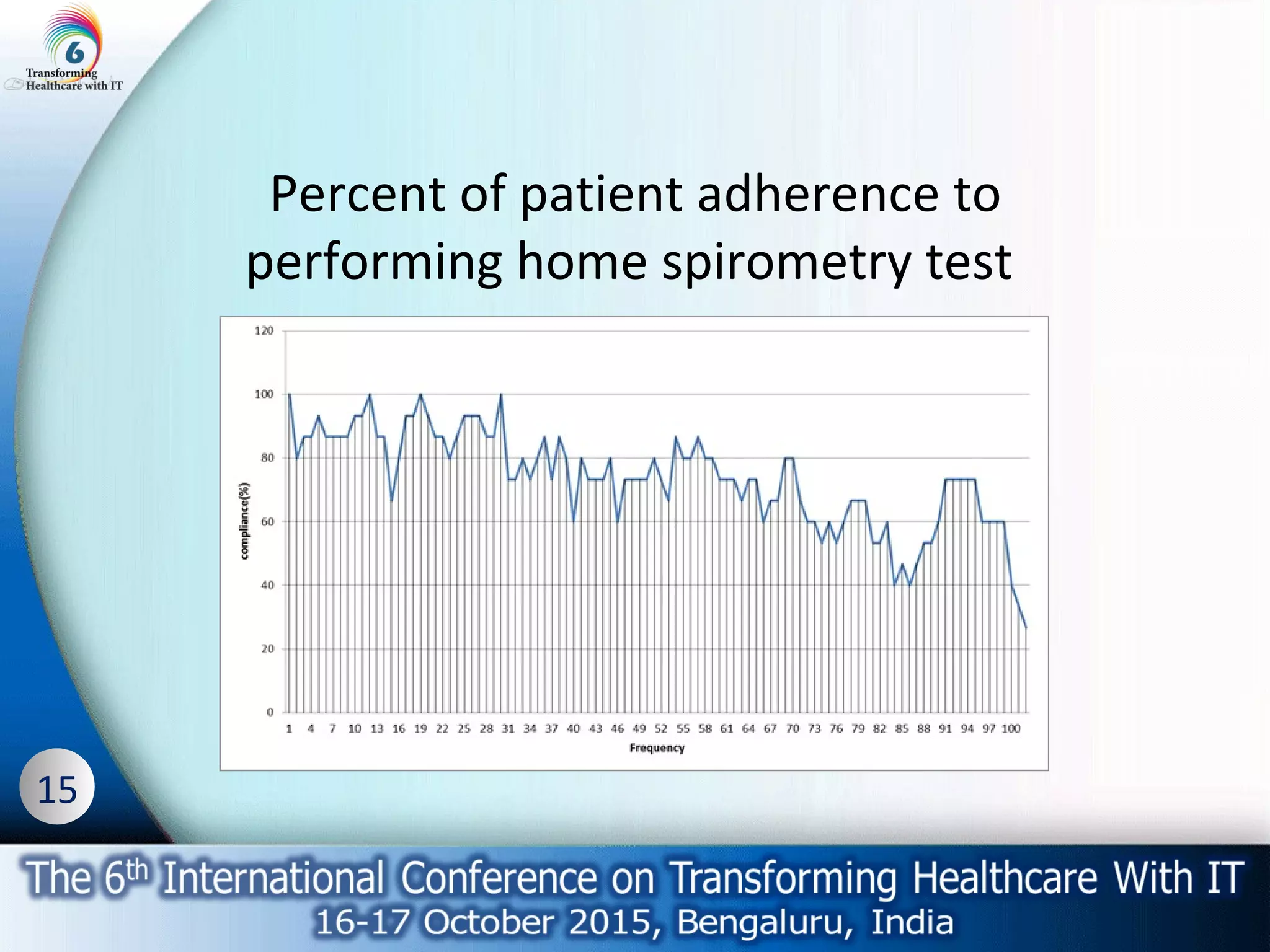
• Average compliance of patients
during the study was rated 78%.
14
• Level of compliance significantly
declined over time (p value
≥0.001), but an increase was
noticed in the middle of the study
which coincides with the stage at
which patients began to send
SMS's on a weekly basis
15
Percent of patient adherence to
performing home spirometry test
16
• Qualitative assessment of satisfaction
parameters was conducted to
determine the patients' level of
satisfaction in the course of the study.
Sense of increased support from the
medical staff was rated highest
(92.9%), while satisfaction with the
spirometer was rated at the lowest
(35.7%).
17
• Changes in FEV1 over time were
examined to assess the patients’
respiratory function during the study.
• There was no statistically significant
difference between values of initial
FEV1 (mean baseline
FEV1=2.26±0.92152) and values of FEV1
recorded during the study (mean
FEV1during the study=2.39±1.07, p
value≥0.835), which means that this
variable had remained stable in the
course of the study.
18
Graph of changes in FEV1
19
Conclusion
• Results showed a relatively good adherence
and satisfaction but the correlation
between clinical symptoms and FEV1
results was not significant.
• In our study, participants expressed their
highest satisfaction with support provided
by the medical staff (92.9% expressed full
satisfaction). This suggests that constant
contacts and follow-up by the physician can
encourage and ensure the patient of the
support provided by the medical team and
therefore increase patient satisfaction.
20
• The patients were least satisfied with
using the spirometer device (35.7%
expressed full satisfaction) and the
causes of such low level of satisfaction
were:
1) Inability to sterilize the device.
2) Concerns about device errors.
3) Concerns about improper use of the
device.
21
• Using the mobile phone was
another factor with which the
patients expressed a relatively
high sense of satisfaction (85.7%
expressed full satisfaction).
22
• The main purpose of telemedicine
is to avoid unnecessary
commuting of patients between
home and hospital as well as
unnecessary hospitalization.
23
• Performing home spirometry is a
useful method of monitoring
chronic and rare cases such as
lung transplant recipients which
not only leads to the patient's
satisfaction and sense of security,
but also avoids unnecessary
patient refer to hospital.
24
• Thank you for
your attention

Home Spirometry: Assessment of patient's compliance and satisfaction and its impact on early diagnosis of pulmonary symptoms in post-lung transplantation patients

  • 1.
    1 Home Spirometry: Assessment ofpatient's compliance and satisfaction and its impact on early diagnosis of pulmonary symptoms in post-lung transplantation patients Lida Fadaizadeh MD Assistant prof of Anesthesiology, Head of Telemedicine Research Center, NRITLD, Shahid Beheshti University of Medical Sciences Tehran, Iran
  • 2.
    2 Telemedicine: • Telemedicine hasthe potential to improve quality of care by allowing clinicians in one “control center” to monitor, consult and even care for and perform procedures on patients in multiple locations.
  • 3.
    3 ITU-T Workshop onStandardization in E-Health, Geneva, 23-25 May 2003
  • 4.
    4 Introduction • Monitoring patients,in particular those with chronic illnesses and life threatening diseases, is of great importance. • Lung transplant recipients are high risk patients that can benefit from telemedicine. These patients have the least life expectancy in comparison to other transplant recipients . • Thus early detection of diseases and following up these patients is of particular importance
  • 5.
    5 • Distance fromspecialized medical centers, economic and social problems as well as immune deficiency make these patients susceptible to infection while traveling to the medical centers, pose as impediments to the timely post-transplant follow-ups.
  • 6.
    6 • Remote spirometryis an approach that contributes to timely monitoring of patients, because it is an efficient tool for assessment of lung function and prognosis of transplantation. The measured respiratory volumes together with clinical symptoms can effectively contribute to timely diagnosis of infection or transplant rejection .
  • 7.
    7 • The presentstudy proceeded on assessing the issue of patient adherence and the involving effective elements. • Moreover, due to the importance of spirometry findings and clinical symptoms in early diagnosis of complications such as respiratory infections, the relationship between them was studied.
  • 8.
    8 • The presentstudy is a prospective cohort study conducted on lung transplant recipients. The patients who were willing to participate in the study and had undergone transplant six months earlier were recruited. Methods
  • 9.
    9 • Each ofthe participants was asked to send the results of the home spirometry as well as their clinical symptoms via SMS messages. • For this purpose, they were given special forms to record variables such as forced expiratory volume (FEV1), volume and color of sputum, cough, wheezes and dyspnea at rest.
  • 10.
    10 • For thefirst three months, participants were asked to send SMS's on a daily basis. The information was examined by the investigating physician and recorded on the relevant form allocated to each patient. • If a patient failed to send SMS, he/she was called by phone and was encouraged to cooperate with the study.
  • 11.
    11 • After threemonths, all the participants were contacted by phone and were asked to send the results of their respiratory tests on a weekly basis thereafter. They were also asked to perform additional tests whenever symptoms occurred during the week.
  • 12.
    12 • The suggestionsand critical remarks received from the patients in the course of the study were recorded and eventually special forms were completed indicating the patient's level of satisfaction.
  • 13.
    13 Results • The studywas conducted with 15 participants. • Average compliance of patients during the study was rated 78%.
  • 14.
    14 • Level ofcompliance significantly declined over time (p value ≥0.001), but an increase was noticed in the middle of the study which coincides with the stage at which patients began to send SMS's on a weekly basis
  • 15.
    15 Percent of patientadherence to performing home spirometry test
  • 16.
    16 • Qualitative assessmentof satisfaction parameters was conducted to determine the patients' level of satisfaction in the course of the study. Sense of increased support from the medical staff was rated highest (92.9%), while satisfaction with the spirometer was rated at the lowest (35.7%).
  • 17.
    17 • Changes inFEV1 over time were examined to assess the patients’ respiratory function during the study. • There was no statistically significant difference between values of initial FEV1 (mean baseline FEV1=2.26±0.92152) and values of FEV1 recorded during the study (mean FEV1during the study=2.39±1.07, p value≥0.835), which means that this variable had remained stable in the course of the study.
  • 18.
  • 19.
    19 Conclusion • Results showeda relatively good adherence and satisfaction but the correlation between clinical symptoms and FEV1 results was not significant. • In our study, participants expressed their highest satisfaction with support provided by the medical staff (92.9% expressed full satisfaction). This suggests that constant contacts and follow-up by the physician can encourage and ensure the patient of the support provided by the medical team and therefore increase patient satisfaction.
  • 20.
    20 • The patientswere least satisfied with using the spirometer device (35.7% expressed full satisfaction) and the causes of such low level of satisfaction were: 1) Inability to sterilize the device. 2) Concerns about device errors. 3) Concerns about improper use of the device.
  • 21.
    21 • Using themobile phone was another factor with which the patients expressed a relatively high sense of satisfaction (85.7% expressed full satisfaction).
  • 22.
    22 • The mainpurpose of telemedicine is to avoid unnecessary commuting of patients between home and hospital as well as unnecessary hospitalization.
  • 23.
    23 • Performing homespirometry is a useful method of monitoring chronic and rare cases such as lung transplant recipients which not only leads to the patient's satisfaction and sense of security, but also avoids unnecessary patient refer to hospital.
  • 24.
    24 • Thank youfor your attention