Gingivitis
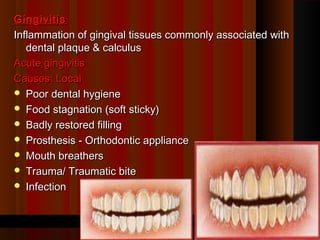
Inflammation of gingival tissues commonly associated with
   dental plaque & calculus
Acute gingivitis
Causes: Local
 Poor dental hygiene
 Food stagnation (soft sticky)
 Badly restored filling
 Prosthesis - Orthodontic appliance
 Mouth breathers
 Trauma/ Traumatic bite
 Infection


                          Dr S Chakradhar                   1
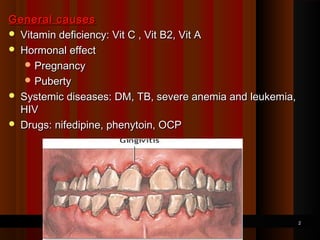
General causes
 Vitamin deficiency: Vit C , Vit B2, Vit A
 Hormonal effect
    Pregnancy
    Puberty
 Systemic diseases: DM, TB, severe anemia and leukemia,
  HIV
 Drugs: nifedipine, phenytoin, OCP


                          Dr S Chakradhar                  2
Types
 Acute necrotising ulcerative gingivitis
 Herpetic gingivitis
 Nonspecific gingivitis
 Leukemic gingivitis


                            Dr S Chakradhar   3
ANUG
 Etiology
  Borellia vincenti
  Fusiform bacilli

 Predisposing factors
  Smoking
  Poor oral hygiene
  Alcohol
  Immunocompromised condition


                       Dr S Chakradhar   4
Clinical features
 Pain
 Ulcer
 Bleeding
 Salivation
 Halitosis
 Metallic taste
 Fever, malaise and enlarge cervical LN


                      Dr S Chakradhar      5
Management
 Maintaining oral hygiene
 Prevention of plaque & Calculus
 Wash the lesion with 3% Hydrogen
  peroxide
 Paint with 10% chromic acid gel
 Advice antiseptic mouthwash eg 0.2%
  chlorhexidine
 Analgesics as needed
 Metronidazole 400mg PO TDS for 7 days
                  Dr S Chakradhar         6
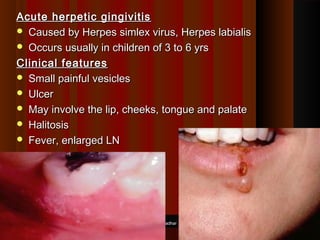
Acute herpetic gingivitis
 Caused by Herpes simlex virus, Herpes labialis
 Occurs usually in children of 3 to 6 yrs

Clinical features
 Small painful vesicles
 Ulcer
 May involve the lip, cheeks, tongue and palate
 Halitosis
 Fever, enlarged LN


                         Dr S Chakradhar           7
Management
 Maintaining oral hygiene
 Prevention of plaque & Calculus
 Self limiting disease (1 or 2 weeks)
 Bed rest
 Soft diet
 Analgesics
 Tetracycline mouth wash
  250mg in 30ml water 6hrly


                     Dr S Chakradhar     8
Acute non specific gingivitis
 Probably due to overgrowth of normal
  bacteria
 Cl/F similar with pain and swelling of gums
 Bleeds on probing and pus may also be
  seen
 Treat by H2O2 wash
 Advise proper oral hygiene


                    Dr S Chakradhar             9
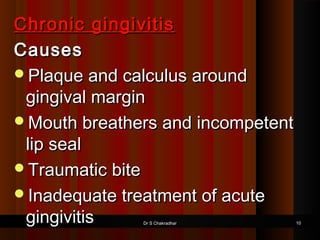
Chronic gingivitis
Causes
Plaque and calculus around
 gingival margin
Mouth breathers and incompetent
 lip seal
Traumatic bite
Inadequate treatment of acute
 gingivitis   Dr S Chakradhar      10
Clinical features
 The classic triad of redness, swelling, and bleeding on
   gentle probing are diagnostic
 Usually complain that 'gums bleed on brushing‘
 Color change: from pink to beefy red/purple
 Gingival pockets


                           Dr S Chakradhar                  11
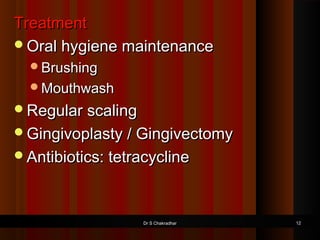
Treatment
Oral hygiene maintenance
  Brushing
  Mouthwash
Regular scaling
Gingivoplasty / Gingivectomy
Antibiotics: tetracycline


                   Dr S Chakradhar   12

7gingivitis

  • 1.
    Gingivitis Inflammation of gingivaltissues commonly associated with dental plaque & calculus Acute gingivitis Causes: Local  Poor dental hygiene  Food stagnation (soft sticky)  Badly restored filling  Prosthesis - Orthodontic appliance  Mouth breathers  Trauma/ Traumatic bite  Infection Dr S Chakradhar 1
  • 2.
    General causes  Vitamindeficiency: Vit C , Vit B2, Vit A  Hormonal effect  Pregnancy  Puberty  Systemic diseases: DM, TB, severe anemia and leukemia, HIV  Drugs: nifedipine, phenytoin, OCP Dr S Chakradhar 2
  • 3.
    Types  Acute necrotisingulcerative gingivitis  Herpetic gingivitis  Nonspecific gingivitis  Leukemic gingivitis Dr S Chakradhar 3
  • 4.
    ANUG  Etiology Borellia vincenti Fusiform bacilli  Predisposing factors Smoking Poor oral hygiene Alcohol Immunocompromised condition Dr S Chakradhar 4
  • 5.
    Clinical features  Pain Ulcer  Bleeding  Salivation  Halitosis  Metallic taste  Fever, malaise and enlarge cervical LN Dr S Chakradhar 5
  • 6.
    Management  Maintaining oralhygiene  Prevention of plaque & Calculus  Wash the lesion with 3% Hydrogen peroxide  Paint with 10% chromic acid gel  Advice antiseptic mouthwash eg 0.2% chlorhexidine  Analgesics as needed  Metronidazole 400mg PO TDS for 7 days Dr S Chakradhar 6
  • 7.
    Acute herpetic gingivitis Caused by Herpes simlex virus, Herpes labialis  Occurs usually in children of 3 to 6 yrs Clinical features  Small painful vesicles  Ulcer  May involve the lip, cheeks, tongue and palate  Halitosis  Fever, enlarged LN Dr S Chakradhar 7
  • 8.
    Management  Maintaining oralhygiene  Prevention of plaque & Calculus  Self limiting disease (1 or 2 weeks)  Bed rest  Soft diet  Analgesics  Tetracycline mouth wash 250mg in 30ml water 6hrly Dr S Chakradhar 8
  • 9.
    Acute non specificgingivitis  Probably due to overgrowth of normal bacteria  Cl/F similar with pain and swelling of gums  Bleeds on probing and pus may also be seen  Treat by H2O2 wash  Advise proper oral hygiene Dr S Chakradhar 9
  • 10.
    Chronic gingivitis Causes Plaque andcalculus around gingival margin Mouth breathers and incompetent lip seal Traumatic bite Inadequate treatment of acute gingivitis Dr S Chakradhar 10
  • 11.
    Clinical features  Theclassic triad of redness, swelling, and bleeding on gentle probing are diagnostic  Usually complain that 'gums bleed on brushing‘  Color change: from pink to beefy red/purple  Gingival pockets Dr S Chakradhar 11
  • 12.
    Treatment Oral hygiene maintenance Brushing Mouthwash Regular scaling Gingivoplasty / Gingivectomy Antibiotics: tetracycline Dr S Chakradhar 12