Enhancing the climate science
basis of the climate rationale in
GCF funded activities
GCF – WMO partnership
NAP-EXPO 2019
Amir H. Delju
WMO Climate Prediction and Adaptation Branch, 10 April 2019
1
2
3
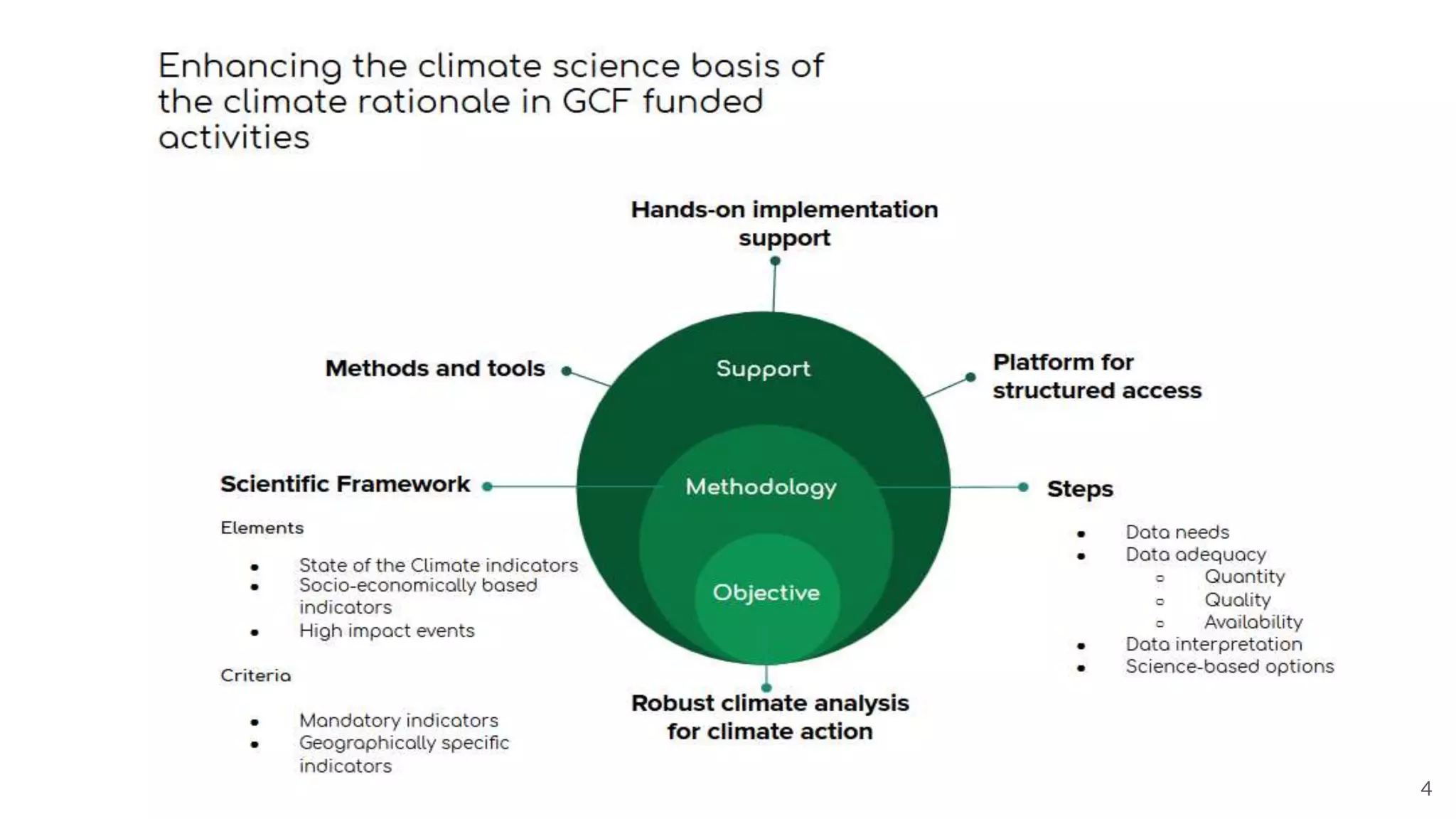
4
Climate rationale - what is it?
5
Needs to be
based on
best
available
science
Motion
design
Provides the
evidence for
climate
investment and
policy decision
making
Assess the causal
links between
climate action and
climate impacts
The impact an
investment or
policy is
expected to
have in the
climate
The impact that
climate is
expected to
have in an
investment or
policy
Climate rationale - why is it so important?
6
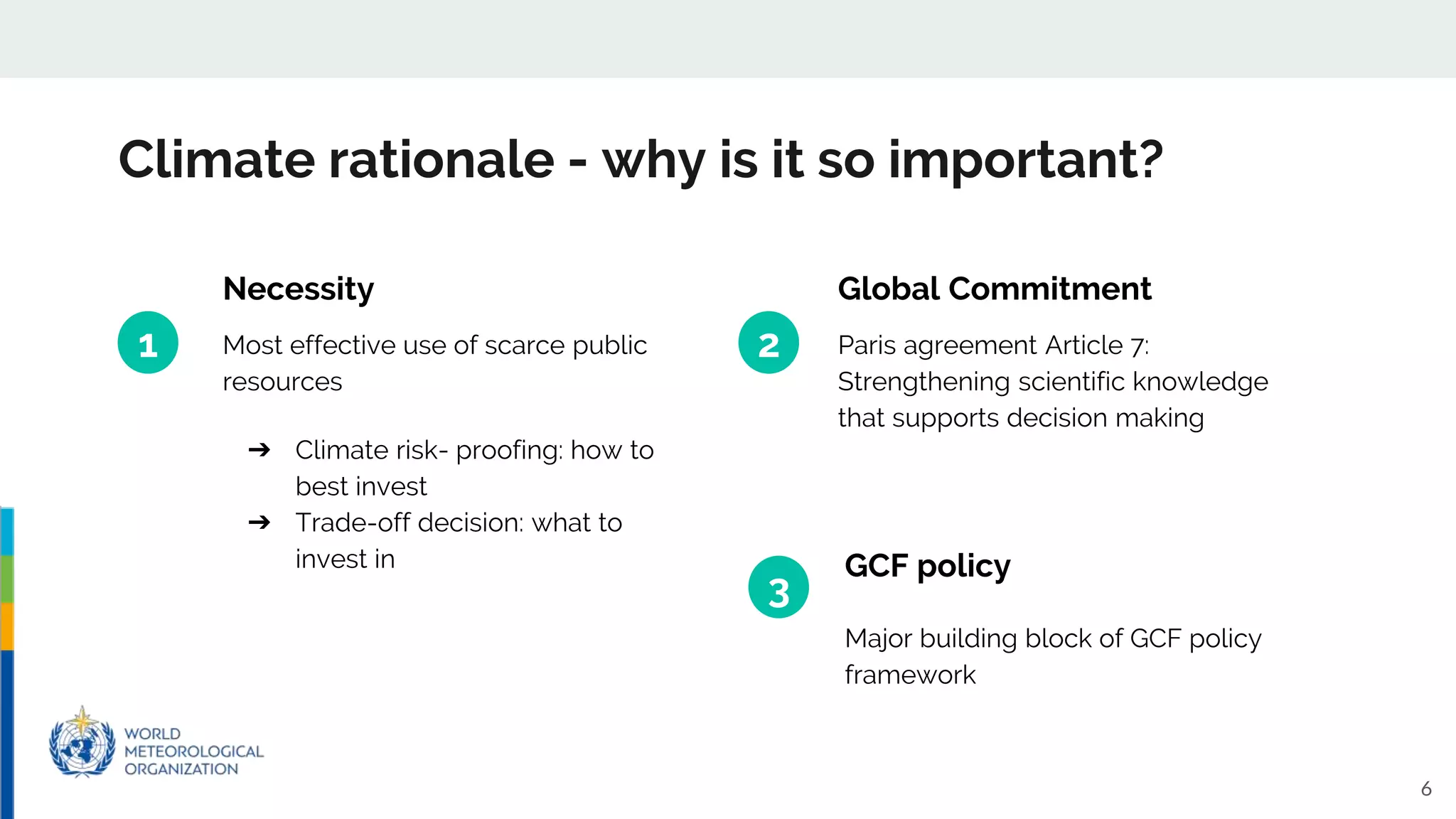
1
Necessity
Most effective use of scarce public
resources
➔ Climate risk- proofing: how to
best invest
➔ Trade-off decision: what to
invest in GCF policy
Major building block of GCF policy
framework
2
Global Commitment
Paris agreement Article 7:
Strengthening scientific knowledge
that supports decision making
3
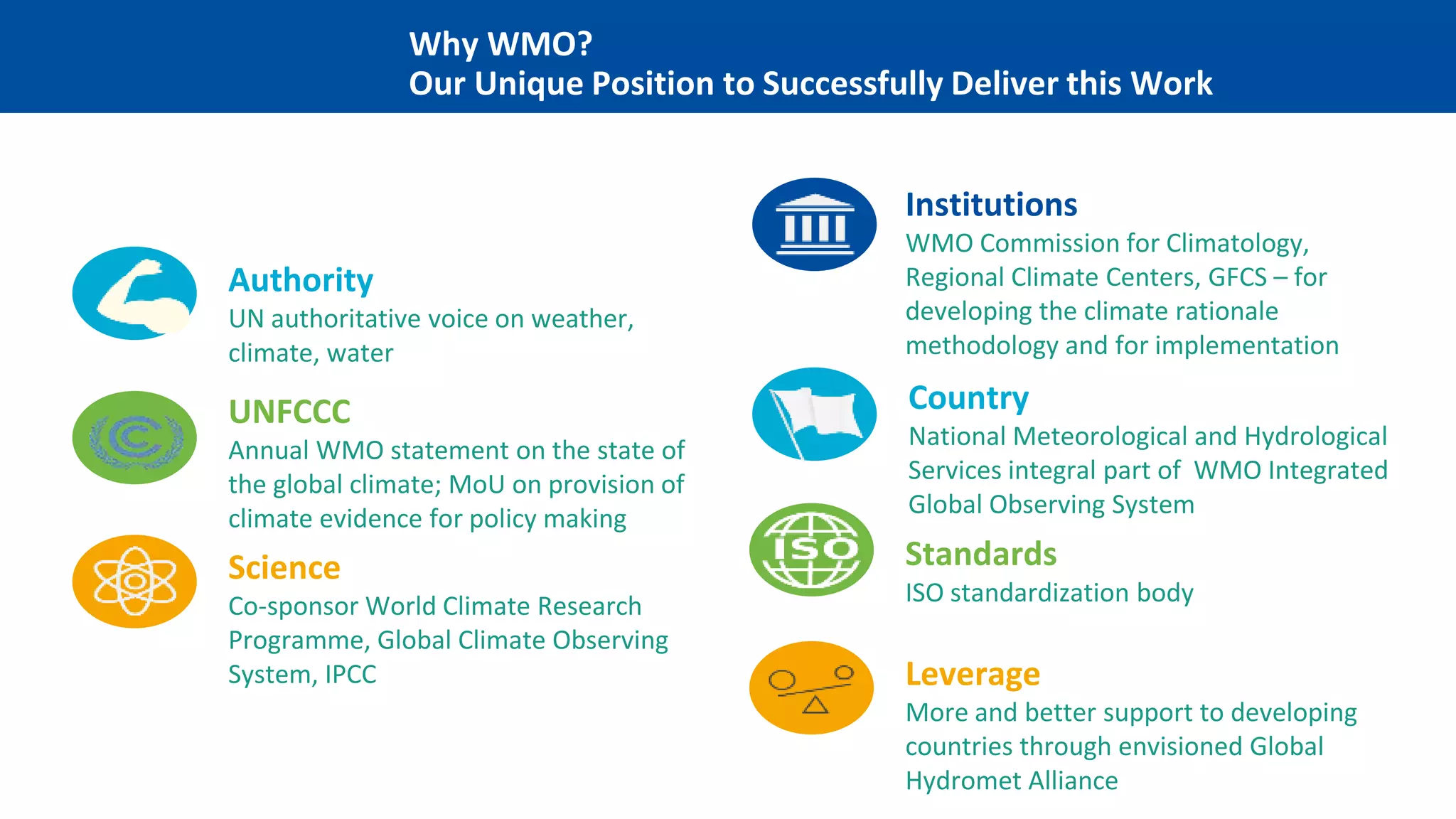
Authority
UN authoritative voice on weather,
climate, water
UNFCCC
Annual WMO statement on the state of
the global climate; MoU on provision of
climate evidence for policy making
Science
Co-sponsor World Climate Research
Programme, Global Climate Observing
System, IPCC
Institutions
WMO Commission for Climatology,
Regional Climate Centers, GFCS – for
developing the climate rationale
methodology and for implementation
Country
National Meteorological and Hydrological
Services integral part of WMO Integrated
Global Observing System
Standards
ISO standardization body
Leverage
More and better support to developing
countries through envisioned Global
Hydromet Alliance
Why WMO?
Our Unique Position to Successfully Deliver this Work
What is the methodology?
8
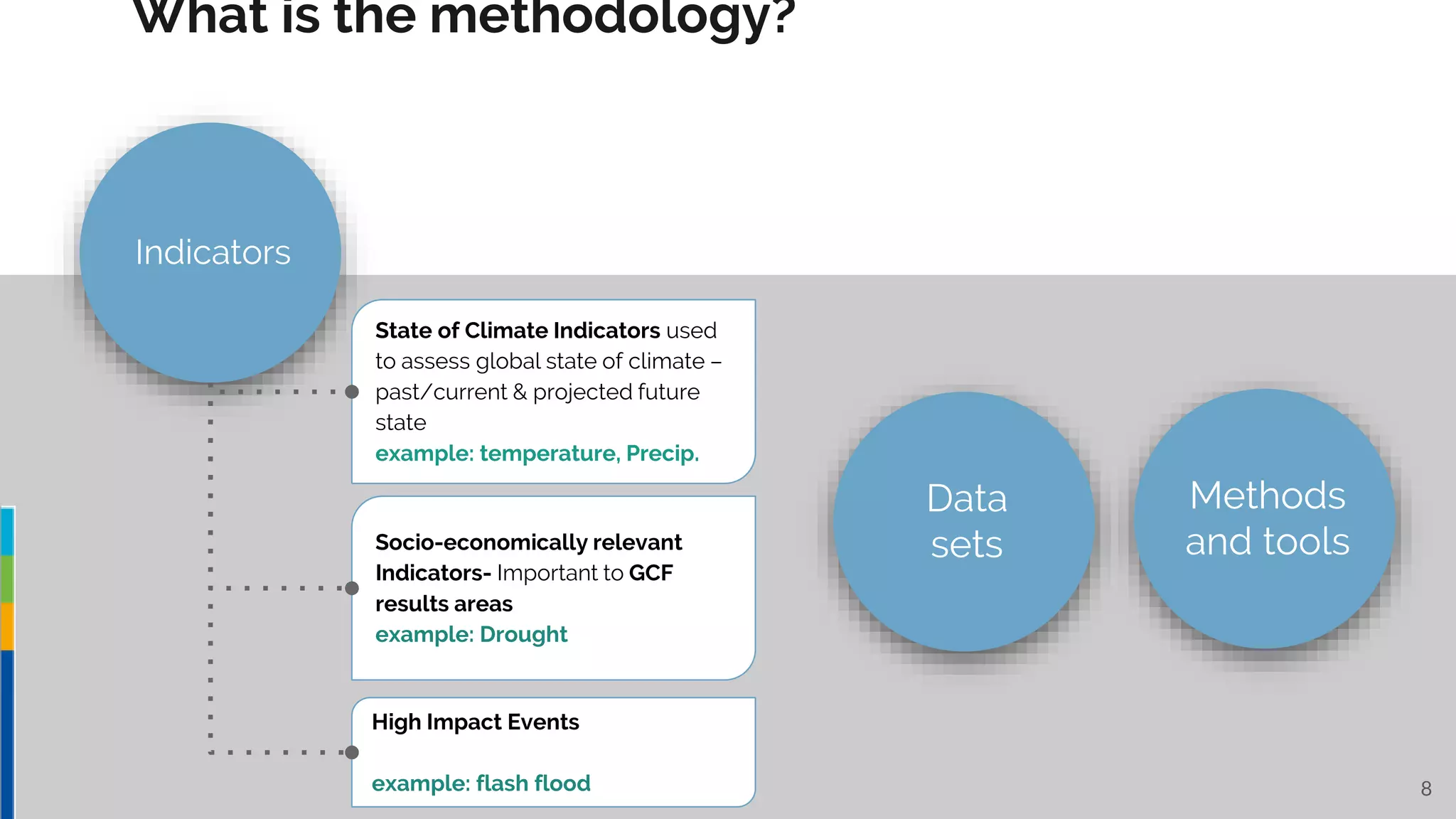
Indicators
Data
sets
Methods
and tools
State of Climate Indicators used
to assess global state of climate –
past/current & projected future
state
example: temperature, Precip.
Socio-economically relevant
Indicators- Important to GCF
results areas
example: Drought
High Impact Events
example: flash flood
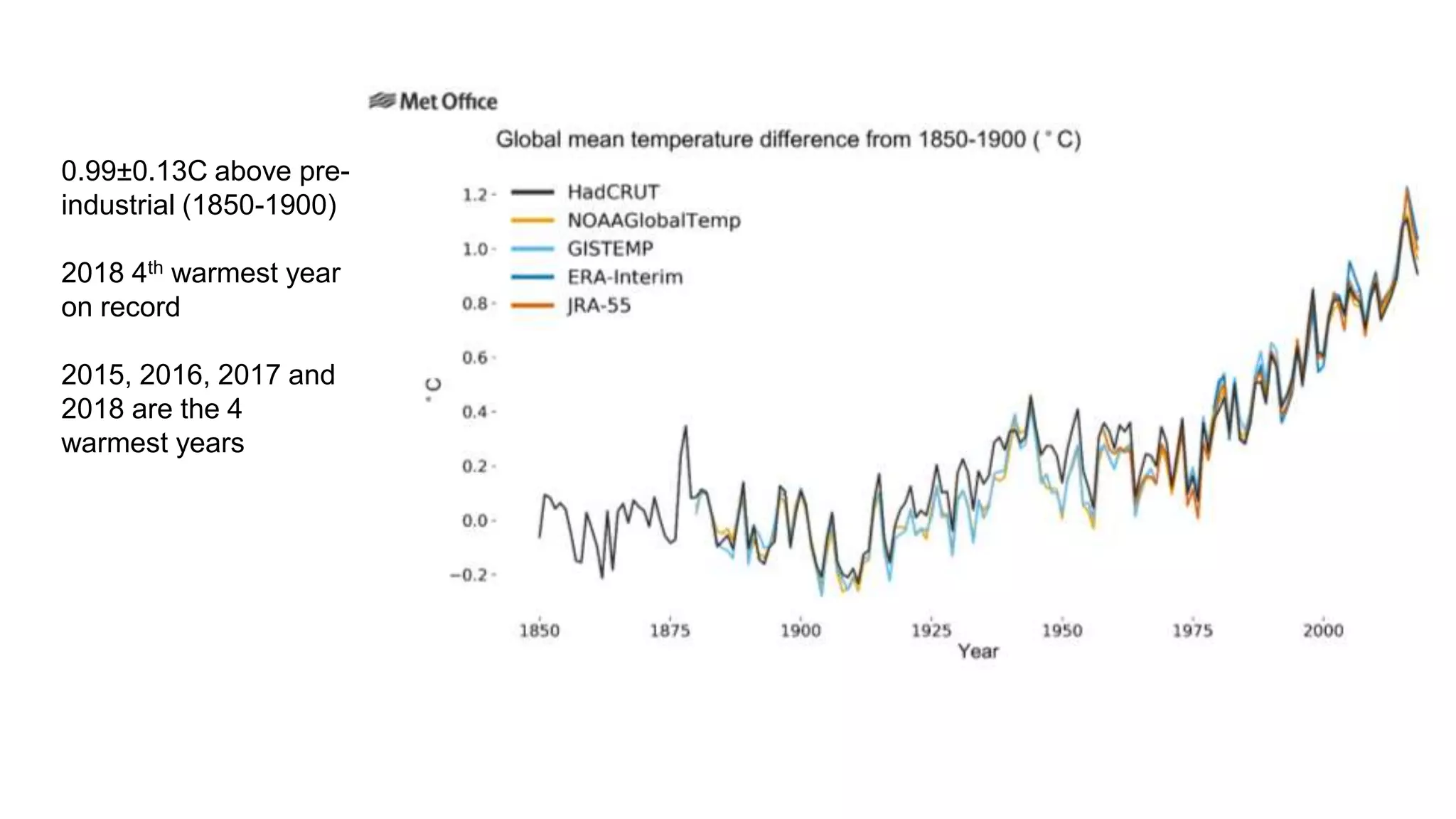
0.99±0.13C above pre-
industrial (1850-1900)
2018 4th warmest year
on record
2015, 2016, 2017 and
2018 are the 4
warmest years
Greenhouse gases at record levels – CO2
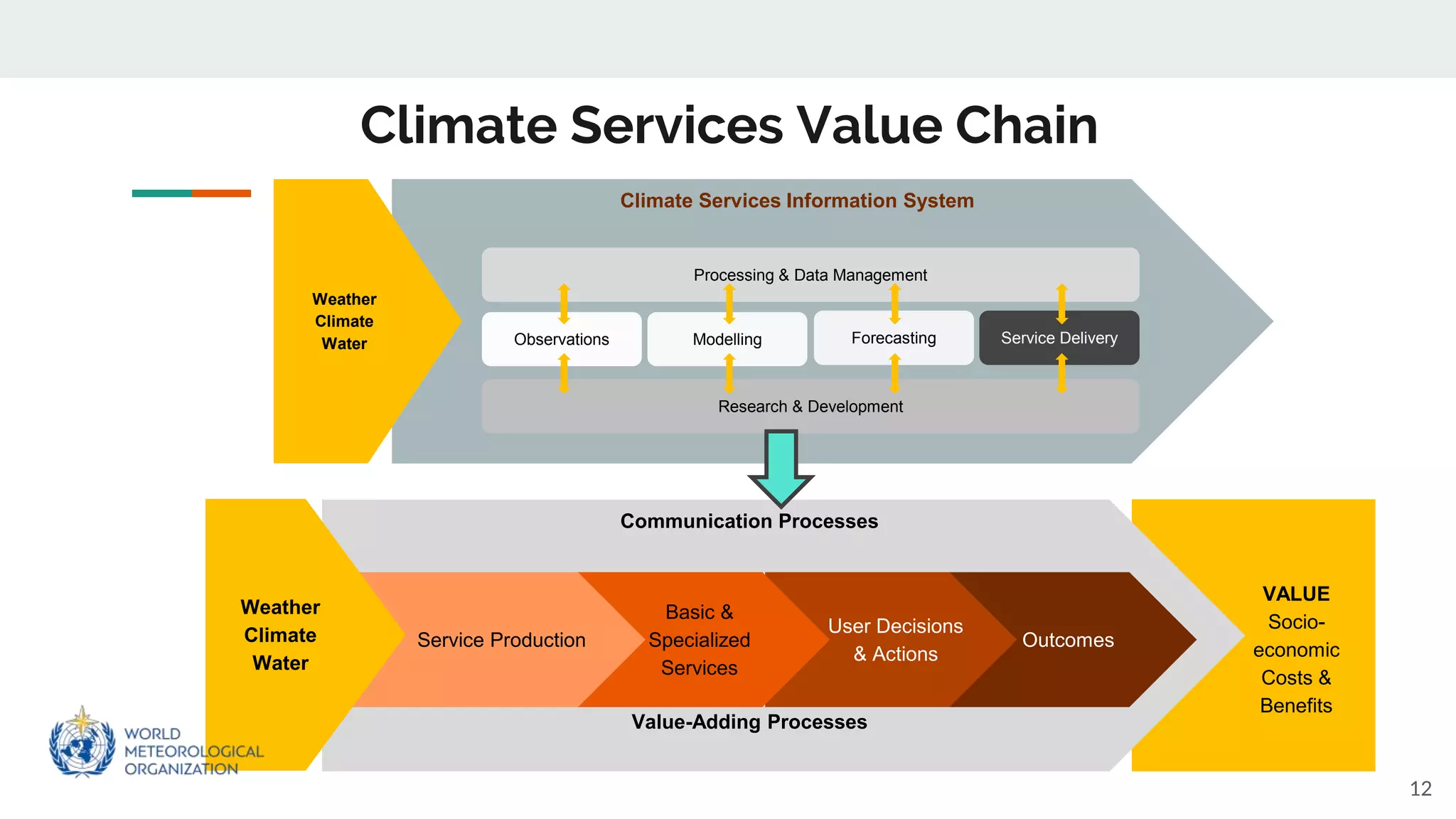
Climate Services Value Chain
12
VALUE
Socio-
economic
Costs &
Benefits
Communication Processes
Value-Adding Processes
Outcomes
User Decisions
& Actions
Basic &
Specialized
Services
Service Production
Weather
Climate
Water
Climate Services Information System
Weather
Climate
Water Observations Modelling Forecasting Service Delivery
Processing & Data Management
Research & Development
What is the working mechanism?
13
How to ensure easy access?
14
Unique structured
access platform
“one-stop-shop”
easy access
Indicators,
data, tools and
methods
What support will be provided?
Country
ownership
National Hydro-met
offices as key actor
Country support
for climate science
basis of GCF projects
and NAPs
Country capacity
Hydro-Met. offices capacity
would be systematically
strengthened through
“learning-by-doing” support
15
Thanks for your attention
adelju@wmo.int
16

6.1.2 Methodologies for climate rational for adaptation - WMO

  • 1.
    Enhancing the climatescience basis of the climate rationale in GCF funded activities GCF – WMO partnership NAP-EXPO 2019 Amir H. Delju WMO Climate Prediction and Adaptation Branch, 10 April 2019 1
  • 2.
  • 3.
  • 4.
  • 5.
    Climate rationale -what is it? 5 Needs to be based on best available science Motion design Provides the evidence for climate investment and policy decision making Assess the causal links between climate action and climate impacts The impact an investment or policy is expected to have in the climate The impact that climate is expected to have in an investment or policy
  • 6.
    Climate rationale -why is it so important? 6 1 Necessity Most effective use of scarce public resources ➔ Climate risk- proofing: how to best invest ➔ Trade-off decision: what to invest in GCF policy Major building block of GCF policy framework 2 Global Commitment Paris agreement Article 7: Strengthening scientific knowledge that supports decision making 3
  • 7.
    Authority UN authoritative voiceon weather, climate, water UNFCCC Annual WMO statement on the state of the global climate; MoU on provision of climate evidence for policy making Science Co-sponsor World Climate Research Programme, Global Climate Observing System, IPCC Institutions WMO Commission for Climatology, Regional Climate Centers, GFCS – for developing the climate rationale methodology and for implementation Country National Meteorological and Hydrological Services integral part of WMO Integrated Global Observing System Standards ISO standardization body Leverage More and better support to developing countries through envisioned Global Hydromet Alliance Why WMO? Our Unique Position to Successfully Deliver this Work
  • 8.
    What is themethodology? 8 Indicators Data sets Methods and tools State of Climate Indicators used to assess global state of climate – past/current & projected future state example: temperature, Precip. Socio-economically relevant Indicators- Important to GCF results areas example: Drought High Impact Events example: flash flood
  • 10.
    0.99±0.13C above pre- industrial(1850-1900) 2018 4th warmest year on record 2015, 2016, 2017 and 2018 are the 4 warmest years
  • 11.
    Greenhouse gases atrecord levels – CO2
  • 12.
    Climate Services ValueChain 12 VALUE Socio- economic Costs & Benefits Communication Processes Value-Adding Processes Outcomes User Decisions & Actions Basic & Specialized Services Service Production Weather Climate Water Climate Services Information System Weather Climate Water Observations Modelling Forecasting Service Delivery Processing & Data Management Research & Development
  • 13.
    What is theworking mechanism? 13
  • 14.
    How to ensureeasy access? 14 Unique structured access platform “one-stop-shop” easy access Indicators, data, tools and methods
  • 15.
    What support willbe provided? Country ownership National Hydro-met offices as key actor Country support for climate science basis of GCF projects and NAPs Country capacity Hydro-Met. offices capacity would be systematically strengthened through “learning-by-doing” support 15
  • 16.
    Thanks for yourattention adelju@wmo.int 16