Elyse Whitt
August 15, 2011
EDTC 601


ONLINE LEARNING
What is Online Learning
 All forms of electronically
  supported learning and
  teaching
 This includes web-based
  learning, computer-based
  learning, virtual education
  opportunities and digital
  collaboration
 In 2006 3.5 million students
  were participating in online
  learning
 Online learning is utilized by
  public K-12 schools and
  universities in the United
  States
History of Virtual Learning

 1953 University of Houston offers the first
  televised college credit classes
   13-15 hours a week
   Mid-1960’s 1/3 of the station’s programming devoted
    to education
 1956 The first adaptive teaching system was put
  into commercial production
 1956-1958 A physics professor at U. C. Berkeley
  produced 163 high school physics lessons that
  were broadcast into public schools
History Continued

 University of Chicago produces Sunrise
  Semester, a series of courses delivered via
  broadcast television
 1960 Programmed Logic for Automated
  Teaching Operations system was developed
  at the University of Illinois
   PLATO delivers managed course content over the
    internet
 1963 The first computer for instruction is
  installed at Orange Coast College
History

 1964 The first authoring system for
  developing lessons and courses on a
  computer system is produced
 1968 an IBM 1500 system was installed at the
  University of Alberta
   With 12 years of operation 20,000 people had
    used the system
The start of the Internet

                1969 The US Department
                 of Defense commissions
                 ARPANET
                  The start of the internet as
                   we know it
                The first Associate
                 Committee on
                 Instructional Technology
                 is formed at the National
                 Research Council of
                 Canada
First Online Classes

 1993 William Graziadei began an online
  computer –delivered lecture including
  tutorials and assessment projects using email
 1997 Graziadei published an article describing
  a process of evaluating products and
  developing an overall strategy for
  technology-based courses
Online Learning in the US

 In 2006 38 states have
  established sate-led
  online learning programs
   25 states have state-led
    online learning programs
   18 states are home to a
    total of 147 virtual charter
    schools
 In 2006 Michigan
  became the first state to
  require students to take
  an online course for
  graduation
Compare Online Vs. Traditional

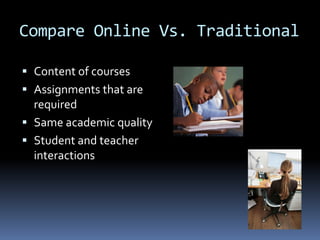
 Content of courses
 Assignments that are
  required
 Same academic quality
 Student and teacher
  interactions
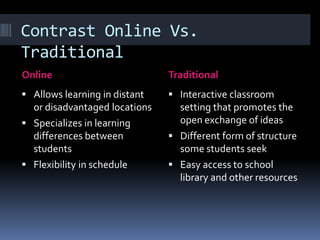
Contrast Online Vs.
Traditional
Online                         Traditional
 Allows learning in distant    Interactive classroom
  or disadvantaged locations     setting that promotes the
 Specializes in learning        open exchange of ideas
  differences between           Different form of structure
  students                       some students seek
 Flexibility in schedule       Easy access to school
                                 library and other resources
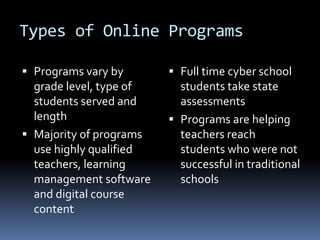
Types of Online Programs

 Programs vary by        Full time cyber school
  grade level, type of     students take state
  students served and      assessments
  length                  Programs are helping
 Majority of programs     teachers reach
  use highly qualified     students who were not
  teachers, learning       successful in traditional
  management software      schools
  and digital course
  content
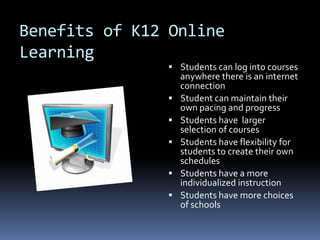
Benefits of K12 Online
Learning
                Students can log into courses
                   anywhere there is an internet
                   connection
                  Student can maintain their
                   own pacing and progress
                  Students have larger
                   selection of courses
                  Students have flexibility for
                   students to create their own
                   schedules
                  Students have a more
                   individualized instruction
                  Students have more choices
                   of schools
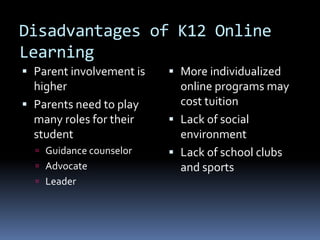
Disadvantages of K12 Online
Learning
 Parent involvement is    More individualized
  higher                    online programs may
 Parents need to play      cost tuition
  many roles for their     Lack of social
  student                   environment
   Guidance counselor     Lack of school clubs
   Advocate                and sports
   Leader
Local Online K12 Schools

 Denver Online High            Colorado Virtual
  School                         Academy
   http://online.dpsk12.org      http://www.covcs.org
 Academy Online High           Falcon Virtual Academy
  School                          www.d49.org/school/fva
   http://www.d20onlinesc      Provost Academy
    hool.org                     Colorado
 Connections Academy             http://co.provostacade
   http://www.connections         my.com
    academy.com
References
   Dan Lips. (January 12, 2010). How Online Learning Is Revolutionizing K-
    12 Education and Benefiting Students. In The Heritage Foundation .
    Retrieved August 19 2011, from
    http://www.heritage.org/research/reports/2010/01/how-online-learning-
    is-revolutionizing-k12-education-and-benefiting-students .
   N. A.. (July 27, 2011). Online Programs. In The Colorado Department of
    Education. Retrieved August 19, 2011, from
    http://www.cde.state.co.us/onlinelearning/schools.htm#Academy20.
   N. A.. (August 12, 2011). Web 2,0. In Wikipedia. Retrieved August 16,
    2011, from http://en.wikipedia.org/wiki/Web_2.0 .
   N. A.. (N. D. ). K12 Education Articles. In Directory of Schools. Retrieved
    August 16, 2011, from http://www.directoryofschools.com/Education-
    Articles/K12-Education/K12-Education-Online-Learning.htm.
   N. A.. (2006). 10 Advantages to Taking Online Classes. In Online
    Education Database. Retrieved August 19 2011, from
    http://oedb.org/library/distance-vs-local/10-advantages-to-taking-
    online-classes .

601 online learning

  • 1.
    Elyse Whitt August 15,2011 EDTC 601 ONLINE LEARNING
  • 2.
    What is OnlineLearning  All forms of electronically supported learning and teaching  This includes web-based learning, computer-based learning, virtual education opportunities and digital collaboration  In 2006 3.5 million students were participating in online learning  Online learning is utilized by public K-12 schools and universities in the United States
  • 3.
    History of VirtualLearning  1953 University of Houston offers the first televised college credit classes  13-15 hours a week  Mid-1960’s 1/3 of the station’s programming devoted to education  1956 The first adaptive teaching system was put into commercial production  1956-1958 A physics professor at U. C. Berkeley produced 163 high school physics lessons that were broadcast into public schools
  • 4.
    History Continued  Universityof Chicago produces Sunrise Semester, a series of courses delivered via broadcast television  1960 Programmed Logic for Automated Teaching Operations system was developed at the University of Illinois  PLATO delivers managed course content over the internet  1963 The first computer for instruction is installed at Orange Coast College
  • 5.
    History  1964 Thefirst authoring system for developing lessons and courses on a computer system is produced  1968 an IBM 1500 system was installed at the University of Alberta  With 12 years of operation 20,000 people had used the system
  • 6.
    The start ofthe Internet  1969 The US Department of Defense commissions ARPANET  The start of the internet as we know it  The first Associate Committee on Instructional Technology is formed at the National Research Council of Canada
  • 7.
    First Online Classes 1993 William Graziadei began an online computer –delivered lecture including tutorials and assessment projects using email  1997 Graziadei published an article describing a process of evaluating products and developing an overall strategy for technology-based courses
  • 8.
    Online Learning inthe US  In 2006 38 states have established sate-led online learning programs  25 states have state-led online learning programs  18 states are home to a total of 147 virtual charter schools  In 2006 Michigan became the first state to require students to take an online course for graduation
  • 9.
    Compare Online Vs.Traditional  Content of courses  Assignments that are required  Same academic quality  Student and teacher interactions
  • 10.
    Contrast Online Vs. Traditional Online Traditional  Allows learning in distant  Interactive classroom or disadvantaged locations setting that promotes the  Specializes in learning open exchange of ideas differences between  Different form of structure students some students seek  Flexibility in schedule  Easy access to school library and other resources
  • 11.
    Types of OnlinePrograms  Programs vary by  Full time cyber school grade level, type of students take state students served and assessments length  Programs are helping  Majority of programs teachers reach use highly qualified students who were not teachers, learning successful in traditional management software schools and digital course content
  • 12.
    Benefits of K12Online Learning  Students can log into courses anywhere there is an internet connection  Student can maintain their own pacing and progress  Students have larger selection of courses  Students have flexibility for students to create their own schedules  Students have a more individualized instruction  Students have more choices of schools
  • 13.
    Disadvantages of K12Online Learning  Parent involvement is  More individualized higher online programs may  Parents need to play cost tuition many roles for their  Lack of social student environment  Guidance counselor  Lack of school clubs  Advocate and sports  Leader
  • 14.
    Local Online K12Schools  Denver Online High  Colorado Virtual School Academy  http://online.dpsk12.org  http://www.covcs.org  Academy Online High  Falcon Virtual Academy School  www.d49.org/school/fva  http://www.d20onlinesc  Provost Academy hool.org Colorado  Connections Academy  http://co.provostacade  http://www.connections my.com academy.com
  • 15.
    References  Dan Lips. (January 12, 2010). How Online Learning Is Revolutionizing K- 12 Education and Benefiting Students. In The Heritage Foundation . Retrieved August 19 2011, from http://www.heritage.org/research/reports/2010/01/how-online-learning- is-revolutionizing-k12-education-and-benefiting-students .  N. A.. (July 27, 2011). Online Programs. In The Colorado Department of Education. Retrieved August 19, 2011, from http://www.cde.state.co.us/onlinelearning/schools.htm#Academy20.  N. A.. (August 12, 2011). Web 2,0. In Wikipedia. Retrieved August 16, 2011, from http://en.wikipedia.org/wiki/Web_2.0 .  N. A.. (N. D. ). K12 Education Articles. In Directory of Schools. Retrieved August 16, 2011, from http://www.directoryofschools.com/Education- Articles/K12-Education/K12-Education-Online-Learning.htm.  N. A.. (2006). 10 Advantages to Taking Online Classes. In Online Education Database. Retrieved August 19 2011, from http://oedb.org/library/distance-vs-local/10-advantages-to-taking- online-classes .