THE IIS (DEEMED TO BE UNIVERSITY)
SUBMITTED BY:-
AMISHA SINGH
M.Com BSG SEM 2
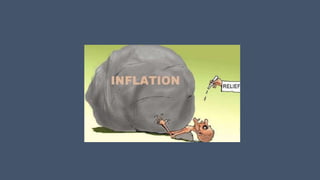
INFLATION
 Inflation is the rate at which the cost of goods and services rises over
time. It could also be thought of as a reduction in the value of rupee
because consumers are now able to purchase less than they previously
could with the same rupee bill.
 Value of money depreciates with the occurrence of inflation.
Current inflation (5.52%) March,2021.
DEFINITION:-
In Economics, the Word inflation Refers to General rise in Prices Measured
against a Standard Level of Purchasing Power.
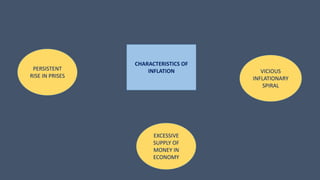
PERSISTENT
RISE IN PRISES
VICIOUS
INFLATIONARY
SPIRAL
EXCESSIVE
SUPPLY OF
MONEY IN
ECONOMY
CHARACTERISTICS OF
INFLATION
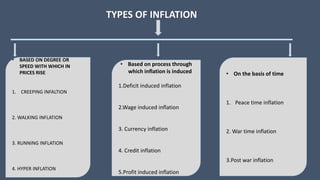
TYPES OF INFLATION
• BASED ON DEGREE OR
SPEED WITH WHICH IN
PRICES RISE
1. CREEPING INFALTION
2. WALKING INFLATION
3. RUNNING INFLATION
4. HYPER INFLATION
• Based on process through
which inflation is induced
1.Deficit induced inflation
2.Wage induced inflation
3. Currency inflation
4. Credit inflation
5.Profit induced inflation
• On the basis of time
1. Peace time inflation
2. War time inflation
3.Post war inflation
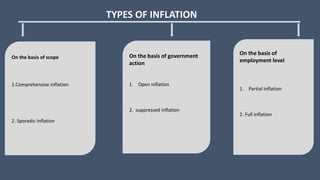
On the basis of scope
1.Comprehensive inflation
2. Sporadic inflation
On the basis of government
action
1. Open inflation
2. suppressed inflation
On the basis of
employment level
1. Partial inflation
2. Full inflation
TYPES OF INFLATION
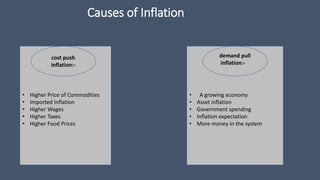
Causes of Inflation
• Higher Price of Commodities
• Imported Inflation
• Higher Wages
• Higher Taxes
• Higher Food Prices
• A growing economy
• Asset inflation
• Government spending
• Inflation expectation
• More money in the system
cost push
inflation:-
demand pull
inflation:-
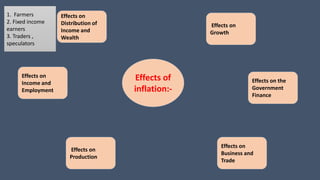
Effects of
inflation:-
Effects on
Distribution of
Income and
Wealth
Effects on the
Government
Finance
Effects on
Production
Effects on
Income and
Employment
Effects on
Business and
Trade
Effects on
Growth
1. Farmers
2. Fixed income
earners
3. Traders ,
speculators
Measures to control inflation
Monetary measure
Fiscal measure
Price control
The central bank increases rate of
interest on borrowings for
commercial banks. As a result,
commercial banks increase their rate
of interests on credit for the public.
In such a situation, individuals prefer
to save money instead of investing in
new ventures.
• Performing Open Market
Operations (OMO)
• Rise in Bank Rate
• Changing Reserve Ratios
• Issue of new currency
The two main components of
fiscal policy are government
revenue and government
expenditure. In fiscal policy, the
government controls inflation
either by reducing private
spending or by decreasing
government expenditure, or by
using both.
• Increase in taxes
• Increase in savings
• Public debt
Inflation is suppressed by price
control, but cannot be controlled
for the long term. In such a case,
the basic inflationary pressure in
the economy is not exhibited in
the form of rise in prices for a
short time. Such inflation is
termed as suppressed inflation.
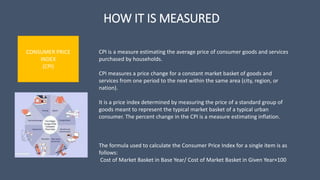
HOW IT IS MEASURED
CONSUMER PRICE
INDEX
(CPI)
CPI is a measure estimating the average price of consumer goods and services
purchased by households.
CPI measures a price change for a constant market basket of goods and
services from one period to the next within the same area (city, region, or
nation).
It is a price index determined by measuring the price of a standard group of
goods meant to represent the typical market basket of a typical urban
consumer. The percent change in the CPI is a measure estimating inflation.
The formula used to calculate the Consumer Price Index for a single item is as
follows:
Cost of Market Basket in Base Year/ Cost of Market Basket in Given Year​×100
WHOLESALE PRICE
INDEX
(WPI)
WPI was published in 1902,and was one of the economic indicators
available to policy makers until it was replaced by most developed
countries by the CPI market index in the 1970.
WPI is the index that is used to measure the change in the average
price level of goods traded in wholesale market.
Some countries (like India and The Philippines) use WPI changes as a
central measure of inflation. However, India and the United States
now report a producer price index instead.
• INFLATION - KEYNESIAN VIEW
Keynesian economics proposes that changes in money supply do not directly affect prices, and that visible
inflation is the result of pressures in the economy expressing themselves in prices. Demand-pull inflation is
caused by increases in aggregate demand due to increased private and government spending.
Cost-push inflation, also called "supply shock inflation," is caused by a drop in aggregate supply (potential
output).
This may be due to natural disasters, or increased prices of inputs.
For example, a sudden decrease in the supply of oil, leading to increased oil prices, can cause cost-push
inflation.
• MONETARIST VIEW
Consider fiscal policy, or government spending and taxation, as ineffective in controlling inflation. The
quantity theory of money, simply stated, says that any change in the amount of money in a system will
change the price level.
• MV = PQ
COVID -19 IMPACT ON INFLATION
• India’s economy has been facing stubbornly high inflation for over almost one year now
• Food inflation has been the main reason behind the rapid rise in inflation. Core inflation
has been higher than expected as well, caused by disrupted supply chains related to local
lockdowns
• While inflation in the health category has been lower this year than the last year, in
October it went up by 5.22%, the highest it has been this year. 5)
• Within the fuel category, the price of domestic cooking gas went up by 10.16% in October,
while kerosene was up 8.28%.
• Given the explicit inflation mandate of the Reserve Bank of India and the importance of the
central bank’s credibility, the Monetary Policy Committee will likely remain reluctant to cut
its policy rates.
Inflation

Inflation

  • 1.
    THE IIS (DEEMEDTO BE UNIVERSITY) SUBMITTED BY:- AMISHA SINGH M.Com BSG SEM 2
  • 3.
    INFLATION  Inflation isthe rate at which the cost of goods and services rises over time. It could also be thought of as a reduction in the value of rupee because consumers are now able to purchase less than they previously could with the same rupee bill.  Value of money depreciates with the occurrence of inflation. Current inflation (5.52%) March,2021. DEFINITION:- In Economics, the Word inflation Refers to General rise in Prices Measured against a Standard Level of Purchasing Power.
  • 4.
    PERSISTENT RISE IN PRISES VICIOUS INFLATIONARY SPIRAL EXCESSIVE SUPPLYOF MONEY IN ECONOMY CHARACTERISTICS OF INFLATION
  • 5.
    TYPES OF INFLATION •BASED ON DEGREE OR SPEED WITH WHICH IN PRICES RISE 1. CREEPING INFALTION 2. WALKING INFLATION 3. RUNNING INFLATION 4. HYPER INFLATION • Based on process through which inflation is induced 1.Deficit induced inflation 2.Wage induced inflation 3. Currency inflation 4. Credit inflation 5.Profit induced inflation • On the basis of time 1. Peace time inflation 2. War time inflation 3.Post war inflation
  • 6.
    On the basisof scope 1.Comprehensive inflation 2. Sporadic inflation On the basis of government action 1. Open inflation 2. suppressed inflation On the basis of employment level 1. Partial inflation 2. Full inflation TYPES OF INFLATION
  • 7.
    Causes of Inflation •Higher Price of Commodities • Imported Inflation • Higher Wages • Higher Taxes • Higher Food Prices • A growing economy • Asset inflation • Government spending • Inflation expectation • More money in the system cost push inflation:- demand pull inflation:-
  • 8.
    Effects of inflation:- Effects on Distributionof Income and Wealth Effects on the Government Finance Effects on Production Effects on Income and Employment Effects on Business and Trade Effects on Growth 1. Farmers 2. Fixed income earners 3. Traders , speculators
  • 9.
    Measures to controlinflation Monetary measure Fiscal measure Price control The central bank increases rate of interest on borrowings for commercial banks. As a result, commercial banks increase their rate of interests on credit for the public. In such a situation, individuals prefer to save money instead of investing in new ventures. • Performing Open Market Operations (OMO) • Rise in Bank Rate • Changing Reserve Ratios • Issue of new currency The two main components of fiscal policy are government revenue and government expenditure. In fiscal policy, the government controls inflation either by reducing private spending or by decreasing government expenditure, or by using both. • Increase in taxes • Increase in savings • Public debt Inflation is suppressed by price control, but cannot be controlled for the long term. In such a case, the basic inflationary pressure in the economy is not exhibited in the form of rise in prices for a short time. Such inflation is termed as suppressed inflation.
  • 10.
    HOW IT ISMEASURED CONSUMER PRICE INDEX (CPI) CPI is a measure estimating the average price of consumer goods and services purchased by households. CPI measures a price change for a constant market basket of goods and services from one period to the next within the same area (city, region, or nation). It is a price index determined by measuring the price of a standard group of goods meant to represent the typical market basket of a typical urban consumer. The percent change in the CPI is a measure estimating inflation. The formula used to calculate the Consumer Price Index for a single item is as follows: Cost of Market Basket in Base Year/ Cost of Market Basket in Given Year​×100
  • 11.
    WHOLESALE PRICE INDEX (WPI) WPI waspublished in 1902,and was one of the economic indicators available to policy makers until it was replaced by most developed countries by the CPI market index in the 1970. WPI is the index that is used to measure the change in the average price level of goods traded in wholesale market. Some countries (like India and The Philippines) use WPI changes as a central measure of inflation. However, India and the United States now report a producer price index instead.
  • 12.
    • INFLATION -KEYNESIAN VIEW Keynesian economics proposes that changes in money supply do not directly affect prices, and that visible inflation is the result of pressures in the economy expressing themselves in prices. Demand-pull inflation is caused by increases in aggregate demand due to increased private and government spending. Cost-push inflation, also called "supply shock inflation," is caused by a drop in aggregate supply (potential output). This may be due to natural disasters, or increased prices of inputs. For example, a sudden decrease in the supply of oil, leading to increased oil prices, can cause cost-push inflation. • MONETARIST VIEW Consider fiscal policy, or government spending and taxation, as ineffective in controlling inflation. The quantity theory of money, simply stated, says that any change in the amount of money in a system will change the price level. • MV = PQ
  • 13.
    COVID -19 IMPACTON INFLATION • India’s economy has been facing stubbornly high inflation for over almost one year now • Food inflation has been the main reason behind the rapid rise in inflation. Core inflation has been higher than expected as well, caused by disrupted supply chains related to local lockdowns • While inflation in the health category has been lower this year than the last year, in October it went up by 5.22%, the highest it has been this year. 5) • Within the fuel category, the price of domestic cooking gas went up by 10.16% in October, while kerosene was up 8.28%. • Given the explicit inflation mandate of the Reserve Bank of India and the importance of the central bank’s credibility, the Monetary Policy Committee will likely remain reluctant to cut its policy rates.