





What data tell us about candidate
and employee experience
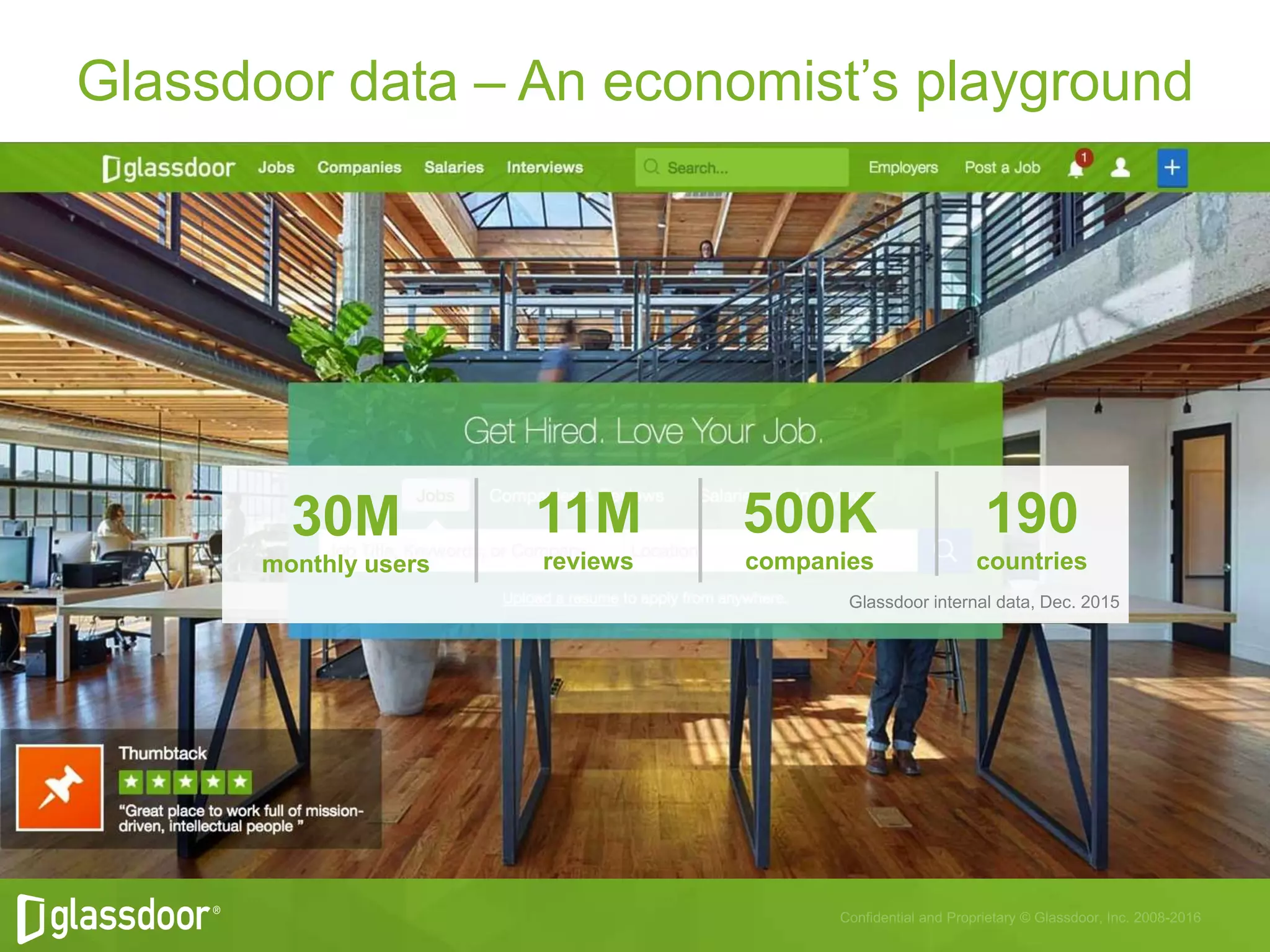
30M
monthly users
11M
reviews
500K
companies
190
countries
Glassdoor internal data, Dec. 2015
Glassdoor data – An economist’s playground
Understanding Candidate
Experience
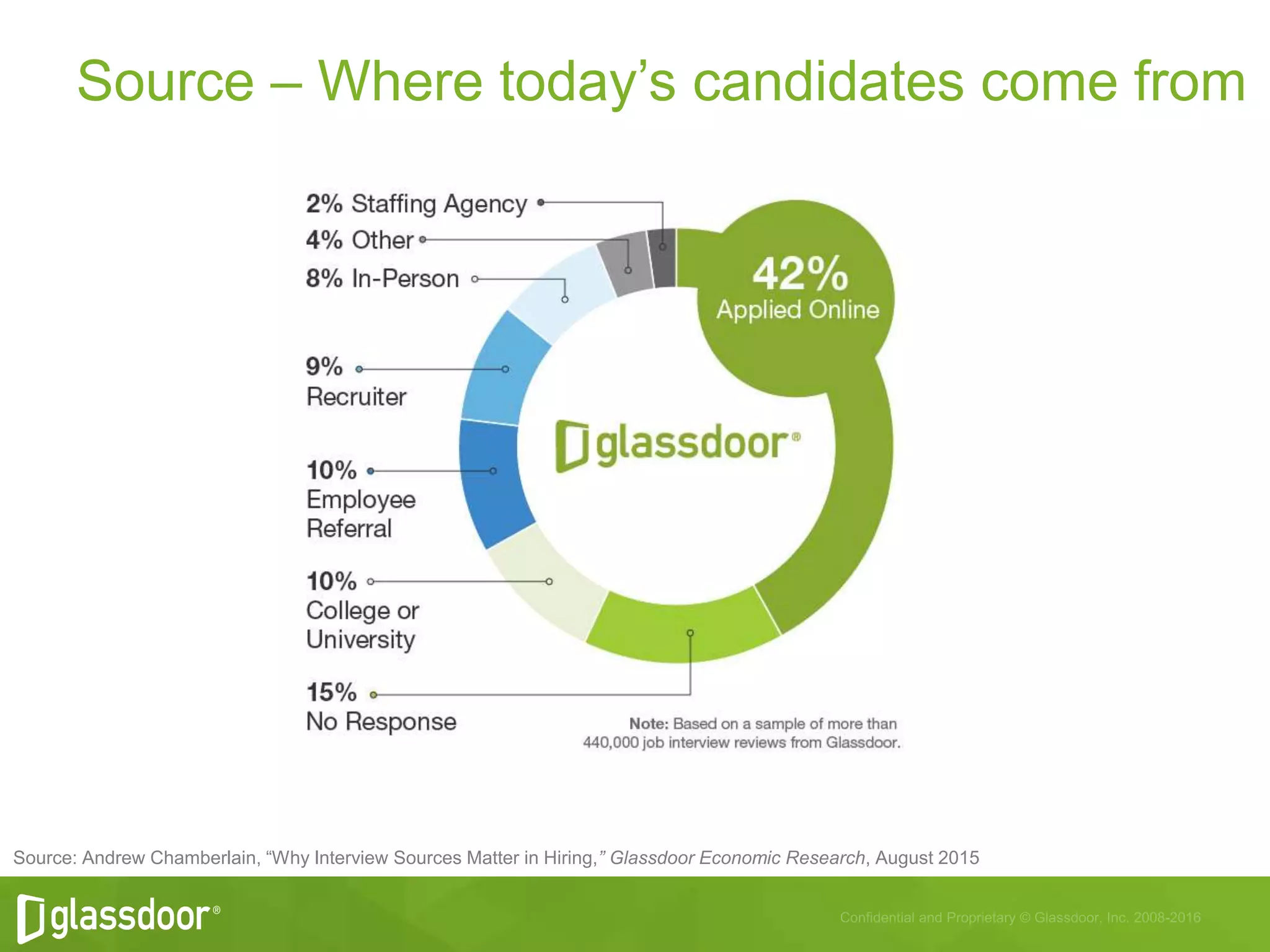
Source – Where today’s candidates come from
Source: Andrew Chamberlain, “Why Interview Sources Matter in Hiring,” Glassdoor Economic Research, August 2015
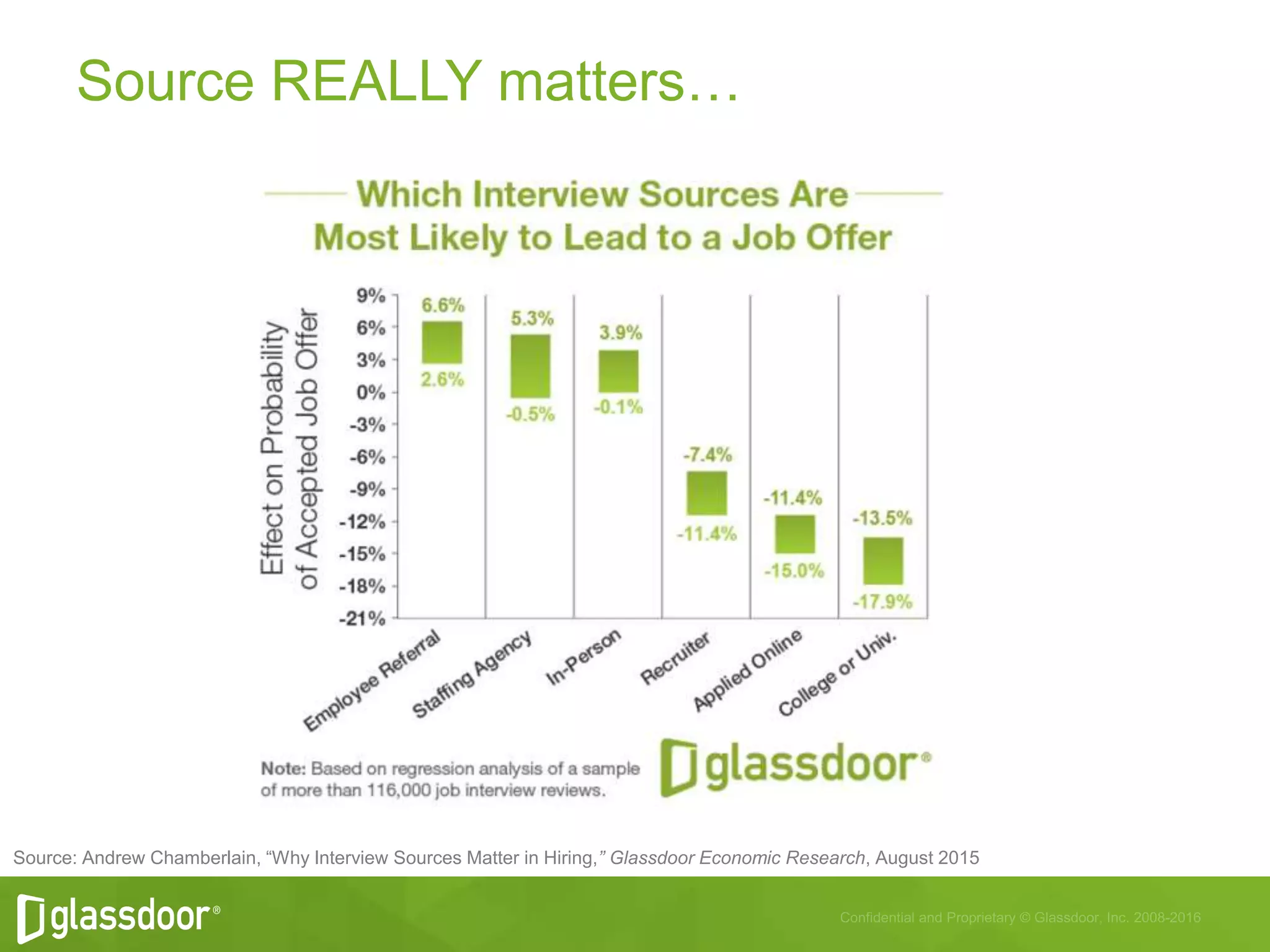
Source REALLY matters…
Source: Andrew Chamberlain, “Why Interview Sources Matter in Hiring,” Glassdoor Economic Research, August 2015
Understanding Time to Hire
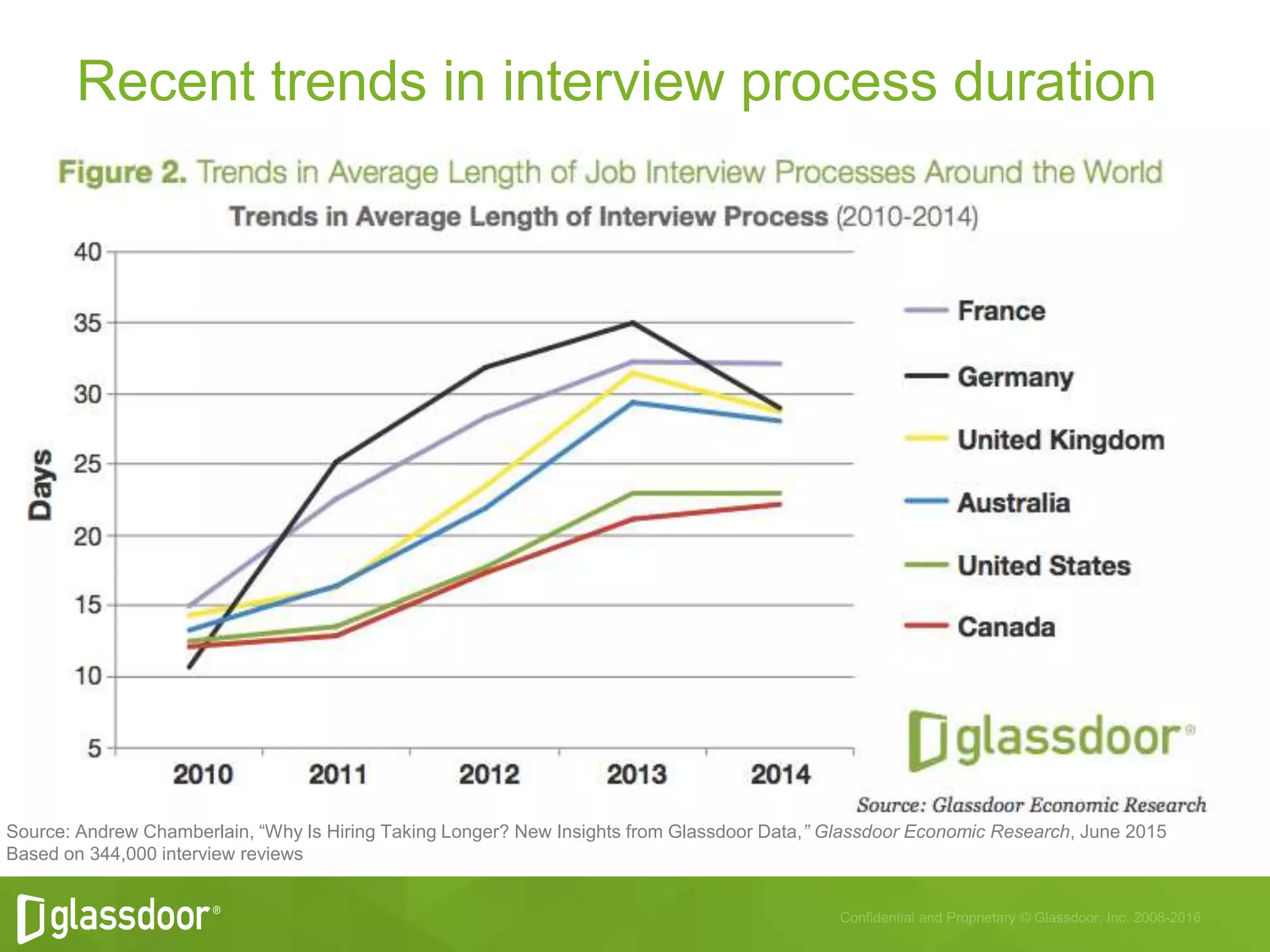
Recent trends in interview process duration
Source: Andrew Chamberlain, “Why Is Hiring Taking Longer? New Insights from Glassdoor Data,” Glassdoor Economic Research, June 2015
Based on 344,000 interview reviews
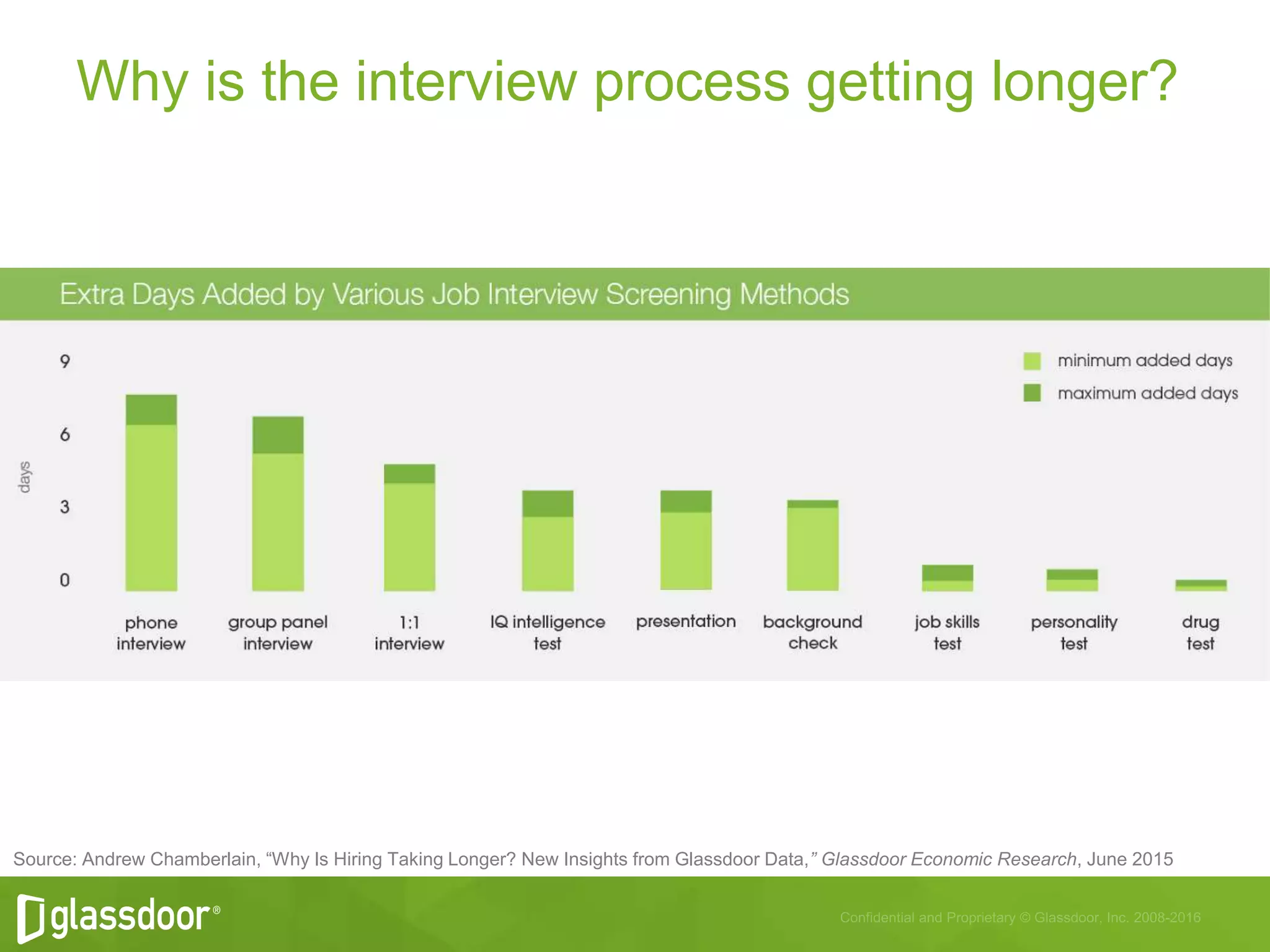
Why is the interview process getting longer?
Source: Andrew Chamberlain, “Why Is Hiring Taking Longer? New Insights from Glassdoor Data,” Glassdoor Economic Research, June 2015
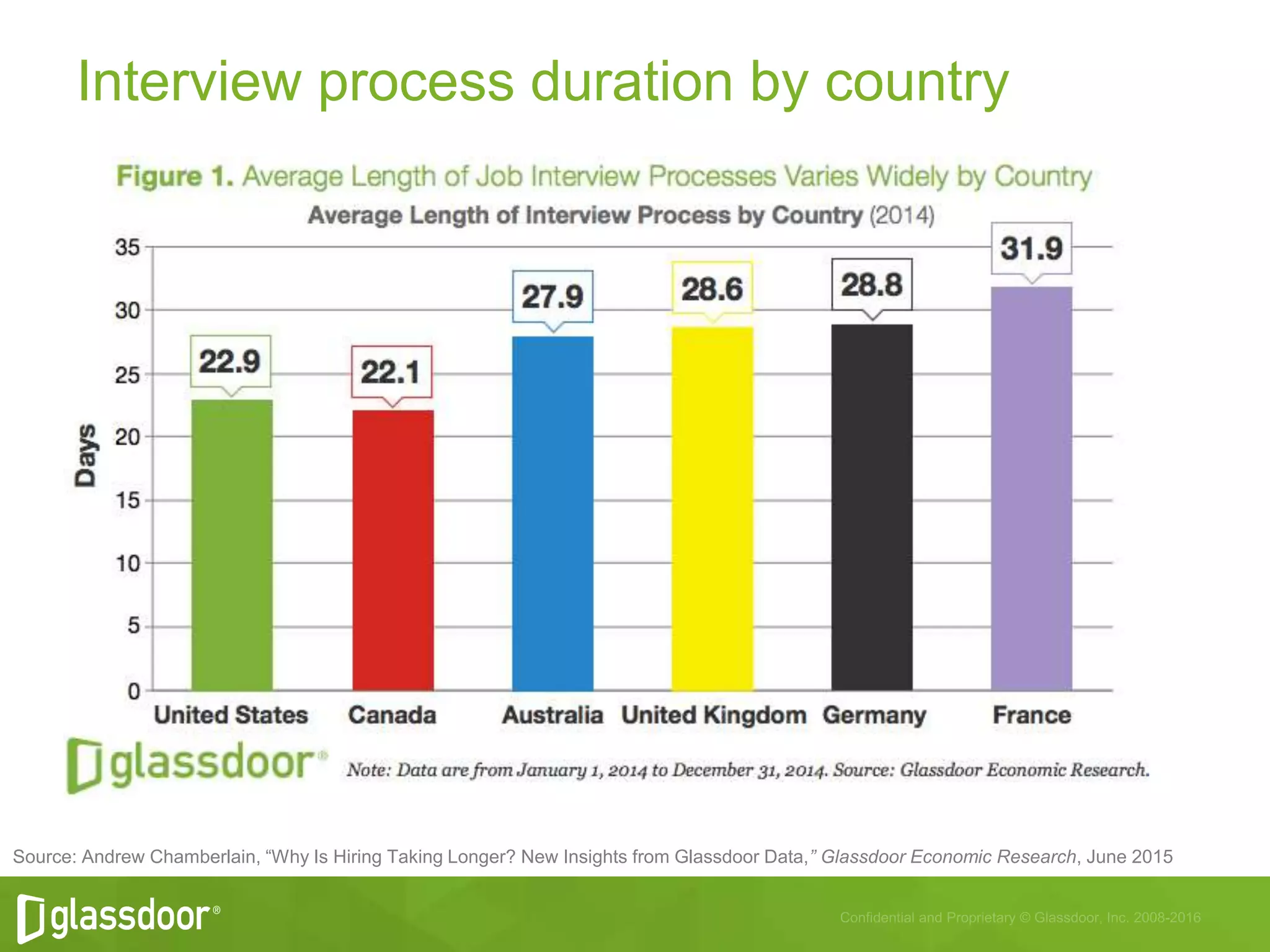
Interview process duration by country
Source: Andrew Chamberlain, “Why Is Hiring Taking Longer? New Insights from Glassdoor Data,” Glassdoor Economic Research, June 2015
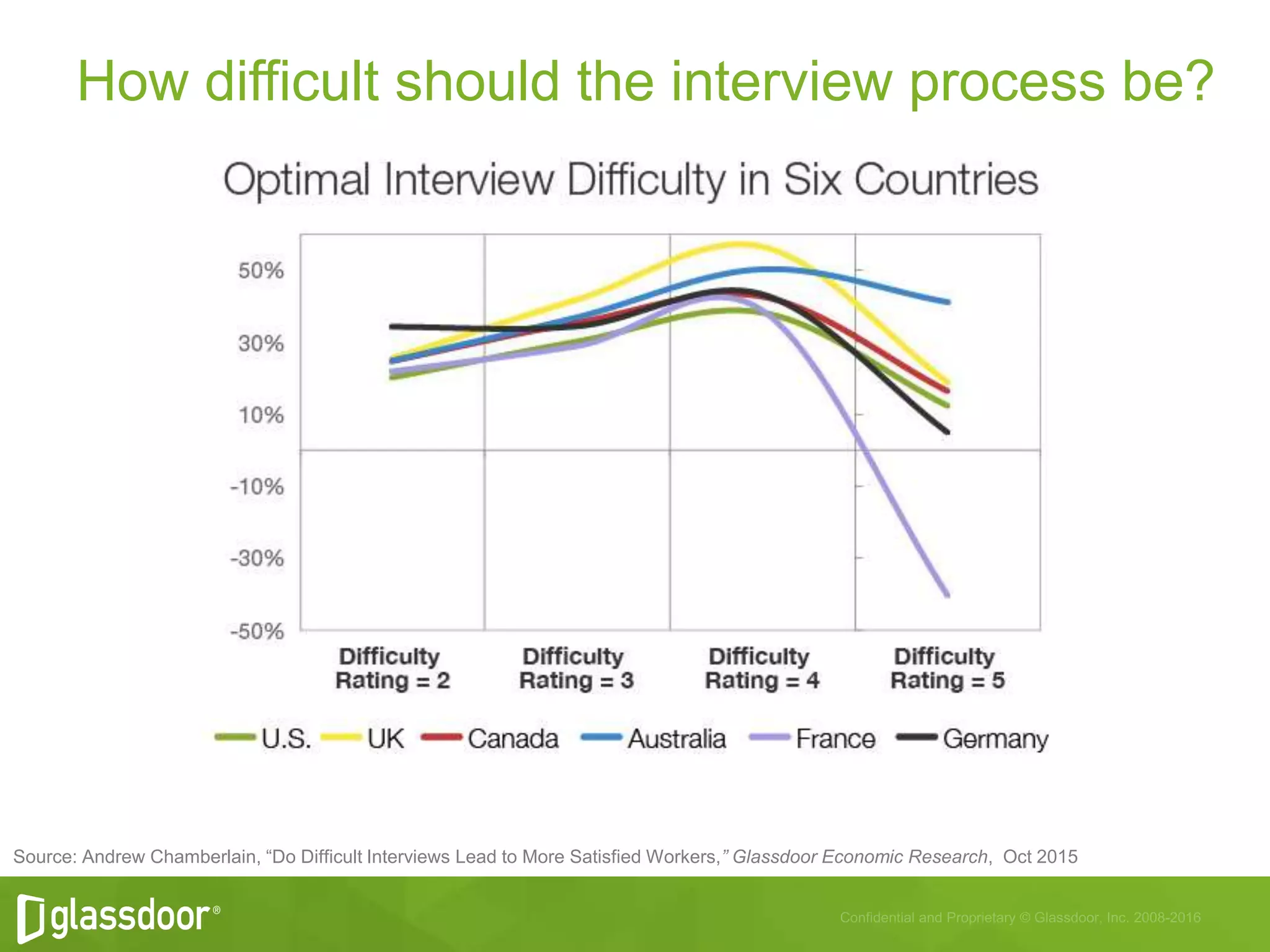
How difficult should the interview
process be?
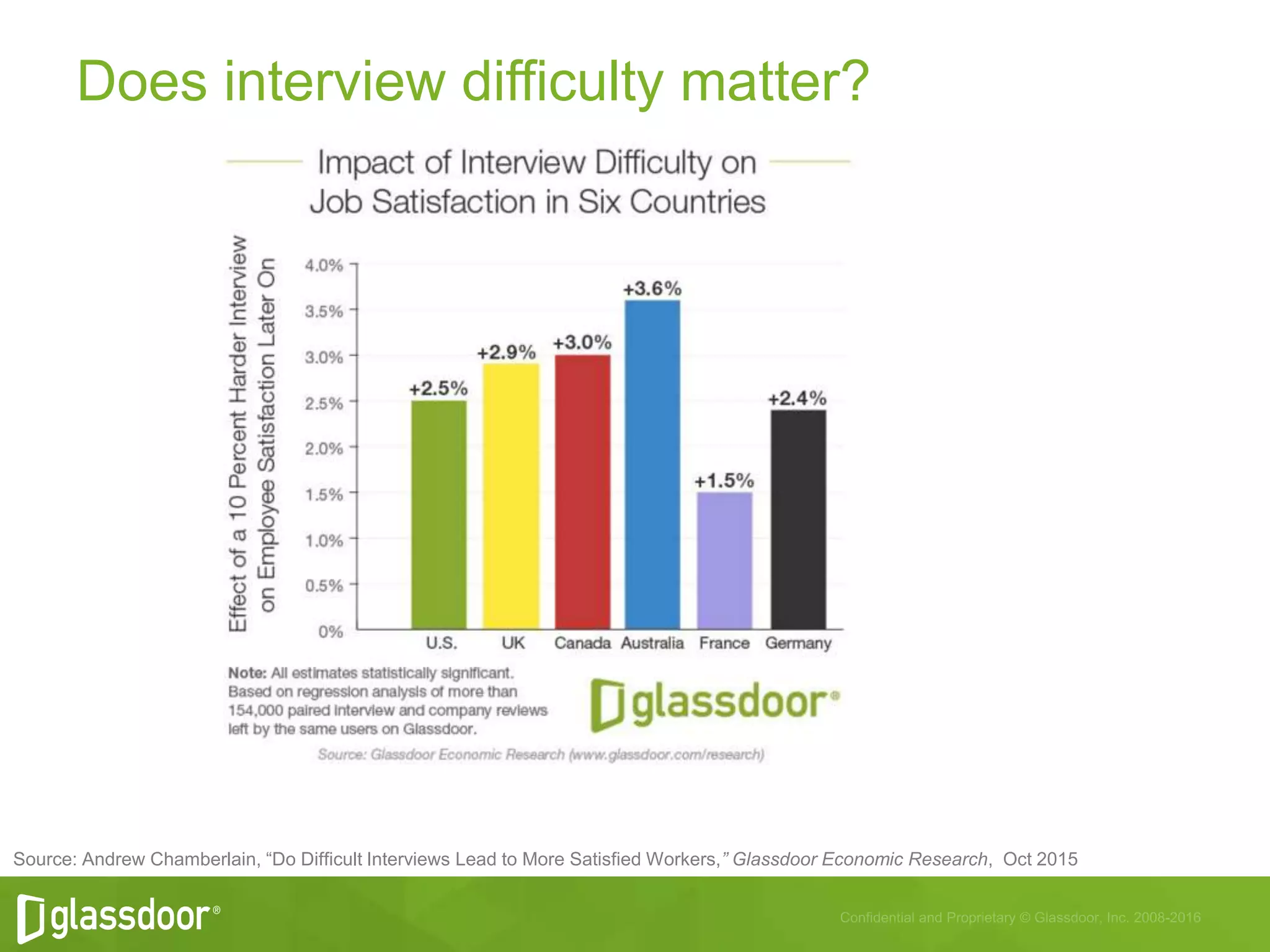
Does interview difficulty matter?
Source: Andrew Chamberlain, “Do Difficult Interviews Lead to More Satisfied Workers,” Glassdoor Economic Research, Oct 2015
How difficult should the interview process be?
Understanding Employee
Satisfaction
Culture is more important
than money.
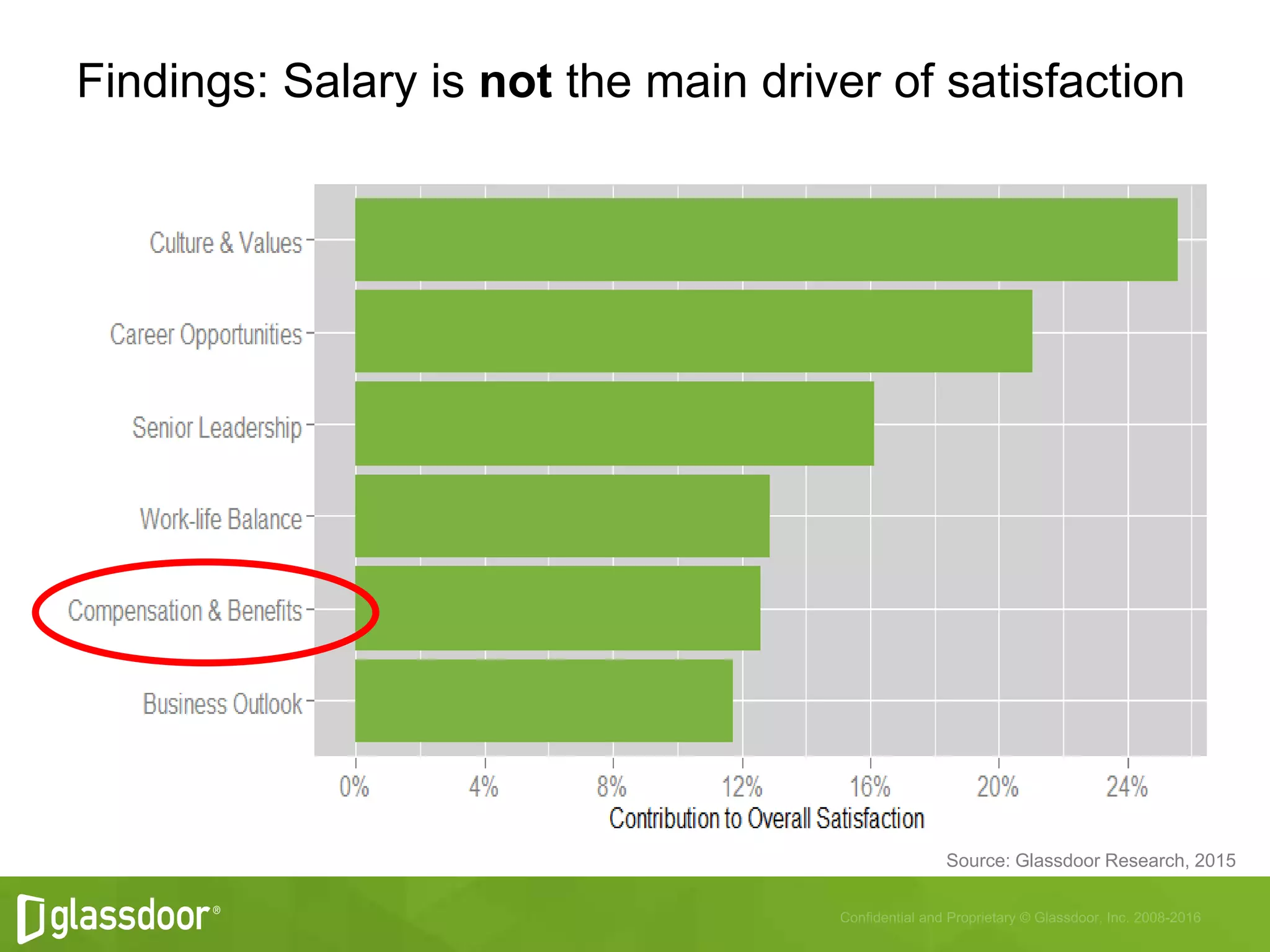
Findings: Salary is not the main driver of satisfaction
Source: Glassdoor Research, 2015
Employee satisfaction has an
impact on financial performance
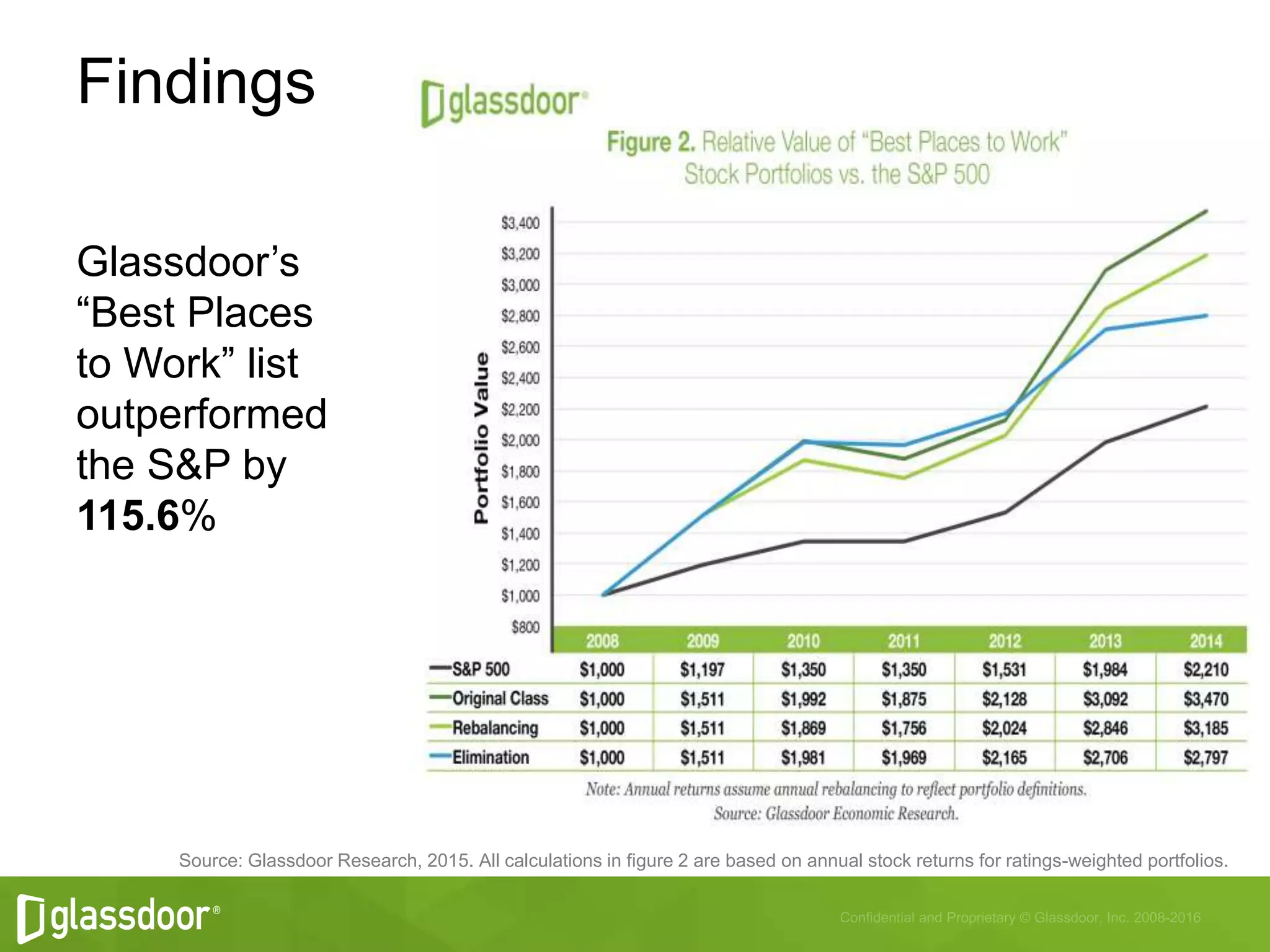
Findings
Glassdoor’s
“Best Places
to Work” list
outperformed
the S&P by
115.6%
Source: Glassdoor Research, 2015. All calculations in figure 2 are based on annual stock returns for ratings-weighted portfolios.
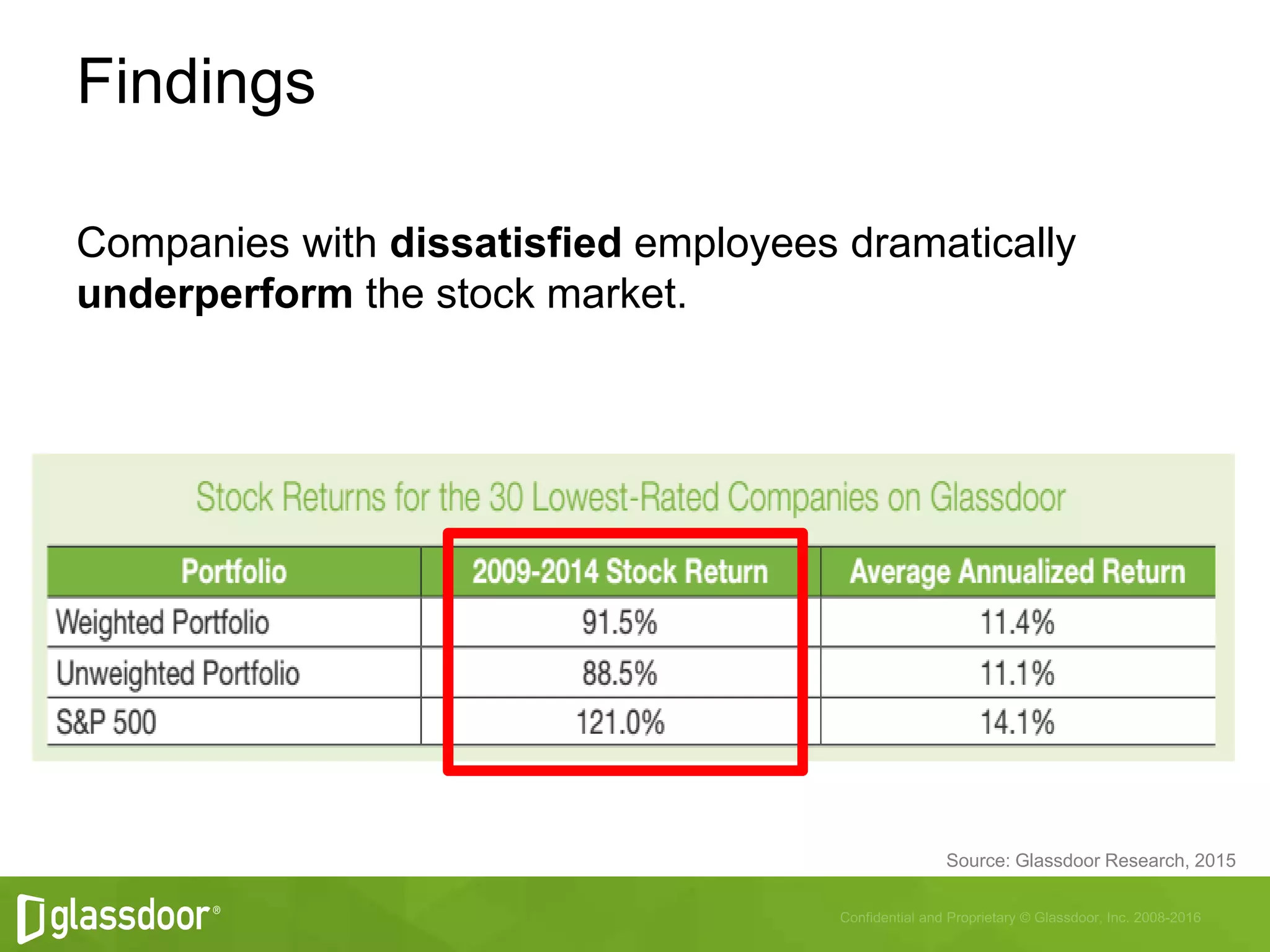
Findings
Companies with dissatisfied employees dramatically
underperform the stock market.
Source: Glassdoor Research, 2015
How to use this research to ignite
change at your organisation
How to use this research
Invest properly in sourcing
Examine your interview
process duration
Invest in engagement
strategies with your people
Understand your labor
market perception
Brand Awareness
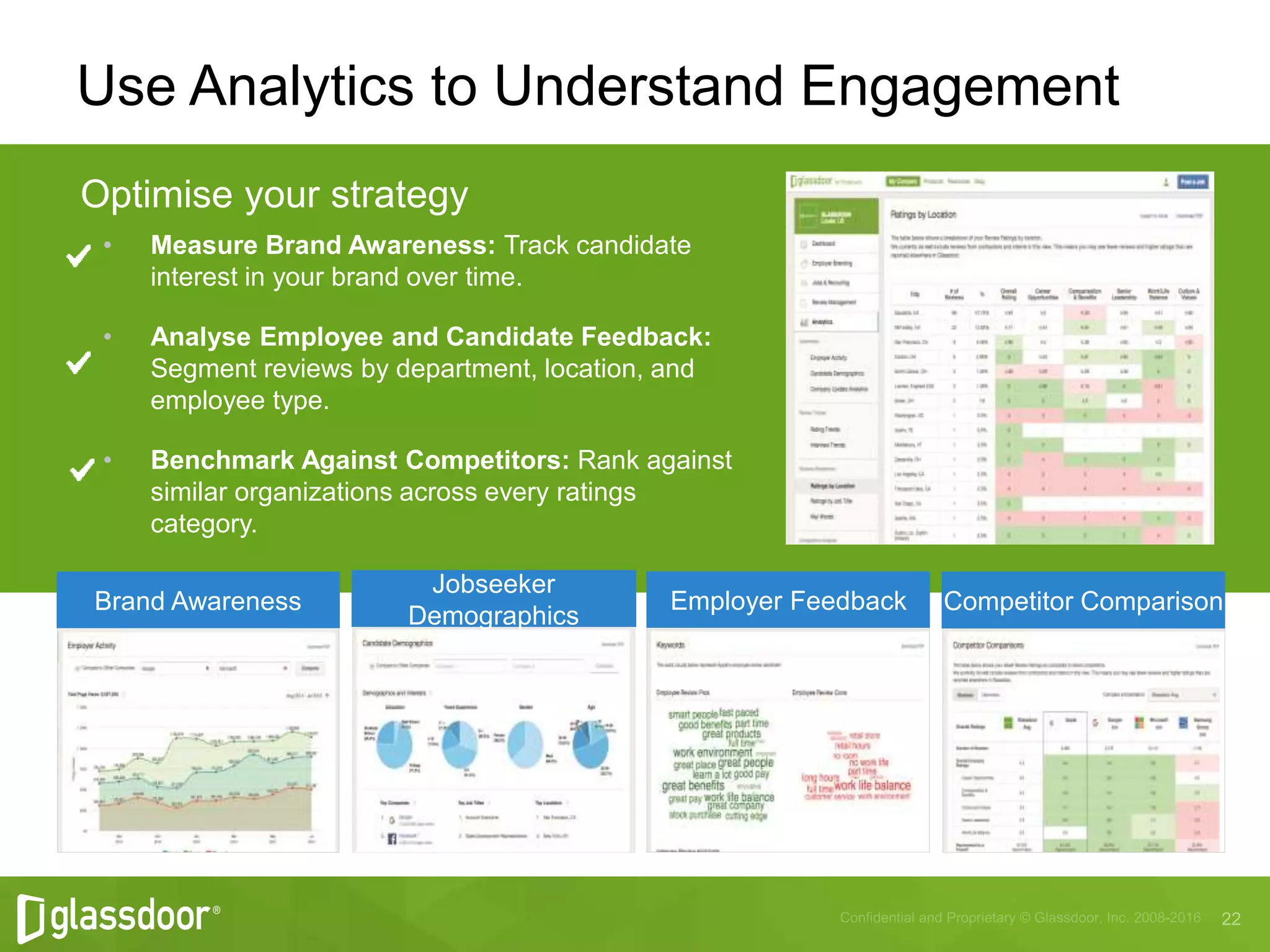
Use Analytics to Understand Engagement
• Measure Brand Awareness: Track candidate
interest in your brand over time.
• Analyse Employee and Candidate Feedback:
Segment reviews by department, location, and
employee type.
• Benchmark Against Competitors: Rank against
similar organizations across every ratings
category.
Optimise your strategy
Jobseeker
Demographics
Competitor ComparisonEmployer Feedback
Thank you!

5 Ways to Use Talent Analytics to Improve your Recruitment Process

  • 1.
    What data tellus about candidate and employee experience
  • 2.
    30M monthly users 11M reviews 500K companies 190 countries Glassdoor internaldata, Dec. 2015 Glassdoor data – An economist’s playground
  • 3.
  • 4.
    Source – Wheretoday’s candidates come from Source: Andrew Chamberlain, “Why Interview Sources Matter in Hiring,” Glassdoor Economic Research, August 2015
  • 5.
    Source REALLY matters… Source:Andrew Chamberlain, “Why Interview Sources Matter in Hiring,” Glassdoor Economic Research, August 2015
  • 6.
  • 7.
    Recent trends ininterview process duration Source: Andrew Chamberlain, “Why Is Hiring Taking Longer? New Insights from Glassdoor Data,” Glassdoor Economic Research, June 2015 Based on 344,000 interview reviews
  • 8.
    Why is theinterview process getting longer? Source: Andrew Chamberlain, “Why Is Hiring Taking Longer? New Insights from Glassdoor Data,” Glassdoor Economic Research, June 2015
  • 9.
    Interview process durationby country Source: Andrew Chamberlain, “Why Is Hiring Taking Longer? New Insights from Glassdoor Data,” Glassdoor Economic Research, June 2015
  • 10.
    How difficult shouldthe interview process be?
  • 11.
    Does interview difficultymatter? Source: Andrew Chamberlain, “Do Difficult Interviews Lead to More Satisfied Workers,” Glassdoor Economic Research, Oct 2015
  • 12.
    Source: Andrew Chamberlain,“Do Difficult Interviews Lead to More Satisfied Workers,” Glassdoor Economic Research, Oct 2015 How difficult should the interview process be?
  • 13.
  • 14.
    Culture is moreimportant than money.
  • 15.
    Findings: Salary isnot the main driver of satisfaction Source: Glassdoor Research, 2015
  • 16.
    Employee satisfaction hasan impact on financial performance
  • 17.
    Findings Glassdoor’s “Best Places to Work”list outperformed the S&P by 115.6% Source: Glassdoor Research, 2015. All calculations in figure 2 are based on annual stock returns for ratings-weighted portfolios.
  • 18.
    Findings Companies with dissatisfiedemployees dramatically underperform the stock market. Source: Glassdoor Research, 2015
  • 19.
    How to usethis research to ignite change at your organisation
  • 20.
    How to usethis research Invest properly in sourcing Examine your interview process duration Invest in engagement strategies with your people Understand your labor market perception
  • 21.
    Brand Awareness Use Analyticsto Understand Engagement • Measure Brand Awareness: Track candidate interest in your brand over time. • Analyse Employee and Candidate Feedback: Segment reviews by department, location, and employee type. • Benchmark Against Competitors: Rank against similar organizations across every ratings category. Optimise your strategy Jobseeker Demographics Competitor ComparisonEmployer Feedback
  • 22.

Editor's Notes

  • #3 For those of you not familiar, Glassdoor helps people everywhere find a job and company they love. We’re able to do this because we collect ratings and reviews from employees about their workplace experience, which in turn, helps job seekers make more informed decisions about where to work. One area we ask people about is their interview experience. We ask candidates revealing questions about their interview process including -How they found the job -How difficult the interview was -How long it took -What questions were asked -How they rate the overall experience -and more Today Glassdoor has millions of candidate reviews, and our Chief Economist has used this data to answer some interesting questions about the candidate experience.
  • #5 Despite being an effective a hiring tool, employee referrals were only reported by roughly 10 percent of candidates in Glassdoor data. This is a channel you can take more advantage of, and will likely yield positive results… but clearly it can’t be your only resource. The trick is to find a balance so that you’re pulling candidates from all of your resources and are aware of which channels tend to produce more reliable results. Big takeaway: Context and information matter in the hiring process. Employee referrals give information about candidate quality to companies, and about the quality of workplaces to candidates. At Glassdoor, we’re trying to give people that same kind of information advantage, even when they’re not lucky enough to have a social network that gets them an employee referral.
  • #6 To answer this question our chief economist examined which hiring channels tend to perform best using a unique data set: job interview reviews posted on Glassdoor. He found that job interviews from employee referrals are much more likely to lead to an accepted job offer Employee referrals boost the odds of a successful job match by a statistically significant 2.6-6.6 percent. That might seem small, but that means about 3-7 new hires for every 100 interviews – a significant bump (which is also statistically significant, by the way). You may hypothesize that because of this success rate, referrals are the most commonly used sourcing channel for candidates… not so.
  • #8 To answer this question we looked at hiring process length based on 344,000 Glassdoor interview reviews across six countries And found that the average process have grown by 3.3 to 3.7 days since 2009, in other words, in every country we examined, the process is taking longer. The trend looks a lot bigger in this graph, because these are just simple averages for each country. The 3.3 - 3.7 days is the boost we see after we carefully statistically control for the mix of jobs, companies and locations hiring during this time period. But there are large international differences…
  • #9 This image reveals how various job interview “screens” used by employers affect hiring times.   As you can see telephone interviews add 6.8 to 8.2 days; group panel interviews add 5.6 to 6.8 days; one-on-one interviews add 4.1 to 5.3 days; background checks add 3.1 to 3.4 days; and so on.   Interestingly, all of the interview methods we examined had a positive and statistically significant effect on interview process times. So in other words, additional layers of candidate screening add to hiring times, illustrating the basic tradeoff between candidate match quality and job vacancy durations.   These results highlight factors that are directly within the control of employers. Unlike industry or geographic factors, the choice of which and how many interview methods to employ can be directly influenced by company hiring managers. These estimates provide a useful way to quantify the time cost incurred from each job interview method, allowing hiring managers to more intelligently design HR policies by weighing the costs and benefits of various screening techniques.
  • #10 Jobs in France, Germany and the United Kingdom each take on average 4 to 9 days longer than in the United States and Canada. Some of these differences between countries reflect different labor market institutions that affect how quickly people get matched to jobs – and how careful companies are before hiring. Places with regulations that make it hard to let employees go tend to take much more care before bring on new hires. What we don’t show you here is there are huge differences across industries also. Governments take dramatically longer to hire, larger companies take significantly longer than smaller firms – even for the same jobs – and public companies are slower than private companies. Some of these delays at big public companies might make sense, but surely some of it is bureaucratic waste in the hiring process. Are 100,000-employee firms really getting that much better candidate matches than 5,000-person firms? We doubt it, but they take far longer to hire. But the main driver for the increase in recent years: Employers using more screens like background checks, skills tests, presentations, etc. for more complex jobs. Choosing to require group panel interviews, candidate presentations, background checks, skills tests and more can extend hiring times However adding screens during the interview process isn’t always a bad thing
  • #12 We know tough interviews can be scary for the candidate and more resource-draining for the hiring manager… but are they worth it? We examined six countries and found that more difficult job interviews are statistically linked to higher employee satisfaction Overall, a 10 percent more difficult job interview process is associated with 2.6 percent higher employee satisfaction later on On a five-point scale, the optimal or “best” interview difficulty that leads to the highest employee satisfaction is 4 out of 5. So if your job interview process isn’t a breeze, that’s a good thing. The candidates who make it through have already gotten a taste of what your organization expects of them, and are agreeing to work hard, before they even begin.
  • #13 However, interviews can be too hard – the research finds that employee satisfaction drops off significantly across all countries when the difficulty level is 5 out of 5. Aim for a 4-star difficulty – hard but not overwhelmingly so, otherwise candidates who make it will still have a burnout point, as you can see in this image. My interpretation of this: 1-star reviews are bad because you’re not properly screening candidates, and you’re making many bad hires, and putting people in the wrong jobs which hurts satisfaction. By contrast, 5-star interviews are so difficult they’re likely a sign of deeper dysfunction in company culture, perhaps revealing an adversarial culture that is mean-spirited or harsh with candidates with little benefit later on. (In case anyone asks: the Y-axis is the percentage bump in employee satisfaction you get from each interview difficulty level. They’re all relative to a 1-star review, which is the omitted “reference” category in the statistical work we did.)
  • #15 Our second discovery is that employees value culture over pay and benefits…..
  • #16 Interestingly, we found that salary is NOT at the top of this list, CLICK in fact, it’s towards the bottom
  • #17 …..In other words, employee satisfaction can be quantified in terms of improvement or deterioration in shareholder value….
  • #18 In the chart here, we look at stock returns for three portfolios of companies with very high employee satisfaction – winners of Glassdoor’s “Best Places to Work” award. With each portfolio, we imagined we had $1,000 to invest in each, and we compare their stock performance to the overall market since 2009, the first year the awards were issued. The black line shows what a $1,000 investment in the S&P 500 back in 2009 would’ve grown to today. The three colored lines show what similar investments in “happy employee” companies would’ve grown to. As is clear in the chart, an investment in Glassdoor’s “Best Places to Work” companies would’ve grown to between $2,797 and $3,470, far outpacing the $2,210 for the overall market. If you’re wondering what the difference is between the three portfolios: the dark green line is based on the original winners from December 2008; the light green line is based on investment in each new set of winners, rebalancing to the newest winners each January; and the blue line is based on repeat winners of the award, in other words those companies that show consistently high employee satisfaction each year. It comes as no surprise to us that the best places to work outperform the market. Great companies are highly profitable, often attracting top talent and keeping them with employee-friendly policies. ENDS
  • #19 As a robustness check, we examined stock returns among public companies with the lowest employee ratings on Glassdoor. We found a portfolio of the 30 lowest-rated public companies on Glassdoor broadly underperformed the market from 2009 to 2014.
  • #21 could you add or remove a step for more optimization How much time are you taking in comparison to others in your industry? Are you spending time on the processes that help you make better hires?