Recruitment Leaders Connect
Direct Sourcing
John Wallace
1. Why we direct source
2. Why we still use agencies
3. What the future holds
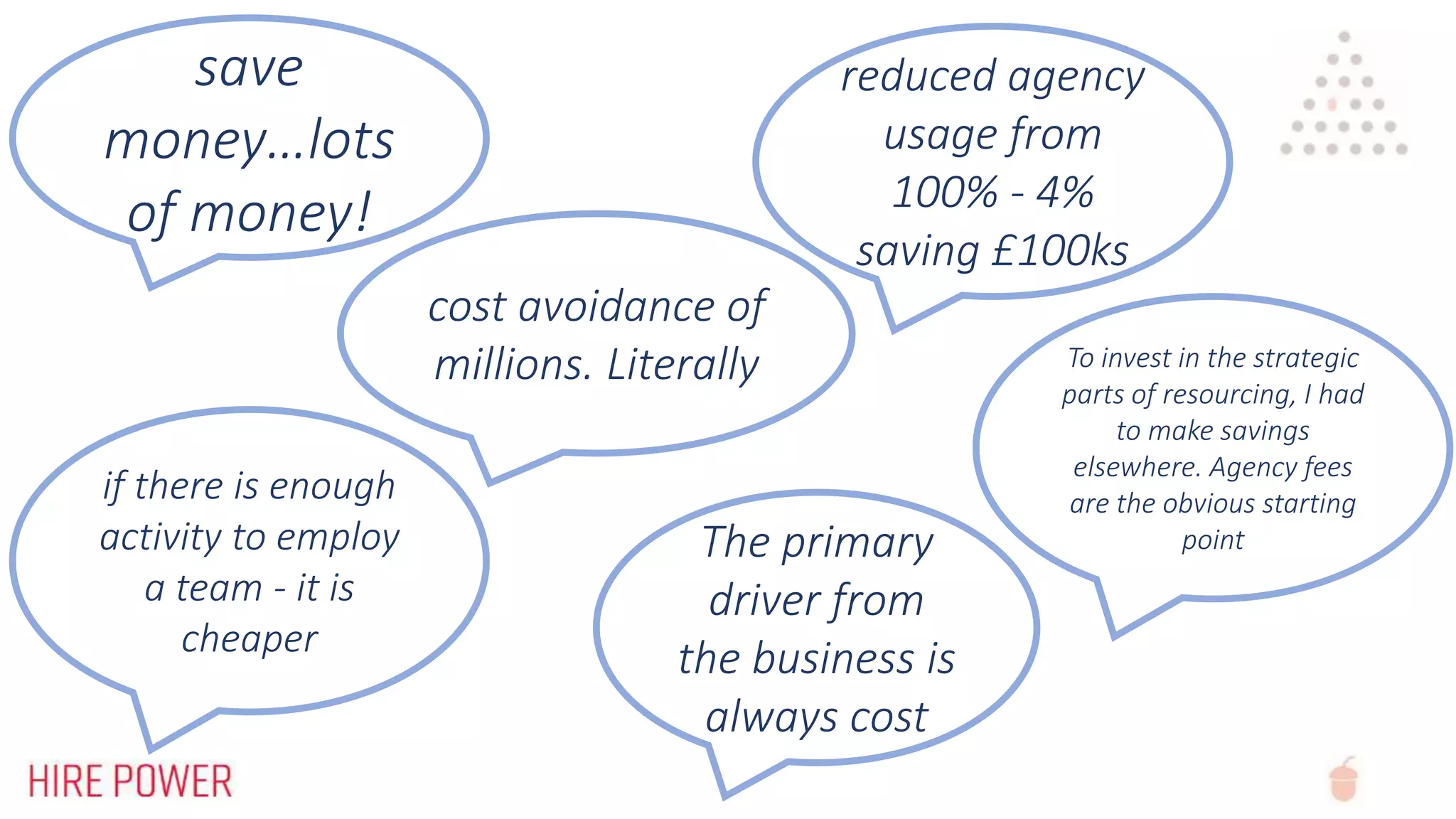
save
money…lots
of money!
The primary
driver from
the business is
always cost
To invest in the strategic
parts of resourcing, I had
to make savings
elsewhere. Agency fees
are the obvious starting
point
if there is enough
activity to employ
a team - it is
cheaper
reduced agency
usage from
100% - 4%
saving £100ks
cost avoidance of
millions. Literally
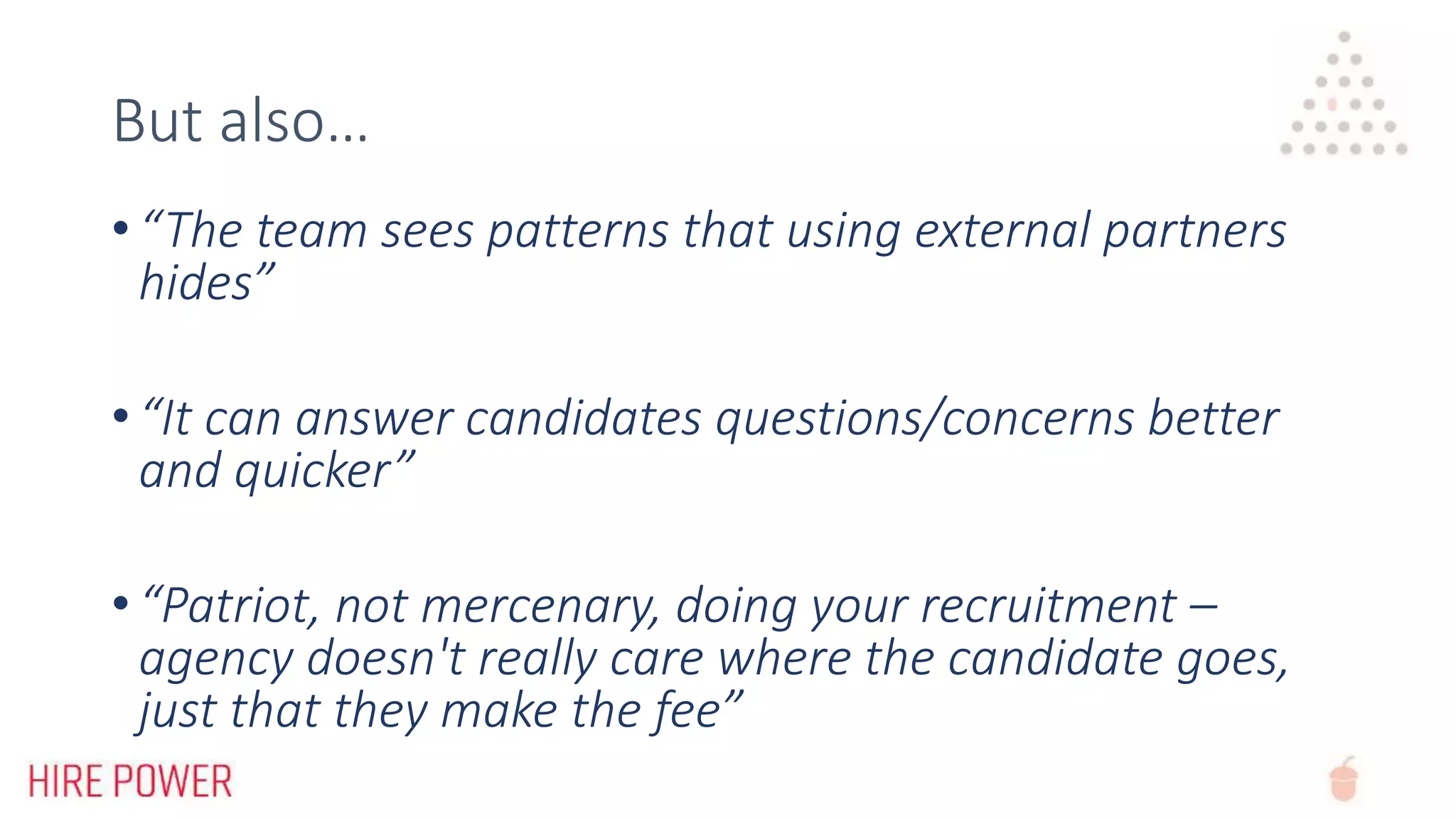
But also…
• “The team sees patterns that using external partners
hides”
• “It can answer candidates questions/concerns better
and quicker”
• “Patriot, not mercenary, doing your recruitment –
agency doesn't really care where the candidate goes,
just that they make the fee”
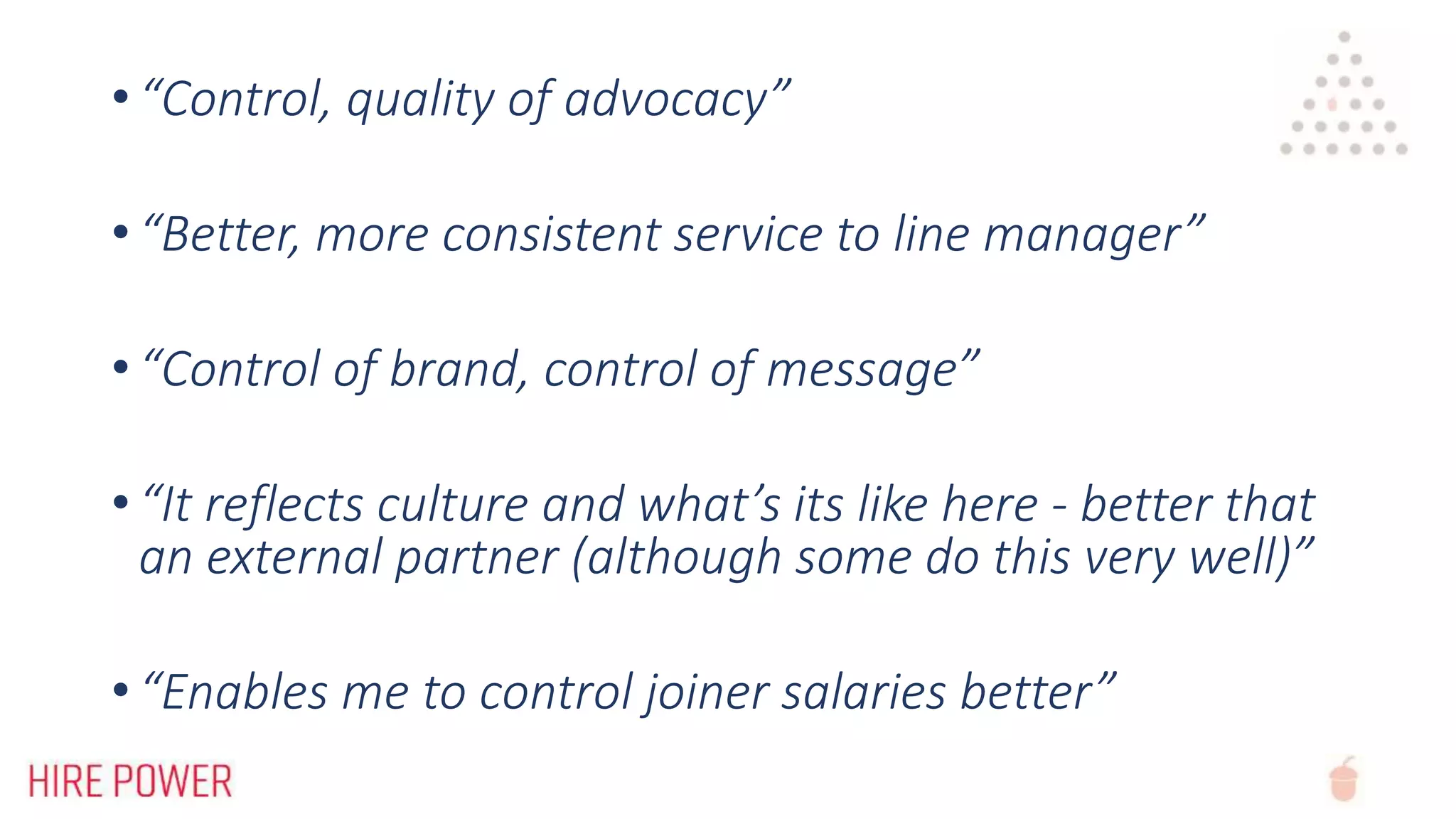
• “Control, quality of advocacy”
• “Better, more consistent service to line manager”
• “Control of brand, control of message”
• “It reflects culture and what’s its like here - better that
an external partner (although some do this very well)”
• “Enables me to control joiner salaries better”
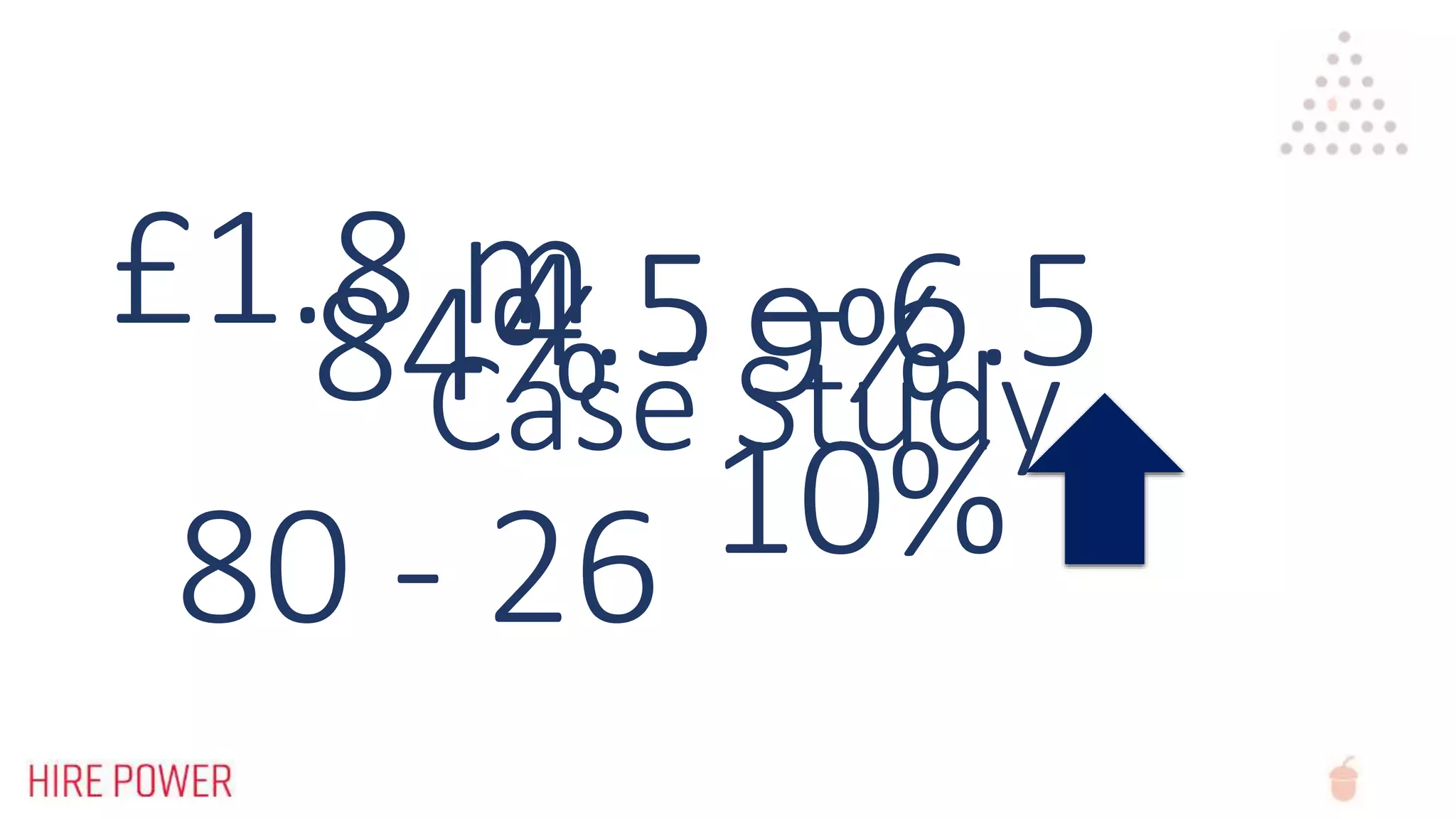
84% - 9%£1.8 m4.5 – 6.5
80 - 26 10%
Case Study
• Centralised budget
• Strong governance / executive support
• 100% lower level roles
• 75 – 90% mid / senior management level roles
• 0% executive
• 95% very good or excellent candidate experience
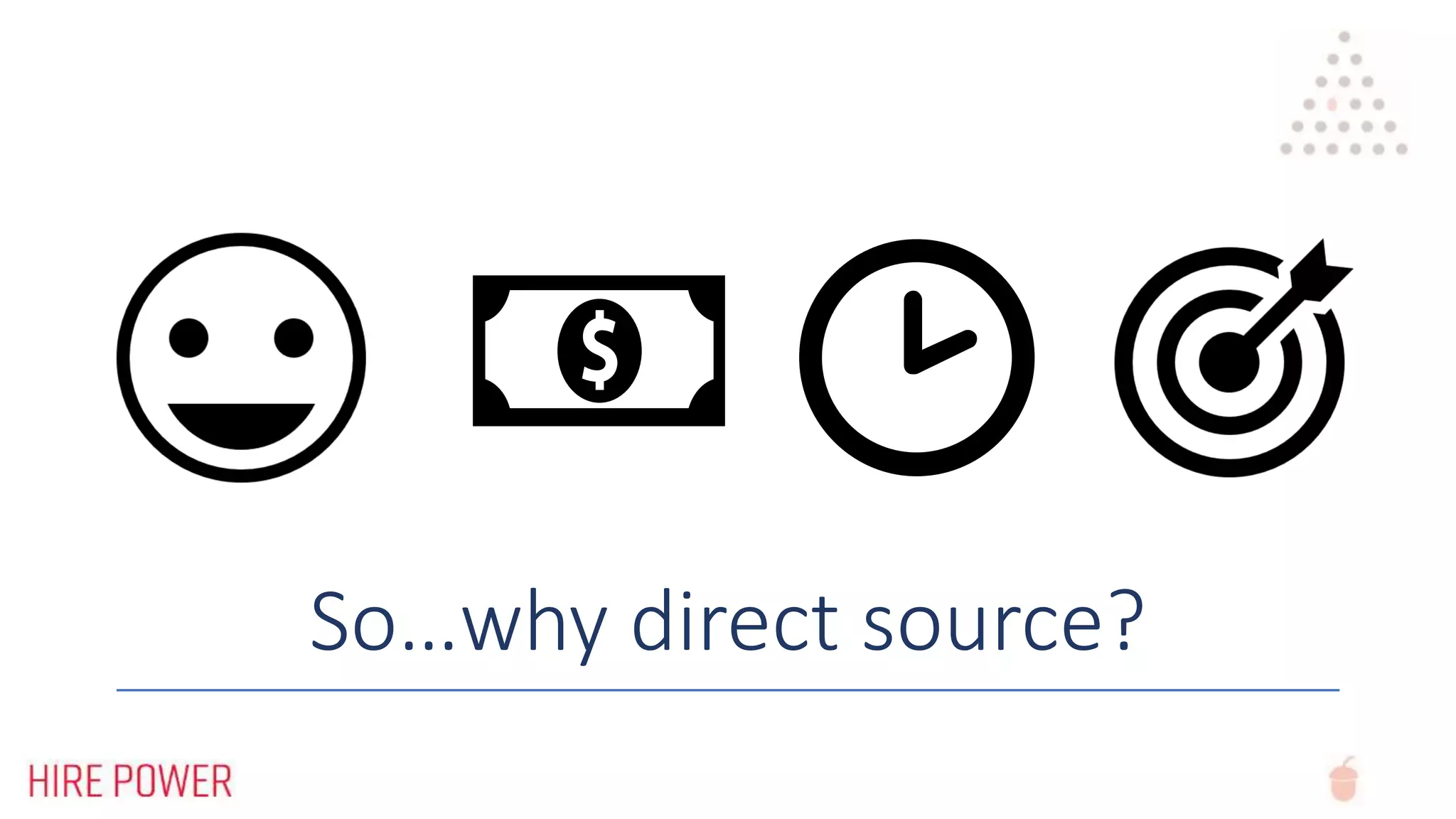
So…why direct source?
But also…
great employees
not
great candidates
Why agencies still thrive
• Low control – naive buyers
• Apathy - don’t care about cost
• Avoidance of those pesky HR processes
• Bad planning
• Distress purchase
Why agencies still thrive
• No in-house team
• No centralised budget for recruitment
• Poor in-house recruitment capability
• Bumps in demand
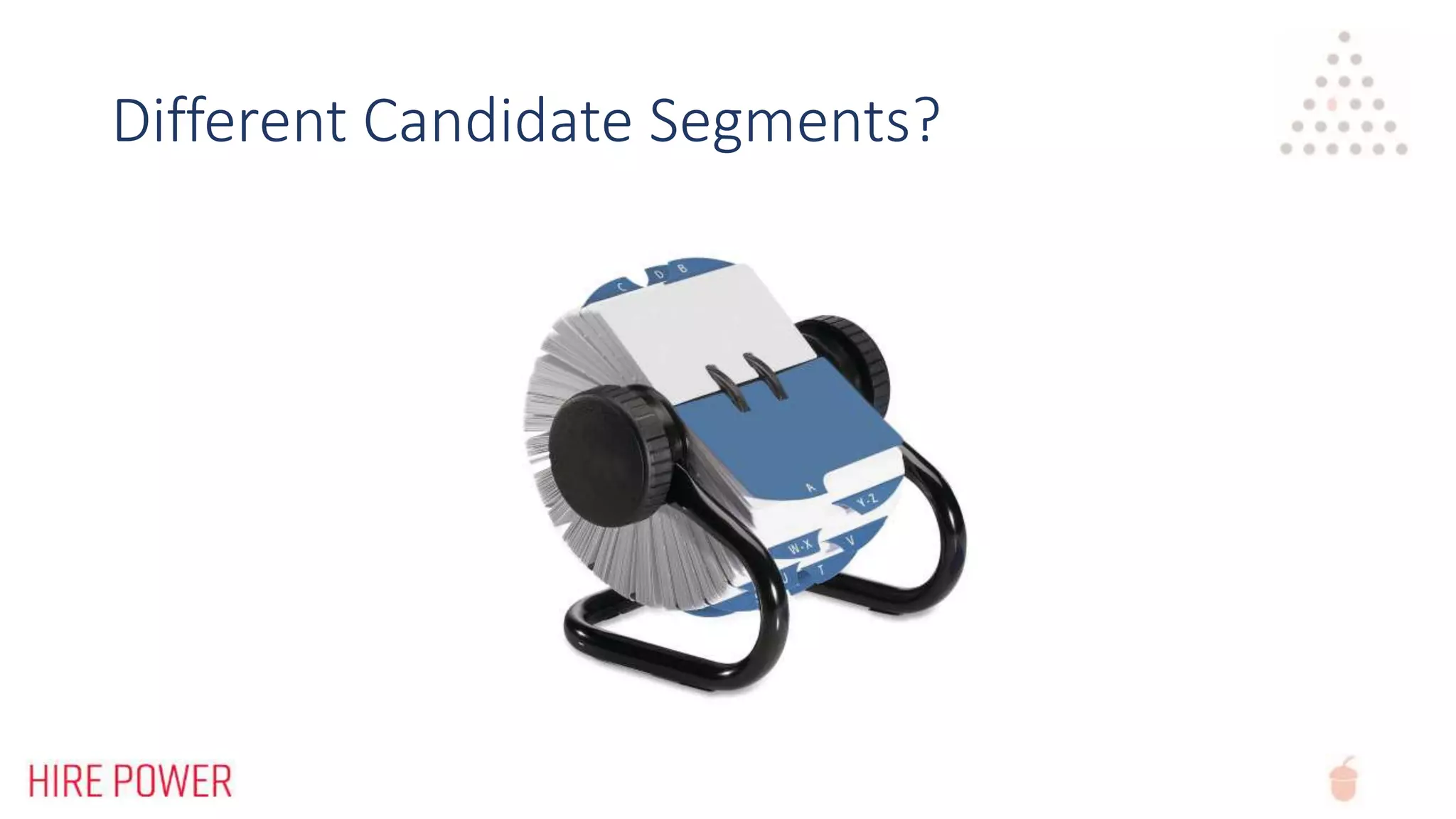
• Different candidate segments
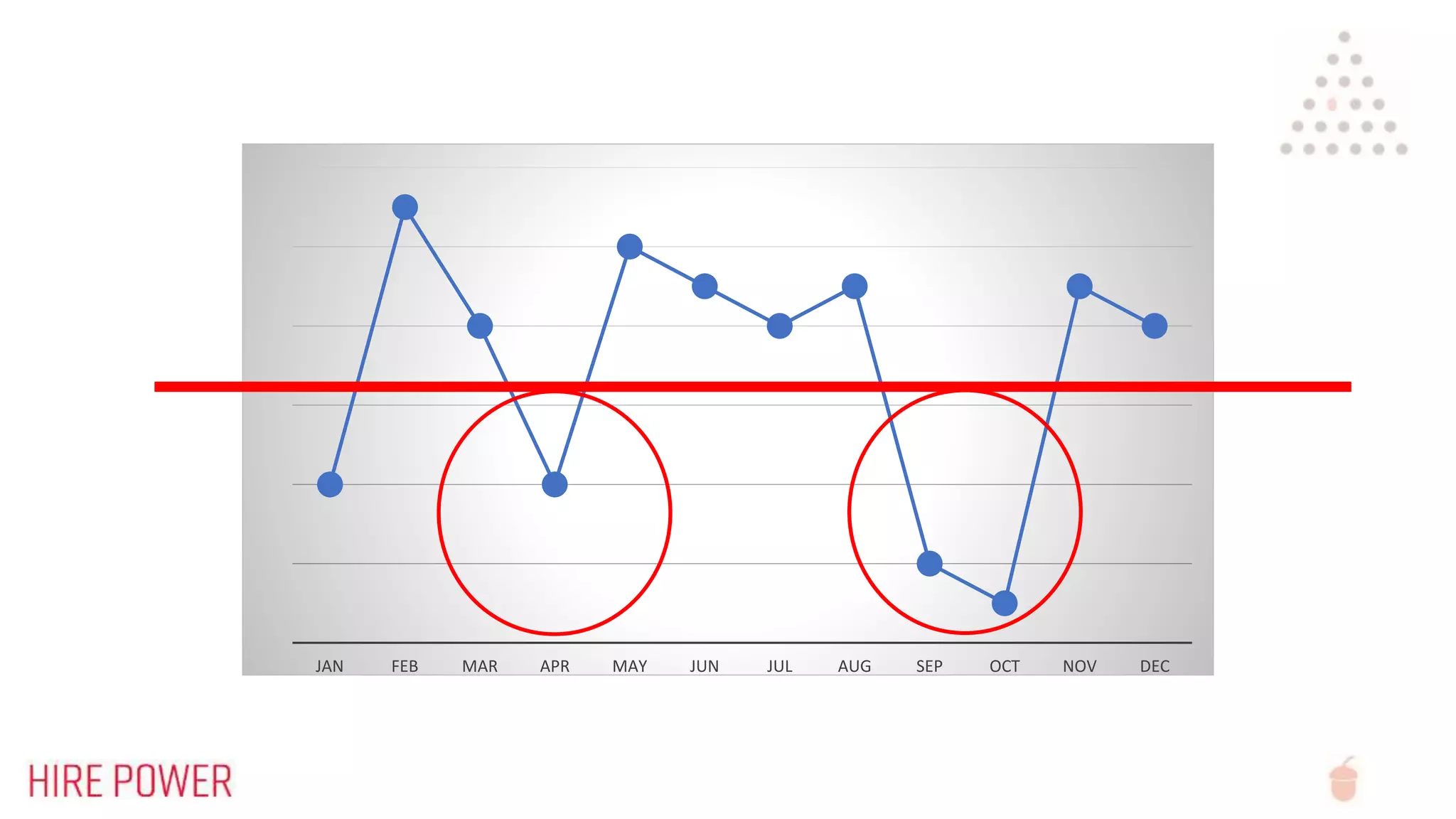
Bumps in demand?
JAN FEB MAR APR MAY JUN JUL AUG SEP OCT NOV DEC
We are effectively outsourcing workload
• Someone who’ll just get on and deliver
• Works inside the process
• Understands the brief
• Minimum time spent by my consultant managing your
consultant
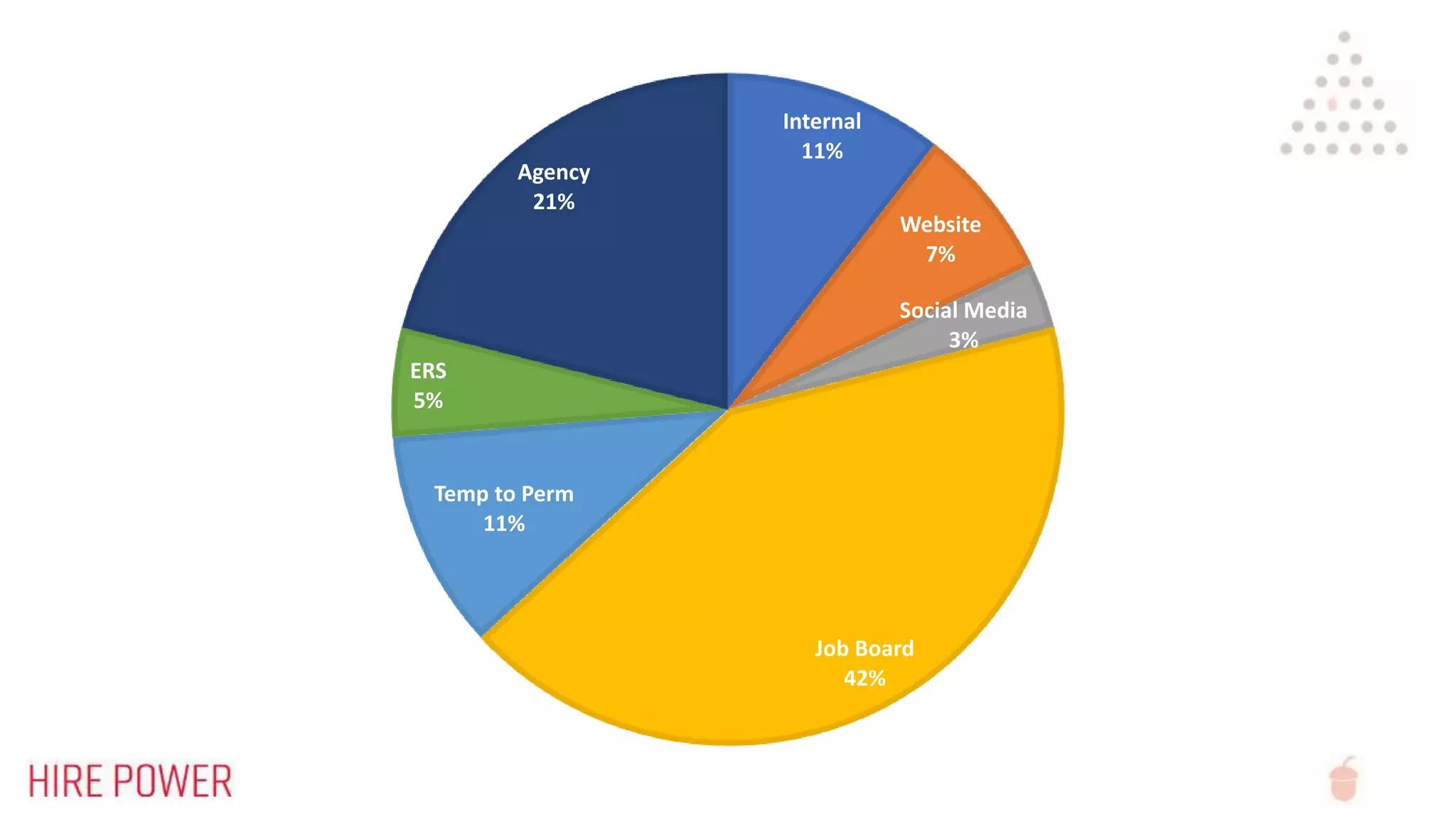
Different Candidate Segments?
Internal
11%
Website
7%
Social Media
3%
Job Board
42%
Temp to Perm
11%
ERS
5%
Agency
21%
lazy jobseekers
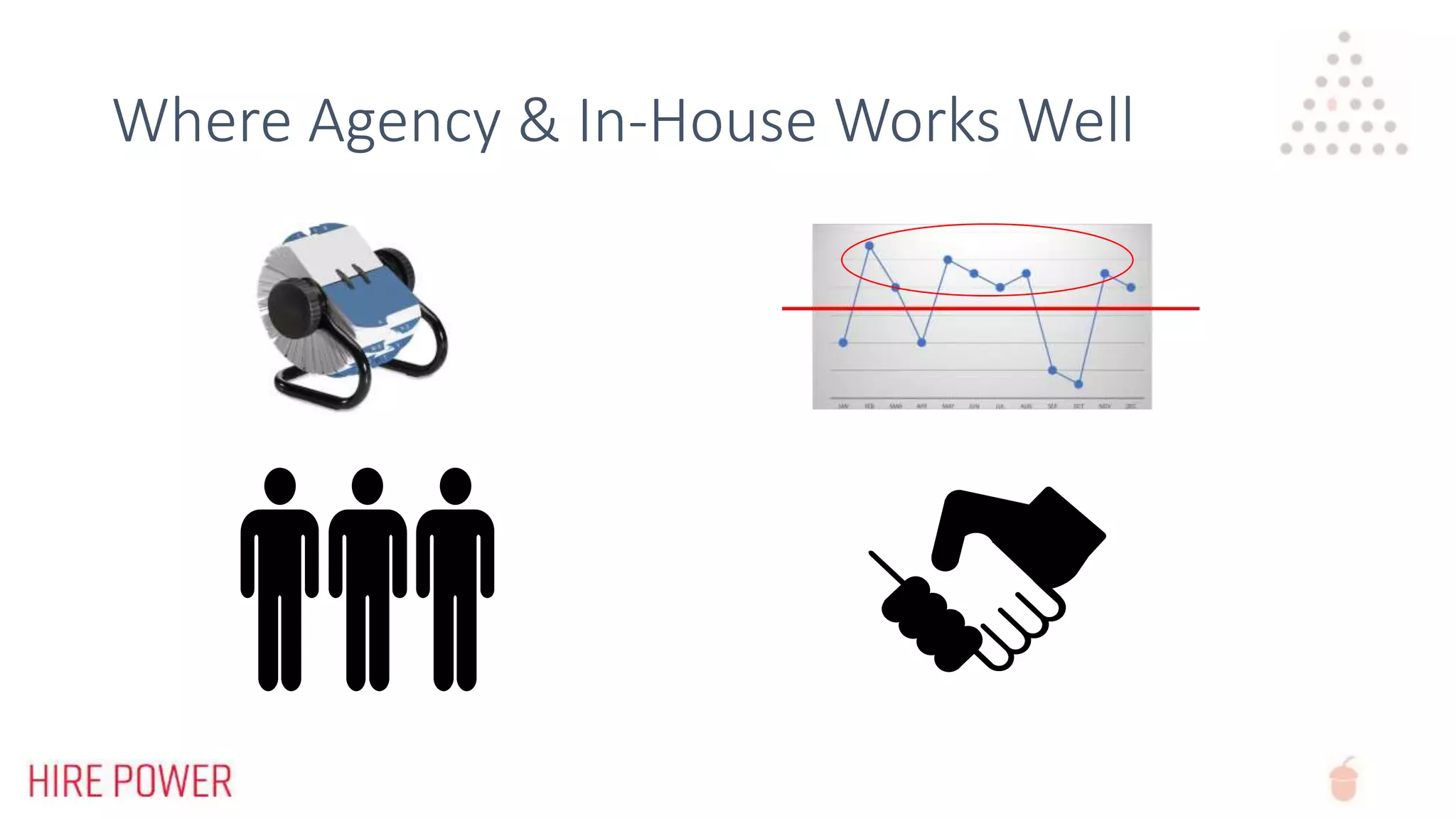
Where Agency & In-House Works Well
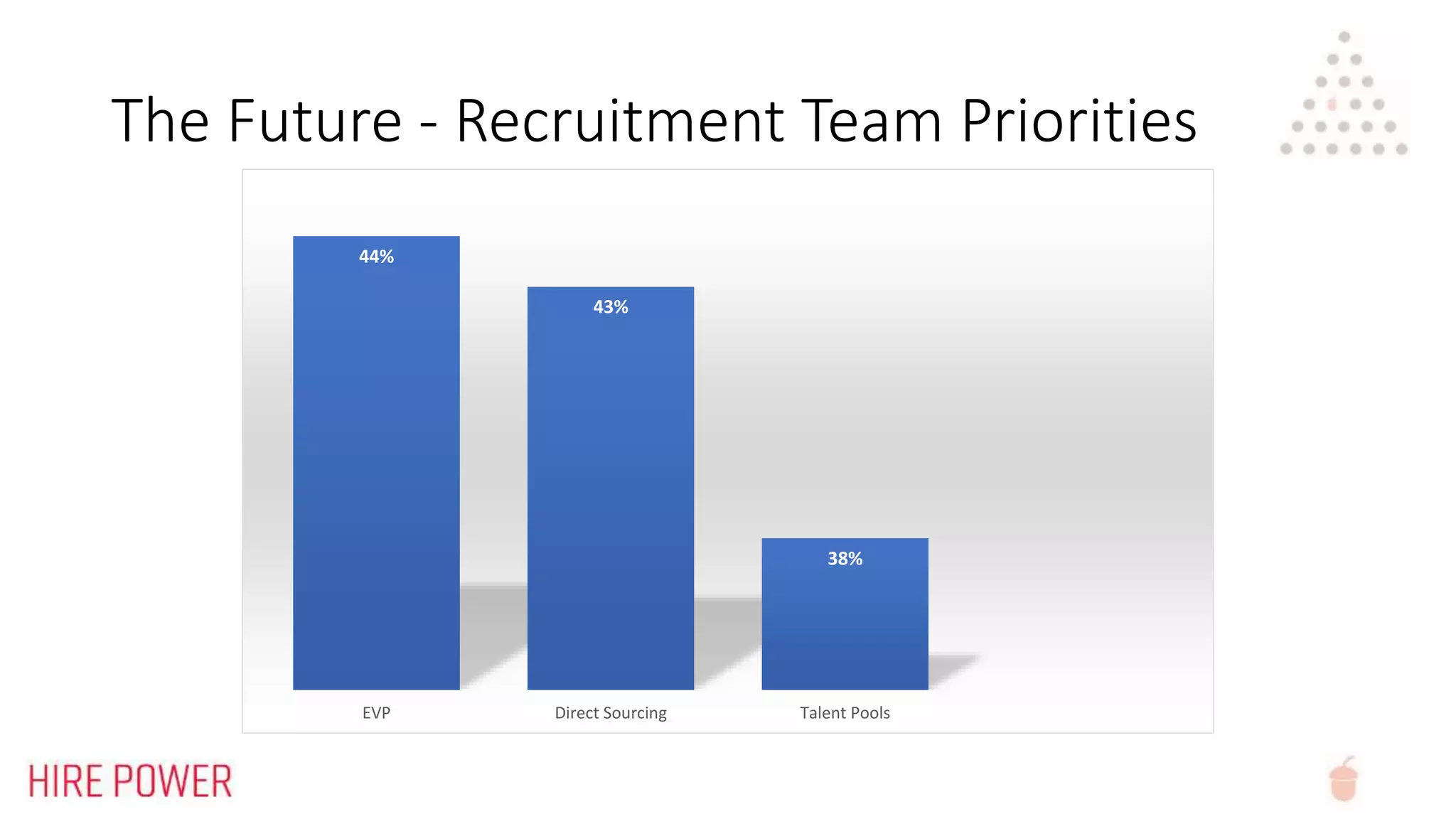
The Future - Recruitment Team Priorities
44%
43%
38%
EVP Direct Sourcing Talent Pools
What Does The Future Hold?
• In-house direct sourcing is the direction of travel
• Not enough space for everyone
• “Rolodex” deep vertical experts
• More outsourcing – full function / chunks / overflow
Direct Sourcing – The Insider’s View

Direct Sourcing – The Insider’s View

  • 1.
  • 2.
    1. Why wedirect source 2. Why we still use agencies 3. What the future holds
  • 7.
    save money…lots of money! The primary driverfrom the business is always cost To invest in the strategic parts of resourcing, I had to make savings elsewhere. Agency fees are the obvious starting point if there is enough activity to employ a team - it is cheaper reduced agency usage from 100% - 4% saving £100ks cost avoidance of millions. Literally
  • 8.
    But also… • “Theteam sees patterns that using external partners hides” • “It can answer candidates questions/concerns better and quicker” • “Patriot, not mercenary, doing your recruitment – agency doesn't really care where the candidate goes, just that they make the fee”
  • 9.
    • “Control, qualityof advocacy” • “Better, more consistent service to line manager” • “Control of brand, control of message” • “It reflects culture and what’s its like here - better that an external partner (although some do this very well)” • “Enables me to control joiner salaries better”
  • 10.
    84% - 9%£1.8m4.5 – 6.5 80 - 26 10% Case Study
  • 11.
    • Centralised budget •Strong governance / executive support • 100% lower level roles • 75 – 90% mid / senior management level roles • 0% executive • 95% very good or excellent candidate experience
  • 13.
  • 14.
  • 15.
  • 17.
    Why agencies stillthrive • Low control – naive buyers • Apathy - don’t care about cost • Avoidance of those pesky HR processes • Bad planning • Distress purchase
  • 18.
    Why agencies stillthrive • No in-house team • No centralised budget for recruitment • Poor in-house recruitment capability • Bumps in demand • Different candidate segments
  • 19.
  • 20.
    JAN FEB MARAPR MAY JUN JUL AUG SEP OCT NOV DEC
  • 21.
    JAN FEB MARAPR MAY JUN JUL AUG SEP OCT NOV DEC
  • 22.
    JAN FEB MARAPR MAY JUN JUL AUG SEP OCT NOV DEC
  • 23.
    JAN FEB MARAPR MAY JUN JUL AUG SEP OCT NOV DEC
  • 24.
    We are effectivelyoutsourcing workload • Someone who’ll just get on and deliver • Works inside the process • Understands the brief • Minimum time spent by my consultant managing your consultant
  • 25.
  • 26.
  • 34.
  • 35.
    Where Agency &In-House Works Well
  • 36.
    The Future -Recruitment Team Priorities 44% 43% 38% EVP Direct Sourcing Talent Pools
  • 37.
    What Does TheFuture Hold? • In-house direct sourcing is the direction of travel • Not enough space for everyone • “Rolodex” deep vertical experts • More outsourcing – full function / chunks / overflow

Editor's Notes

  • #3 The future – personal view as predictions are the realm of the foolish as pollsters, economists and bookmakers regularly prove
  • #7 I’ve only got 20 minutes – so I’ll get straight to the point If you don’t know this – you haven’t been paying attention. But I asked others
  • #8 This is what they said. So, I asked what other benefits?
  • #9 This is what they then said
  • #10 Except the last one. That was me. I was also head of reward. I’ll explain in a minute
  • #11 FMCG Example 84 to 9 in agency usage Annual saving 1.8 million Candidate experience score up from 4.5 – 8.5 Average 80 day hiring to 26 day 10% better performance in sales team of directly sourced candidates Extreme example – capable HoR
  • #12 What my job was – gets me the bonus At Tesco – literally no pressure from exec – in fact the oppostite Much more interesting If I have time I’ll come back to executive - deliberate choice
  • #13 There was the great intangible benefit 22 bus was a metaphor – my team knew the bank / knew the way to work / knew the reality and could always sell it better
  • #14 In summary Time Cost quality Candidate experience
  • #15 Control – when it goes wrong I’m in charge Salary pressure – I was head of reward. Managers always highballed salary. Consultants always pressure upwards – not for commission increase (that’s marginal) but to secure the candidate. I wanted to secure the candidate by not pushing up the salary. “you’ll definitely get him if you offer X”
  • #16 This is the critical reason – another indefinable. We look for great employees – you send us great candidates.
  • #17 No – industry worth £bn – and as I say in Hire Power agencies will continue to play an important role in the supply chain. The next slide has the most words and it lists the reasons why. But things will change
  • #18 Aardvark have “great people on their books”. Investment banking Not everyone is as good at this as the people I know All of the above Only 54% of recruitment teams say they hold the budget Just over half 52% say that agencies in top 5 sources The last two are positive – lets look at some frustrations with the current way of working
  • #19 Aardvark have “great people on their books”. Investment banking Not everyone is as good at this as the people I know All of the above Only 54% of recruitment teams say they hold the budget Just over half 52% say that agencies in top 5 sources The last two are positive – lets look at some frustrations with the current way of working
  • #21 Lets look at an imagined demand plan (even included the annual rec freeze)
  • #22 There are two problems for me in organising resource
  • #23 People sitting around with conspicuously low workloads – time for projects. Also why resourcing teams are under-resourced
  • #24 Teams flat out and have too big a workstack. Quality suffers at these points as its job off desk time. Knowing who to outsource the work to is critical to maintain service and quality.
  • #25 I’ve outsourced – I don’t want to then spend resource to manage. It’s painful and becomes a visous circle.
  • #26 Let’s look at what I see as the main 2 positive reasons starting with candidate pools. Not passive candidates. I’ll come back to the rolodex.
  • #27 Let’s look at where we get candidates This is a typical source data chart – numbers made up, but details where the candidates come from - informs strategy
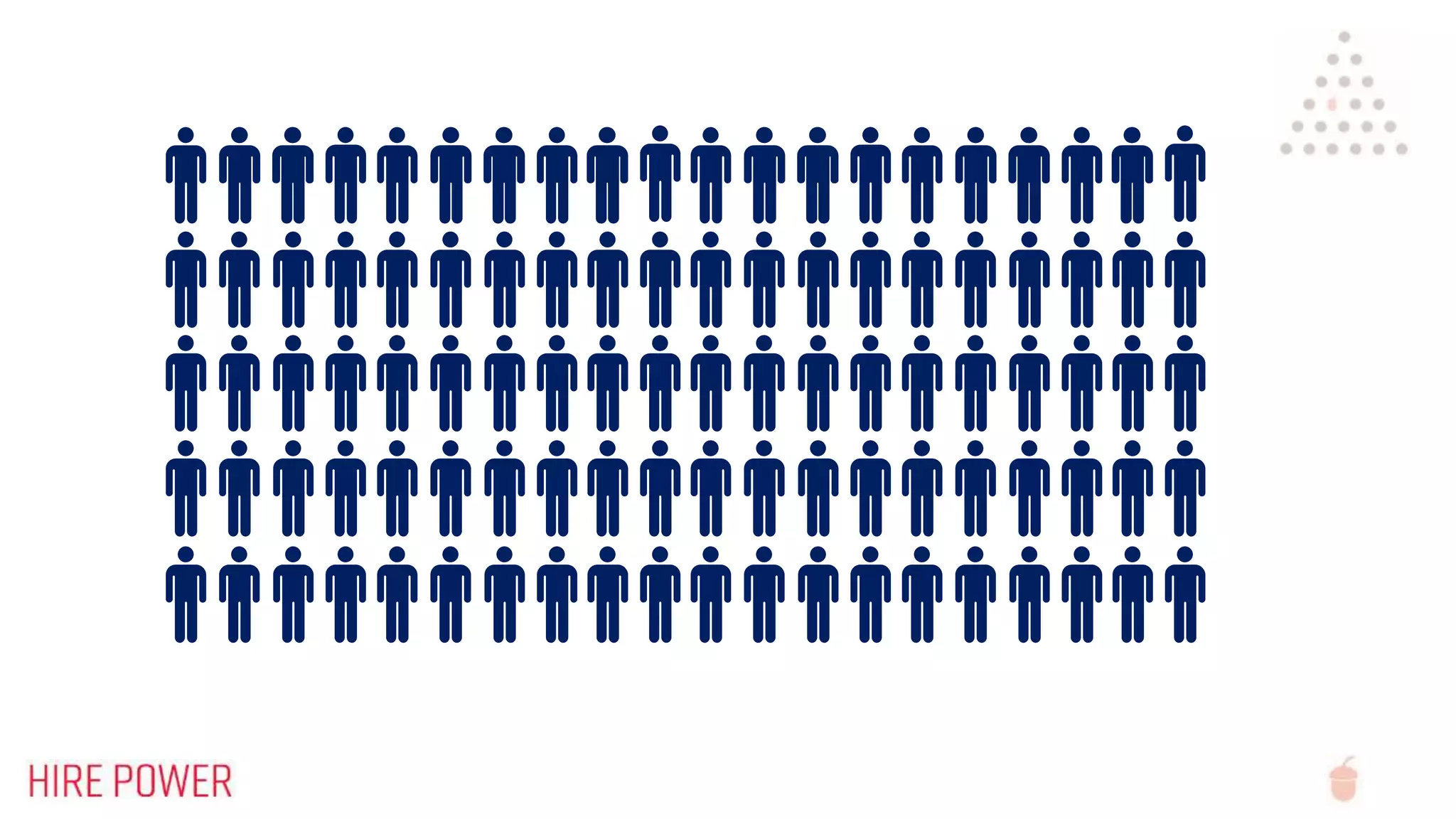
  • #28 In the book I look at candidate sources slightly differently. I like to think in terms of candidate behaviour Take this a the full market for people who widget production managers
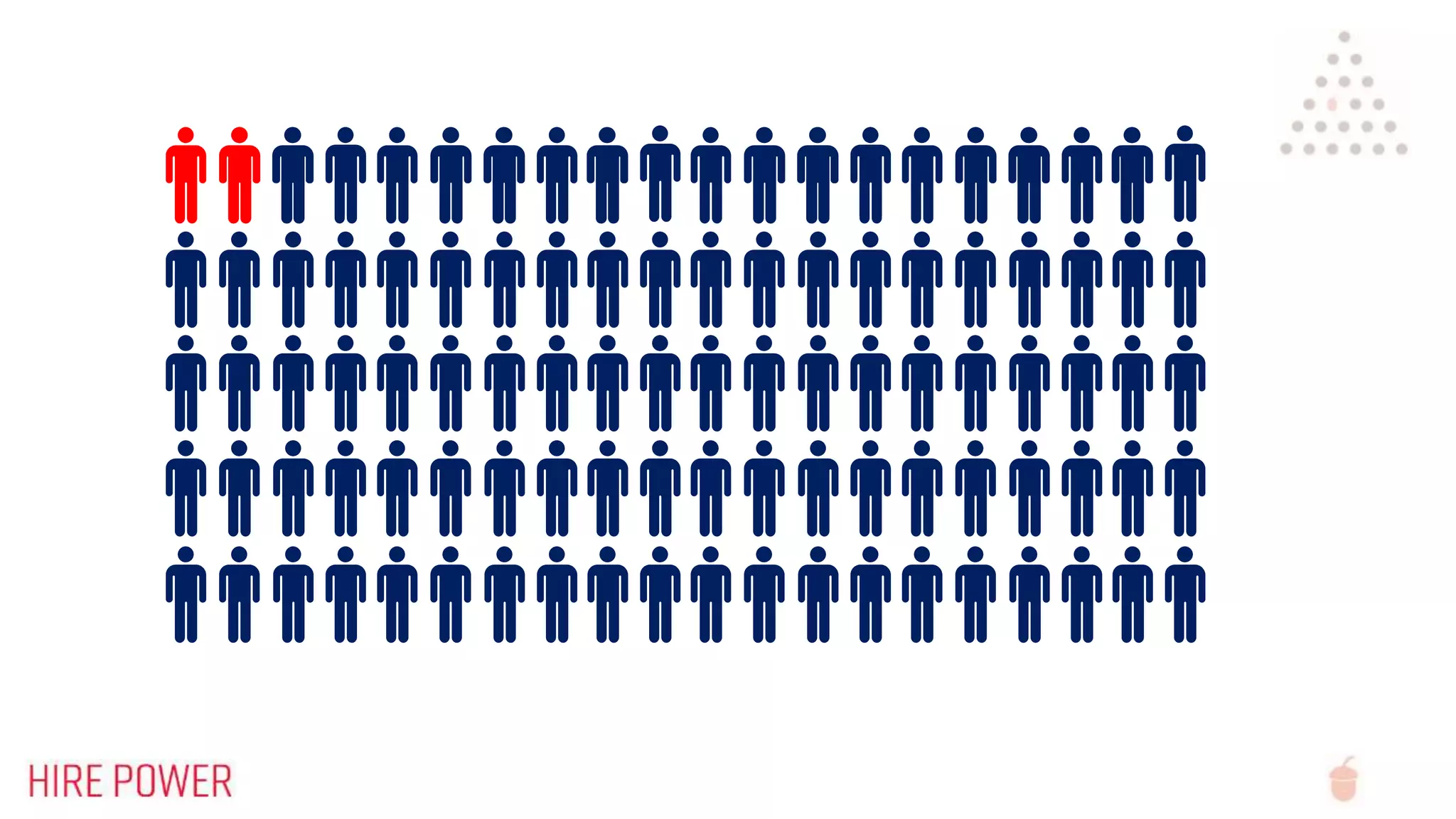
  • #29 The red lot are the ones who are really in MY market – proximity / salary / skill level
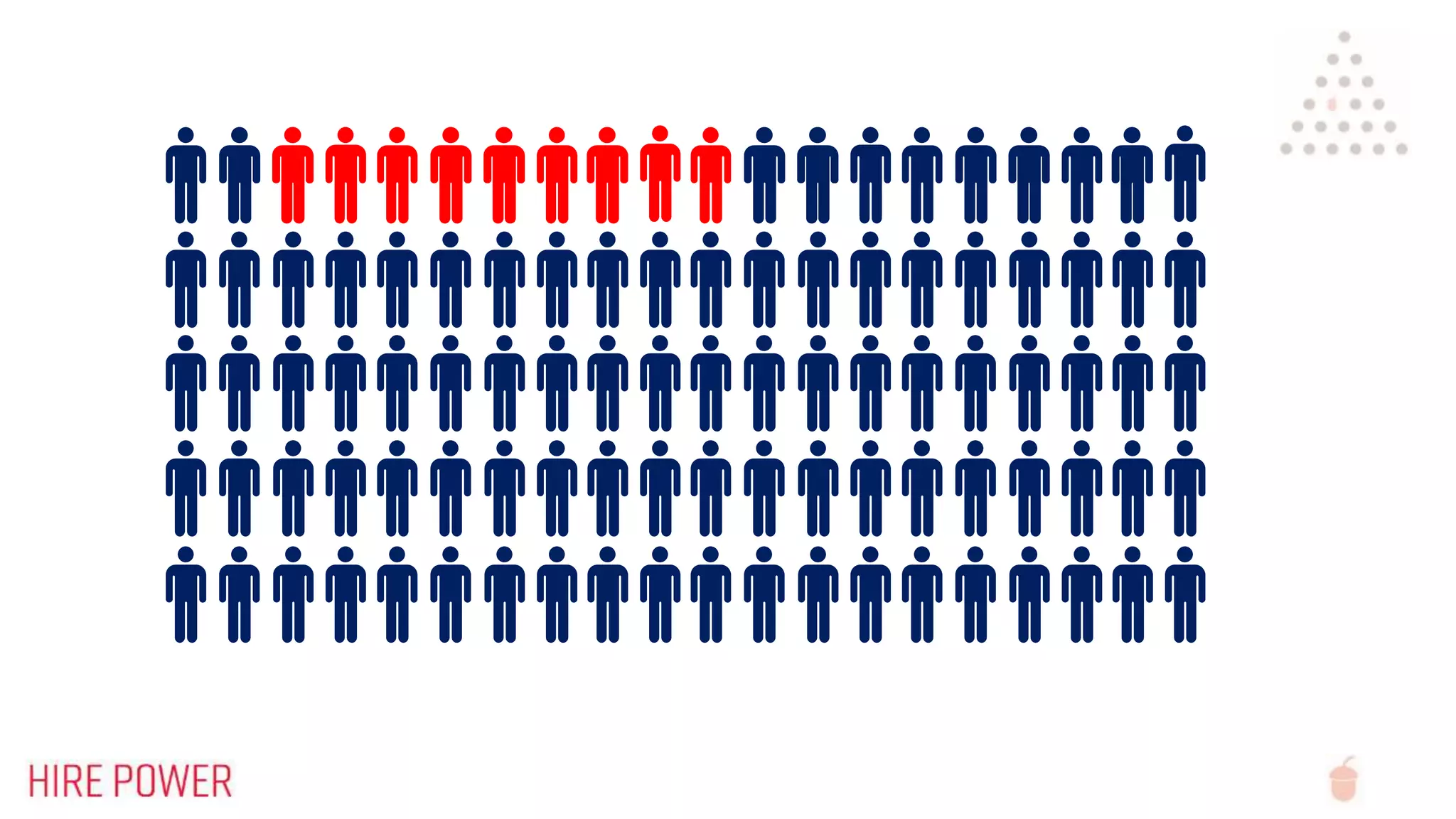
  • #30 These are the ones who will look online, respond to linked in etc I can access most of the market – so my chances of getting the star is pretty high. Direct sourcing perfect
  • #32 No lets look at the widget designers – smaller market
  • #33 And different behaviours – these are the ones I can access. My chances are now not so clever It’s not those “hard to fill jobs” – it’s the behaviour of the candidates in those markets.
  • #35 Not looking – in hire power I talk about lazy jobseekers - doesn’t make them bad employees – it’s the jobseeking behaviour. Not PASSIVE canddiates Have a relationship with a consultant – That’s where the rolodex comes in. Deep vertical knowledge Counterpoint – would pay
  • #36 My view. Deep Specialists Help with high demand Wok as an extension of the team Single supplier per vacancy – accountability to succeed – decent fee
  • #37 Once direct sourcing in and benefits are obvious there is no going back Figures from the FIRM In house rec leaders asked to list their top 5 priorities and these came out top. If you ask me they are all the same. FIRM If your business is based on the
  • #38 My view.