5 WAYS TO ARRANGE &
ORGANIZE SPACE
CENTRALIZED
LINEAR
RADIAL
CLUSTERED
GRID
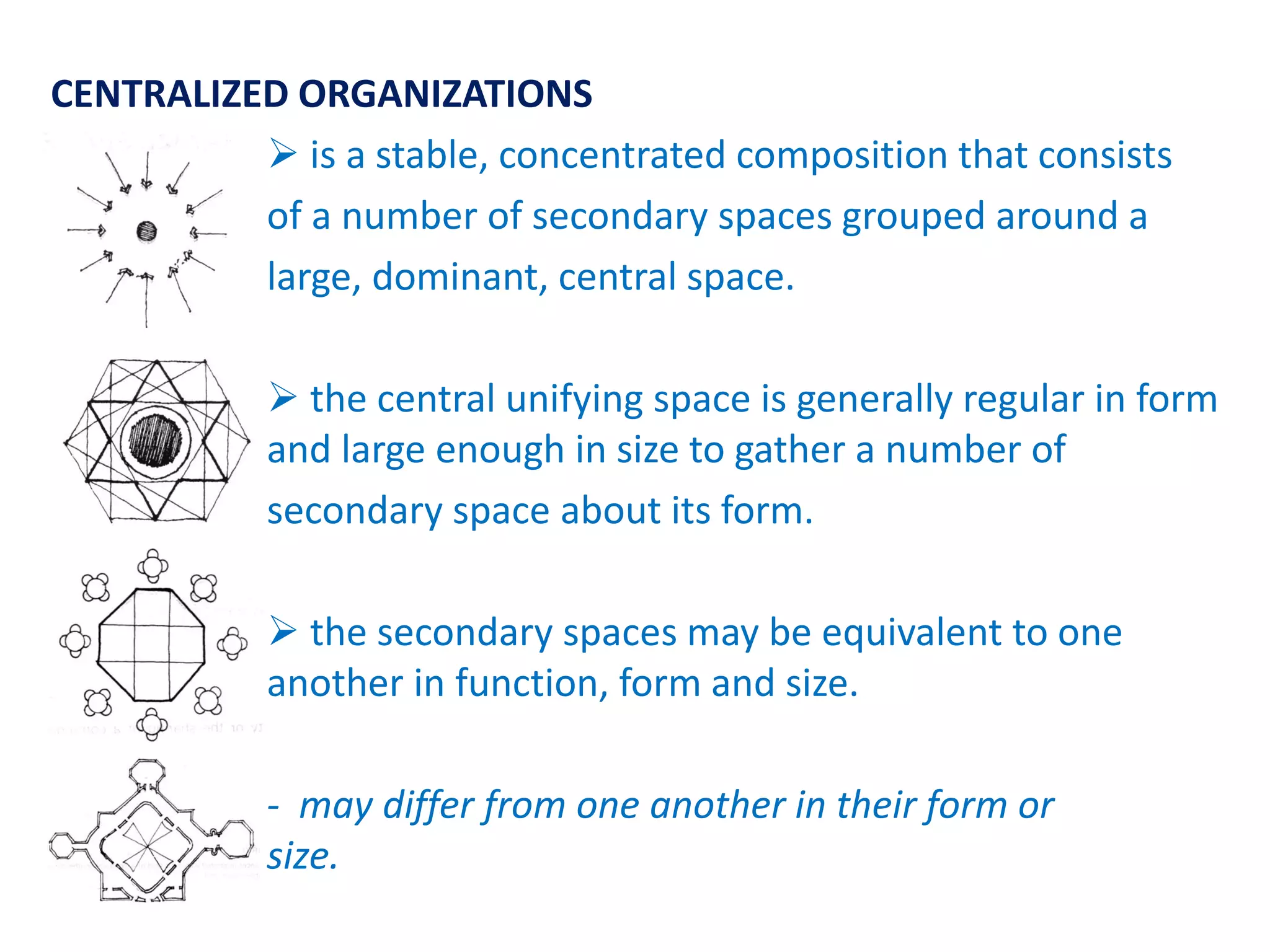
CENTRALIZED ORGANIZATIONS
 is a stable, concentrated composition that consists
of a number of secondary spaces grouped around a
large, dominant, central space.
 the central unifying space is generally regular in form
and large enough in size to gather a number of
secondary space about its form.
 the secondary spaces may be equivalent to one
another in function, form and size.
- may differ from one another in their form or
size.
LINEAR ORGANIZATION
 consist essentially of a series of spaces
 can either be directly related to one another
 consists of repetitive spaces that are alike in size,
form and function
 consist of a linear space that organizes along its
length a series of spaces that differ in sizes, form or
function
 can be straight, segmented or curvilinear
RADIAL ORGANIZATION
 a central space from which linear organizations of
space extend in a radial manner
 generally regular in form ( central space is called
hub)
 radiating arms can also differ from one another
 pinwheel pattern
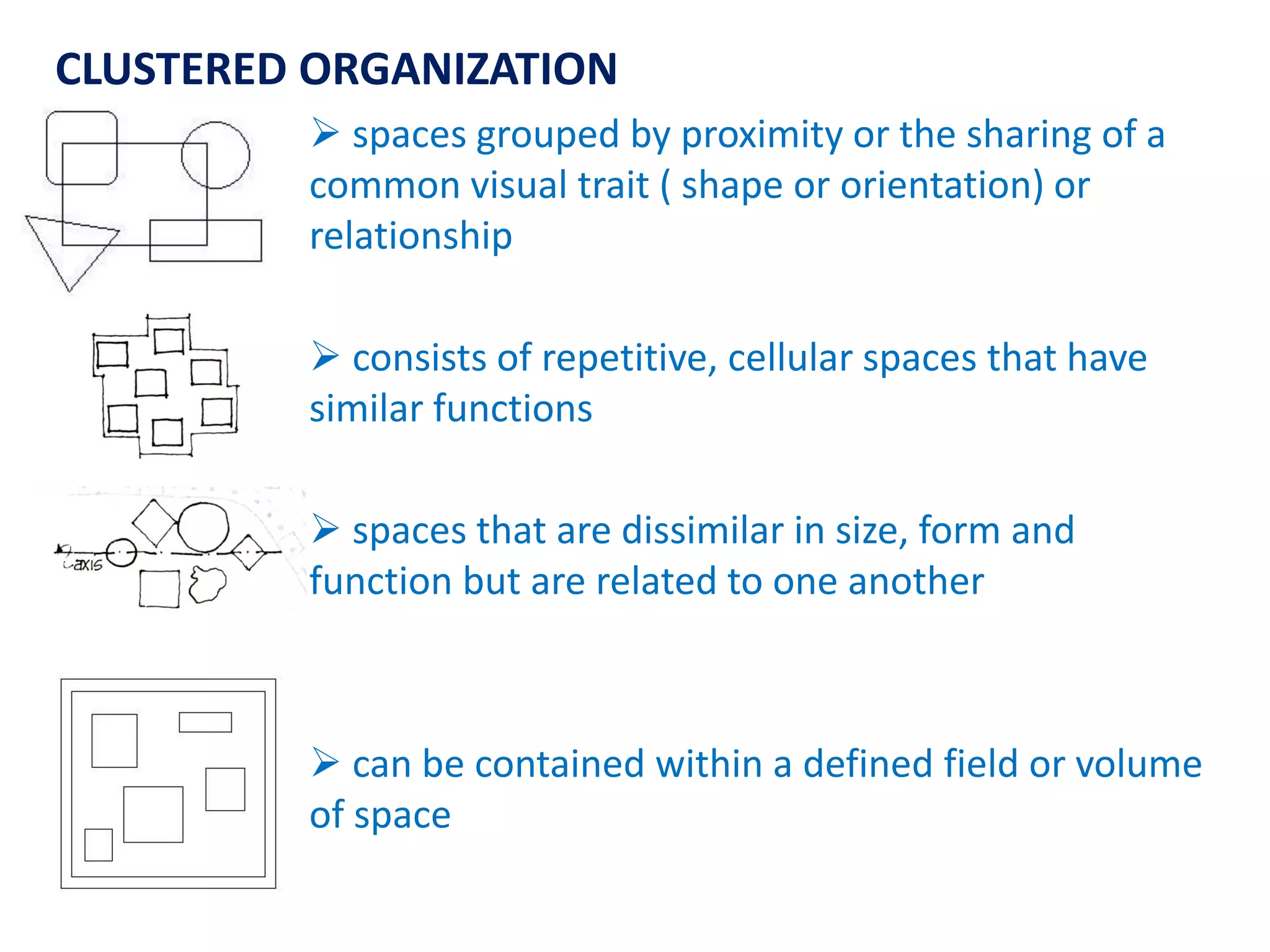
CLUSTERED ORGANIZATION
 spaces grouped by proximity or the sharing of a
common visual trait ( shape or orientation) or
relationship
 consists of repetitive, cellular spaces that have
similar functions
 spaces that are dissimilar in size, form and
function but are related to one another
 can be contained within a defined field or volume
of space
GRID ORGANIZATIONS
 consists of forms and spaces whose positions in
space and relationships with one another are
regulated by a three-dimensional grid pattern or
field
 can be interrupted to define a major space or
accommodate a natural feature of its site
 portions of the grid can slide to alter the visual
and spatial continuity across its field
- the original design concept can be
clarified, strengthened and built
upon, rather than destroyed

5 ways to arrange & organize space

  • 1.
    5 WAYS TOARRANGE & ORGANIZE SPACE CENTRALIZED LINEAR RADIAL CLUSTERED GRID
  • 2.
    CENTRALIZED ORGANIZATIONS  isa stable, concentrated composition that consists of a number of secondary spaces grouped around a large, dominant, central space.  the central unifying space is generally regular in form and large enough in size to gather a number of secondary space about its form.  the secondary spaces may be equivalent to one another in function, form and size. - may differ from one another in their form or size.
  • 3.
    LINEAR ORGANIZATION  consistessentially of a series of spaces  can either be directly related to one another  consists of repetitive spaces that are alike in size, form and function  consist of a linear space that organizes along its length a series of spaces that differ in sizes, form or function  can be straight, segmented or curvilinear
  • 4.
    RADIAL ORGANIZATION  acentral space from which linear organizations of space extend in a radial manner  generally regular in form ( central space is called hub)  radiating arms can also differ from one another  pinwheel pattern
  • 5.
    CLUSTERED ORGANIZATION  spacesgrouped by proximity or the sharing of a common visual trait ( shape or orientation) or relationship  consists of repetitive, cellular spaces that have similar functions  spaces that are dissimilar in size, form and function but are related to one another  can be contained within a defined field or volume of space
  • 6.
    GRID ORGANIZATIONS  consistsof forms and spaces whose positions in space and relationships with one another are regulated by a three-dimensional grid pattern or field  can be interrupted to define a major space or accommodate a natural feature of its site  portions of the grid can slide to alter the visual and spatial continuity across its field - the original design concept can be clarified, strengthened and built upon, rather than destroyed