5 FACTORS AFFECT
LEARNING LANGUAGE
     STRATEGY

NOR AZLIN BINTI MUHAMAD
         P69067
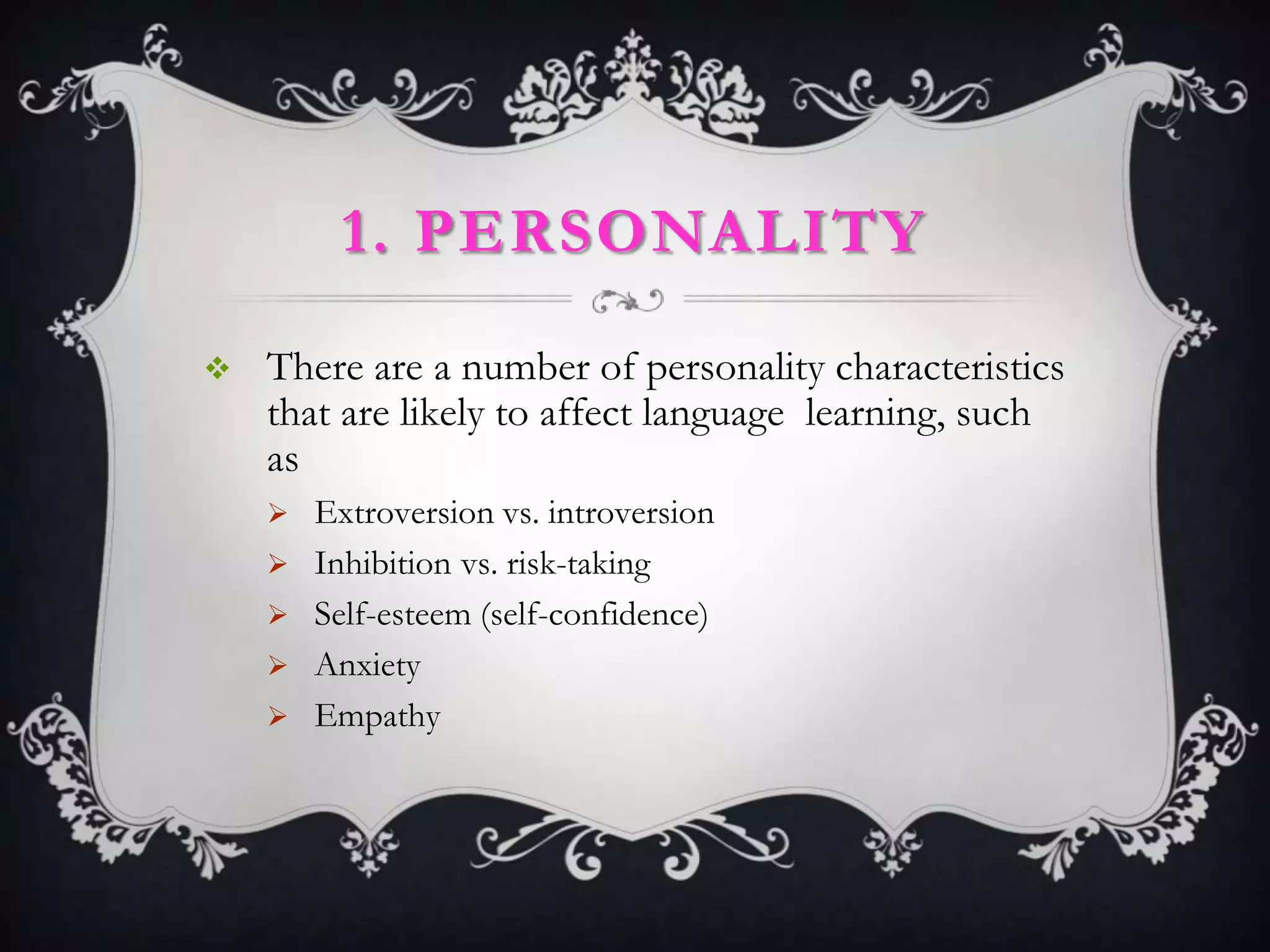
1. PERSONALITY

   There are a number of personality characteristics
    that are likely to affect language learning, such
    as
       Extroversion vs. introversion
       Inhibition vs. risk-taking
       Self-esteem (self-confidence)
       Anxiety
       Empathy
2. APTITUDE

 Aptitude refers to the special ability involved in second language
learning (Douglous et al 1995). The relationship between aptitude and
second language learning success is a very important one and various
studies, such as Gardner (1980) and Skehan (1989) have reported that
aptitude is a major factor determining the level of success of second
language learning (Douglous et al 1995).
 Students can have a good aptitude for learning.This can infer
various things, such as:

 The understanding of the function of words in sentences .

 The ability to understand and use grammatical rules.

 Memory of key words, what they mean and how to use them.
An important point regarding aptitude and second language
learning is that successful learners may not be strong in all the
components of aptitude and can still succeed at learning a
second language. For example, some individuals may have
strong memories but only average abilities in the other
components of aptitude (Spada 1999)
3. MOTIVATION

 The social psychological factor of motivation has been proven to
account for differential success in second language learning. A
motivated student can be defined as someone who:

"Expends effort, is persistent and attentive to the tasks at hand, has goals, desires
and aspirations, enjoys the activity, makes attributions concerning success or
failure, is aroused and makes use of strategies to aid in achieving goals. (Dornyei
2003, p.173).
4. LEARNING STRATEGIES

 As in all school topics, learning strategies are a factor of second
language learning. One definition of learning strategies is:

Steps or actions taken by learners to improve the development
of their language skills (Gass et al 1993, p.265).
 Different learning strategies work best for different people when
learning a second language.

 For example, one student may learn vocabulary through writing
and practicing the vocabulary using cue cards, whereas another
student may only read the vocabulary and learn that way.
 Although it is clear that students can be more successful in second
language learning if they adopt particular learning strategies to suit
them, theorists such as Bialystok (1990) and Cohen (1992), have
found the learning strategies field to have its problems, as some
aspects are not yet clear.
 These problems include that it is difficult to separate the conscious
from the unconscious and the difficulty of showing what
contributions they have on language learning (Gass et al 1993). As
Grass (1993) insights, learning strategies is clearly an important area
but there needs to be more theoretically sound research.
5. LEARNING
               DIFFICULTIES

 Many people believe that students with learning difficulties or are
Negotiated education plans can not successfully learn a second
language. Research has found that students on a NEP often benefit
from learning another language.
 It allows students to re-visit the basics of how a language is
constructed which helps students with their native tongue. Research
has proven that second language learning is not linked to intelligence
and therefore (most) students with learning difficulties can succeed in
second language learning (DECS 2003, p.5).
THE END

5 factors affect learning language strategy

  • 1.
    5 FACTORS AFFECT LEARNINGLANGUAGE STRATEGY NOR AZLIN BINTI MUHAMAD P69067
  • 2.
    1. PERSONALITY  There are a number of personality characteristics that are likely to affect language learning, such as  Extroversion vs. introversion  Inhibition vs. risk-taking  Self-esteem (self-confidence)  Anxiety  Empathy
  • 3.
    2. APTITUDE  Aptituderefers to the special ability involved in second language learning (Douglous et al 1995). The relationship between aptitude and second language learning success is a very important one and various studies, such as Gardner (1980) and Skehan (1989) have reported that aptitude is a major factor determining the level of success of second language learning (Douglous et al 1995).
  • 4.
     Students canhave a good aptitude for learning.This can infer various things, such as:  The understanding of the function of words in sentences .  The ability to understand and use grammatical rules.  Memory of key words, what they mean and how to use them.
  • 5.
    An important pointregarding aptitude and second language learning is that successful learners may not be strong in all the components of aptitude and can still succeed at learning a second language. For example, some individuals may have strong memories but only average abilities in the other components of aptitude (Spada 1999)
  • 6.
    3. MOTIVATION  Thesocial psychological factor of motivation has been proven to account for differential success in second language learning. A motivated student can be defined as someone who: "Expends effort, is persistent and attentive to the tasks at hand, has goals, desires and aspirations, enjoys the activity, makes attributions concerning success or failure, is aroused and makes use of strategies to aid in achieving goals. (Dornyei 2003, p.173).
  • 7.
    4. LEARNING STRATEGIES As in all school topics, learning strategies are a factor of second language learning. One definition of learning strategies is: Steps or actions taken by learners to improve the development of their language skills (Gass et al 1993, p.265).
  • 8.
     Different learningstrategies work best for different people when learning a second language.  For example, one student may learn vocabulary through writing and practicing the vocabulary using cue cards, whereas another student may only read the vocabulary and learn that way.
  • 9.
     Although itis clear that students can be more successful in second language learning if they adopt particular learning strategies to suit them, theorists such as Bialystok (1990) and Cohen (1992), have found the learning strategies field to have its problems, as some aspects are not yet clear.
  • 10.
     These problemsinclude that it is difficult to separate the conscious from the unconscious and the difficulty of showing what contributions they have on language learning (Gass et al 1993). As Grass (1993) insights, learning strategies is clearly an important area but there needs to be more theoretically sound research.
  • 11.
    5. LEARNING DIFFICULTIES  Many people believe that students with learning difficulties or are Negotiated education plans can not successfully learn a second language. Research has found that students on a NEP often benefit from learning another language.
  • 12.
     It allowsstudents to re-visit the basics of how a language is constructed which helps students with their native tongue. Research has proven that second language learning is not linked to intelligence and therefore (most) students with learning difficulties can succeed in second language learning (DECS 2003, p.5).
  • 13.