Download to read offline

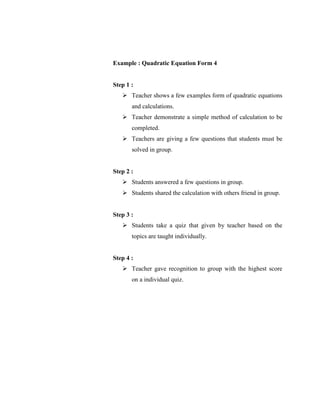
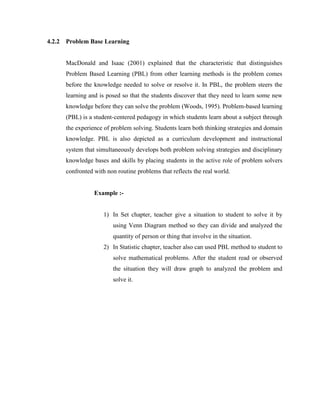
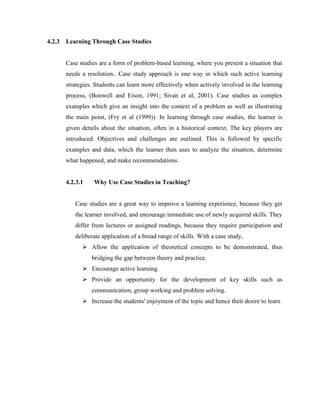
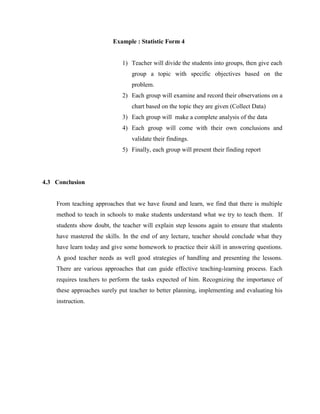

This document discusses different teaching approaches used in mathematics education, including cooperative learning, problem-based learning, and case studies. Cooperative learning involves students working in small groups to achieve common goals, emphasizing positive interdependence, interaction, individual accountability, collaborative skills, and group processing. Problem-based learning frames instruction around non-routine problems that require students to discover new knowledge to solve. Case studies present real-world situations for students to analyze and resolve, applying theoretical concepts. These active learning strategies encourage students to directly engage with course content.


