

• Introduction
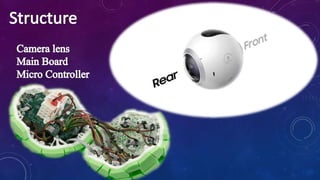
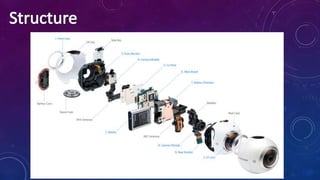
• Structure
• How it works?
• Stitching
• Application
• Advantages
• Disadvantages
• Example
• Conclusion
• References
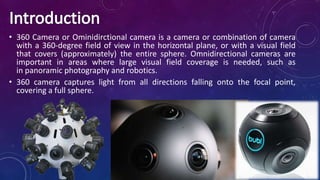
• 360 Camera or Ominidirctional camera is a camera or combination of camera
with a 360-degree field of view in the horizontal plane, or with a visual field
that covers (approximately) the entire sphere. Omnidirectional cameras are
important in areas where large visual field coverage is needed, such as
in panoramic photography and robotics.
• 360 camera captures light from all directions falling onto the focal point,
covering a full sphere.
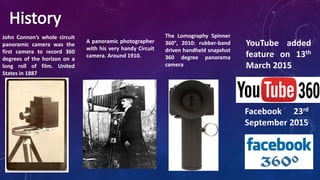
John Connon’s whole circuit
panoramic camera was the
first camera to record 360
degrees of the horizon on a
long roll of film. United
States in 1887
A panoramic photographer
with his very handy Circuit
camera. Around 1910.
The Lomography Spinner
360°, 2010: rubber-band
driven handheld snapshot
360 degree panorama
camera
YouTube added
feature on 13th
March 2015
Facebook 23rd
September 2015
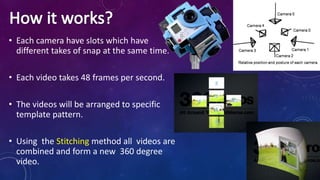
• Each camera have slots which have
different takes of snap at the same time.
• Each video takes 48 frames per second.
• The videos will be arranged to specific
template pattern.
• Using the Stitching method all videos are
combined and form a new 360 degree
video.
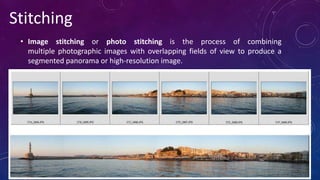
• Image stitching or photo stitching is the process of combining
multiple photographic images with overlapping fields of view to produce a
segmented panorama or high-resolution image.
Stitching
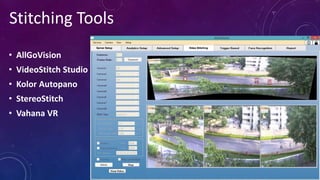
Stitching Tools
• AllGoVision
• VideoStitch Studio
• Kolor Autopano
• StereoStitch
• Vahana VR
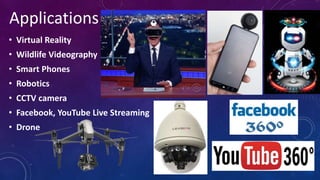
Applications
• Virtual Reality
• Wildlife Videography
• Smart Phones
• Robotics
• CCTV camera
• Facebook, YouTube Live Streaming
• Drone
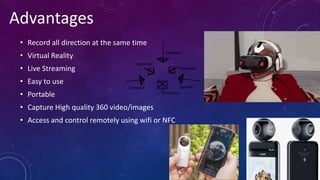
• Record all direction at the same time
• Virtual Reality
• Live Streaming
• Easy to use
• Portable
• Capture High quality 360 video/images
• Access and control remotely using wifi or NFC
Advantages
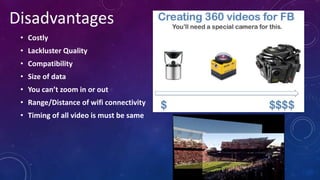
• Costly
• Lackluster Quality
• Compatibility
• Size of data
• You can’t zoom in or out
• Range/Distance of wifi connectivity
• Timing of all video is must be same
Disadvantages
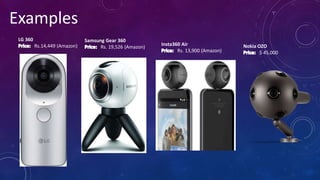
Examples
LG 360
Rs.14,449 (Amazon)
Samsung Gear 360
Rs. 19,526 (Amazon)
Insta360 Air
Rs. 13,900 (Amazon)
Nokia OZO
$ 45,000
• 360-degree video is being hyped because that's the quickest way to get people to adopt
VR but it's something that won't last. There will surely be specialized use-cases for 360-
degree video but to say it will go mainstream is a bit of a stretch. VR content will
continue to focus on gaming and other interactive apps as it is the most logical choice
however, video will most likely take a back seat as it is not easy creating video content
for this medium.
• Till date, most 3D movies do a mediocre job at presenting a headache-free 3D
experience and most of them are just an afterthought because that's what's expected
from movies these days. It's difficult enough to film in 3D, imagine what the challenges
will be like to film for 360-degree video, let alone editing a full-length movie for a 360
experience.
Conclusion
• https://en.wikipedia.org/wiki/360-degree_video
• https://en.wikipedia.org/wiki/Omnidirectional_camera
• https://en.wikipedia.org/wiki/Panorama
• https://en.wikipedia.org/wiki/VR_photography
• https://www.slideshare.net/
• http://www.samsung.com/global/galaxy/gear-360/
• https://ozo.nokia.com/
References
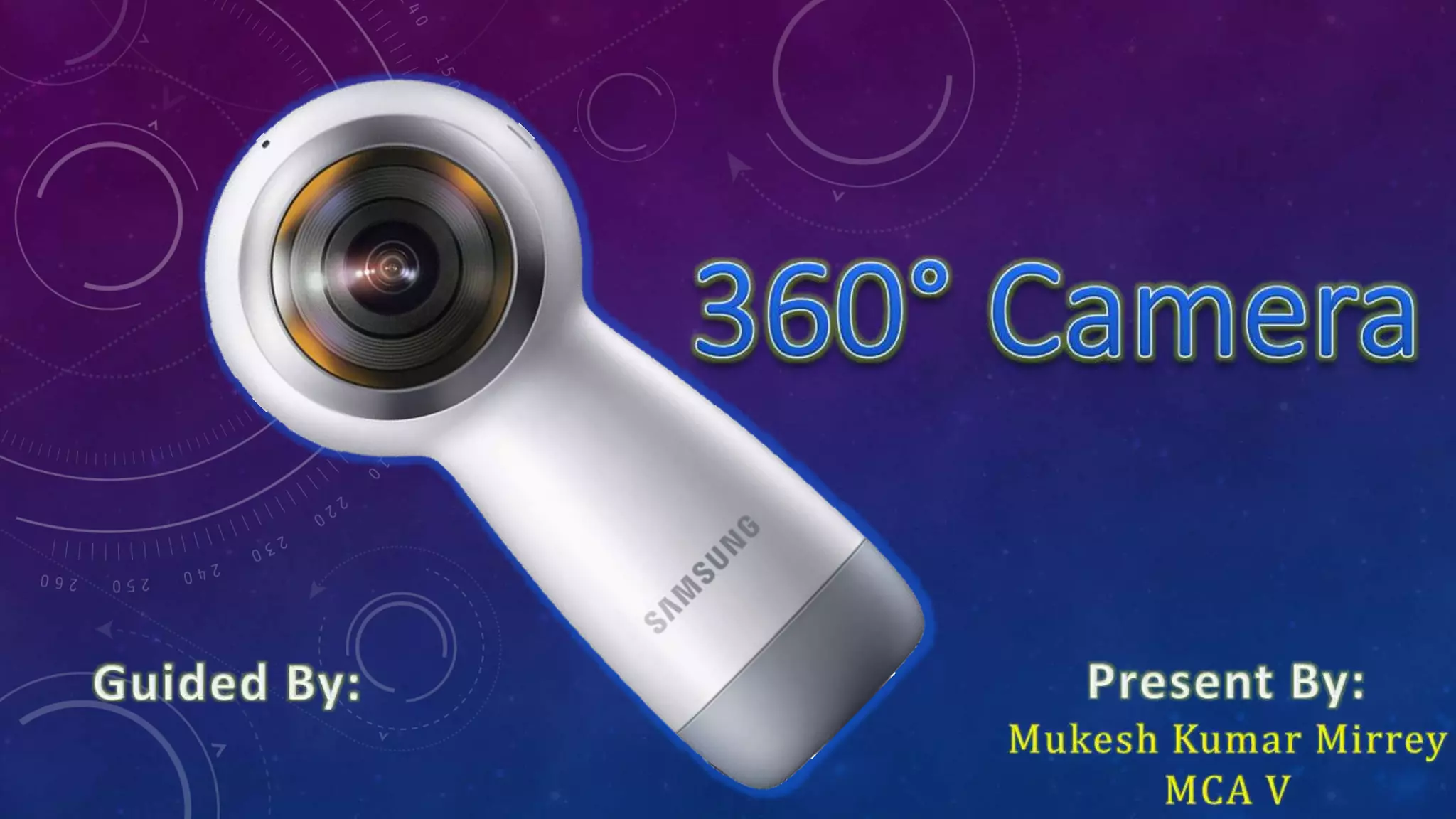
360 camera
360 camera

360 camera

  • 2.
    • Introduction • Structure •How it works? • Stitching • Application • Advantages • Disadvantages • Example • Conclusion • References
  • 3.
    • 360 Cameraor Ominidirctional camera is a camera or combination of camera with a 360-degree field of view in the horizontal plane, or with a visual field that covers (approximately) the entire sphere. Omnidirectional cameras are important in areas where large visual field coverage is needed, such as in panoramic photography and robotics. • 360 camera captures light from all directions falling onto the focal point, covering a full sphere.
  • 4.
    John Connon’s wholecircuit panoramic camera was the first camera to record 360 degrees of the horizon on a long roll of film. United States in 1887 A panoramic photographer with his very handy Circuit camera. Around 1910. The Lomography Spinner 360°, 2010: rubber-band driven handheld snapshot 360 degree panorama camera YouTube added feature on 13th March 2015 Facebook 23rd September 2015
  • 8.
    • Each camerahave slots which have different takes of snap at the same time. • Each video takes 48 frames per second. • The videos will be arranged to specific template pattern. • Using the Stitching method all videos are combined and form a new 360 degree video.
  • 9.
    • Image stitchingor photo stitching is the process of combining multiple photographic images with overlapping fields of view to produce a segmented panorama or high-resolution image. Stitching
  • 10.
    Stitching Tools • AllGoVision •VideoStitch Studio • Kolor Autopano • StereoStitch • Vahana VR
  • 11.
    Applications • Virtual Reality •Wildlife Videography • Smart Phones • Robotics • CCTV camera • Facebook, YouTube Live Streaming • Drone
  • 12.
    • Record alldirection at the same time • Virtual Reality • Live Streaming • Easy to use • Portable • Capture High quality 360 video/images • Access and control remotely using wifi or NFC Advantages
  • 13.
    • Costly • LacklusterQuality • Compatibility • Size of data • You can’t zoom in or out • Range/Distance of wifi connectivity • Timing of all video is must be same Disadvantages
  • 14.
    Examples LG 360 Rs.14,449 (Amazon) SamsungGear 360 Rs. 19,526 (Amazon) Insta360 Air Rs. 13,900 (Amazon) Nokia OZO $ 45,000
  • 15.
    • 360-degree videois being hyped because that's the quickest way to get people to adopt VR but it's something that won't last. There will surely be specialized use-cases for 360- degree video but to say it will go mainstream is a bit of a stretch. VR content will continue to focus on gaming and other interactive apps as it is the most logical choice however, video will most likely take a back seat as it is not easy creating video content for this medium. • Till date, most 3D movies do a mediocre job at presenting a headache-free 3D experience and most of them are just an afterthought because that's what's expected from movies these days. It's difficult enough to film in 3D, imagine what the challenges will be like to film for 360-degree video, let alone editing a full-length movie for a 360 experience. Conclusion
  • 16.
    • https://en.wikipedia.org/wiki/360-degree_video • https://en.wikipedia.org/wiki/Omnidirectional_camera •https://en.wikipedia.org/wiki/Panorama • https://en.wikipedia.org/wiki/VR_photography • https://www.slideshare.net/ • http://www.samsung.com/global/galaxy/gear-360/ • https://ozo.nokia.com/ References