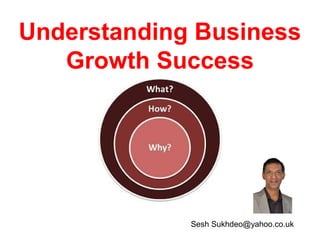
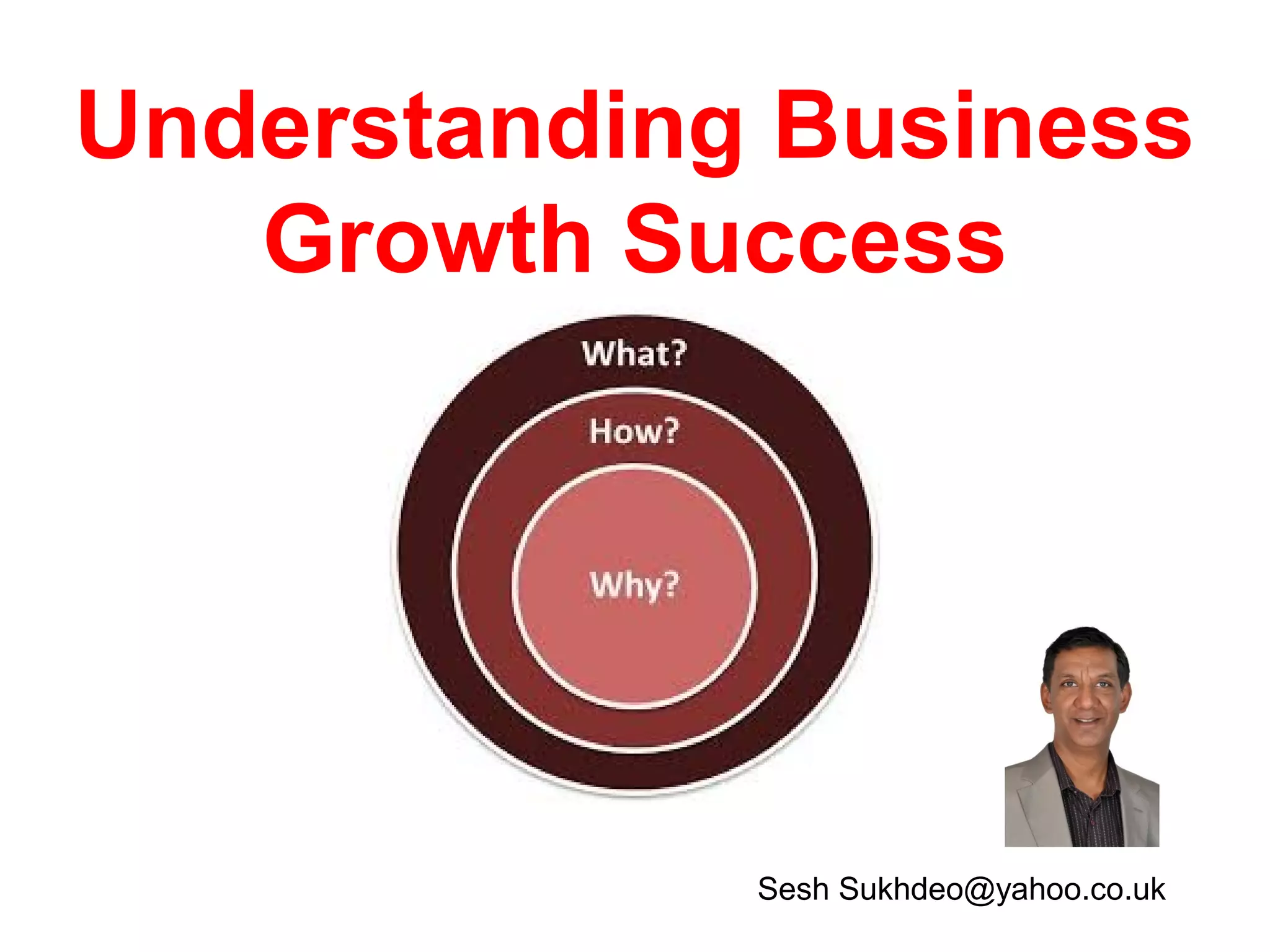
Understanding Business
Growth Success

Sesh Sukhdeo@yahoo.co.uk
Keys to Growth
• Understand why you have been
successful
• Build on strengths and core competencies
and shore up weaknesses
• Build a marketing strategy for each
product that reflects the appropriate
generic strategy, plus
– the stage the it is at in its life cycle and
– all in the context of its place in the
portfolio of products
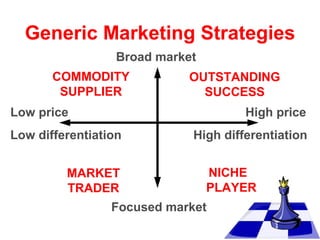
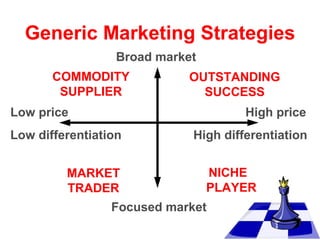
Generic Marketing Strategies
Broad market
COMMODITY
SUPPLIER

OUTSTANDING
SUCCESS

Low price

High price

Low differentiation
MARKET
TRADER

High differentiation
NICHE
PLAYER

Focused market
Strategy Imperatives which
one?
Selling on low price
Maintaining cost leadership
Continually driving down costs
Generic Marketing Strategies
Broad market
COMMODITY
SUPPLIER

OUTSTANDING
SUCCESS

Low price

High price

Low differentiation
MARKET
TRADER

High differentiation
NICHE
PLAYER

Focused market
When you’ve got single digit market share – and
you’re competing with the big boys – you either
differentiate or die
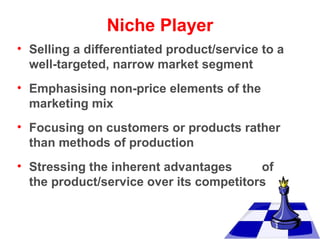
Niche Player
• Selling a differentiated product/service to a
well-targeted, narrow market segment
• Emphasising non-price elements of the
marketing mix
• Focusing on customers or products rather
than methods of production
• Stressing the inherent advantages
of
the product/service over its competitors
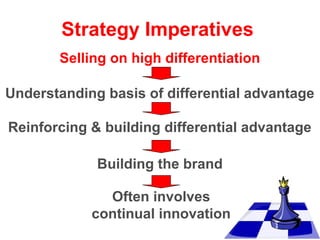
Strategy Imperatives
Selling on high differentiation
Understanding basis of differential advantage
Reinforcing & building differential advantage
Building the brand
Often involves
continual innovation
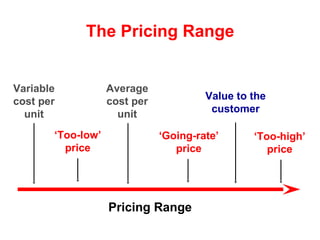
The Pricing Range
Variable
cost per
unit
‘Too-low’
price

Average
cost per
unit

Value to the
customer
‘Going-rate’
price

Pricing Range

‘Too-high’
price
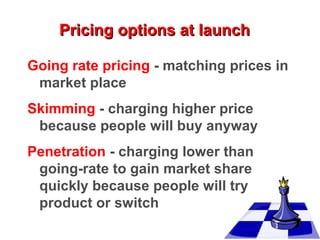
Pricing options at launch
Going rate pricing - matching prices in
market place
Skimming - charging higher price
because people will buy anyway
Penetration - charging lower than
going-rate to gain market share
quickly because people will try
product or switch
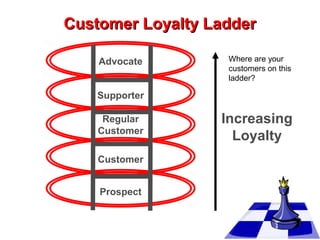
Customer Loyalty Ladder
Advocate

Where are your
customers on this
ladder?

Supporter
Regular
Customer
Customer
Prospect

Increasing
Loyalty
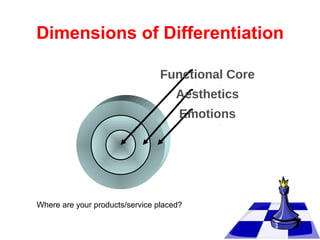
Dimensions of Differentiation
Functional Core
Aesthetics
Emotions

Where are your products/service placed?
Successful Strategy
• Strategy should emphasise something
that makes your firm as unique as
possible and delivers as much value as
possible to the customer
• The best chance of doing this comes
from differentiation with the aim of
dominating your market and to do this
effectively and quickly
• Then to continue to innovate based
upon your differential advantage
Sustaining Competitive Advantage
• Reputation – often encapsulated in
the brand, but communicated through
relationships

• The way the organisation innovates
– again and again
• The organisation’s strategic assets
– particularly the ones that can’t be
copied or competitors do not have
access to
AND……...
• Strategy should be clear and focused
• Supported by
- a culture that aims high
- a structure that is flexible & responsive
• A good strategy is important but effective
strategy execution is vital
(and often ignored)

3 understanding successn3

  • 1.
  • 2.
    Keys to Growth •Understand why you have been successful • Build on strengths and core competencies and shore up weaknesses • Build a marketing strategy for each product that reflects the appropriate generic strategy, plus – the stage the it is at in its life cycle and – all in the context of its place in the portfolio of products
  • 3.
    Generic Marketing Strategies Broadmarket COMMODITY SUPPLIER OUTSTANDING SUCCESS Low price High price Low differentiation MARKET TRADER High differentiation NICHE PLAYER Focused market
  • 4.
    Strategy Imperatives which one? Sellingon low price Maintaining cost leadership Continually driving down costs
  • 5.
    Generic Marketing Strategies Broadmarket COMMODITY SUPPLIER OUTSTANDING SUCCESS Low price High price Low differentiation MARKET TRADER High differentiation NICHE PLAYER Focused market
  • 6.
    When you’ve gotsingle digit market share – and you’re competing with the big boys – you either differentiate or die
  • 7.
    Niche Player • Sellinga differentiated product/service to a well-targeted, narrow market segment • Emphasising non-price elements of the marketing mix • Focusing on customers or products rather than methods of production • Stressing the inherent advantages of the product/service over its competitors
  • 8.
    Strategy Imperatives Selling onhigh differentiation Understanding basis of differential advantage Reinforcing & building differential advantage Building the brand Often involves continual innovation
  • 9.
    The Pricing Range Variable costper unit ‘Too-low’ price Average cost per unit Value to the customer ‘Going-rate’ price Pricing Range ‘Too-high’ price
  • 10.
    Pricing options atlaunch Going rate pricing - matching prices in market place Skimming - charging higher price because people will buy anyway Penetration - charging lower than going-rate to gain market share quickly because people will try product or switch
  • 11.
    Customer Loyalty Ladder Advocate Whereare your customers on this ladder? Supporter Regular Customer Customer Prospect Increasing Loyalty
  • 12.
    Dimensions of Differentiation FunctionalCore Aesthetics Emotions Where are your products/service placed?
  • 13.
    Successful Strategy • Strategyshould emphasise something that makes your firm as unique as possible and delivers as much value as possible to the customer • The best chance of doing this comes from differentiation with the aim of dominating your market and to do this effectively and quickly • Then to continue to innovate based upon your differential advantage
  • 14.
    Sustaining Competitive Advantage •Reputation – often encapsulated in the brand, but communicated through relationships • The way the organisation innovates – again and again • The organisation’s strategic assets – particularly the ones that can’t be copied or competitors do not have access to
  • 15.
    AND……... • Strategy shouldbe clear and focused • Supported by - a culture that aims high - a structure that is flexible & responsive • A good strategy is important but effective strategy execution is vital (and often ignored)