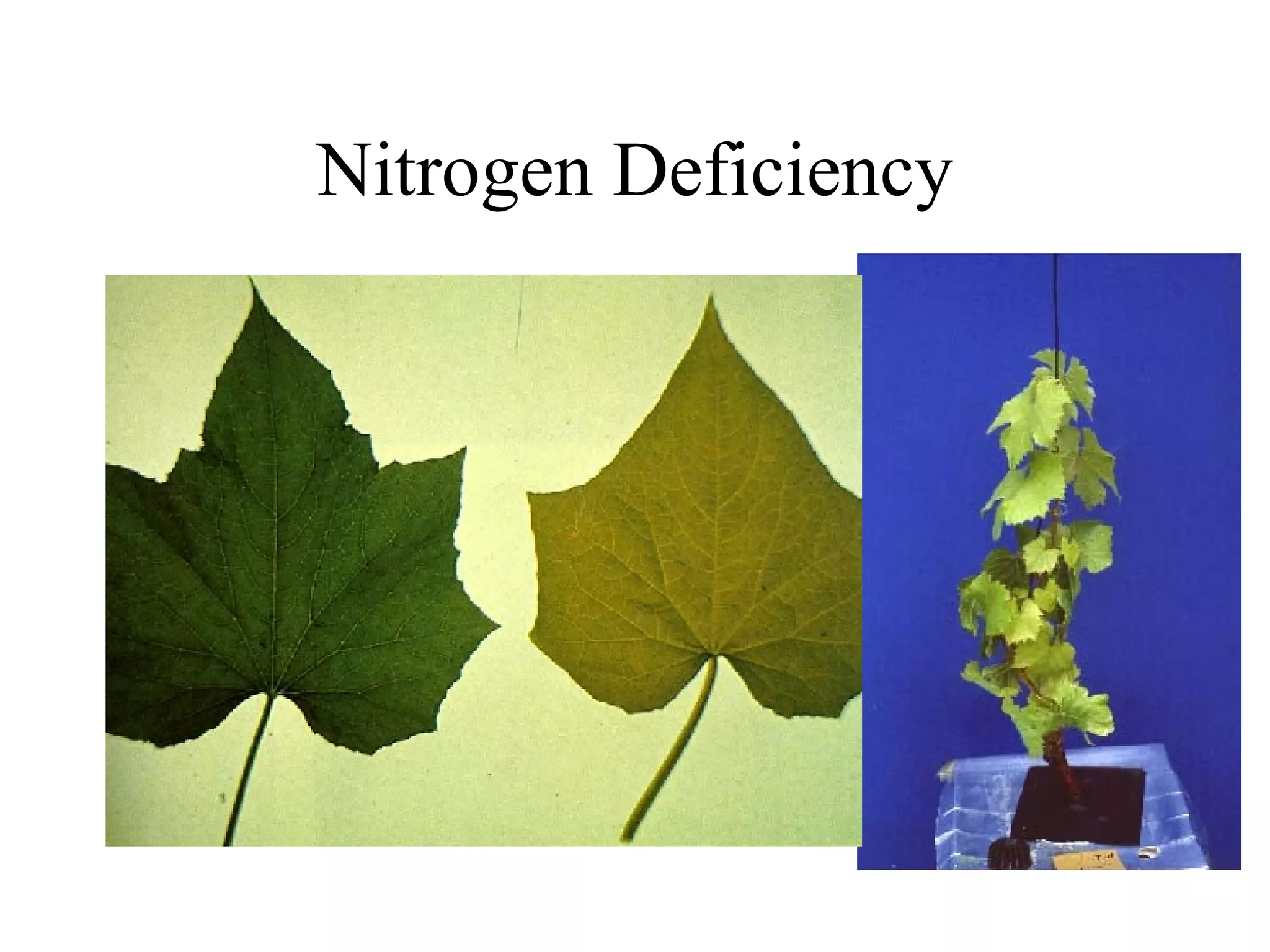
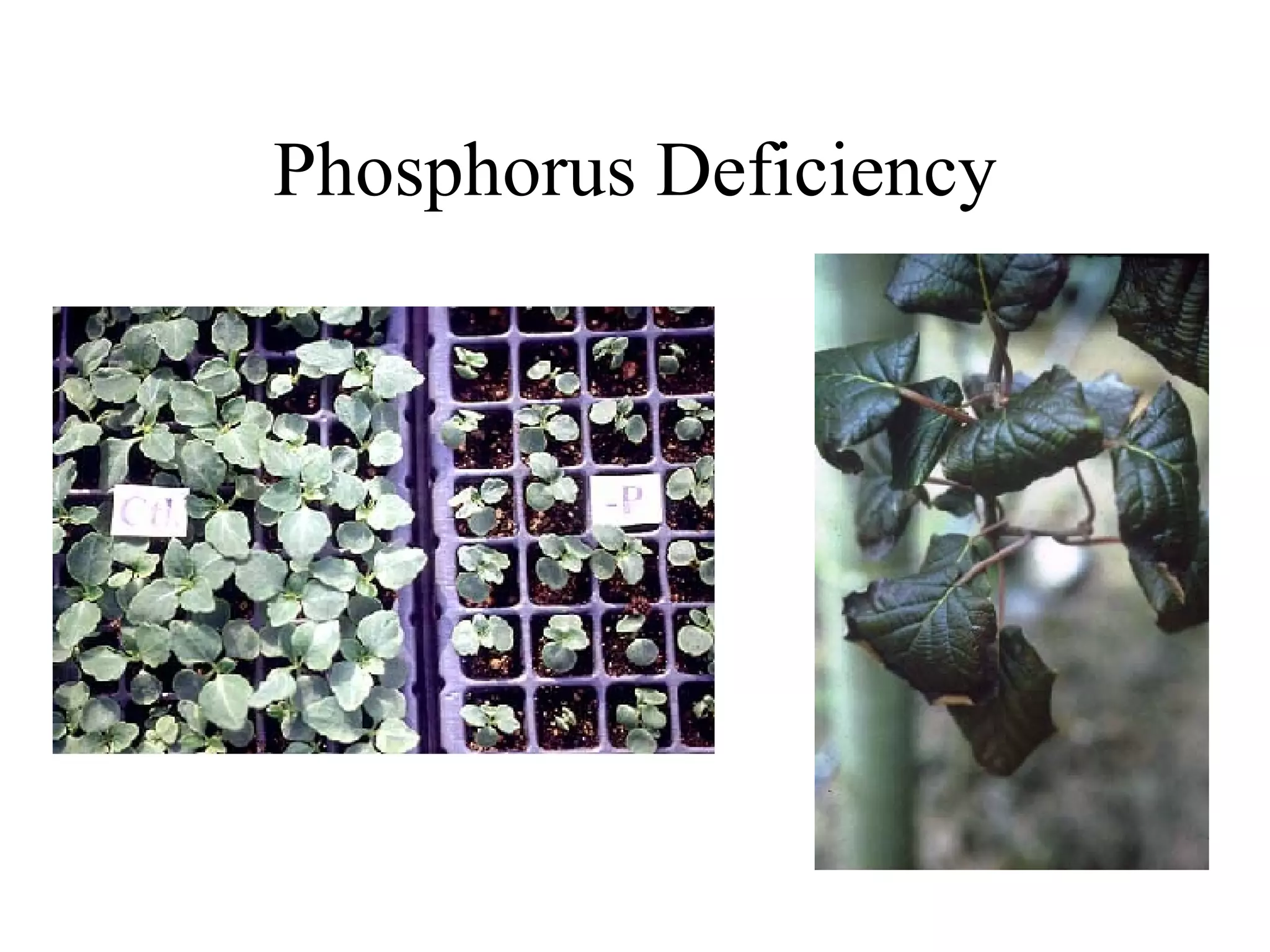
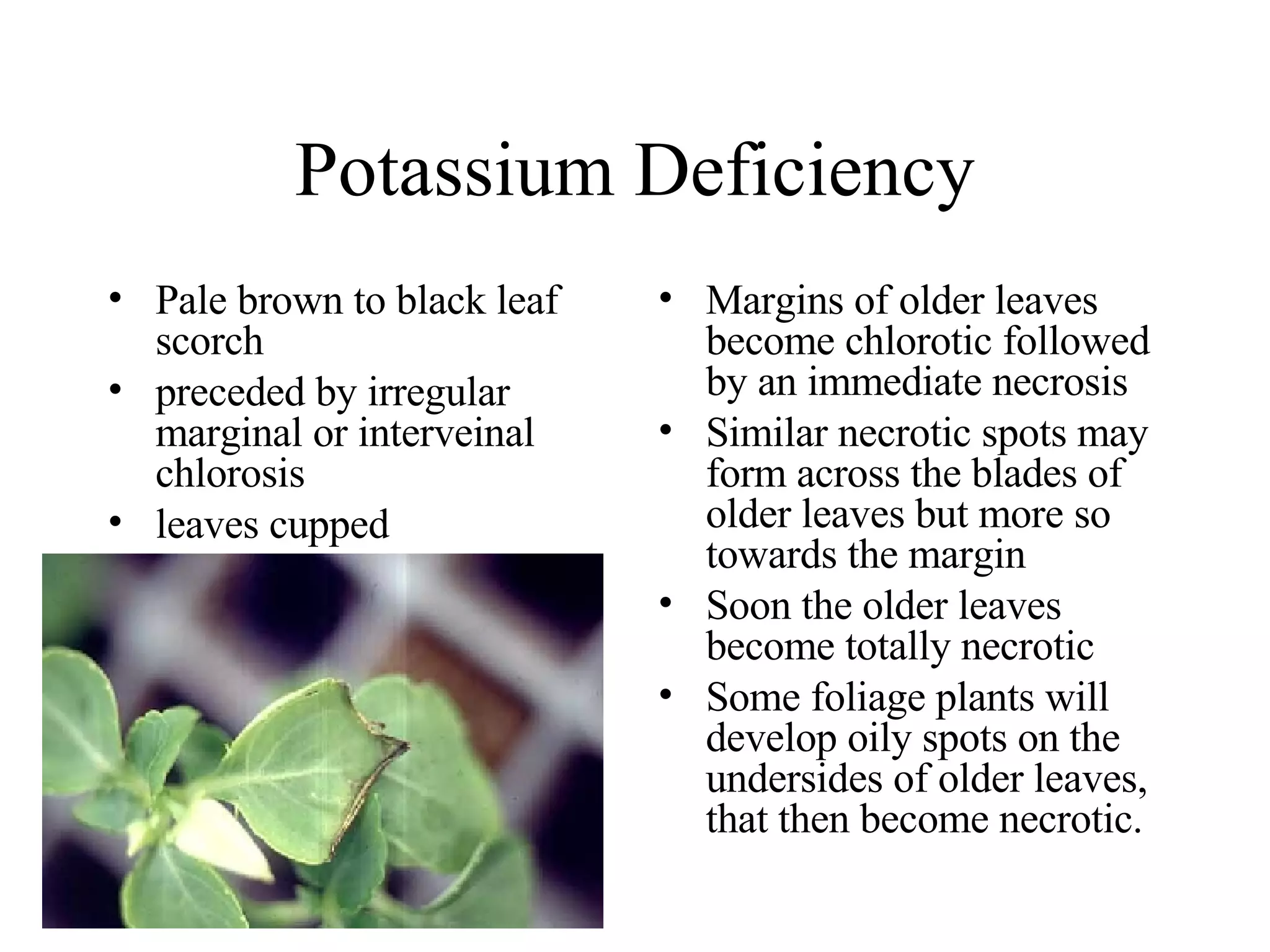
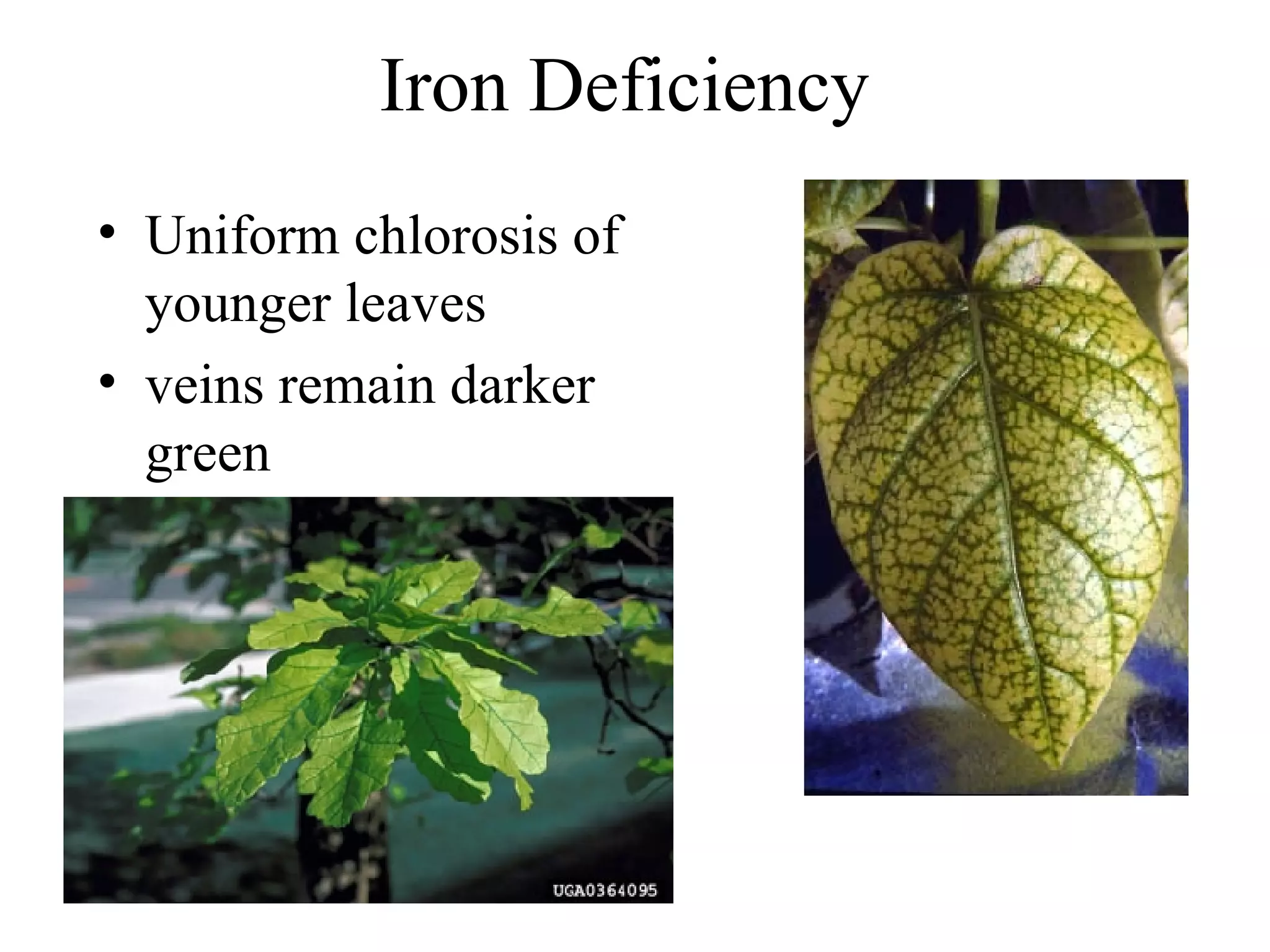
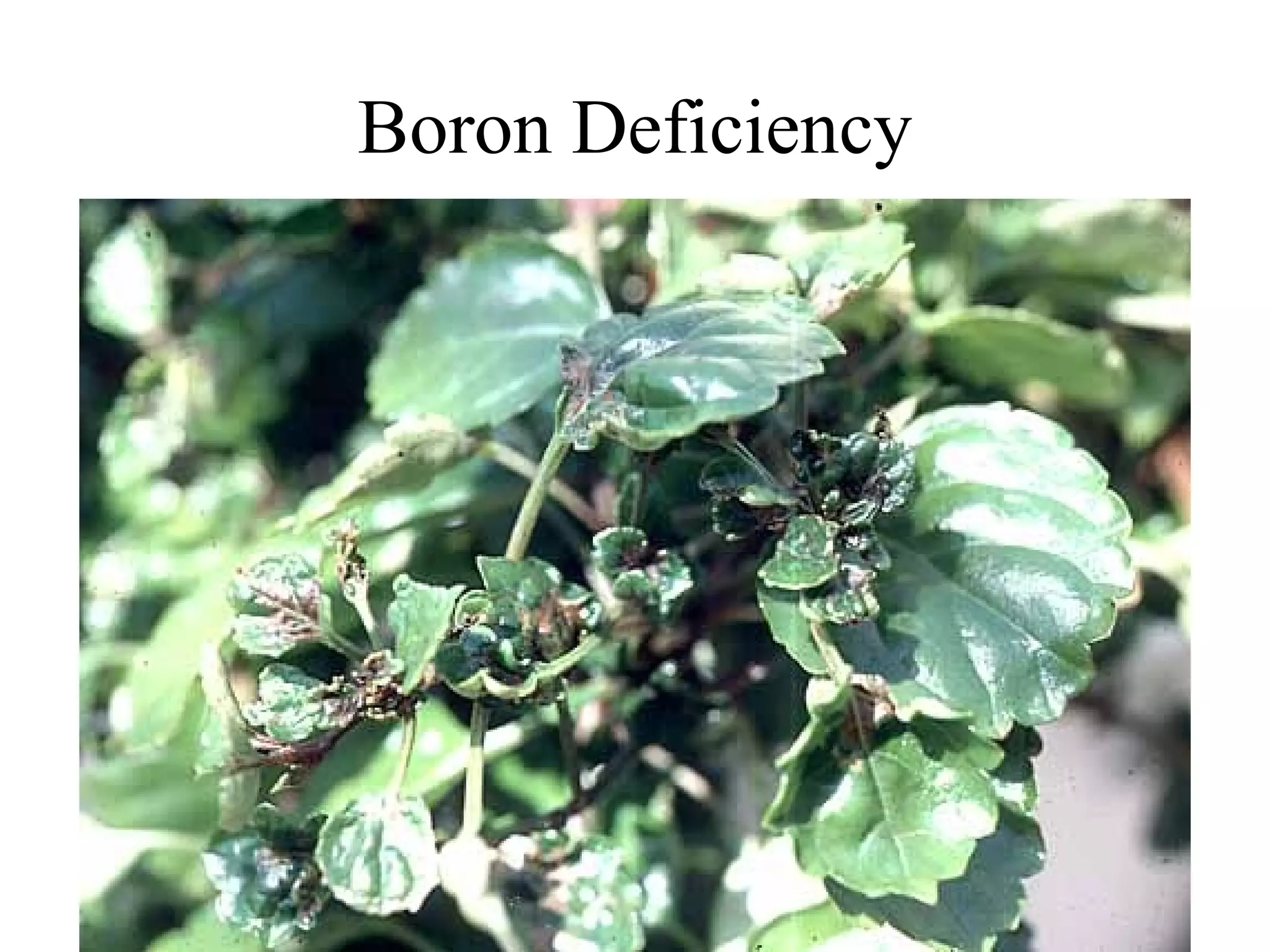
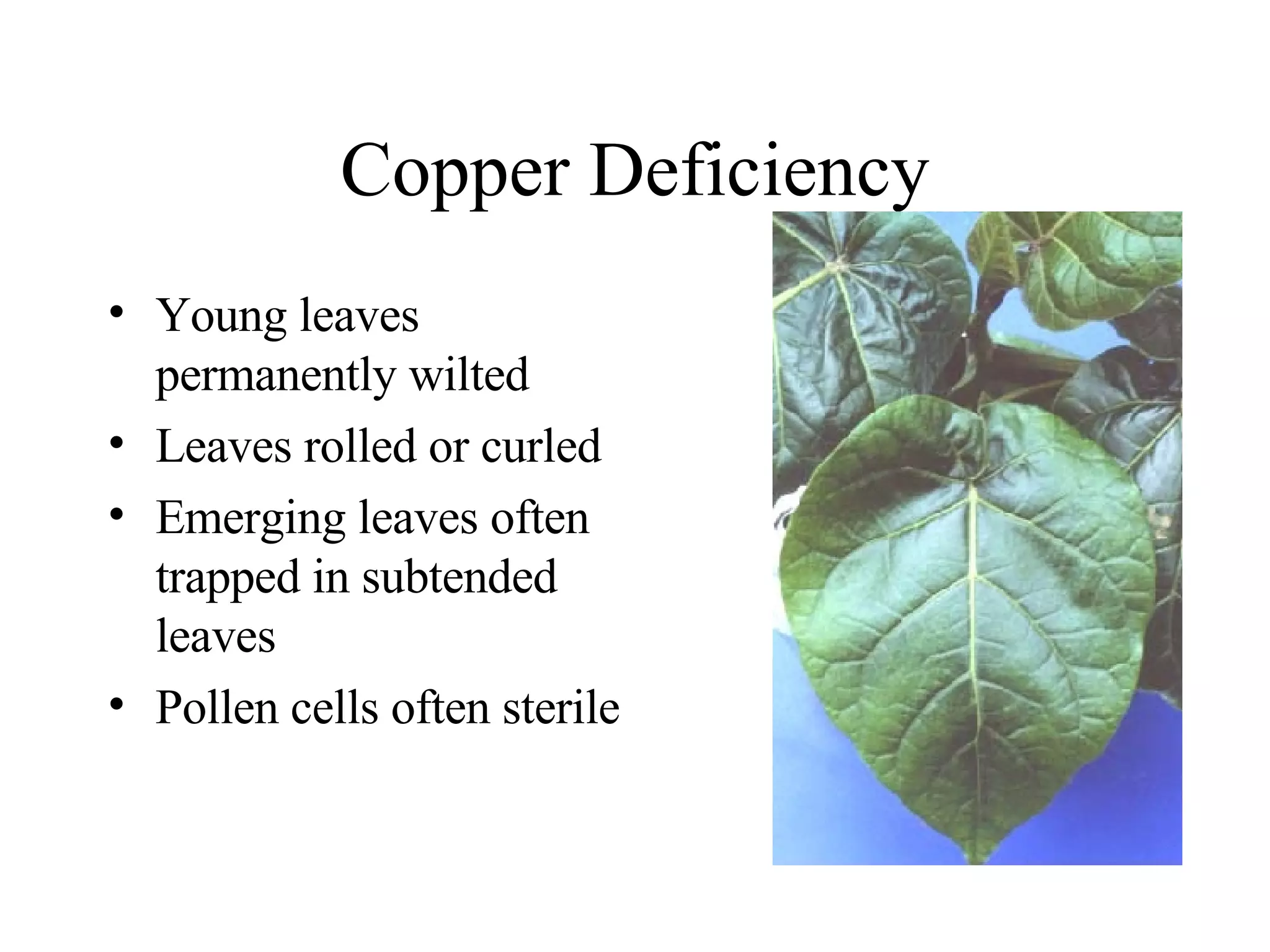
This document discusses various abiotic and nutritional deficiencies that can affect plants. Abiotic diseases are caused by non-living factors like temperature, water, soil chemicals, and mechanical damage. These stresses can weaken plants and make them susceptible to pathogens. Common nutritional deficiencies include nitrogen, phosphorus, potassium, magnesium, iron, calcium, boron, sulfur, copper, manganese, zinc, and molybdenum. Deficiencies typically show up first in older or younger leaves and cause symptoms like chlorosis, necrosis, stunting, and leaf distortion. Specific deficiency symptoms and their effects on greenhouse crops are described for each nutrient. Other abiotic disorders addressed include blossom end rot, edema, frost damage, heat stress















![10%20 Tips%20for%20 Water%20 Savings[1]](https://cdn.slidesharecdn.com/ss_thumbnails/1020-tips20for20-water20-savings1-1198158338560336-3-thumbnail.jpg?width=640&height=640&fit=bounds)


