STRATEGIC WORKFORCE PLANNING:
THE KEY TO ORGANISATIONAL
SUCCESS
Ron Thomas
CEO, Great Place to Work - Gulf
Questions
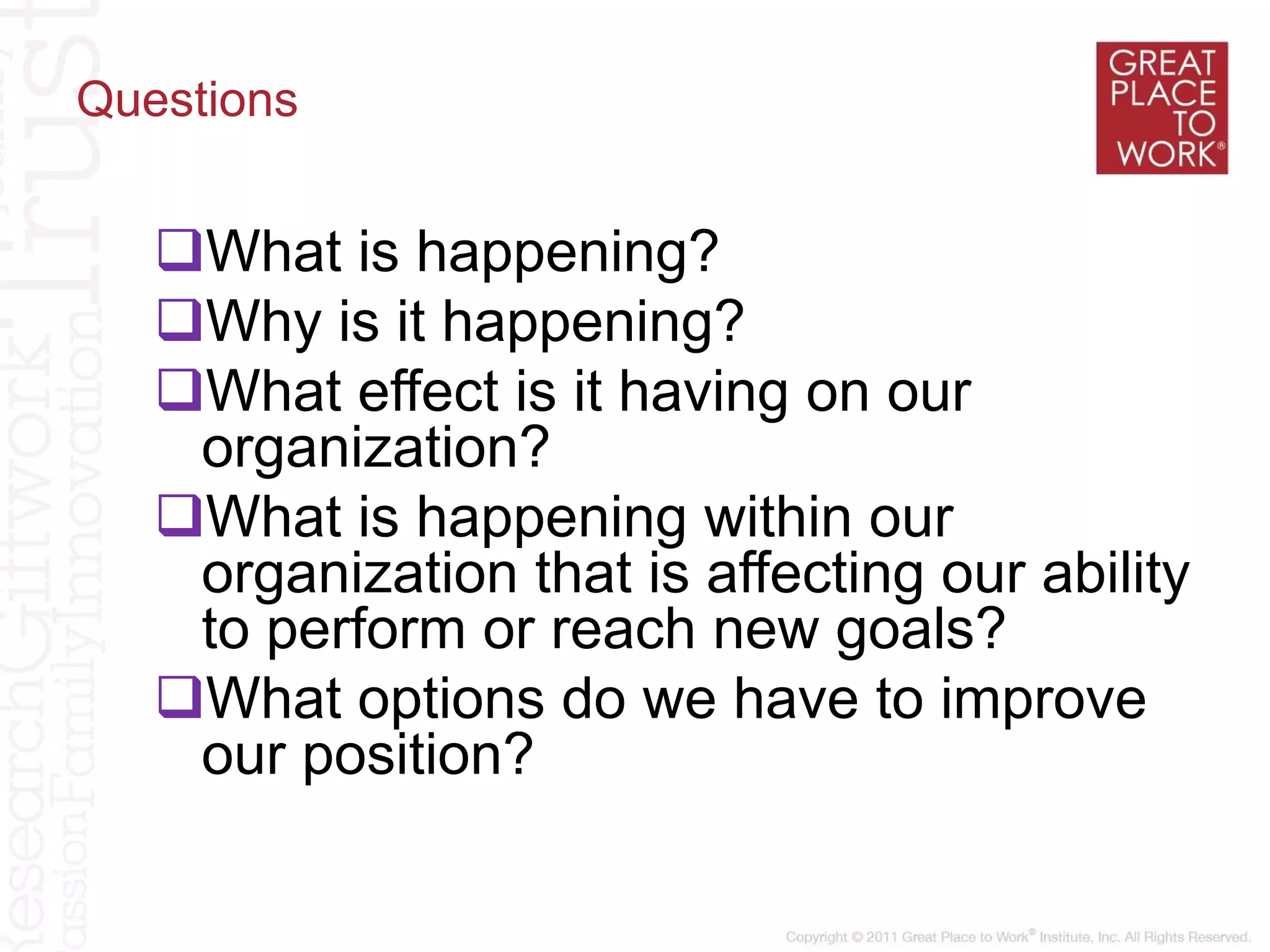
What is happening?
Why is it happening?
What effect is it having on our
organization?
What is happening within our
organization that is affecting our ability
to perform or reach new goals?
What options do we have to improve
our position?
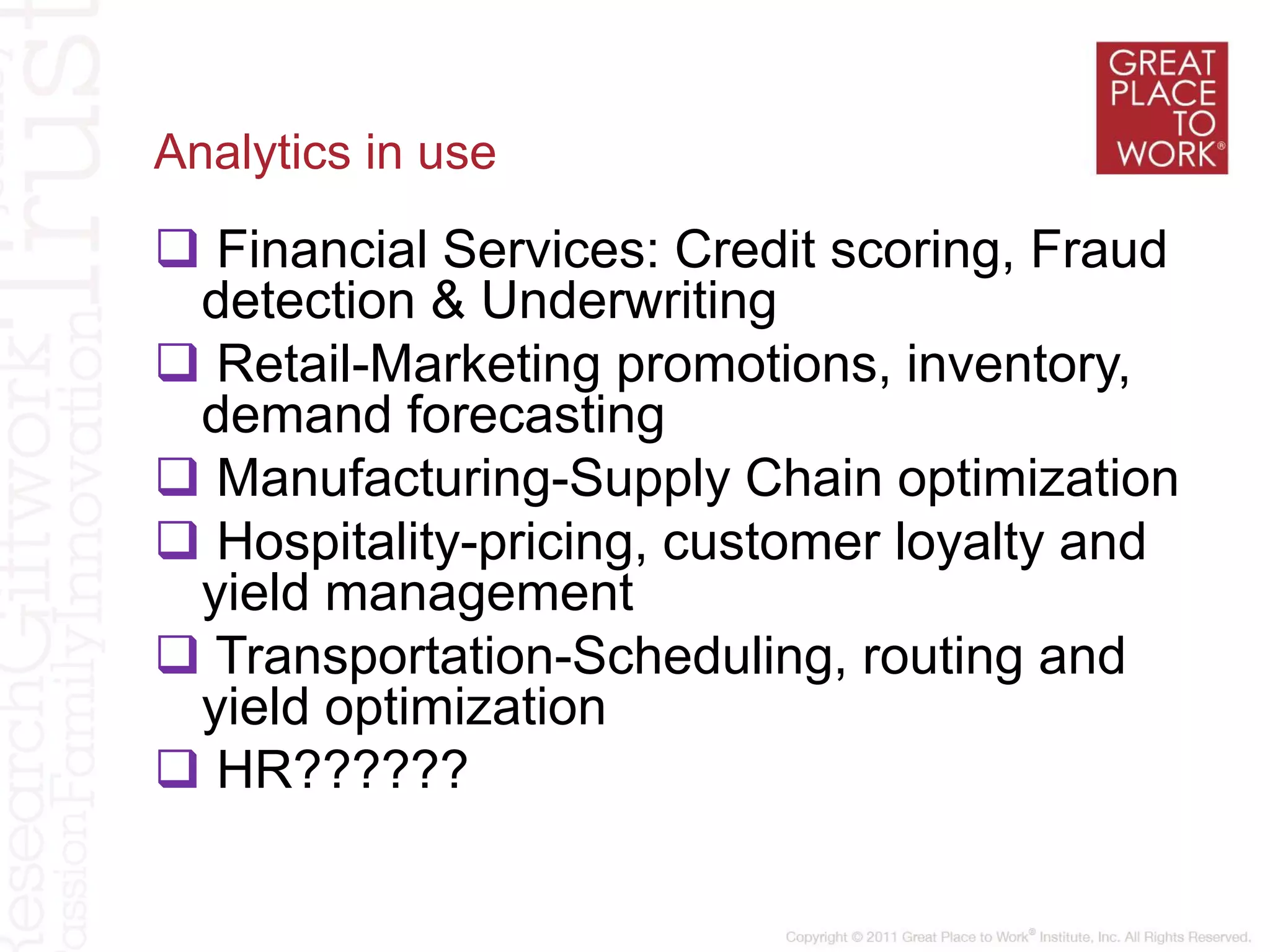
Analytics in use
 Financial Services: Credit scoring, Fraud
detection & Underwriting
 Retail-Marketing promotions, inventory,
demand forecasting
 Manufacturing-Supply Chain optimization
 Hospitality-pricing, customer loyalty and
yield management
 Transportation-Scheduling, routing and
yield optimization
 HR??????
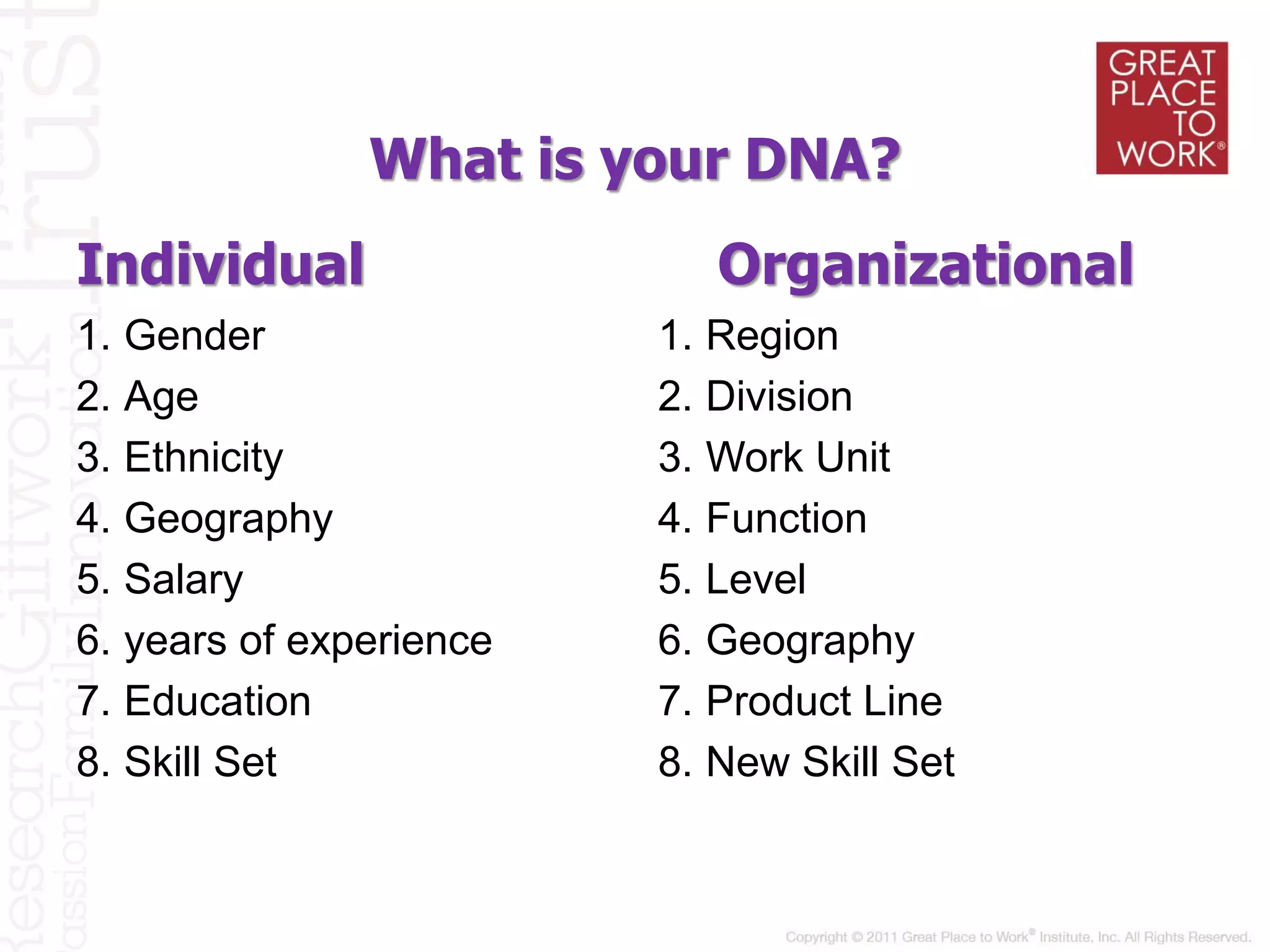
What is your DNA?
Individual
1. Gender
2. Age
3. Ethnicity
4. Geography
5. Salary
6. years of experience
7. Education
8. Skill Set
Organizational
1. Region
2. Division
3. Work Unit
4. Function
5. Level
6. Geography
7. Product Line
8. New Skill Set
Enhancing workforce performance
1.An adaptable workforce that can rapidly
respond to changes in the outside
market
2.Leadership to guide individuals through
change and deliver results
3.An integrated talent management
model using data and information to
deliver strategic insights and measure
success.
Needs for the New Global Economy
1.Developing an adaptable workforce
– A critical capability
2.Revealing the leadership gap –
Future growth at risk
3.Cracking the code for talent
4.Driving growth through workforce
analytics.
Developing an adaptable workforce –
A critical capability
1.Predicting the future skill requirements
2.Effectively identify and locate experts
3.Collaborate across their organizations,
connecting individuals and groups that
are separated by organizational
boundaries, time zones and cultures.
Leadership gap – Future growth at risk
1.75% of surveyed see developing
future leaders as a critical issue.
2.Identify, develop and empower the
next generation of leaders
3.Broad range of opportunities from
across the organization
4.Matching potential leaders with
mentors early in their career
Cracking the code for talent
1.Ease and speed to change jobs
2.4.5 years per job
3.Different expectation of workforce
levels
4.Focus on the employee-lifecycle
5.Segmenting and targeting talent
6.Alternative labor pools
7.Corporate alumni
8.Social Networking
Driving Growth through Workforce
Analytics
1. HR and the business units to
engage
2. 2-way ongoing dialogue about
strategic workforce investments and
transformation programs.
3. Linking human capital information
with data from Sales, Finance and
other related departments
Employee Engagement
1.Workplace culture is the key to
business success.
2.Where are your engagement levels
headed?
3.Companies who focus on culture
experience 246% more employment
growth and level of talent
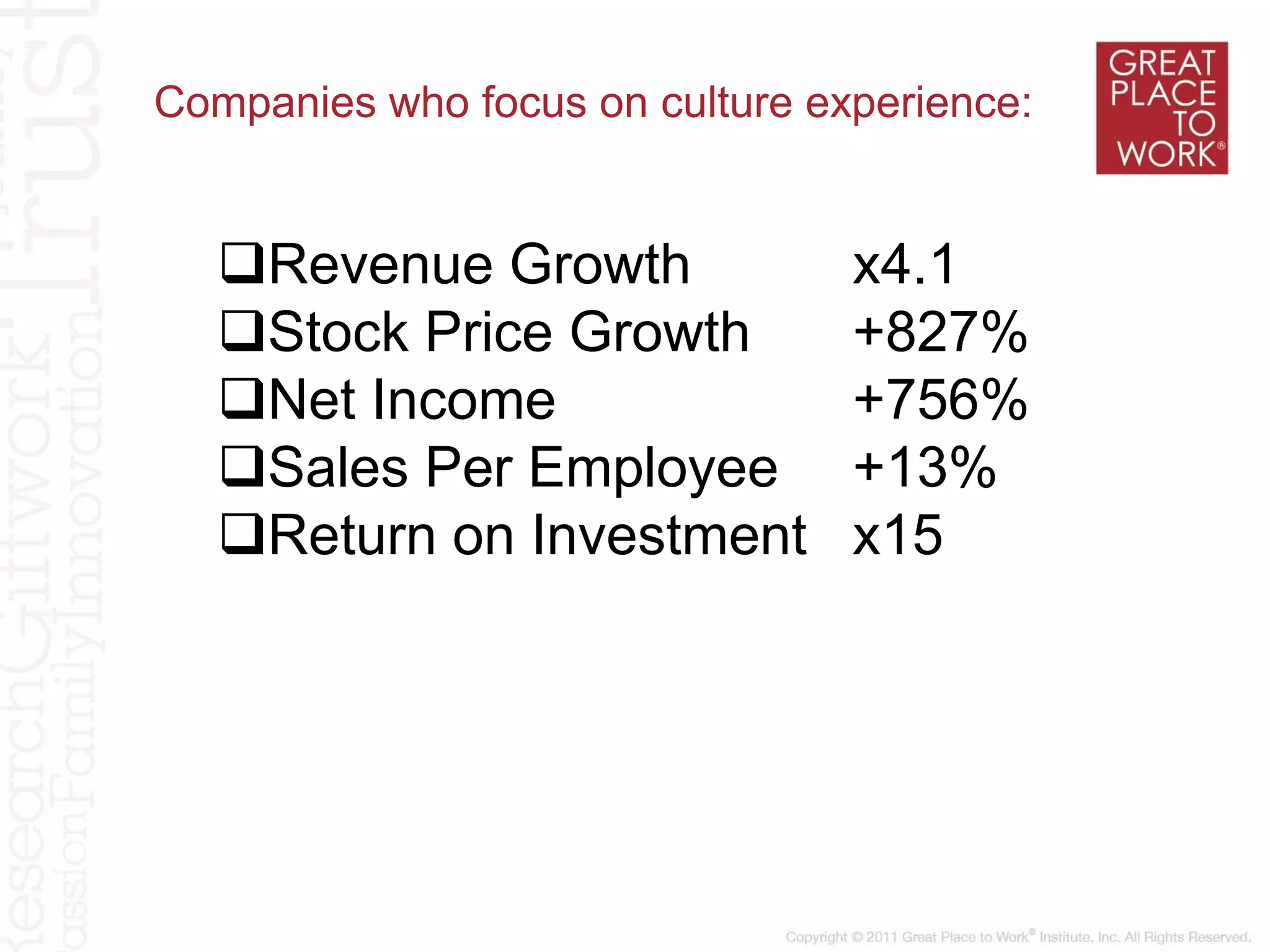
Companies who focus on culture experience:
Revenue Growth x4.1
Stock Price Growth +827%
Net Income +756%
Sales Per Employee +13%
Return on Investment x15
Major Themes of Analytics
Become more data-driven in our actions and
decisions.
Guide our organizations to build on success
and become more effective.
Build “meaningful” analytics and not measure
what is convenient or easy to measure.
Focus on practical uses, real world examples
and outcomes, not abstract or conceptual
treatments of human capital analytics.
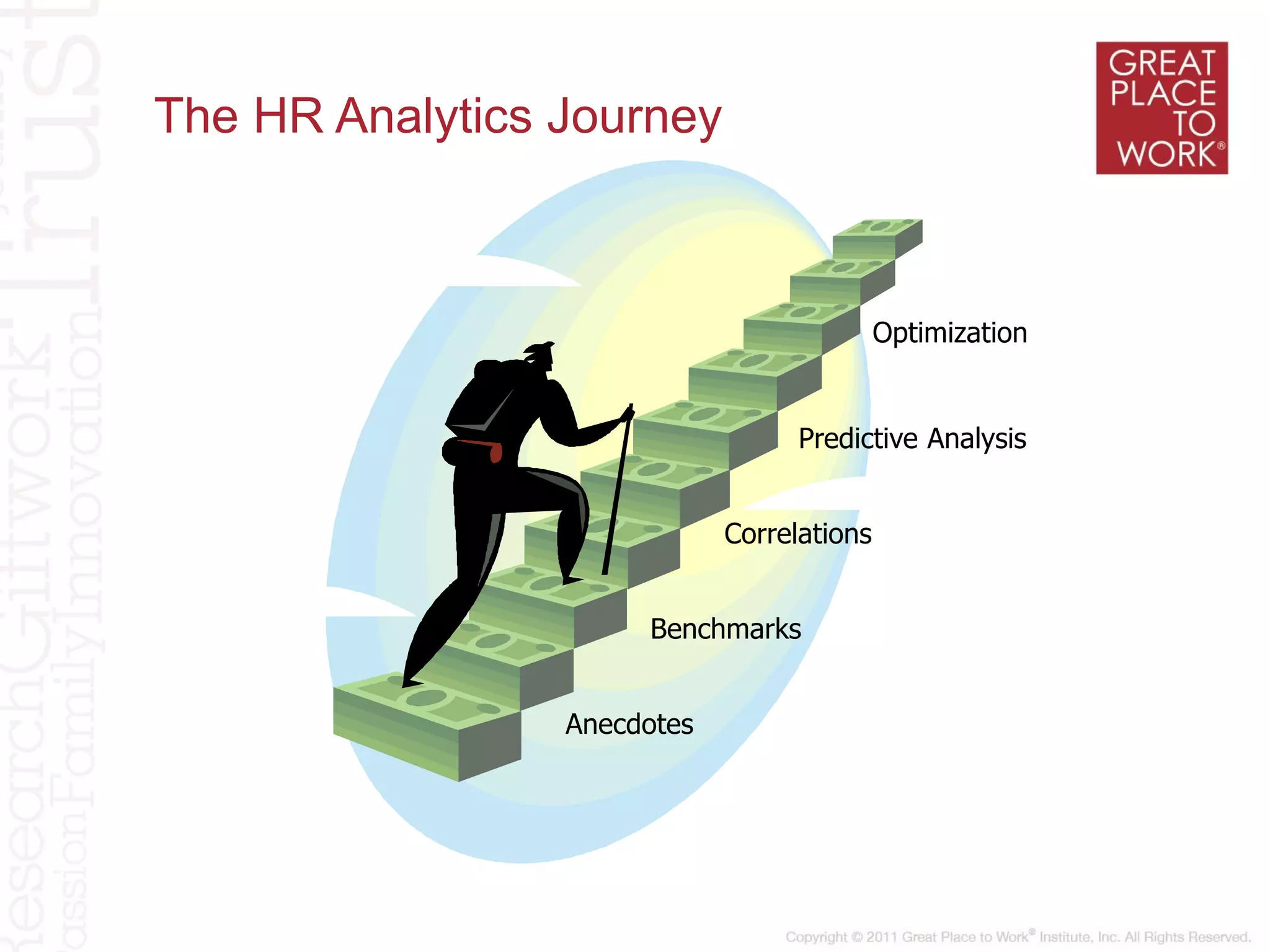
The HR Analytics Journey
Anecdotes
Benchmarks
Predictive Analysis
Correlations
Optimization
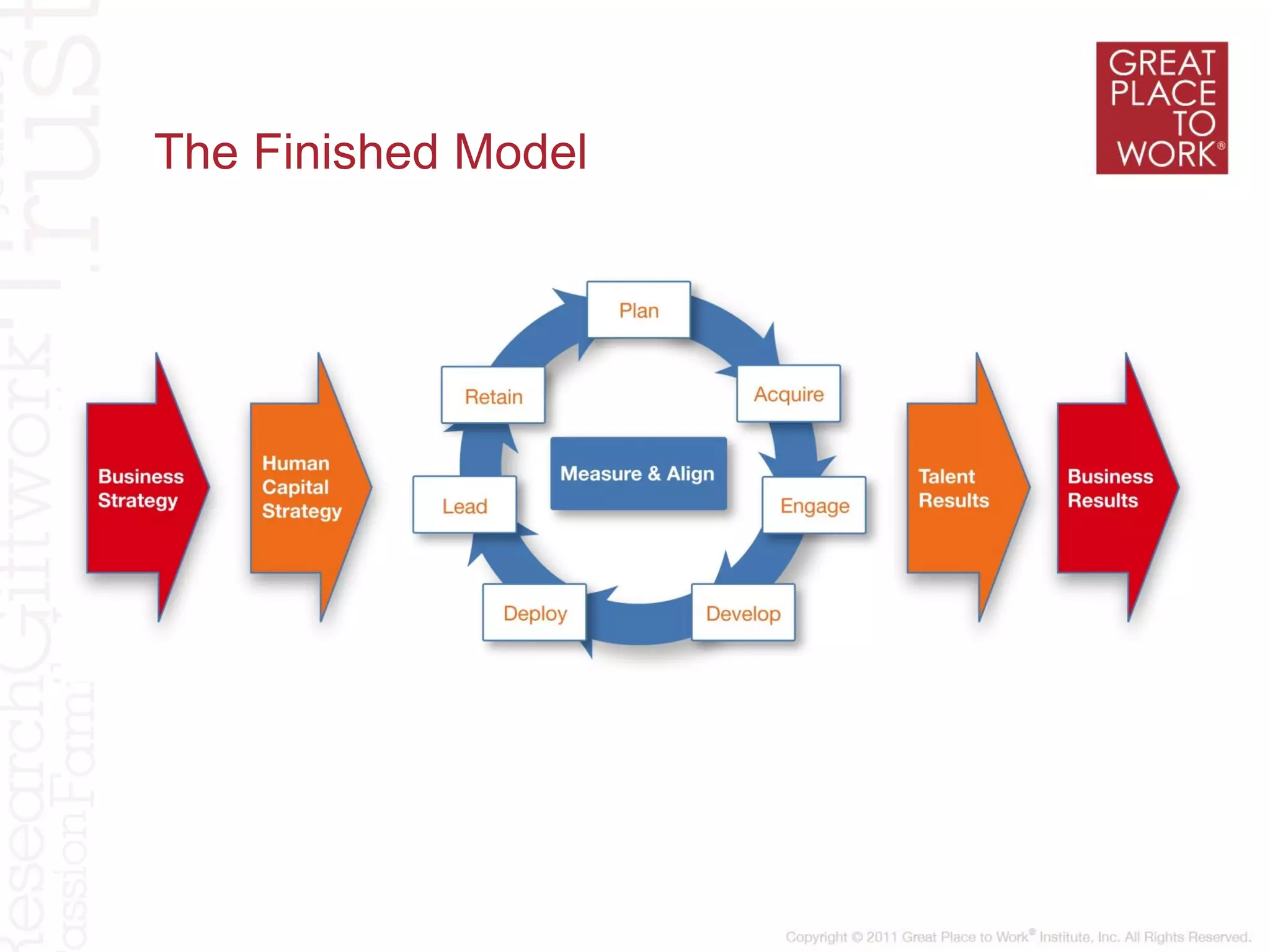
The Finished Model
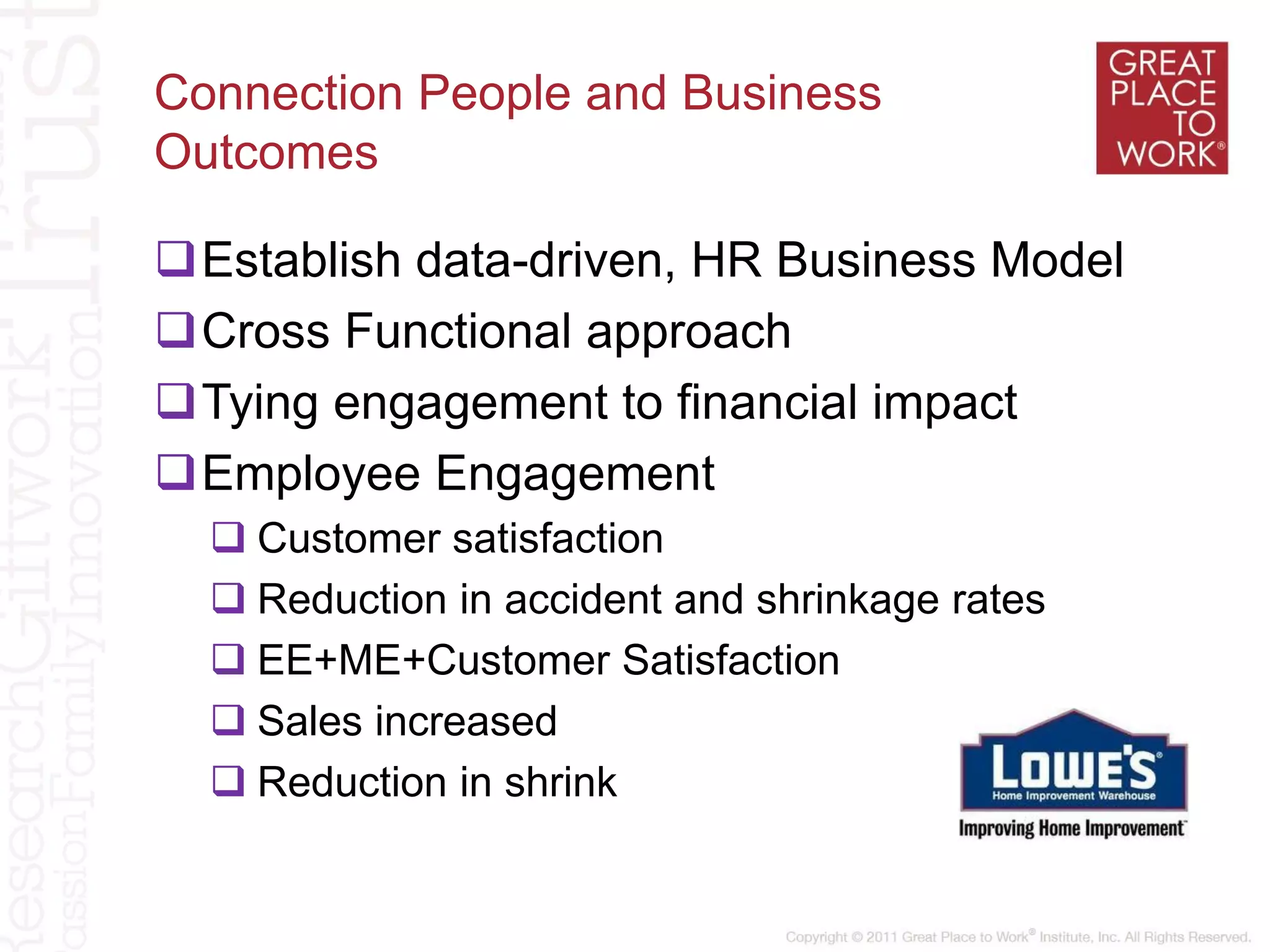
Connection People and Business
Outcomes
Establish data-driven, HR Business Model
Cross Functional approach
Tying engagement to financial impact
Employee Engagement
 Customer satisfaction
 Reduction in accident and shrinkage rates
 EE+ME+Customer Satisfaction
 Sales increased
 Reduction in shrink
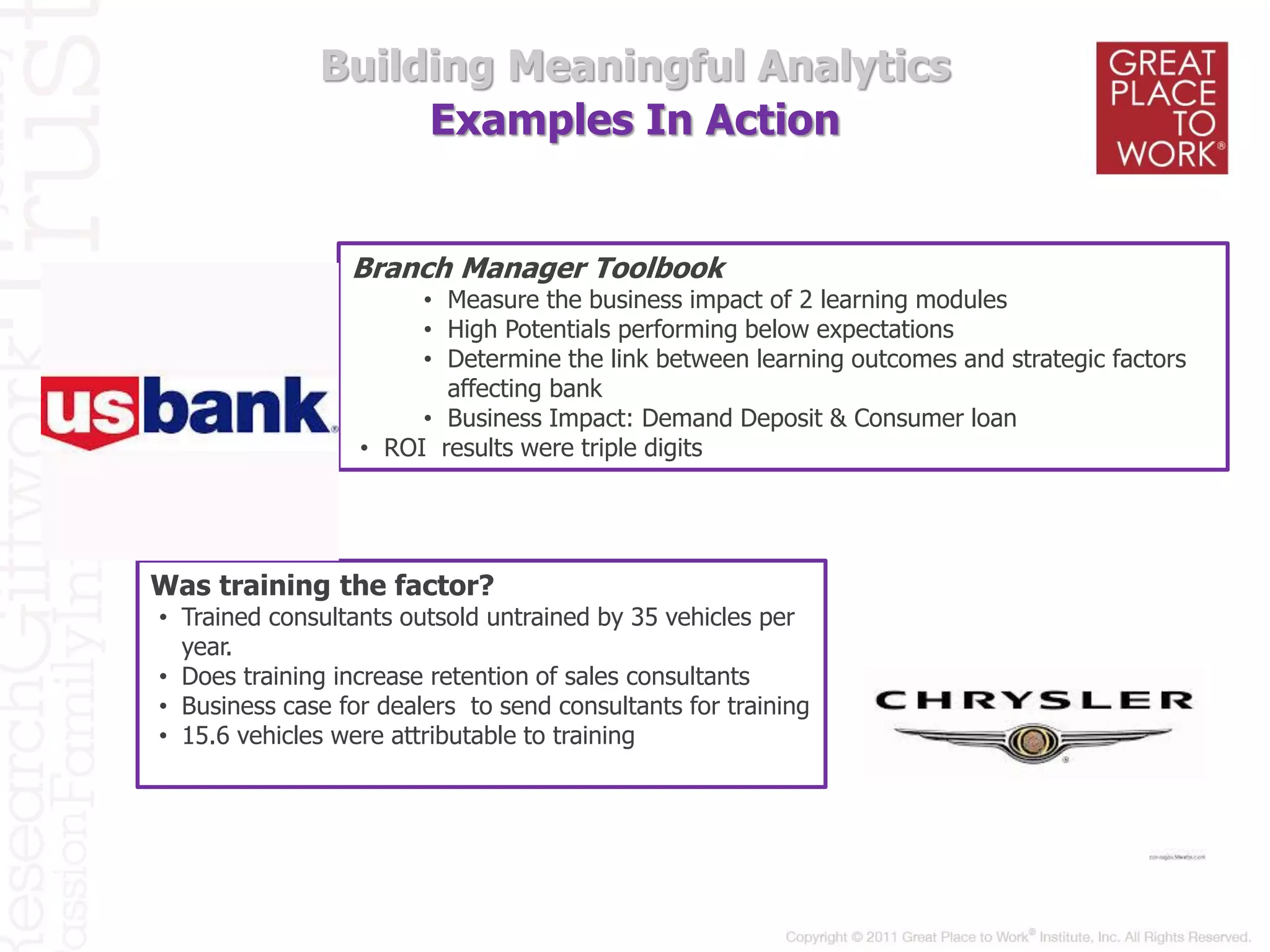
Examples In Action
Branch Manager Toolbook
• Measure the business impact of 2 learning modules
• High Potentials performing below expectations
• Determine the link between learning outcomes and strategic factors
affecting bank
• Business Impact: Demand Deposit & Consumer loan
• ROI results were triple digits
Was training the factor?
• Trained consultants outsold untrained by 35 vehicles per
year.
• Does training increase retention of sales consultants
• Business case for dealers to send consultants for training
• 15.6 vehicles were attributable to training
Building Meaningful Analytics
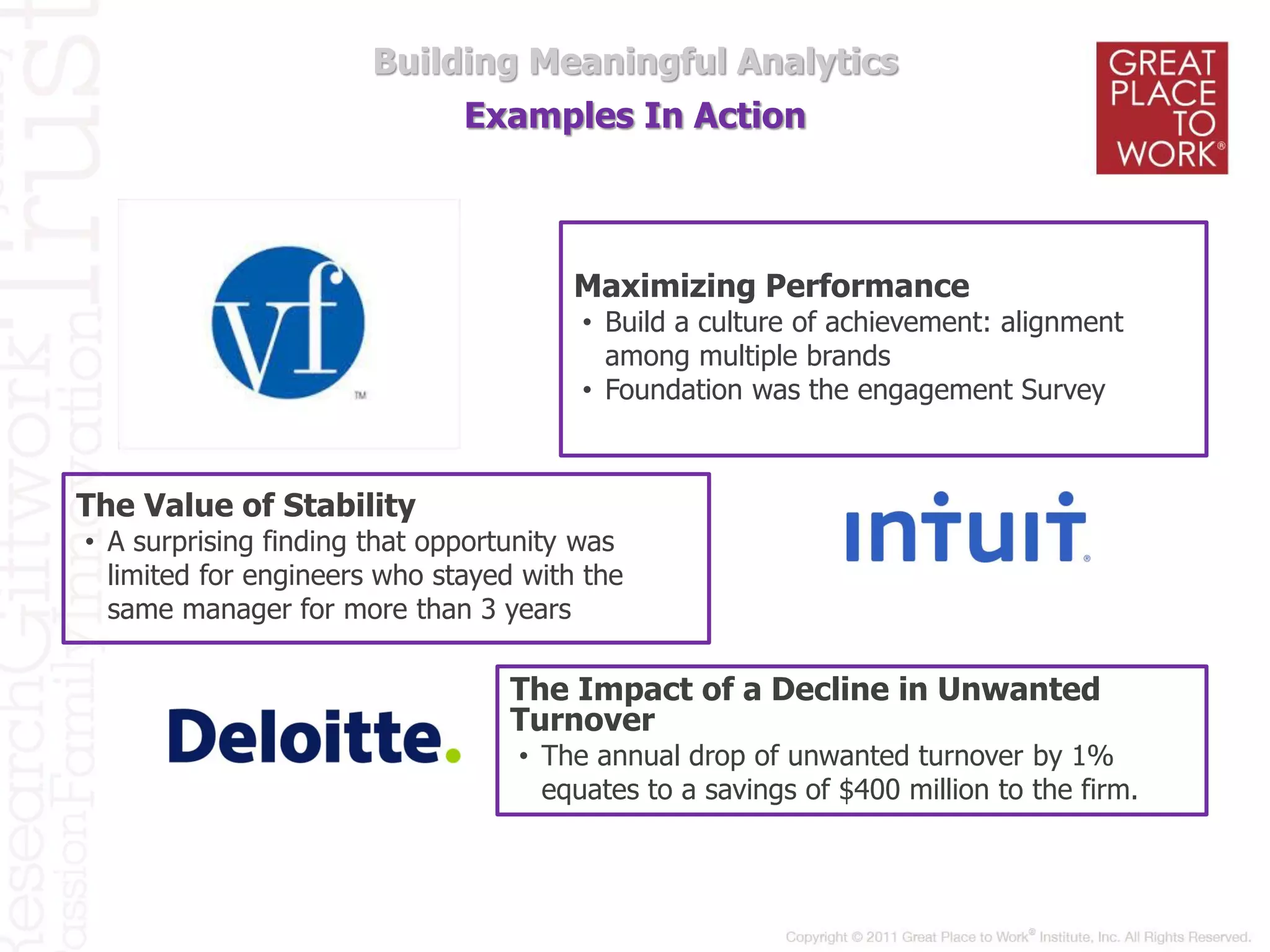
Examples In Action
Building Meaningful Analytics
Maximizing Performance
• Build a culture of achievement: alignment
among multiple brands
• Foundation was the engagement Survey
The Value of Stability
• A surprising finding that opportunity was
limited for engineers who stayed with the
same manager for more than 3 years
The Impact of a Decline in Unwanted
Turnover
• The annual drop of unwanted turnover by 1%
equates to a savings of $400 million to the firm.
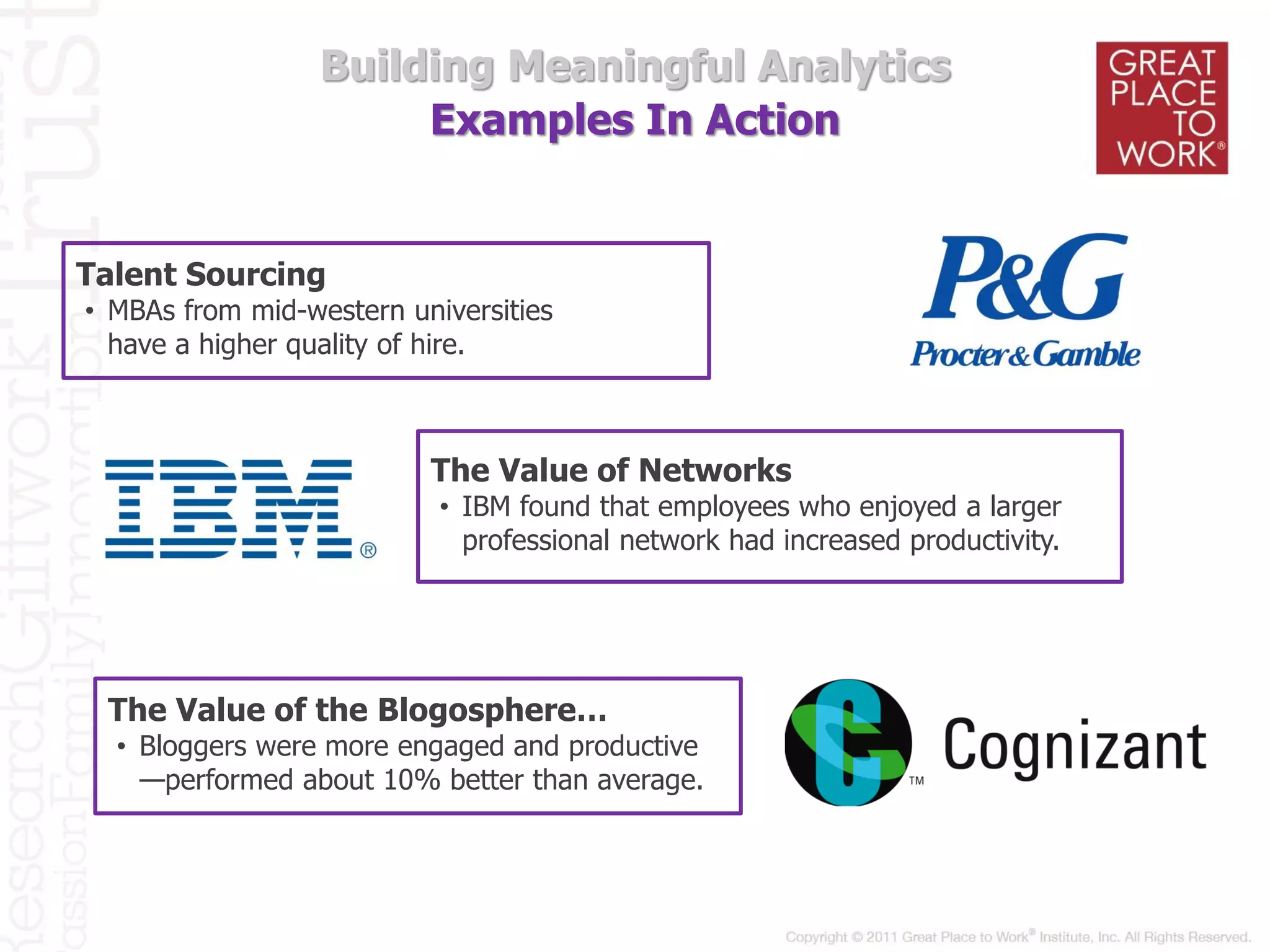
Examples In Action
Building Meaningful Analytics
Talent Sourcing
• MBAs from mid-western universities
have a higher quality of hire.
The Value of Networks
• IBM found that employees who enjoyed a larger
professional network had increased productivity.
The Value of the Blogosphere…
• Bloggers were more engaged and productive
—performed about 10% better than average.
Insert Cognizant Logo
Insert IBM Logo
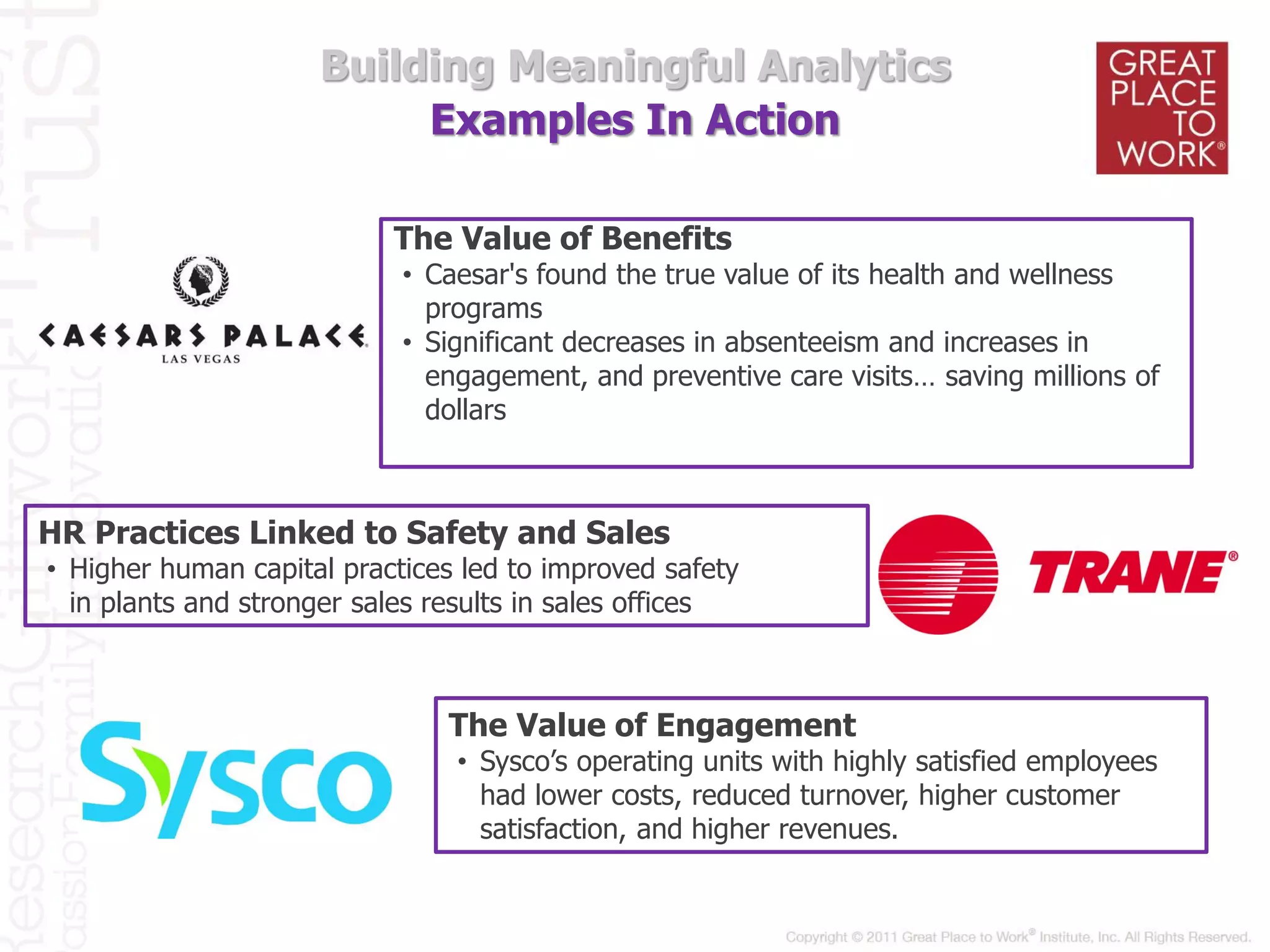
Examples In Action
Building Meaningful Analytics
Insert Caesar's Logo
The Value of Benefits
• Caesar's found the true value of its health and wellness
programs
• Significant decreases in absenteeism and increases in
engagement, and preventive care visits… saving millions of
dollars
HR Practices Linked to Safety and Sales
• Higher human capital practices led to improved safety
in plants and stronger sales results in sales offices
The Value of Engagement
• Sysco’s operating units with highly satisfied employees
had lower costs, reduced turnover, higher customer
satisfaction, and higher revenues.
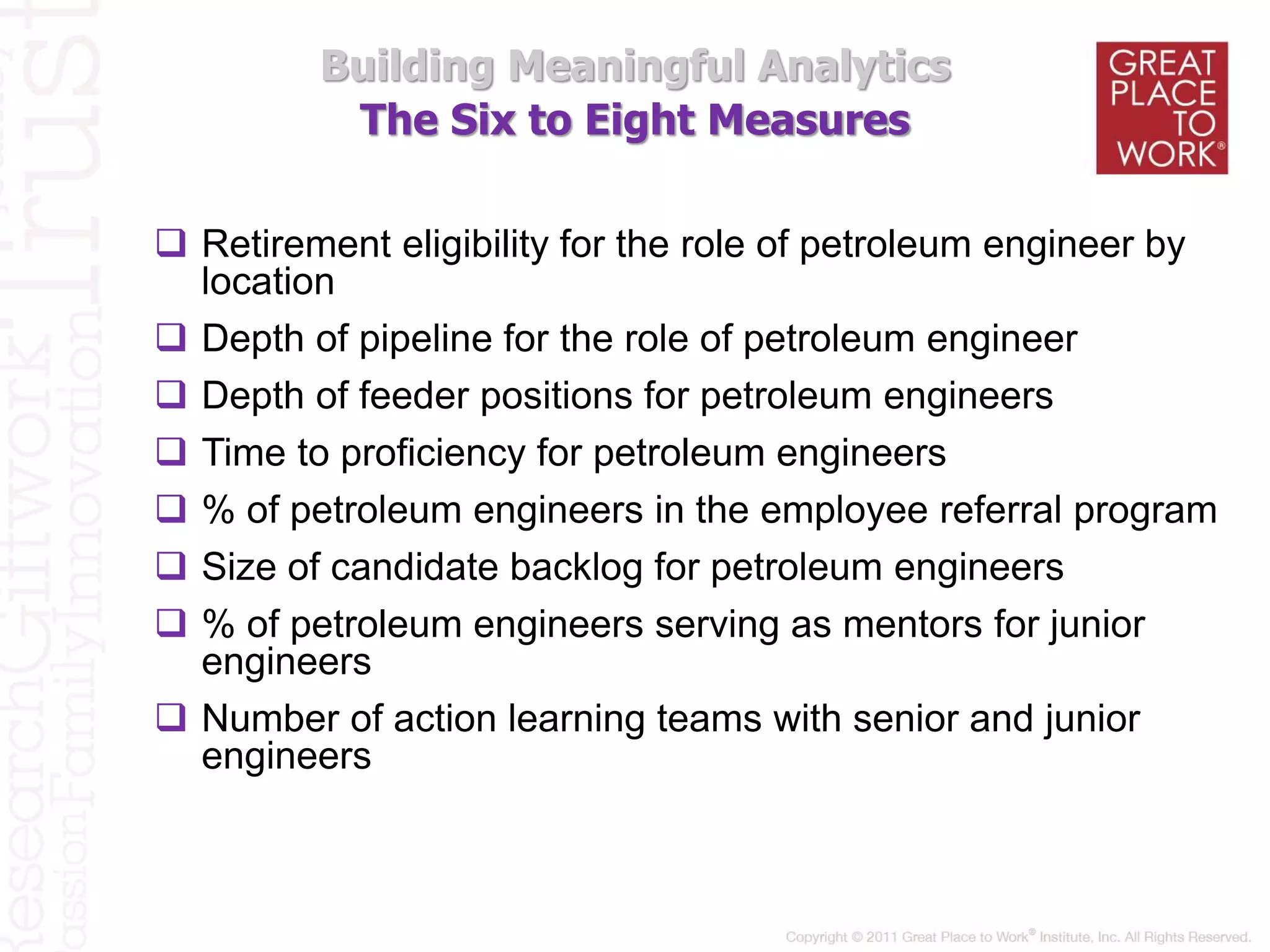
The Six to Eight Measures
Building Meaningful Analytics
 Retirement eligibility for the role of petroleum engineer by
location
 Depth of pipeline for the role of petroleum engineer
 Depth of feeder positions for petroleum engineers
 Time to proficiency for petroleum engineers
 % of petroleum engineers in the employee referral program
 Size of candidate backlog for petroleum engineers
 % of petroleum engineers serving as mentors for junior
engineers
 Number of action learning teams with senior and junior
engineers
Q & A
THANK YOU

Strategic Workforce Planning: The Key to Organisational Success

  • 1.
    STRATEGIC WORKFORCE PLANNING: THEKEY TO ORGANISATIONAL SUCCESS Ron Thomas CEO, Great Place to Work - Gulf
  • 2.
    Questions What is happening? Whyis it happening? What effect is it having on our organization? What is happening within our organization that is affecting our ability to perform or reach new goals? What options do we have to improve our position?
  • 3.
    Analytics in use Financial Services: Credit scoring, Fraud detection & Underwriting  Retail-Marketing promotions, inventory, demand forecasting  Manufacturing-Supply Chain optimization  Hospitality-pricing, customer loyalty and yield management  Transportation-Scheduling, routing and yield optimization  HR??????
  • 4.
    What is yourDNA? Individual 1. Gender 2. Age 3. Ethnicity 4. Geography 5. Salary 6. years of experience 7. Education 8. Skill Set Organizational 1. Region 2. Division 3. Work Unit 4. Function 5. Level 6. Geography 7. Product Line 8. New Skill Set
  • 5.
    Enhancing workforce performance 1.Anadaptable workforce that can rapidly respond to changes in the outside market 2.Leadership to guide individuals through change and deliver results 3.An integrated talent management model using data and information to deliver strategic insights and measure success.
  • 6.
    Needs for theNew Global Economy 1.Developing an adaptable workforce – A critical capability 2.Revealing the leadership gap – Future growth at risk 3.Cracking the code for talent 4.Driving growth through workforce analytics.
  • 7.
    Developing an adaptableworkforce – A critical capability 1.Predicting the future skill requirements 2.Effectively identify and locate experts 3.Collaborate across their organizations, connecting individuals and groups that are separated by organizational boundaries, time zones and cultures.
  • 8.
    Leadership gap –Future growth at risk 1.75% of surveyed see developing future leaders as a critical issue. 2.Identify, develop and empower the next generation of leaders 3.Broad range of opportunities from across the organization 4.Matching potential leaders with mentors early in their career
  • 9.
    Cracking the codefor talent 1.Ease and speed to change jobs 2.4.5 years per job 3.Different expectation of workforce levels 4.Focus on the employee-lifecycle 5.Segmenting and targeting talent 6.Alternative labor pools 7.Corporate alumni 8.Social Networking
  • 10.
    Driving Growth throughWorkforce Analytics 1. HR and the business units to engage 2. 2-way ongoing dialogue about strategic workforce investments and transformation programs. 3. Linking human capital information with data from Sales, Finance and other related departments
  • 11.
    Employee Engagement 1.Workplace cultureis the key to business success. 2.Where are your engagement levels headed? 3.Companies who focus on culture experience 246% more employment growth and level of talent
  • 12.
    Companies who focuson culture experience: Revenue Growth x4.1 Stock Price Growth +827% Net Income +756% Sales Per Employee +13% Return on Investment x15
  • 13.
    Major Themes ofAnalytics Become more data-driven in our actions and decisions. Guide our organizations to build on success and become more effective. Build “meaningful” analytics and not measure what is convenient or easy to measure. Focus on practical uses, real world examples and outcomes, not abstract or conceptual treatments of human capital analytics.
  • 14.
    The HR AnalyticsJourney Anecdotes Benchmarks Predictive Analysis Correlations Optimization
  • 15.
  • 16.
    Connection People andBusiness Outcomes Establish data-driven, HR Business Model Cross Functional approach Tying engagement to financial impact Employee Engagement  Customer satisfaction  Reduction in accident and shrinkage rates  EE+ME+Customer Satisfaction  Sales increased  Reduction in shrink
  • 17.
    Examples In Action BranchManager Toolbook • Measure the business impact of 2 learning modules • High Potentials performing below expectations • Determine the link between learning outcomes and strategic factors affecting bank • Business Impact: Demand Deposit & Consumer loan • ROI results were triple digits Was training the factor? • Trained consultants outsold untrained by 35 vehicles per year. • Does training increase retention of sales consultants • Business case for dealers to send consultants for training • 15.6 vehicles were attributable to training Building Meaningful Analytics
  • 18.
    Examples In Action BuildingMeaningful Analytics Maximizing Performance • Build a culture of achievement: alignment among multiple brands • Foundation was the engagement Survey The Value of Stability • A surprising finding that opportunity was limited for engineers who stayed with the same manager for more than 3 years The Impact of a Decline in Unwanted Turnover • The annual drop of unwanted turnover by 1% equates to a savings of $400 million to the firm.
  • 19.
    Examples In Action BuildingMeaningful Analytics Talent Sourcing • MBAs from mid-western universities have a higher quality of hire. The Value of Networks • IBM found that employees who enjoyed a larger professional network had increased productivity. The Value of the Blogosphere… • Bloggers were more engaged and productive —performed about 10% better than average. Insert Cognizant Logo Insert IBM Logo
  • 20.
    Examples In Action BuildingMeaningful Analytics Insert Caesar's Logo The Value of Benefits • Caesar's found the true value of its health and wellness programs • Significant decreases in absenteeism and increases in engagement, and preventive care visits… saving millions of dollars HR Practices Linked to Safety and Sales • Higher human capital practices led to improved safety in plants and stronger sales results in sales offices The Value of Engagement • Sysco’s operating units with highly satisfied employees had lower costs, reduced turnover, higher customer satisfaction, and higher revenues.
  • 21.
    The Six toEight Measures Building Meaningful Analytics  Retirement eligibility for the role of petroleum engineer by location  Depth of pipeline for the role of petroleum engineer  Depth of feeder positions for petroleum engineers  Time to proficiency for petroleum engineers  % of petroleum engineers in the employee referral program  Size of candidate backlog for petroleum engineers  % of petroleum engineers serving as mentors for junior engineers  Number of action learning teams with senior and junior engineers
  • 22.