Module 2
The Nine Elements of
Digital Citizenship

2
LEARNING OBJECTIVES

-Learn how to advocate, model, and teach safe,
legal, and ethical use of digital information and
technology.
-Learn how to address the diverse needs of all
learners by using learner-centered strategies
and providing equitable access to appropriate
digital tools and resources.

SOURCE: International Society for
Technology in Education

3
LEARNING OBJECTIVES
-Learn how to promote and model digital
etiquette and responsible social interactions
related to the use of technology and information.
- Learn how to develop and model cultural
understanding and global awareness by
engaging with colleagues and students of other
cultures using digital-age communication and
collaboration tools.
SOURCE: International Society for
Technology in Education
4
What is a citizen?
DEFINITION

“...a native or naturalized
person who owes allegiance to
a larger state or collective and
who shares in the rights and
responsibilities afforded all
members of that collective.”
Ribble, 2011
5
What is digital citizenship?
DEFINITION

“Digital citizenship can be
described as the norms of
appropriate, responsible
behavior with regard to
technology use.”
Ribble, 2011

6
Characteristics of
Digital Citizenship
-Relevant to everyone: teachers,
students, parents.
-Doesn’t stop at the classroom
door.

7
Nine Elements of Digital
Citizenship
1. DIGITAL ACCESS
- Full electronic participation in
society.

SOURCE: International Society for
Technology in Education
8
Nine Elements of Digital
Citizenship
2. DIGITAL COMMERCE
- Electronic buying and selling of
goods.

SOURCE: International Society for
Technology in Education
9
Nine Elements of Digital
Citizenship
3. DIGITAL
COMMUNICATION
- Electronic exchange of
information.
SOURCE: International Society for
Technology in Education
10
Nine Elements of Digital
Citizenship
4. DIGITAL LITERACY
- Process of teaching and
learning about technology & the
use of technology.
SOURCE: International Society for
Technology in Education
11
Nine Elements of Digital
Citizenship
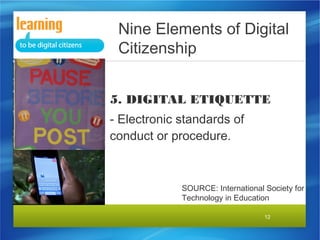
5. DIGITAL ETIQUETTE
- Electronic standards of
conduct or procedure.

SOURCE: International Society for
Technology in Education
12
Nine Elements of Digital
Citizenship
6. DIGITAL LAW
- Electronic responsibility for
actions or deeds.

SOURCE: International Society for
Technology in Education
13
Nine Elements of Digital
Citizenship
7. DIGITAL RIGHTS &
RESPONSIBILITIES
- Those requirements and
freedoms extended to everyone
in a digital world.
SOURCE: International Society for
Technology in Education
14
Nine Elements of Digital
Citizenship
8. DIGITAL HEALTH &
WELLNESS
- Physical and psychological
well-being in a digital technology
world.
SOURCE: International Society for
Technology in Education
15
Nine Elements of Digital
Citizenship
9. DIGITAL SECURITY
(Self-Protection)
- Electronic precautions to
guarantee safety.

SOURCE: International Society for
Technology in Education
16
Nine Elements of Digital
Citizenship
Mike Ribble, author of Digital Citizenship in
Schools recommends teaching this content at all
grade levels, focusing on:

- Awareness
- Guided Practice
- Modeling/Demonstration
- Feedback/Analysis

17
2.0 nine elements_slideshow

2.0 nine elements_slideshow

  • 2.
    Module 2 The NineElements of Digital Citizenship 2
  • 3.
    LEARNING OBJECTIVES -Learn howto advocate, model, and teach safe, legal, and ethical use of digital information and technology. -Learn how to address the diverse needs of all learners by using learner-centered strategies and providing equitable access to appropriate digital tools and resources. SOURCE: International Society for Technology in Education 3
  • 4.
    LEARNING OBJECTIVES -Learn howto promote and model digital etiquette and responsible social interactions related to the use of technology and information. - Learn how to develop and model cultural understanding and global awareness by engaging with colleagues and students of other cultures using digital-age communication and collaboration tools. SOURCE: International Society for Technology in Education 4
  • 5.
    What is acitizen? DEFINITION “...a native or naturalized person who owes allegiance to a larger state or collective and who shares in the rights and responsibilities afforded all members of that collective.” Ribble, 2011 5
  • 6.
    What is digitalcitizenship? DEFINITION “Digital citizenship can be described as the norms of appropriate, responsible behavior with regard to technology use.” Ribble, 2011 6
  • 7.
    Characteristics of Digital Citizenship -Relevantto everyone: teachers, students, parents. -Doesn’t stop at the classroom door. 7
  • 8.
    Nine Elements ofDigital Citizenship 1. DIGITAL ACCESS - Full electronic participation in society. SOURCE: International Society for Technology in Education 8
  • 9.
    Nine Elements ofDigital Citizenship 2. DIGITAL COMMERCE - Electronic buying and selling of goods. SOURCE: International Society for Technology in Education 9
  • 10.
    Nine Elements ofDigital Citizenship 3. DIGITAL COMMUNICATION - Electronic exchange of information. SOURCE: International Society for Technology in Education 10
  • 11.
    Nine Elements ofDigital Citizenship 4. DIGITAL LITERACY - Process of teaching and learning about technology & the use of technology. SOURCE: International Society for Technology in Education 11
  • 12.
    Nine Elements ofDigital Citizenship 5. DIGITAL ETIQUETTE - Electronic standards of conduct or procedure. SOURCE: International Society for Technology in Education 12
  • 13.
    Nine Elements ofDigital Citizenship 6. DIGITAL LAW - Electronic responsibility for actions or deeds. SOURCE: International Society for Technology in Education 13
  • 14.
    Nine Elements ofDigital Citizenship 7. DIGITAL RIGHTS & RESPONSIBILITIES - Those requirements and freedoms extended to everyone in a digital world. SOURCE: International Society for Technology in Education 14
  • 15.
    Nine Elements ofDigital Citizenship 8. DIGITAL HEALTH & WELLNESS - Physical and psychological well-being in a digital technology world. SOURCE: International Society for Technology in Education 15
  • 16.
    Nine Elements ofDigital Citizenship 9. DIGITAL SECURITY (Self-Protection) - Electronic precautions to guarantee safety. SOURCE: International Society for Technology in Education 16
  • 17.
    Nine Elements ofDigital Citizenship Mike Ribble, author of Digital Citizenship in Schools recommends teaching this content at all grade levels, focusing on: - Awareness - Guided Practice - Modeling/Demonstration - Feedback/Analysis 17

Editor's Notes

  • #9 FOCUS QUESTION: Can all users participate in a digital society at acceptable levels if they choose?
  • #10 FOCUS QUESTION: Do users have the knowledge and protection to buy and sell in a digital world?
  • #11 FOCUS QUESTION: Do users understand the various digital communication methods and when each is appropriate?
  • #12 FOCUS QUESTION: Have users taken the time to learn about digital technologies and do they share that knowledge with others?
  • #13 FOCUS QUESTION: Do users consider others when using digital technologies?
  • #14 FOCUS QUESTION: Are users aware of laws (rules, policies) that govern the use of digital technologies?
  • #15 FOCUS QUESTION: Are users ready to protect the rights of others and to defend their own digital rights?
  • #16 FOCUS QUESTION: Do users consider the risks (both physical and psychological) when using digital technologies?
  • #17 FOCUS QUESTION: Do users take the time to protect their information while taking precautions to protect others’ data as well?
  • #18 SOURE: This is a four-stage reflection model for teaching digital citizenship, taken from Digital Citizenship in Schools, Second Edition (Ribble, 2011)