Download to read offline
![the “quantitative history of literature”
Franco Moretti, director of Stanford Literary Lab, presented the idea of Literary Evolution.
Within the discipline of ‘digital humanities’, Moretti created the “quantitative history of literature”. In his book Graphs, Maps,
Trees: Abstract Models for a Literary History (2005), Morettti used a quantitative approach to the study of literature that
includes historical and comparative contexts and charts a cultural geography for literary genres.
Moretti’s other books include Signs Taken for Wonders (1983), Modern Epic (1995) and Atlas of the European Novel 1800-
1900 (1998).
Moretti is at work on a five-volume collaborative study of the novel throughout all history and in all forms. In his triptych
published in New Left Review —‘Graphs’, ‘Maps’ and ‘Trees’, with subtitle ‘Abstract Models for Literary History’, published
later as book, Moretti offers intriguing and innovative approach based on the quantitative history, geography and
evolutionary biology.
In his essay „On Literary Evolution”, Мoretti uses evolution as a metaphor, linking evolutionary model with this of Darvin.
Moretti ended his essay „Maps” with the quotation from D’Arcy Wentworth Thompson’s On Growth and Form: “We rise from
a conception of form to an understanding of the forces which gave rise to it [. . .] and in the comparison of kindred forms [. . .]
we discern the magnitude and the direction of the forces which we have sufficed to convert the one form into the other”.
(Thompson, D’Arcy Wentworth. On Growth and Form. Macmillan, 1943.)
In his last part from the triptych ‘Trees’, Moretti discusses the morphological tree of evolution. He claims that the
evolutionary bibliography could be understood as prototype evolutionary science and to think biology in the terms of
bibliorgraphy. For Moretti the philogenesis is the base of bibliogenesis.](https://image.slidesharecdn.com/21-3-atopologicalapproachtoreadingpracticesinthe-181126134607/75/21-3-a-topological-approach-to-reading-practices-in-the-13-2048.jpg)
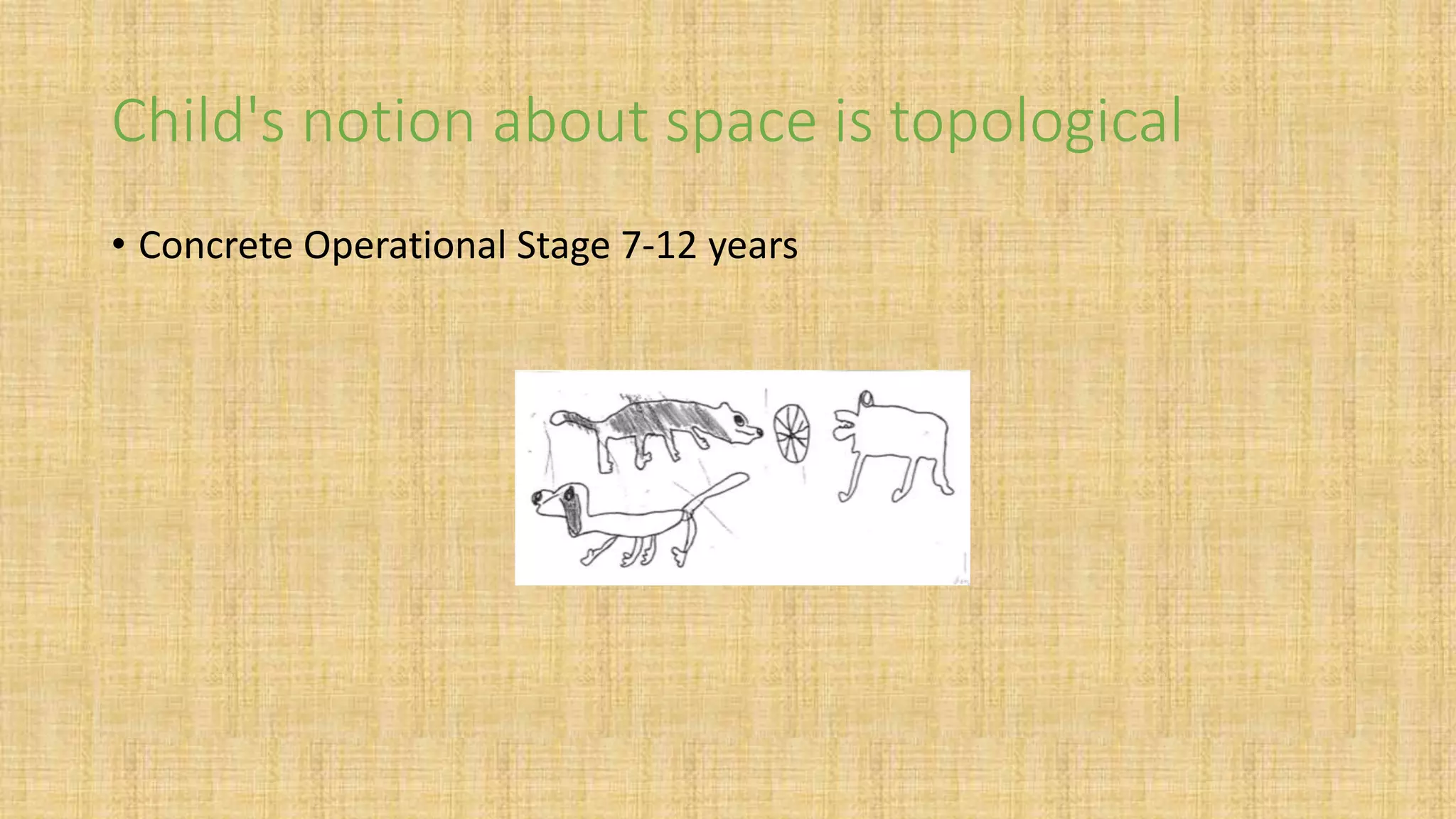
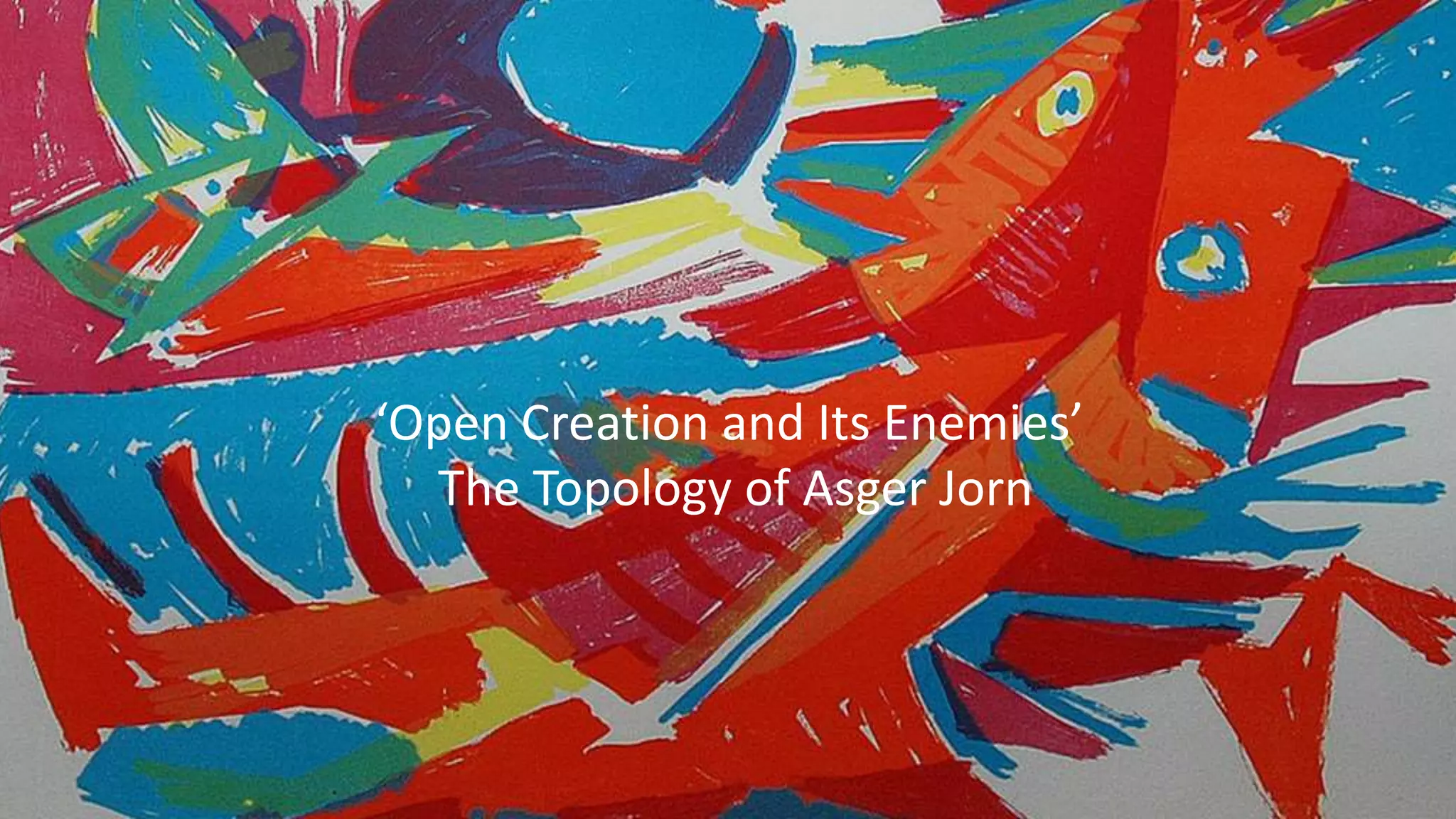
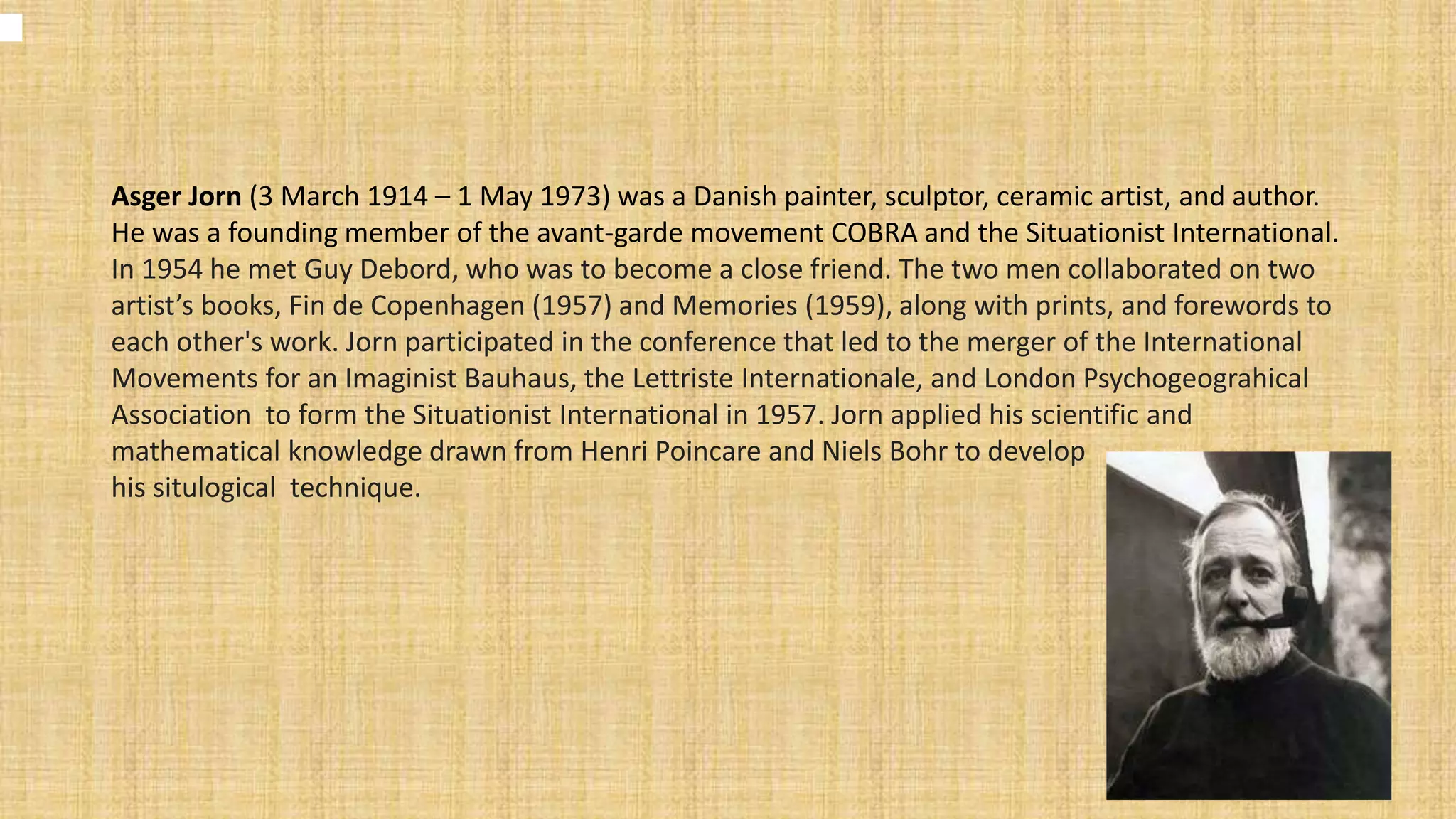

The document explores the integration of topology in literary studies and its implications for reading practices in the digital age, tracing its roots from rhetorical concepts to modern literary topology as developed by Ernst Robert Curtius. It discusses the evolution of literary analysis through concepts like 'literary topos' and examines contemporary approaches such as quantitative literary history by Franco Moretti and topological reading by Andrew Piper, emphasizing the significance of spatial relationships in interpreting texts. Additionally, it highlights how topology informs both visual art and cognitive processes of perception, offering insights into the interconnectedness of literary structures and artistic representation.


