Working for a
healthy planet with
healthy people
Health In Harmony
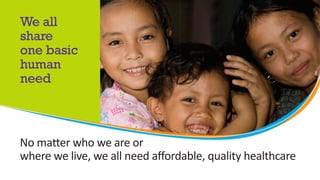
We all
share
one basic
human
need
No matter who we are or
where we live, we all need affordable, quality healthcare
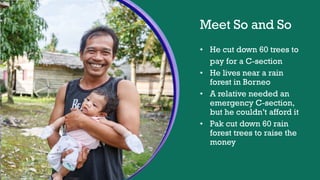
Meet So and So
•	He cut down 60 trees to
	 pay for a C-section
•	He lives near a rain
forest in Borneo
•	A relative needed an
emergency C-section,
but he couldn’t afford it
•	Pak cut down 60 rain
forest trees to raise the
money
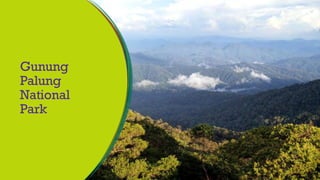
Gunung
Palung
National
Park
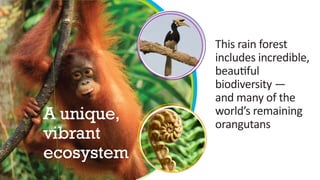
This rain forest
includes incredible,
beautiful
biodiversity —
and many of the
world’s remaining
orangutans
A unique,
vibrant
ecosystem
H
Natural allies,living side by side
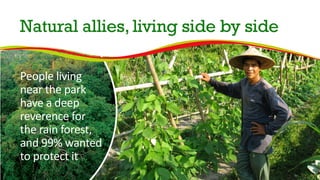
People living
near the park
have a deep
reverence for
the rain forest,
and 99% wanted
to protect it
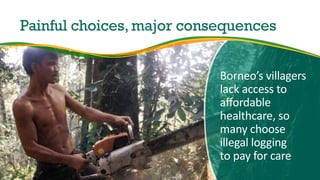
Borneo’s villagers
lack access to
affordable
healthcare, so
many choose
illegal logging
to pay for care
Painful choices,major consequences
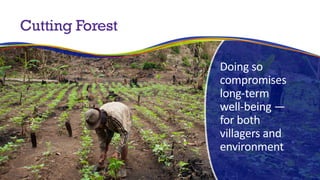
Doing so
compromises
long-term
well-being —
for both
villagers and
environment
Cutting Forest
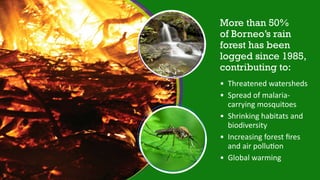
• Threatened watersheds
• Spread of malaria-
carrying mosquitoes
• Shrinking habitats and
biodiversity
• Increasing forest fires
and air pollution
• Global warming
More than 50%
of Borneo’s rain
forest has been
logged since 1985,
contributing to:
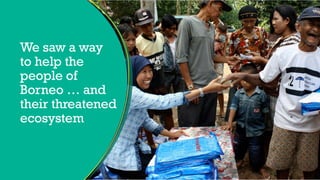
We saw a way
to help the
people of
Borneo … and
their threatened
ecosystem
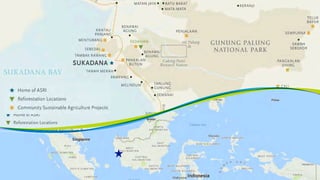
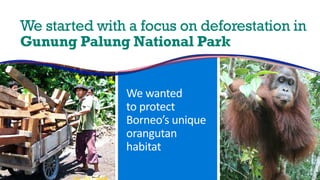
We started with a focus on deforestation in
Gunung Palung National Park
We wanted
to protect
Borneo’s unique
orangutan
habitat
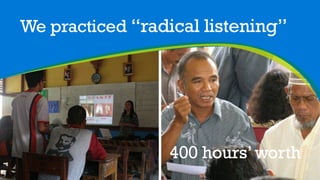
We practiced “radical listening”
400 hours’worth
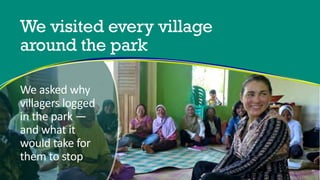
We visited every village
around the park
We asked why
villagers logged
in the park —
and what it
would take for
them to stop
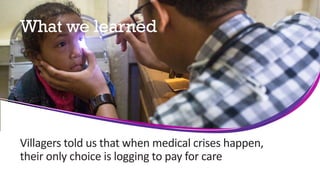
Villagers told us that when medical crises happen,
their only choice is logging to pay for care
What we learned
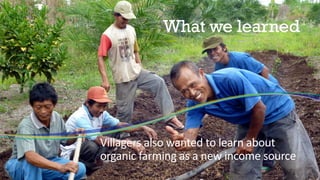
Villagers also wanted to learn about
organic farming as a new income source
What we learned
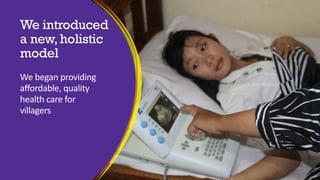
We began providing
affordable, quality
health care for
villagers
We introduced
a new, holistic
model
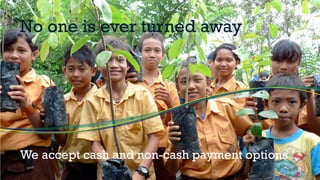
No one is ever turned away
We accept cash and non-cash payment options
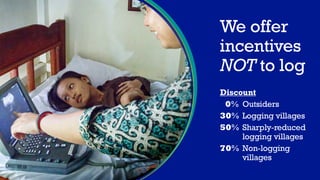
Discount
	 0%	Outsiders
	30%	Logging villages
50%		Sharply-reduced
logging villages
70%	Non-logging
villages
We offer
incentives
NOT to log
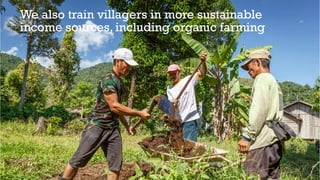
We also train villagers in more sustainable
income sources, including organic farming
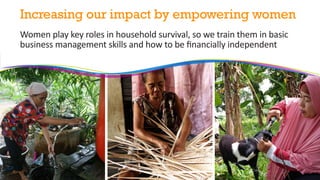
Women play key roles in household survival, so we train them in basic
business management skills and how to be financially independent
Increasing our impact by empowering women
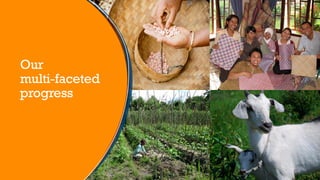
Our
multi-faceted
progress
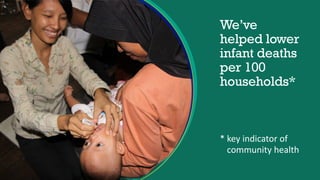
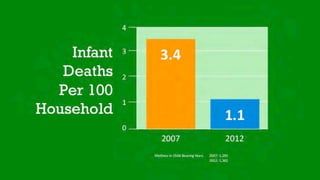
We’ve
helped lower
infant deaths
per 100
households*
* key indicator of
community health
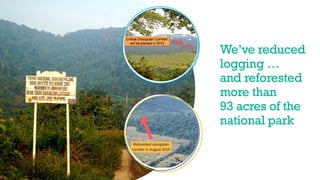
We’ve reduced
logging …
and reforested
more than
93 acres of the
national park
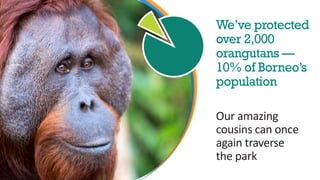
We’ve protected
over 2,000
orangutans —
10% of Borneo’s
population
Our amazing
cousins can once
again traverse
the park
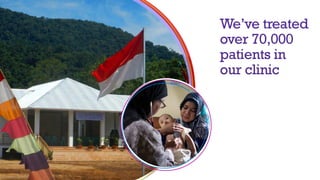
We’ve treated
over 70,000
patients in
our clinic
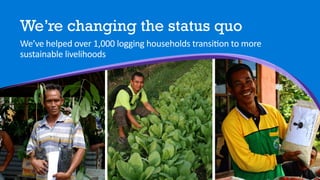
We’ve helped over 1,000 logging households transition to more
sustainable livelihoods
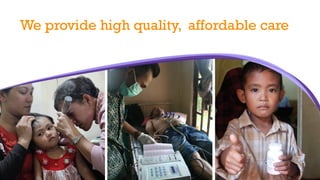
We provide high quality, affordable care
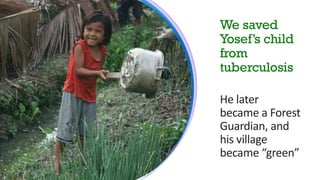
We saved
Yosef’s child
from
tuberculosis
He later
became a Forest
Guardian, and
his village
became “green”
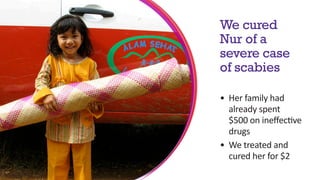
We cured
Nur of a
severe case
of scabies
• Her family had
already spent
$500 on ineffective
drugs
• We treated and
cured her for $2
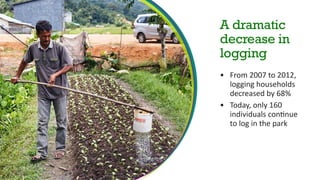
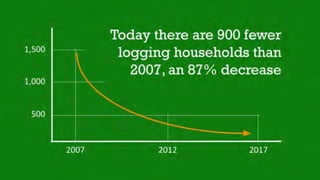
•	From 2007 to 2012,
logging households
decreased by 68%
•	Today, only 160
individuals continue
to log in the park
A dramatic
decrease in
logging
We’ve helped over 1,000 logging households transition to more
sustainable livelihoods
We’re changing the status quo
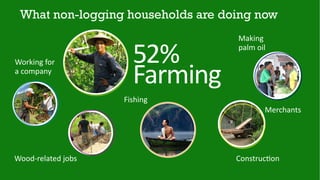
What non-logging households are doing now
Working for
a company
Making
palm oil
Fishing
Construction
Merchants
Wood-related jobs
52%
Farming
Now let’s talk
globally
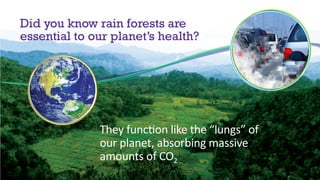
They function like the “lungs” of
our planet, absorbing massive
amounts of CO2
Did you know rain forests are
essential to our planet’s health?
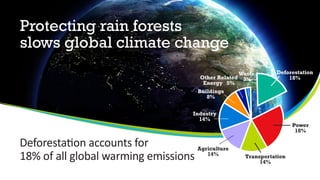
Protecting rain forests
slows global climate change
Deforestation accounts for
18% of all global warming emissions
Deforestation
18%
Power
18%
Transportation
14%
Agriculture
14%
Industry
14%
Buildings
8%
Other Related
Energy 5%
Waste
3%
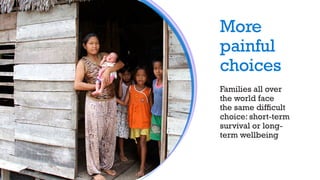
More
painful
choices
Families all over
the world face
the same difficult
choice: short-term
survival or long-
term wellbeing
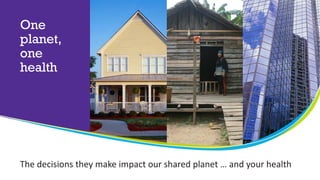
One
planet,
one
health
The decisions they make impact our shared planet … and your health
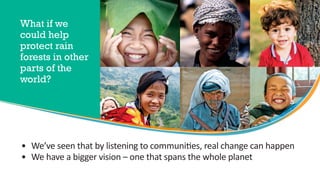
What if we
could help
protect rain
forests in other
parts of the
world?
•	 We’ve seen that by listening to communities, real change can happen
•	 We have a bigger vision – one that spans the whole planet
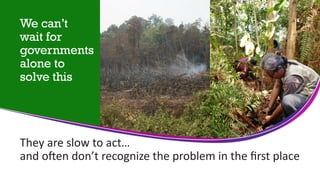
We can’t
wait for
governments
alone to
solve this
They are slow to act…
and often don’t recognize the problem in the first place
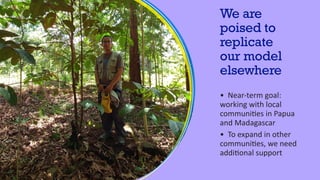
We are
poised to
replicate
our model
elsewhere
• Near-term goal:
working with local
communities in Papua
and Madagascar
• To expand in other
communities, we need
additional support
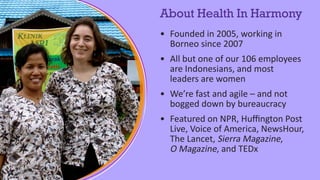
About Health In Harmony
•	Founded in 2005, working in
Borneo since 2007
•	All but one of our 106 employees
are Indonesians, and most
leaders are women
•	We’re fast and agile – and not
bogged down by bureaucracy
•	Featured on NPR, Huffington Post
Live, Voice of America, NewsHour,
The Lancet, Sierra Magazine,
O Magazine, and TEDx
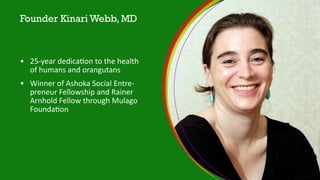
•	25-year dedication to the health
of humans and orangutans
•	Winner of Ashoka Social Entre-
preneur Fellowship and Rainer
Arnhold Fellow through Mulago
Foundation
Founder Kinari Webb, MD
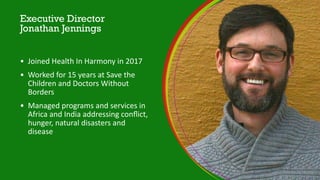
• Joined Health In Harmony in 2017
• Worked for 15 years at Save the
Children and Doctors Without
Borders
• Managed programs and services in
Africa and India addressing conflict,
hunger, natural disasters and
disease
Executive Director
Jonathan Jennings
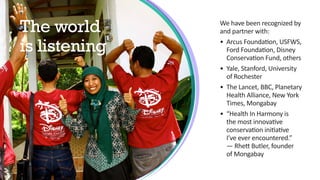
We have been recognized by
and partner with:
• Arcus Foundation, USFWS,
Ford Foundation, Disney
Conservation Fund, others
• Yale, Stanford, University
of Rochester
• The Lancet, BBC, Planetary
Health Alliance, New York
Times, Mongabay
• “Health In Harmony is
the most innovative
conservation initiative
I’ve ever encountered.”
— Rhett Butler, founder
of Mongabay
The world
is listening
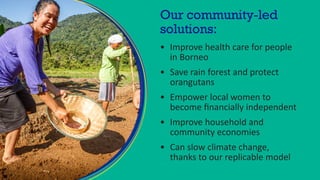
Our community-led
solutions:
•	Improve health care for people
in Borneo
•	Save rain forest and protect
orangutans
•	Empower local women to
become financially independent
•	Improve household and
community economies
•	Can slow climate change,
thanks to our replicable model
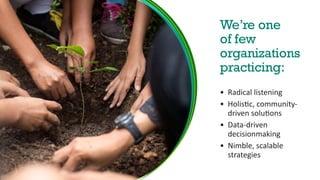
We’re one
of few
organizations
practicing:
• Radical listening
• Holistic, community-
driven solutions
• Data-driven
decisionmaking
• Nimble, scalable
strategies
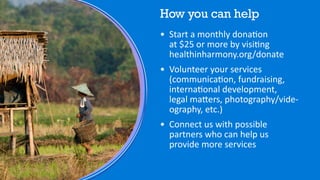
How you can help
• Start a monthly donation
at $25 or more by visiting
healthinharmony.org/donate
• Volunteer your services
(communication, fundraising,
international development,
legal matters, photography/vide-
ography, etc.)
• Connect us with possible
partners who can help us
provide more services
• Stay connected on social media:
@HealthInHarmonyNGO
• Learn more by visiting our
website: healthinharmony.org
Thank you.
Questions?