Statement of intent Key Stage 4 Languages Enrichment Academic Year: 2019-20
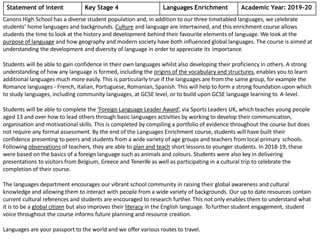
Canons High School has a diverse student population and, in addition to our three timetabled languages, we celebrate
students’ home languages and backgrounds. Culture and language are intertwined, and this enrichment course allows
students the time to look at the history and development behind their favourite elements of language. We look at the
purpose of language and how geography and modern society have both influenced global languages. The course is aimed at
understanding the development and diversity of language in order to appreciate its importance.
Students will be able to gain confidence in their own languages whilst also developing their proficiency in others. A strong
understanding of how any language is formed, including the origins of the vocabulary and structures, enables you to learn
additional languages much more easily. This is particularly true if the languages are from the same group, for example the
Romance languages - French, Italian, Portuguese, Romanian, Spanish. This will help to form a strong foundation upon which
to study languages, including community languages, at GCSE level, or to build upon GCSE language learning to A-level.
Students will be able to complete the ‘Foreign Language Leader Award’, via Sports Leaders UK, which teaches young people
aged 13 and over how to lead others through basic languages activities by working to develop their communication,
organisation and motivational skills. This is completed by compiling a portfolio of evidence throughout the course but does
not require any formal assessment. By the end of the Languages Enrichment course, students will have built their
confidence presenting to peers and students from a wide variety of age groups and teachers from local primary schools.
Following observations of teachers, they are able to plan and teach short lessons to younger students. In 2018-19, these
were based on the basics of a foreign language such as animals and colours. Students were also key in delivering
presentations to visitors from Belgium, Greece and Tenerife as well as participating in a cultural trip to celebrate the
completion of their course.
The languages department encourages our vibrant school community in raising their global awareness and cultural
knowledge and allowing them to interact with people from a wide variety of backgrounds. Our up to date resources contain
current cultural references and students are encouraged to research further. This not only enables them to understand what
it is to be a global citizen but also improves their literacy in the English language. Tofurther student engagement, student
voice throughout the course informs future planning and resource creation.
Languages are your passport to the world and we offer various routes to travel.
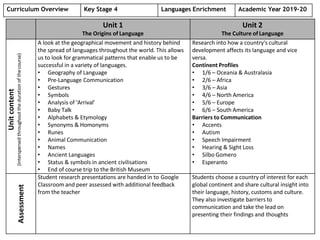
Unit 1
The Origins of Language
Unit 2
The Culture of Language
Unitcontent
(interspersedthroughoutthedurationofthecourse)
A look at the geographical movement and history behind
the spread of languages throughout the world. This allows
us to look for grammatical patterns that enable us to be
successful in a variety of languages.
• Geography of Language
• Pre-Language Communication
• Gestures
• Symbols
• Analysis of ‘Arrival’
• Baby Talk
• Alphabets & Etymology
• Synonyms & Homonyms
• Runes
• Animal Communication
• Names
• Ancient Languages
• Status & symbols in ancient civilisations
• End of course trip to the British Museum
Research into how a country's cultural
development affects its language and vice
versa.
Continent Profiles
• 1/6 – Oceania & Australasia
• 2/6 – Africa
• 3/6 – Asia
• 4/6 – North America
• 5/6 – Europe
• 6/6 – South America
Barriers to Communication
• Accents
• Autism
• Speech Impairment
• Hearing & Sight Loss
• Silbo Gomero
• Esperanto
Assessment
Student research presentations are handed in to Google
Classroom and peer assessed with additional feedback
from the teacher
Students choose a country of interest for each
global continent and share cultural insight into
their language, history, customs and culture.
They also investigate barriers to
communication and take the lead on
presenting their findings and thoughts
Curriculum Overview Key Stage 4 Languages Enrichment Academic Year 2019-20
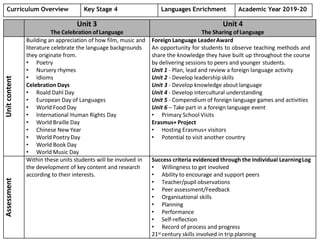
Unit 3
The Celebration ofLanguage
Unit 4
The Sharing of Language
Unitcontent
Building an appreciation of how film, music and
literature celebrate the language backgrounds
they originate from.
• Poetry
• Nursery rhymes
• Idioms
Celebration Days
• Roald Dahl Day
• European Day of Languages
• World Food Day
• International Human Rights Day
• World Braille Day
• Chinese New Year
• World Poetry Day
• World Book Day
• World Music Day
Foreign Language LeaderAward
An opportunity for students to observe teaching methods and
share the knowledge they have built up throughout the course
by delivering sessions to peers and younger students.
Unit 1 - Plan, lead and review a foreign language activity
Unit 2 - Develop leadership skills
Unit 3 - Develop knowledge about language
Unit 4 - Develop intercultural understanding
Unit 5 - Compendium of foreign language games and activities
Unit 6 – Take part in a foreign language event
• Primary School Visits
Erasmus+ Project
• Hosting Erasmus+ visitors
• Potential to visit another country
Assessment
Within these units students will be involved in
the development of key content and research
according to their interests.
Success criteria evidenced through the Individual LearningLog
• Willingness to get involved
• Ability to encourage and support peers
• Teacher/pupil observations
• Peer assessment/Feedback
• Organisational skills
• Planning
• Performance
• Self-reflection
• Record of process and progress
21st century skills involved in trip planning
Curriculum Overview Key Stage 4 Languages Enrichment Academic Year 2019-20

2019 20-ks4-languages-enrichment-curriculum-map

  • 1.
    Statement of intentKey Stage 4 Languages Enrichment Academic Year: 2019-20 Canons High School has a diverse student population and, in addition to our three timetabled languages, we celebrate students’ home languages and backgrounds. Culture and language are intertwined, and this enrichment course allows students the time to look at the history and development behind their favourite elements of language. We look at the purpose of language and how geography and modern society have both influenced global languages. The course is aimed at understanding the development and diversity of language in order to appreciate its importance. Students will be able to gain confidence in their own languages whilst also developing their proficiency in others. A strong understanding of how any language is formed, including the origins of the vocabulary and structures, enables you to learn additional languages much more easily. This is particularly true if the languages are from the same group, for example the Romance languages - French, Italian, Portuguese, Romanian, Spanish. This will help to form a strong foundation upon which to study languages, including community languages, at GCSE level, or to build upon GCSE language learning to A-level. Students will be able to complete the ‘Foreign Language Leader Award’, via Sports Leaders UK, which teaches young people aged 13 and over how to lead others through basic languages activities by working to develop their communication, organisation and motivational skills. This is completed by compiling a portfolio of evidence throughout the course but does not require any formal assessment. By the end of the Languages Enrichment course, students will have built their confidence presenting to peers and students from a wide variety of age groups and teachers from local primary schools. Following observations of teachers, they are able to plan and teach short lessons to younger students. In 2018-19, these were based on the basics of a foreign language such as animals and colours. Students were also key in delivering presentations to visitors from Belgium, Greece and Tenerife as well as participating in a cultural trip to celebrate the completion of their course. The languages department encourages our vibrant school community in raising their global awareness and cultural knowledge and allowing them to interact with people from a wide variety of backgrounds. Our up to date resources contain current cultural references and students are encouraged to research further. This not only enables them to understand what it is to be a global citizen but also improves their literacy in the English language. Tofurther student engagement, student voice throughout the course informs future planning and resource creation. Languages are your passport to the world and we offer various routes to travel.
  • 2.
    Unit 1 The Originsof Language Unit 2 The Culture of Language Unitcontent (interspersedthroughoutthedurationofthecourse) A look at the geographical movement and history behind the spread of languages throughout the world. This allows us to look for grammatical patterns that enable us to be successful in a variety of languages. • Geography of Language • Pre-Language Communication • Gestures • Symbols • Analysis of ‘Arrival’ • Baby Talk • Alphabets & Etymology • Synonyms & Homonyms • Runes • Animal Communication • Names • Ancient Languages • Status & symbols in ancient civilisations • End of course trip to the British Museum Research into how a country's cultural development affects its language and vice versa. Continent Profiles • 1/6 – Oceania & Australasia • 2/6 – Africa • 3/6 – Asia • 4/6 – North America • 5/6 – Europe • 6/6 – South America Barriers to Communication • Accents • Autism • Speech Impairment • Hearing & Sight Loss • Silbo Gomero • Esperanto Assessment Student research presentations are handed in to Google Classroom and peer assessed with additional feedback from the teacher Students choose a country of interest for each global continent and share cultural insight into their language, history, customs and culture. They also investigate barriers to communication and take the lead on presenting their findings and thoughts Curriculum Overview Key Stage 4 Languages Enrichment Academic Year 2019-20
  • 3.
    Unit 3 The CelebrationofLanguage Unit 4 The Sharing of Language Unitcontent Building an appreciation of how film, music and literature celebrate the language backgrounds they originate from. • Poetry • Nursery rhymes • Idioms Celebration Days • Roald Dahl Day • European Day of Languages • World Food Day • International Human Rights Day • World Braille Day • Chinese New Year • World Poetry Day • World Book Day • World Music Day Foreign Language LeaderAward An opportunity for students to observe teaching methods and share the knowledge they have built up throughout the course by delivering sessions to peers and younger students. Unit 1 - Plan, lead and review a foreign language activity Unit 2 - Develop leadership skills Unit 3 - Develop knowledge about language Unit 4 - Develop intercultural understanding Unit 5 - Compendium of foreign language games and activities Unit 6 – Take part in a foreign language event • Primary School Visits Erasmus+ Project • Hosting Erasmus+ visitors • Potential to visit another country Assessment Within these units students will be involved in the development of key content and research according to their interests. Success criteria evidenced through the Individual LearningLog • Willingness to get involved • Ability to encourage and support peers • Teacher/pupil observations • Peer assessment/Feedback • Organisational skills • Planning • Performance • Self-reflection • Record of process and progress 21st century skills involved in trip planning Curriculum Overview Key Stage 4 Languages Enrichment Academic Year 2019-20