The Changing Landscape of Recruiting Physicians to your Practice
Presenter 
David Cranford, CPA 
Principal, Decosimo 
Contact: 
DavidCranford@decosimo.com 
423-756-7100 
www.linkedin.com/pub/david-cranford-cpa/2/357/72b 
2
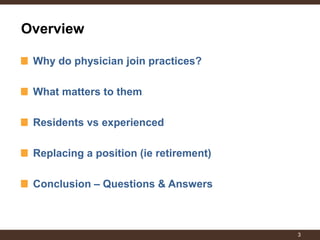
Overview Why do physician join practices? 
What matters to them 
Residents vs experienced 
Replacing a position (ie retirement) 
Conclusion – Questions & Answers 
3
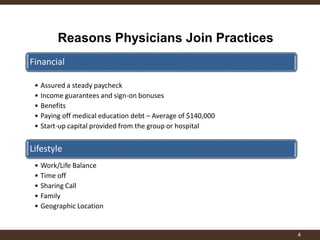
Reasons Physicians Join Practices 
4 
Financial 
•Assured a steady paycheck 
•Income guarantees and sign-on bonuses 
•Benefits 
•Paying off medical education debt – Average of $140,000 
•Start-up capital provided from the group or hospital 
Lifestyle 
•Work/Life Balance 
•Time off 
•Sharing Call 
•Family 
•Geographic Location
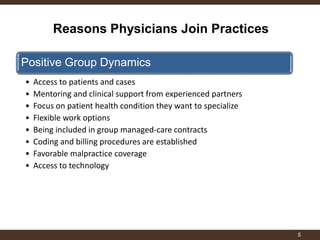
Reasons Physicians Join Practices 
5 
Positive Group Dynamics 
•Access to patients and cases 
•Mentoring and clinical support from experienced partners 
•Focus on patient health condition they want to specialize 
•Flexible work options 
•Being included in group managed-care contracts 
•Coding and billing procedures are established 
•Favorable malpractice coverage 
•Access to technology
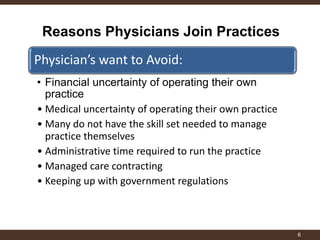
Reasons Physicians Join Practices 
6 
Physician’s want to Avoid: 
•Financial uncertainty of operating their own practice 
•Medical uncertainty of operating their own practice 
•Many do not have the skill set needed to manage practice themselves 
•Administrative time required to run the practice 
•Managed care contracting 
•Keeping up with government regulations
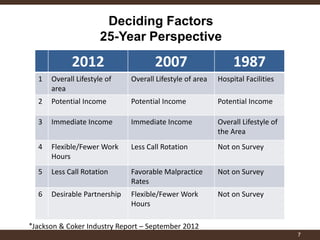
Deciding Factors 25-Year Perspective 
7 
2012 
2007 
1987 
1 
Overall Lifestyle of area 
Hospital Facilities 
2 
Potential Income 
Potential Income 
Potential Income 
3 
Immediate Income 
Immediate Income 
Overall Lifestyle of the Area 
4 
Flexible/Fewer Work Hours 
Less Call Rotation 
Not on Survey 
5 
Less Call Rotation 
Favorable Malpractice Rates 
Not on Survey 
6 
Desirable Partnership 
Flexible/Fewer Work Hours 
Not on Survey 
*Jackson & Coker Industry Report – September 2012
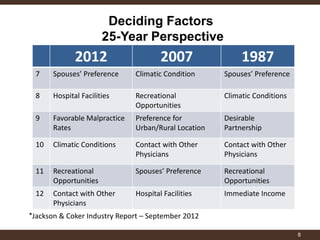
Deciding Factors 25-Year Perspective 
8 
2012 
2007 
1987 
7 
Spouses’ Preference 
Climatic Condition 
Spouses’ Preference 
8 
Hospital Facilities 
Recreational Opportunities 
Climatic Conditions 
9 
Favorable Malpractice Rates 
Preference for Urban/Rural Location 
Desirable Partnership 
10 
Climatic Conditions 
Contact with Other Physicians 
11 
Recreational Opportunities 
Spouses’ Preference 
Recreational Opportunities 
12 
Contact with Other Physicians 
Hospital Facilities 
Immediate Income 
*Jackson & Coker Industry Report – September 2012
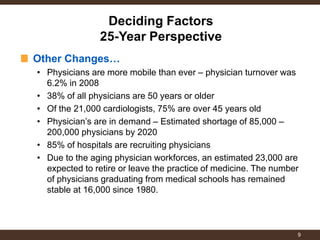
Other Changes… 
•Physicians are more mobile than ever – physician turnover was 6.2% in 2008 
•38% of all physicians are 50 years or older 
•Of the 21,000 cardiologists, 75% are over 45 years old 
•Physician’s are in demand – Estimated shortage of 85,000 – 200,000 physicians by 2020 
•85% of hospitals are recruiting physicians 
•Due to the aging physician workforces, an estimated 23,000 are expected to retire or leave the practice of medicine. The number of physicians graduating from medical schools has remained stable at 16,000 since 1980. 
Deciding Factors 25-Year Perspective 
9
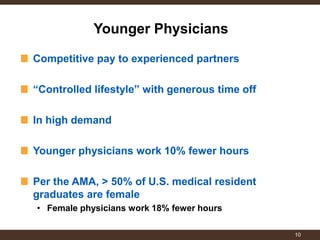
Competitive pay to experienced partners 
“Controlled lifestyle” with generous time off 
In high demand 
Younger physicians work 10% fewer hours 
Per the AMA, > 50% of U.S. medical resident graduates are female 
•Female physicians work 18% fewer hours 
Younger Physicians 
10
Focused on developing skills rather than sacrificing for an extended partnership track 
•Time-to-partnership – Two years and decreasing 
•Unwillingness to buy-in to a Practice Willing to relocate due to the spouse’s career 
Tend to spend more time with patients 
Want access to the latest technology 
Have seen their parents or other adults laid off 
•Skeptical of organization loyalty 
Younger Physicians 
11
51% plan/want to leave the patient care setting or reduce number of patients seen 
8% plan to retire in three years 
10% want to transfer to non-clinical job (teaching) 
17% are considering closing their practice to new patients 
Many are going to part-time in groups – or locum tenens 
Experienced Physicians (Aged 50 – 65) 
12
Practices are also offering incentives for their senior physicians to stay 
•AMGA survey respondents – 62% believed that physicians were delaying retirement because of the economy 
•73% of practices allowed pre-retirement physicians to reduce hours 
•56% allowed for these doctors not to be on-call 
•20% allowed for specialization in the group 
•Other options included extending vacations up to several months 
•Volunteer or mission work 
Do Physician really retire? 
13
Physicians are frustrated 
14 
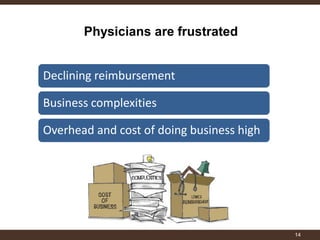
Declining reimbursement 
Business complexities 
Overhead and cost of doing business high
Physicians are frustrated 
15 
Denied claims 
Appealed claims 
Timely filing of claims 
Program audits of Medicare/Medicaid
Physicians are frustrated 
16 
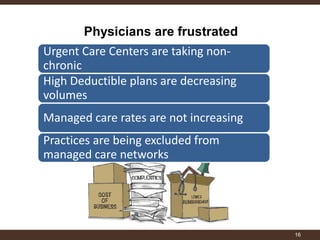
Urgent Care Centers are taking non- chronic 
High Deductible plans are decreasing volumes 
Managed care rates are not increasing 
Practices are being excluded from managed care networks
Definition of working is changing 
17 
Hospital employment 
Single or multi-specialty practice owned by hospital or health system 
Independent contractor or locum tenens 
Non-clinical teaching position 
Non-clinical administrative position
Immediately, costs go up for the remaining physicians 
•Fixed costs remain 
•Debt service remains 
•Production can do down for the practice Difficult choices are required 
•Closing offices 
•Cutting staff 
•Cutting other staff 
Transition to recruiting a physician 
18
Cost of tail coverage – can be $100,000 for a specialist in high cost region Legal and financial obligations follow (debt related to recruitment, excess office space, rental agreements, etc.) Operating loss while new physician builds practice Loss of patient referrals Patients needing a new physician – who may not stay with the group 
Impact of the loss of a Physician 
19
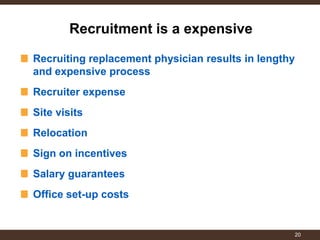
Recruiting replacement physician results in lengthy and expensive process 
Recruiter expense 
Site visits 
Relocation 
Sign on incentives 
Salary guarantees 
Office set-up costs 
Recruitment is a expensive 
20
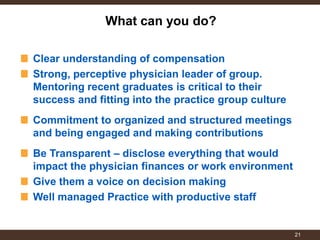
Clear understanding of compensation Strong, perceptive physician leader of group. Mentoring recent graduates is critical to their success and fitting into the practice group culture 
Commitment to organized and structured meetings and being engaged and making contributions 
Be Transparent – disclose everything that would impact the physician finances or work environment Give them a voice on decision making Well managed Practice with productive staff 
What can you do? 
21
Questions 
22
Thank You!

The Changing Landscape of Recruiting Physicians to Your Practice - David Cranford

  • 1.
    The Changing Landscapeof Recruiting Physicians to your Practice
  • 2.
    Presenter David Cranford,CPA Principal, Decosimo Contact: DavidCranford@decosimo.com 423-756-7100 www.linkedin.com/pub/david-cranford-cpa/2/357/72b 2
  • 3.
    Overview Why dophysician join practices? What matters to them Residents vs experienced Replacing a position (ie retirement) Conclusion – Questions & Answers 3
  • 4.
    Reasons Physicians JoinPractices 4 Financial •Assured a steady paycheck •Income guarantees and sign-on bonuses •Benefits •Paying off medical education debt – Average of $140,000 •Start-up capital provided from the group or hospital Lifestyle •Work/Life Balance •Time off •Sharing Call •Family •Geographic Location
  • 5.
    Reasons Physicians JoinPractices 5 Positive Group Dynamics •Access to patients and cases •Mentoring and clinical support from experienced partners •Focus on patient health condition they want to specialize •Flexible work options •Being included in group managed-care contracts •Coding and billing procedures are established •Favorable malpractice coverage •Access to technology
  • 6.
    Reasons Physicians JoinPractices 6 Physician’s want to Avoid: •Financial uncertainty of operating their own practice •Medical uncertainty of operating their own practice •Many do not have the skill set needed to manage practice themselves •Administrative time required to run the practice •Managed care contracting •Keeping up with government regulations
  • 7.
    Deciding Factors 25-YearPerspective 7 2012 2007 1987 1 Overall Lifestyle of area Overall Lifestyle of area Hospital Facilities 2 Potential Income Potential Income Potential Income 3 Immediate Income Immediate Income Overall Lifestyle of the Area 4 Flexible/Fewer Work Hours Less Call Rotation Not on Survey 5 Less Call Rotation Favorable Malpractice Rates Not on Survey 6 Desirable Partnership Flexible/Fewer Work Hours Not on Survey *Jackson & Coker Industry Report – September 2012
  • 8.
    Deciding Factors 25-YearPerspective 8 2012 2007 1987 7 Spouses’ Preference Climatic Condition Spouses’ Preference 8 Hospital Facilities Recreational Opportunities Climatic Conditions 9 Favorable Malpractice Rates Preference for Urban/Rural Location Desirable Partnership 10 Climatic Conditions Contact with Other Physicians Contact with Other Physicians 11 Recreational Opportunities Spouses’ Preference Recreational Opportunities 12 Contact with Other Physicians Hospital Facilities Immediate Income *Jackson & Coker Industry Report – September 2012
  • 9.
    Other Changes… •Physiciansare more mobile than ever – physician turnover was 6.2% in 2008 •38% of all physicians are 50 years or older •Of the 21,000 cardiologists, 75% are over 45 years old •Physician’s are in demand – Estimated shortage of 85,000 – 200,000 physicians by 2020 •85% of hospitals are recruiting physicians •Due to the aging physician workforces, an estimated 23,000 are expected to retire or leave the practice of medicine. The number of physicians graduating from medical schools has remained stable at 16,000 since 1980. Deciding Factors 25-Year Perspective 9
  • 10.
    Competitive pay toexperienced partners “Controlled lifestyle” with generous time off In high demand Younger physicians work 10% fewer hours Per the AMA, > 50% of U.S. medical resident graduates are female •Female physicians work 18% fewer hours Younger Physicians 10
  • 11.
    Focused on developingskills rather than sacrificing for an extended partnership track •Time-to-partnership – Two years and decreasing •Unwillingness to buy-in to a Practice Willing to relocate due to the spouse’s career Tend to spend more time with patients Want access to the latest technology Have seen their parents or other adults laid off •Skeptical of organization loyalty Younger Physicians 11
  • 12.
    51% plan/want toleave the patient care setting or reduce number of patients seen 8% plan to retire in three years 10% want to transfer to non-clinical job (teaching) 17% are considering closing their practice to new patients Many are going to part-time in groups – or locum tenens Experienced Physicians (Aged 50 – 65) 12
  • 13.
    Practices are alsooffering incentives for their senior physicians to stay •AMGA survey respondents – 62% believed that physicians were delaying retirement because of the economy •73% of practices allowed pre-retirement physicians to reduce hours •56% allowed for these doctors not to be on-call •20% allowed for specialization in the group •Other options included extending vacations up to several months •Volunteer or mission work Do Physician really retire? 13
  • 14.
    Physicians are frustrated 14 Declining reimbursement Business complexities Overhead and cost of doing business high
  • 15.
    Physicians are frustrated 15 Denied claims Appealed claims Timely filing of claims Program audits of Medicare/Medicaid
  • 16.
    Physicians are frustrated 16 Urgent Care Centers are taking non- chronic High Deductible plans are decreasing volumes Managed care rates are not increasing Practices are being excluded from managed care networks
  • 17.
    Definition of workingis changing 17 Hospital employment Single or multi-specialty practice owned by hospital or health system Independent contractor or locum tenens Non-clinical teaching position Non-clinical administrative position
  • 18.
    Immediately, costs goup for the remaining physicians •Fixed costs remain •Debt service remains •Production can do down for the practice Difficult choices are required •Closing offices •Cutting staff •Cutting other staff Transition to recruiting a physician 18
  • 19.
    Cost of tailcoverage – can be $100,000 for a specialist in high cost region Legal and financial obligations follow (debt related to recruitment, excess office space, rental agreements, etc.) Operating loss while new physician builds practice Loss of patient referrals Patients needing a new physician – who may not stay with the group Impact of the loss of a Physician 19
  • 20.
    Recruiting replacement physicianresults in lengthy and expensive process Recruiter expense Site visits Relocation Sign on incentives Salary guarantees Office set-up costs Recruitment is a expensive 20
  • 21.
    Clear understanding ofcompensation Strong, perceptive physician leader of group. Mentoring recent graduates is critical to their success and fitting into the practice group culture Commitment to organized and structured meetings and being engaged and making contributions Be Transparent – disclose everything that would impact the physician finances or work environment Give them a voice on decision making Well managed Practice with productive staff What can you do? 21
  • 22.
  • 23.