ORCID Identifiers @ ICPSR
Jared Lyle
lyle@umich.edu
http://orcid.org/0000-0001-8623-7612
ORCID Outreach Meeting
Chicago
21 May 2014
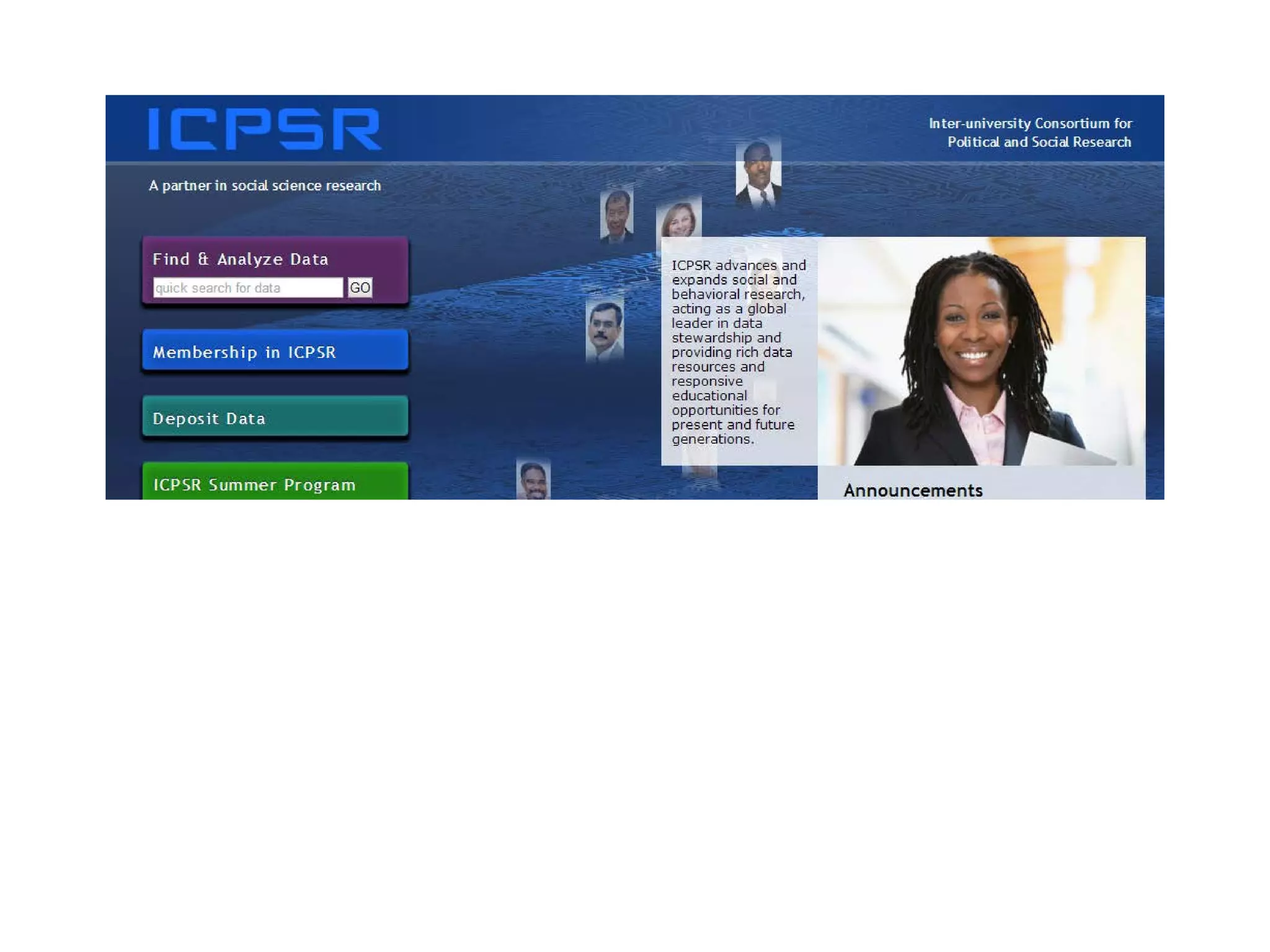
What is ICPSR?
• Repository of social science data established in
1962 for data sharing and preservation
• Membership-based organization -- over 740
institutional members (colleges and
universities) from around the world
• Source for training in statistics and data
curation through the Summer Program
http://graphics8.nytimes.com/images/2013/06/20/technology/20DATA_SPAN/20DATA_SPAN-tmagArticle.jpg
Why ORCID @ ICPSR?
• Access mechanism (authentication)
• Identity management
• Link data to publications
• Looking to the future
Access Mechanism (Authentication)
Sponsored Archives
• Child Care and Early Education Research Connections
• Data Sharing for Demographic Research
• Health and Medical Care Archive
• Measures of Effective Teaching Longitudinal Database
• National Addiction & HIV Data Archive Program
• National Archive of Computerized Data on Aging
• National Archive of Criminal Justice Data
• Resource Center for Minority Data
• Substance Abuse & Mental Health Data Archive
http://www.icpsr.umich.edu/icpsrweb/ICPSR/studies/28501
Identity Management
Link Data to Publications
http://www.icpsr.umich.edu/icpsrweb/ICPSR/citations/
“Since data are still considered an alternative
metric of a researcher's impact, the more data
repositories and altmetric organizations can take
advantage of ORCIDs, the more a researcher's
impact becomes apparent (not to mention the
value of shared research data).”
-Elizabeth Moss (ICPSR)
"It [an ORCID] would be attached to researchers' journal
publications, and could also be assigned to data sets they
helped to generate, comments on their colleagues' blog
posts or unpublished draft papers, edits of Wikipedia
entries and much else besides. This kind of
'microattribution' could ultimately make it possible for
each researcher to have a constantly updated 'digital
curriculum vitae' providing a picture of his or her
contributions to science going far beyond the simple
publication list."
“Credit where credit is due” editorial
(http://doi.org/10.1038/462825a)
Implementing ORCID @ ICPSR
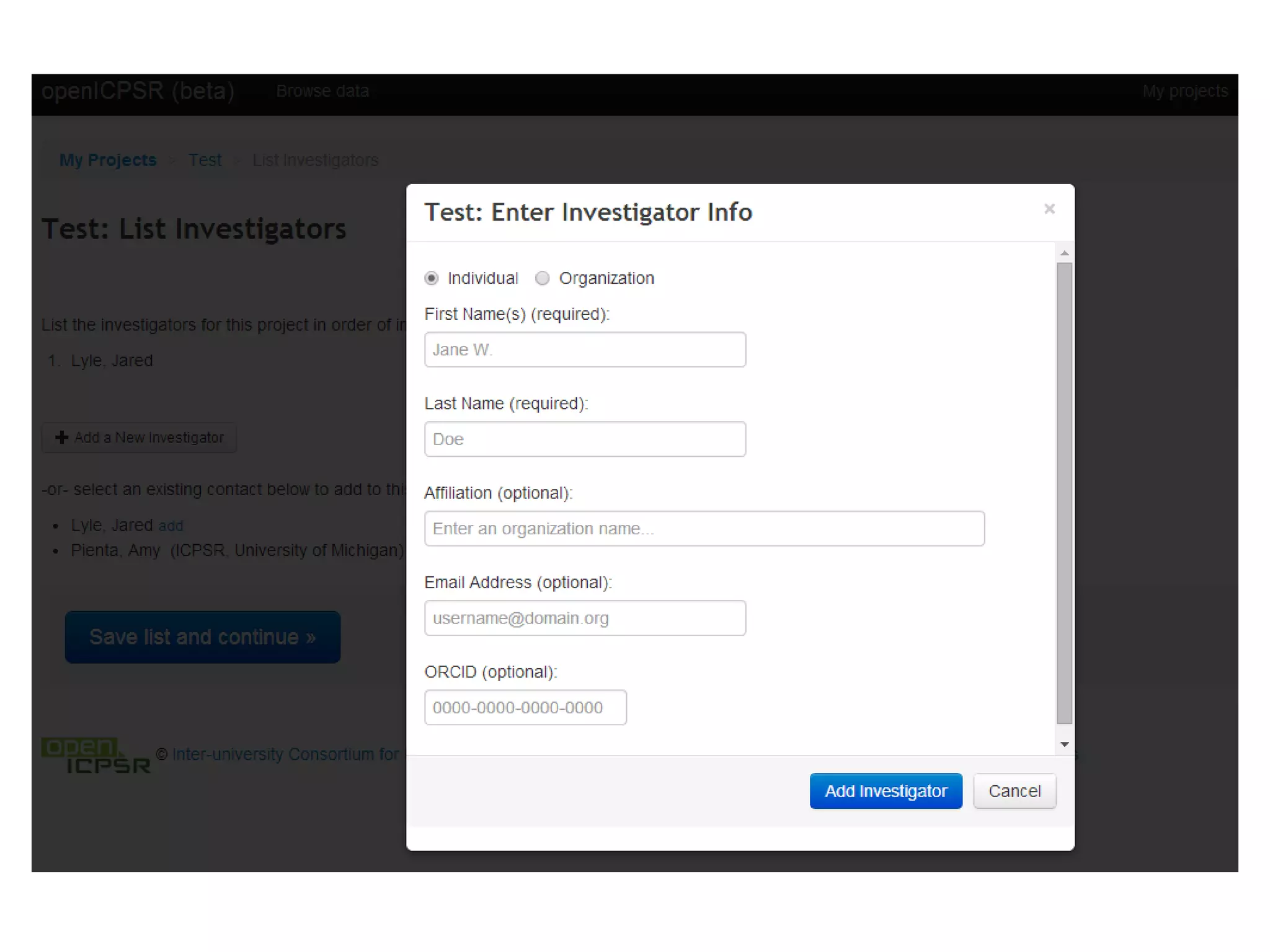
http://openicpsr.org
Access Mechanism (Authentication)
Identity Management
Policy Issues
• Whether to use?
– Wait or lead?
– Integration with Michigan ecosystem?
• How to implement?
– Retrofit, integrate, or build into new system?
• Using ORCID to link data with publications.
Future Dreams
• What do our users want?
• What is most beneficial to the community?
• Make the primary email address in ORCID
viewable to trusted third parties by default.
• Allow depositor to link previous deposits to
ORCID ID upon submission.
• Once ORCID IDs for all University of Michigan
faculty and staff, consider retrofit to add those
ORCID IDs to our collection.
• Authority control for authors -- clean up
underlying database so authors can be
disambiguated.
• Linking data with publications.
Acknowledgments
Mary Vardigan
Nathan Adams
Karen Sullivan
Elizabeth Moss
Matthew Richardson
UM Library
Thank you!
lyle@umich.edu

20140521 orcid outreach_meeting_jlyle

  • 1.
    ORCID Identifiers @ICPSR Jared Lyle lyle@umich.edu http://orcid.org/0000-0001-8623-7612 ORCID Outreach Meeting Chicago 21 May 2014
  • 2.
    What is ICPSR? •Repository of social science data established in 1962 for data sharing and preservation • Membership-based organization -- over 740 institutional members (colleges and universities) from around the world • Source for training in statistics and data curation through the Summer Program
  • 3.
  • 4.
    Why ORCID @ICPSR? • Access mechanism (authentication) • Identity management • Link data to publications • Looking to the future
  • 5.
  • 7.
    Sponsored Archives • ChildCare and Early Education Research Connections • Data Sharing for Demographic Research • Health and Medical Care Archive • Measures of Effective Teaching Longitudinal Database • National Addiction & HIV Data Archive Program • National Archive of Computerized Data on Aging • National Archive of Criminal Justice Data • Resource Center for Minority Data • Substance Abuse & Mental Health Data Archive
  • 8.
  • 11.
  • 13.
    Link Data toPublications
  • 14.
  • 15.
    “Since data arestill considered an alternative metric of a researcher's impact, the more data repositories and altmetric organizations can take advantage of ORCIDs, the more a researcher's impact becomes apparent (not to mention the value of shared research data).” -Elizabeth Moss (ICPSR)
  • 16.
    "It [an ORCID]would be attached to researchers' journal publications, and could also be assigned to data sets they helped to generate, comments on their colleagues' blog posts or unpublished draft papers, edits of Wikipedia entries and much else besides. This kind of 'microattribution' could ultimately make it possible for each researcher to have a constantly updated 'digital curriculum vitae' providing a picture of his or her contributions to science going far beyond the simple publication list." “Credit where credit is due” editorial (http://doi.org/10.1038/462825a)
  • 17.
  • 18.
  • 19.
  • 21.
  • 23.
  • 24.
    • Whether touse? – Wait or lead? – Integration with Michigan ecosystem? • How to implement? – Retrofit, integrate, or build into new system? • Using ORCID to link data with publications.
  • 25.
  • 26.
    • What doour users want? • What is most beneficial to the community?
  • 27.
    • Make theprimary email address in ORCID viewable to trusted third parties by default. • Allow depositor to link previous deposits to ORCID ID upon submission. • Once ORCID IDs for all University of Michigan faculty and staff, consider retrofit to add those ORCID IDs to our collection. • Authority control for authors -- clean up underlying database so authors can be disambiguated. • Linking data with publications.
  • 28.
    Acknowledgments Mary Vardigan Nathan Adams KarenSullivan Elizabeth Moss Matthew Richardson UM Library
  • 29.