Basic Design 2011

      Spring
week 1. Introduction to synetics
1. Introduction to Design Synectics
2. 分合法(Synetics)
1.INTRODUCTION TO DESIGN
SYNECTICS
Based on
Design Synectics
       by
Nicholas Roukes
Synectics Definition
• The term Synectics is from the Greek word
  synectikos, which means “bringing forth
  together,” or “bringing different things into
  unified connection.”
• Synectics is about making connections.
Since creativity involves the
    changing of things into new
 structures, every creative thought
or action draws on synectic thinking.
Synectic thinking is the process of
  discovering the links that unite
seemingly disconnected elements.
It is a way of mentally
 taking things apart and
putting them together to
 furnish new insight for
  all types of problems.
Synectics Definition
• Creative discovery comes from analogical and
  metaphorical thinking, the process of linking
  unlike subjects.
• You must create VISUAL analogies and
  metaphors.
Thinking to Connect
• Analogical thinking is a comparison between
  two things that are similar in some respects,
  often used to help explain something or make
  it easier to understand.
• Metaphorical thinking is when one thing is
  used or considered to represent another
Thinking to Connect

Metaphorical thinking is
 when one thing is used
    or considered to
                           = or is like
   represent another.
The Synectic Process

• Make something strange familiar…
• Create something new…
• Personal analogies-do you feel like a sponge,
  doormat? Do you see yourself as a lion, a mouse?
• Direct analogies-A school is like a salad…life is like an
  elevator.
• Conflicting analogies…War-creative and destructive.
  Talent is a blessing and a curse.
Metaphorical Thinking
• A metaphor is a soft thinking technique connecting
  two different universes of meaning.
• Examples: Food chain, flow of time, fiscal watchdog.
• The key to metaphorical thinking is similarity. The
  human mind tends to look for similarities.
• A road map is a model or metaphor of reality and
  useful for explaining things.
• The Dolby Sound system is like a sonic laundry.
Architect Buckminster Fuller summed
up the essence of synectics when he
   said all things regardless of their
 dissimilarity can somehow be linked
     together, either in a physical,
    psychological or symbolic way.
The Synectic Attitude
• Synectics encourages the ability to live with
  complexity and apparent contradiction.
• Synectics stimulates creative thinking.
• Synectics mobilizes both sides of the brain,
  the right brain (the dreamer), and the left
  brain (the reasoner).
• Synectics provides a free-thinking state of
  consciousness .
The Synectic Ways of Working
• Synectics is based on the fusion of opposites.
• Synectics is based on analogical thinking.
• Synectics is synergistic. Its action produces a
  result which is greater than the sum of its
  parts.
The Synectic Pinball Machine
• Synectic thinking is like a mental pinball game.
  Stimulus input bounced against the scoring
  bumpers (the Trigger Questions) is
  transformed.
• Ordinary perceptions are turned into
  extraordinary ones; the familiar or prosaic is
  made strange.
• Synectic play is the creative mind at work.
The Synectic Triggers
• Synectic Trigger mechanisms catalyze or
  create new thoughts, ideas and inventions.
• Synectic Theory is based on disruptive
  thinking.
The 23 Design Synectic Triggers
Subtract      Change Scale   Prevaricate
Repeat        Substitute     Analogize
Combine       Fragment       Hybridize
Add           Isolate        Metamorphose
Transfer      Distort        Symbolize
Empathize     Disguise       Mythologize
Animate       Contradict     Fantasize
Superimpose   Parody
Take Creative Action!
• Ideas are not born in a vacuum.
• Use the 23 synectic triggers to transform your
  ideas into something new.
• The triggers are tools for transformational
  thinking and may lead you to some great
  discoveries.
Art Think: Ways of Working

1. Identify:       Set the problem or task, identify the subject.
2. Analyze:        Examine the subject; break it down, classify it.
3. Ideate:         Think, fantasize, produce ideas. Generate options
                      towards a creative solution. Relate, rearrange,
                      reconstruct. What design synectic triggers can
                      you use?
4. Select:         Choose your best option.
5. Implement:      Put your ideas into action. Realize it. Transform
                      imagination and fantasy into tangible form.

6. Evaluate:       Judge the result. Think about new options and
                      possibilities that have emerged. Go back to
                      step #1.
Your Assignment

  Draw a picture you can use to
 transform using the 23 synectic
triggers. Be sure it is a complete
drawing of an object. No heads,
       people or cartoons!
2. 分合法(SYNETICS)
分合法(Synetics)
• 分合法係由果登(Gordon W.J.J.)於1961年
  發表「分合法:創造能力的發展」
  (Synetics: the development of creativity)一
  書,所提出的一套團體問題解決的方法。
• 其本義為「將原不相同,亦無關聯的元素
  加以整合」。
• 果登的分合法將過去所認為神秘的創造過
  程,用簡單的話歸納為兩種心理運作的歷
  程:

•   1.使熟悉的事物變得新奇(由合而分)。

•   2.使新奇的事物變得熟悉(由分而合)。
•    所謂「使熟悉的事物變得新奇」,也就是熟
    悉的事物陌生化,此一歷程在使學生對某種熟
    悉的事物,用新穎而富有創意的觀點,去重新
    了解舊問題、舊事物、舊觀念,以產生學習的
    興趣。

• 例如,有一些諺語就是從另一個新奇的角度來
  解釋一些熟悉的概念,就像我們很熟悉的「母
  雞」這個概念,採用化熟悉為新奇的方法,就
  是:「母雞只是生蛋的一個工具。」
•    所謂「使新奇的事物變得熟悉」,也就
    是熟悉陌生的事物,此一歷程,主要在增
    進學生對不同新奇事物的理解,使不同的
    材料主觀化。

• 大部份的學生對於陌生事物的學習,多少
  都會有些壓力。所以,面對陌生的事物,
  或新觀念時,教師可經由學生熟悉的概念
  來瞭解。
• 通常可以用兩種方式來熟悉陌生的事物。

• 其一是分析法,先把陌生的事物盡可能劃分
  成許多小部份,然後就每個小部分加以研究。

• 第二個方法是利用類推,即對陌生的事物加以
  類推。例如,可問學生:「這個像什麼呢?」,
  「它像你所知道的那一樣東西呢?」
•    果登的分合法,主要是運用類推
    (analogies)和譬喻(metaphors)的技術
    來協助學生分析問題,並形成相異的觀點。
•      「譬喻」的功能在使事物之間,或事物
    教材之間形成「概念距離」(conceptual
    distance),以激發學生的「新思」。

• 例如,問學生:「如果教室像電影院」,
  提供新穎的譬喻架構,讓學生以新的途徑,
  去思考所熟悉的事物。
•    相反地,我們也可以讓學生以舊有的方
    式,去思索新的主題,例如,以人體去比
    擬交通運輸系統。
• 譬喻的活動可將某種觀念,從熟悉的教材
  串連到新教材,或以新觀點,去分析熟悉
  的教材。

• 透過此種「概念距離」的形成,學生能自
  由任意地思索其日常生活中的活動或經驗,
  發揮想像力及領悟力。
Homework
• 製作 synetic triggers 23 張牌卡, 附圖片範例
week 2. Sensing the force field
Force field in nature scene
Ex: Sketch the force field of the
        following scene:
Ex: Sketching the force field of van
           Gogh's work:
EX: Sketching the force field of
       Vasarely's work:
Ex: Sketching the force field of Henry
           Moore's work:
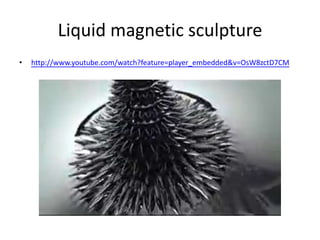
Liquid magnetic sculpture
•   http://www.youtube.com/watch?feature=player_embedded&v=OsW8zctD7CM
Home Work
• Take 5 photos to show force field
• upload 5 photos and their corresponding force
  field
week 3. Form and Force
VICTOR VASARELY, BETELGEUSE
• Ex1. Applying force field to an abstract shape array
• Ex2. Subconscious drawing
• Ex3. Imaginative projection on a roadmap
• Ex4. Draw the above Trilobyte as #1 shape, and the shell as #6
  shape, then morph the inbetweens #2-#5 shape
• "The form of an object is a diagram of forces.
  We can deduce the forces that are acting or
  have acted upon it; in this strict and particular
  sense, it is a diagram." ~ D'arcy Thompson
Home Work
• 1. Find a shape and its force field
• 2. apply the forcefield to a basic shape array
• 3. use 6 synectics rules when applying
  forcefield
week 4. Function analog
• Philip Johnson
• Philip Johnson
• Philip Johnson
• Jean Tinguely
• Jean Tinguely
• Jean Tinguely
• Jean Tinguely
• "Invention is the process of discovering a
  principle. Design is the process of applying that
  principle." ~ David Pye "To design is to plan and
  to organize to related and to control.
• In short it embraces all means opposing disorder
  and accident.
• Therefore it signifies a human need and qualifies
  man's
  thinking and doing."
• Joseph Albers
Concept
• Inventions come from a result of analogizing
  the way something work.
Home Work
• 1. find a mechanism system
• 2. use "analog" and 2 other synectics rules
• 3. create a mixed media work
week 5. sculpture of nature
         materials
• Andy Goldsworthy
• Andy Goldsworthy
• http://www.youtube.com/watch?v=ulLU1BUJk8Q
• http://www.youtube.com/watch?v=stwDR4zgNFY
• http://vimeo.com/5060259
• Andy Goldsworthy - Naturally beautiful
  http://www.youtube.com/watch?feature=player_embedded&
  v=fUpVf-7i75I
• Richard Long retrospective at Tate Britain
  http://www.youtube.com/watch?v=9_T3OvBdtKM&feature=p
  layer_embedded
• Minimalists and Conceptualists: Richard Long, Jan Dibbets
  http://www.youtube.com/watch?v=9_T3OvBdtKM&feature=p
  layer_embedded
Concept
• Inventions come from a result of analogizing
  the way something work.
Home Work
• 1. find a mechanism system
• 2. use "analog" and 2 other synectics rules
• 3. create a mixed media work
week 6. HW4 review
• Philip Johnson
• Jean Tinguely
• Jean Tinguely
• "Invention is the process of discovering a
  principle. Design is the process of applying
  that principle." ~ David Pye "To design is to
  plan and to organize to related and to control.
• In short it embraces all means opposing
  disorder and accident.
• Therefore it signifies a human need and
  qualifies man's thinking and doing."
Concept
• Inventions come from a result of analogizing
  the way something work.
Home Work
• 1. find a mechanism system
• 2. use "analog" and 2 other synectics rules
• 3. create a mixed media work
week 7. basic systems in nature
• Spiral       • Grid
• Explosion    • Lattice
• Vertebraic   • Interlocking
• Radiating    • Stress and Flow
• Cluster      • Close Packing
• Branching    • Open Packing
Vertebraic
• http://www.trendhunter.com/trends/scott-jarvie-atlas-chair
HR Giger


• http://www.snegidhi.com/2010/96-30-03/vertebrae-skeleton-bar.html
HR Corian Vertebrae Couch Backs Innovation at
      Toronto Interior Design ShowGiger


• http://www.dexigner.com/news/17002
Vertebrae recliner rocker by Anna Franco from
        the Art Center College of Design


• http://www.icsid.org/feature/current/articles1053.htm
Vertebrae recliner rocker by Anna Franco from
           the Art Center College of Design


•   http://www.worldarchitecturenews.com/interiors/index.php?fuseaction=prod
    uct.productview&pdid=113
Mandala
week 8. Vertebraic Form Review
Vertebraic Form
Home Work
• Design a Vertebraic System
  This Vertebraic system should demonstrate
  the concept of "Future"
week 9. mandala drawing
Mandala drawing
Student’s Drawing
week 10. cyborgs
week 11. Analogy
7 analogs
•   Design Analogs
•   Function Analogs
•   Phenomena Analogs
•   Sensory Analogs
•   Empathy Analogs
•   Symbolic Analogs
•   Fantasy Analogs
1. Design Analogs
• Protozoa such as a Radiolaria as stimulus
2. Function Analogs
• in Homework
3. Phenomena Analogs
4. Sensory Analogs
• Morris Graves
5. Empathy Analogs
• Marc Chagall on Lover
organic and form
week 12. semiotics and
vertebraic form review
week 13. 共時性
week 14. 演講: Macdonald
         Steward
• 系上很榮幸邀請到英國學者Professor
  Macdonald Steward 以及光助大房創辦人黃
  怡儒進行兩場講座,訂於6月2日下午1:00於
  IB-202舉行, 請各位同學前往聽講, 並轉告大
  家.

基本設計 2011 spring

  • 1.
  • 2.
  • 3.
    1. Introduction toDesign Synectics 2. 分合法(Synetics)
  • 4.
  • 5.
    Based on Design Synectics by Nicholas Roukes
  • 6.
    Synectics Definition • Theterm Synectics is from the Greek word synectikos, which means “bringing forth together,” or “bringing different things into unified connection.” • Synectics is about making connections.
  • 7.
    Since creativity involvesthe changing of things into new structures, every creative thought or action draws on synectic thinking.
  • 8.
    Synectic thinking isthe process of discovering the links that unite seemingly disconnected elements.
  • 9.
    It is away of mentally taking things apart and putting them together to furnish new insight for all types of problems.
  • 10.
    Synectics Definition • Creativediscovery comes from analogical and metaphorical thinking, the process of linking unlike subjects. • You must create VISUAL analogies and metaphors.
  • 11.
    Thinking to Connect •Analogical thinking is a comparison between two things that are similar in some respects, often used to help explain something or make it easier to understand. • Metaphorical thinking is when one thing is used or considered to represent another
  • 12.
    Thinking to Connect Metaphoricalthinking is when one thing is used or considered to = or is like represent another.
  • 13.
    The Synectic Process •Make something strange familiar… • Create something new… • Personal analogies-do you feel like a sponge, doormat? Do you see yourself as a lion, a mouse? • Direct analogies-A school is like a salad…life is like an elevator. • Conflicting analogies…War-creative and destructive. Talent is a blessing and a curse.
  • 14.
    Metaphorical Thinking • Ametaphor is a soft thinking technique connecting two different universes of meaning. • Examples: Food chain, flow of time, fiscal watchdog. • The key to metaphorical thinking is similarity. The human mind tends to look for similarities. • A road map is a model or metaphor of reality and useful for explaining things. • The Dolby Sound system is like a sonic laundry.
  • 15.
    Architect Buckminster Fullersummed up the essence of synectics when he said all things regardless of their dissimilarity can somehow be linked together, either in a physical, psychological or symbolic way.
  • 16.
    The Synectic Attitude •Synectics encourages the ability to live with complexity and apparent contradiction. • Synectics stimulates creative thinking. • Synectics mobilizes both sides of the brain, the right brain (the dreamer), and the left brain (the reasoner). • Synectics provides a free-thinking state of consciousness .
  • 17.
    The Synectic Waysof Working • Synectics is based on the fusion of opposites. • Synectics is based on analogical thinking. • Synectics is synergistic. Its action produces a result which is greater than the sum of its parts.
  • 18.
    The Synectic PinballMachine • Synectic thinking is like a mental pinball game. Stimulus input bounced against the scoring bumpers (the Trigger Questions) is transformed. • Ordinary perceptions are turned into extraordinary ones; the familiar or prosaic is made strange. • Synectic play is the creative mind at work.
  • 19.
    The Synectic Triggers •Synectic Trigger mechanisms catalyze or create new thoughts, ideas and inventions. • Synectic Theory is based on disruptive thinking.
  • 20.
    The 23 DesignSynectic Triggers Subtract Change Scale Prevaricate Repeat Substitute Analogize Combine Fragment Hybridize Add Isolate Metamorphose Transfer Distort Symbolize Empathize Disguise Mythologize Animate Contradict Fantasize Superimpose Parody
  • 21.
    Take Creative Action! •Ideas are not born in a vacuum. • Use the 23 synectic triggers to transform your ideas into something new. • The triggers are tools for transformational thinking and may lead you to some great discoveries.
  • 22.
    Art Think: Waysof Working 1. Identify: Set the problem or task, identify the subject. 2. Analyze: Examine the subject; break it down, classify it. 3. Ideate: Think, fantasize, produce ideas. Generate options towards a creative solution. Relate, rearrange, reconstruct. What design synectic triggers can you use? 4. Select: Choose your best option. 5. Implement: Put your ideas into action. Realize it. Transform imagination and fantasy into tangible form. 6. Evaluate: Judge the result. Think about new options and possibilities that have emerged. Go back to step #1.
  • 23.
    Your Assignment Draw a picture you can use to transform using the 23 synectic triggers. Be sure it is a complete drawing of an object. No heads, people or cartoons!
  • 24.
  • 25.
    分合法(Synetics) • 分合法係由果登(Gordon W.J.J.)於1961年 發表「分合法:創造能力的發展」 (Synetics: the development of creativity)一 書,所提出的一套團體問題解決的方法。
  • 26.
  • 27.
    • 果登的分合法將過去所認為神秘的創造過 程,用簡單的話歸納為兩種心理運作的歷 程: • 1.使熟悉的事物變得新奇(由合而分)。 • 2.使新奇的事物變得熟悉(由分而合)。
  • 28.
    所謂「使熟悉的事物變得新奇」,也就是熟 悉的事物陌生化,此一歷程在使學生對某種熟 悉的事物,用新穎而富有創意的觀點,去重新 了解舊問題、舊事物、舊觀念,以產生學習的 興趣。 • 例如,有一些諺語就是從另一個新奇的角度來 解釋一些熟悉的概念,就像我們很熟悉的「母 雞」這個概念,採用化熟悉為新奇的方法,就 是:「母雞只是生蛋的一個工具。」
  • 29.
    所謂「使新奇的事物變得熟悉」,也就 是熟悉陌生的事物,此一歷程,主要在增 進學生對不同新奇事物的理解,使不同的 材料主觀化。 • 大部份的學生對於陌生事物的學習,多少 都會有些壓力。所以,面對陌生的事物, 或新觀念時,教師可經由學生熟悉的概念 來瞭解。
  • 30.
    • 通常可以用兩種方式來熟悉陌生的事物。 • 其一是分析法,先把陌生的事物盡可能劃分 成許多小部份,然後就每個小部分加以研究。 • 第二個方法是利用類推,即對陌生的事物加以 類推。例如,可問學生:「這個像什麼呢?」, 「它像你所知道的那一樣東西呢?」
  • 31.
    果登的分合法,主要是運用類推 (analogies)和譬喻(metaphors)的技術 來協助學生分析問題,並形成相異的觀點。
  • 32.
    「譬喻」的功能在使事物之間,或事物 教材之間形成「概念距離」(conceptual distance),以激發學生的「新思」。 • 例如,問學生:「如果教室像電影院」, 提供新穎的譬喻架構,讓學生以新的途徑, 去思考所熟悉的事物。
  • 33.
    相反地,我們也可以讓學生以舊有的方 式,去思索新的主題,例如,以人體去比 擬交通運輸系統。
  • 34.
    • 譬喻的活動可將某種觀念,從熟悉的教材 串連到新教材,或以新觀點,去分析熟悉 的教材。 • 透過此種「概念距離」的形成,學生能自 由任意地思索其日常生活中的活動或經驗, 發揮想像力及領悟力。
  • 35.
    Homework • 製作 synetictriggers 23 張牌卡, 附圖片範例
  • 36.
    week 2. Sensingthe force field
  • 37.
    Force field innature scene
  • 38.
    Ex: Sketch theforce field of the following scene:
  • 39.
    Ex: Sketching theforce field of van Gogh's work:
  • 40.
    EX: Sketching theforce field of Vasarely's work:
  • 41.
    Ex: Sketching theforce field of Henry Moore's work:
  • 42.
    Liquid magnetic sculpture • http://www.youtube.com/watch?feature=player_embedded&v=OsW8zctD7CM
  • 43.
    Home Work • Take5 photos to show force field • upload 5 photos and their corresponding force field
  • 44.
    week 3. Formand Force
  • 45.
  • 46.
    • Ex1. Applyingforce field to an abstract shape array
  • 47.
  • 49.
    • Ex3. Imaginativeprojection on a roadmap
  • 50.
    • Ex4. Drawthe above Trilobyte as #1 shape, and the shell as #6 shape, then morph the inbetweens #2-#5 shape
  • 51.
    • "The formof an object is a diagram of forces. We can deduce the forces that are acting or have acted upon it; in this strict and particular sense, it is a diagram." ~ D'arcy Thompson
  • 52.
    Home Work • 1.Find a shape and its force field • 2. apply the forcefield to a basic shape array • 3. use 6 synectics rules when applying forcefield
  • 53.
  • 54.
  • 55.
  • 56.
  • 57.
  • 58.
  • 59.
  • 60.
  • 61.
    • "Invention isthe process of discovering a principle. Design is the process of applying that principle." ~ David Pye "To design is to plan and to organize to related and to control. • In short it embraces all means opposing disorder and accident. • Therefore it signifies a human need and qualifies man's thinking and doing." • Joseph Albers
  • 62.
    Concept • Inventions comefrom a result of analogizing the way something work.
  • 63.
    Home Work • 1.find a mechanism system • 2. use "analog" and 2 other synectics rules • 3. create a mixed media work
  • 64.
    week 5. sculptureof nature materials
  • 65.
  • 66.
  • 67.
  • 68.
  • 69.
  • 70.
    • Andy Goldsworthy- Naturally beautiful http://www.youtube.com/watch?feature=player_embedded& v=fUpVf-7i75I
  • 71.
    • Richard Longretrospective at Tate Britain http://www.youtube.com/watch?v=9_T3OvBdtKM&feature=p layer_embedded
  • 72.
    • Minimalists andConceptualists: Richard Long, Jan Dibbets http://www.youtube.com/watch?v=9_T3OvBdtKM&feature=p layer_embedded
  • 73.
    Concept • Inventions comefrom a result of analogizing the way something work.
  • 74.
    Home Work • 1.find a mechanism system • 2. use "analog" and 2 other synectics rules • 3. create a mixed media work
  • 75.
  • 76.
  • 77.
  • 78.
  • 79.
    • "Invention isthe process of discovering a principle. Design is the process of applying that principle." ~ David Pye "To design is to plan and to organize to related and to control. • In short it embraces all means opposing disorder and accident. • Therefore it signifies a human need and qualifies man's thinking and doing."
  • 80.
    Concept • Inventions comefrom a result of analogizing the way something work.
  • 81.
    Home Work • 1.find a mechanism system • 2. use "analog" and 2 other synectics rules • 3. create a mixed media work
  • 82.
    week 7. basicsystems in nature
  • 83.
    • Spiral • Grid • Explosion • Lattice • Vertebraic • Interlocking • Radiating • Stress and Flow • Cluster • Close Packing • Branching • Open Packing
  • 84.
  • 85.
  • 86.
  • 87.
    HR Corian VertebraeCouch Backs Innovation at Toronto Interior Design ShowGiger • http://www.dexigner.com/news/17002
  • 88.
    Vertebrae recliner rockerby Anna Franco from the Art Center College of Design • http://www.icsid.org/feature/current/articles1053.htm
  • 89.
    Vertebrae recliner rockerby Anna Franco from the Art Center College of Design • http://www.worldarchitecturenews.com/interiors/index.php?fuseaction=prod uct.productview&pdid=113
  • 90.
  • 91.
    week 8. VertebraicForm Review
  • 92.
  • 93.
    Home Work • Designa Vertebraic System This Vertebraic system should demonstrate the concept of "Future"
  • 94.
  • 95.
  • 96.
  • 98.
  • 105.
  • 106.
    7 analogs • Design Analogs • Function Analogs • Phenomena Analogs • Sensory Analogs • Empathy Analogs • Symbolic Analogs • Fantasy Analogs
  • 107.
    1. Design Analogs •Protozoa such as a Radiolaria as stimulus
  • 111.
  • 112.
  • 113.
  • 114.
    5. Empathy Analogs •Marc Chagall on Lover
  • 115.
  • 116.
    week 12. semioticsand vertebraic form review
  • 117.
  • 118.
    week 14. 演講:Macdonald Steward
  • 119.
    • 系上很榮幸邀請到英國學者Professor Macdonald Steward 以及光助大房創辦人黃 怡儒進行兩場講座,訂於6月2日下午1:00於 IB-202舉行, 請各位同學前往聽講, 並轉告大 家.