Social Media as Learning Tool Mike Vandall EVP, Business Development RedVector.com, Inc.
Learning Objectives Define Social Learning Mitigating the Risks Associated with Social Learning Identify Social Learning Methods & Tools Examine how to Apply Social Learning in the typical A/E/C Firm
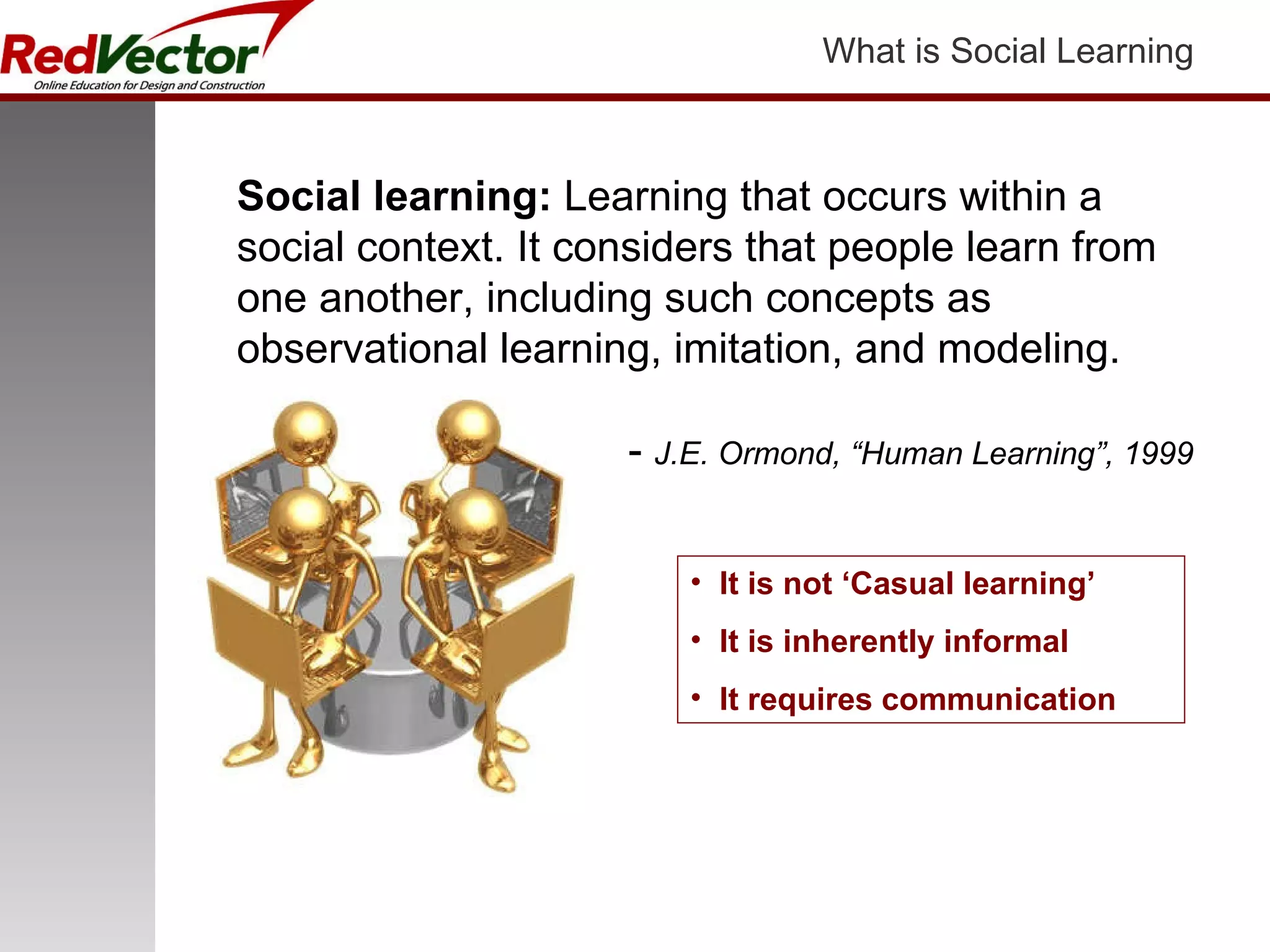
What is Social Learning Social learning:  Learning that occurs within a social context. It considers that people learn from one another, including such concepts as observational learning, imitation, and modeling. -  J.E. Ormond, “Human Learning”, 1999 It is not ‘Casual learning’ It is inherently informal It requires communication
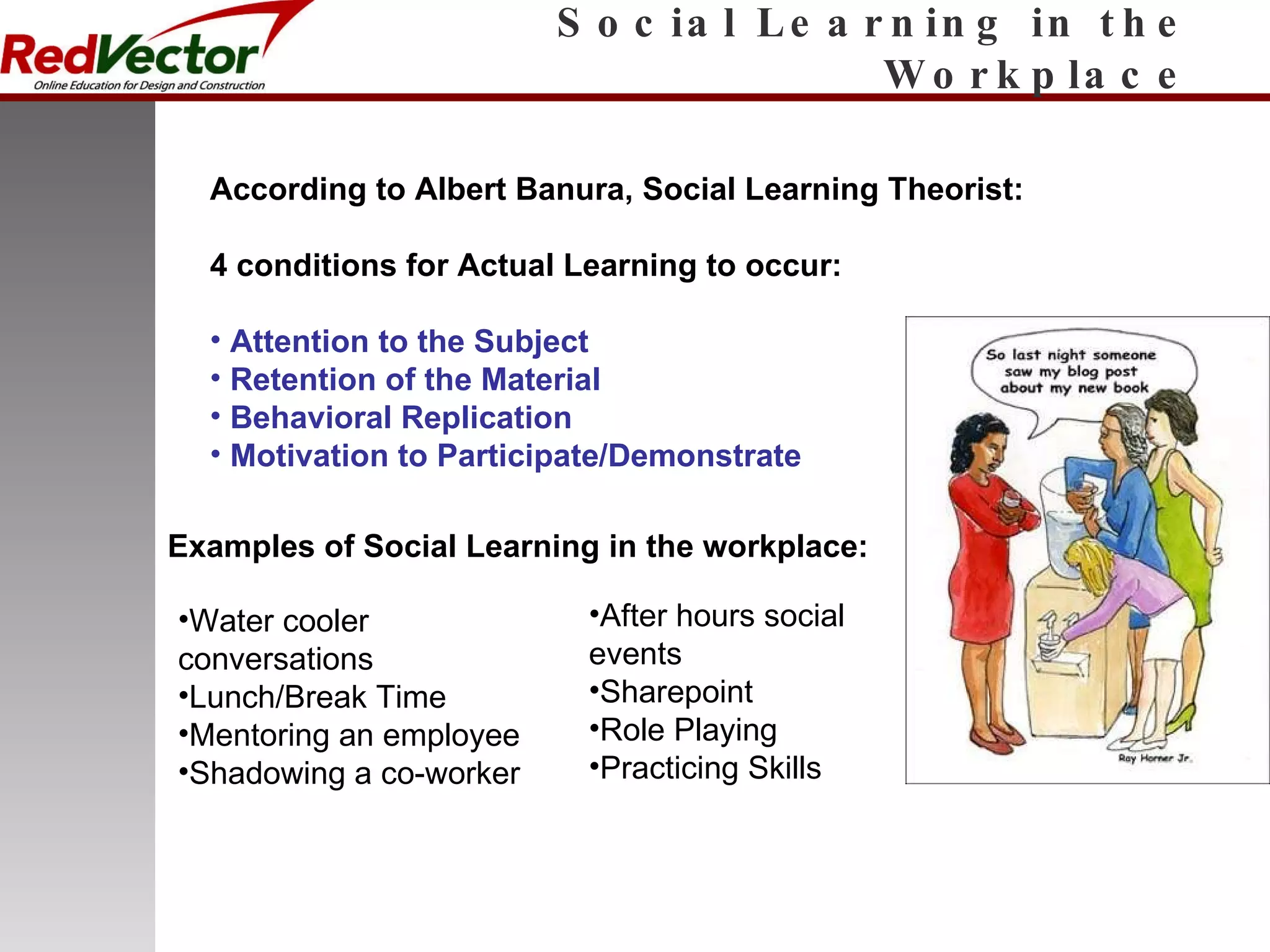
Social Learning in the Workplace According to Albert Banura, Social Learning Theorist: 4 conditions for Actual Learning to occur: Attention to the Subject Retention of the Material Behavioral Replication Motivation to Participate/Demonstrate Examples of Social Learning in the workplace: Water cooler conversations Lunch/Break Time Mentoring an employee Shadowing a co-worker After hours social events Sharepoint Role Playing Practicing Skills
Social Learning Impacts and Risks
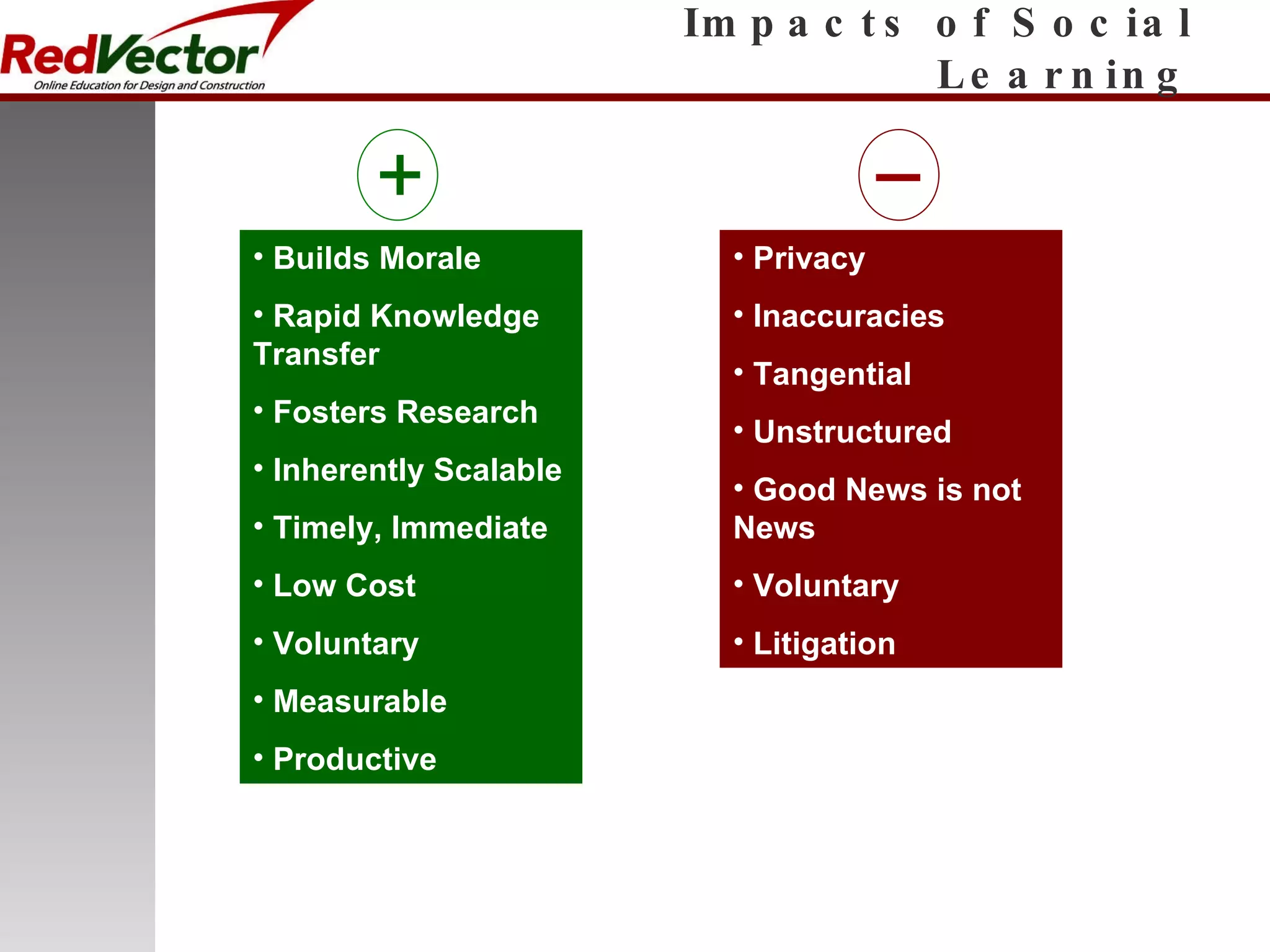
Impacts of Social Learning + _ Builds Morale Rapid Knowledge Transfer Fosters Research Inherently Scalable Timely, Immediate Low Cost Voluntary Measurable Productive Privacy Inaccuracies Tangential Unstructured Good News is not News Voluntary Litigation
The Next Step for Social Learning? Social Networking!
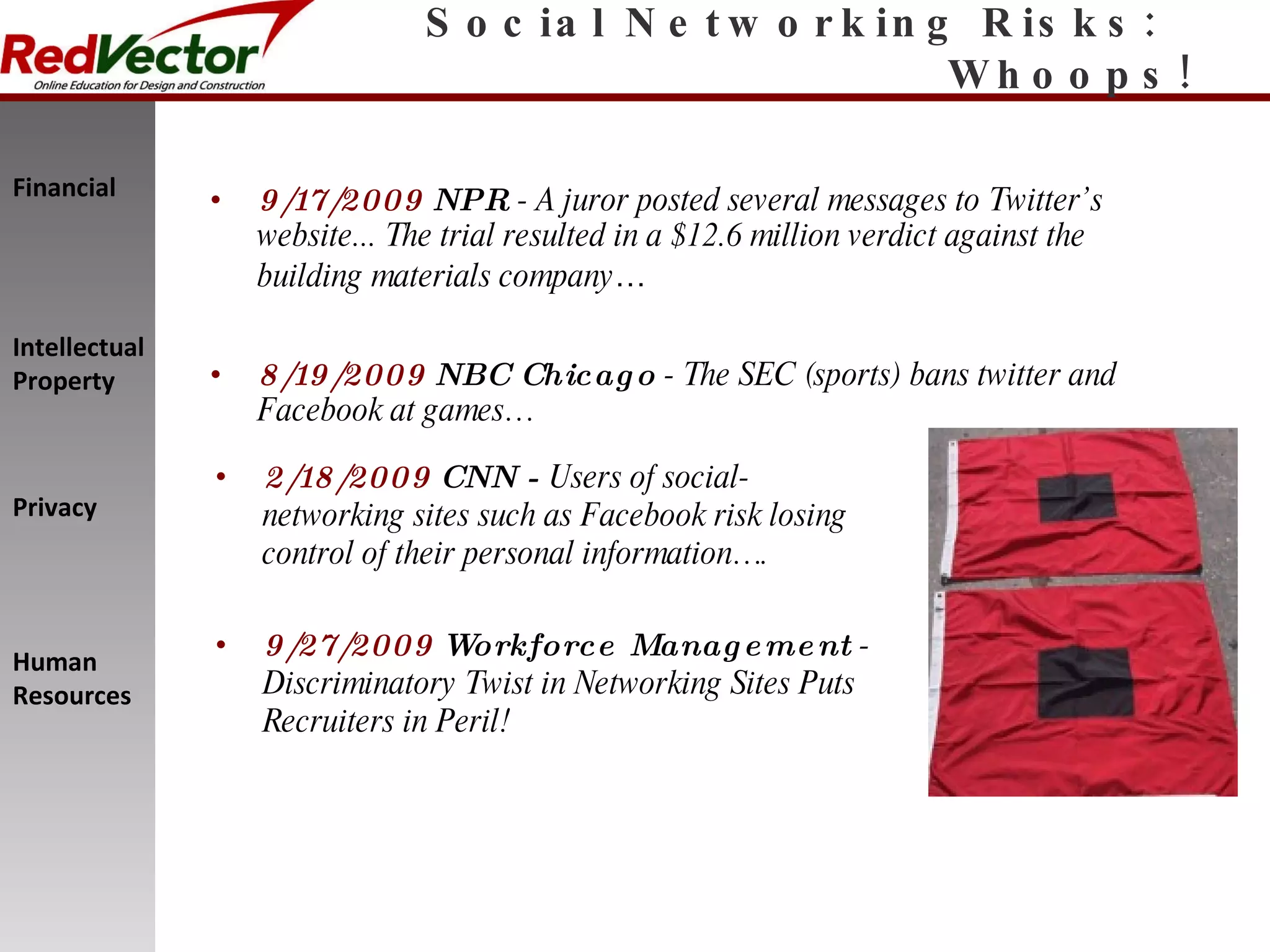
Social Networking Risks:  Whoops! 9/17/2009   NPR  - A juror posted several messages to Twitter’s website... The trial resulted in a $12.6 million verdict against the building materials company … 8/19/2009   NBC Chicago  - The SEC (sports) bans twitter and Facebook at games… 2/18/2009   CNN -  Users of social-networking sites such as Facebook risk losing control of their personal information…. 9/27/2009   Workforce Management  - Discriminatory Twist in Networking Sites Puts Recruiters in Peril! Financial Intellectual Property Privacy Human Resources
“Coaching” to minimize Risk Set written ground rules Separate personal & business accounts Document Activity Consider internal systems for highly sensitive info Use Common Sense
Why Risk it? I don’t use it It’s a fad I DON’T CARE! There are too many Security I don’t want my colleagues to see those pictures! Waste of time It’s for narcissists Claims
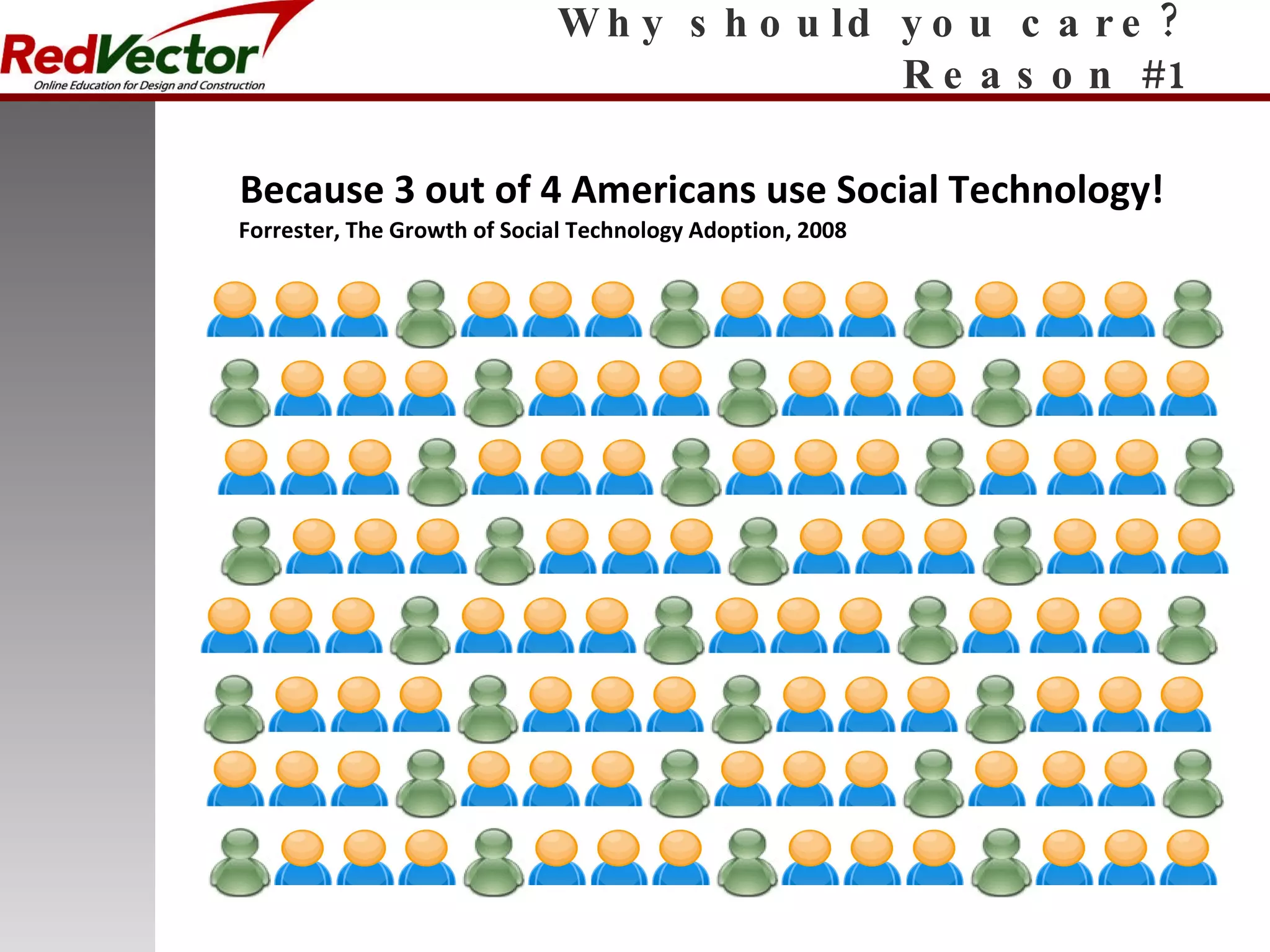
Why should you care? Reason #1 Because 3 out of 4 Americans use Social Technology! Forrester, The Growth of Social Technology Adoption, 2008
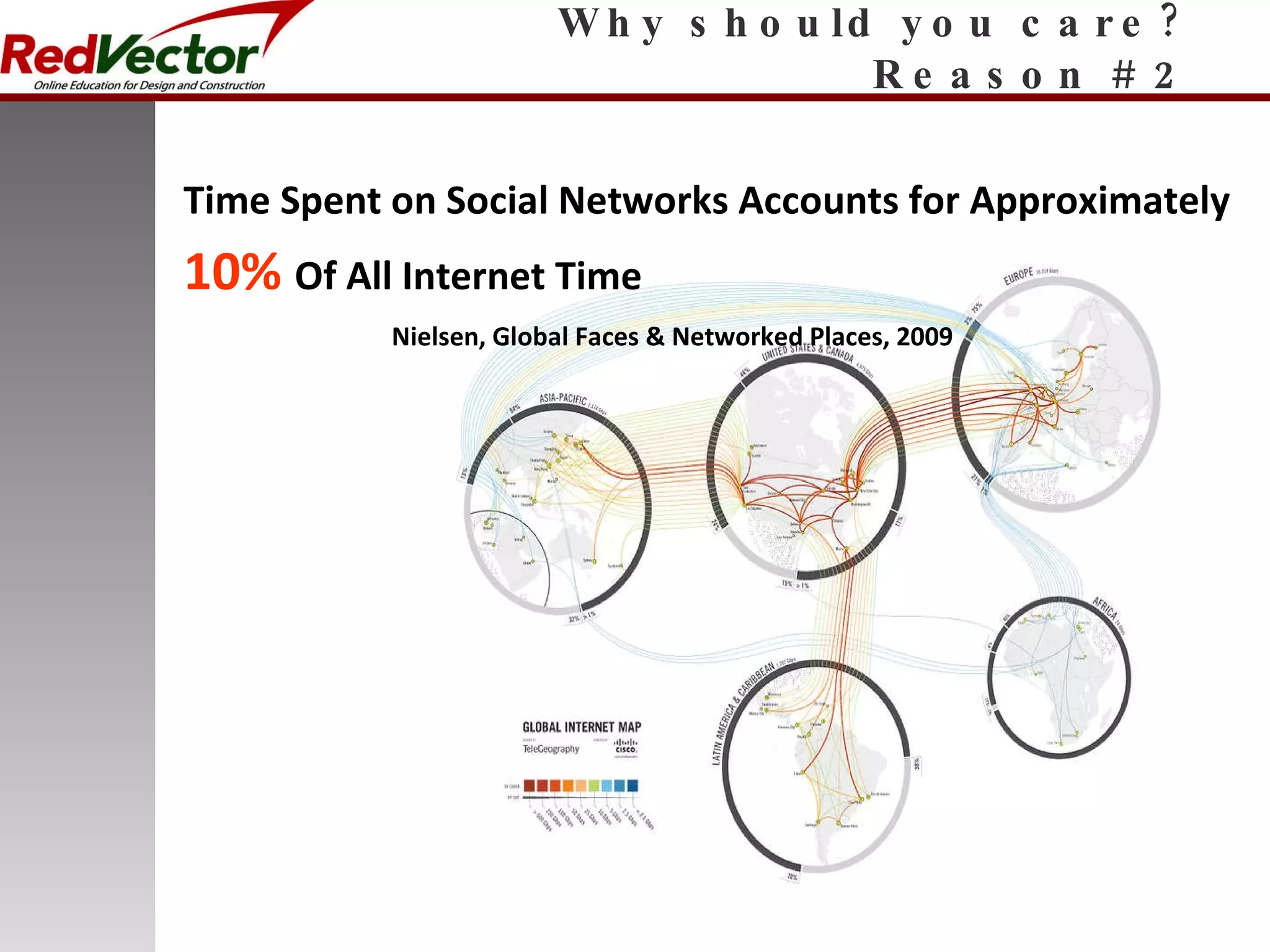
Why should you care? Reason # 2 Time Spent on Social Networks Accounts for Approximately 10%  Of All Internet Time Nielsen, Global Faces & Networked Places, 2009
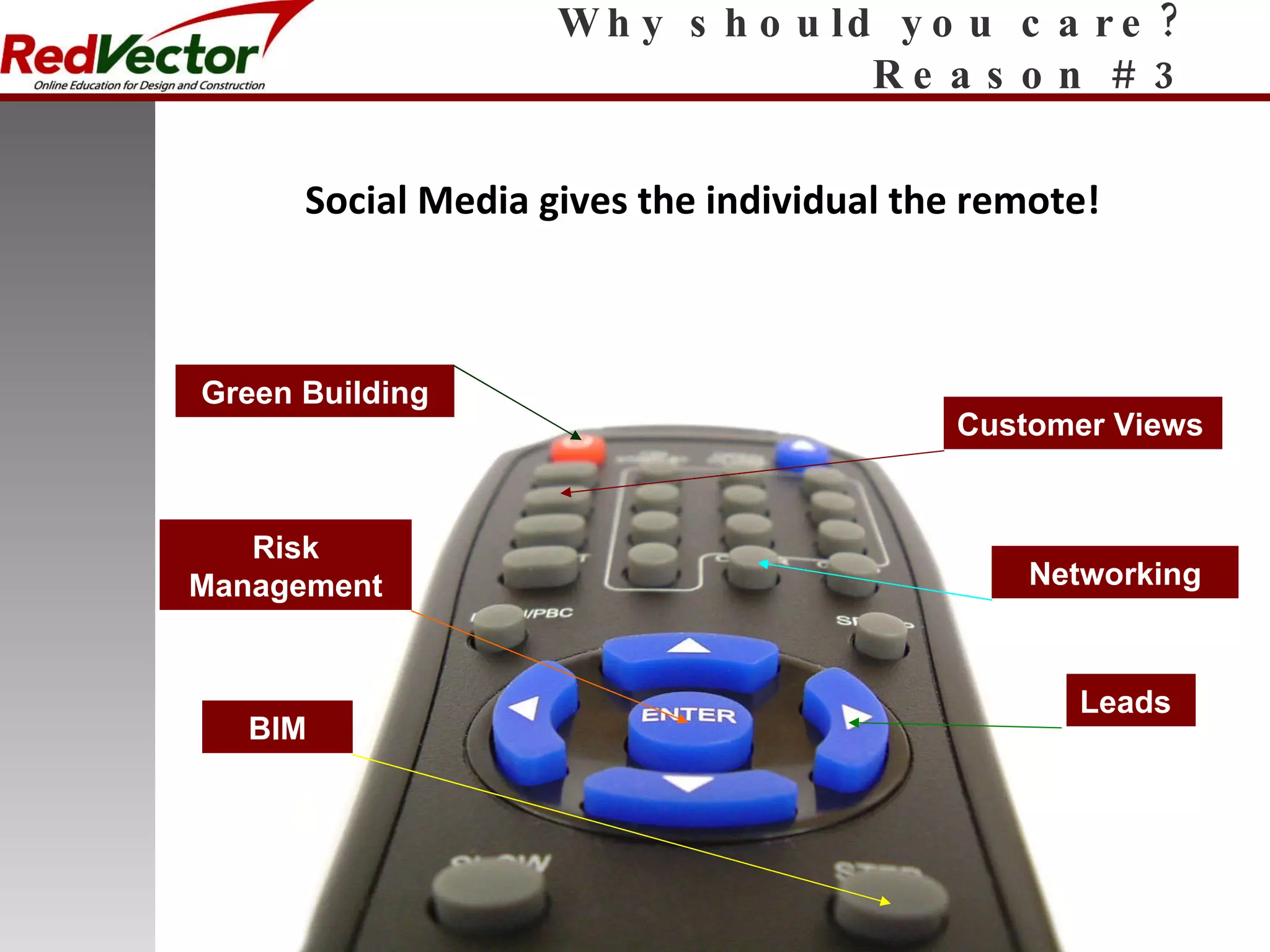
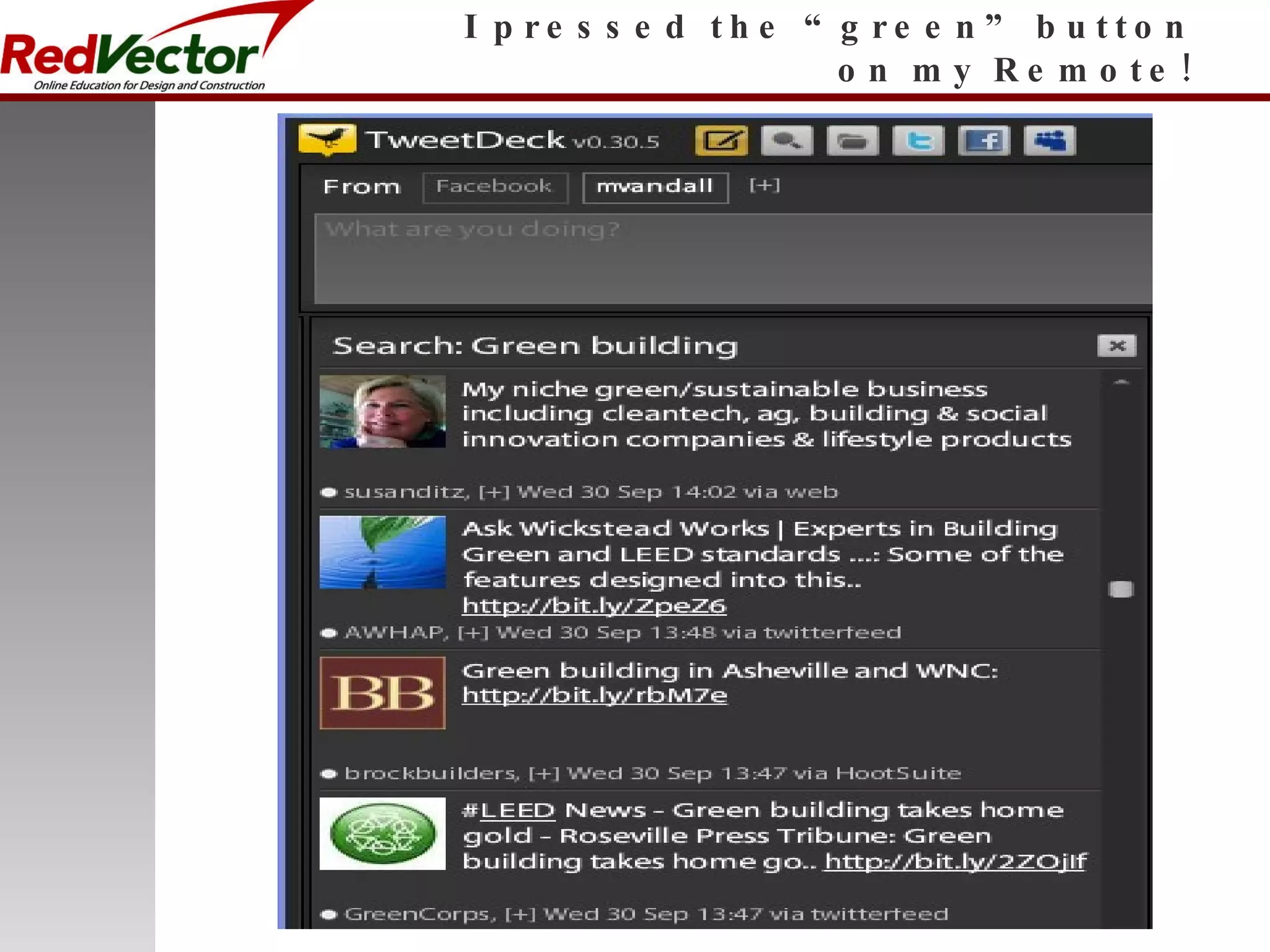
Why should you care? Reason # 3 Social Media gives the individual the remote! Green Building BIM Customer Views Networking Leads Risk Management
Why should you care? Reason # 4 For companies, resistance to social media is futile . -Millions of people are creating content for the social Web. -Your competitors are already there. -Your customers (employees) have been there for a long time. BusinessWeek, February 19, 2009
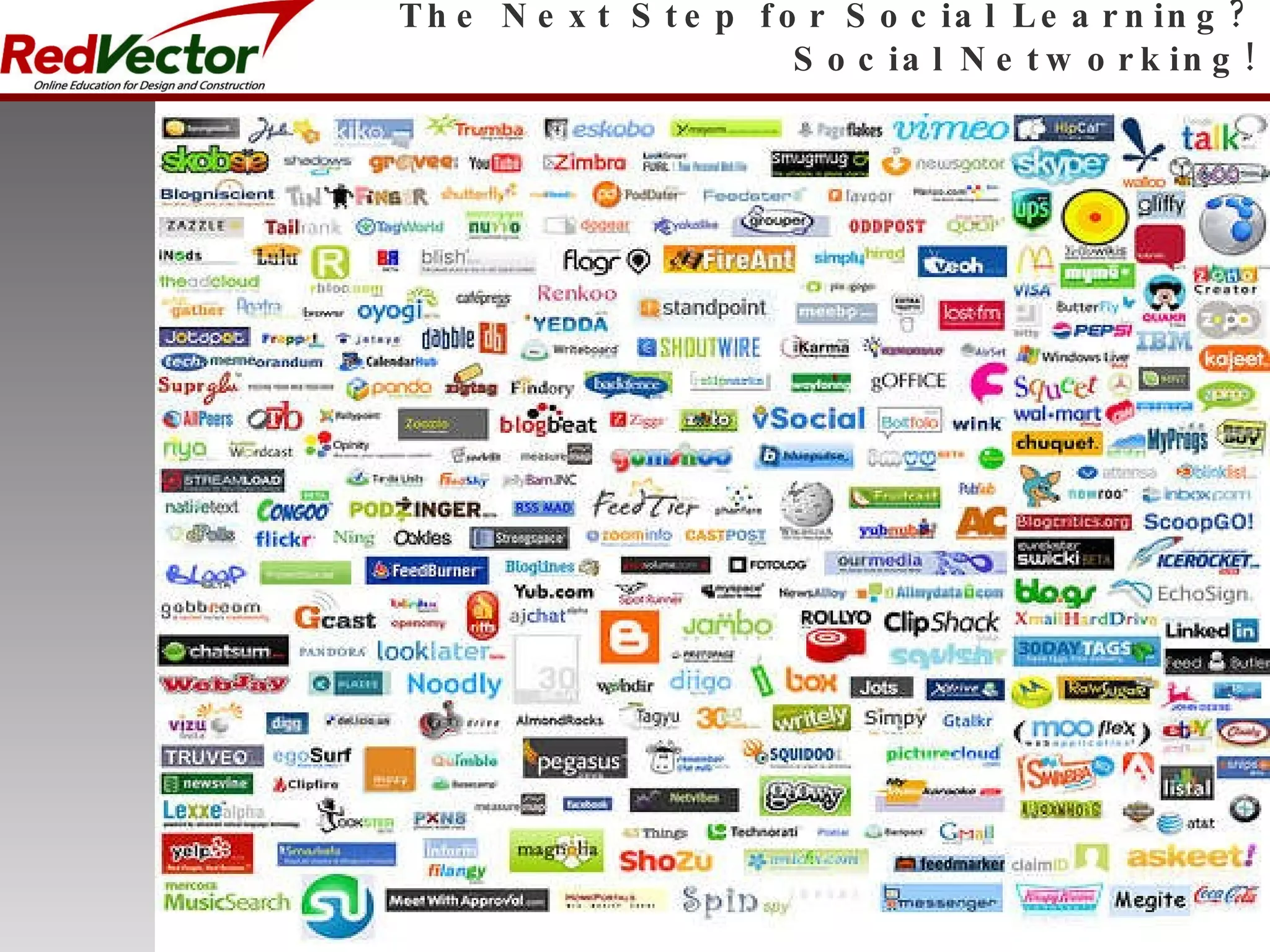
Major Social Networking (Learning) Sites
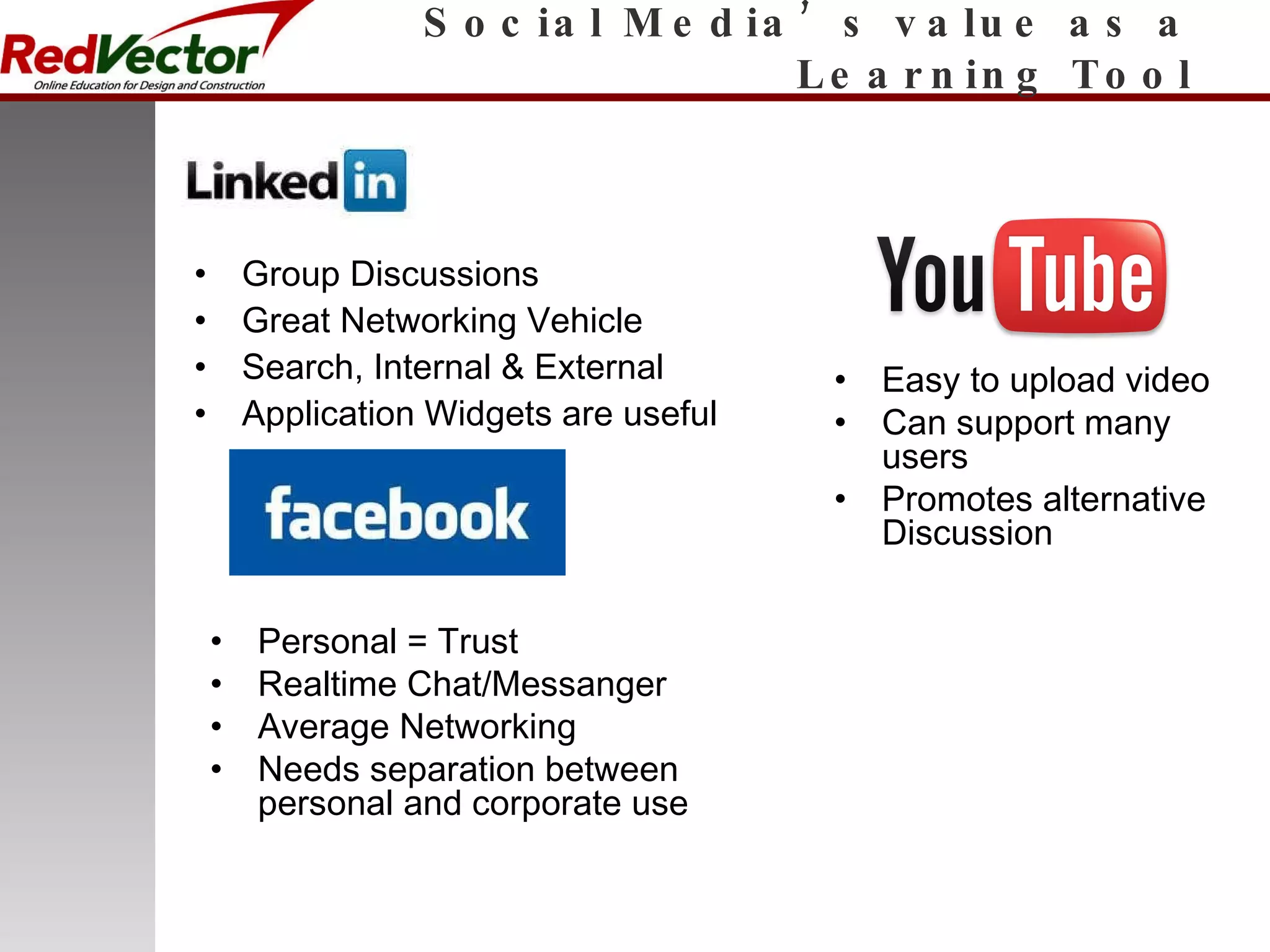
Social Media’s value as a Learning Tool Group Discussions Great Networking Vehicle Search, Internal & External Application Widgets are useful Easy to upload video Can support many users Promotes alternative Discussion Personal = Trust Realtime Chat/Messanger Average Networking Needs separation between personal and corporate use
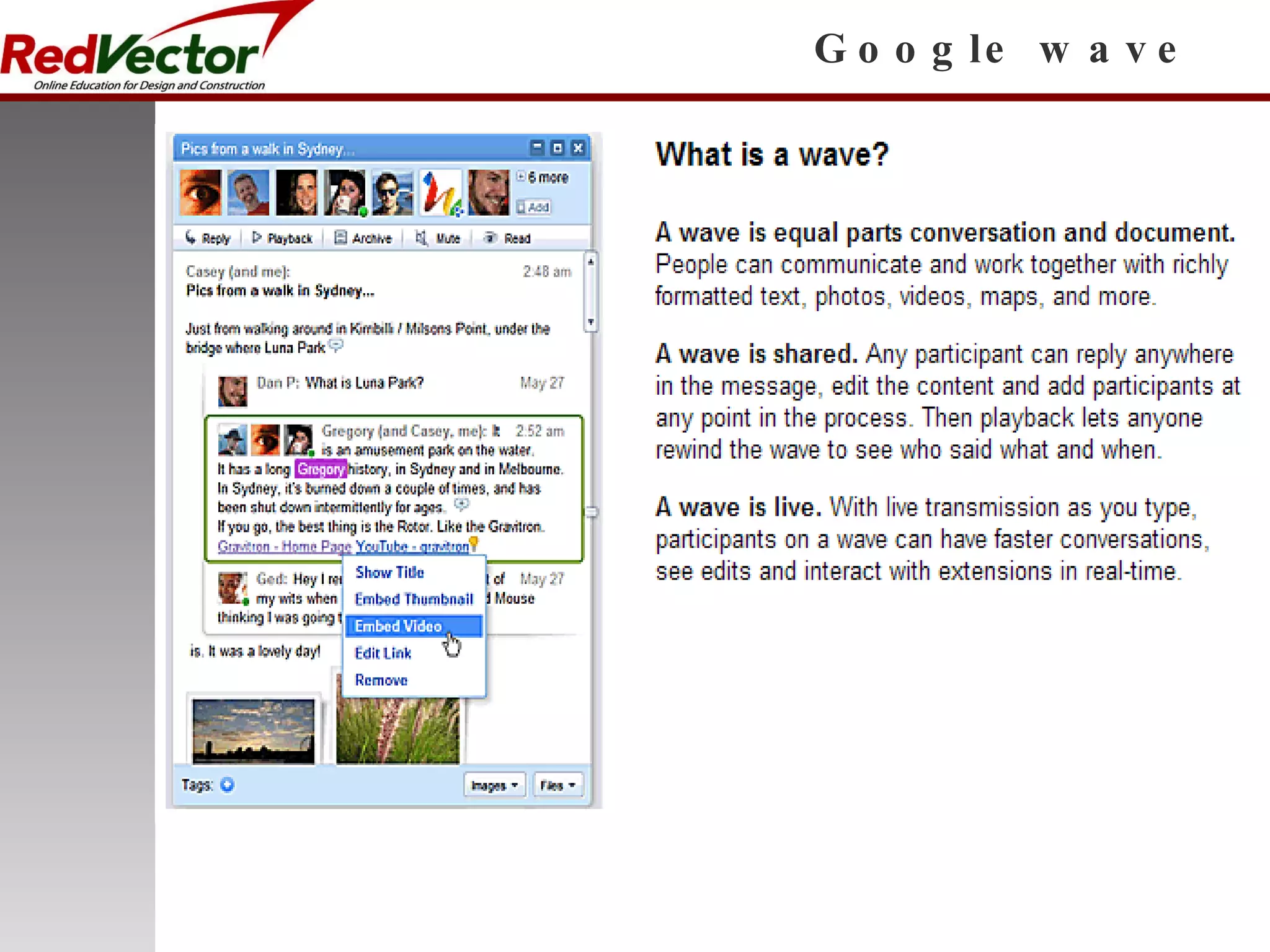
Google wave
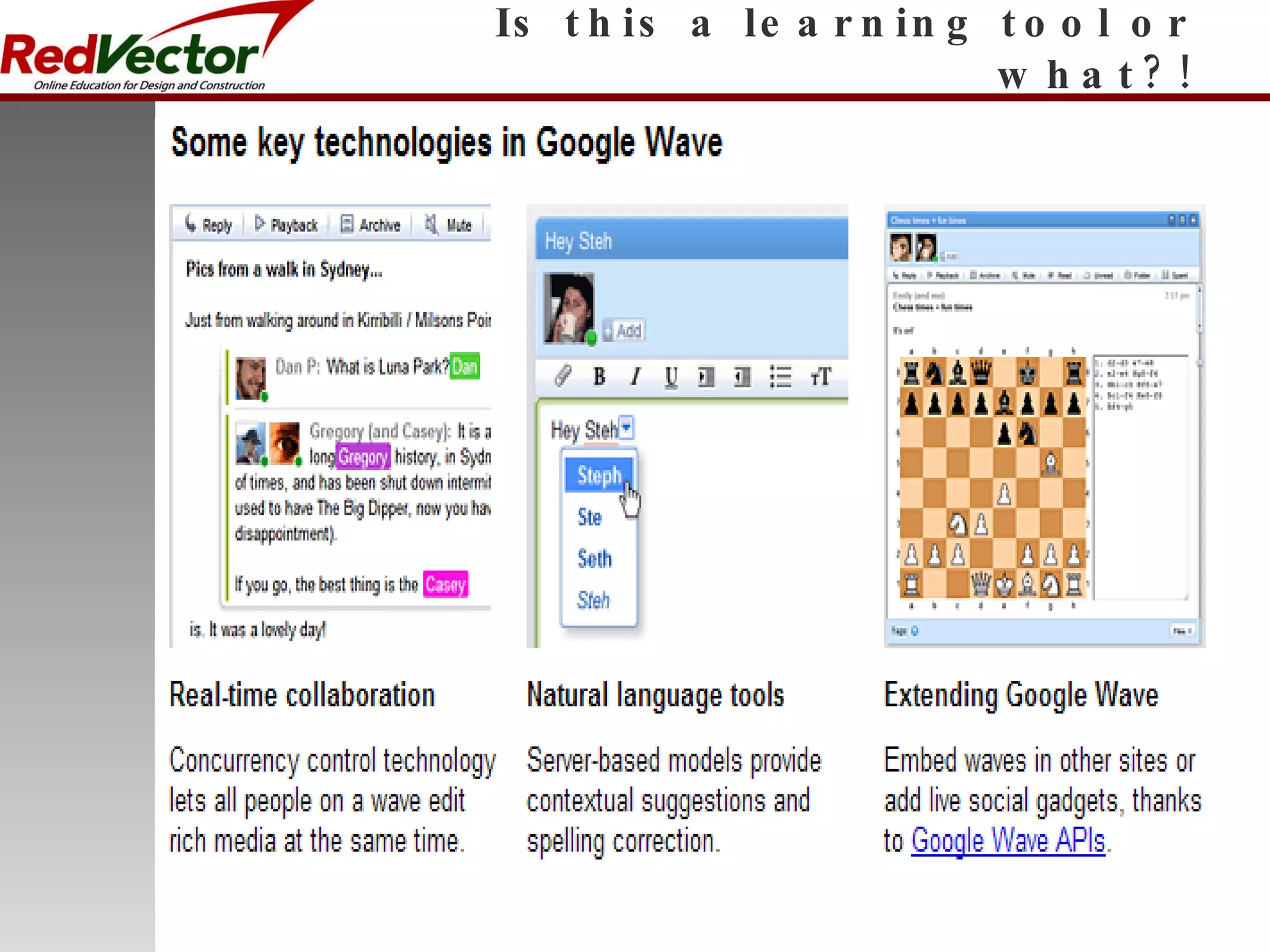
Is this a learning tool or what?!
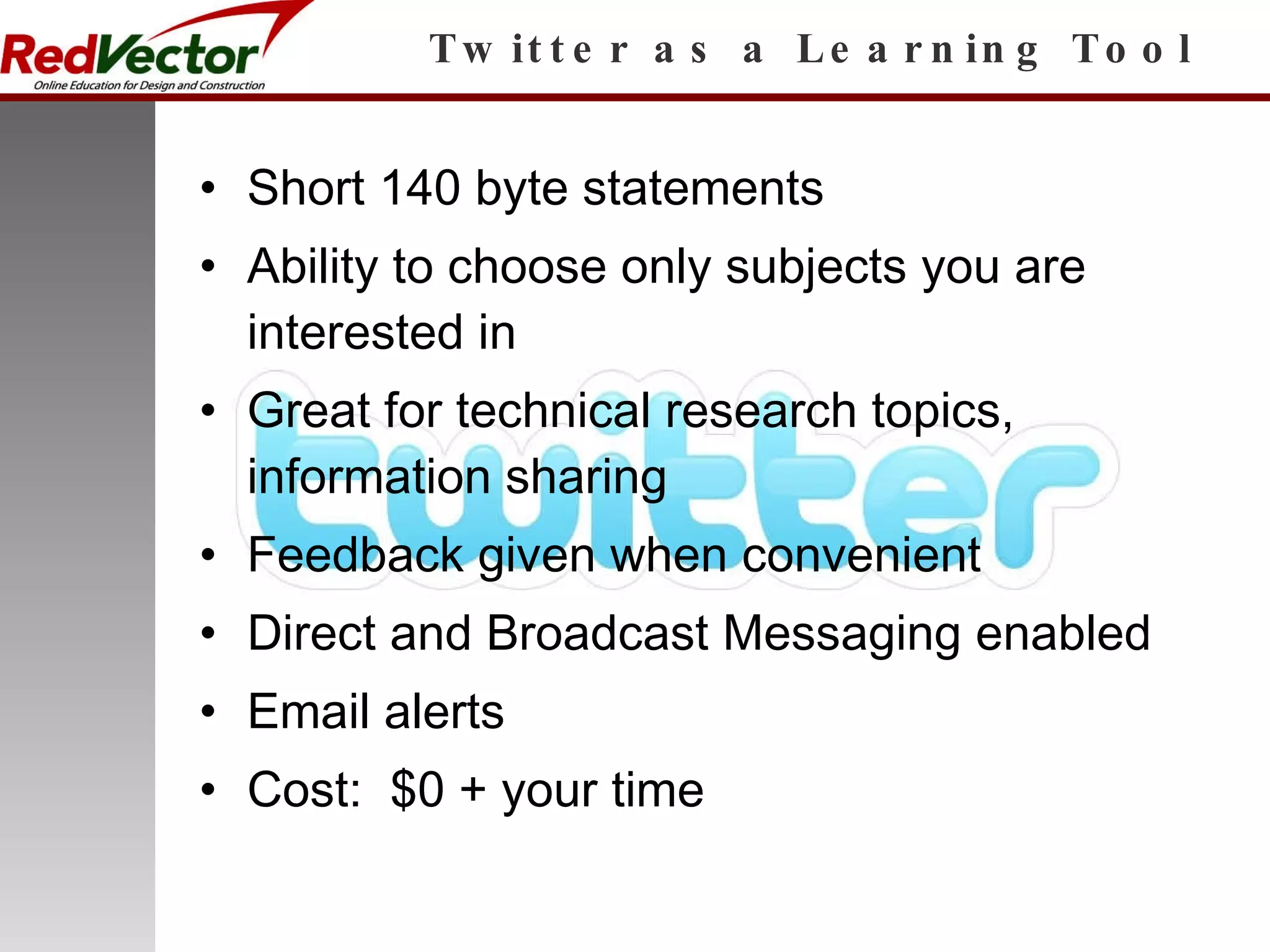
Twitter as a Learning Tool Short 140 byte statements Ability to choose only subjects you are interested in Great for technical research topics, information sharing Feedback given when convenient Direct and Broadcast Messaging enabled Email alerts  Cost:  $0 + your time
I pressed the “green” button on my Remote!
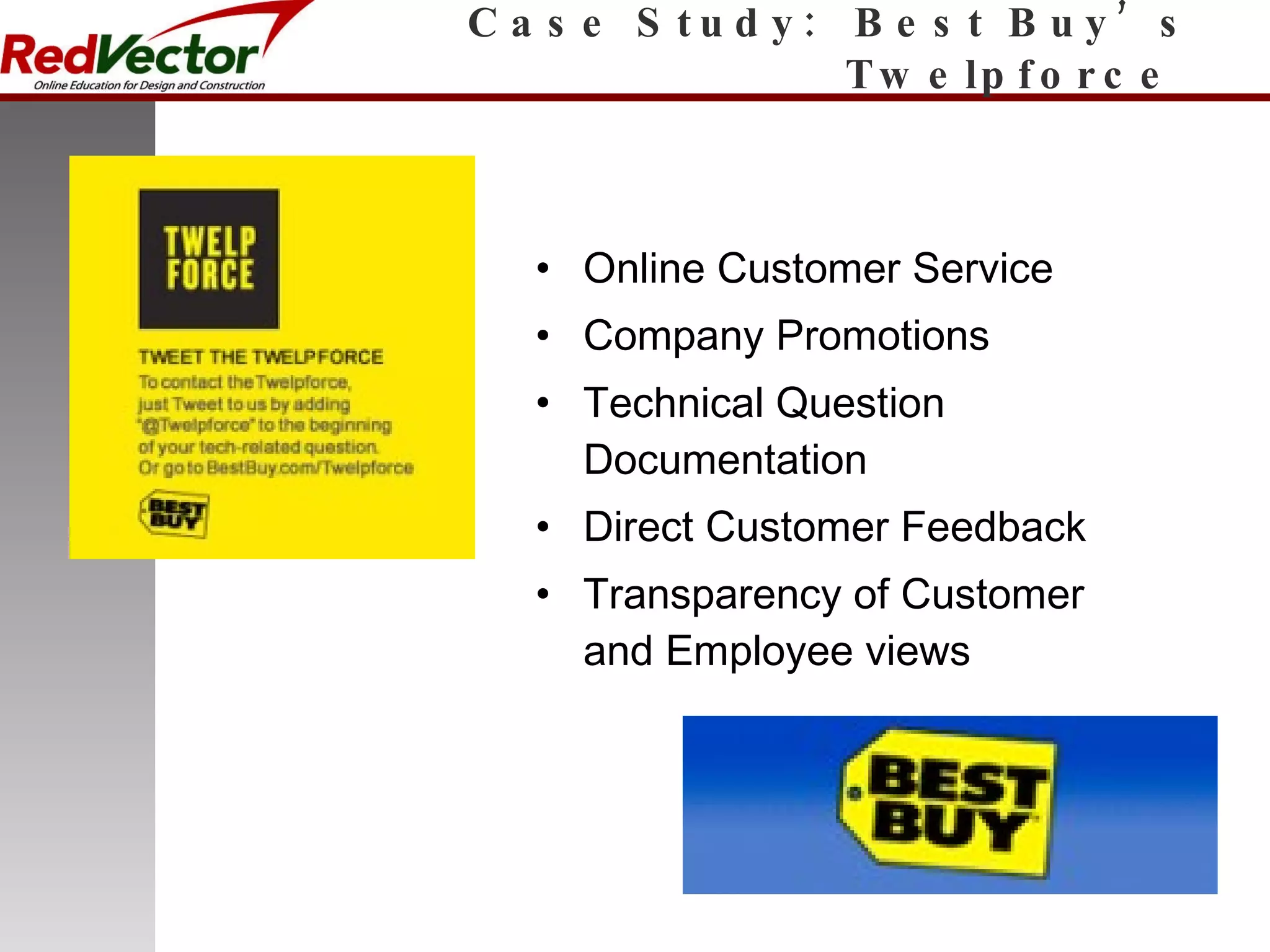
Case Study:  Best Buy’s Twelpforce  Online Customer Service Company Promotions Technical Question Documentation Direct Customer Feedback Transparency of Customer and Employee views
Twelpforce In Action
Make Social Media Social Learning Attention to the Subject Retention of the Material Behavioral Replication Motivation to  Participate/Demonstrate Remember the 4 conditions for Social Learning to occur?
Step 1: Planning Attention to Subject ID the topics ID social medium (s) Set some ground rules Retention of Material Create formal assessments/exams Set participation metrics ID useful learning management (LMS) reports Incorporate into performance reviews Behavioral Replication Benchmark behaviors Set participation metrics ID ways to observe OTJ Benchmark Proficiencies Motivation/Participation Develop a budget ID a recognition program ID LMS activity to be published Get feedback from key team members
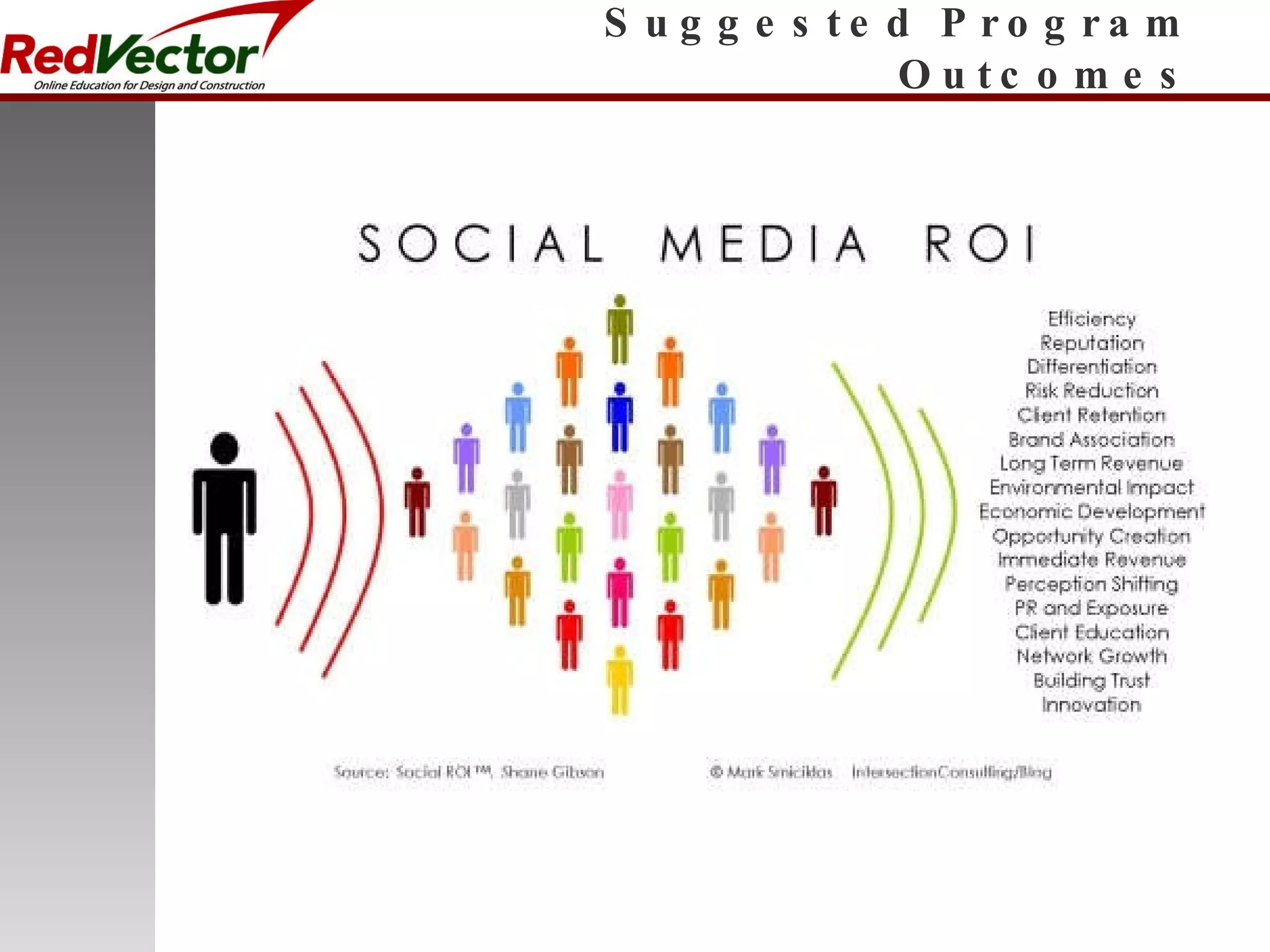
Suggested Program Outcomes
Step 2: Implementation Attention to Subject GET EXECS TO COMMIT Recruit some experts Subject Matter Technology Savvy Diversity Retention of Material GET EXECS TO COMMIT Set a project schedule Assign a PM Assess your capabilities IT/Access/Records Learning Management Human Capital Communicate plan to key managers & influencers Behavioral Replication GET EXECS TO COMMIT Field Observations Create Proficiency Exams Confirm Metrics Motivation/Participation Get Budget Approved GET EXECS TO COMMIT “ BUZZ” the project Publish objectives/ Get feedback from key team members
Step 3: Participation Attention to Subject Update posts regularly Set aside time Ask questions Give your REAL opinion Retention of Material Challenge assessments How did you apply this? Review LMS reports & provide feedback Monitor posts for ‘intelligent growth’ Behavioral Replication Ask questions in field Monitor activity metrics Perform OTJ observations Conduct proficiency tests Motivation/Participation Communicate recognition programs Publish LMS activity Engage in Conversation about posted topics Get feedback from ANY team members
Step 4: Apply Metrics Attention to Subject Record posts/topic Publish metrics/topic Retention of Material Review assessment scores and compare by individual/unit/firm Record posts & time/employee Incorporate into performance reviews Behavioral Replication Review posts Compare benchmark data Document OTJ observations Review proficiency pass rates Motivation/Participation Recognize ‘stars’ & why Broadcast your wins Internally Externally Count the smiles
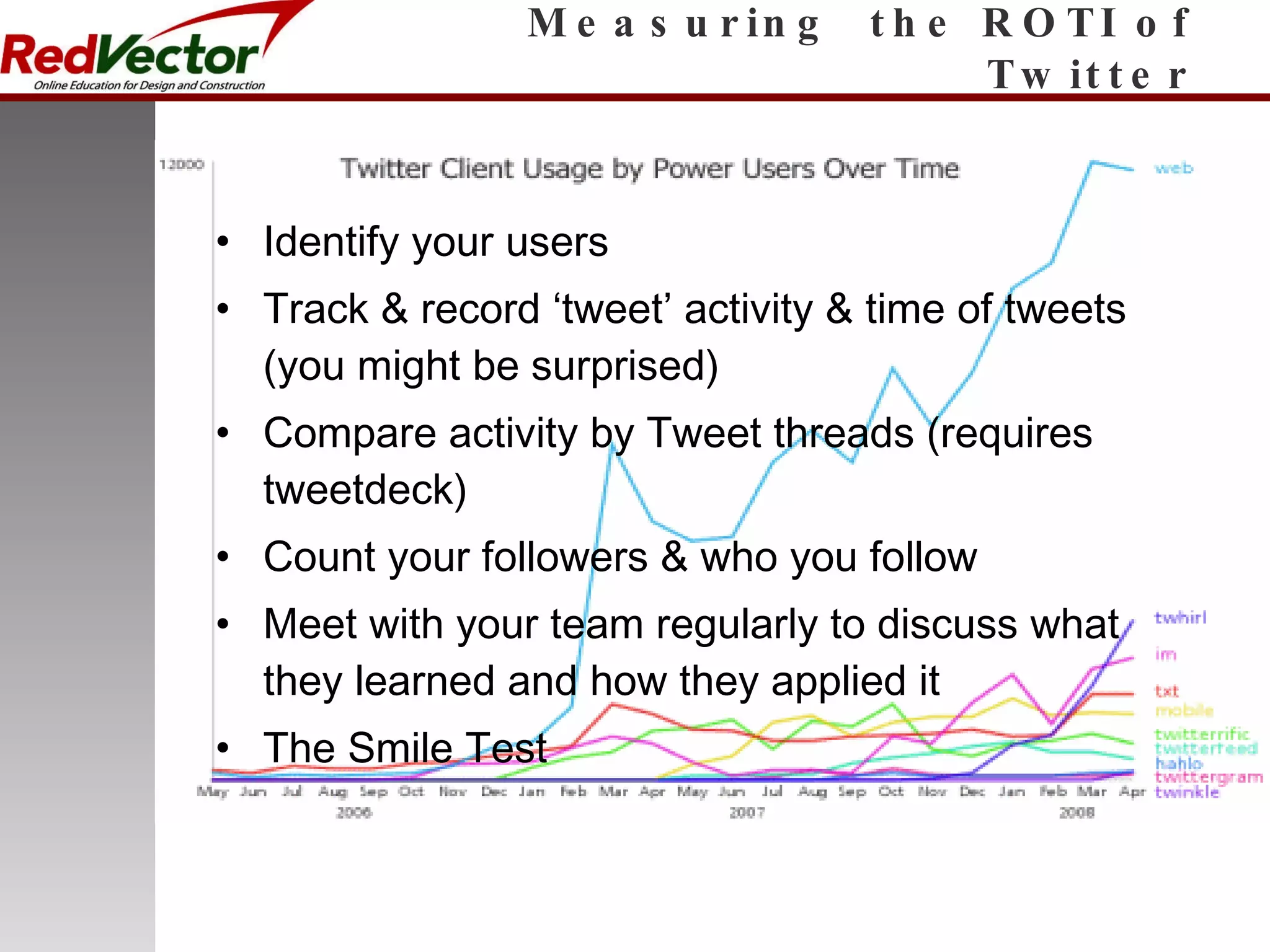
Measuring  the ROTI of Twitter Identify your users Track & record ‘tweet’ activity & time of tweets (you might be surprised) Compare activity by Tweet threads (requires tweetdeck) Count your followers & who you follow Meet with your team regularly to discuss what they learned and how they applied it The Smile Test
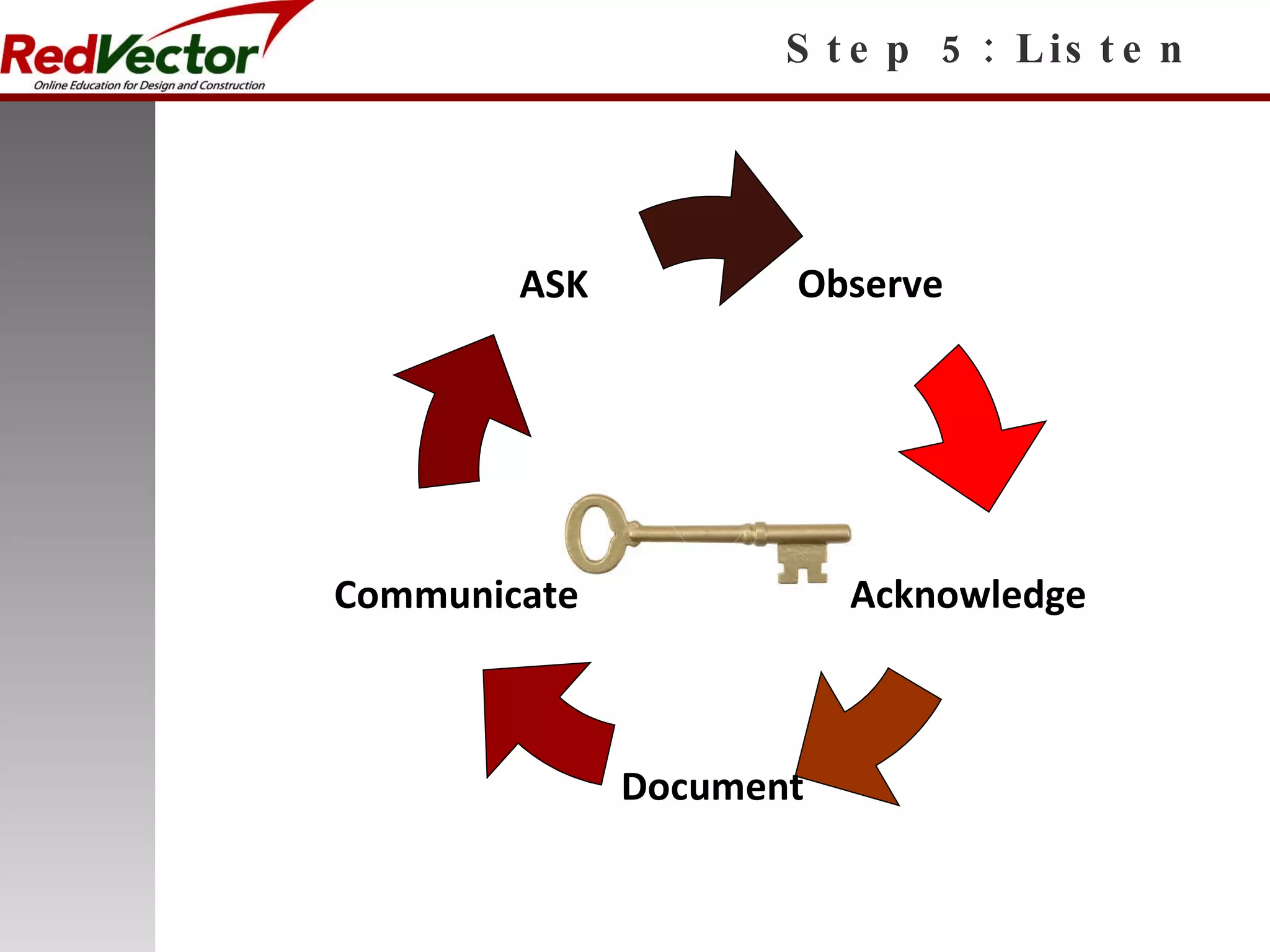
Step 5: Listen Observe Acknowledge Document Communicate ASK
Step 6: Rinse & Repeat
Conclusions Social Learning is a learning process that is rapidly evolving as a direct result of internet based social networking sites and collaboration technologies.  While there are risks associated with embracing these technologies, they can be readily mitigated through careful planning and active communication. An A/E/C firm that implements a Social Learning program will see gains in productivity, knowledge transfer, OTJ Performance and morale. A Social Learning program does not just happen.  A firm must commit time, resources and technology to get a program launched.  In addition, buy-in from senior leadership is critical for Social Learning to be an ongoing success to an A/E/C firms learning organization.
Questions
How to find me Mike Vandall EVP, Business Development (813) 864-2663 [email_address]   www.redvectorsolutions.com

2009.10.09 Social Media As A Learning Tool

  • 1.
    Social Media asLearning Tool Mike Vandall EVP, Business Development RedVector.com, Inc.
  • 2.
    Learning Objectives DefineSocial Learning Mitigating the Risks Associated with Social Learning Identify Social Learning Methods & Tools Examine how to Apply Social Learning in the typical A/E/C Firm
  • 3.
    What is SocialLearning Social learning: Learning that occurs within a social context. It considers that people learn from one another, including such concepts as observational learning, imitation, and modeling. - J.E. Ormond, “Human Learning”, 1999 It is not ‘Casual learning’ It is inherently informal It requires communication
  • 4.
    Social Learning inthe Workplace According to Albert Banura, Social Learning Theorist: 4 conditions for Actual Learning to occur: Attention to the Subject Retention of the Material Behavioral Replication Motivation to Participate/Demonstrate Examples of Social Learning in the workplace: Water cooler conversations Lunch/Break Time Mentoring an employee Shadowing a co-worker After hours social events Sharepoint Role Playing Practicing Skills
  • 5.
  • 6.
    Impacts of SocialLearning + _ Builds Morale Rapid Knowledge Transfer Fosters Research Inherently Scalable Timely, Immediate Low Cost Voluntary Measurable Productive Privacy Inaccuracies Tangential Unstructured Good News is not News Voluntary Litigation
  • 7.
    The Next Stepfor Social Learning? Social Networking!
  • 8.
    Social Networking Risks: Whoops! 9/17/2009 NPR - A juror posted several messages to Twitter’s website... The trial resulted in a $12.6 million verdict against the building materials company … 8/19/2009 NBC Chicago - The SEC (sports) bans twitter and Facebook at games… 2/18/2009 CNN - Users of social-networking sites such as Facebook risk losing control of their personal information…. 9/27/2009 Workforce Management - Discriminatory Twist in Networking Sites Puts Recruiters in Peril! Financial Intellectual Property Privacy Human Resources
  • 9.
    “Coaching” to minimizeRisk Set written ground rules Separate personal & business accounts Document Activity Consider internal systems for highly sensitive info Use Common Sense
  • 10.
    Why Risk it?I don’t use it It’s a fad I DON’T CARE! There are too many Security I don’t want my colleagues to see those pictures! Waste of time It’s for narcissists Claims
  • 11.
    Why should youcare? Reason #1 Because 3 out of 4 Americans use Social Technology! Forrester, The Growth of Social Technology Adoption, 2008
  • 12.
    Why should youcare? Reason # 2 Time Spent on Social Networks Accounts for Approximately 10% Of All Internet Time Nielsen, Global Faces & Networked Places, 2009
  • 13.
    Why should youcare? Reason # 3 Social Media gives the individual the remote! Green Building BIM Customer Views Networking Leads Risk Management
  • 14.
    Why should youcare? Reason # 4 For companies, resistance to social media is futile . -Millions of people are creating content for the social Web. -Your competitors are already there. -Your customers (employees) have been there for a long time. BusinessWeek, February 19, 2009
  • 15.
    Major Social Networking(Learning) Sites
  • 16.
    Social Media’s valueas a Learning Tool Group Discussions Great Networking Vehicle Search, Internal & External Application Widgets are useful Easy to upload video Can support many users Promotes alternative Discussion Personal = Trust Realtime Chat/Messanger Average Networking Needs separation between personal and corporate use
  • 17.
  • 18.
    Is this alearning tool or what?!
  • 19.
    Twitter as aLearning Tool Short 140 byte statements Ability to choose only subjects you are interested in Great for technical research topics, information sharing Feedback given when convenient Direct and Broadcast Messaging enabled Email alerts Cost: $0 + your time
  • 20.
    I pressed the“green” button on my Remote!
  • 21.
    Case Study: Best Buy’s Twelpforce Online Customer Service Company Promotions Technical Question Documentation Direct Customer Feedback Transparency of Customer and Employee views
  • 22.
  • 23.
    Make Social MediaSocial Learning Attention to the Subject Retention of the Material Behavioral Replication Motivation to Participate/Demonstrate Remember the 4 conditions for Social Learning to occur?
  • 24.
    Step 1: PlanningAttention to Subject ID the topics ID social medium (s) Set some ground rules Retention of Material Create formal assessments/exams Set participation metrics ID useful learning management (LMS) reports Incorporate into performance reviews Behavioral Replication Benchmark behaviors Set participation metrics ID ways to observe OTJ Benchmark Proficiencies Motivation/Participation Develop a budget ID a recognition program ID LMS activity to be published Get feedback from key team members
  • 25.
  • 26.
    Step 2: ImplementationAttention to Subject GET EXECS TO COMMIT Recruit some experts Subject Matter Technology Savvy Diversity Retention of Material GET EXECS TO COMMIT Set a project schedule Assign a PM Assess your capabilities IT/Access/Records Learning Management Human Capital Communicate plan to key managers & influencers Behavioral Replication GET EXECS TO COMMIT Field Observations Create Proficiency Exams Confirm Metrics Motivation/Participation Get Budget Approved GET EXECS TO COMMIT “ BUZZ” the project Publish objectives/ Get feedback from key team members
  • 27.
    Step 3: ParticipationAttention to Subject Update posts regularly Set aside time Ask questions Give your REAL opinion Retention of Material Challenge assessments How did you apply this? Review LMS reports & provide feedback Monitor posts for ‘intelligent growth’ Behavioral Replication Ask questions in field Monitor activity metrics Perform OTJ observations Conduct proficiency tests Motivation/Participation Communicate recognition programs Publish LMS activity Engage in Conversation about posted topics Get feedback from ANY team members
  • 28.
    Step 4: ApplyMetrics Attention to Subject Record posts/topic Publish metrics/topic Retention of Material Review assessment scores and compare by individual/unit/firm Record posts & time/employee Incorporate into performance reviews Behavioral Replication Review posts Compare benchmark data Document OTJ observations Review proficiency pass rates Motivation/Participation Recognize ‘stars’ & why Broadcast your wins Internally Externally Count the smiles
  • 29.
    Measuring theROTI of Twitter Identify your users Track & record ‘tweet’ activity & time of tweets (you might be surprised) Compare activity by Tweet threads (requires tweetdeck) Count your followers & who you follow Meet with your team regularly to discuss what they learned and how they applied it The Smile Test
  • 30.
    Step 5: ListenObserve Acknowledge Document Communicate ASK
  • 31.
    Step 6: Rinse& Repeat
  • 32.
    Conclusions Social Learningis a learning process that is rapidly evolving as a direct result of internet based social networking sites and collaboration technologies. While there are risks associated with embracing these technologies, they can be readily mitigated through careful planning and active communication. An A/E/C firm that implements a Social Learning program will see gains in productivity, knowledge transfer, OTJ Performance and morale. A Social Learning program does not just happen. A firm must commit time, resources and technology to get a program launched. In addition, buy-in from senior leadership is critical for Social Learning to be an ongoing success to an A/E/C firms learning organization.
  • 33.
  • 34.
    How to findme Mike Vandall EVP, Business Development (813) 864-2663 [email_address] www.redvectorsolutions.com