Talent Management of Nestle
-R.Karthik (2002041)
Introduction
According to Schiemann (2014), Talent is the
collective knowledge, skills, abilities,
experiences, values, habits and behaviors of all
labor that is brought to bear on the
organization’s mission
Talent management is a comprehensive
management technique that contributes to an
organization's competitive advantage.
Talent management strategy has become a
useful tool to develop company’s future and
increasing its production as a whole
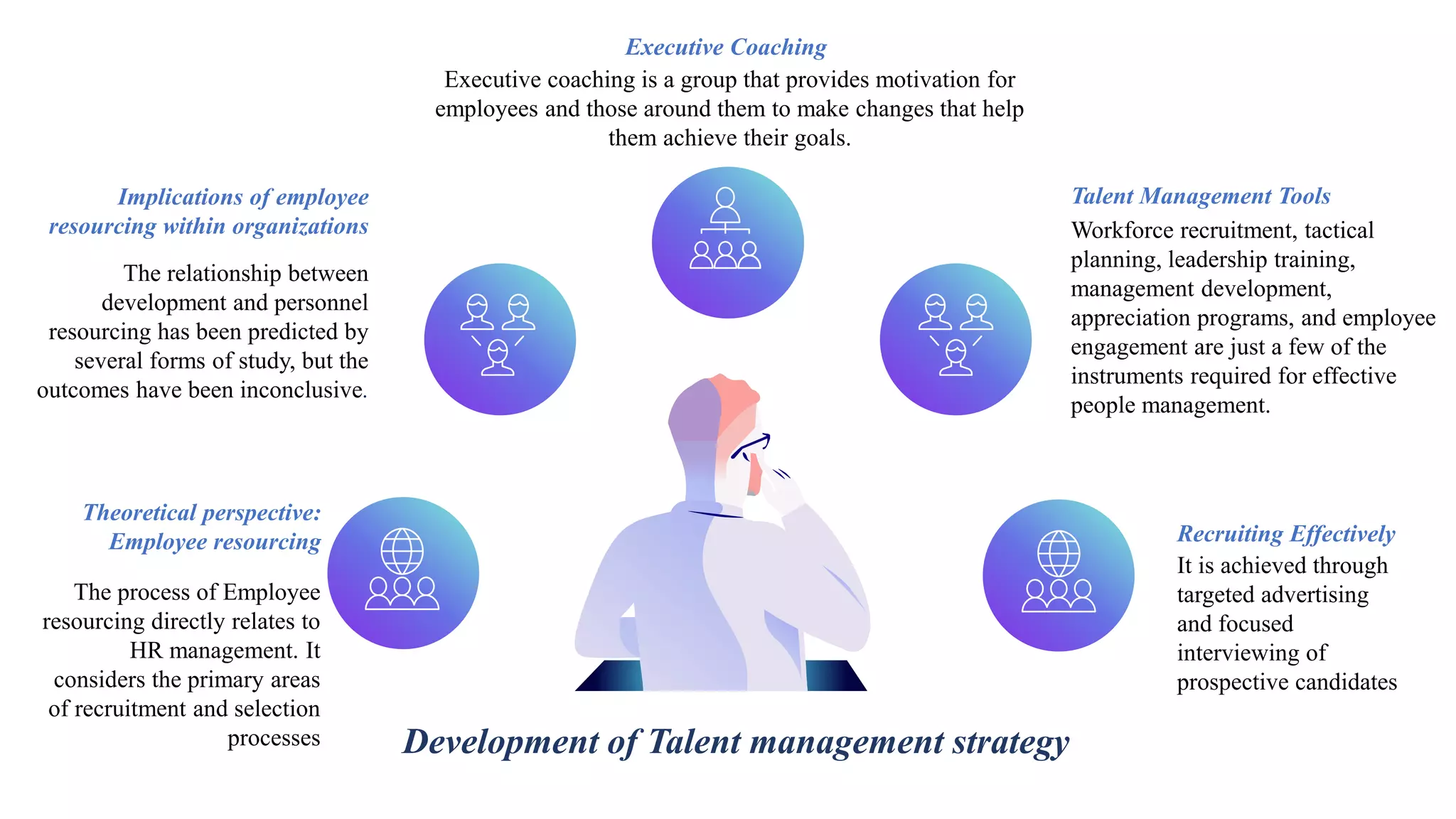
Development of Talent management strategy
Recruiting Effectively
It is achieved through
targeted advertising
and focused
interviewing of
prospective candidates
Talent Management Tools
Workforce recruitment, tactical
planning, leadership training,
management development,
appreciation programs, and employee
engagement are just a few of the
instruments required for effective
people management.
Implications of employee
resourcing within organizations
The relationship between
development and personnel
resourcing has been predicted by
several forms of study, but the
outcomes have been inconclusive.
Theoretical perspective:
Employee resourcing
The process of Employee
resourcing directly relates to
HR management. It
considers the primary areas
of recruitment and selection
processes
Executive Coaching
Executive coaching is a group that provides motivation for
employees and those around them to make changes that help
them achieve their goals.
Talent Management Initiatives by Nestle
Some of its key initiatives for Talent management are:
• The primary objective of selecting employees who can offer maximum to
the company.
• Making sure that employees understand the role Nestle and move in
accordance with business strategy.
• To bring into notice employee perspectives and boosting their talent
• Identify company strategies and that they are in accordance with employee
work ethics
Nestle, Objectives of Talent Management
• Role model: In order to cultivate talent
development, senior management is critical. In
a talent management strategy, the role of senior
management must be stressed
• Encourage development: Managers
should be very supportive in encouraging
their employees
• Strengthen shared values: People need
to understand their position in the
company and the importance of the work
they do
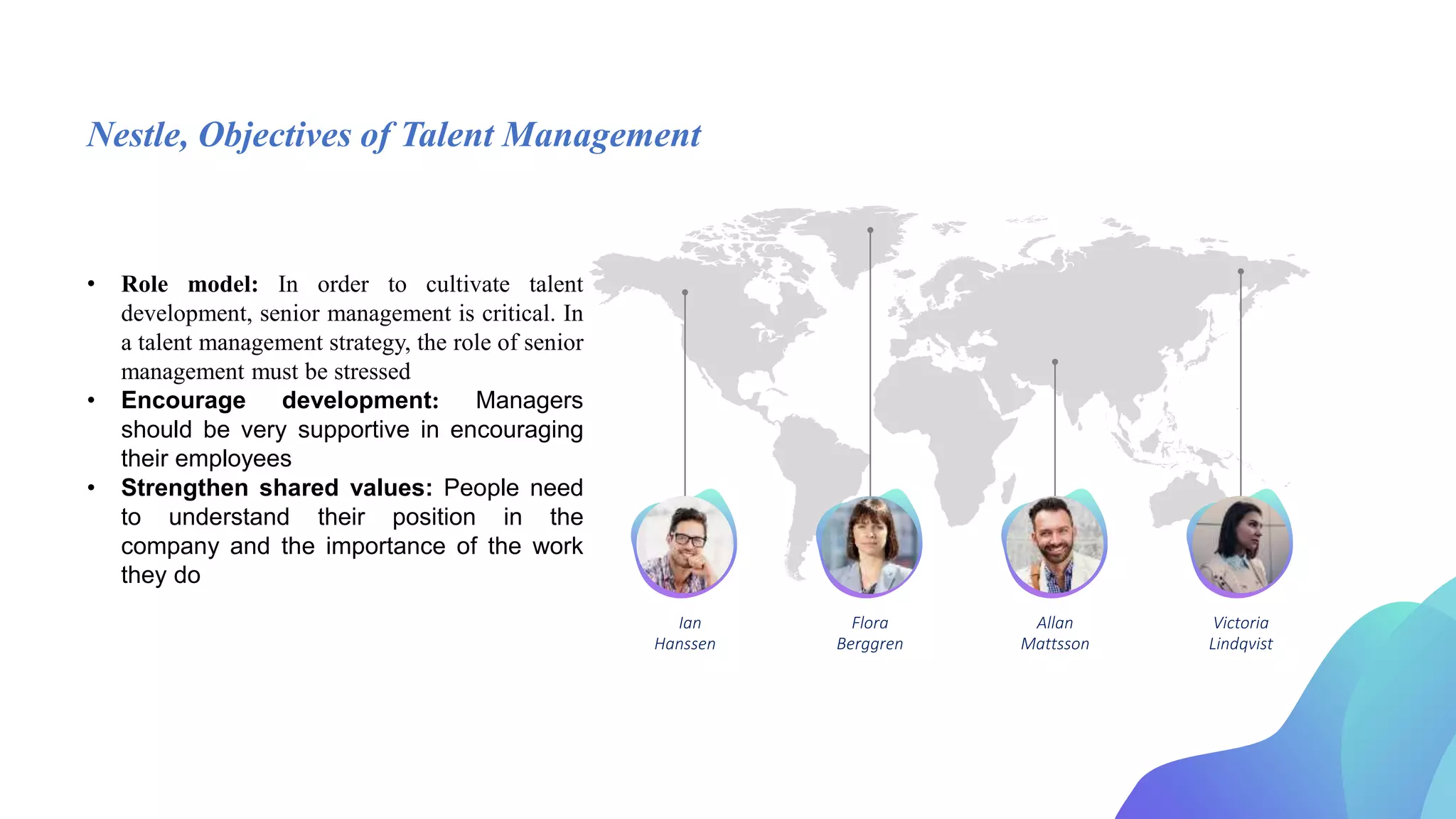
Ian Flora Allan Victoria
Berggren
Hanssen Mattsson Lindqvist
Thank You

2002041 R karthik

  • 1.
    Talent Management ofNestle -R.Karthik (2002041)
  • 2.
    Introduction According to Schiemann(2014), Talent is the collective knowledge, skills, abilities, experiences, values, habits and behaviors of all labor that is brought to bear on the organization’s mission Talent management is a comprehensive management technique that contributes to an organization's competitive advantage. Talent management strategy has become a useful tool to develop company’s future and increasing its production as a whole
  • 3.
    Development of Talentmanagement strategy Recruiting Effectively It is achieved through targeted advertising and focused interviewing of prospective candidates Talent Management Tools Workforce recruitment, tactical planning, leadership training, management development, appreciation programs, and employee engagement are just a few of the instruments required for effective people management. Implications of employee resourcing within organizations The relationship between development and personnel resourcing has been predicted by several forms of study, but the outcomes have been inconclusive. Theoretical perspective: Employee resourcing The process of Employee resourcing directly relates to HR management. It considers the primary areas of recruitment and selection processes Executive Coaching Executive coaching is a group that provides motivation for employees and those around them to make changes that help them achieve their goals.
  • 4.
    Talent Management Initiativesby Nestle Some of its key initiatives for Talent management are: • The primary objective of selecting employees who can offer maximum to the company. • Making sure that employees understand the role Nestle and move in accordance with business strategy. • To bring into notice employee perspectives and boosting their talent • Identify company strategies and that they are in accordance with employee work ethics
  • 5.
    Nestle, Objectives ofTalent Management • Role model: In order to cultivate talent development, senior management is critical. In a talent management strategy, the role of senior management must be stressed • Encourage development: Managers should be very supportive in encouraging their employees • Strengthen shared values: People need to understand their position in the company and the importance of the work they do Ian Flora Allan Victoria Berggren Hanssen Mattsson Lindqvist
  • 6.