The Catholic Church  and its Popes
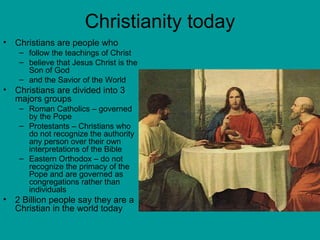
Christianity today Christians are people who  follow the teachings of Christ  believe that Jesus Christ is the Son of God  and the Savior of the World Christians are divided into 3 majors groups Roman Catholics – governed by the Pope Protestants – Christians who do not recognize the authority any person over their own interpretations of the Bible Eastern Orthodox – do not recognize the primacy of the Pope and are governed as congregations rather than individuals 2 Billion people say they are a Christian in the world today
Catholicism Catholic means universal Catholic Church means universal Church Catholics are Christians and believe that Jesus is the Messiah/Christ/Annointed One of God to save the world from sin Catholics tend to be hierarchical and believe that the Pope is the ultimate temporal authority on spiritual matters
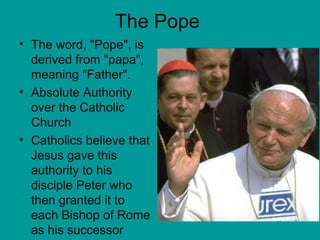
The Pope The word, "Pope", is derived from "papa", meaning "Father".  Absolute Authority over the Catholic Church Catholics believe that Jesus gave this authority to his disciple Peter who then granted it to each Bishop of Rome as his successor
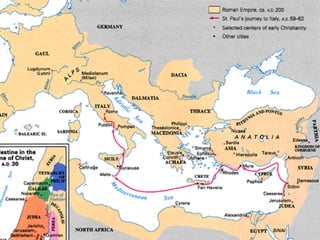
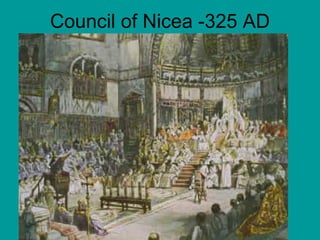
The Controversy By about 150 AD their were 5 Bishops in 5 cities (Antioch, Jeruselum, Alexandria, Rome, and Constantinople) who were all called Popes and all held power over their geographic areas About 300 the Council of Nicea, the conversion of Constantine to Christianity and its acceptance in the Roman Empire gave the Roman Pope the greatest power in the West The other Popes called the Roman Pope the “first among equals” and he had some special authorities in councils
 
Council of Nicea -325 AD
1054  The Great East-West Schism The division of the Roman Empire into halves was eventually echoed in the church. The break came when Michael Cerularius was Patriarch of Constantinople and St. Leo pope in Rome.  Cerularius believed that Catholics use unleavened bread and shouldn’t Catholics believe that Holy Spirit originates with the Father and the Son; Eastern orthodox believe only from the Father The Popes messenger replied on July 6, 1054  by placing a bull on the altar in Byzantium, excommunicating Cerularius  Eastern and Western Christianity were divided and remain so today http://www.gospelcom.net/chi/DAILYF/2001/07/daily-07-06-2001.shtml
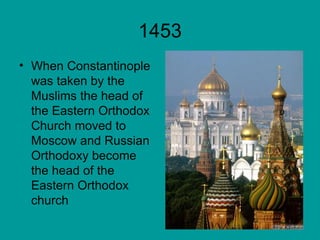
1453 When Constantinople was taken by the Muslims the head of the Eastern Orthodox Church moved to Moscow and Russian Orthodoxy become the head of the Eastern Orthodox church
Judeo/Christian contributions to  Western Civilization United Western Civilization’s basic premises One God  exists Truth  is absolute (changing today) Truth is more important than feeling/emotion Importance of  education  for all to be closer to God Basic  equality  of all people Importance of the  Individual  over the community Preservation of  Classical  Knowledge
Judeo/Christian Contributions Idea of Christendom  unites  Western Civilization Morality/Ethics  are based on 10 Commandments and the “Golden Rule”  “ Treat others as you want to be treated Sympathy, kindness, and Charity as guiding ideas  (Red Cross, Salvation Army, YMCA, YWCA, Goodwill, St. Vincent de Paul, World Vision, and thousands more)
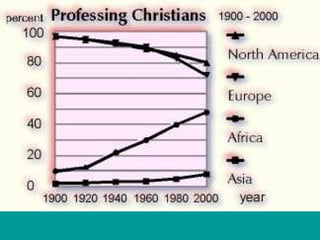
Globalization Influence of Christianity in the West is declining Influence of Christianity in the South and East is rising Influence of tradition everywhere is declining while new ideas are gaining ground
 
Things to Know Over the past 2000 years, the Catholic church is the most powerful and influential institution  in Western Civilization Nearly 1 Billion people are Catholics in the world today American Catholics are not normal – because they are flexible on birth control, abortion, not follow the Pope on feminism, homosexuality, Priest sex abuse scandals and many other issues are different from the rest of the world American Catholics are not a big proportion of world Catholics (most are in South America)
Terms to Know Hierarchy God Pope Cardinals ArchBishops Bishops Priests Congregation
Terms (cont.) Excommunication Papal Bull Purgatory Great Schism Simony Indulgence Pluralism
Terms (cont.) 7 Sacraments Baptism,  Confirmation,  Mass (Holy Eucharist, Communion) Holy Annointing (extreme unction or last rights) Holy Matrimony Holy Orders Penance

2 the catholic church background and overview

  • 1.
    The Catholic Church and its Popes
  • 2.
    Christianity today Christiansare people who follow the teachings of Christ believe that Jesus Christ is the Son of God and the Savior of the World Christians are divided into 3 majors groups Roman Catholics – governed by the Pope Protestants – Christians who do not recognize the authority any person over their own interpretations of the Bible Eastern Orthodox – do not recognize the primacy of the Pope and are governed as congregations rather than individuals 2 Billion people say they are a Christian in the world today
  • 3.
    Catholicism Catholic meansuniversal Catholic Church means universal Church Catholics are Christians and believe that Jesus is the Messiah/Christ/Annointed One of God to save the world from sin Catholics tend to be hierarchical and believe that the Pope is the ultimate temporal authority on spiritual matters
  • 4.
    The Pope Theword, "Pope", is derived from "papa", meaning "Father". Absolute Authority over the Catholic Church Catholics believe that Jesus gave this authority to his disciple Peter who then granted it to each Bishop of Rome as his successor
  • 5.
    The Controversy Byabout 150 AD their were 5 Bishops in 5 cities (Antioch, Jeruselum, Alexandria, Rome, and Constantinople) who were all called Popes and all held power over their geographic areas About 300 the Council of Nicea, the conversion of Constantine to Christianity and its acceptance in the Roman Empire gave the Roman Pope the greatest power in the West The other Popes called the Roman Pope the “first among equals” and he had some special authorities in councils
  • 6.
  • 7.
  • 8.
    1054 TheGreat East-West Schism The division of the Roman Empire into halves was eventually echoed in the church. The break came when Michael Cerularius was Patriarch of Constantinople and St. Leo pope in Rome. Cerularius believed that Catholics use unleavened bread and shouldn’t Catholics believe that Holy Spirit originates with the Father and the Son; Eastern orthodox believe only from the Father The Popes messenger replied on July 6, 1054 by placing a bull on the altar in Byzantium, excommunicating Cerularius Eastern and Western Christianity were divided and remain so today http://www.gospelcom.net/chi/DAILYF/2001/07/daily-07-06-2001.shtml
  • 9.
    1453 When Constantinoplewas taken by the Muslims the head of the Eastern Orthodox Church moved to Moscow and Russian Orthodoxy become the head of the Eastern Orthodox church
  • 10.
    Judeo/Christian contributions to Western Civilization United Western Civilization’s basic premises One God exists Truth is absolute (changing today) Truth is more important than feeling/emotion Importance of education for all to be closer to God Basic equality of all people Importance of the Individual over the community Preservation of Classical Knowledge
  • 11.
    Judeo/Christian Contributions Ideaof Christendom unites Western Civilization Morality/Ethics are based on 10 Commandments and the “Golden Rule” “ Treat others as you want to be treated Sympathy, kindness, and Charity as guiding ideas (Red Cross, Salvation Army, YMCA, YWCA, Goodwill, St. Vincent de Paul, World Vision, and thousands more)
  • 12.
    Globalization Influence ofChristianity in the West is declining Influence of Christianity in the South and East is rising Influence of tradition everywhere is declining while new ideas are gaining ground
  • 13.
  • 14.
    Things to KnowOver the past 2000 years, the Catholic church is the most powerful and influential institution in Western Civilization Nearly 1 Billion people are Catholics in the world today American Catholics are not normal – because they are flexible on birth control, abortion, not follow the Pope on feminism, homosexuality, Priest sex abuse scandals and many other issues are different from the rest of the world American Catholics are not a big proportion of world Catholics (most are in South America)
  • 15.
    Terms to KnowHierarchy God Pope Cardinals ArchBishops Bishops Priests Congregation
  • 16.
    Terms (cont.) ExcommunicationPapal Bull Purgatory Great Schism Simony Indulgence Pluralism
  • 17.
    Terms (cont.) 7Sacraments Baptism, Confirmation, Mass (Holy Eucharist, Communion) Holy Annointing (extreme unction or last rights) Holy Matrimony Holy Orders Penance