Reformation    Martin Luther and   Ana-baptists   Henry VIII in England   John Calvin in   Catholic
Leaders        Lutherans                                                  Geneva           Counter Reformers
Central
idea(s)


Other people
To know


Books or
Legislation

Economic
Changes


Social
Changes


Political
Changes


Treatment of
Women
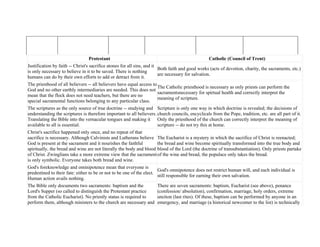
Protestant                                                         Catholic (Council of Trent)
Justification by faith -- Christ's sacrifice atones for all sins, and it
                                                                         Both faith and good works (acts of devotion, charity, the sacraments, etc.)
is only necessary to believe in it to be saved. There is nothing
                                                                         are necessary for salvation.
humans can do by their own efforts to add or detract from it.
The priesthood of all believers -- all believers have equal access to
                                                                         The Catholic priesthood is necessary as only priests can perform the
God and no other earthly intermediaries are needed. This does not
                                                                         sacramentsnecessary for spirtual health and correctly interpret the
mean that the flock does not need teachers, but there are no
                                                                         meaning of scripture.
special sacramental functions belonging to any particular class.
The scriptures as the only source of true doctrine -- studying and Scripture is only one way in which doctrine is revealed; the decisions of
understanding the scriptures is therefore important to all believers. church councils, encyclicals from the Pope, tradition, etc. are all part of it.
Translating the Bible into the vernacular tongues and making it Only the priesthood of the church can correctly interpret the meaning of
available to all is essential.                                           scripture -- do not try this at home.
Christ's sacrifice happened only once, and no repeat of that
sacrifice is necessary. Although Calvinists and Lutherans believe The Eucharist is a mystery in which the sacrifice of Christ is reenacted;
God is present at the sacrament and it nourishes the faithful            the bread and wine become spiritually transformed into the true body and
spiritually, the bread and wine are not literally the body and blood blood of the Lord (the doctrine of transubstantiation). Only priests partake
of Christ. Zwinglians take a more extreme view that the sacrament of the wine and bread, the populace only takes the bread.
is only symbolic. Everyone takes both bread and wine.
God's foreknowledge and ominipotence mean that everyone is
                                                                         God's omnipotence does not restrict human will, and each individual is
predestined to their fate: either to be or not to be one of the elect.
                                                                         still responsible for earning their own salvation.
Human action avails nothing.
The Bible only documents two sacraments: baptism and the                 There are seven sacraments: baptism, Eucharist (see above), penance
Lord's Supper (so called to distinguish the Protestant practice          (confession/ absolution), confirmation, marriage, holy orders, extreme
from the Catholic Eucharist). No priestly status is required to          unction (last rites). Of these, baptism can be performed by anyone in an
perform them, although ministers to the church are necessary and emergency, and marriage (a historical newcomer to the list) is technically
bestowed by the two partners on one another -- all the rest can only be
useful to directing and guiding it.
                                      performed by a priest.

9 reformation chart

  • 1.
    Reformation Martin Luther and Ana-baptists Henry VIII in England John Calvin in Catholic Leaders Lutherans Geneva Counter Reformers Central idea(s) Other people To know Books or Legislation Economic Changes Social Changes Political Changes Treatment of Women
  • 2.
    Protestant Catholic (Council of Trent) Justification by faith -- Christ's sacrifice atones for all sins, and it Both faith and good works (acts of devotion, charity, the sacraments, etc.) is only necessary to believe in it to be saved. There is nothing are necessary for salvation. humans can do by their own efforts to add or detract from it. The priesthood of all believers -- all believers have equal access to The Catholic priesthood is necessary as only priests can perform the God and no other earthly intermediaries are needed. This does not sacramentsnecessary for spirtual health and correctly interpret the mean that the flock does not need teachers, but there are no meaning of scripture. special sacramental functions belonging to any particular class. The scriptures as the only source of true doctrine -- studying and Scripture is only one way in which doctrine is revealed; the decisions of understanding the scriptures is therefore important to all believers. church councils, encyclicals from the Pope, tradition, etc. are all part of it. Translating the Bible into the vernacular tongues and making it Only the priesthood of the church can correctly interpret the meaning of available to all is essential. scripture -- do not try this at home. Christ's sacrifice happened only once, and no repeat of that sacrifice is necessary. Although Calvinists and Lutherans believe The Eucharist is a mystery in which the sacrifice of Christ is reenacted; God is present at the sacrament and it nourishes the faithful the bread and wine become spiritually transformed into the true body and spiritually, the bread and wine are not literally the body and blood blood of the Lord (the doctrine of transubstantiation). Only priests partake of Christ. Zwinglians take a more extreme view that the sacrament of the wine and bread, the populace only takes the bread. is only symbolic. Everyone takes both bread and wine. God's foreknowledge and ominipotence mean that everyone is God's omnipotence does not restrict human will, and each individual is predestined to their fate: either to be or not to be one of the elect. still responsible for earning their own salvation. Human action avails nothing. The Bible only documents two sacraments: baptism and the There are seven sacraments: baptism, Eucharist (see above), penance Lord's Supper (so called to distinguish the Protestant practice (confession/ absolution), confirmation, marriage, holy orders, extreme from the Catholic Eucharist). No priestly status is required to unction (last rites). Of these, baptism can be performed by anyone in an perform them, although ministers to the church are necessary and emergency, and marriage (a historical newcomer to the list) is technically
  • 3.
    bestowed by thetwo partners on one another -- all the rest can only be useful to directing and guiding it. performed by a priest.