Early
Christian
Community
PREPARED BY: MANNY CAGATA
The life exemplified by the early
Christian community showed certain
patterns that our Church in the history
tried to follow.
Kerygma
(Proclamation)
The Apostles spoke so
much with intensity,
like Jesus, the good
news of salvation that
1
THE LIFE OF EARLY
CHURCH
Koinonia
(Community)
The early Christians
gathered themselves
together and formed
into a community of
2
THE LIFE OF EARLY
CHURCH
Diakonia
(Service)
Faith in Jesus was a
matter of deeds, not
merely of words.
They lived out Jesus’
3
THE LIFE OF EARLY
CHURCH
Leitourgia
(Worship)
The early Christians
always celebrated the
breaking of the bread as a
form of worship that Jesus
had bequeathed them as
4
THE LIFE OF EARLY
CHURCH
SIGNIFICANT DATES IN CHURCH
HISTORY
c. 67 Persecution of church by Nero
c. 30 Jesus is crucified by the Romans; the Holy Spirit
descends upon the apostles.
c. 36 The conversion of Saul (Paul) of Tarsus. Christianity’s
first great thinker and missionary
c. 50 The Council of Jerusalem; apostles meet in Jerusalem
and free the Gentile Christians from the demand of
circumcision.
cc. 70 Destruction of Jerusalem by Titus
SIGNIFICANT DATES IN CHURCH
HISTORY
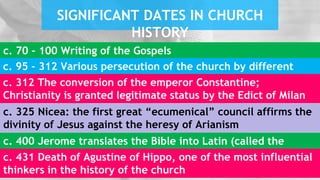
c. 325 Nicea: the first great “ecumenical” council affirms the
divinity of Jesus against the heresy of Arianism
c. 70 – 100 Writing of the Gospels
c. 95 – 312 Various persecution of the church by different
Roman emperorsc. 312 The conversion of the emperor Constantine;
Christianity is granted legitimate status by the Edict of Milan
c. 400 Jerome translates the Bible into Latin (called the
Vulgate)c. 431 Death of Agustine of Hippo, one of the most influential
thinkers in the history of the church
SIGNIFICANT DATES IN CHURCH
HISTORY
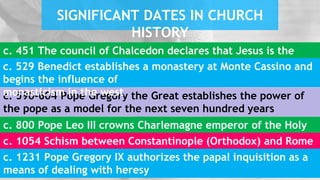
c. 590-604 Pope Gregory the Great establishes the power of
the pope as a model for the next seven hundred years
c. 451 The council of Chalcedon declares that Jesus is the
Second person of the Trinity with
both a human and divine nature
c. 529 Benedict establishes a monastery at Monte Cassino and
begins the influence of
monasticism in the west
c. 800 Pope Leo III crowns Charlemagne emperor of the Holy
Roman Empirec. 1054 Schism between Constantinople (Orthodox) and Rome
reaches final climaxc. 1231 Pope Gregory IX authorizes the papal inquisition as a
means of dealing with heresy
SIGNIFICANT DATES IN CHURCH
HISTORY
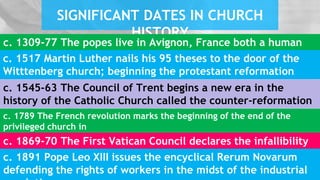
c. 1545-63 The Council of Trent begins a new era in the
history of the Catholic Church called the counter-reformation
c. 1309-77 The popes live in Avignon, France both a human
and divine naturec. 1517 Martin Luther nails his 95 theses to the door of the
Witttenberg church; beginning the protestant reformation
c. 1789 The French revolution marks the beginning of the end of the
privileged church in
Europe and the new era of enlightenment.c. 1869-70 The First Vatican Council declares the infallibility
of the popec. 1891 Pope Leo XIII issues the encyclical Rerum Novarum
defending the rights of workers in the midst of the industrial
Emperor Constantine and
the Edict of Milan
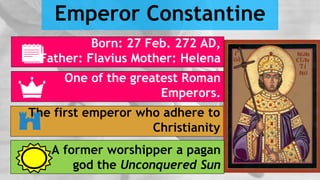
Emperor Constantine
The first emperor who adhere to
Christianity
A former worshipper a pagan
god the Unconquered Sun
One of the greatest Roman
Emperors.
Born: 27 Feb. 272 AD,
Father: Flavius Mother: Helena
🏰
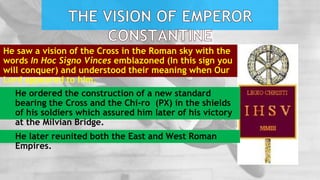
He saw a vision of the Cross in the Roman sky with the
words In Hoc Signo Vinces emblazoned (In this sign you
will conquer) and understood their meaning when Our
Lord appeared to him.
He ordered the construction of a new standard
bearing the Cross and the Chi-ro (PX) in the shields
of his soldiers which assured him later of his victory
at the Milvian Bridge.
He later reunited both the East and West Roman
Empires.
In 313 AD, Emperor Constantine issued
his famous Edict of Milan (Liccet esse
Christianos) or the Edict of Tolerance.
Through the Edict of Milan 313, he
granted Christianity the legal status
CHRISTIANITY became the symbol of
power
CHRISTIANITY became the religion of
the state
It guaranteed the right of religious
freedom
within his domain.
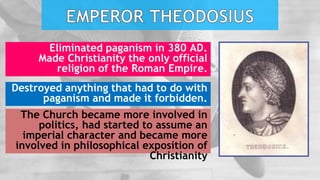
Eliminated paganism in 380 AD.
Made Christianity the only official
religion of the Roman Empire.
Destroyed anything that had to do with
paganism and made it forbidden.
The Church became more involved in
politics, had started to assume an
imperial character and became more
involved in philosophical exposition of
Christianity

Church-The Early-christian-community

  • 1.
  • 2.
    The life exemplifiedby the early Christian community showed certain patterns that our Church in the history tried to follow.
  • 3.
    Kerygma (Proclamation) The Apostles spokeso much with intensity, like Jesus, the good news of salvation that 1 THE LIFE OF EARLY CHURCH
  • 4.
    Koinonia (Community) The early Christians gatheredthemselves together and formed into a community of 2 THE LIFE OF EARLY CHURCH
  • 5.
    Diakonia (Service) Faith in Jesuswas a matter of deeds, not merely of words. They lived out Jesus’ 3 THE LIFE OF EARLY CHURCH
  • 6.
    Leitourgia (Worship) The early Christians alwayscelebrated the breaking of the bread as a form of worship that Jesus had bequeathed them as 4 THE LIFE OF EARLY CHURCH
  • 7.
    SIGNIFICANT DATES INCHURCH HISTORY c. 67 Persecution of church by Nero c. 30 Jesus is crucified by the Romans; the Holy Spirit descends upon the apostles. c. 36 The conversion of Saul (Paul) of Tarsus. Christianity’s first great thinker and missionary c. 50 The Council of Jerusalem; apostles meet in Jerusalem and free the Gentile Christians from the demand of circumcision. cc. 70 Destruction of Jerusalem by Titus
  • 8.
    SIGNIFICANT DATES INCHURCH HISTORY c. 325 Nicea: the first great “ecumenical” council affirms the divinity of Jesus against the heresy of Arianism c. 70 – 100 Writing of the Gospels c. 95 – 312 Various persecution of the church by different Roman emperorsc. 312 The conversion of the emperor Constantine; Christianity is granted legitimate status by the Edict of Milan c. 400 Jerome translates the Bible into Latin (called the Vulgate)c. 431 Death of Agustine of Hippo, one of the most influential thinkers in the history of the church
  • 9.
    SIGNIFICANT DATES INCHURCH HISTORY c. 590-604 Pope Gregory the Great establishes the power of the pope as a model for the next seven hundred years c. 451 The council of Chalcedon declares that Jesus is the Second person of the Trinity with both a human and divine nature c. 529 Benedict establishes a monastery at Monte Cassino and begins the influence of monasticism in the west c. 800 Pope Leo III crowns Charlemagne emperor of the Holy Roman Empirec. 1054 Schism between Constantinople (Orthodox) and Rome reaches final climaxc. 1231 Pope Gregory IX authorizes the papal inquisition as a means of dealing with heresy
  • 10.
    SIGNIFICANT DATES INCHURCH HISTORY c. 1545-63 The Council of Trent begins a new era in the history of the Catholic Church called the counter-reformation c. 1309-77 The popes live in Avignon, France both a human and divine naturec. 1517 Martin Luther nails his 95 theses to the door of the Witttenberg church; beginning the protestant reformation c. 1789 The French revolution marks the beginning of the end of the privileged church in Europe and the new era of enlightenment.c. 1869-70 The First Vatican Council declares the infallibility of the popec. 1891 Pope Leo XIII issues the encyclical Rerum Novarum defending the rights of workers in the midst of the industrial
  • 11.
  • 12.
    Emperor Constantine The firstemperor who adhere to Christianity A former worshipper a pagan god the Unconquered Sun One of the greatest Roman Emperors. Born: 27 Feb. 272 AD, Father: Flavius Mother: Helena 🏰
  • 13.
    He saw avision of the Cross in the Roman sky with the words In Hoc Signo Vinces emblazoned (In this sign you will conquer) and understood their meaning when Our Lord appeared to him. He ordered the construction of a new standard bearing the Cross and the Chi-ro (PX) in the shields of his soldiers which assured him later of his victory at the Milvian Bridge. He later reunited both the East and West Roman Empires.
  • 14.
    In 313 AD,Emperor Constantine issued his famous Edict of Milan (Liccet esse Christianos) or the Edict of Tolerance. Through the Edict of Milan 313, he granted Christianity the legal status CHRISTIANITY became the symbol of power CHRISTIANITY became the religion of the state It guaranteed the right of religious freedom within his domain.
  • 15.
    Eliminated paganism in380 AD. Made Christianity the only official religion of the Roman Empire. Destroyed anything that had to do with paganism and made it forbidden. The Church became more involved in politics, had started to assume an imperial character and became more involved in philosophical exposition of Christianity